
谷歌

Search documents
计算机行业点评报告:谷歌(GOOGL.O):发布强大图像模型,巩固AI技术领先地位
Huaxin Securities· 2025-09-26 15:36
Investment Rating - The report maintains a "Recommended" investment rating for the industry [4]. Core Insights - The release of Google's Gemini 2.5 Flash Image model has solidified its leading position in AI technology, showcasing advanced image generation and editing capabilities [4][6]. - The model has significantly increased user engagement, with over 12.6 million downloads in the first half of September, marking a 45% increase from the previous month [4]. - Google's optimistic outlook on AI investments is reflected in its Q2 financial report, where it announced an increase in capital expenditure guidance from $75 billion to $85 billion for the year, a 62% increase compared to 2024 [4][6]. Summary by Sections Industry Performance - The computer industry has shown varied performance over different time frames, with a 1-month decline of 5.1%, a 3-month increase of 15.6%, and a 12-month increase of 69.3% [1]. AI Model Development - Google's Gemini 2.5 Flash Image model is positioned as a state-of-the-art AI image model, outperforming competitors like ChatGPT 4o and GPT Image in multiple performance metrics [4]. - The model's capabilities include maintaining character consistency, modifying image details based on language instructions, and merging multiple images [4]. Financial Outlook - Google's core search business has seen an 11.7% year-on-year growth driven by new AI features, while its cloud business has grown by 32% [4]. - The report anticipates that continued investment in AI will empower core business areas and drive steady growth, with Gemini and other AI applications expected to become significant growth drivers in the future [6][7].
ASIC系列研究之四:国产ASIC:PD分离和超节点
Shenwan Hongyuan Securities· 2025-09-26 12:46
Investment Rating - The report maintains a positive outlook on the ASIC industry, indicating a favorable investment rating for the sector [2]. Core Insights - The report highlights the significant cost-effectiveness and efficiency advantages of ASICs over GPUs, particularly in the context of AI model inference, with Google's TPU v5 demonstrating an energy efficiency ratio 1.46 times that of NVIDIA's H200 [3][19]. - The increasing penetration of AI applications is driving a surge in inference demand, expanding the market for ASICs, with projections indicating the global AI ASIC market could reach $125 billion by 2028 [3][32]. - The report emphasizes the complexity of ASIC design, underscoring the critical role of design service providers like Broadcom and Marvell, which are expected to benefit from the growing demand for custom ASIC solutions [4][44]. Summary by Sections 1. Demand Driven by Large Model Inference - The global AI chip market is projected to reach $500 billion by 2028-2030, with significant growth in AI infrastructure spending anticipated [13]. - ASICs are specialized chips that offer strong cost and efficiency advantages, particularly in specific applications like text and video inference [14][19]. - The report notes that the demand for ASICs is expected to rise sharply due to the increasing consumption of tokens in AI applications, exemplified by the rapid growth of ChatGPT's user engagement [25][31]. 2. High Complexity of ASIC Design and Value of Service Providers - ASIC design involves a complex supply chain, with cloud vendors often relying on specialized design service providers for chip architecture and optimization [41][44]. - Broadcom's ASIC revenue is projected to exceed $12 billion in 2024, driven by the success of its TPU designs for Google and other clients [60]. - The report identifies the importance of a complete IP system and design experience as key factors for service providers to secure new orders in the ASIC market [63]. 3. Domestic Developments: Not Just Following Trends - Leading Chinese cloud providers like Alibaba and Baidu are making significant strides in self-developed ASICs, indicating a robust domestic ecosystem [3][4]. - The report highlights the emergence of domestic design service providers such as Chipone and Aowei Technology, which are positioned to capitalize on the growing demand for ASICs [3][4]. - The trends of PD separation and supernodes are identified as critical developments in the domestic ASIC landscape, with companies like Huawei and Haiguang leading the way [4][44]. 4. Key Trends in Domestic ASIC Development - PD separation involves using different chips for prefill and decode tasks, enhancing efficiency in specific applications [4]. - Supernodes are being developed to create unified computing systems through high-bandwidth interconnections, with early implementations seen in domestic companies [4][44].




StubHub创始人获得100:1的超级投票权,标志着双重股权结构在IPO市场的回归
Sou Hu Cai Jing· 2025-09-26 08:04
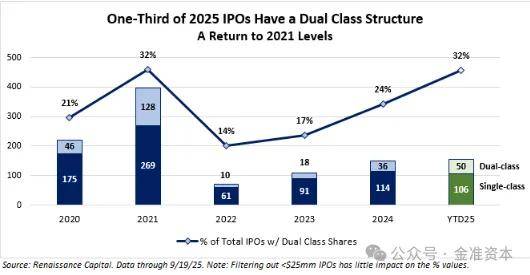
Group 1 - StubHub completed its long-awaited IPO, with CEO Eric Baker retaining nearly 90% of voting rights through a dual-class share structure, despite holding only 11% of the public shares [1] - Each B-class share in StubHub has up to 100 votes, contrasting with the typical 10:1 or 20:1 voting power ratio seen in other dual-class structures [1] - The trend of dual-class share structures has been increasing, with 32% of IPOs in 2023 adopting this model, up from a low of 14% in 2022 [2][4] Group 2 - The dual-class share structure was previously associated mainly with tech disruptors like Google and Facebook, but its acceptance has expanded to other industries [4] - Public investor reactions to dual-class structures can be negative, as seen with StubHub's IPO performance, although this is not solely attributed to the share structure [5] - The S&P Dow Jones Indices previously decided to exclude companies with unequal voting rights from its indices, a decision that was reversed in 2023 [6]

AI点燃新周期! 特朗普嗤之以鼻的可再生能源竟然涨势如虹
智通财经网· 2025-09-26 07:56
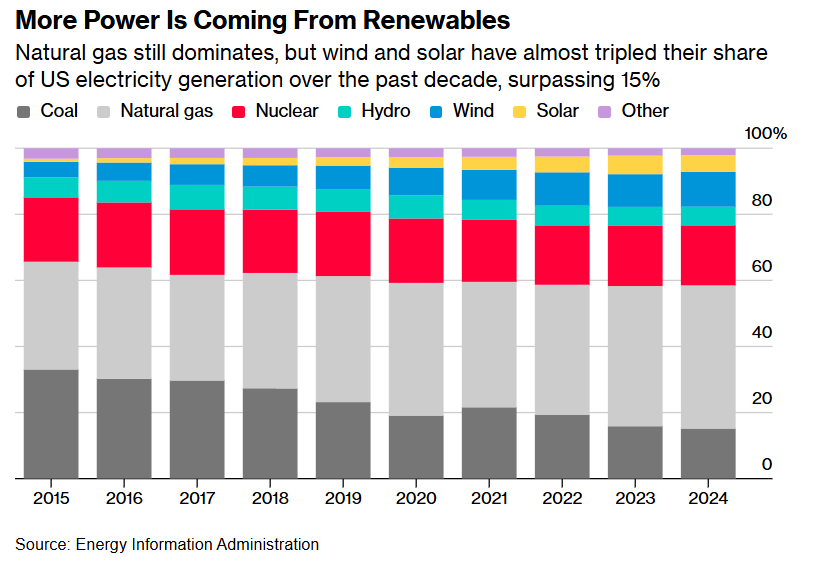
Group 1 - The stock market remains optimistic about the future of renewable energy despite the Trump administration's disinterest, driven by the belief that AI is ushering in a new cycle and that clean energy is the future of the global energy system [1][2] - The S&P Global Clean Energy Index has risen by 32% this year, led by strong performances from U.S. renewable energy giants Bloom Energy and First Solar, while popular clean energy ETFs have also shown significant gains [1] - By 2025, the U.S. is expected to see its largest solar installation capacity and battery storage capacity, contrasting with the S&P 500 Energy Sector Index, which has only increased by 5.5% this year [1] Group 2 - Fortescue Ltd. asserts that Trump's stance on climate change will not significantly suppress the long-term demand for clean electricity resources in the U.S., driven by AI's massive power needs and the pressure for emissions reduction [2][3] - The economic benefits of renewable energy are expected to outweigh political factors, as renewable energy has become more cost-effective than coal or natural gas in the U.S. [2][3] - Fortescue's CEO highlighted that the demand for clean energy will grow significantly due to cost pressures and the increasing scale of AI applications [3] Group 3 - The share of renewable energy in the global power mix has been expanding, with wind and solar systems in the U.S. nearly doubling their share over the past decade, surpassing 15% [7] - Since Trump's return to the presidency, significant delays and cancellations of renewable energy projects have occurred, amounting to nearly $42 billion [7] - Over 90% of new renewable power projects launched last year were more cost-effective than any new fossil fuel alternatives, with potential savings of up to $19 trillion in fuel costs by mid-century [7][4] Group 4 - The demand for electricity from AI data centers is expected to surge, with predictions indicating that global data center electricity demand will more than double by 2030, driven primarily by AI applications [9][10] - Major tech companies like Microsoft and Google are entering long-term power purchase agreements for renewable energy, indicating a strong demand for clean energy solutions [10][11] - UBS analysts note that the demand for utility-scale solar projects in the U.S. is gradually exceeding supply, providing significant growth potential for the solar industry [11]


计算机行业点评报告:微软(MSFT.O):追加40亿美元投建AI数据中心,AI算力投入持续上修
Huaxin Securities· 2025-09-26 05:21
Investment Rating - The report maintains a "Recommended" investment rating for the industry [10] Core Insights - Microsoft is leading the AI data center construction wave, with significant investments in building large-scale AI data centers, including a recent announcement of an additional $4 billion investment for a second AI data center in Wisconsin [5][8] - The Fairwater AI data center in Wisconsin, with an investment of $3.3 billion, is nearing completion and is designed to support large-scale AI models and applications [5][6] - The report highlights the increasing capital expenditures in the AI computing sector, with Microsoft's Q2 2025 capital expenditure reaching $24.2 billion, a 27% year-on-year increase, indicating a strong outlook for AI computing investments [7][8] Summary by Sections Industry Performance - The computer industry has shown varied performance over different time frames, with a 1-month decline of 1.9%, a 3-month increase of 19.5%, and a 12-month increase of 75% [1] Investment Highlights - Microsoft has extensive experience in constructing large-scale data centers, which positions it favorably in the AI computing infrastructure sector [5][6] - Other leading companies in the overseas market are also increasing their capital expenditures for computing, indicating a clear mid-term visibility for global computing investments [7][8] Company Focus and Earnings Forecast - The report provides earnings forecasts for Microsoft, Google, and Nvidia, with Microsoft expected to have an EPS of $11.86 in 2024, increasing to $15.75 by 2026 [10]
“易中天”被高估了?
Ge Long Hui· 2025-09-26 01:08
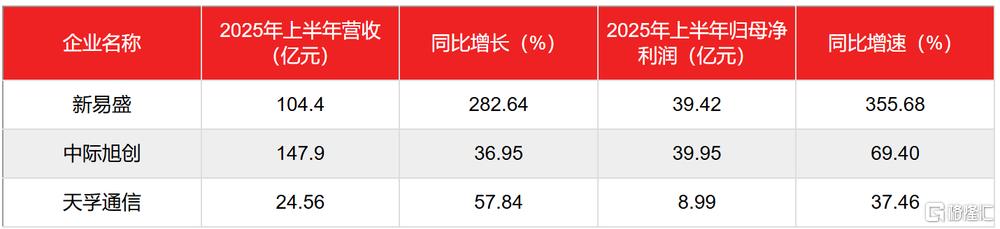
Core Viewpoint - The A-share market is experiencing a surge, leading to concerns about potential overvaluation in AI-related stocks, particularly in the optical module sector, represented by companies like New Yisheng, Zhongji Xuchuang, and Tianfu Communication [1][2][50]. Group 1: Market Trends - The rapid development of AI is expected to increase the demand for optical modules and drive upgrades towards higher transmission rates [5][6]. - The competition in AI computing not only focuses on GPU capabilities but also on data transmission efficiency, where optical modules play a crucial role [7][8]. - The optical module sector is witnessing a significant increase in both demand and iteration speed, with a shift from 400Gb/s to 800Gb/s modules already impacting company performance [12][14]. Group 2: Financial Performance - In the first half of 2025, New Yisheng reported a revenue of 10.44 billion, a year-on-year increase of 282.64%, while Zhongji Xuchuang's revenue was 14.79 billion, up 36.95% [13]. - The gross margins for these companies have improved, reflecting the successful rollout of high-end products like the 800G optical modules [12][13]. - The expected market size for 800G and 1.6T optical modules is projected to exceed $22 billion by 2030, driven by increased capital expenditure from key clients [15]. Group 3: Valuation Insights - Morgan Stanley has downgraded the ratings for New Yisheng and Tianfu Communication, citing that their valuations have reached historical highs [2][3]. - The dynamic price-to-earnings ratios for Zhongji Xuchuang, New Yisheng, and Tianfu Communication are currently at 34.71, 30.66, and 48.04, respectively, with a reasonable P/E range suggested to be between 30-40 times [31][32]. - The influx of capital into the A-share market and the potential for higher valuations due to improved liquidity are factors that could influence the stock prices of these companies [34][35]. Group 4: Investment Strategies - For investors already holding shares in these high-flying stocks, a strategy of locking in profits through gradual selling is recommended [39][40]. - New investors are advised to wait for significant price corrections before entering the market, as chasing high prices can lead to losses [46][50]. - The overall sentiment suggests that while there may be some bubble characteristics in these stocks, continued interest and investment in AI infrastructure could sustain their valuations [50][51].
中概股逆势走强,小米集团ADR涨超4%
Zhong Guo Zheng Quan Bao· 2025-09-25 23:53
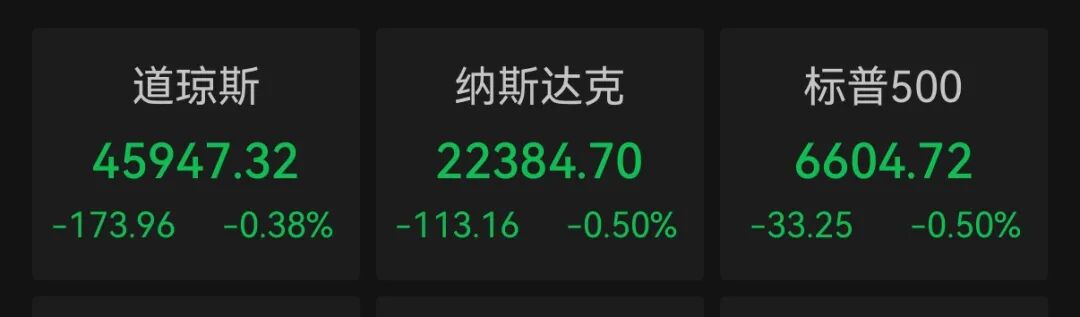
Group 1: Market Overview - On September 25, US stock indices collectively closed lower, with the Dow Jones down 0.38%, S&P 500 down 0.5%, and Nasdaq down 0.5% [2][4] - The US technology giants index fell by 0.34%, with Tesla leading the decline at over 4% [4] Group 2: Chinese Concept Stocks - Chinese concept stocks showed resilience, with the Nasdaq Golden Dragon China Index rising by 0.42% and the Chinese tech leaders index up by 0.79% [4] - Xiaomi Group's ADR surged by 4.31%, while BYD's ADR increased by 2.45% and Baidu's stock rose by 1.87% [4] Group 3: Commodity Market - Precious metals saw a rise, with COMEX gold futures up by 0.33% to $3780.5 per ounce and COMEX silver futures increasing by 2.89% to $45.47 per ounce [5] - In the oil market, light crude oil futures for November delivery fell by $0.01 to $64.98 per barrel, while Brent crude oil futures rose by $0.11 to $69.42 per barrel [7]

独立站与AI:Shopify示范史上最强Beta,谁能成为下一个Alpha?
格隆汇APP· 2025-09-25 10:31
Core Insights - Shopify started as a small ski shop and evolved into a global e-commerce platform, addressing the limitations of existing e-commerce solutions by providing a flexible and data-driven system for merchants [2] - The independent site model, while less familiar to Chinese consumers, reflects the differences in internet development between China and the U.S., where merchants prefer to build their own brands and user data through independent sites [2] - Shopify's SaaS model allows it to offer comprehensive solutions for online sales, payment, logistics, and marketing, enabling merchants to efficiently manage their stores and achieve scale [3] Growth Catalysts and Market Dynamics - The COVID-19 pandemic acted as a catalyst for Shopify, leading to explosive growth as consumers shifted online, resulting in a peak market valuation of $200 billion and a PS ratio of 40x [5] - However, as the pandemic subsided, consumer behavior shifted back to offline shopping, causing Shopify's stock to drop significantly, with a decline of 58% from late 2021 to early 2022 [5] Strategic Decisions and Management Response - In 2022, Shopify's acquisition of logistics company Deliverr aimed to replicate Amazon's model but deviated from its core SaaS focus, leading to significant capital investment and profit drag [9] - The company quickly recognized this strategic misstep and sold the logistics assets at a loss of approximately $1.3 billion, which was positively received by the market, resulting in a stock price increase of over 20% on the announcement day [9][10] AI Integration and Future Growth - Shopify is leveraging AI technologies, such as Sidekick and Shopify Magic, to enhance merchant workflows, improve operational efficiency, and increase marketing conversion rates [11] - The integration of AI not only empowers small merchants but also attracts larger enterprises by reducing costs and supporting more physical operations [11] - The rapid adoption of AI technologies is reshaping industry dynamics, with Shopify positioned to capitalize on this trend, potentially becoming a leader in the e-commerce SaaS space [12] Investment Philosophy and Market Outlook - Successful companies typically exhibit three key elements: a favorable environment, a solid business model, and effective management, as demonstrated by Shopify's ability to adapt and focus on its core business [14] - The current AI wave presents significant investment opportunities, and identifying companies with long-term growth potential is crucial for maximizing returns [17][18]

市值暴涨千亿,这泼天富贵终于轮到百度了
首席商业评论· 2025-09-25 04:02
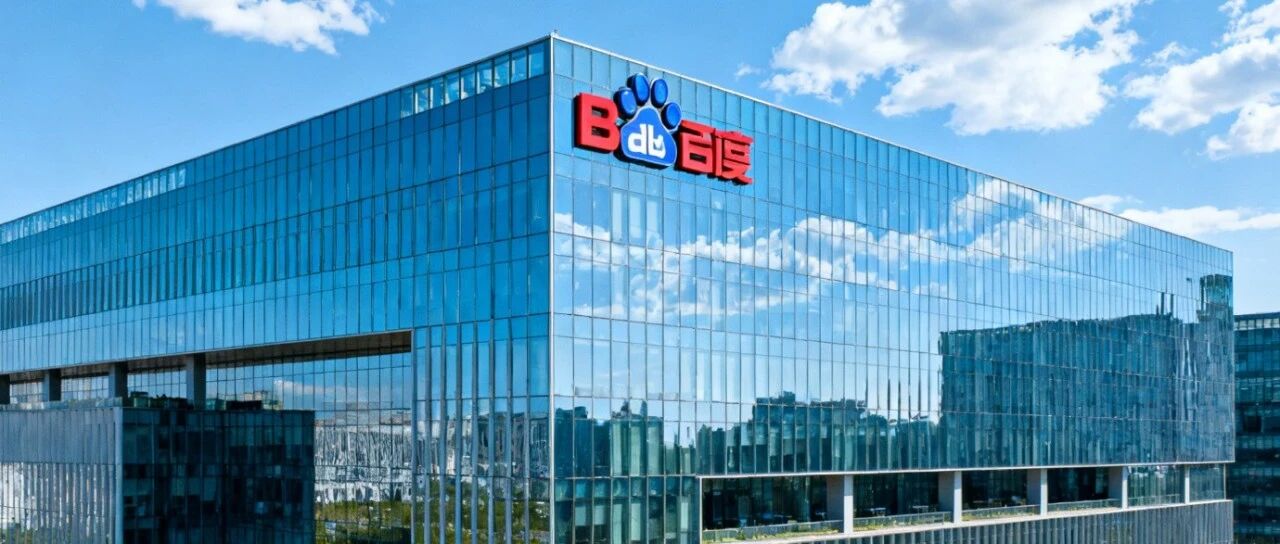
Core Viewpoint - Baidu's recent stock price surge is attributed to a combination of factors, including a focus on AI, improved financial performance, and a favorable market environment, leading to a reassessment of its valuation by investors [3][18][29]. Group 1: Stock Performance - In September, Baidu's Hong Kong stock price increased by over 50%, reaching a market capitalization of over 360 billion HKD, while its US stock rose by 62.06% year-to-date [3][4]. - Baidu's stock performance has significantly outpaced other internet companies, indicating a strong market interest [3][6]. Group 2: Business Transformation - Baidu has shifted its focus towards AI, particularly in its cloud and autonomous driving sectors, which has led to a notable increase in revenue from AI-related services [10][27]. - The company's intelligent cloud revenue grew by 26% year-on-year in Q4 2024, with AI-related income increasing nearly threefold [10][12]. Group 3: Market Sentiment and Valuation - Analysts suggest that Baidu's AI cloud, autonomous driving, and substantial cash reserves could justify a valuation close to 200 USD per share [8]. - The market's renewed interest in Baidu is seen as a response to its strategic pivot towards AI and the successful commercialization of its technologies [18][21]. Group 4: Competitive Landscape - Baidu's AI search capabilities have gained traction, with active users reaching 365 million, positioning it as a leader in the domestic AI search market [15][17]. - The competitive landscape is evolving, with major players like Google and Tencent also enhancing their AI capabilities, indicating a robust market for AI-driven services [14][15]. Group 5: Future Outlook - Baidu's recent financial results show a 33% increase in net profit despite a 4% decline in total revenue, highlighting the growing importance of its AI cloud business [18][24]. - The company is expected to continue its aggressive investment in AI infrastructure, which is crucial for maintaining its competitive edge in the rapidly evolving tech landscape [29].
格林大华期货早盘提示:全球经济-20250925
Ge Lin Qi Huo· 2025-09-25 01:37
Report Industry Investment Rating - The investment rating for the global economy in the macro and financial sector is (Bullish) [1] Core View of the Report - The global economy maintains an upward direction, with China implementing the AI+ initiative, international capital actively increasing positions in China's technology sector, and major technology companies such as OpenAI and Alibaba making significant investments in AI infrastructure [1] Summary by Related Catalog Important Information - OpenAI plans to invest approximately $400 billion to develop five new data center sites in the US with Oracle and SoftBank, fulfilling its commitment to invest $500 billion in AI infrastructure in the US [1] - Alibaba Cloud's chairman says that large models are the next - generation operating systems, and AI Cloud is the next - generation computer. Alibaba is actively promoting 380 billion yuan of AI infrastructure construction and plans to increase investment [1] - Morgan Stanley predicts that by 2028, AI data center and chip investment will reach $29 trillion, with tech giants bearing about $14 trillion and the remaining gap filled by debt financing, of which private credit funds are expected to provide $800 billion [1] - Alibaba Cloud showcases high - density AI servers and a new - generation network architecture. Its ecosystem companies are promoting customer introduction and product delivery in the hardware field, and many Agent applications and AI terminal products will be exhibited [1] - Bloomberg's Nour Al Ali believes that the rise in the price of gold in Swiss francs this year shows that central bank demand is the key driver for the rise of precious metals [1] - Tech giants like Microsoft and Google are in an AI capital expenditure race, and Deutsche Bank warns that historical technology - driven capital spending booms have often led to "boom - bust" cycles [1] Global Economic Logic - China implements the AI+ initiative, and international capital is bullish on China's technology sector. The US retail sales in August increased by 0.6% month - on - month, and its capital goods imports in July reached a record high. Huawei's Ascend chips lead NVIDIA in computing power. OpenAI and Alibaba are making large - scale AI infrastructure investments [1]