国星宇航

Search documents
参考消息特稿|从西博会感知中国对外开放“西”引力
Xin Hua She· 2025-05-29 01:29
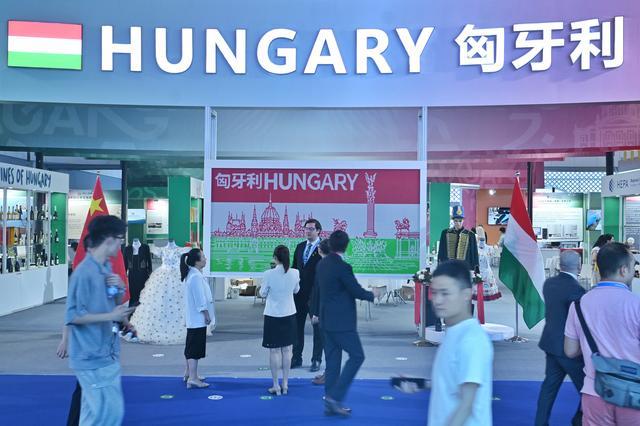
Group 1 - The 20th China Western International Expo (CWIE) opened on May 25, showcasing over 3,000 enterprises from 62 countries and regions, with more than 20 national pavilions, marking a new high in international participation [1][2] - The expo serves as a platform for deepening understanding, friendship, and cooperation among countries, injecting new momentum into global economic prosperity [1][2] - The event highlights China's commitment to opening up the western region, with a focus on high-quality development and international collaboration [5][13] Group 2 - This year's expo introduced a "dual guest country" mechanism, featuring Hungary and Laos, reflecting China's new posture towards international openness [5][6] - Hungarian enterprises showcased innovative products, while Laos presented its unique products, emphasizing green development and regional cooperation [4][5] - The expo facilitated the signing of 416 investment cooperation projects worth 354.3 billion yuan, indicating strong interest from domestic and international investors [5][6] Group 3 - The expo is seen as a significant opportunity for foreign enterprises, with Thai companies expressing interest in exploring the western market due to its rapid development and potential [5][16] - The event has led to the establishment of various projects in the western region, including a cutting tool research and manufacturing base in Chengdu, which will support high-end manufacturing and strategic emerging industries [6][10] - The western region is transitioning from a resource-exporting model to deep industrial chain cooperation, showcasing advanced technologies and innovations at the expo [9][10] Group 4 - The expo features seven thematic exhibition areas focusing on new industrial dynamics, including artificial intelligence and low-altitude economy, presenting cutting-edge technological achievements [9][11] - Companies like Sichuan Development and Kuang-Chi Technology are showcasing groundbreaking products, such as all-vanadium flow batteries and advanced drones, highlighting the region's technological advancements [10][11] - The event underscores the potential of the western region in renewable energy, advanced manufacturing, and logistics, attracting global enterprises and investors [13][15]

开启AI太空征途 我国“三体计算星座”进入组网阶段
Zhong Guo Jing Ying Bao· 2025-05-23 09:12
Core Insights - The successful launch of the "Three-body Computing Constellation" marks China's entry into space-based AI development, with the first batch of 12 satellites deployed, indicating the start of a new era in space computing infrastructure [1][2][3] Group 1: Satellite Launch and Capabilities - The "Three-body Computing Constellation" consists of 12 satellites, each with a maximum single-satellite computing power of 744 TOPS, contributing to an overall capability of 5 POPS and a storage capacity of 30 TB [1][3] - The constellation aims to achieve a total computing power of 1000 POPS once fully operational, positioning itself as a foundational infrastructure for space computing [1][3] Group 2: Technological Advancements - Unlike traditional satellites that rely on ground processing, the "Three-body Computing Constellation" processes data in space, significantly improving data handling efficiency and reducing the loss of satellite data [2][3] - The satellites are equipped with onboard intelligent computing systems and inter-satellite communication systems, enabling real-time data processing and model deployment in space [3] Group 3: Future Plans and Scale - Future plans for the "Three-body Computing Constellation" include expanding to approximately 1000 satellites, with over 50 satellites expected to be deployed by the end of this year and around 100 by 2027 [5] - The "Star Computing Plan" aims to deploy a total of 2800 computing satellites, creating an integrated computing network between space and over 100 ground computing centers [5] Group 4: Industry Context and Global Competition - The launch signifies China's strategic move in the global space computing race, with the global computing capacity growing by 40% year-on-year as of the end of 2023 [8][10] - While the U.S. focuses on commercial innovation and military applications, Europe and Japan are still in the planning and validation stages for their space computing initiatives [9][10] Group 5: Market Potential - The global market for in-orbit data centers is projected to reach $39.09 billion by 2035, with a compound annual growth rate of 67.4% over the next decade, highlighting the increasing importance of computing satellites in national space capabilities and digital sovereignty [10]
“破”与“立”:成都高新区加快打造未来产业“试验场”
Mei Ri Jing Ji Xin Wen· 2025-05-23 08:31
Core Viewpoint - Chengdu High-tech Zone is transforming urban scenes into future technology incubators, promoting innovation and industry development through scene-driven models [3][11][12]. Group 1: Scene Innovation - The global premiere of the 3D Nezha video in Chengdu High-tech Zone showcases the integration of popular animation IP with advanced technology [2]. - Chengdu High-tech Zone is establishing itself as a "future scene laboratory," where urban environments serve as experimental grounds for technological validation [3][4]. - The zone has released 20 technology application scenarios covering low-altitude economy, artificial intelligence, intelligent robotics, and unmanned driving [4]. Group 2: Industry Development - Chengdu High-tech Zone is fostering a unique "park ecology" to nurture enterprise growth, focusing on optimizing and enhancing industrial parks [12][15]. - The zone has attracted over 94 core enterprises in the low-altitude economy, establishing a comprehensive industrial chain that includes materials, components, and services [15]. - The successful launch of the world's first space computing constellation by a local company highlights the zone's commitment to building advanced technological capabilities [9][10]. Group 3: Talent and Community - Chengdu High-tech Zone has updated its talent policy to version 3.0, with a total talent pool of 6.69 million, making it one of the most attractive regions for high-level talent in central and western China [16]. - The zone is developing a "15-minute community happiness living circle," enhancing public service facilities to improve community well-being [21]. - The balance between industrial development and quality of life is emphasized, showcasing a dual approach to urban living that values both innovation and community [21].

计算机行业周报:“星算”计划开启太空算力时代新篇章,OpenAI发布云端AI编程智能体
Huaxin Securities· 2025-05-20 12:23
Investment Rating - The report maintains a "Buy" rating for several companies in the computer and AI sectors, including Yidao Information, iFlytek, Weike Technology, and others [15][53]. Core Insights - The "Star Computing" plan, led by Guoxing Aerospace, successfully launched 12 space computing satellites, marking the beginning of a new era in space computing [5][6][23]. - OpenAI's release of the cloud-based AI programming agent Codex is set to revolutionize software development, enabling developers to complete tasks that previously took hours in just 30 minutes [8][29][31]. - Perplexity AI is nearing completion of a $500 million funding round, raising its valuation to $14 billion, reflecting strong growth in the AI search engine market [10][37]. Summary by Sections Computing Power Dynamics - The rental prices for computing power remain stable, with specific configurations priced as follows: Tencent Cloud A100-40G at 28.64 CNY/hour and Alibaba Cloud A100-80G at 34.74 CNY/hour [22][24]. - The "Star Computing" plan aims to establish a space-based intelligent computing infrastructure, with the first batch of satellites equipped for space computing and interconnectivity [6][25]. AI Application Dynamics - Kimi's average traffic increased by 9.94%, indicating growing interest in AI applications [28]. - OpenAI's Codex, powered by the codex-1 model, is designed to assist developers in various coding tasks, significantly enhancing productivity [29][31]. AI Financing Trends - Perplexity AI's upcoming funding round will increase its valuation from $9 billion to $14 billion, highlighting the rapid growth in AI startups [10][37]. - The company has over 15 million monthly active users and is generating nearly $100 million in annual recurring revenue [10][38]. Investment Recommendations - Tencent reported a 13% year-on-year revenue growth in Q1 2025, with significant contributions from AI initiatives [51]. - Companies to watch include Jiahe Meikang, iFlytek, and others that are positioned to benefit from advancements in AI and computing power [52].




计算机行业重大事项点评:太空计算星座全球首发,我国开启天算时代
Huachuang Securities· 2025-05-19 12:41
Investment Rating - The industry investment rating is "Recommended," indicating an expected increase in the industry index by more than 5% over the next 3-6 months compared to the benchmark index [19]. Core Insights - The successful launch of the first batch of 12 satellites for the space computing constellation marks a significant milestone for China's space computing capabilities, ushering in the "Heavenly Computing Era" [2][9]. - The space computing constellation, led by the Zhijiang Laboratory, aims to create a large-scale space-based intelligent computing infrastructure, addressing traditional satellite data processing efficiency bottlenecks [9]. - The constellation's total computing power is projected to reach 1000POPS (one hundred billion billion calculations per second) once fully operational, significantly enhancing data processing capabilities for various applications [9]. Company Profit Forecast and Valuation - The report provides a detailed profit forecast and valuation for key companies in the industry, including: - Softcom Power: Market Cap 55.36 billion, EPS 0.2 (2024A), PE 306.9 (2024A) [4]. - Guangxun Technology: Market Cap 34.65 billion, EPS 0.8 (2024A), PE 52.4 (2024A) [4]. - China Satellite: Market Cap 31.21 billion, EPS 0.0 (2024A), PE 1117.9 (2024A) [4]. - Zhongke Star Map: Market Cap 29.84 billion, EPS 0.6 (2024A), PE 84.9 (2024A) [4]. - Fenghuo Communication: Market Cap 24.74 billion, EPS 0.6 (2024A), PE 35.2 (2024A) [4]. - The report highlights the expected growth in EPS and PE ratios for these companies from 2024 to 2025, indicating a positive outlook for the industry [4]. Industry Basic Data - The industry consists of 336 listed companies, with a total market capitalization of 4,278.56 billion and a circulating market capitalization of 3,671.50 billion [6]. Relative Index Performance - The absolute performance of the industry over the past 12 months is 33.7%, with a relative performance of 26.9% compared to the benchmark index [7].
通信行业周报:“星算”首批星发射,美AI扩散规则趋严-20250518
Guoyuan Securities· 2025-05-18 14:13
Investment Rating - The report gives a "Recommended" rating for the telecommunications industry, considering the sustained high prosperity of the sector driven by AI, 5.5G, and satellite communications [2][6]. Core Viewpoints - The overall market performance for the week (May 12-16, 2025) saw the Shanghai Composite Index rise by 0.76%, the Shenzhen Component Index by 0.52%, and the ChiNext Index by 1.38%. However, the Shenwan Communications Index fell by 0.12% during the same period [2][11]. - The report highlights that the telecommunications industry remains in a high prosperity phase, with significant developments in AI, 5.5G, and satellite communications driving growth [2][3]. - In the telecommunications sector, the highest increase was seen in communication network equipment and devices, which rose by 1.16%, while the communication application value-added services experienced the largest decline at 3.27% [2][14]. Summary by Sections Market Overview - The telecommunications sector index decreased by 0.12% during the week, contrasting with the overall market indices which showed positive growth [11][13]. - The report notes a general downward trend across various sub-sectors within telecommunications, with communication network equipment and devices being the exception [14][15]. Key Investment Directions - **Computing Power Industry Chain**: Domestic internet giants are increasing capital expenditures year-on-year, with significant growth in revenue from cloud computing services. The report suggests focusing on undervalued overseas targets and leading domestic suppliers [3]. - **Satellite Internet**: The successful launch of China's first fully interconnected space computing satellite constellation marks a significant milestone, with a total computing power of 1000POPS expected upon completion. This development is anticipated to enhance data utilization efficiency and reduce operational costs [4][21]. Company Highlights - Notable stock performances include *ST Tianyu with a rise of 14.78%, Youfang Technology at 12.20%, and Yongding Co. at 9.60% during the week [2][16]. - The report mentions key announcements from companies in the telecommunications sector, including new executive appointments and share buybacks [28]. Upcoming Announcements - The report outlines significant upcoming announcements for the telecommunications sector, including share placements and executive changes scheduled for the following week [29].
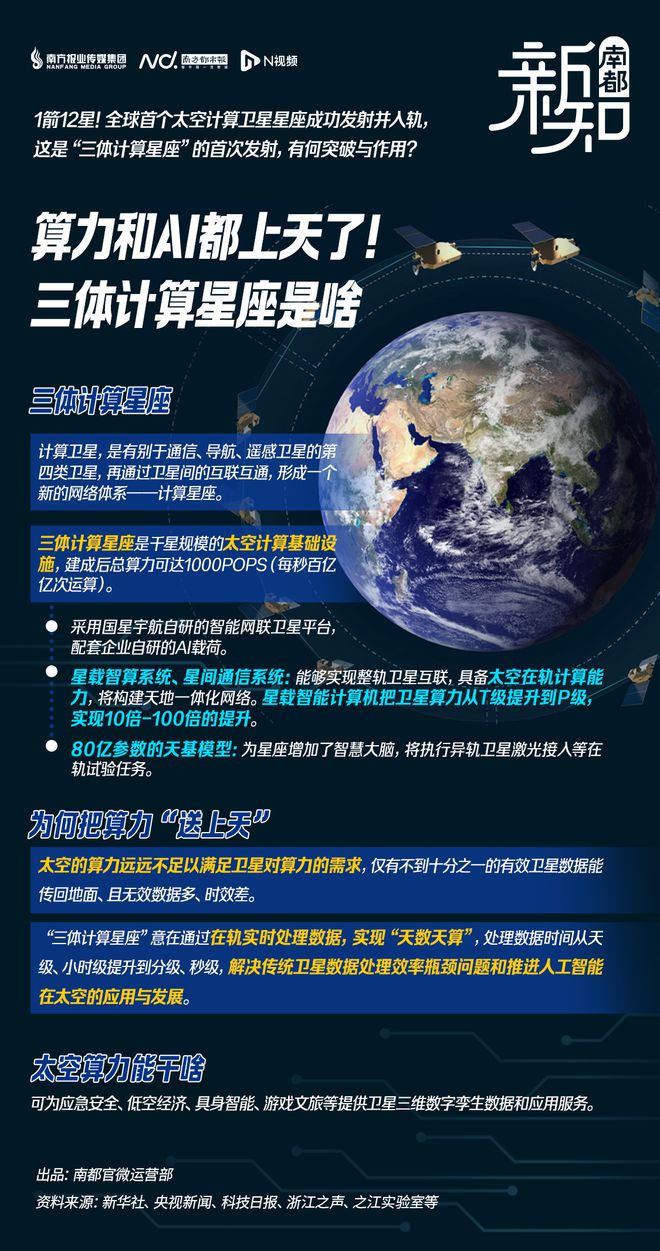
算力和AI上天!三体计算星座“天数天算”,太空算力有啥用
Nan Fang Du Shi Bao· 2025-05-16 01:39
Core Viewpoint - The successful launch of China's first space computing satellite constellation marks a significant advancement in space-based computing capabilities, aiming to address the challenges posed by the rapid increase in the number of satellites in orbit [1][6][10]. Group 1: Overview of the Space Computing Satellite Constellation - The launch on May 14 involved 12 satellites and is part of the "Star Computing" plan led by Guoxing Aerospace, which aims to establish a network of 2,800 satellites for space-based computing [6][11]. - The "Three-body Computing Constellation" is designed to provide a computing infrastructure in space, with a total computing power of 1000 POPS (peta-operations per second) once fully operational [1][10]. Group 2: Technical Innovations and Capabilities - The satellites are equipped with advanced onboard intelligent computing systems, enhancing their computing power from Tera to Peta level, achieving a 10 to 100 times increase in performance [13]. - Each satellite can achieve a maximum single satellite computing power of 744 TOPS, with inter-satellite laser communication speeds reaching up to 100 Gbps, resulting in a combined computing capability of 5 POPS and a storage capacity of 30 TB [13][16]. Group 3: Applications and Future Prospects - The space computing constellation is expected to revolutionize scientific research and applications, providing critical computing support for near-Earth spacecraft, lunar, and Mars exploration [17]. - It will enable real-time data processing in space, significantly improving the efficiency of satellite data handling from days or hours to minutes or seconds, thus facilitating the application of artificial intelligence in space [10][18]. - The constellation will support various applications, including real-time monitoring of wildfires, low-altitude aircraft tracking, and dynamic optimization of deep space exploration tasks [17][18].
把算力送上天,我国“太空计算”正式进入组网阶段
Xuan Gu Bao· 2025-05-14 23:15
Industry Insights - The "Three-body Computing Constellation" is a large-scale space computing infrastructure consisting of 2800 satellites and over 100 ground computing centers, aiming to create an integrated space-ground computing network by 2025 [2] - The total computing power of the constellation is expected to reach 1000 POPS (one quintillion operations per second), significantly enhancing data processing efficiency in space [1] - The current global AI + satellite industry is experiencing rapid development, with strategic significance in overcoming traditional data processing limitations [2] Company Developments - Kaipu Cloud is collaborating with Guoxing Aerospace on the "Star Computing Plan" to jointly develop key technologies in the space computing field [3] - Putian Technology is accelerating the development of low-orbit satellite communication products and launching proprietary products aimed at satellite terminals [3]
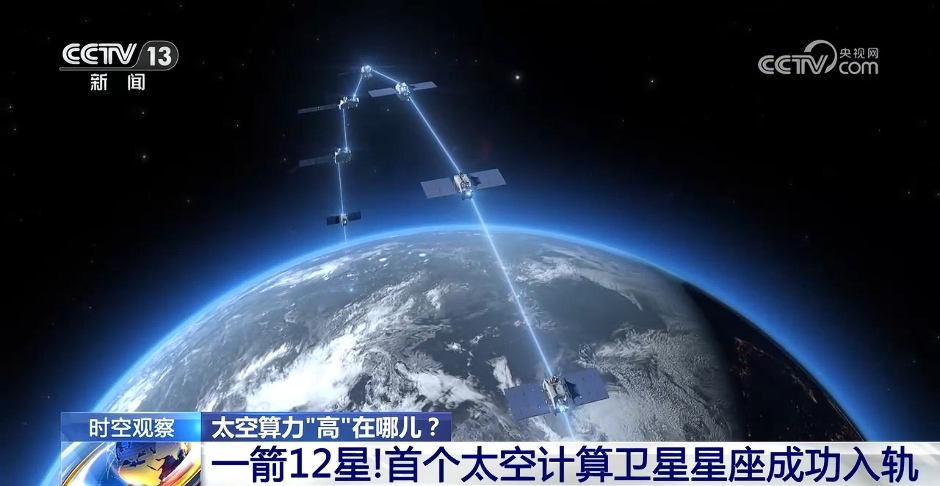
首个太空计算卫星星座成功入轨 太空算力有啥用?还面临哪些考验?
Yang Shi Wang· 2025-05-14 22:04
Core Viewpoint - The successful launch of the first batch of 12 satellites for the world's first space computing satellite constellation marks a significant advancement in space technology and capabilities [1][2][4]. Group 1: Satellite Launch and Technology - The launch was conducted using the Long March 2D rocket from the Jiuquan Satellite Launch Center, successfully placing the satellites into their designated orbits [1]. - The satellites utilize a self-developed intelligent networking satellite platform, equipped with onboard intelligent computing systems and high-speed routers, enabling "computing in space and networking in orbit" [2][4]. Group 2: Capabilities and Applications - The satellite constellation aims to create a high-performance space computing system that can support various applications, including emergency response and real-time data processing [11][12]. - The system will facilitate the transition from traditional data processing methods to more efficient space-based computing, significantly reducing response times from months or weeks to seconds [11]. Group 3: Future Prospects and Challenges - The space computing initiative is expected to contribute to the development of a new ecosystem encompassing satellite manufacturing, AI chips, inter-satellite communication, and on-orbit computing platforms, supporting the global digital economy [12][14]. - The growth of space computing faces challenges related to technology reliability, international legal frameworks, and geopolitical factors that may affect global cooperation [14].
晚报 | 5月15日主题前瞻
Xuan Gu Bao· 2025-05-14 14:27
Group 1: Financial Technology - The Ministry of Science and Technology, People's Bank of China, and other regulatory bodies issued policies to accelerate the construction of a technology finance system, establishing a "National Venture Capital Guiding Fund" to support technological innovation and the growth of tech enterprises [1][6] - The policies aim to enhance the financial service capabilities for technological innovation, promoting the transformation of technological achievements and industrial upgrades [1][6] Group 2: Carbon Fiber - Jilin Chemical Fiber Group has announced a price increase of 10,000 yuan per ton for its wet-process 3k carbon fiber products due to surging demand from the low-altitude economy and drones [2][6] - The domestic demand for carbon fiber is expected to rise significantly, with a projected demand of 60,300 tons in 2024, marking it as a key growth area for the industry [2][6] Group 3: Rare Earth - China Rare Earth announced plans to leverage its operational advantages for internal and external asset integration and restructuring to promote sustainable development in the rare earth industry [3][6] - Analysts suggest that rare earth prices are at a cyclical low, with supply concentration expected to drive prices upward, particularly benefiting domestic deep processing enterprises [3][6] Group 4: Overseas Warehousing - Following the reduction of tariffs between China and the U.S., there is a surge in demand for logistics services, leading to a "shipping rush" as companies prepare for potential trade policy uncertainties [4][9] - Overseas warehousing has become a strategic measure to mitigate tariff costs and enhance logistics efficiency, allowing businesses to stockpile goods in response to fluctuating tariffs [4][9] Group 5: Space Computing - China successfully launched the first space computing constellation, marking the beginning of a new era in global "space computing" [5][6] - The "Star Computing" plan aims to establish a global integrated computing network through a constellation of 2,800 satellites, enhancing capabilities in AI and other advanced technologies [5][6]