
地平线

Search documents
市值增长600亿,地平线下了一盘大棋
Xin Lang Cai Jing· 2025-12-17 04:52
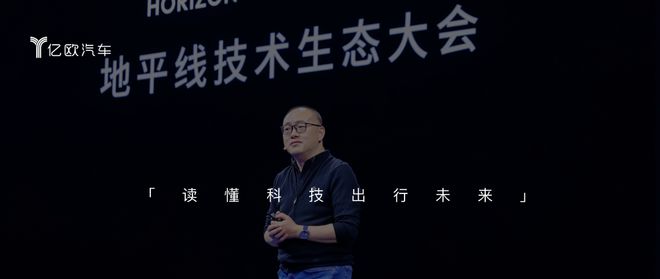
Core Insights - Horizon Robotics achieved a market capitalization of HKD 126 billion by December 16, 2025, reflecting a growth of over 90% since its IPO, which is the largest IPO for a Chinese tech company in the past three years [3][9][8] - The company positions itself as a "Horizontal Platform" for the Robotics era, emphasizing an open and win-win ecosystem [4][12] Company Overview - Horizon Robotics, founded by Yu Kai, is described as a non-typical chip company, focusing on "processing hardware" rather than traditional chip terminology [4] - The company has shipped over 7 million units of its "processing hardware" [5] IPO Significance - The IPO not only marked a significant financial milestone but also attracted long-term international funds, injecting confidence into the Hong Kong market [9] - The timing of the IPO coincided with a market recovery, which Yu Kai humorously attributed to "luck" [8] Ecosystem Ambitions - Horizon's vision includes creating a vibrant ecosystem within the automotive industry, aiming to foster innovation and improve safety and quality of life [12][14] - The first technology ecosystem conference showcased participation from major automotive manufacturers, highlighting the collaborative nature of Horizon's approach [13] Technological Foundations - The company introduced its fourth-generation BPU architecture, named "Riemann," which aims for significant performance improvements through algorithm and architecture optimization [18] - The new architecture enhances tensor calculations and supports vector and floating-point computations, achieving a fivefold increase in energy efficiency [18] HSD Together Model - Horizon launched the HSD Together model, which aims to reduce partners' costs and time by 90%, transforming the business model from selling products to providing services [28][30] - This model is designed to attract more automotive manufacturers, particularly mainstream brands, to join Horizon's ecosystem [29] Competitive Strategy - Horizon's strategy contrasts with competitors like Tesla and Huawei by adopting a semi-open approach, focusing on collaboration rather than strict control [31] - The goal is to establish a trust-based ecosystem that fosters innovation and efficiency, positioning Horizon as a key player in the smart automotive and physical AI markets [32] Future Vision - Horizon aims to leverage its ecosystem to drive technological advancements and ensure long-term growth, with a focus on making technology accessible to everyday users [36]

真·自动驾驶要来了,但它可能没你想的那么好
3 6 Ke· 2025-12-17 01:23
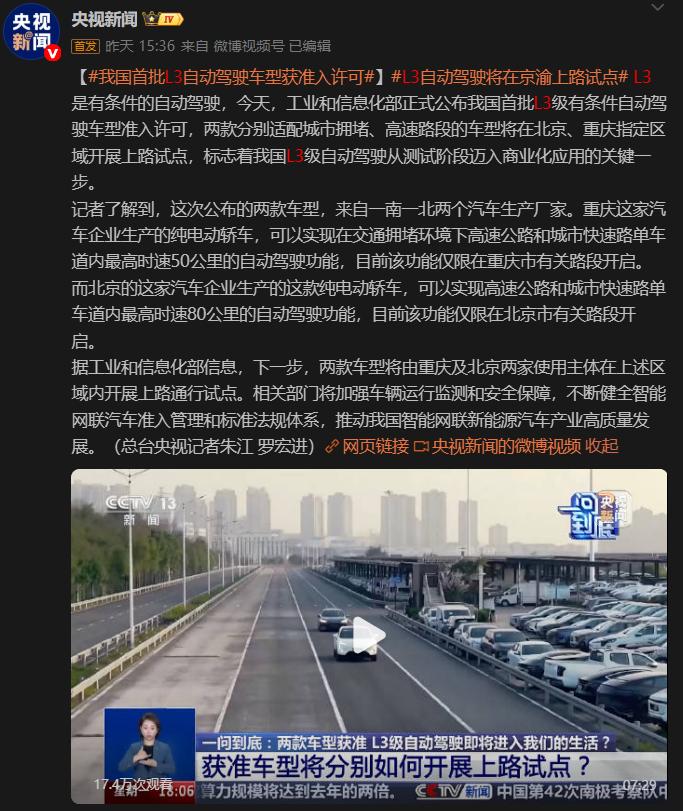
Core Viewpoint - The approval of two new vehicles for L3 conditional autonomous driving marks a significant milestone in the domestic market, transitioning from testing to mass production capabilities, which is expected to invigorate the entire autonomous driving industry [1][12]. Group 1: Industry Impact - The recent news has led to a surge in stock prices for companies related to autonomous driving, indicating a strong market reaction and excitement within the industry [3]. - The approval signifies a shift in focus for car manufacturers from merely developing driver assistance systems to fully embracing autonomous driving technologies [3][12]. - The Ministry of Industry and Information Technology (MIIT) is now the approving authority, which indicates a more formalized regulatory framework for L3 vehicles compared to previous local government approvals [9][12]. Group 2: Technical Specifications - L3 autonomous driving allows vehicles to operate independently under certain conditions, relieving drivers of the need to control the vehicle, and placing liability on the manufacturers in case of accidents [7][12]. - The two approved vehicles are the Changan Deep Blue SL03 and the Arcfox Alpha S6, utilizing advanced technologies from Horizon Robotics and Huawei, respectively [13]. - The operational parameters for these vehicles are still limited, with the SL03 restricted to a maximum speed of 50 km/h on specific roads, and the Alpha S6 allowed up to 80 km/h but also limited to a single lane without overtaking [19][21]. Group 3: Future Outlook - The national standards for L3 autonomous driving are expected to be released for public consultation early next year, which may lead to a rapid increase in the number of L3 vehicles available in the market [15]. - There is an anticipation that 2024 could be a significant year for the mass production of L3 vehicles, as more manufacturers are likely to enter the market [15]. - Despite the advancements, the experience of L3 driving may still be conservative compared to current L2 systems, focusing on safety over efficiency, which may affect consumer adoption [17][21].


中信建投执委会委员蒋月勤:中资券商国际化破局之道
2 1 Shi Ji Jing Ji Bao Dao· 2025-12-16 23:57
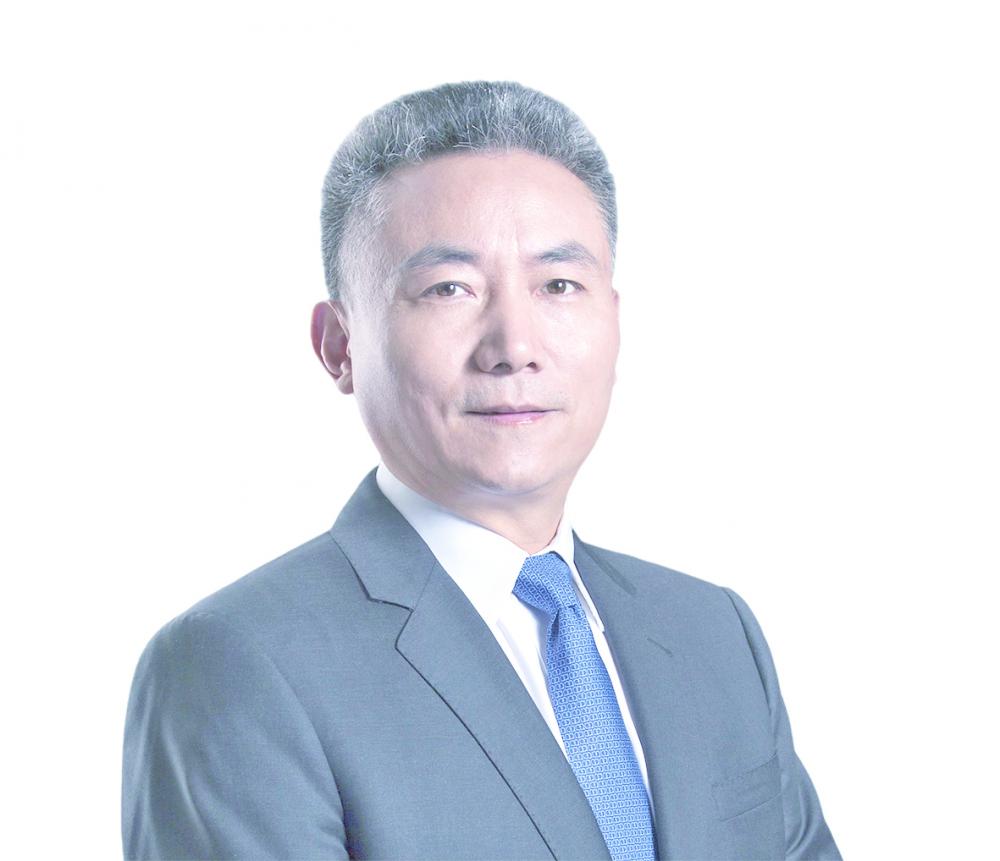
Core Viewpoint - Internationalization is deemed a necessary path for Chinese securities firms to achieve the goal of becoming a first-class investment bank, as highlighted by the chairman of CITIC Securities International, Jiang Yueqin [1][3]. Group 1: Internationalization Goals - The China Securities Regulatory Commission has set a target to establish 2 to 3 investment banks with international competitiveness and market leadership by 2035 [3]. - Leading Chinese securities firms currently have over 20% of their revenue from international operations, while top global investment banks like Goldman Sachs and Morgan Stanley achieve 30% to 40% [3]. - By mid-2025, the total assets of overseas subsidiaries of leading securities firms are expected to exceed HKD 1.64 trillion, with Chinese investment banks dominating core businesses such as Hong Kong IPOs [3]. Group 2: Key Projects and Achievements - CITIC Securities International has completed several landmark projects, including acting as the sole sponsor for "Laopu Gold" to list in Hong Kong in 2024 and facilitating the largest technology sector IPO for "Dihorizon" [3]. - The firm also assisted CATL in listing on the Hong Kong Stock Exchange in just 98 days, setting a new record, and completed a RMB 3.584 billion zero-coupon convertible bond issuance for ZTE, marking the first RMB-denominated convertible bond in Hong Kong in four years [3]. Group 3: Strategic Development Directions - Jiang Yueqin emphasized the need for internationalization to align with trends of "value investment banks," "new quality investment banks," and "digital intelligence investment banks" [4]. - The development strategy includes focusing on core advantages, enhancing local connections, and strengthening compliance and risk management to navigate complex international environments [4]. - The "Belt and Road" initiative is seen as a crucial opportunity for Chinese securities firms to use Hong Kong as a strategic hub to connect with global capital and support national strategies [4].

AI沦为暗线?从商业航天入手“十五五”投资机会!
Ge Long Hui A P P· 2025-12-16 10:24
Core Viewpoint - The article discusses the ongoing AI bubble concerns and the impact of various negative news on the AI technology sector, while emphasizing that the fundamental logic and trends of the global AI industry remain unchanged in the long term [2][5]. Group 1: Investment Opportunities in Key Technology Directions - Commercial Space: The "strong nation in space" goal in the 14th Five-Year Plan, along with policies, demand, and technology, creates a robust investment opportunity in commercial space [2][3]. - Demand for low-orbit satellite resources is urgent, with China's GW and Qianfan constellations planning over 10,000 satellites, of which less than 1% are currently in orbit [3]. - The successful launch of the Zhuque-3 and the upcoming Long March 12 rocket are expected to significantly reduce launch costs, which is crucial for satellite networking [3]. Group 2: Specific Technology Areas - Autonomous Driving: The recent approval of L3 autonomous vehicle licenses marks a critical transition from testing to commercialization, with a projected market size of 270 billion for Robotaxi by 2030 [5]. - Nuclear Fusion: While still in the experimental phase, nuclear fusion is recognized as a future key industry, with significant investment opportunities tied to technological breakthroughs [6]. - Artificial Intelligence: The focus has shifted from speculative investments to practical applications, with the 14th Five-Year Plan promoting AI integration across various industries [6][7]. Group 3: Market Dynamics and Trends - The commercial space sector has shown resilience despite recent launch delays, indicating strong market recognition and investment potential [9][11]. - The core logic of commercial space revolves around the urgent need for satellite networking and decreasing costs, with various companies positioned to benefit from this trend [11]. - The article highlights the importance of selecting the right sectors and companies for sustained investment, particularly in the context of the 14th Five-Year Plan's long-term technological focus [15].




AI沦为暗线?从商业航天入手“十五五”投资机会!
格隆汇APP· 2025-12-16 09:44
Core Viewpoint - The article discusses the ongoing trends in various technology sectors, particularly focusing on the AI industry, commercial aerospace, autonomous driving, nuclear fusion, and quantum technology, emphasizing the long-term potential despite short-term market fluctuations [5][6][10][13][16]. Group 1: Commercial Aerospace - The Chinese government has prioritized commercial aerospace in its strategic goals, establishing a dedicated department and action plans, indicating strong policy support [8]. - The demand for low-orbit satellite resources is urgent, with plans for thousands of satellites, and recent technological advancements in reusable rockets are expected to significantly reduce launch costs [8][20]. - Key players in the commercial aerospace sector include China Satellite, which leads in satellite manufacturing, and various companies involved in rocket manufacturing and satellite components [20][22]. Group 2: Autonomous Driving - The autonomous driving sector is entering a critical commercialization phase, supported by government policies and technological advancements, with a projected market size of 2.7 trillion by 2030 for Robotaxi services [10]. - The recent approval of L3 autonomous vehicle models marks a significant step towards commercial deployment [10]. Group 3: Nuclear Fusion - Nuclear fusion is recognized as a future clean energy source, but it remains in the experimental stage, with significant breakthroughs needed before commercialization [11][12]. - Current investments are focused on technological milestones, making it a long-term investment opportunity [12]. Group 4: Artificial Intelligence - The AI sector is transitioning from speculative investments to practical applications, with a focus on real-world implementations that enhance efficiency and reduce costs [13]. - The emphasis is on AI applications across various industries, including manufacturing and healthcare, rather than on speculative infrastructure investments [13]. Group 5: Robotics - The development of embodied intelligence and humanoid robots is a key focus area, with increasing demand in manufacturing due to labor shortages and rising costs [14]. - Companies like Tesla are advancing humanoid robot production, while domestic firms are achieving significant progress in core components [14]. Group 6: Semiconductor Industry - The semiconductor sector is a priority for domestic self-sufficiency, with a focus on overcoming key technological challenges [15]. - Domestic wafer manufacturers are expanding production, and there is a growing demand for domestic semiconductor components [15]. Group 7: Quantum Technology - Quantum communication is positioned as a strategic priority for national security, with ongoing efforts in standardization and pilot projects in financial and governmental applications [16]. - Companies in the quantum sector are beginning to secure significant contracts, indicating a move towards commercialization [16][24]. Group 8: Market Trends and Investment Strategy - The article suggests that commercial aerospace is currently the most promising sector for investment, driven by policy, demand, and technological advancements [26]. - It also highlights the importance of focusing on sectors with clear policy support and performance validation, such as AI applications and robotics, while recognizing the long-term potential of quantum technology and semiconductor advancements [26].

这个自动驾驶黄埔军校,近4500人了
自动驾驶之心· 2025-12-16 09:25
Core Insights - The article emphasizes the establishment of a comprehensive community for autonomous driving knowledge, aiming to facilitate learning and collaboration among industry professionals and newcomers [22][10][8] Group 1: Community and Learning Resources - The "Autonomous Driving Heart Knowledge Planet" has over 4,000 members and aims to grow to nearly 10,000 in two years, providing a platform for technical exchange and job opportunities [8][22] - The community offers a variety of resources, including video tutorials, learning routes, and Q&A sessions, to help members navigate the complexities of autonomous driving technology [10][23] - Members can access insights from industry leaders and academic experts, enhancing their understanding of the latest trends and technologies in autonomous driving [11][10] Group 2: Technical Insights and Developments - Recent updates include discussions on Waymo's latest base model, advancements in self-driving technology, and insights from industry conferences [7][10] - The community has compiled over 40 technical routes covering various aspects of autonomous driving, such as perception, simulation, and planning control [23][10] - Key topics include end-to-end autonomous driving, multi-modal large models, and the integration of traditional planning with new technologies [44][52][56] Group 3: Job Opportunities and Industry Trends - The community provides job recommendations and internal referrals to help members connect with leading companies in the autonomous driving sector [27][10] - Members can inquire about job openings, industry trends, and the future of autonomous driving technologies, fostering a supportive environment for career development [26][10] - The platform encourages collaboration between academia and industry, aiming to bridge the gap between research and practical applications in autonomous driving [22][11]
“寒武纪卖早了”
投资界· 2025-12-16 07:52
Core Insights - The article discusses the annual venture capital conference in Shenzhen, focusing on the theme of "missed opportunities and heavy investments" in the context of investment strategies and industry shifts in China [2][3]. Group 1: Investment Institutions Overview - Tang Capital, founded in 2019, focuses on hard technology, particularly in electronic information, advanced manufacturing, and new materials, managing over 3 billion [3]. - Huakong Fund, established in 2007, has over 10 billion under management, emphasizing hard technology sectors such as advanced manufacturing and AI [4]. - Huaying Capital, founded in 2008, has invested in over 280 companies, with over 50% of investments related to AI [4]. - Guozhong Capital, established in 2015, manages 16 billion across multiple funds, focusing on supporting small and medium-sized enterprises [5]. - Lenovo Star, since 2008, has invested in over 400 companies, primarily in technology and healthcare [6]. - Linghang New Frontier, founded in 2019, manages approximately 2.8 billion, focusing on smart technology and biomedical sectors [7]. - Tiantang Silicon Valley, established in 2000, has invested in over 230 projects, with over 50% achieving exits, focusing on technology and healthcare [8]. Group 2: Investment Strategies and Shifts - Investment strategies have evolved due to industry cycles, with institutions adjusting their focus based on market conditions and technological advancements [9][16]. - Huaying Capital's investment methodology adapts to different stages of technology development, focusing on disruptive technologies and market leadership [12]. - Institutions like Tang Capital and Huakong Fund emphasize AI and advanced technologies as key future investment areas, reflecting a shift towards more innovative sectors [29][30]. - Guozhong Capital aligns its investment strategy with national development plans, focusing on emerging industries as outlined in the "14th Five-Year Plan" [19]. Group 3: Missed Opportunities and Lessons Learned - Many institutions shared experiences of missed opportunities in sectors like quantum computing and commercial aerospace, highlighting the importance of timely decision-making [25][27]. - The article emphasizes the need for continuous learning and adaptation in investment strategies to avoid missing out on emerging trends [26][28]. - Institutions reflect on past mistakes, such as underestimating the potential of the solar energy sector, which has since become a leading industry [26]. Group 4: Future Focus Areas - Future investment focus areas include AI, embodied intelligence, and commercial aerospace, with expectations for significant growth in these sectors [29][30]. - Institutions are also looking at advanced materials and renewable energy as key investment opportunities over the next five years [32][33].
电子行业周报:NVIDIAH200芯片放松出口限制-20251216
Shanghai Aijian Securities· 2025-12-16 07:35
Investment Rating - The report rates the electronic industry as "Outperform" compared to the market [1]. Core Insights - The SW electronic industry index increased by 2.63%, ranking 3rd out of 31 sectors, while the CSI 300 index decreased by 0.08% [2]. - The U.S. government has allowed NVIDIA to export the H200 AI chip to China, but more advanced chips like Blackwell and Rubin are not included in this approval [5][10]. - The H200 chip, based on the Hopper architecture, features 141GB of HBM3e memory and a memory bandwidth of 4.8TB/s, outperforming the A100 and mainstream domestic AI chips [10][12]. - Domestic companies like Huawei and Cambrian have launched their own AI chips, but they still lag significantly behind the H200 in terms of core computing power [12][15]. - The successful IPO of Moer Technology on December 5, 2025, highlights the growth potential in the domestic GPU market, with a revenue increase of 253.65% year-on-year [16][19]. Summary by Sections Section 1: U.S. Export Control Information - The U.S. BIS has implemented export controls limiting China's access to advanced chips, leading NVIDIA to adjust its chip offerings to comply with these regulations [6][8]. Section 2: Global Industry Dynamics - AMD launched the EPYC Embedded 2005 series processors, designed for embedded environments, showcasing significant performance improvements over competitors [21][22]. - Naxin Micro officially listed on the Hong Kong Stock Exchange, focusing on high-performance analog and mixed-signal chips [23]. - Sanan Optoelectronics has begun small-scale shipments of its 800G optical chips, indicating advancements in optical communication technology [24][25]. - North China Innovation has acquired a 90% stake in Chengdu Guotai Vacuum, enhancing its capabilities in precision optical coating equipment [26]. Section 3: Market Performance Review - The SW electronic industry index's performance reflects a positive trend, with significant gains in integrated circuit manufacturing and printed circuit boards [31][34].


传统车企孵化智驾企业缘何走到尽头
Zhong Guo Qi Che Bao Wang· 2025-12-16 06:50
Core Viewpoint - The decline of independent intelligent driving companies incubated by traditional automakers, such as Haomo Zhixing, highlights the challenges and inefficiencies in the current market, leading to a shift towards more collaborative and cost-effective solutions [1][10][13]. Group 1: Haomo Zhixing's Decline - Haomo Zhixing announced a complete work stoppage starting November 24, 2024, due to its operational status, with indications of significant layoffs and management departures since 2024 [3][4]. - The company, which originated from Great Wall Motors in 2019, had once been a leading player in the intelligent driving sector, achieving a valuation exceeding $1 billion and planning an IPO in 2025 [4][5]. - Despite initial successes, Haomo Zhixing's actual deployment of its NOH system was limited to only three cities by the end of 2023, falling behind competitors [5][6]. Group 2: Industry Trends and Challenges - The trend of traditional automakers dissolving or integrating their independent intelligent driving subsidiaries, such as the dissolution of Dazhuo Intelligent and the integration of Zero束 Technology into SAIC, reflects a broader industry shift towards consolidation and collaboration [7][8]. - The low return on investment for these independent companies has led automakers to reconsider their support, especially in light of more cost-effective third-party solutions [10][11]. - The competitive landscape has evolved, with over 80% of domestic automakers opting for partnerships with established tech firms like Huawei, indicating a preference for collaborative models over independent development [14][15]. Group 3: Future Directions - The industry is moving towards a hybrid model of "self-research + cooperation," allowing traditional automakers to leverage their manufacturing strengths while addressing technological gaps through partnerships [15]. - The market is increasingly favoring third-party intelligent driving solutions, as evidenced by the dominance of companies like Momenta and Huawei in the NOA market, which has shifted the focus back to core automotive manufacturing [14][15].

2026年汽车智能化投资策略
2025-12-16 03:26
Summary of Conference Call Records Industry Overview - The conference call discusses the **smart automotive industry**, focusing on the evolution of autonomous driving technologies and investment strategies from 2026 to 2030 [1][2][4][7]. Key Points and Arguments Industry Development Stages - The smart automotive industry has undergone several key phases: - **2014-2017**: Initial phase focusing on L1 to early L2 technologies, primarily using low-cost monocular cameras for features like AEB, ACC, and LCC. Companies like Mobike were prominent during this period [2]. - **2018-2019**: A downturn where many companies exited the market due to supply chain and demand changes [2]. - **2020-2023**: Peak phase focusing on L2++ technologies, driven by the electric vehicle (EV) boom, with Tesla leading the innovation [2]. - **2023-2025**: Shift towards software and algorithm innovations, moving away from hardware-centric approaches [2][7]. Future Predictions (2026-2030) - The industry is expected to experience three distinct phases: - **2025-2026**: A "dark period" before dawn, where the electric vehicle boom fades, but significant investments are needed [1][11]. - **2026-2028**: Optimal investment period where L4 technology will validate B2B business models, leading to the emergence of new autonomous vehicle companies [1][11]. - **2028-2030**: A resurgence in the C-end market as early EV adopters seek replacements, driving demand and technological innovation [1][11]. Investment Strategy - Future investment strategies should pivot from electric vehicle frameworks to focus on AI applications, emphasizing software over hardware as the market matures [1][8][10]. Key Technologies and Trends - The importance of software algorithms is surpassing that of hardware, with advancements in large language models significantly impacting the automotive sector [1][12]. - The cost of both hardware and software is expected to decline rapidly, aligning with Moore's Law, which will further drive industry growth [5]. Market Dynamics - The **Robotaxi** segment is highlighted as having the highest potential, with expected penetration rates of 10% by 2028 and 50% by 2035 [3][24]. - The autonomous vehicle market is projected to see significant growth in commercial applications, with estimates of 500,000 autonomous commercial vehicles by 2028, increasing to 1.5 million by 2030 [23][26]. Policy and Technology Interaction - While policy has historically driven the electric vehicle market, the focus is shifting to technological advancements as the primary growth driver for autonomous vehicles [10][12][16]. Other Important Insights - The acceptance of autonomous vehicles by consumers is crucial for market growth, with companies like Xiaoma Zhixing and Waymo focusing on L4 development while others like Tesla and XPeng validate algorithms through consumer experiences [20]. - The upcoming year (2026) is expected to be pivotal for L4 technology, with significant market impacts anticipated as consumers begin to understand and accept the concept of not driving themselves [4][6]. - The differences between the US and Chinese markets in terms of labor costs and consumer acceptance are noted, with China potentially adapting to and promoting autonomous technology more rapidly [25]. This summary encapsulates the key insights and projections regarding the smart automotive industry and its trajectory over the next several years, emphasizing the shift towards software and AI applications in autonomous driving technologies.