联发科

Search documents
联想集团中国首席战略官:个人AI是下一个阶段创新和普惠的关键方向
Xin Hua Cai Jing· 2025-12-30 03:04
Core Insights - Personal AI is identified as a key direction for innovation and inclusivity, requiring collaboration across the entire industry chain for scalable, trustworthy, and sustainable evolution [2][3] - The current AI product and service architecture is primarily based on cloud-based large models, which lack capabilities for continuous perception, long-term memory, and autonomous decision-making, thus failing to create a truly personalized service loop [2] - The white paper released by Lenovo and IDC defines the current AI form as "Public AI," which significantly lowers the usage threshold and enhances efficiency, but still provides average services rather than personalized support [2] Industry Trends - Personal AI will adopt a hybrid architecture of edge and cloud to address user trust, cost control, response speed, and continuous companionship issues [3] - The rise of personal AI is reshaping the industry structure into a distributed three-layer architecture centered around individuals, consisting of integration, service, and capability layers [3] - Major companies like Intel, AMD, Qualcomm, MediaTek, Apple, and NVIDIA are launching next-generation chips optimized for AI inference, providing the necessary computational power for multimodal, continuous memory, and personalized services [3] Company Developments - Lenovo is actively developing and iterating its Tianxi personal super intelligent system (Tianxi AI) and various smart terminals embedded with Tianxi AI to enhance user experience [4] - The Tianxi AI has been upgraded to version 3.5 and is rapidly iterating, contributing to significant growth in Lenovo's AI mobile phones and tablets, with growth rates exceeding 90% and 100% respectively [4] - The AIoT product line is expanding with new categories such as AI glasses, AI headphones, and AI home products being introduced [4]


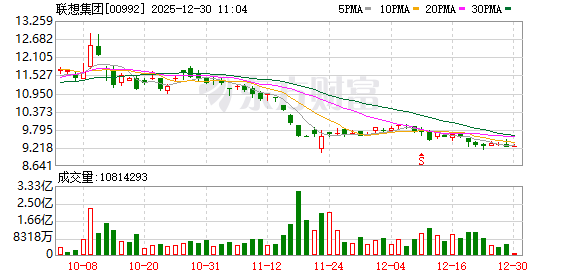
10月恢复出货以来,安世中国出货超110亿片芯片
Xin Lang Cai Jing· 2025-12-29 13:44
Supply News - Anshi China has shipped over 11 billion chips since resuming shipments in mid-October, serving over 800 global customers [1][7] - In response to semiconductor-related disputes, Wentai Technology has initiated multiple legal proceedings in the Netherlands and submitted a dispute notice, potentially seeking international arbitration with claims up to $8 billion if unresolved within six months [1][7] Project Progress - The third phase of the Muling North Semiconductor Technology Co., Ltd. project has officially commenced production, with a total investment of 2 billion yuan and an annual capacity of 1 million 6-inch wafers, primarily for applications in new energy vehicles, industrial control, and photovoltaics [2][8] - The core equipment for the New Beauty Materials New Station Optical Functional Film project was moved in on December 25, marking significant progress, with a total investment of approximately 5 billion yuan and plans for five internationally leading intelligent display material production lines, expected to achieve mass production by the third quarter of 2026 [2][8] Corporate Dynamics - Zhongwei Company won a provincial patent award for its invention patent "Chemical Vapor Deposition Reactor or Epitaxial Layer Growth Reactor and Its Supporting Device" and also secured the gold award in the second "Changgao Competition" for high-value patent transformation [3][9] - Noreco announced on December 26 the launch of a new product series, Optical Critical Dimension (OCD) equipment NKShape, successfully delivered to a leading domestic customer, designed for advanced semiconductor processes [3][9] - Tianzhun Technology announced on December 28 the successful completion of its public offering of convertible bonds, totaling 872 million yuan, with the bonds set to be listed on the Shanghai Stock Exchange on December 31, 2025 [4][10] - Chipone announced on December 26 that its shareholder, the National Integrated Circuit Industry Investment Fund, plans to reduce its holdings by up to 8.9396 million shares, accounting for no more than 1.70% of the total share capital [4][10] - SK Hynix is accelerating the construction of its 2.5D packaging production line to enhance its overall packaging capabilities for AI semiconductors, including high bandwidth memory (HBM) [4][10] - Media reports indicate that MediaTek announced a strategic partnership with global automotive component supplier DENSO to jointly develop customized automotive system-on-chip (SoC) solutions for advanced driver assistance systems (ADAS) and smart cockpit applications [4][10]



全球2nm芯片发布,我们与全球顶尖水平,还落后3代?
Xin Lang Cai Jing· 2025-12-29 09:39
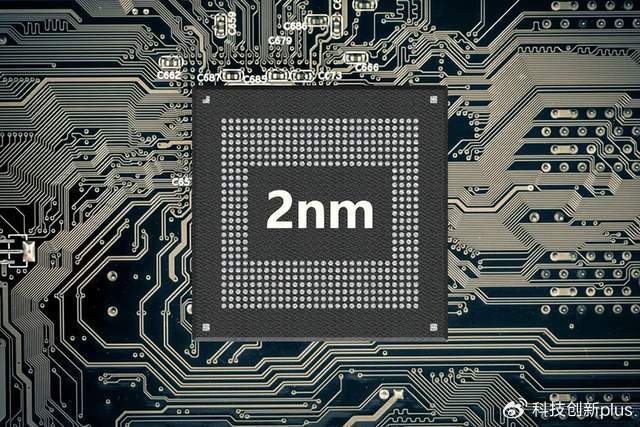
Core Insights - Samsung has unveiled the world's first 2nm chip, the Exynos 2600, utilizing its own GAAFET 2nm technology, marking a significant advancement in chip manufacturing [1][3] - The Exynos 2600 features a 10-core design with a 39% performance increase and a 16% reduction in thermal efficiency due to HPB technology [1] - The introduction of the 2nm chip indicates that global chip manufacturing has officially entered a new era, widening the technological gap with leading manufacturers [3][5] Group 1 - The Exynos 2600 is Samsung's second-generation GAA technology chip, showcasing advancements in semiconductor technology [1] - Current parameters such as transistor density remain unclear, but the chip's release signifies a leap in manufacturing capabilities [3] - The gap in chip manufacturing technology between domestic capabilities and international leaders like Samsung and TSMC has widened, with domestic technology still at an equivalent of 7nm [5] Group 2 - The transition to 2nm technology by Samsung and the impending arrival of TSMC's 2nm process highlights a significant technological leap, with domestic manufacturers lagging behind by three generations [5] - The lack of EUV lithography machines poses a significant challenge for domestic manufacturers aiming to produce chips below 7nm, as alternative methods have not been proven effective at this scale [8][10] - The necessity for domestic production of EUV lithography machines is emphasized, as reliance on foreign technology could exacerbate the existing technological gap [10]

索赔80亿美元!闻泰科技:必须夺回安世半导体;扫地机器人巨头给全员发金子,或共超37斤;官方明确!明年「国补」范围和标准将调整
雷峰网· 2025-12-29 00:28
Group 1 - The Chinese government will adjust the scope and standards of the "National Subsidy" program in 2024, expanding it to include more consumer goods and services, with a focus on stimulating consumption [4][5] - The "National Subsidy" program will continue to support the replacement of old vehicles and various household appliances, with an increase in funding from 150 billion yuan in 2024 to 300 billion yuan in 2025 [4][5] - Experts suggest shifting the focus of subsidies from goods to services and increasing cash and digital currency subsidies to better support consumer spending [5] Group 2 - Wentai Technology is pursuing legal action to reclaim its control over Nexperia, with potential claims reaching up to $8 billion if unresolved within six months [7][8] - Geely's subsidiary is suing Awin for over 2.3 billion yuan due to quality issues with battery cells supplied between June 2021 and December 2023 [9][10] - Awin has faced complaints from customers regarding battery performance, leading to a significant lawsuit that could impact its financial standing [9][10] Group 3 - Duzhi Technology announced a year-end bonus of 26 million yuan, distributing gold to all employees, reflecting its strong performance with over 100% annual growth for six consecutive years [12][13] - The company has expanded its market share in the robotic vacuum sector, ranking third globally with a 12.4% share [13] Group 4 - NetEase announced the retirement of its executive vice president Ding Yingfeng, who will continue as a consultant, highlighting a trend of "soft exits" for senior executives in Chinese tech companies [14] - Ding has been instrumental in the development of several flagship games and the establishment of a professional game development system at NetEase [14] Group 5 - BYD is undergoing a significant internal restructuring, merging its 13th division into other departments and adjusting executive roles, indicating a strategic shift in its organizational structure [20][21] - The company has also implemented substantial salary increases for technical staff, signaling a commitment to retaining talent amid competitive market conditions [21] Group 6 - Zero Run Technology aims to sell 4 million vehicles annually in the next decade, focusing on international expansion and leveraging local partnerships for market entry [23] - The company has reported significant overseas orders, positioning itself as a leader in the new energy vehicle sector [23] Group 7 - Apple, Qualcomm, and MediaTek are set to launch 2nm chips in 2026, marking a significant advancement in semiconductor technology [37][38] - TSMC is ramping up production capacity for 2nm chips, indicating strong demand from major tech companies [37][38] Group 8 - OpenAI is recruiting a new safety officer with a salary of $555,000 to address potential risks associated with its AI models, reflecting the company's focus on safety amid growing scrutiny [45][46] - The role is critical as OpenAI faces legal challenges related to the impact of its technology on user mental health [45][46]





8点1氪丨爱奇艺回应充25年会员退费难;B站2025年度弹幕为“致敬”;官方明确明年继续“国补”
3 6 Ke· 2025-12-29 00:02
Group 1 - The movie "Zootopia 2" has become the first imported film in Chinese history to surpass 100 million viewers [5] - Bilibili announced that the annual bullet screen for 2025 is "Tribute," with over 22.82 million mentions and 4.59 million users participating [2] - The Chinese government plans to relax household registration restrictions outside of a few mega cities to promote urban integration [2] Group 2 - Xiaomi's co-founder Lin Bin plans to sell up to $2 billion worth of B-class ordinary shares starting December 2026, with proceeds aimed at establishing an investment fund [4] - The new national standard for electric vehicle energy consumption, considered the strictest globally, will be implemented starting January 1, 2026, limiting energy consumption for 2-ton vehicles to no more than 15.1 kWh per 100 km [6] - Guizhou Moutai aims to prevent price speculation and ensure reasonable pricing to stabilize market expectations [6] Group 3 - The precious metals market has seen significant price increases, with platinum futures surpassing $2,400 per ounce, marking a weekly increase of over 22% [5] - A lawsuit involving a subsidiary of XWANDA is seeking over 2.314 billion yuan due to alleged quality issues with delivered battery cells [6] - NASA's new director has stated that the U.S. will return to the moon during Trump's second term, emphasizing the importance of lunar exploration for economic and national security [8]




8点1氪:爱奇艺回应充25年会员退费难;B站2025年度弹幕为“致敬”;官方明确明年继续“国补”
36氪· 2025-12-29 00:00
Group 1 - iQIYI has initiated a refund process for a user who faced difficulties in obtaining a refund for a 25-year membership due to account issues [3][5] - The user reported that their membership was charged from 2017 to 2043, and the customer service offered a refund only to the original payment account, which is no longer in use [5] - iQIYI's response indicates a commitment to user satisfaction and financial security by verifying account ownership before processing refunds [3] Group 2 - The film "Zootopia 2" has become the first imported movie in Chinese history to surpass 100 million viewers [4][8] - The CEO of Chasing Technology announced an additional reward of 1 gram of gold for each employee during the upcoming Spring Festival, totaling approximately 26 million yuan [4][8] - The National Development and Reform Commission has confirmed that the "national subsidy" program will continue next year to boost consumer spending [4] Group 3 - The State Council plans to relax household registration restrictions outside of major cities to facilitate the integration of rural populations into urban areas [6] - The Ministry of Finance has announced measures to support consumer spending, including adjustments to subsidy standards [4][6] Group 4 - Kawasaki Heavy Industries has admitted to data falsification regarding fuel efficiency for submarine engines, leading to a suspension from bidding for two and a half months [11] - The company has faced scrutiny for similar issues in the past, raising concerns about the integrity of Japanese manufacturing [11] Group 5 - Xiaomi's co-founder plans to sell up to $2 billion worth of B-class shares starting in December 2026, primarily to establish an investment fund [4] - The company has announced that the sales will occur in increments of up to $500 million every 12 months [4] Group 6 - Precious metals have seen a significant price surge, with platinum futures reaching a historic high of over $2,400 per ounce, marking a weekly increase of over 22% [7] - Gold and silver prices have also risen sharply, driven by factors such as a weakening dollar and supply constraints [7]

未来,星闪能“上天入海”吗
Xin Lang Cai Jing· 2025-12-26 16:58
Group 1 - The Star Flash Alliance has over 1,200 members, covering the entire industry chain including chips, terminals, and applications, with major international chip companies like Qualcomm and MediaTek joining the alliance [2] - Huawei's HarmonyOS integrates Star Flash with Bluetooth functionality, enabling point-to-point message transmission between devices in environments without public network coverage, providing new possibilities for emergency communication [2] Group 2 - The application range of Star Flash is expected to continuously expand, with the Aerospace Science and Technology Corporation completing flight tests of the "Aerospace Star Flash" module in January 2025, verifying its reliability in rocket networking and satellite communication [3] - The technology can replace 500 kilograms of cabling on rockets, enhancing their lightness and payload capacity [3] - Star Flash sensors can operate in high-pressure and complex electromagnetic environments, supporting deep-sea ecological monitoring and resource exploration [3] - According to predictions by an academician from the Chinese Academy of Engineering, global short-range communication chip shipments are expected to reach 12 billion units annually by 2032, with Star Flash likely to capture 30% of the market share [3] - Star Flash is reshaping the Internet of Things landscape with its core technology originating from China, applicable in everyday devices like headphones and watches, as well as in rockets and deep-sea probes [3]

在鸟巢开过发布会的陈凯峰,决定不再做手机品牌|我们的四分之一世纪
Xin Lang Cai Jing· 2025-12-25 12:41
Core Insights - The article chronicles the journey of Chen Kaifeng, the chairman of KUSAI Intelligent, from a young salesman in 1997 to a leader in the smartphone industry, selling over 6 million phones globally by 2025, highlighting the evolution of China's mobile communication industry [1][42][43] Industry Evolution - In the early 2000s, domestic mobile phone manufacturers primarily acted as intermediaries, lacking core technology, which was held by overseas brands [5][45] - By 2004, the long lead time for orders from overseas revealed the weaknesses of this model, as market dynamics could change drastically within the 12-week production cycle [6][46] - The introduction of MediaTek's "Turnkey Solution" in 2005 significantly lowered the technical and financial barriers for manufacturers, allowing them to produce market-ready phones without extensive R&D [7][46] Product Innovation - In 2006, Chen's team capitalized on a MediaTek chip that lacked a camera by focusing on audio capabilities, creating a product tailored for laborers in noisy environments, which became known as a "shanzhai" phone [10][52] - The design included features like powerful speakers and long battery life, catering to the needs of low-income workers, thus democratizing mobile phone access [12][52] Brand Development - In 2009, Chen launched the "Koobee" brand, influenced by the "smile curve" theory, which posits that value is highest at the ends of the production chain [15][54] - Initially successful, the brand faced challenges as the market shifted towards major players like Xiaomi and OPPO, leading to a significant contraction for smaller brands [20][59] Strategic Shift - By 2017, recognizing the entrenched market dynamics, Chen pivoted KUSAI's focus from domestic branding to international markets, seeking opportunities in niches overlooked by larger competitors [23][61] - The company began to serve as an "invisible factory" for U.S. carriers, adapting products to meet specific local needs, which allowed KUSAI to thrive in a competitive landscape [71][72] Technological Capability - KUSAI established three R&D centers in China, employing nearly a thousand engineers to support diverse customization needs, which became a competitive advantage [73][76] - The company is now exploring applications beyond smartphones, such as smart screens for fitness equipment and automotive technology, indicating a broader strategic vision [77][78]
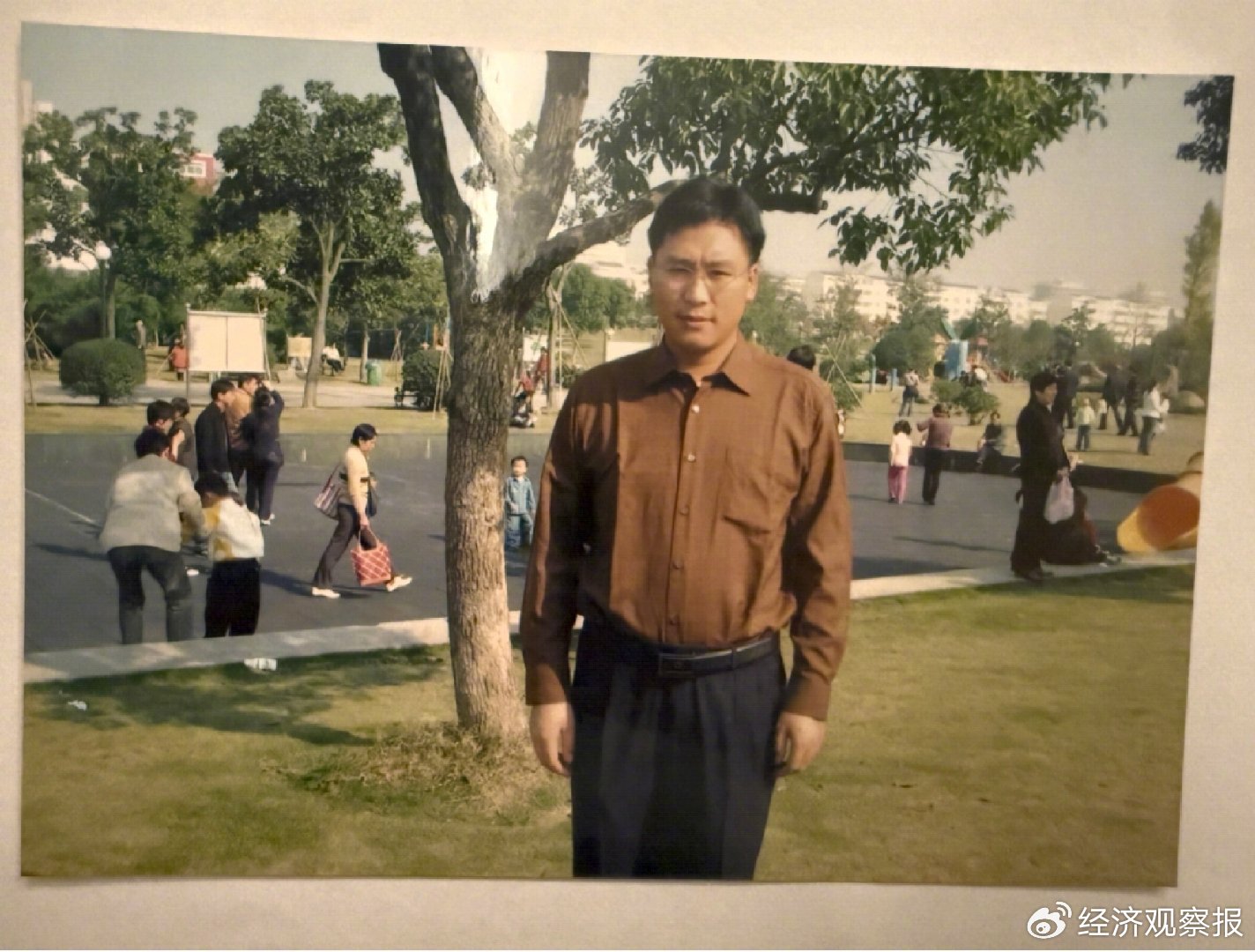
在鸟巢开过发布会的陈凯峰,决定不再做手机品牌
Jing Ji Guan Cha Wang· 2025-12-25 12:11
Core Viewpoint - The article chronicles the evolution of the Chinese mobile phone industry through the experiences of Chen Kaifeng, highlighting the transition from basic feature phones to smart devices and the strategic pivots made by companies like KuSai Intelligent in response to market changes [2][10][22]. Industry Evolution - In the late 1990s, mobile phones were luxury items in China, with high costs for both calls and devices, leading to a burgeoning electronic communication industry [2]. - By the early 2000s, domestic manufacturers primarily acted as intermediaries, lacking core technology and relying on foreign designs for assembly [3][4]. - The introduction of MediaTek's "Turnkey Solution" in 2005 significantly lowered the technical and financial barriers for manufacturers, allowing them to produce phones without extensive R&D [5]. Company Development - Chen Kaifeng founded his company in 2006, initially focusing on a unique product that catered to specific user needs, such as loudspeakers for construction workers and long battery life [6][7]. - The "shanzhai" (copycat) phones, while often viewed negatively, provided affordable access to mobile technology for lower-income consumers, contributing to the growth of the Shenzhen electronics industry [8][9]. - In 2009, the company shifted focus to branding, launching the "Koobee" brand, which initially thrived due to its understanding of the market [10][11]. Market Challenges - The smartphone market began to consolidate around major players like Xiaomi and OPPO, leading to increased competition and pressure on smaller brands [12][14][15]. - By 2017, the company faced significant challenges as the market became dominated by a few key brands, prompting a strategic pivot towards international markets and niche segments [15][21]. Strategic Shift - The company transitioned from a focus on branding to becoming an "invisible factory" for local brands in overseas markets, emphasizing customized solutions for specific regional needs [21][22]. - KuSai Intelligent began to explore specialized markets, such as rugged phones for industrial use, integrating advanced features like thermal imaging and laser measurement [18][19][20]. Future Outlook - The company is now leveraging its engineering capabilities to expand beyond mobile phones into other technology sectors, such as fitness equipment and robotics [24][25]. - Chen Kaifeng emphasizes the importance of surviving and thriving within the industry ecosystem rather than seeking fame, focusing on building a sustainable business model [26].
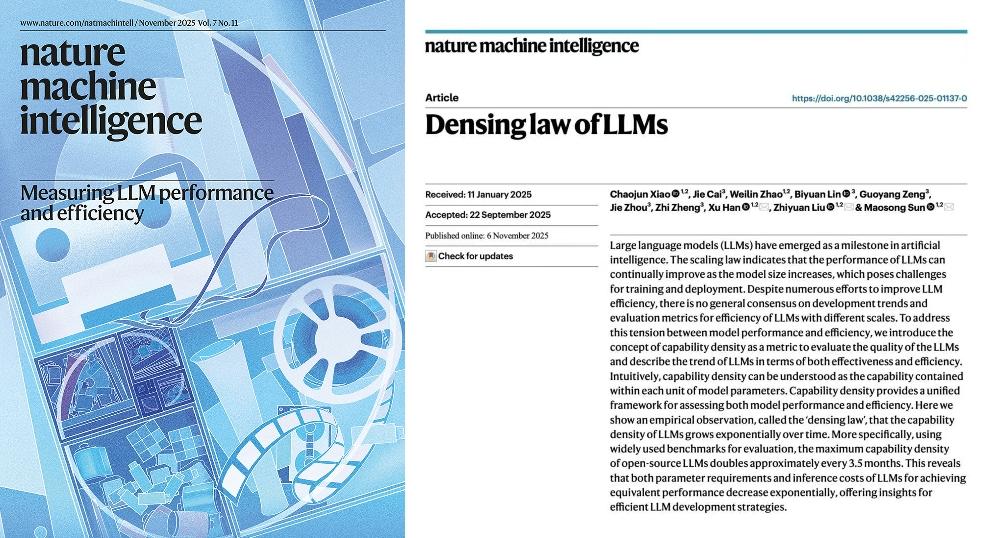
中国大模型团队登Nature封面,刘知远语出惊人:期待明年“用AI造AI”
3 6 Ke· 2025-12-25 01:24
Group 1 - The core principle of the article revolves around the evolution of AI and the emergence of the "Densing Law," which indicates that the capability density of large models doubles approximately every 3.5 months, significantly faster than Moore's Law [5][6][14] - The "Densing Law" suggests that advancements in AI will require less computational power to achieve equivalent performance, with costs potentially decreasing to one-tenth within a year [6][29] - The article highlights the need for a reverse revolution in the industry, where large models must leverage extreme algorithms and engineering to maximize capabilities on existing hardware [4][5] Group 2 - Chinese companies are positioned as key practitioners of this new path, with innovations such as DeepSeek V3 and MiniCPM series models demonstrating significant efficiency improvements [5][11] - The rapid iteration cycle of 3.5 months poses challenges for business models, as companies must recover costs quickly or risk being outpaced by competitors [6][29] - The article emphasizes the importance of efficiency in AI development, particularly in the context of China's limited computational resources, and the necessity for technological innovation to bypass existing limitations [11][12] Group 3 - The article discusses the relationship between the "Scaling Law" and the "Densing Law," suggesting that both are essential for the advancement of AI, with the former focusing on model size and the latter on efficiency [16][17] - Innovations in model architecture, such as the fine-grained mixture of experts (MoE) and sparse attention mechanisms, are highlighted as key developments that enhance computational efficiency [20][21] - The future of AI is envisioned as a collaborative effort between humans and machines, with the potential for AI to autonomously create and improve itself, marking a significant shift in production paradigms [35][36]