
万华化学

Search documents
化工石化稳增长方案落地,行业有望加速优化升级
Changjiang Securities· 2025-09-28 14:25
Investment Rating - The report indicates a positive outlook for the chemical and petrochemical industry, with an emphasis on stable growth and structural optimization [4][7]. Core Insights - The Ministry of Industry and Information Technology, along with six other departments, issued a notice regarding the "Stabilization and Growth Work Plan for the Petrochemical and Chemical Industry (2025-2026)" aimed at promoting stable operation and structural optimization in the industry [4][7]. - The main goals for 2025 include an average annual growth of over 5% in the added value of the petrochemical and chemical industry, stabilization of economic benefits, significant enhancement of technological innovation capabilities, and continuous improvement in quality development [9]. - The plan emphasizes the importance of technological innovation, pollution reduction, and high-quality development, with an upward adjustment in growth expectations compared to previous plans [9]. Supply Side Summary - The report outlines measures to enhance high-end supply, effectively constrain traditional new projects, and optimize the structure of existing capacity [9]. - Key initiatives include supporting the development of critical products in electronic chemicals, high-end polyolefins, and special rubber, while preventing irrational capacity expansion in traditional sectors [9]. - The report also highlights the need for a comprehensive upgrade of outdated facilities and the implementation of a standard system for evaluating and transforming these facilities [9]. Demand Side Summary - The report suggests exploring new application scenarios and expanding international cooperation to stimulate market demand [9]. - It emphasizes the importance of developing materials for new energy, low-altitude economy, and humanoid robots, as well as promoting the application of green ammonia and green alcohol in marine fuel markets [9]. - The report advocates for deeper participation in high-quality Belt and Road initiatives and the development of overseas resources [9]. Industry Outlook - The report concludes that the petrochemical and chemical industry is expected to gradually improve, with a more orderly new supply and more efficient existing supply [9]. - It recommends focusing on sub-industries that are at the bottom of the economic cycle, such as organic silicon, polyester filament, glyphosate, and industrial silicon [9]. - Additionally, it suggests paying attention to industries that are at very low levels or undergoing clearance, such as soda ash, and highlights leading companies in the refrigerant industry and major players in the refining and coal chemical sectors [9].
化工周报:石化化工稳增长政策出台,粘胶长丝景气向上可期,草铵膦格局有望优化-20250928


Shenwan Hongyuan Securities· 2025-09-28 13:55
Investment Rating - The report maintains a "Positive" rating for the chemical industry [5][6][20] Core Insights - The petrochemical industry is expected to see stable growth due to the introduction of policies aimed at enhancing industry health and eliminating outdated capacity [5][6] - The demand for viscose filament is anticipated to tighten, leading to an upward trend in prices, while the grass herbicide market is expected to optimize its structure [5][6] - The global GDP growth is projected to remain at 2.8%, with stable oil demand despite some slowdown due to tariff policies [5][6] Industry Dynamics - Oil supply is expected to increase significantly, driven by non-OPEC production, while demand remains stable [5][6] - The coal market is anticipated to experience long-term price stabilization, with easing pressures on downstream sectors [5][6] - Natural gas exports from the U.S. are likely to accelerate, potentially lowering import costs [5][6] Chemical Sector Analysis - The report highlights that the viscose filament industry will see a supply-demand tightening, with a projected increase in operating rates from 84% to over 95% [5][6] - The grass herbicide market is set to address issues of low pricing and quality through upcoming industry meetings aimed at regulating competition [5][6] Investment Recommendations - The report suggests focusing on sectors benefiting from the "anti-involution" policy, including textiles, agriculture, and export-related chemicals [5][6] - Specific companies to watch include Xinxiang Chemical Fiber, Jilin Chemical Fiber, and Lier Chemical, which are expected to benefit from market dynamics [5][6][20] Key Company Valuations - The report provides a valuation table for key companies, indicating various ratings such as "Buy" and "Increase" for companies like Hailir Chemical, Yunnan Chemical, and Wanhu Chemical [20]
南华期货丙烯2025年四季度展望:供需压力仍存,宏观扰动加大
Nan Hua Qi Huo· 2025-09-28 12:55
Group 1: Report Industry Investment Rating - Not provided in the content Group 2: Core Views of the Report - Since the listing of propylene on July 22, its price has been oscillating downward, affected by the "Anti-Involution" policy and device maintenance. In Q4, key aspects to focus on include the industrial chain's commissioning progress, the impact of PDH profit on operation, the PP market's performance, the influence of the "Anti-Involution" policy, and potential delivery issues [1]. - The Q4 price range of propylene is estimated to be between 6,000 - 6,700 yuan/ton. Recommended strategies are range trading for the single - side, backwardation for the inter - month, and range trading for the PP - PL spread. Also, consider buying MA and shorting PL based on Iran's gas restrictions [2]. Group 3: Summary by Related Catalogs Chapter 2: Market Review - Since July 22, the main contract price of propylene has oscillated downward from a high of 6,694 yuan/ton to a low of 6,354 yuan/ton, influenced by the "Anti - Involution" policy and device fluctuations [2]. - The "Anti - Involution" policy, which involves assessing old petrochemical devices, mainly affects market expectations and sentiment, increasing price volatility [3]. - Device fluctuations in the Shandong market, such as Zhenhua's device malfunctions and adjustments by Jineng and Yulong based on the propylene - polypropylene spread, can cause significant price changes [3]. - The propylene basis has been expanding. The spot market is more sensitive to supply - demand changes, while the 01 contract is under pressure due to potential delivery issues and the influence of the PP market [5]. - The 01 - 02 month spread of propylene has been oscillating in the range of - 100 yuan/ton to 0 yuan/ton, with a tendency towards backwardation due to the 01 contract being a mandatory delivery month [7]. - The propylene - polypropylene spread showed a V - shaped pattern in Q3, currently at a yearly low [9]. Chapter 3: Core Focus Points 3.1 Focus on the Industrial Chain Commissioning Rhythm - From January to September, 808 million tons of propylene and 565 million tons of polypropylene (415 million tons of pellets and 150 million tons of powder) were commissioned, mostly as supporting capacities. The impact on the supply - demand gap by the end of the year depends on different commissioning scenarios [11]. - In the Shandong market, the supply - demand situation is more important. As of now, it is looser than in 2024. By the end of the year, different commissioning plans will lead to different supply - demand gaps [11]. 3.2 PDH Profit Remains Crucial - PDH and refinery catalytic cracking have a significant impact on the propylene trading market. In Q4, profit will remain a key factor. With propane in the seasonal peak, PDH is currently at a loss, and some factories plan maintenance. PP overcapacity also adds pressure [15][17]. 3.3 PP Operation Still Needs Key Attention - The price of the propylene main contract is highly correlated with the PP futures price. PP accounts for about 70% of propylene demand. In Q4, key aspects to focus on include supply - side profit - related operation fluctuations, demand - side performance during the peak season, the PP - propylene spread, and the impact of macro - policies [19]. 3.4 Continuous Tracking of the "Anti - Involution" Policy - The "Anti - Involution" policy has increased market volatility since June, and its impact will be greater in Q4. The assessment of old devices is more for technological improvement, with a relatively small impact on the actual supply - demand pattern. The coal market may affect market sentiment. The reduction of South Korea's cracking capacity will reduce imports to China, but domestic production can make up for it [24]. 3.5 Potential Delivery Issues - Propylene has high storage and transportation requirements. The current exchange settings have designated delivery areas and depots, with a 100 - yuan/ton discount for South China's depots. There may be delivery problems in South China, and the discount may not cover the friction costs [26]. Chapter 4: Valuation Feedback and Supply - Demand Outlook 3.1 Valuation Feedback - PDH cost provides support. In Q4, propane prices are relatively strong, and the 01 PDH cost is about 6,400 yuan/ton, with a neutral valuation [27]. - The PP - PL spread is oscillating at a low level. Historically, the spread is mostly between 400 - 800 yuan/ton, currently around 500 yuan/ton, with a neutral short - term outlook [31]. - The olefin/methanol ratio is expected to decline in Q4 due to potential gas restrictions in Iran affecting methanol supply [33]. 3.2 Supply - Demand Outlook - From January to August, domestic propylene production was 394.4 million tons, a 13.21% year - on - year increase. In Q4, production is expected to remain high under high commissioning, and PDH profit is crucial for external supply [35][36]. - PP is expected to maintain high production in Q4, supporting propylene demand but with limited upward price space. Other downstream industries are also affected by profit and need continuous profit tracking [41]. - The Shandong market is more important for supply - demand balance. In Q4, key aspects to focus on include supply - side PDH profit and propylene - polypropylene spread, and demand - side new project commissioning and the operation of main downstream industries [42][43].
南华期货丙烯产业周报:随PP波动,关注PP上方空间-20250928
Nan Hua Qi Huo· 2025-09-28 12:39
1. Report Industry Investment Rating No information provided in the content. 2. Core Viewpoints of the Report - The current core contradictions affecting the propylene market include the possible repeated submission of "anti - involution", the vulnerability of spot prices to individual device fluctuations, and the insufficient demand of major downstream PP, which leads to a contraction in the price difference between PP and propylene and a lack of ability to accept high - priced propylene. The PL01 contract is expected to oscillate between 6200 - 6600 yuan/ton. The propylene trend is highly correlated with polypropylene, and the PP - PL spread oscillates between 490 - 540 yuan/ton. Recently, as PP maintenance increases, its valuation is repaired, and propylene follows the upward trend [1]. - In the short - term, the spot price is relatively stable, and the futures price rebounds slightly. The previous expectation of a narrowing basis has basically been fulfilled. The basis has shrunk from a high of 190 to - 15 yuan/ton. Considering the characteristics of the 01 contract, the month - spread strategy is to conduct reverse arbitrage at high prices, and the hedging and arbitrage strategy is to widen the PP - PL spread at low prices [15][17]. - In the long - term, there are expectations of new capacity coming on stream on the supply side, and the growth rate of PP terminal demand is lower than that of supply, leading to inventory accumulation [8]. 3. Summary by Relevant Catalogs 3.1 Core Contradictions and Strategy Recommendations 3.1.1 Core Contradictions - "Anti - involution" may be repeatedly submitted, affecting market expectations [1]. - Spot prices are easily affected by individual device fluctuations. With the restart and increased load of some devices in the Shandong region, the supply - demand gap in the spot market has widened [1]. - The main downstream PP has sufficient supply but insufficient demand. The price difference between PP and propylene has significantly shrunk, and most downstream industries have poor profit conditions and resist high - priced propylene [1]. 3.1.2 Trading Strategy Recommendations - **Market Positioning**: The market is in an oscillatory state, and the price range of PL01 is 6200 - 6600 yuan/ton. For the unilateral strategy, those who went long at around 6300 can still hold their positions [15]. - **Basis Strategy**: The basis is in an oscillatory state. The previous expectation of a narrowing basis has basically been fulfilled, and currently, the spot is stable in the short - term, and the futures price rebounds slightly [15]. - **Month - Spread Strategy**: Conduct reverse arbitrage at high prices. Considering that 01 is a forced cancellation month, the direction is still to conduct reverse arbitrage at high prices [16][17]. - **Hedging and Arbitrage Strategy**: Widen the PP - PL spread at low prices. When the PP - PL spread is around 500, add positions [17]. 3.1.3 Industrial Customer Operation Recommendations - **Price Range Forecast**: The predicted price range of propylene is 6250 - 6600 yuan/ton, with a current volatility of 0.0513 and a historical percentage of 0.102 (3 - year) [19]. - **Hedging Strategy**: For inventory management, when the finished product inventory is high, short - sell propylene futures at high prices and sell call options to lock in profits and reduce costs. For procurement management, when the procurement inventory is low, buy propylene futures at low prices and sell put options to lock in procurement costs and reduce costs [19]. 3.2 This Week's Important Information and Next Week's Events to Watch 3.2.1 This Week's Important Information - **Positive Information**: On the crude oil side, sanctions and disputes around Russia drive the market up. On the industrial side, as PP maintenance increases this week, its valuation is repaired, driving propylene up. Additionally, as PDH profits are compressed, planned maintenance increases [20]. - **Negative Information**: This week's data on the number of Americans applying for unemployment benefits and the second - quarter GDP are better than expected, increasing the probability of a pause in interest rate cuts in October [21]. 3.2.2 Next Week's Events to Watch - On September 30th, China's official manufacturing PMI will be released [23]. - On October 1st, the US September ISM manufacturing data is expected to be 49.2, higher than the previous value of 48.7 [23]. - On October 3rd, economic data such as the US unemployment rate and non - farm payrolls will be released [23]. 3.3 Disk Interpretation 3.3.1 Price, Volume, and Capital Interpretation - **Unilateral Trend and Capital Movement**: This week, the PL01 contract first declined and then rebounded. The trading volume did not change much. The net long positions of the main profitable seats decreased, the positions in the top - ten long and short lists did not change significantly, the net short positions of profitable seats decreased slightly, foreign investors' net short positions increased slightly, and retail investors' net long positions increased slightly [24]. - **Technical Analysis**: From the daily line, propylene is in a rebound during an oscillatory decline, and the short - term upper pressure is still near the middle track. From the hourly line, the Bollinger Bands are narrowing, indicating a possible transition to oscillatory consolidation in the short - term [24]. - **Basis and Month - Spread Structure**: This week, the basis of propylene 01 closed at - 15 yuan/ton, compared with - 67 yuan/ton last week. The 01 - 02 month - spread of propylene closed at - 34 yuan/ton, up 12 yuan/ton from last week, showing an overall reverse arbitrage trend but with oscillations [27]. 3.4 Valuation and Profit Analysis 3.4.1 Upstream Profits This week, the gross profit of major refineries was 823.98 yuan/ton (- 98.7), and that of Shandong local refineries was 204.72 yuan/ton (- 73.48). Although the profits of major refineries increased, the cracking capacity utilization rate decreased slightly, mainly affected by the new cracking capacity of Yulong [30]. 3.4.2 Mid - stream Profits - The cracking profit of Asian naphtha was - 56 US dollars/ton (- 27), and that of Asian propane was - 14 US dollars/ton (- 12). Propane cracking profit was better than naphtha cracking profit, but as the propane price strengthened, propane cracking profit weakened [32]. - The PDH profit based on FEI cost was - 215 yuan/ton (- 65), and that based on CP cost was - 170 yuan/ton (- 175). Currently, both the propylene monomer and PP sectors are in a loss - making state [32]. 3.4.3 Downstream Profits - The price difference between PP raffia and propylene was 225 yuan/ton (+ 160), and that between PP powder and propylene was 255 yuan/ton (+ 130). The pressure caused by the price difference still exists [34]. - The profit of propylene oxide (PO) by different methods showed different trends. The profit of acrylonitrile was - 1191 yuan/ton (+ 6), with little change. The profit of acrylic acid was + 391 yuan/ton (+ 214), with a significant improvement. The profit of butanol was + 147 yuan/ton (+ 84), with little change. The profit of octanol was 264 yuan/ton (- 84), with a relatively large decline recently but still in a relatively good profit state among downstream products. The profit of phenol - acetone was - 371 yuan/ton (- 87), with little change [36]. 3.4.4 Import and Export Profit Tracking The price difference between Chinese and South Korean propylene has shown little recent fluctuation. With fewer planned maintenance activities in South Korea in September and October, imports are expected to remain at a high level [41]. 3.5 Supply, Demand, and Inventory Projection 3.5.1 Supply - Demand Balance Sheet Projection in the Shandong Market This week, both supply and demand in the Shandong market increased. In October, Binhuahua and Lihuayi have maintenance plans, and the supply - demand gap will oscillate [43]. 3.5.2 Market Supply - Side and Projection - This week, due to the resumption of production by some enterprises, the overall operating rate of propylene increased to 75.52% (+ 1.67%), still at a high level. In October, Jilin Petrochemical, Guangxi Petrochemical, and Yulong Petrochemical still have plans for production start - up and capacity increase, while on the PDH side, Bohua, Binhuahua, Haiwei, Lihuayi, etc. have maintenance plans [46]. - This week's supply increase mainly comes from the increased load of Wanhua Penglai. The production volume in the Shandong region is expected to oscillate in the next few weeks. Although Zhenhua is restarting, Jinneng's maintenance is postponed, and the maintenance plans of Binhuahua and Lihuayi are expected to offset some of the incremental supply [48]. 3.5.3 Demand - Side and Projection - The price difference between PP powder and propylene is still relatively low, and many devices are shut down. This week, Shandong Kairi resumed production at a low - load operation [54]. - In the Shandong region, demand increased this week, mainly due to the resumption of production of PP devices. There were different production - related changes in various downstream industries such as PP granules, PP powder, propylene oxide, acrylonitrile, acrylic acid, butanol - octanol, and phenol - acetone [73].
中泰期货烧碱周报:液氯价格未能如预期下跌,烧碱期货价格承压下行-20250928
Zhong Tai Qi Huo· 2025-09-28 11:58
Report Industry Investment Rating - Not provided in the content Core Viewpoints - This week, the caustic soda futures showed a significant downward trend, with short - sellers actively increasing positions to push down the futures price, and there were stop - loss phenomena among long - sellers. The main reasons include weak spot prices, the non - decline of liquid chlorine prices contrary to expectations, and the continuous decline of alumina spot and futures prices. In the later stage, the caustic soda futures may be supported by the liquid chlorine price, especially during the National Day holiday. Therefore, the caustic soda futures should be treated with a volatile mindset [5]. Summary by Directory 01 Overview - **Supply**: In the period from September 19 - 25, 2025, the average capacity utilization rate of Chinese caustic soda sample enterprises with a capacity of 200,000 tons and above was 82.5%, a 0.6% week - on - week increase. Northwest had new device production cuts and maintenance, while North China and East China had increased loads after device maintenance. Next week, except for the Southwest region, other six regions are expected to increase their loads, with an estimated capacity utilization rate of about 85.9% and a weekly output of about 845,700 tons [5]. - **Demand - Alumina**: China's alumina production was 1.855 million tons, a decline from last week's 1.861 million tons. Shandong's alumina production remained flat at 626,000 tons. The liquid caustic soda purchase price of large - scale alumina factories in Shandong dropped to 740 yuan/ton, with a 100% converted price of 2,313 yuan/ton. Alumina prices and production profits declined recently [5]. - **Demand - Viscose Staple Fiber**: China's viscose staple fiber production was 90,000 tons, a 30 - ton increase from last week. As of September 25, 2025, the total daily output of 20 domestic viscose staple fiber enterprises was around 12,960 tons. The physical inventory of domestic viscose staple fiber factories was 128,200 tons, a 50 - ton decrease from the previous period and a 32,000 - ton increase compared to the same period last year, a year - on - year increase of 33.26%. The downstream demand for viscose staple fiber was weak [5]. - **Demand - Printing and Dyeing**: As of September 25, 2025, the comprehensive startup rate in the Jiangsu and Zhejiang regions was 66.15%, a 0.4% increase from the previous period. The average startup rate of printing and dyeing enterprises in Zhejiang was 66.25%, remaining flat compared to the previous data and a 1.25% increase year - on - year. The overall startup rate of dyeing factories in Zhejiang remained stable, with orders featuring "short, frequent, and fast" characteristics. Most dyeing factories planned to have a 2 - 3 - day holiday during the National Day [5]. - **Export**: In August, the export volume of liquid caustic soda was 213,500 tons, and the export volume of flake caustic soda was 66,800 tons [5]. - **Inventory**: As of September 25, 2025, the factory inventory of fixed liquid caustic soda sample enterprises with a capacity of 200,000 tons and above in China was 391,200 tons (wet tons), a 3.4% week - on - week increase and a 26.26% year - on - year increase. The storage capacity ratio of domestic liquid caustic soda sample enterprises was 20.78%, a 0.64% week - on - week increase [5]. - **Profit**: This Friday, the average price of Shandong liquid caustic soda was 2,500 yuan/ton, the average price of liquid chlorine was - 100 yuan/ton, and the chlor - alkali profit was 306 yuan/ton, at a historically low level. The decline in liquid caustic soda prices compressed the comprehensive chlor - alkali profit [5]. - **Strategy**: Adopt a volatile mindset for single - side trading; no strategy for arbitrage and options [5]. 02 Price - The report presents price trends of Shandong chlor - alkali spot, flake caustic soda, export caustic soda, caustic soda futures, basis, inter - month spreads, raw salt, and coal, with data sources from Mysteel and compiled by Zhongtai Futures [7][10][13][16] 03 Supply - **Caustic Soda Supply**: Data on China's weekly caustic soda production, caustic soda startup rate, caustic soda device loss volume, and cumulative caustic soda production are provided, with data sources from Mysteel and compiled by Zhongtai Futures [20][21] - **Caustic Soda Inventory and Chlor - Alkali Profit**: Information on the liquid caustic soda inventory of Chinese sample enterprises, caustic soda futures warehouse receipts, and Shandong chlor - alkali enterprise profits is presented, with data sources from Mysteel and compiled by Zhongtai Futures [23][24] - **Chlor - Alkali Device Maintenance Plan**: This week, many chlor - alkali devices have resumed operation after maintenance, and there are also some devices under maintenance. In the future, multiple enterprises have maintenance plans, including specific time and capacity information [26] 04 Demand - **Alumina Industry**: Data on China's alumina production, Shandong's alumina production, alumina profit, Shandong alumina enterprises' liquid caustic soda purchase price, and alumina inventory are provided, with data sources from Mysteel and compiled by Zhongtai Futures [29][30][31][32] - **Textile Industry**: Information on viscose staple fiber capacity utilization rate, market price, factory inventory, inventory available days of viscose staple fiber in Chinese rayon yarn enterprises, textile enterprise weekly startup rate, order days, in - factory finished product inventory available days, and Jiangsu and Zhejiang region printing and dyeing factory startup rate is presented, with data sources from Mysteel and compiled by Zhongtai Futures [34][35][37][38] - **Pulp and Paper Industry**: Data on pulp production, paper product production, and the inventory available days of paper products in upstream factories are provided, with data sources from Mysteel and compiled by Zhongtai Futures [39][40] - **Export**: Data on China's monthly export volume of liquid caustic soda, flake caustic soda, cumulative export volume of caustic soda, and monthly export volume of caustic soda are presented, with data sources from Mysteel and compiled by Zhongtai Futures [41][42]
长江大宗2025年10月金股推荐
Changjiang Securities· 2025-09-28 10:12
Group 1: Metal Sector - Zijin Mining's net profit forecast for 2025 is 475 million CNY, with a PE ratio of 15.46[12] - Luoyang Molybdenum's net profit forecast for 2025 is 168.65 million CNY, with a PE ratio of 17.35[12] - The copper production of Zijin Mining is expected to increase by 7% to 115,000 tons in 2025[20] Group 2: Chemical Sector - Wanhua Chemical's net profit forecast for 2025 is 141.75 million CNY, with a PE ratio of 0.00[12] - Longbai Group's net profit forecast for 2025 is 23.01 million CNY, with a PE ratio of 19.75[12] - The MDI market is expected to improve as supply and demand conditions stabilize[48] Group 3: Transportation Sector - China Merchants Highway's net profit forecast for 2025 is 55.01 million CNY, with a PE ratio of 12.10[12] - Haitong Development's net profit forecast for 2025 is 4.43 million CNY, with a PE ratio of 18.87[12] Group 4: Construction Sector - Sichuan Road and Bridge's net profit forecast for 2025 is 82.86 million CNY, with a PE ratio of 8.79[12] - Honglu Steel Structure's net profit forecast for 2025 is 7.96 million CNY, with a PE ratio of 15.35[12]




《石化化工行业稳增长工作方案(2025-2026年)》印发,草铵膦、锦纶行业反内卷有序推进
KAIYUAN SECURITIES· 2025-09-28 00:26
Investment Rating - The investment rating for the basic chemical industry is "Positive" (maintained) [1] Core Views - The industry is experiencing a tightening supply-demand situation, particularly in the areas of glyphosate and nylon, which is expected to support an upward trend in industry prosperity [4][20] - The chemical industry index has underperformed the CSI 300 index by 2.02% this week, indicating a challenging market environment [15][17] Summary by Sections Industry Trends - The chemical industry index reported a decline of 0.95% this week, while the CSI 300 index increased by 1.07% [15] - The China Chemical Product Price Index (CCPI) decreased by 0.18%, indicating a slight contraction in chemical product prices [15][17] Key Products and Developments - Glyphosate: The average market price for 95% glyphosate raw powder is stable at 44,500 CNY/ton as of September 25, with a cautious pricing strategy from suppliers [21][22] - Nylon: The China Chemical Fiber Industry Association has initiated a high-quality development initiative to address issues of insufficient demand and rising inventory in the nylon sector [25][26] Recommendations and Beneficiaries - Recommended stocks include leading companies in the chemical sector such as Wanhua Chemical, Hualu Hengsheng, and Hengli Petrochemical [6] - Beneficiary stocks in the glyphosate sector include Lier Chemical and Yunnan Yuntianhua [22][28] Market Performance - In the past week, 33.58% of the 545 stocks in the chemical sector experienced price increases, while 63.49% saw declines [15] - The top ten products with price increases included liquid chlorine and paraquat, while vitamin E and sulfur saw the largest declines [16] Supply Chain Insights - The supply of glyphosate is stable, with domestic factories operating well, although some smaller factories remain offline [21] - The nylon industry is encouraged to limit production to prevent "involution" competition and to focus on product differentiation and green development [25][26] Export and Demand Trends - In August 2025, the export value of domestic clothing and accessories increased by 1.4% year-on-year, indicating potential growth in demand for chemical fibers [30] - The market for polyester filament has seen increased shipments ahead of the holiday season, with inventory days decreasing [31] Price Trends - The average price for polyester filament POY is 6,610 CNY/ton, showing a slight decrease from the previous week [31] - The price of urea has shown a downward trend, with an average market price of 1,651 CNY/ton as of September 25 [42]



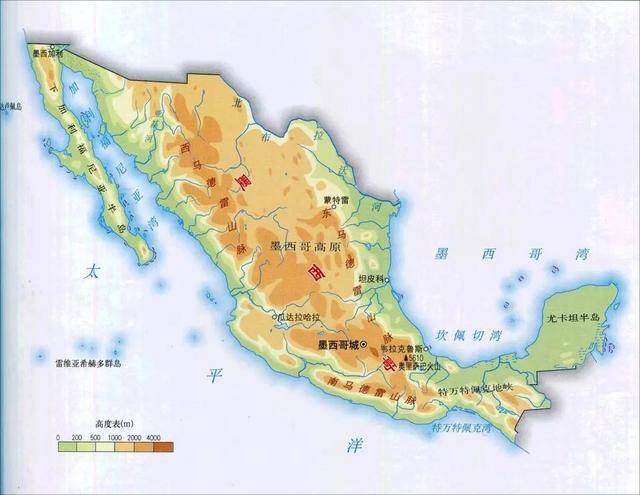
1.3亿人口的墨西哥,GDP达1.85万亿美元,山东1亿人口是多少?
Sou Hu Cai Jing· 2025-09-26 14:20
Group 1 - The economic comparison between Shandong and Mexico reveals that Shandong's GDP for 2024 is approximately 1.4 trillion USD, while Mexico's GDP is 1.85 trillion USD, highlighting a significant economic scale difference [4][6] - Mexico's economic growth is heavily influenced by its geographical proximity to the United States and the benefits from the USMCA agreement, leading to a booming automotive industry with an annual output value exceeding 110 billion USD by mid-2025 [10][12] - Shandong boasts a comprehensive industrial structure, being the only province in China with all 41 industrial categories, and is experiencing growth in various sectors, including hydrogen energy and new display industries [16][20] Group 2 - Foreign direct investment in Mexico is predominantly directed towards the automotive sector, which accounts for 60% of such investments, indicating a reliance on a single industry for economic growth [22] - Shandong's economy is characterized by a diversified industrial base, with significant contributions from agriculture and logistics, positioning it as a robust economic engine [29] - The demographic challenges in Shandong, including an aging population and talent outflow, pose risks to its economic sustainability, while Mexico faces infrastructure and social security issues that could hinder its growth [31][38] Group 3 - As of mid-2025, Shandong's economic growth rate is 5.6%, outpacing Mexico's 3.2%, suggesting a stronger momentum in Shandong's economy [34] - Both regions have similar per capita GDP levels around 14,000 USD, indicating comparable living standards, but the integration of Chinese automotive companies in Mexico reflects a deepening economic interconnection [36] - The ultimate measure of success for both economies will depend on their ability to address core challenges: Mexico must improve infrastructure and diversify its economy, while Shandong needs to foster innovation and retain young talent [40][42]

国内产业链的一体化、规模化、集约化提升带来的比较优势基本确立,石化ETF(159731)受益于政策发展
Mei Ri Jing Ji Xin Wen· 2025-09-26 11:08
Core Viewpoint - The A-share market indices opened lower but turned positive, with the China Securities Petrochemical Industry Index rebounding, indicating a potential recovery in the petrochemical sector [1] Group 1: Market Performance - The China Securities Petrochemical Industry Index rose approximately 0.4%, with leading stocks including Wanhua Chemical, Yara International, Rongsheng Petrochemical, and Yangnong Chemical [1] - The Petrochemical ETF (159731) followed the upward trend of the index [1] Group 2: Industry Outlook - Tianfeng Securities believes that the integration, scaling, and intensification of domestic industrial chains have established comparative advantages in the medium to long term [1] - The economic development in ASEAN and Africa may lead to a rapid increase in demand for chemicals, while traditional refining centers in the US, EU, Japan, and South Korea are gradually exiting or pausing expansion in the petrochemical industry [1] - Domestic consumption appears to have emerged from a low point, with factors driving chemical product demand and export growth expected to remain strong despite short-term tariff disturbances [1] Group 3: Sector Composition - According to the Shenwan secondary industry classification, the top three sectors in the China Securities Petrochemical Industry Index are refining and trading (27.12%), chemical products (23.87%), and agricultural chemicals (19.75%) [1] - These sectors are expected to benefit significantly from policies aimed at reducing competition, restructuring, and eliminating outdated production capacity [1]
POE胶膜概念涨0.75%,主力资金净流入12股
Zheng Quan Shi Bao Wang· 2025-09-26 09:40
Core Viewpoint - The POE film concept sector has shown a modest increase of 0.75%, ranking 7th among concept sectors, with notable performances from several stocks, including Donghua Technology, which hit the daily limit, and others like Ningbo Color Masterbatch and Rongsheng Petrochemical showing significant gains [1][2]. Group 1: Market Performance - The POE film concept sector saw 13 stocks rise, with Donghua Technology leading with a limit-up performance, followed by Ningbo Color Masterbatch and Rongsheng Petrochemical, which increased by 6.15% and 4.99% respectively [1]. - Conversely, stocks such as Lianhong Xinke, Lushan New Materials, and Tianyang New Materials experienced declines, with decreases of 3.93%, 2.52%, and 2.39% respectively [1]. Group 2: Capital Flow - The POE film concept sector attracted a net inflow of 118 million yuan from main funds, with 12 stocks receiving net inflows, and 6 stocks exceeding 10 million yuan in net inflow [2]. - Donghua Technology topped the list with a net inflow of 148 million yuan, followed by Ningbo Color Masterbatch, Jizhi Technology, and Wanhua Chemical, which saw net inflows of 24.11 million yuan, 23.97 million yuan, and 22.35 million yuan respectively [2][3]. Group 3: Capital Inflow Ratios - The leading stocks in terms of net inflow ratios were Donghua Technology, Jizhi Technology, and Ningbo Color Masterbatch, with net inflow rates of 22.55%, 10.81%, and 7.55% respectively [3].
