华创证券

Search documents
Riders on the Charts:每周大类资产配置图表精粹:【资产配置快评】2026年第8期-20260224
Huachuang Securities· 2026-02-24 07:15
Group 1: Market Trends - Significant style shift in overseas stock markets, particularly in the U.S., with value stocks outperforming growth stocks[5] - As of February 20, the value long/short hedge fund strategy index rose by 9.7%, while the growth long/short hedge fund strategy index fell by 1.6%, resulting in a performance gap exceeding 10%[7] - The equal-weighted S&P 500 index's monthly performance difference compared to the market-cap weighted S&P 500 index reached 3.4%, the highest level since 2010[16] Group 2: Risk and Returns - The equity risk premium (ERP) for the CSI 300 index was 4.2% as of February 13, which is one standard deviation below the 16-year average, indicating potential for valuation uplift[19] - The forward arbitrage return for China's 10-year government bonds was 29 basis points, 59 basis points higher than the level in December 2016[21] - The total return ratio of domestic stocks to bonds was 28.7 as of February 13, above the 16-year average, suggesting increased attractiveness of equity assets relative to fixed income[29] Group 3: Currency and Commodity Indicators - The copper-gold price ratio reached 2.5 as of February 20, indicating a convergence with the offshore RMB exchange rate of 6.9, suggesting alignment in signals from both indicators[27] - The 3-month USD/JPY basis swap was -16.8 basis points as of February 20, indicating increased offshore dollar financing pressure relief due to higher usage of the Fed's standing repo facility[24]
【债市观察】节前资金面平稳十债稳定运行在1.80%下方 海外市场动荡美债收益率下行逾10BP
Xin Hua Cai Jing· 2026-02-24 02:30
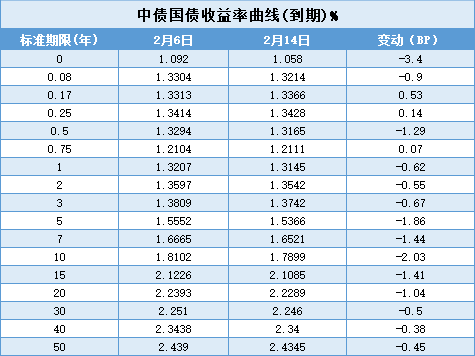
新华财经北京2月24日电回顾春节前最后一个交易周(2026年2月9日至2月14日),央行加大资金投放力度,货币政策报告也传递出支持 性态度,资金面保持平稳,机构持债过节意愿较强,收益率整体下行,10年期国债收益率跌破1.80%后一路下触至1.7675%方在止盈盘推 动下有所止步。海外市场长假期间风云涌动,地缘政治和关税不确定性阴霾推动避险资产走强。 节后公开市场将迎来单周超27000亿元资金到期,预计央行仍将综合运用买断式逆回购、MLF等政策工具,持续注入中期流动性。在重 要会议时点前后,债市季节性配置力度有望增加,机构对债市看法仍偏乐观。 行情回顾 2026年2月14日,中债国债到期收益率1年期、2年期、3年期、5年期、7年期、10年期、30年期、50年期较2月6日分别变 动-0.62BP、-0.55BP、-0.67BP、-1.86BP、-1.44BP、-2.03BP、-0.5BP、-0.45BP。 | | | 中债国债收益率曲线(到期)* | | | --- | --- | --- | --- | | 标准期限(年) | 2月6日 | 2月14日 | 变云(BP) | | 0 | 1.092 | 1.05 ...

科技亮点频出 资金流入格局不改 机构看好A股马年开局行情
Shang Hai Zheng Quan Bao· 2026-02-23 18:37
周恒 制图 □ 2012年至2025年,万得全A指数春节后20个交易日里上涨的概率达到75%。今年来看,A股在春节假 期后表现同样值得期待 □ 机构表示,央视2026年春晚科技感十足,人形机器人表现进步超预期,科技成为共识度较高的两大主 线之一,节后可关注机器人与AI技术应用板块 ◎记者 汪友若 马年A股的第一个交易日即将到来。春节长假期间,海外市场整体小幅反弹。美股止跌回升,大宗商品 表现强势,原油、黄金和铜价显著上涨。中国资产方面,富时中国A50指数期货上涨,港股主要指数震 荡整理。 光大证券则从日历效应角度分析,认为节后市场有望震荡上行。光大证券表示,从历史经验来看,受微 观流动性好转及投资者风险偏好抬升影响,A股市场在春节后的20个交易日里通常表现较好。2012年至 2025年,万得全A指数春节后20个交易日里上涨的概率达到75%。今年来看,A股在春节假期后表现同 样值得期待。除了日历效应之外,外围市场的上涨、国内产业端的催化等也将对行情产生积极影响。 "整体而言,资金流入和人心思涨的市场格局没有变化,节后春季行情有望延续。"中信证券在报告中提 示。该机构表示,配置型资金的流入趋势并未发生变化。中国人 ...

港股AI应用板块集体走强,Seedance 2.0引爆版权治理新需求,摩根大通斥资约7691万港元增持阜博集团
Jin Rong Jie· 2026-02-16 02:25
Group 1 - The AI application sector in Hong Kong saw active performance on February 16, with stocks like Fubo Group (03738.HK), Haizhi Technology Group (02706.HK), and Zhipu (02513.HK) showing significant strength due to multiple positive catalysts [1] - ByteDance's video generation model Seedance 2.0 has been integrated into the Doubao App, allowing users to generate 5 or 10-second videos through a prompt input, showcasing improvements in physical realism, consistency, and instruction comprehension [1] - Huachuang Securities reports that AI video generation is transitioning from entertainment to precise industrial production, with new models significantly reducing waste rates and overall production costs [1] Group 2 - The rise of Seedance 2.0 has introduced new challenges in copyright management, with concerns over unauthorized AI-generated movie clips and celebrity likenesses leading to disputes over portrait rights [2] - Fubo Group has launched the Vobile MAX™ platform for element-level rights management, capable of accurately identifying and tracking AI-generated content across the internet, aiding creators in monetizing their work [2] - Morgan Stanley increased its stake in Fubo Group by acquiring 14.92 million shares at an average price of HKD 5.1537, raising its holding from 4.57% to 5.15% [2] Group 3 - Zhipu recently released its next-generation flagship model GLM-5, achieving state-of-the-art performance in coding and agent capabilities [3] - Zhipu has withdrawn its previous guidance filing and is reapplying for registration, aiming to list on the Sci-Tech Innovation Board with new advisory firms [3]
投顾周刊:1月信贷投放实现“开门红”
Sou Hu Cai Jing· 2026-02-14 23:22
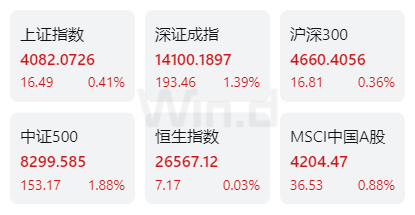
Group 1 - In January, social financing scale reached a record high of 7.22 trillion yuan, with M2 growing by 9% year-on-year, indicating strong support from a moderately loose monetary policy for the economy's stable start [1][5] - The anticipated visit of US President Trump to China in April is expected to ease bilateral trade tensions, potentially extending the "truce" in US-China trade relations and stabilizing global supply chains [1][5] - The launch of ByteDance's AI video model Seedance 2.0 has positively impacted the media sector, leading to a significant rebound in the net value of several media-themed funds [1][5] Group 2 - The bank wealth management market is showing strong capital attraction, with an expected recovery of 1 trillion yuan in February, driven by declining deposit rates and year-end bonuses [2][5] - The expansion of pension wealth management trials nationwide, with increased fundraising limits for institutions, provides a broader business space for wealth management companies and more stable pension growth tools for investors [2][5] - The Federal Reserve's February meeting minutes indicate a hawkish stance, with expectations for interest rate cuts being postponed, leading to a short-term strengthening of the US dollar [2][5] Group 3 - The "AI panic trading" in tech stocks has caused significant market fluctuations, with funds shifting from overvalued AI sectors to more stable cash flow assets, particularly in Chinese internet leaders and high-dividend stocks [3][5] - Global stock markets showed mixed performance before the Spring Festival, with the Shanghai Composite Index rising by 0.41% and the Nasdaq Index declining by 2.10% [4][5] Group 4 - The bond yield performance was mixed, with the 1-year Chinese government bond yield rising by 0.95 basis points to 1.32%, while the 10-year US Treasury yield fell by 18 basis points to 4.04% [8][11] - The overall performance of the Wande Fund Index was stable, with the Wande Stock Fund Index rising by 1.26% [9][10]
投顾周刊:1月信贷投放实现“开门红”
Wind万得· 2026-02-14 22:20
Group 1 - The core viewpoint of the article highlights the significant growth in credit issuance in January, with a record social financing scale of 7.22 trillion yuan, indicating strong support from a moderately loose monetary policy for the economy's stable start in 2026 [1][2] - The anticipated visit of U.S. President Trump to China in April is expected to ease bilateral trade tensions, potentially extending the "truce" in U.S.-China trade relations and providing stability to global supply chains [1][2] - The launch of ByteDance's AI video model Seedance 2.0 has positively impacted the media sector, leading to a notable recovery in the net value of several media-themed funds [1][2] Group 2 - The bank wealth management market is showing strong recovery, with an expected increase of 1 trillion yuan in February, driven by declining deposit rates and year-end bonuses [2] - The expansion of pension wealth management trials nationwide, with increased fundraising limits for institutions, is expected to provide investors with more robust pension growth tools [2] Group 3 - The Federal Reserve's meeting minutes indicate a hawkish stance, with expectations for interest rate cuts being pushed back, leading to a strengthening of the dollar index [4] - The "AI panic trading" in technology stocks has caused significant market fluctuations, with funds shifting towards value stocks, particularly in the Chinese internet sector and high-dividend assets [4] Group 4 - Global stock markets showed mixed performance, with the Chinese market indices such as the Shanghai Composite Index and Shenzhen Component Index experiencing slight increases, while U.S. indices faced declines [5][6] - The bond market showed varied performance, with the 1-year Chinese government bond yield rising slightly, while longer-term yields decreased [9][10] Group 5 - In the commodity market, gold and silver prices increased, while international oil prices continued to adjust downwards [12][13] - The dominance of fixed-income plus funds in the bank financing products indicates a strong market presence, with 477 such funds accounting for 56.79% of new products and 69.17% of total scale [14][15]

科磊财报业绩超预期但指引温和,股价波动反映市场分歧
Jing Ji Guan Cha Wang· 2026-02-13 21:37
Financial Performance - Company reported Q2 FY2026 results with revenue of $3.297 billion and adjusted EPS of $8.85, exceeding market expectations [1] - Guidance for Q3 indicates revenue between $3.35 billion with a fluctuation of $150 million and non-GAAP EPS of $9.08 with a fluctuation of $0.78, which was perceived as moderate growth, failing to meet high expectations for AI-driven growth [1] Stock Performance - As of February 11, 2026, stock price showed significant volatility, with a drop of 3.56% on February 4 and a rebound of 8.41% on February 6, reflecting market divergence on guidance [2] Institutional Perspectives - Citigroup and JPMorgan maintain positive ratings (such as "Buy" or "Overweight"), believing that demand for AI infrastructure and high bandwidth memory (HBM) will support long-term growth [3] - Huachuang Securities cautions that despite expected growth in the global wafer fab equipment market for 2026, fluctuations in equipment procurement pace may impact short-term performance [3] - Company’s revenue guidance indicates that approximately 27% of revenue will come from the China region, highlighting the importance of regional demand changes [3] Future Development - The semiconductor industry continues to see demand for advanced processes, HBM, and advanced packaging, with the company's investments in wafer foundry and memory sectors likely to be focal points for future events [4] - Company executives emphasized opportunities in AI-related infrastructure development as a driver for business growth [4]
德州仪器收购芯科实验室,股价波动,机构看好长期协同效应
Jing Ji Guan Cha Wang· 2026-02-13 21:31
Core Viewpoint - Texas Instruments announced a $7.5 billion all-cash acquisition of Silicon Labs, expected to be completed in the first half of 2027, aimed at enhancing its position in the IoT wireless connectivity sector and strengthening its presence in growth markets like industrial automation and automotive electronics [1] Stock Performance - Over the past week (February 8 to February 13, 2026), Texas Instruments' stock exhibited volatility, with a cumulative increase of 2.13% and a fluctuation range of 6.86%. As of February 13, the stock closed at $226.16, up 1.42% for the day, with trading volume decreasing to $1.098 billion, indicating a cautious market response to the acquisition news. Year-to-date, the stock has risen by 31.21%, reflecting a positive long-term trend [2] Financial Report Analysis - Texas Instruments reported Q4 2025 revenue of $4.423 billion, a 10% year-over-year increase, slightly below market expectations. However, the Q1 2026 revenue guidance midpoint (between $4.32 billion and $4.68 billion) exceeded analyst forecasts, marking the first quarter-over-quarter growth in 16 years. The data center business saw a 70% year-over-year increase, viewed as a positive signal for the recovery in analog chip demand, providing support for the recent stock price [3] Institutional Perspectives - Institutions generally hold a neutral to positive view on the acquisition. UBS noted on February 10, 2026, that the acquisition would help Texas Instruments expand into the IoT market, and the transaction size is relatively small, leading to optimism about long-term synergies. Huachuang Securities emphasized the strong growth in the data center business and the positive impact of the better-than-expected guidance in their report on January 30 [4]
——债基、货基2025Q4季报解读:\固收+\规模放量,偏好哪类债券?
Huachuang Securities· 2026-02-13 13:43
Report Industry Investment Rating No relevant information provided. Report's Core Viewpoints - In Q4 2025, the bond market showed a weak and volatile pattern. The performance of pure - bond funds improved overall. Short - term bond funds' scale recovered significantly under the dominant leveraged carry strategy, passive index bond funds' scale increased significantly due to institutional year - end volume - boosting, and hybrid secondary bond funds continued to expand rapidly due to the expected strong equity market. Bond funds adopted conservative strategies in terms of leverage and duration, focusing on coupon strategies and emphasizing the safety of credit assets. Money funds continued to grow in scale driven by both retail and institutional ends, with the 7 - day annualized average yield approaching 1% [189]. - Looking forward, the bond market pricing factors are favorable in February, but there is no new trend - setting factor. It is expected that the bond market will remain in a range - bound and slightly downward - fluctuating market. In March, insurance usually increases its entry, and from the end of March to early April, wealth management will continue to reserve assets for the second - quarter allocation, which may further catalyze the bond market. Attention should be paid to the potential concentrated redemptions of hybrid secondary bond funds due to increased equity market volatility. Also, it is possible to pay attention to the allocation market of 3 - 5 - year key - term credit bonds in Q1 2026 [192]. Summary According to the Table of Contents 1. 2025, What are the Bond - Allocation Preferences of "Fixed - Income +" Funds? - Growth Phases of "Fixed - Income +" Funds: "Fixed - Income +" funds experienced two rounds of growth from 2016 - 2025, with hybrid secondary bond funds being the main growth driver. From 2019 - 2021, due to the transformation of bank wealth management to net - value products under the new asset - management regulations, the scale of hybrid primary and secondary bond funds increased from 51.61 billion yuan and 26.18 billion yuan at the end of 2019 to 66.52 billion yuan and 101.26 billion yuan respectively. In the second half of 2025, driven by the "anti - involution" market and the expiration of large - scale fixed - deposits, the scale of hybrid primary and secondary bond funds increased from 74.80 billion yuan and 69.35 billion yuan at the end of 2024 to 83.70 billion yuan and 158.10 billion yuan respectively, with a total scale of 2.4 trillion yuan [14]. - Bond - Allocation Preferences: In terms of variety, the proportion of interest - rate bonds in pure - bond assets of hybrid bond funds increased significantly in 2025, and the proportion of convertible bonds decreased. As of Q4 2025, the top - held bonds of hybrid primary and secondary bond funds were interest - rate bonds, credit bonds, convertible bonds, and inter - bank certificates of deposit, accounting for 43.6%, 28.9%, 26.9%, and 0.7% respectively. In bond structure, interest - rate bonds were mainly policy - bank bonds, and credit bonds were mainly Tier 2 capital bonds. In terms of duration, Treasury bonds showed a dumbbell - shaped characteristic, local government bonds preferred maturities over 10 years, and the rest of the varieties were mainly medium - and short - term with maturities within 5 years. In terms of credit rating, industrial bonds and Tier 2 capital bonds were concentrated in high - grade bonds above AA +, and urban investment bonds focused on short - term credit risk - taking to explore coupon value [16][20][29]. 2. Q4 Bond Funds: Scale and Performance of Pure - Bond Funds Recovered, and "Fixed - Income +" Products Remained Highly Prosperous (1) Asset Scale: The Suppression of the Bond Market by the Rising Equity Market Eased, and the Bond Fund Scale Increased by 429.4 Billion Yuan - Overall Scale: In Q4 2025, the bond fund scale increased by 429.4 billion yuan quarter - on - quarter to 11.12 trillion yuan. The total number of bond funds was 3,993, accounting for 29.32% of all funds. The net issuance of bond funds in Q4 was 57, and the asset net value increased by 429.4 billion yuan to 11.12 trillion yuan. The total share increased by 180.6 billion shares [33]. - Scale by Type: The scale of medium - and long - term pure - bond funds continued to decline, with a year - on - year growth rate of - 2.63%. The scale of short - term pure - bond funds increased slightly, with a year - on - year growth rate of 7.34%. The scale of primary bond funds decreased, with a year - on - year growth rate of - 2.09%. The scale of secondary bond funds continued to expand significantly, with a year - on - year growth rate of 19.71%. The scale of passive index bond funds increased significantly, with a year - on - year growth rate of 17.62% [38][39][40]. (2) Subscription and Redemption: The Redemption Pressure of Pure - Bond Funds Eased, and the Subscription Sentiment of Secondary Bond Funds Remained High - Pure - Bond Funds: The redemption pressure of pure - bond funds eased in Q4 2025. The net subscription ratios of medium - and long - term pure - bond funds, short - term bond funds, and passive index bond funds increased by 6.96, 19.21, and 31.12 percentage points respectively to 34.09%, 39.09%, and 53.64% [54]. - Secondary Bond Funds: Benefiting from the high - level risk preference of the equity market and the allocation cost - effectiveness of stocks relative to bonds, the overall subscription sentiment of secondary bond funds was stronger than that of pure - bond funds. The net subscription ratio of secondary bond funds increased by 1.43 percentage points to 50.41%, and the median net subscription - redemption rate increased slightly to around 0.00% [55]. (3) Performance: The Return of Bond Funds Declined to 1.63%, and the Income of Pure - Bond Funds Improved Significantly - Overall Performance: In Q4 2025, the annualized return of bond funds decreased by 0.52 percentage points quarter - on - quarter to 1.63%. The performance ranking of pure - bond funds was medium - and long - term pure - bond funds (1.94%) > primary bond funds (1.83%) ≈ passive index bond funds (1.83%) > short - term pure - bond funds (1.70%) > secondary bond funds (0.43%) [59]. - Performance by Type: The yields of pure - bond funds changed from a sharp decline in Q3 to a narrow - range fluctuation, and the medium - and long - term pure - bond funds and passive index funds turned positive. The yields of "Fixed - Income +" funds decreased quarter - on - quarter due to the weakening and increased volatility of the equity market [59]. (4) Leverage Ratio: The Bond Market Sentiment was Cautious, and the Leverage Ratio Declined to 115.57% - Overall Leverage: In Q4 2025, the overall leverage ratio of bond funds decreased by 0.26 percentage points to around 115.57%. The weighted average leverage ratios of medium - and long - term pure - bond funds and passive index bond funds decreased slightly, while those of the rest of the bond funds increased slightly [64]. - Leverage by Type: The weighted average leverage ratio of medium - and long - term pure - bond funds was about 119.68%, a quarter - on - quarter decrease of 0.23 percentage points; that of short - term pure - bond funds was 111.95%, a quarter - on - quarter increase of 0.94 percentage points; that of primary bond funds was 117.21%, a quarter - on - quarter decrease of 3.45 percentage points; that of secondary bond funds was 111.58%, a quarter - on - quarter increase of 1.94 percentage points; and that of passive index bond funds was 107.28%, a quarter - on - quarter decrease of 2.16 percentage points [64]. (5) Weighted Average Duration of Top - Held Bonds: Concerns about the Supply - Demand Pattern of Ultra - Long - Term Bonds Increased, and the Duration Declined to 2.75 Years - Overall Duration: In Q4 2025, under multiple pressures such as tightened fund regulation, weakened expectations of monetary easing, and increased pressure on the supply - demand structure of ultra - long - term bonds, the weighted average duration of the top 5 held bonds of bond funds decreased by 0.17 years to 2.75 years [67]. - Duration by Type: The average durations of medium - and long - term pure - bond funds and passive index bond funds decreased, while those of the rest of the bond funds changed little. The average duration of medium - and long - term pure - bond funds decreased by 0.24 years to 2.56 years; that of short - term pure - bond funds increased by 0.04 years to 0.95 years; the weighted average duration of primary bond funds in hybrid bond funds increased by 0.06 years to 3.25 years; that of secondary bond funds remained unchanged at 3.90 years; and that of passive index bond funds decreased by 0.51 years to 3.18 years [67]. (6) Asset Allocation: The Bond Position Increased Significantly, and the Relative Proportion of Credit Bonds Rose - Asset Allocation by Type: In Q4 2025, bond funds mainly increased their holdings of bonds, with a total increase of 404.4 billion yuan. The proportion of bonds held by bond funds decreased by 0.64 percentage points to 94.24%, the proportion of stocks increased by 0.25 percentage points to 1.95%, the proportion of bank deposits increased by 0.28 percentage points to 1.31%, and the proportion of other assets increased by 0.11 percentage points to 2.50% [83]. - Bond - Category Asset Allocation: In Q4 2025, the bond - holding assets of bond funds increased by 404.4 billion yuan to 11.97 trillion yuan. The coupon strategy was better than the duration strategy, the proportion of credit bonds increased, and the proportion of interest - rate bonds decreased significantly. Bond funds increased their holdings of credit bonds by 516.4 billion yuan, with the proportion increasing by 2.57 percentage points to 54.02%, and decreased their holdings of interest - rate bonds, with the proportion decreasing by 2.69 percentage points to 39.58% [106]. - Credit Rating of Top - Held Bonds: Overall, the credit rating of urban investment bonds held by bond funds decreased moderately, while the high - grade nature of top - held industrial bonds remained unchanged. Marginally, in Q4, both urban investment bonds and industrial bonds showed an obvious trend of concentration towards AAA - grade bonds. By type, the risk preference of institutions decreased. Pure - bond funds increased their allocation to AAA - grade bonds while obtaining coupons through partial credit risk - taking. In the context of the high - level volatility of the equity market, urban investment bonds in hybrid secondary bond funds showed an obvious trend of concentration towards AA + - grade bonds [125][126]. 3. Q4 Money Funds: Some Broker - Affiliated Products were Liquidated, and the Scale Continued to Reach New Highs (1) Traditional Money Funds: The Scale of Money Funds Continued to Reach New Highs, and the Yield Declined to Approach 1% - Asset Scale: At the end of Q4 2025, the number of traditional money funds decreased by 6 to 352. The total scale of money funds increased by 344.7 billion yuan to 14.99 trillion yuan, a quarter - on - quarter increase of 2.35% [145]. - Subscription and Redemption: In Q4 2025, 47.56% of money funds had net subscriptions, a slightly lower proportion compared to Q3. Retail - oriented money funds maintained positive subscriptions, and institutional - oriented money funds' subscription willingness recovered [148][152]. - Performance: In Q4 2025, the 7 - day annualized average yield of money funds was 1.11%, which was at a historically low level. The 7 - day annualized yield of Yu'E Bao and WeChat Wealth Management decreased to around 1.0% [156]. - Leverage Ratio and Duration: In Q4 2025, the average leverage ratio of money funds increased by 1.26 percentage points to 106.48%, and the average remaining maturity increased by 4.02 days to 88.73 days [160]. - Deviation: In Q4 2025, the absolute - value average of the deviation of money funds was basically the same as that in Q3, and the number of money funds with a negative minimum deviation decreased by 37 to 116, indicating that the negative - deviation risk was relatively controllable [165]. - Asset Allocation: In Q4 2025, money funds mainly increased their holdings of bonds and bank deposits and decreased their holdings of repurchase agreements. In terms of bond - category asset allocation, money funds mainly increased their holdings of inter - bank certificates of deposit and policy - bank bonds [170][172]. (2) Floating - Net - Value Money Funds: The Scale Decreased Slightly, with an Increase in Bank Deposits and a Decrease in Bonds - Scale: At the end of Q4 2025, the scale of floating - net - value money funds decreased slightly. The total assets of 6 floating - net - value money funds were 18.479 billion yuan, a quarter - on - quarter decrease of 3.82% [177]. - Leverage and Duration: The average leverage ratio of floating - net - value money funds increased by 0.18 percentage points to 101.91%, which was lower than that of traditional money funds. The average remaining maturity increased to 55.17 days, still significantly lower than that of traditional money funds [178][179]. - Asset Allocation: In Q4 2025, floating - net - value money funds mainly decreased their holdings of bonds and increased their holdings of bank deposits. In terms of bond - category asset allocation, they mainly decreased their holdings of inter - bank certificates of deposit and increased their holdings of policy - bank bonds [179]. - Performance: In Q4 2025, the average annualized yield of floating - net - value money funds increased by 0.04 percentage points quarter - on - quarter to 1.27% [180]. 4. Main Conclusions: In Q4, Bond Funds Reduced Leverage and Shortened Duration, Focused on Coupon Strategies, and Emphasized Safety - In Q4 2025, the bond market showed a weak and volatile pattern. The performance of pure - bond funds improved overall, short - term bond funds' scale recovered significantly, passive index bond funds' scale increased due to institutional volume - boosting, and hybrid secondary bond funds continued to expand rapidly. Bond funds adopted conservative strategies in terms of leverage and duration, emphasizing coupon strategies and the safety of credit assets. Money funds continued to grow in scale driven by both retail and institutional ends, with the 7 - day annualized average yield approaching 1% [189]. - Looking forward, the bond market may continue to fluctuate in a narrow range in February. In March, the bond market may have further catalytic opportunities. Attention should be paid to the potential concentrated redemptions of hybrid secondary bond funds due to increased equity market volatility, and it is possible to pay attention to the allocation market of 3 - 5 - year key - term credit bonds in Q1 2026 [192].
视频大模型概念强势收官
第一财经· 2026-02-13 12:16
Core Viewpoint - The AI industry is experiencing a surge in activity with major companies like ByteDance, Alibaba, and others releasing flagship models, indicating a competitive landscape and potential investment opportunities in AI applications and related sectors [3][6]. Group 1: Industry Performance - On the last trading day before the Year of the Snake, the film and media, as well as semiconductor equipment sectors, saw significant gains, with the Seedance video model index rising against the trend [4]. - Companies such as iReader Technology and Light Media reached their daily limit up, while semiconductor stocks like Deep Technology and North Huachuang also surged [4]. - In the Hong Kong market, AI leaders MiniMax and Zhiyu both saw their market values exceed HKD 200 billion [4]. Group 2: AI Model Developments - ByteDance's Seedance 2.0 model has achieved four key breakthroughs, including multi-modal input support and a significant reduction in video production costs, with costs dropping to between 4.5-9 yuan per 15-second 1080P video [6][7]. - Zhiyu AI launched its flagship model GLM-5, enhancing programming capabilities, while MiniMax introduced its new text model MiniMax M2.5 [7]. - The rapid release of flagship models in the AI sector is noted as unprecedented, with a shift towards converting technological advancements into consumer products [7]. Group 3: Market Trends and Investment Insights - The AI sector is witnessing a surge in ETF investments, with several thematic ETFs showing over 20% gains this year [6]. - Analysts caution that the current enthusiasm in the AI sector may lead to overvaluation, with some stocks already reflecting optimistic future earnings [9]. - Investment opportunities are seen in areas with high certainty, such as computing infrastructure and content production, while risks remain due to high valuations and market volatility [9][10]. Group 4: Future Outlook - The AI commercialization path is expected to focus on user subscriptions and enterprise applications, with internet tech companies poised to benefit from advertising and value-added services [10]. - Market sentiment is anticipated to improve post-Spring Festival, with analysts expressing a relatively optimistic outlook for the A-share market [10].