中材科技

Search documents
周期论剑|地产链,逻辑再梳理
2026-01-26 02:50
Summary of Conference Call Industry Overview - The conference focused on the real estate chain logic and investment opportunities within the real estate sector, highlighting the recent strong performance of real estate-related stocks [1][2]. Key Points and Arguments Market Sentiment - The speaker emphasized a positive outlook for the market, predicting a potential rise to 4200 points before the Spring Festival, indicating a strong market sentiment despite regulatory interventions [2][3]. - The speaker noted that while 300 stocks appeared constrained, the majority of stocks performed well, suggesting a broader market strength [2][3]. Real Estate Sector Insights - The real estate sector has seen significant declines, with residential investment as a percentage of GDP dropping to 4.5%, and real estate investment growth decreasing by nearly 60% [6]. - Sales area has fallen by approximately 50% from peak levels, and housing prices have decreased by 30% to 40% [6]. - The speaker highlighted the critical role of stabilizing the real estate market for national economic stability and internal demand growth, especially in the face of external uncertainties [6][7]. Investment Opportunities - The speaker identified three key investment directions: 1. Quality real estate companies with a price-to-book (PB) ratio below one, indicating deep discounts [9]. 2. Companies in the real estate supply chain, particularly in construction materials, chemicals, and appliances, which have seen improved competitive dynamics due to market consolidation [10]. 3. Urban renewal projects that will drive demand for construction materials and related services [10]. Regulatory Environment - The speaker discussed the regulatory environment, suggesting that early interventions by regulators could lead to a more stable market and longer-term growth [4][5]. Additional Insights - The real estate and related sectors currently represent only 8.1% of the total A-share market capitalization, while consumer goods account for 9.4% despite contributing 43% to GDP [8]. - The speaker noted that the current low expectations and stock valuations create a favorable environment for potential recovery in the real estate sector [8]. Transportation Sector Insights - The transportation sector, particularly aviation and oil shipping, is expected to see increased demand during the upcoming Spring Festival, with passenger traffic projected to reach 9.5 billion, a 5% increase from the previous year [12][13]. - The oil shipping market has seen a significant rise in freight rates, with expectations for continued profitability in Q1 2026 [14]. Chemical Sector Insights - The chemical sector is closely tied to the real estate chain, with optimism regarding demand recovery for products like MDI, PVC, and soda ash due to improving internal demand [17][18]. - Key companies in the chemical sector, such as Wanhua Chemical and Boryung Chemical, are highlighted for their competitive advantages and growth potential [19][21]. Metal Sector Insights - The metal sector remains bullish, with expectations for continued price increases driven by supply disruptions and strong demand from sectors like AI and renewable energy [26][29]. - Industrial metals, particularly copper and aluminum, are seen as strategic resources with strong long-term demand prospects [29][30]. Energy Sector Insights - Oil prices are expected to remain stable around $60-$65 per barrel, with limited downside risk due to production cost considerations [34][35]. - The speaker noted that geopolitical factors could temporarily influence prices, but the overall supply-demand balance suggests a bearish outlook for the next 1-2 years [35][36]. Coal Sector Insights - The coal market is experiencing fluctuations due to seasonal demand, with expectations for price pressures in the spring as new projects commence [42][43]. - The speaker indicated that without significant fiscal stimulus, coal prices may face downward pressure in the upcoming quarters [42][43].
建筑建材投资机会解读
2026-01-26 02:49
Summary of Conference Call on Construction and Building Materials Industry Industry Overview - The construction and building materials industry is experiencing significant investment opportunities, particularly in the central and western regions of China, with a focus on Sichuan Province due to debt reduction and state-owned enterprise reforms [1][4] - Infrastructure investment growth is projected at approximately 4.5% for 2026, with a focus on regional and structural characteristics [5] Key Insights - **Special Bond Issuance**: There has been a notable acceleration in the issuance of special bonds, particularly in Q4 2025, with a total of 200 billion yuan issued by the end of October, followed by 460 billion and 190 billion in November and December respectively. However, these funds are expected to translate into physical investments primarily in Q1 2026 [2][3] - **Construction Orders**: The amount of construction orders has increased by 23% year-on-year, indicating a significant rise in physical workload for Q1 [2][3] - **Central Enterprises**: Major construction central enterprises like China State Construction and China State Construction International are expected to see substantial valuation recovery if they can clear receivables through debt reduction and reform [1][8] - **Overseas Orders**: Companies like China National Materials and Jinggong Steel Structure have shown remarkable growth in overseas orders, with Jinggong's overseas orders increasing by 90% year-on-year, reaching 7.2 billion yuan [2][10] Regional Focus - **Sichuan Province**: As a strategic hub, Sichuan is expected to benefit from policy incentives and has a stable demand for fixed asset investments. The province's infrastructure investment is projected to have significant potential due to its rising share of national transportation investment [6][7] Sector Recommendations - **Building Materials**: The building materials sector is currently in a phase of valuation recovery, with recommendations prioritizing consumer building materials, cement, glass, and fiberglass [11] - **Consumer Building Materials**: Within this category, the recommended order is waterproof materials, gypsum boards, pipes, and coatings [12] Market Dynamics - **Demand Trends**: Demand for various building materials is expected to decline from previous highs, particularly in waterproof and municipal pipeline sectors, while coatings and gypsum boards show resilience due to renovation activities [14] - **Infrastructure Impact**: The acceleration of special bond issuance and a strong start to 2026 are expected to support overall demand for building materials, particularly in renovation-related products [15] Supply and Pricing - **Waterproof Industry**: The waterproof sector has seen a significant reduction in small enterprises, with the top three companies controlling nearly 50% of the market. Price stability or slight increases are anticipated due to a shift in pricing strategies [16] - **Cement Sector**: Cement companies are currently valued at historical lows, with a mild recovery in production capacity utilization expected. Prices are projected to follow a trend of low-to-high throughout the year [17] - **Glass Sector**: The glass market remains weak, with demand linked to construction activity. Supply constraints due to production line adjustments may provide some support [18] - **Fiberglass Sector**: Fiberglass demand is less correlated with real estate, with price stability expected for standard products and slight increases for high-end products [19]


如何看待年初周期行情的持续性
2026-01-26 02:49
Summary of Conference Call Records Industry Overview Coatings and Waterproofing Materials - There are opportunities for price increases in the coatings and waterproofing materials sectors, with coatings showing signs of growth in 2025 and waterproofing expected to follow in 2026. Key companies to focus on include Yuhong, Keshun, and Sankeshu [1][2] Pipe Manufacturing - Companies targeting the C-end market are performing steadily with good cash flow and dividends, making them suitable for conservative investors. Recommended companies include Tubao and Weixing [1][2] Glass Fiber Sector - The demand outlook for the glass fiber sector is positive, with significant price increases in ordinary electronic cloth since the beginning of the year. China Jushi and Zhongcai Technology have considerable growth potential in the high-end electronic cloth market [1][2] Construction Sector - Large companies with low valuations and high dividend yields, such as Tunnel Co. and China State Construction, are worth attention. A recovery in traditional construction demand will benefit upstream material suppliers like Honglu Steel Structure and Jinggong Steel Structure [1][2] Non-Ferrous Metals Industry - The non-ferrous metals sector is currently at a high PB valuation, around the 75th percentile over the last 20 years, but still has upward potential based on PE valuation at approximately the 35th percentile. Gold stocks are valued at 12-13 times earnings, with a potential increase of 50%-70% during a bull market. Energy metals like copper and aluminum also show around 40% upside potential. The gold sector has risen 30% since the beginning of the year and is in the middle of a quarterly uptrend [3][4] Coal Industry Current Fundamentals - The coking coal sector shows strong fundamentals, with a recent increase in the coal index by 1.44%, outperforming the CSI 300 index. Supply-side data is low, with significant inventory reductions. As of January 23, coal inventory was 168 million tons, down 3.3% year-on-year, with coking coal inventory down 12% [5][6] Future Expectations - The coal sector is expected to see significant price increases following policy changes that will affect inventory and production levels. High-quality coking coal companies and high-dividend thermal coal companies are recommended for investment [6] Real Estate Sector Market Trends - The real estate sector is nearing the end of its bottoming phase, with recommendations to accumulate stocks that have improved fundamentals but have not yet realized performance. Jianfa Co. is highlighted, with expected losses of 5.2 to 10 billion yuan in 2025 but a commitment to maintain dividends of at least 0.7 yuan per share [7][8] Company Performance - Jianfa Co. has a stable supply chain business with significant growth in overseas operations, achieving sales of 14 billion USD, a 37% year-on-year increase. Major losses are attributed to its home furnishing business and real estate operations [9][10] Future Performance Expectations - The year 2025 is anticipated to be a low point for Jianfa Co., with a projected rebound in 2026, estimating profits between 3 to 3.5 billion yuan. The company is expected to maintain a stable dividend strategy, supported by strong cash flow [11]

建筑材料行业周报:新一轮城市更新开启,关注消费建材底部向上的弹性-20260125
East Money Securities· 2026-01-25 14:49
Investment Rating - The report maintains an "Outperform" rating for the construction materials sector, indicating a positive outlook compared to the broader market [2] Core Views - A new round of urban renewal is beginning, which is expected to provide significant opportunities in the consumer building materials sector, effectively countering the decline in new housing market demand [8] - The report highlights that after a prolonged downturn in the real estate sector, profitability in various segments of the construction supply chain is starting to recover, particularly for leading companies that have undergone strategic adjustments [8] - The report emphasizes the potential for price increases in certain segments, such as waterproofing and coatings, as companies respond to improved market conditions [8] Summary by Sections Cement - The cement market is entering a seasonal downturn, with demand expected to decline. The average shipment rate for major regions has dropped to 29%, a decrease of approximately 10 percentage points [27][34] - The national average price for cement remains stable at around 353 RMB per ton, with minor fluctuations observed in specific regions [28][34] - The report suggests that after the Spring Festival, demand may recover as new key projects are expected to commence, potentially stabilizing prices [34] Glass - The glass market is also experiencing a decline in demand, with production capacity decreasing to approximately 14.95 million tons, the lowest in recent years [53] - The average price for float glass has increased slightly to 1,139 RMB per ton, with inventory levels decreasing [38] - The report indicates that the glass industry is facing profitability challenges, leading to accelerated production line cold repairs, which may help stabilize the market [53] Fiberglass - The fiberglass market is seeing stable pricing for both roving and electronic fabrics, with the price of 7628 electronic fabric currently at approximately 4.4-4.85 RMB per meter [55] - The report anticipates continued high demand for electronic fabrics, supported by structural adjustments and a shortage of high-end products [55] - Key recommendations include focusing on leading companies like China Jushi, with additional attention on International Composite Materials and Zhongcai Technology [55] Carbon Fiber - Carbon fiber prices are expected to remain stable in the short term, with the rapid development of commercial aerospace potentially driving new demand [55] - The report notes that the current price stability is a necessary step for increased market penetration, with significant growth expected in the aerospace sector [55] Consumer Building Materials - The report highlights the resilience of consumer building materials, with leading companies like Sanke Tree and Rabbit Baby showing strong growth potential as they emerge from profitability challenges [8] - The urban renewal initiative is expected to create substantial market opportunities, particularly for high-quality consumer building materials [8]


非金属建材行业周报:继续推荐中国巨石、防水、utg玻璃、cte布-20260125
SINOLINK SECURITIES· 2026-01-25 12:52
Investment Rating - The report maintains a positive outlook on the price increase chain, particularly for traditional electronic fabrics, indicating a bullish sentiment for the sector [1][13]. Core Insights - The report highlights a significant price increase in 7628 electronic fabrics, rising from 4.15 CNY/m to 4.75 CNY/m since late September 2025, driven by supply constraints due to AI demand and copper price fluctuations [1][13]. - The waterproof coating sector is also experiencing price hikes, with a 5-10% increase announced by Keshun for certain products starting February 2026, reflecting a trend of consolidation and structural demand in non-real estate sectors [2][14]. - The report emphasizes the potential of UTG and TCO glass in the space photovoltaic sector, with SpaceX and Tesla aiming for an annual solar manufacturing capacity of 100GW within three years [3][15]. - In the AI-PCB upstream materials segment, there is a positive outlook for substrate materials driven by CPU shortages and price increases, with a notable 30% price hike planned by a leading Japanese company [4][16]. Summary by Sections Weekly Discussion - The report anticipates the continuation of the price increase chain through Q1 2026, particularly for traditional electronic fabrics, with a notable price increase observed since Q4 2025 [1][13]. - The electronic fabric market is transitioning to a supply-demand gap pricing model, with low inventory levels and bullish expectations for future prices [1][13]. Price Changes in Construction Materials - The report notes that the national average price for cement remains stable at 348 CNY/ton, with a significant drop in average shipment rates to 29.5% [5][17]. - The average price for float glass is reported at 1138.82 CNY/ton, with a slight increase observed, while the inventory levels are decreasing [5][17]. Market Performance - The construction materials index showed a strong performance with an 8.82% increase, outperforming the Shanghai Composite Index [20][23]. - Specific sectors such as glass manufacturing and fiberglass also reported significant gains, indicating robust market conditions [20][23]. Important Developments - The waterproof coating sector is seeing price increases, with Keshun announcing a price hike for certain products [6][14]. - The report highlights the ongoing expansion in solar energy production capabilities by major companies, indicating a shift towards renewable energy solutions [6][15].


基础化工行业深度报告:AI发展驱动PCB升级,上游材料迎发展良机
Huajin Securities· 2026-01-25 12:24
Investment Rating - The report maintains an "Outperform" rating for the industry [1]. Core Insights - The development of AI is driving upgrades in PCB technology, leading to increased demand for upstream materials. The global PCB market is expected to reach USD 96.8 billion by 2025 [3]. - The three main materials—copper foil, electronic cloth, and resin—are undergoing expansion and upgrades. High-end copper foil is becoming mainstream, with foreign companies dominating the high-end market while domestic firms gradually enter the supply chain [3]. - The market for silicon micro-powder is expected to grow, with high-performance spherical silicon micro-powder projected to reach a market size of RMB 850 million by 2024, accounting for 49.22% of the total market [3]. - Investment opportunities are highlighted in various segments, including copper foil (e.g., Tongguan Copper Foil, Defu Technology), electronic cloth (e.g., Feilihua, Ping An Electric), resin (e.g., Dongcai Technology), silicon micro-powder (e.g., Lianrui New Materials), and PCB chemicals (e.g., Guangxin Materials) [3]. Summary by Sections AI-Driven PCB Upgrades - The PCB industry is experiencing significant growth due to AI technology and the rise of electric vehicles, with a notable increase in demand for AI servers and automotive electronics [3]. - The trend towards high-density, small aperture, large capacity, and lightweight PCBs is evident, necessitating higher performance from upstream materials [3]. Expansion of Three Main Materials - High-end copper foil demand is on the rise, with HVLP-type copper foil expected to become the mainstream product. Foreign companies currently dominate this segment [3]. - Electronic cloth is becoming thinner and lighter, with domestic companies increasing their investments in high-end electronic cloth [3]. - The performance of copper-clad laminates is largely determined by the resin formulation, with a shift from epoxy resin to more advanced materials [3]. High-End Silicon Micro-Powder and Specialty Chemicals - The upgrade of PCBs is driving the iteration of silicon micro-powder products, with a focus on spherical silicon micro-powder to meet high-end demands [3]. - The market for PCB specialty chemicals is expanding, with foreign companies currently leading while domestic firms accelerate their development [3]. Investment Recommendations - The report suggests focusing on companies involved in copper foil, electronic cloth, resin, silicon micro-powder, and PCB chemicals, highlighting specific firms in each category [3].
AI发展驱动PCB升级,上游材料迎发展良机
Huajin Securities· 2026-01-25 12:10
Investment Rating - The report maintains an "Outperform" rating for the industry [1]. Core Insights - The development of AI is driving upgrades in PCB technology, leading to increased demand for upstream materials. The global PCB market is expected to reach USD 96.8 billion by 2025 [3]. - The three main materials—copper foil, electronic cloth, and resin—are undergoing expansion and upgrades, with high-end copper foil becoming mainstream [3]. - The market for silicon micro-powder is expected to grow, with high-performance spherical silicon micro-powder projected to reach a market size of RMB 850 million by 2024, accounting for 49.22% of the total demand [3]. - Investment opportunities are highlighted in various sectors, including copper foil, electronic cloth, resin, silicon micro-powder, and PCB chemicals [3]. Summary by Sections AI-Driven PCB Upgrades - PCB is essential in modern electronic products, with significant demand growth driven by AI technology and electric vehicles. The industry is expected to expand further [3][30]. - The trend towards high-density, small aperture, large capacity, and lightweight PCBs is evident, necessitating higher quality upstream materials [3]. Main Materials Expansion - High-end copper foil demand is increasing, with foreign companies dominating the high-end market while domestic firms are gradually entering the supply chain [3]. - Electronic cloth is becoming thinner and lighter, with domestic companies increasing their investments [3]. - The resin market is evolving from epoxy resin to more advanced materials, enhancing the performance of copper-clad laminates [3]. Silicon Micro-Powder and Specialty Chemicals - The upgrade of PCBs is driving the iteration of silicon micro-powder products, with a notable market for high-performance spherical silicon micro-powder [3]. - The market for PCB specialty chemicals is expanding, with foreign companies currently leading but domestic firms accelerating their development [3]. Investment Recommendations - The report suggests focusing on companies in various segments: - Copper Foil: Copper Crown, Defu Technology, Nord Shares, Zhongyi Technology, Longyang Electronics - Electronic Cloth: Feili Hua, Ping An Electric, Lite Optoelectronics, Quartz Shares, Honghe Technology, China National Materials, International Composites, China Jushi, Changhai Shares, Shandong Fiberglass, Bofei Electric - Resin: Dongcai Technology, Shengquan Group, Tongyu New Materials, Shiming Technology, Hongchang Electronics - Silicon Micro-Powder: Lianrui New Materials, Yake Technology, Guoci Materials, Lingwei Technology - PCB Chemicals: Guangxin Materials, Guanghua Technology, Sanfu New Materials, Jiuri New Materials, Yangfan New Materials [3].
建筑材料行业:关注CCL链、防水涨价,UTG太空光伏空间广阔
GF SECURITIES· 2026-01-25 11:30
Group 1 - The report highlights the significant growth potential in the space photovoltaic sector, driven by the increasing demand for UTG glass, which is essential for flexible solar wings in low-orbit satellites. SpaceX and Tesla plan to build a total of 200GW photovoltaic capacity in the U.S. over the next three years, indicating a robust market outlook for UTG glass [13][14][15]. - Intel's announcement of mass production of semiconductor glass substrates marks a major breakthrough in the semiconductor packaging field, enhancing the stability and reliability of AI processors. This development is expected to accelerate the adoption of glass substrates across the industry [16][17][18]. - The supply-demand tension in PCB materials, particularly CCL, has led to a price increase of over 30% starting March 2026, driven by rising raw material costs and supply chain constraints. This trend is expected to impact the profitability of companies in the CCL supply chain [19][20][21]. Group 2 - The construction materials industry is showing signs of stabilization, with a focus on leading companies that exhibit strong operational resilience. The demand for consumer building materials is expected to recover, supported by the renovation of existing properties and the resilience of leading firms [32][33]. - The cement market remains stable, with prices holding steady. The industry's valuation is at historical lows, presenting potential investment opportunities in leading companies such as Huaxin Cement and Conch Cement [34]. - The glass market is characterized by stable prices for float glass and strong demand for photovoltaic glass. Leading glass companies are expected to maintain their profitability due to their competitive advantages and low valuations [37].
化工新材料产业周报:台积电加大先进封装投资,2025年中国电力储能装机同增54%-20260125
Guohai Securities· 2026-01-25 08:44
Investment Rating - The industry investment rating is "Recommended" (maintained) [1] Core Viewpoints - The new materials sector is a crucial direction for the future development of the chemical industry, currently experiencing rapid growth in downstream demand. With policy support and technological breakthroughs, domestic new materials are expected to accelerate their long-term growth. The report emphasizes that "one generation of materials leads to one generation of industries," highlighting the foundational nature of the new materials industry as the material basis for other industries [4][15]. Summary by Relevant Sections 1. Electronic Information Sector - Focus areas include semiconductor materials, display materials, and 5G materials [5]. - Recent developments include TSMC's plan to increase investment in advanced packaging technology, aiming to upgrade existing InFO equipment and establish a new WMCM production line, with a target capacity of approximately 60,000 wafers per month by the end of 2026 [6][40]. 2. Aerospace Sector - Key materials of interest are PI films, precision ceramics, and carbon fibers [7]. - The successful launch of the Long March 12 rocket, which deployed 19 low-orbit satellites, demonstrates the capabilities of China's aerospace technology [8][50]. 3. New Energy Sector - Focus areas include photovoltaics, lithium-ion batteries, proton exchange membranes, and hydrogen storage materials [9]. - By the end of 2025, China's power storage capacity is projected to reach 213.3 GW, a year-on-year increase of 54%, with new energy storage accounting for over two-thirds of this capacity [10]. 4. Biotechnology Sector - Key areas include synthetic biology and scientific services [11]. - Significant advancements in agricultural biotechnology were reported, including breakthroughs in crop genetic improvement and the development of new wheat varieties [12]. 5. Energy Conservation and Environmental Protection Sector - Focus areas include adsorption resins, membrane materials, and biodegradable plastics [13]. - The government has initiated projects to support equipment upgrades across various sectors, with a total investment exceeding 460 billion yuan [14]. 6. Key Companies and Profit Forecasts - The report highlights several key companies with their respective stock prices and earnings per share (EPS) forecasts for 2023 to 2025, indicating a generally positive outlook for the new materials sector [16].

长江新能源产业混合型A:2025年第四季度利润1224.32万元 净值增长率10.18%
Sou Hu Cai Jing· 2026-01-24 08:44
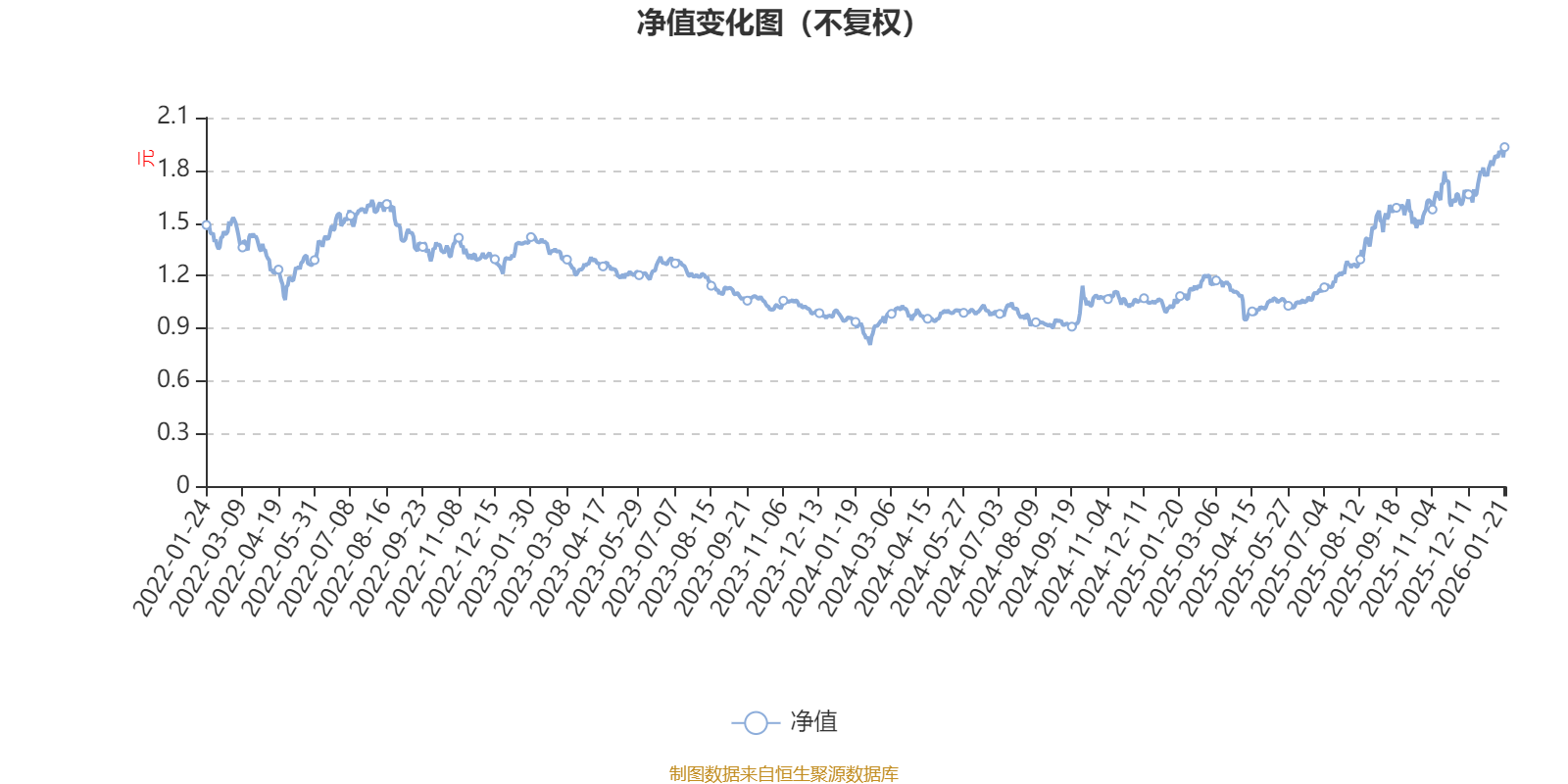
Core Insights - The AI Fund Changjiang New Energy Industry Mixed A (011446) reported a profit of 12.24 million yuan for Q4 2025, with a weighted average profit per fund share of 0.1594 yuan. The fund's net value growth rate for the reporting period was 10.18%, and the fund size reached 123 million yuan by the end of Q4 2025 [2][13]. Fund Performance - As of January 21, the fund's unit net value was 1.932 yuan. Over the past year, the fund achieved a cumulative growth rate of 76.8%, outperforming its peers [2]. - The fund's performance over different time frames includes a 27.27% growth rate over the past three months, ranking 7 out of 621 comparable funds, and a 59.78% growth rate over the past six months, ranking 27 out of 621 [3]. Investment Strategy - The fund focuses on the new energy industry and its upstream and downstream sectors, seeking opportunities in supply-demand reversals and technological advancements within the industry. The management plans to continue tracking and identifying investment opportunities in these areas [2]. Risk Metrics - The fund's Sharpe ratio over the past three years is 0.6629, ranking 173 out of 526 comparable funds [7]. - The maximum drawdown over the past three years was 43.48%, with the largest single-quarter drawdown occurring in Q2 2022 at 21.13% [9]. Portfolio Composition - As of December 31, the fund's average stock position over the past three years was 78.37%, compared to the industry average of 85.83%. The fund reached its highest stock position of 86.26% at the end of 2021 and its lowest of 72.55% by the end of Q3 2024 [12]. - The top ten holdings of the fund include Tianqi Lithium, Huayou Cobalt, CATL, Tianhua New Energy, Yongxing Materials, China National Materials, Liyuanheng, Guoci Materials, Sifang Co., and Keda Technology [16].