
问界

Search documents
年内三现负增长!增程车“续航焦虑”没解决,先遇市场焦虑
Guo Ji Jin Rong Bao· 2025-11-12 13:28
Core Insights - The range-extended electric vehicle (REEV) market is facing growth bottlenecks, with wholesale sales in October dropping to 121,000 units, a year-on-year decline of 1.9%, marking the third negative growth in the first ten months of the year [1][9] - In contrast, pure electric vehicle (BEV) sales have shown robust growth, with a year-on-year increase of 31.6% in October, maintaining an average monthly growth rate above 30% throughout the year [3][9] Sales Performance - October wholesale sales for REEVs: 121,000 units, down 1.9% year-on-year [2] - Year-to-date REEV sales: 1.826 million units, down 1.1% year-on-year [9] - BEV sales in October: 1.02 million units, up 31.6% year-on-year [2] - Plug-in hybrid electric vehicle (PHEV) sales in October: 480,000 units, up 2% year-on-year [2] Market Dynamics - The REEV market, once dominated by the Li Auto ONE, has seen increased competition with new entrants like AITO and Deep Blue, yet Li Auto still holds nearly 60% market share [4][5] - The total sales of REEVs are projected to exceed 1 million units by 2024, with a significant increase in brand participation [7] Consumer Sentiment and Challenges - REEVs were initially favored for their "no range anxiety" feature, but advancements in BEV technology have diminished this advantage [9] - Consumer complaints regarding REEVs have surged by 280% in 2024, with over 70% of complaints related to range misrepresentation, high fuel consumption when depleted, and battery issues [9] Regulatory Environment - Policy changes are impacting the REEV market, with a shift in tax incentives starting in 2026, which will reduce the cost advantage of REEVs compared to traditional fuel vehicles [10] - New regulations will require REEVs to meet specific criteria, such as a minimum electric range of 100 kilometers, potentially leading to the elimination of lower-range models from the market [10]


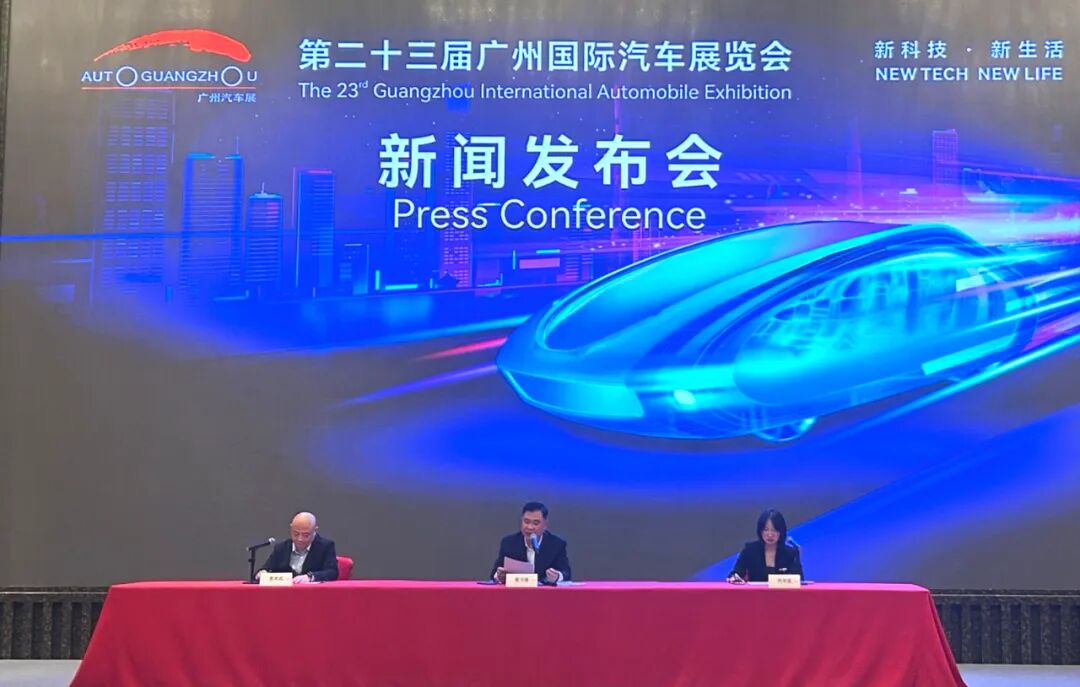
首发新车93台 第二十三届广州国际汽车展览会11月21日开幕
Zhong Guo Zhi Liang Xin Wen Wang· 2025-11-12 07:36
Core Points - The 23rd Guangzhou International Automobile Exhibition will be held from November 21 to 30, 2025, at the China Import and Export Fair Complex, with the automotive industry chain and culture exhibition running from November 21 to 24, 2025, and November 21 designated as Media Day [1] Group 1 - A total of 93 new car debuts and 1,085 vehicles will be showcased at the exhibition, including 629 new energy vehicles [3] - Major global automotive brands such as BMW, Mercedes-Benz, Volkswagen, Ford, and General Motors will participate with their latest products [3] - Domestic brands including Hongqi, Changan, BAIC, and GAC will also present their full range of products at the event [3] Group 2 - New energy vehicle manufacturers and tech companies like NIO, Xpeng, Xiaomi Auto, and CATL will be featured at the exhibition [3]
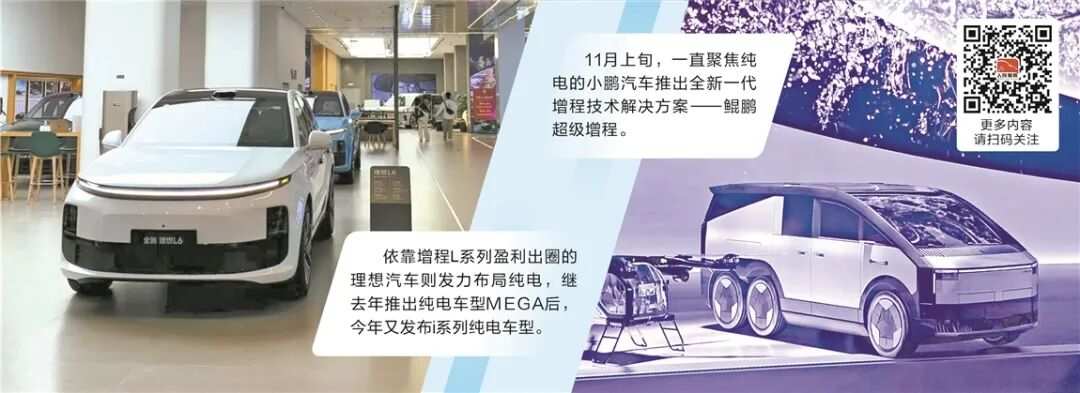
新能源车市上演"技术路线对调",看似矛盾的举措背后有何逻辑?
Zheng Quan Shi Bao· 2025-11-12 02:21
Core Viewpoint - The Chinese electric vehicle market is witnessing a shift in technology strategies, with companies like Xiaopeng Motors introducing range-extended models while Li Auto accelerates its focus on pure electric vehicles, indicating a complex interplay of market demands and technological advancements [1][3][11]. Group 1: Xiaopeng Motors' Strategy - Xiaopeng Motors has launched its first range-extended model, the Xiaopeng X9, featuring a large battery and fuel tank, achieving over 450 km of pure electric range and over 1600 km of total range [3]. - The company plans to adopt a dual strategy of offering both pure electric and range-extended models in the future, responding to market demands and addressing challenges such as winter range reduction and charging infrastructure [3][4]. - Xiaopeng's shift towards range extension is seen as a pragmatic response to market conditions, with the CEO emphasizing that many consumers transitioning from traditional fuel vehicles often start with range-extended options [3][5]. Group 2: Li Auto's Focus on Pure Electric - Li Auto, initially focused on range-extended vehicles, is now increasing its efforts in the pure electric segment, driven by competitive pressures and the need to establish a strong market presence [4][7]. - The company has observed significant growth in the sales of pure electric large SUVs, indicating a shift in consumer preferences towards fully electric options [4]. - Li Auto's strategy reflects a broader trend in the industry where companies are diversifying their offerings to capture different segments of the market [4][6]. Group 3: Market Dynamics and Competition - The competition in the range-extended vehicle market is intensifying, with multiple companies, including Lantu and others, planning to launch new models, indicating a crowded field [4][6]. - The overall market for pure electric vehicles is growing, with over 60% of new energy vehicle sales in China being pure electric from January to September this year, while the share of range-extended vehicles is declining [4][6]. - The dual approach of offering both technologies is seen as a way for companies to maximize market opportunities while addressing consumer needs for flexibility and range [10][11].


2025年中国金鸡百花电影节开幕 问界M9以智慧科技点亮光影盛典
Ge Long Hui· 2025-11-12 02:13
在电影节举办期间,问界M9作为官方指定用车将深度参与各项重要活动。通过这一国家级电影盛事, 问界全方位诠释"智慧重塑豪华"的品牌理念,展现中国高端新能源汽车领军者实力。 11月11日,2025年中国金鸡百花电影节在厦门隆重开幕。开幕式以"点亮金鸡"、新片推介、创意节目等 环节,为全球观众打造了一场光影交织的视听盛宴。作为本届电影节全程战略合作伙伴及官方指定汽车 品牌,问界M9穿梭于盛会之间,为与会嘉宾提供智慧豪华的出行服务,成为现场一道令人瞩目的"科技 风景线"。 在这场星光荟萃的盛典中,问界M9不仅成为镜头内外备受关注的明星专属座驾,更以其卓越的智能科 技与豪华舒适向全场展现了"新豪华"的深刻内涵。作为中国高端新能源车的领军者,问界持续引领新豪 华出行体验,获得了广泛的市场赞誉。截至目前,问界累计交付超80万辆。其中,问界M9上市21个月 累计交付突破25万辆,创50万级车型交付新纪录,更连续9个月蝉联大型SUV保值率第一,印证了其作 为行业引领者的市场标杆地位。 ...
广州车展下周开幕,93台首发新车!超千台展车6成是新能源
Nan Fang Du Shi Bao· 2025-11-12 01:29
Group 1 - The 23rd Guangzhou International Auto Show, themed "New Technology, New Life," will feature 93 global premieres and a total of 1,085 vehicles, with 629 being new energy vehicles, highlighting the focus on electrification and intelligence [1] - The exhibition will take place from November 21 to 30, 2025, at the China Import and Export Fair Complex, covering an area of 220,000 square meters, with major international brands participating [2] - Domestic brands will showcase their full product lines, including notable companies such as BYD, Geely, and Great Wall Motors, among others [2] Group 2 - New energy vehicle brands and tech companies like NIO, Xpeng, and Huawei will compete at the show, alongside luxury and modified vehicle brands [3] - The event will host forums discussing the future of automotive technology, including topics like smart cabins and autonomous driving [3] - The introduction of an intelligent customer service system and a panoramic security system will enhance the exhibition experience [3] Group 3 - The automotive industry is shifting its competitive focus from scale to quality, with projections indicating that by 2024, China's automotive production and sales will exceed 30 million units, and new energy vehicle sales will surpass 10 million units [4] - The penetration rate of new energy vehicles reached 50.2% in the first half of 2025, significantly exceeding the target set in the New Energy Vehicle Industry Development Plan [4] - The exhibition will showcase advancements in technology, such as AI integration in vehicles and the introduction of solid-state batteries [4] Group 4 - The competition rules in the automotive industry are being redefined, with future success depending on global dynamics and the resilience of the entire value chain [5] - The auto show represents not just an exhibition but a broader ecological platform for the future of the Chinese automotive industry [5]
中国构建了有效的创新体系(国际论坛·读懂中国·读懂中国式现代化)
Ren Min Ri Bao· 2025-11-11 22:33
Group 1 - China's technological innovation is rapidly advancing across various fields, particularly in artificial intelligence, electric vehicles, and battery technology [1][2] - The number of high-level international journal papers and citations from Chinese institutions in artificial intelligence is increasing at an incredible rate, with 8 Chinese institutions ranked among the top ten in the Nature Index 2025 [2] - China now holds 60% of the global patents in artificial intelligence, a significant increase from a decade ago when it lagged behind Europe and the US [2] Group 2 - The Chinese innovation system is effective due to its long-term focus, with government and private sectors collaborating to support technological advancements [2][3] - Western countries have underestimated China's innovation capabilities and have responded to competition with restrictions rather than embracing collaboration [3] - The need for Western countries to learn from China's approach to building an innovation system is emphasized, as many key areas of advantage are being challenged [3]
特斯拉在华月销同比下滑36%,近三年最差
Di Yi Cai Jing· 2025-11-11 12:32
Core Insights - Tesla's sales in China for October have dropped significantly, marking the worst performance in three years, with a total of 26,006 vehicles sold, a month-over-month decline of 63.64% and a year-over-year decline of 35.76% [1][2] Sales Performance - In October, Tesla's ranking fell from 7th in September to 27th, with sales lower than the previous low in February, which had 26,777 vehicles sold [2] - The sales figures for October are only slightly better than those from October 2022, when Tesla sold 17,200 vehicles [2] Model Breakdown - Both Model Y and Model 3 experienced significant sales drops, with Model Y selling 19,488 units (down 31,685 from the previous month) and Model 3 selling 6,518 units (down 13,834) [3] - Model Y's ranking fell from 2nd to 15th, while Model 3 dropped to 111th, a decrease of 94 positions [3] Market Context - The decline in sales is attributed to several factors, including factory holiday schedules and export delivery rhythms, with the Shanghai Gigafactory exporting over 35,000 vehicles in October, a year-over-year increase of 28% and a month-over-month increase of 84% [3] - The competitive landscape has intensified due to the impending expiration of tax incentives and aggressive market strategies from other electric vehicle manufacturers, which has squeezed Tesla's market share [3][4] Industry Trends - In October, Tesla's market share in the domestic retail segment for new energy vehicles was 2%, down from 3.4% year-over-year and 5.5% month-over-month [4] - The overall retail penetration rate for new energy vehicles in China reached 57.2%, an increase of 4.3 percentage points from the previous year, with wholesale sales of pure electric vehicles at 1.02 million units, a year-over-year growth of 31.6% [4]

特斯拉在华月销环比暴跌63.6%,近三年最差
Di Yi Cai Jing· 2025-11-11 04:05
Group 1 - Tesla's sales in October 2023 were the lowest in three years, with a total of 26,006 vehicles sold, representing a 63.64% month-over-month decline and a 35.76% year-over-year decline [1] - The brand ranking for Tesla dropped from 7th in September to 27th in October, with sales figures lower than the lowest month of February 2023 [1] - Model Y and Model 3 both experienced significant sales declines, with Model Y sales at 19,488 units (down 31,685 units from the previous month) and Model 3 sales at 6,518 units (down 13,834 units) [1] Group 2 - The decline in Tesla's sales may be related to factory holiday schedules, as October sales have historically seen significant drops compared to September [2] - In comparison to previous years, Tesla faced a larger month-over-month decline in October 2023, with sales down 34.20% from September 2023 [2] - The competitive landscape for electric vehicles has intensified, with other manufacturers like Xiaomi and BYD significantly increasing their sales, which has impacted Tesla's market share [3] Group 3 - Tesla's market share in the domestic electric vehicle market fell to 2% in October 2023, down from 3.4% in the same month last year and 5.5% in September 2023 [3] - The overall retail penetration rate for new energy vehicles in China reached 57.2% in October 2023, an increase of 4.3 percentage points year-over-year [3] - The wholesale sales of pure electric vehicles in China reached 1.02 million units in October 2023, showing a year-over-year growth of 31.6% and a month-over-month growth of 7.5% [3]
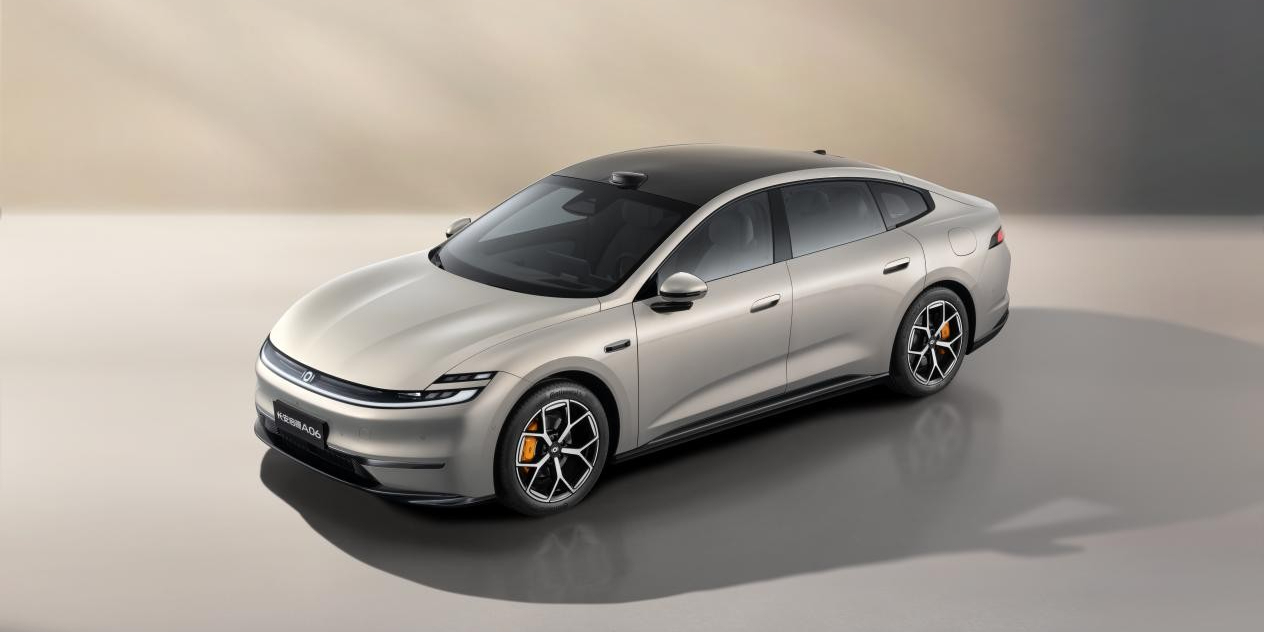
A06与林肯同源制造 长安启源以“豪华”出击主流市场
Jing Ji Guan Cha Wang· 2025-11-10 16:36
Core Insights - Changan Qiyuan has launched a new model, the Qiyuan A06, to strengthen its presence in the mainstream new energy vehicle market [2][3] - The A06 includes six pure electric models and two range-extended models, with prices ranging from 109,900 to 149,900 yuan for electric models and 119,900 to 129,900 yuan for range-extended models [2] - The company aims to focus resources on the 100,000 to 150,000 yuan market segment to improve its current sales structure [2] Product Strategy - The A06 is positioned as a mid-large sedan, targeting young families, and is part of a broader lineup that includes the A07, A05, Q07, and Q05 [2] - Changan Qiyuan's product range spans from 50,000 to 300,000 yuan, with a significant portion of sales concentrated in the 100,000 to 150,000 yuan price range [2] - The company has adopted a "big single product" strategy, aiming to develop models with annual sales of 200,000 units, focusing on the Q07, A07, and A06 [4] Competitive Landscape - The Qiyuan A06 faces competition from models such as BYD Qin PLUS, Geely Galaxy Xingyao 8, and Xpeng MONA3 [3] - The A06 features high-end specifications, including an 800V silicon carbide high-voltage platform, advanced charging technology, and a comprehensive sensing system, positioning it as a competitive offering in the market [3] Sales Performance - Since its launch in August 2023, Changan Qiyuan has sold over 300,000 vehicles, but it still faces challenges in becoming a mainstream brand compared to leading competitors like BYD and Geely [3] - The company has set ambitious sales targets of 500,000 units by 2026 and 1 million units by 2027 [3]

增程车“失宠”
3 6 Ke· 2025-11-10 11:39
Core Insights - The range-extended electric vehicle (REEV) market has experienced a rare "three consecutive declines" in monthly sales, with July, August, and September sales at 106,900 units, 97,400 units, and 105,000 units respectively, reflecting year-on-year declines of 11%, 7%, and 13% [1][3] - Ideal Automotive, once a leader in the REEV market, has seen a significant drop in sales for five consecutive months, raising questions about whether this decline is a temporary market fluctuation or indicative of a ceiling for this technology path [1][3] - The REEV market, which saw explosive growth from 2021 to 2024 with sales increases of 218%, 130%, 154%, and 70.9%, and market share rising from 3.6% to 9.1%, is now facing challenges as the core advantages of REEVs are being undermined by advancements in pure electric vehicles (EVs) [1][3][5] Market Dynamics - The REEV market has expanded significantly, with total sales expected to exceed one million units by 2024 and the number of brands reaching 23 [3] - However, the landscape is changing as Ideal Automotive shifts focus towards pure electric vehicles, while competitors like Wuling, Deep Blue, and others continue to enter the REEV space [3][4] - The core reasons for the decline in REEV popularity include significant improvements in pure EV range, enhanced charging infrastructure, and decreasing battery costs [5][8] Technological Shifts - The average range of new pure EVs has increased to over 500 km, with mainstream models exceeding 600-700 km, closely matching traditional fuel vehicles [5][8] - Charging infrastructure has improved dramatically, with a total of 12.8175 million charging stations in China by the end of 2024, a 49.11% year-on-year increase [8] - Battery costs are projected to drop to $99 per kWh by 2025, making EVs more cost-competitive with fuel vehicles [8][9] Future Considerations - The new generation of REEVs is shifting towards "large battery + small fuel tank" configurations, raising questions about the necessity of the range-extending engine when pure electric range is comparable to that of pure EVs [9][12] - Industry opinions are divided on whether this shift represents progress or a deviation from the original efficiency goals of REEV technology [12][14] - The decline in REEV popularity highlights the transient nature of market advantages and the importance of addressing consumer pain points [15][16]
