
南钢股份

Search documents
国企红利ETF(159515)盘中涨0.26%,政策与资金聚焦高股息防御资产
Sou Hu Cai Jing· 2025-12-25 05:46
Core Insights - The China Securities State-Owned Enterprises Dividend Index has shown a slight increase of 0.08% as of December 25, 2025, with notable gains in constituent stocks such as Xiamen International Trade (up 4.44%) and Luxi Chemical (up 3.30%) [1] - The National State-Owned Enterprises Dividend ETF (159515) has also increased by 0.26%, reflecting a growing interest in dividend-paying assets amid a favorable monetary policy environment [1][2] Market Performance - The trading volume for the National State-Owned Enterprises Dividend ETF reached 2.91% turnover with a transaction value of 1.489 million yuan, and the average daily trading volume over the past week was 4.2193 million yuan [1] - The latest scale of the National State-Owned Enterprises Dividend ETF stands at 51.0433 million yuan, with a total of 44.7866 million shares [1] Policy and Economic Environment - The People's Bank of China has reiterated its commitment to maintaining a moderately loose monetary policy, which is expected to positively influence market sentiment [1] - The decline in the risk-free interest rate is expected to enhance the attractiveness of dividend assets, supported by ongoing policy improvements aimed at strengthening the quality and market capitalization management of listed companies [2] Investment Outlook - According to Kaiyuan Securities, the performance of dividend stocks is anticipated to outperform in 2026 compared to 2025, driven by improved relative valuations, easing pressure on cyclical earnings, and a shift in funding preferences towards high-dividend assets [2] - The National State-Owned Enterprises Dividend Index reflects the overall performance of high-dividend securities selected from state-owned enterprises, focusing on those with stable dividends and significant liquidity [2][3]




钢铁行业 2026 年度投资策略:中流击水,奋楫者进
Changjiang Securities· 2025-12-25 05:13
Core Insights - The steel industry is expected to recover in 2025 after three years of decline, driven by improvements in cost and supply sides [4][7][16] - The majority of profits in the black industrial chain are captured by iron ore, with profit shares of 72% for iron ore, 6% for coking coal, and 22% for steel [4][7] - The West Manganese project is seen as a potential solution to redirect profits back to the domestic steel industry [4][7] Profitability - In Q4 2025, prices for rebar, hot-rolled, iron ore, and coking coal decreased by 7.1%, 6.0%, 1.0%, and 12.5% year-on-year, respectively, with coking coal showing a significant price drop [7][18] - The decline in coking coal prices has alleviated cost pressures for steel companies, leading to a rebound in profitability [18][21] - The overall profit for the steel industry is expected to improve as demand stabilizes and costs decrease [7][21] Supply - The actual crude steel production in 2025 is expected to remain flat year-on-year, despite improved profitability encouraging production [20][21] - The supply side has not yet contracted as expected, with administrative production limits still pending implementation [16][20] - The discrepancy in production statistics indicates that crude steel output may be underestimated due to reporting practices [21][23] Demand - Steel inventory has been successfully reduced to low levels, indicating a stabilization in apparent consumption [26][27] - The demand structure shows a decline in rebar consumption by 5.4%, while hot-rolled and cold-rolled products saw increases of 1.2% and 1.5%, respectively [30][31] - Strong external demand, particularly in machinery and equipment exports, is expected to support steel demand [31][40] Outlook for 2026 - Steel demand is anticipated to remain stable, supported by infrastructure and manufacturing investments as outlined in the 14th Five-Year Plan [42][46] - The decline in new housing starts is expected to moderate, reducing the negative impact on steel demand from the real estate sector [46][48] - Global monetary and fiscal policies are expected to become more accommodative, further supporting steel demand through improved economic conditions [48][49] Policy and Regulation - The introduction of export license management for certain steel products aims to curb low-end exports and improve market stability [51][52] - The focus on "graded management" policies is expected to lead to a reduction in outdated production capacity, benefiting compliant and high-quality steel producers [52]


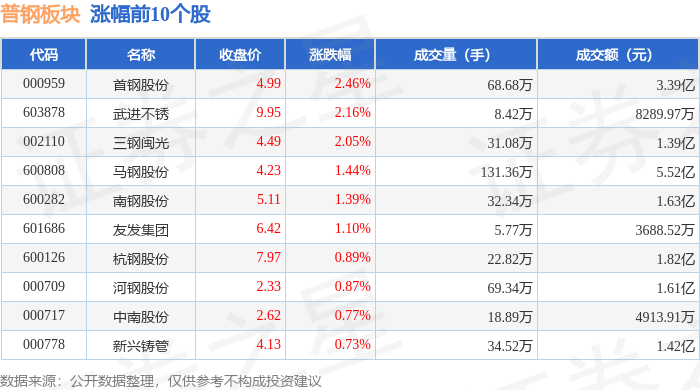
普钢板块12月24日涨0.67%,首钢股份领涨,主力资金净流出1754.37万元
Zheng Xing Xing Ye Ri Bao· 2025-12-24 09:02
Market Performance - On December 24, the general steel sector rose by 0.67% compared to the previous trading day, with Shougang Corporation leading the gains [1] - The Shanghai Composite Index closed at 3940.95, up 0.53%, while the Shenzhen Component Index closed at 13486.42, up 0.88% [1] Individual Stock Performance - Shougang Corporation (000959) closed at 4.99, with a gain of 2.46% and a trading volume of 686,800 shares, amounting to a transaction value of 339 million yuan [1] - Wujin Stainless Steel (603878) closed at 9.95, up 2.16%, with a trading volume of 84,200 shares and a transaction value of approximately 82.9 million yuan [1] - Other notable performers include Sangang Min Guang (002110) with a 2.05% increase, and Sijiang Steel (600808) with a 1.44% increase [1] Capital Flow Analysis - The steel sector experienced a net outflow of 17.54 million yuan from institutional investors, while retail investors saw a net inflow of 13.4 million yuan [2] - The overall capital flow indicates a mixed sentiment, with institutional investors withdrawing funds while retail investors increased their positions [2] Detailed Capital Flow for Selected Stocks - Shougang Corporation had a net inflow of 24.61 million yuan from institutional investors, but a net outflow of 12.70 million yuan from retail investors [3] - Hualing Steel (000932) saw a net inflow of 21.81 million yuan from institutional investors, with retail investors withdrawing 2.19 million yuan [3] - Hebei Steel (000709) had a net inflow of 14.28 million yuan from institutional investors, while retail investors withdrew 2.83 million yuan [3]

政策支持“AI+”为央企转型赋能,国企红利ETF(159515)盘中蓄势
Sou Hu Cai Jing· 2025-12-23 02:25
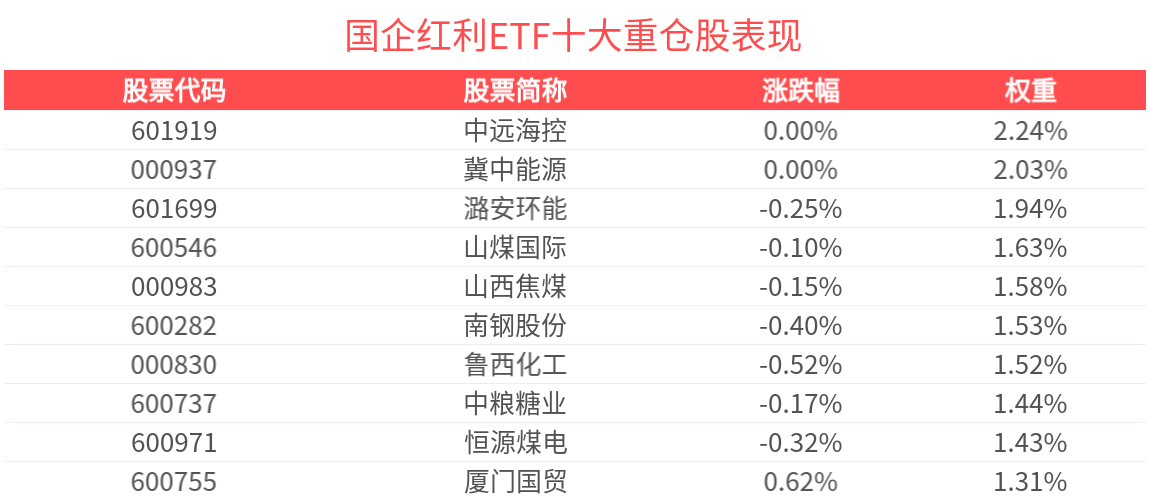
Group 1 - The core viewpoint of the articles indicates that traditional state-owned enterprises (SOEs) are expected to receive clear guidance for transformation and growth in emerging businesses, driven by policy support and capital investment, which may enhance their profitability and long-term investment value [1][2] - The National State-owned Assets Supervision and Administration Commission (SASAC) has announced that during the "14th Five-Year Plan" period, state-owned enterprises will actively undertake major national technological tasks and promote the "AI+" initiative, focusing on high value-added and high-tech industries [1][2] - The China Securities State-Owned Enterprises Dividend Index, which tracks high dividend yield securities from SOEs, reflects the overall performance of these high dividend yield stocks, with the top ten weighted stocks accounting for 16.99% of the index [2][4] Group 2 - The National State-Owned Enterprises Dividend ETF (159515) has shown a trading volume of 450.44 million yuan with a turnover rate of 9.47%, indicating a stable interest in dividend-paying assets in the current low-interest-rate environment [1][2] - The ETF has seen a growth of 298.21 million yuan in size and an increase of 360.00 million shares since the beginning of the month, highlighting the attractiveness of dividend assets in the current market [1][2] - The top ten weighted stocks in the China Securities State-Owned Enterprises Dividend Index include COSCO Shipping Holdings, Jizhong Energy, and Lu'an Environmental Energy, among others, with varying performance in terms of price changes [2][4]
申万宏源证券晨会报告-20251223
Shenwan Hongyuan Securities· 2025-12-23 00:42
郑菁华 A0230525060001 zhengjh@swsresearch.com 今日重点推荐 2025 年 12 月 23 日 人民币升值,"结汇潮"的助推——汇率双周报系列之六 10 月中旬以来,美元小幅贬值背景下、人民币大幅升值;这一非对称的涨 势引发了市场对"年终结汇"的热议。本轮升值是不是结汇推动、后续人 民币汇率的可能演绎?本文分析,供参考。 | 指数 | 收盘 | | 涨跌(%) | | | --- | --- | --- | --- | --- | | 名称 | (点) | 1 日 | 5 日 | 1 月 | | 上证指数 | 3917 | 0.69 | 2.15 | 1.28 | | 深证综指 | 2493 | 1.13 | 5.16 | 1.56 | | 风格指数 (%) | 昨日 | 近 1 个月 | 近 6 个月 | | --- | --- | --- | --- | | 大盘指数 | 0.86 | 3.48 | 20.31 | | 中盘指数 | 1.42 | 6.66 | 29.76 | | 小盘指数 | 1.12 | 5.06 | 25.03 | | 涨幅居前 行业(%) | ...
南钢股份跌2.14%,成交额1.18亿元,主力资金净流出392.27万元
Xin Lang Zheng Quan· 2025-12-22 05:52
Group 1 - The core point of the news is that Nanjing Steel Co., Ltd. (南钢股份) has experienced fluctuations in its stock price, with a current price of 5.03 yuan per share and a market capitalization of 31.01 billion yuan [1] - As of September 30, 2025, Nanjing Steel reported a revenue of 43.28 billion yuan, a year-on-year decrease of 12.19%, while its net profit attributable to shareholders increased by 24.12% to 2.18 billion yuan [2] - The company has a significant portion of its revenue coming from steel sales, accounting for 62.34%, with other sales making up 37.66% [1] Group 2 - The number of shareholders for Nanjing Steel decreased by 15.12% to 54,000, while the average number of circulating shares per person increased by 17.81% to 114,104 shares [2] - The company has distributed a total of 13.44 billion yuan in dividends since its A-share listing, with 4.95 billion yuan distributed in the last three years [2] - Major institutional shareholders include Hongli Low Volatility (红利低波) and Huatai-PB SSE Dividend ETF (华泰柏瑞上证红利ETF), with significant changes in their holdings [2]
1—10月,全市入库软件和人工智能招商项目提前完成全年目标
Nan Jing Ri Bao· 2025-12-22 02:40
Group 1 - Nanjing has prioritized the development of the artificial intelligence industry, becoming the only city in Jiangsu approved to create a national AI innovation application pilot zone [1] - The city's AI products and services cover various fields in the industry chain, including software, algorithms, sensors, machine vision, intelligent voice, and intelligent unmanned systems [1] - A total of 25 new large models have been registered with the National Internet Information Office this year, bringing the total to 37, which accounts for 62% of the province's total [1] Group 2 - Jiangsu Yuanli Digital Technology Co., Ltd. and Nanjing Arts Institute have established a technical innovation center for 3D animation, which aims to create a self-controlled and internationally leading 3D animation technology ecosystem [2] - Nanjing has implemented the "Nanjing Harmony Ecosystem Development Action Plan" to promote Harmony software and hardware products, with 15 certified open-source Harmony operating systems and 122 software and hardware products [2] - The city has introduced a "scene + equity" application promotion model to facilitate the implementation of domestic industrial software, achieving significant project deployments [2] Group 3 - From January to October, 249 software and AI investment projects have been registered, exceeding the annual target, including 16 high-energy projects [3] - Notable projects that have successfully landed include Dassault Systemes' smart manufacturing headquarters in China, BMW's global IT R&D center, and JD Group's Nanjing R&D center [3] - The city has cultivated a number of nationally recognized high-level public service platforms and products in AI and software, enhancing the innovation capabilities and influence of the industry [3]
A+!南钢连续九年获钢企最高评级
Nan Jing Ri Bao· 2025-12-22 02:33
Core Viewpoint - Nanjing Steel has been recognized for its strong competitiveness and ESG performance, achieving the highest ratings in both categories for the 2025 assessment, showcasing its ability to balance economic and social value in the steel industry [1][2]. Group 1: Competitiveness and ESG Ratings - Nanjing Steel has received an A+ rating for competitiveness (development quality) for nine consecutive years and an AAA rating for ESG for three years [1][2]. - The 2025 competitiveness rating evaluated 109 companies, with 16 achieving A+ and 10 receiving AAA ratings, positioning Nanjing Steel in the "first tier" of domestic steel enterprises [2]. Group 2: Technological Advancements and Product Development - Nanjing Steel has completed 215 products and technologies that meet international advanced standards, demonstrating its capability in high-end materials and green manufacturing [3]. - The company focuses on advanced steel materials, providing essential high-performance materials for major national projects and advanced manufacturing needs [3]. Group 3: Environmental and Social Responsibility - Nanjing Steel has achieved ultra-low emissions across all processes, becoming the first long-process steel enterprise in Jiangsu Province to receive an A-level environmental performance rating [4]. - The company has established a three-tier ESG governance structure and has been recognized as a national industrial tourism demonstration base, reflecting its commitment to sustainable development [4]. Group 4: Future Development Strategy - Nanjing Steel aims to enhance its competitiveness through smart manufacturing and deep collaboration across the supply chain, positioning itself for high-quality development [5]. - The company is expanding globally, establishing a global procurement and marketing network, and integrating overseas resources to enhance its value chain [5][6]. Group 5: Business Ecosystem Development - Nanjing Steel is building three business ecosystems: industrial chain, smart manufacturing services, and green low-carbon initiatives, focusing on resource security and cost advantages [6]. - The company is enhancing its digital transformation and modern industrial service platform to support manufacturing enterprises in their digital upgrades [6].
有色钢铁行业周观点(2025年第51周):金铜铝铁权益滞后商品的现象或将改变-20251222
Orient Securities· 2025-12-22 02:20
Investment Rating - The report maintains a "Positive" investment rating for the non-ferrous and steel industry [5]. Core Insights - The phenomenon of gold, copper, aluminum, and iron equities lagging behind commodity prices is expected to change, with market expectations for mid-term price increases strengthening as commodity prices reach new highs [7][11]. - The gold sector is anticipated to benefit from rising commodity prices and inflation expectations due to a decline in non-farm employment, which has increased the likelihood of interest rate cuts [7][11]. - The copper sector is viewed positively due to the demand for traditional power grid upgrades, which is expected to support copper consumption and create a supply-demand imbalance favoring copper prices [12]. - The aluminum sector is expected to see price increases following the closure of the Mozal aluminum plant and the high copper-aluminum price ratio, which is likely to drive demand for aluminum as a substitute for copper [13]. - The steel sector is poised to benefit from the introduction of export license management for certain steel products, which may encourage a shift towards higher value-added product exports [14]. Summary by Sections Steel Market Overview - Supply and demand fundamentals are weak in the off-season, but steel profitability is showing signs of recovery [15]. - Iron output has slightly decreased, while steel demand has shown marginal improvement, with rebar consumption increasing by 2.73% week-on-week [20]. - Overall steel prices have seen a slight increase, with the rebar price rising to 3345 CNY/ton, reflecting a week-on-week increase of 0.87% [33]. New Energy Metals - Lithium carbonate production in November 2025 saw a significant year-on-year increase of 84.78%, indicating strong supply growth in the new energy sector [37]. - The demand for new energy vehicles remains robust, with production and sales of new energy passenger cars in October 2025 showing year-on-year growth of 19.94% and 18.65%, respectively [41]. Price Trends - The report notes a general increase in metal prices, with lithium and cobalt prices rising significantly, while nickel prices have shown mixed trends [46].




趋势研判!2025年中国碳素轴承钢行业产业链全景、发展现状、竞争格局及未来发展趋势分析:技术升级驱动高端转型,需求扩容打开成长空间[图]
Chan Ye Xin Xi Wang· 2025-12-22 00:56
Core Insights - The carbon bearing steel industry is experiencing growth in production despite a decline in crude steel output, driven by technological upgrades and high-value-added capacity releases [1][4] - The market is characterized by a "pyramid" competition structure, with leading companies like CITIC Special Steel and Baowu Steel dominating the high-end market, while smaller firms focus on mid-to-low-end segments [1][8] - Future development will focus on technological upgrades, structural optimization, and demand upgrades, shifting competition towards a combination of products and services [1][10][12] Group 1: Industry Overview - Carbon bearing steel is essential for manufacturing rolling bearing rings and rolling elements, characterized by controlled carbon content (0.95%-1.10%) and low impurity levels [2][3] - The industry is influenced by raw material costs, production capacity adjustments, and environmental policies, leading to fluctuations in crude steel output [4][5] Group 2: Production Trends - From January to October 2025, the crude steel output of major special steel enterprises in China was 4.05 million tons, a decrease of 0.36% year-on-year [4] - In contrast, the bearing steel output during the same period was 3.72 million tons, an increase of 3.43% year-on-year, attributed to refined processes and high-value product releases [4][6] Group 3: Industry Chain - The upstream of the carbon bearing steel industry relies on iron ore and alloy elements, with a high dependency on imported iron ore affecting cost control [5][6] - The downstream applications span various sectors, including automotive, wind power, and high-end equipment manufacturing, with increasing demands for high-performance materials [5][6] Group 4: Competitive Landscape - The market concentration is increasing, with leading companies like CITIC Special Steel and Jiyuan Steel accounting for 68.21% of total output as of January to October 2025 [8][9] - The first tier of companies focuses on high-end markets, while the second tier leverages cost advantages in general machinery, and smaller firms are transitioning to specialized steel [8][9] Group 5: Future Development Trends - Technological upgrades will focus on high-purity refining and customized product development, with advanced processes reducing impurity levels and enhancing material performance [10][11] - Structural optimization will align with green low-carbon production goals, promoting industry cluster characteristics and increasing market concentration [12] - Demand from high-end manufacturing sectors like new energy vehicles and wind power will drive growth, with a shift towards comprehensive competition involving both products and services [13]
