蜜雪冰城

Search documents
外资撤离潮,中国真要变天?别急,经济刚吃饱饭,咱还稳得住!
Sou Hu Cai Jing· 2026-01-11 17:38
Core Viewpoint - The recent withdrawal of foreign capital from China is not solely a sign of a changing economic landscape but rather a combination of global strategic adjustments and local competition dynamics, indicating that the market is not collapsing but rather undergoing a redistribution of opportunities [1][5][10] Group 1: Foreign Capital Withdrawal Reasons - A portion of foreign companies is struggling to adapt to the evolving preferences of Chinese consumers, leading to decreased competitiveness against local brands [3][5] - Global strategic realignments by multinational corporations, such as layoffs at Microsoft and Amazon, are not specifically targeting China but are part of a broader trend of economic contraction [5][10] - The exit of some foreign banks, like Citibank, reflects limited market share and profitability issues rather than a defeat in the Chinese market [5][6] Group 2: Impact of Foreign Capital Exit - The withdrawal of foreign capital may create short-term challenges, particularly in retail, dining, and certain manufacturing sectors, resulting in reduced orders and job adjustments [8][10] - Local companies are poised to fill the gaps left by foreign firms, demonstrating the resilience and adaptability of the domestic market [8][12] Group 3: Long-term Implications and Strategies - The departure of foreign capital highlights existing vulnerabilities in technology and core components, emphasizing the need for accelerated domestic innovation [12][18] - Maintaining stability in employment, supply chains, and market expectations is crucial, with a focus on supporting local enterprises through targeted policies rather than mere subsidies [14][16] - The importance of strategic self-reliance in key industries such as semiconductors, renewable energy, and artificial intelligence is underscored, necessitating a unified effort from both government and businesses [18]


期末周校园垃圾桶,藏着饮品大战的最前线
3 6 Ke· 2026-01-11 02:28
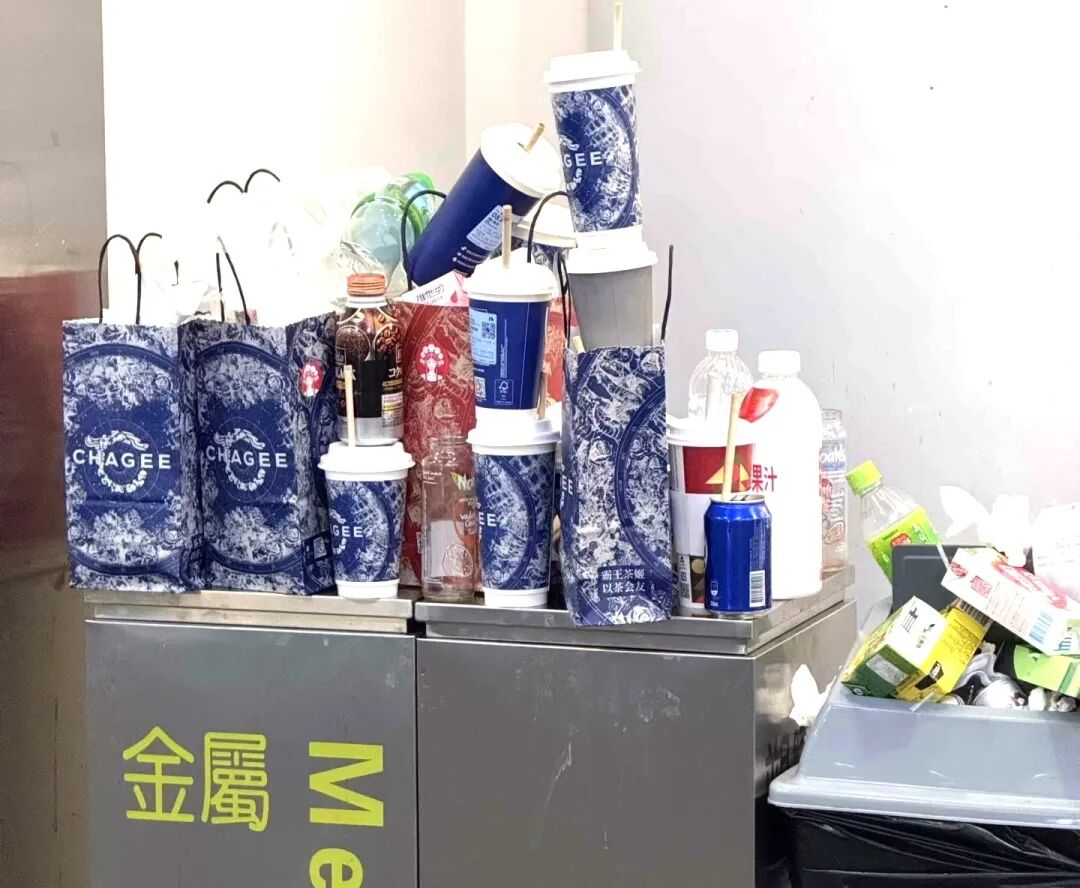
Core Insights - The competition among beverage brands in university campuses has intensified, particularly during exam periods, as evidenced by the overwhelming presence of coffee and tea packaging in library trash bins [1][5][9] - Social media discussions highlight the significant consumption of beverages by students during finals, indicating a strong market demand [2][4] Industry Overview - The beverage market in universities is characterized by a fierce competition among brands like Luckin Coffee, Kudi, and others, with each brand employing different strategies to capture market share [9][15] - Luckin Coffee has established a significant presence with 29,214 stores as of Q3 2025, with 6.83% of its stores located in schools [11] - Kudi Coffee is also expanding rapidly, aiming to surpass 18,000 stores by December 2025, with 9.42% of its locations in educational institutions [11][13] Market Dynamics - The demand for beverages in university settings is driven by students' high consumption rates, particularly during exam periods, creating a lucrative market for beverage brands [17] - The annual compound growth rate of the campus dining market is projected to be 31.6%, with expectations to exceed 600 billion yuan by 2025, indicating substantial growth potential [17] - Brands are increasingly focusing on campus locations not only for immediate sales but also to build long-term customer loyalty among young consumers [17] Brand Strategies - Different brands are adopting unique strategies to penetrate the campus market, such as Kudi's low-investment store model and Bawang Tea's premium positioning [15][17] - The presence of co-branded packaging suggests that collaborative products are gaining popularity among students, further enhancing brand visibility [8]

永和大王等中国业务或被“打包”上市,快乐蜂意图国际资本
Sou Hu Cai Jing· 2026-01-10 03:12
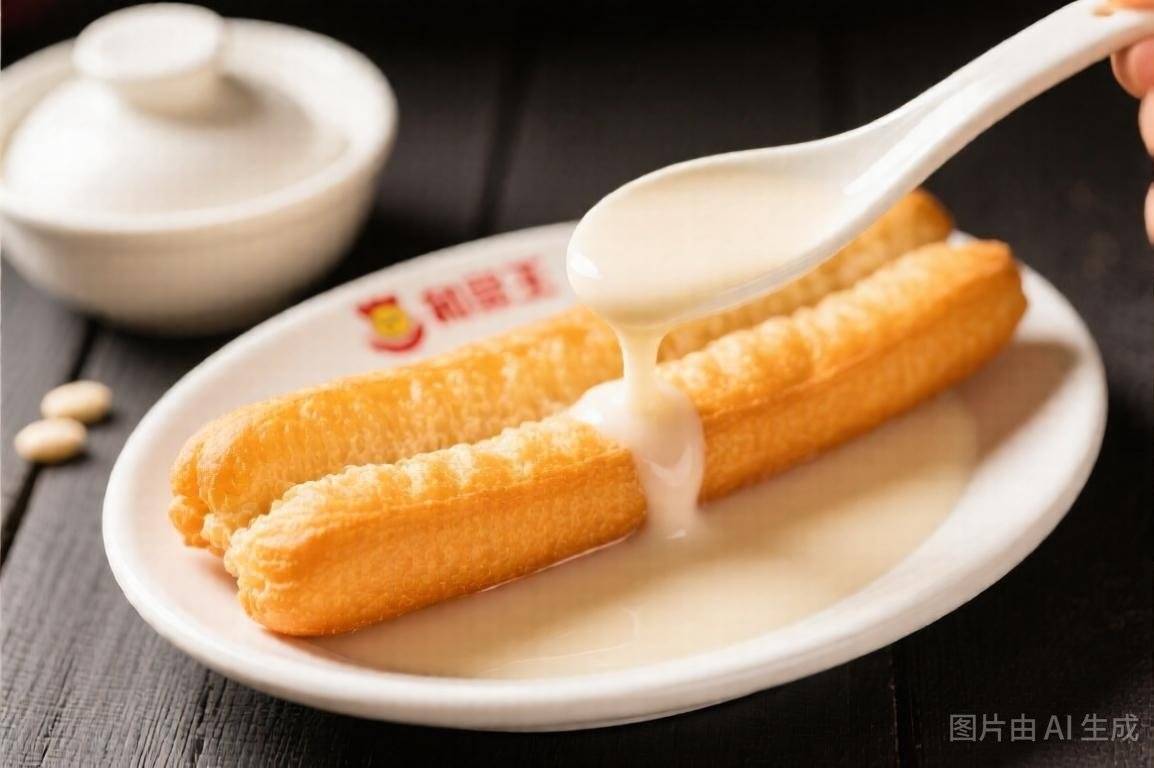
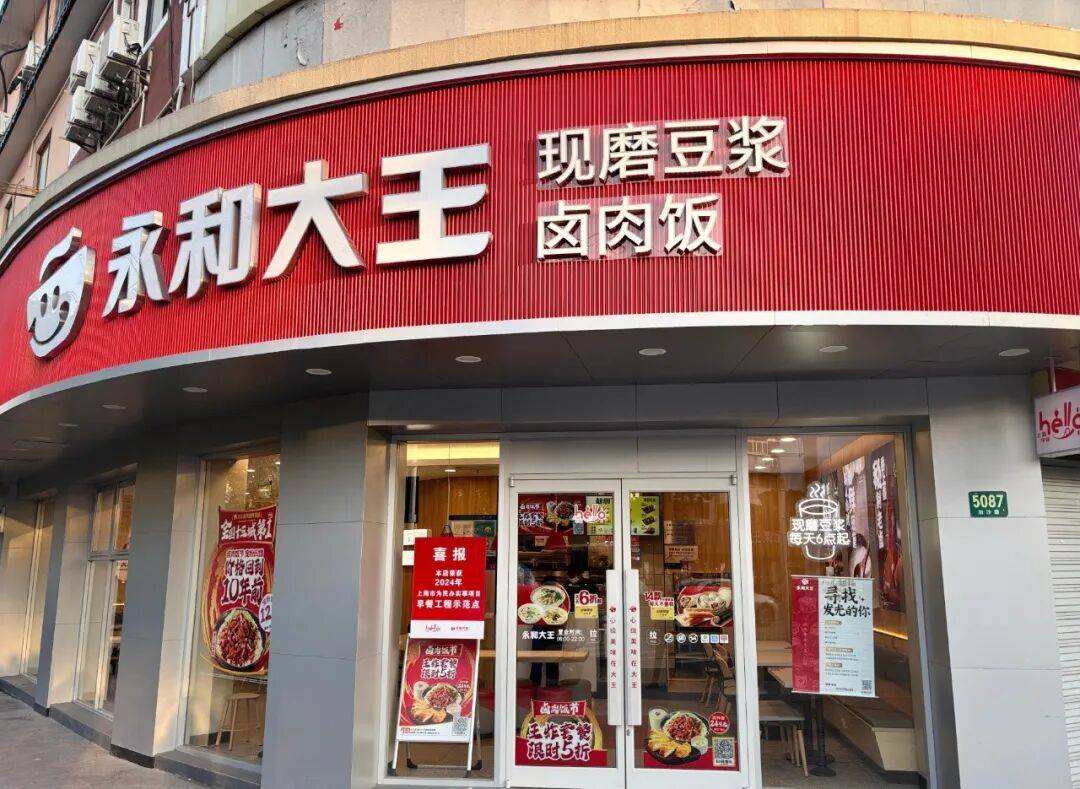
来源:GPLPCN 近日,有媒体报道称,菲律宾餐饮巨头快乐蜂食品集团宣布了一项重大计划:分拆包括中国业务在内的所有国际业务,成立一家名为"快乐蜂国际公司"的新 实体,并计划在2027年底前于美国证券交易所独立上市。 若顺利实施,在中国拥有永和大王、宏状元等多个品牌,门店数量超550家的业务板块,将开启一段全新的资本航程。 不过,快乐蜂这艘准备驶向资本深海的战舰,在中国水域正面临不小的风浪。为了应对激烈的本土竞争,特别是来自瑞幸、蜜雪冰城等品牌在加盟商和投资 回报率上树立的新标杆,永和大王已经主动调整了航向,包括推行"超值模式",通过降低菜单价格来吸引顾客,换来了订单量的大幅增长。 此外,永和大王等品牌还大幅降低了新开门店的成本,将单店投资进行大幅压缩,并计划将新店重点开在二线城市的社区等租金更友好的区域,目标是将投 资回收期缩短。这些策略调整已初见成效,快乐蜂中国业务在2025年第三季度实现了同店销售额增长8%的回升。 此番分拆上市,可视为快乐蜂为其国际业务,尤其是中国业务,注入的一剂"强心针"。独立上市不仅能募集到更专注的国际扩张资金,提升品牌在全球市场 的知名度,也能让不同偏好的投资者更清晰地选择投资标的 ...
和中国分手?“做梦!否则谁买拉美玉米、大豆”
Guan Cha Zhe Wang· 2026-01-10 01:24
Core Viewpoint - The article discusses the U.S. government's efforts under Trump to undermine China's economic influence in Latin America, particularly through actions against Venezuela and its oil resources, while highlighting China's significant economic presence in the region over the past two decades [1][5]. Economic Influence of China in Latin America - Over the past twenty years, China has established substantial economic influence in Latin America, with bilateral trade exceeding $500 billion in 2024, marking a 6% increase year-on-year [1][2]. - China is now the second-largest trading partner for Latin America and the Caribbean, with imports from the region reaching $241.47 billion, a 46% increase compared to five years ago [1]. - Chinese products and investments are pervasive in Latin America, with significant market presence in various sectors, including automotive, electronics, and food [2]. U.S. Response and Strategy - The Trump administration's strategy includes actions to curb China's influence, such as pressuring Venezuela to sever economic ties with China and threatening tariffs on Brazilian goods [4][5]. - Analysts suggest that the U.S. must provide a credible alternative to China's economic engagement in the region, akin to the Marshall Plan post-World War II, to effectively challenge China's established position [6]. Regional Dynamics - Research indicates that in ten out of twelve South American countries, China has economically replaced the U.S., with Chinese trade, investment, and development financing surpassing that of the U.S. [2]. - Some Latin American countries may strengthen their economic ties with China in response to U.S. pressures, as they rely on Chinese markets for their agricultural exports [6].

2025餐饮业复盘:新茶饮IPO年,资本盛宴后的供应链暗战
3 6 Ke· 2026-01-09 13:02
Group 1 - The core viewpoint of the article emphasizes that the new-style tea beverage industry is transforming from a "restaurant model" to a "retail model," focusing on large-scale, multi-channel sales to achieve greater market size and stable cash flow [1][2] - In 2025, the new-style tea beverage industry is characterized by a significant capital influx, with four major brands going public, marking it as the "IPO year" for the industry [3][6] - The industry is experiencing a dual trend of store closures and expansions, with 5,788 stores shutting down, indicating a shift towards high-quality development and a "survival of the fittest" market environment [6][19] Group 2 - The article outlines six key strategies for the new-style tea beverage industry, including product standardization, vertical supply chain integration, and online-offline integration to enhance customer retention [10][12][16] - The competitive landscape is diversifying, with leading brands adopting different operational models: efficiency-driven, quality-premium, and digital balance strategies [7][19] - The profitability logic of the industry is primarily driven by the franchise model, allowing rapid expansion with lower risks, while direct-operated models face higher operational costs and slower adjustments [26][30] Group 3 - The article highlights the importance of supply chain management as a core competitive advantage, suggesting that the future competition will focus on efficiency and innovation in supply chain operations rather than just front-end store battles [21][24] - The new-style tea beverage market is characterized by high gross margins and quick product turnover, allowing for potential price reductions while maintaining profitability [28][30] - The article concludes that the industry's future will depend on balancing efficiency and customer experience, with a focus on sustainable profitability for franchisees and consumer satisfaction [32][33]
新茶饮一年消失15.7万家,品类选错了?
3 6 Ke· 2026-01-09 12:39
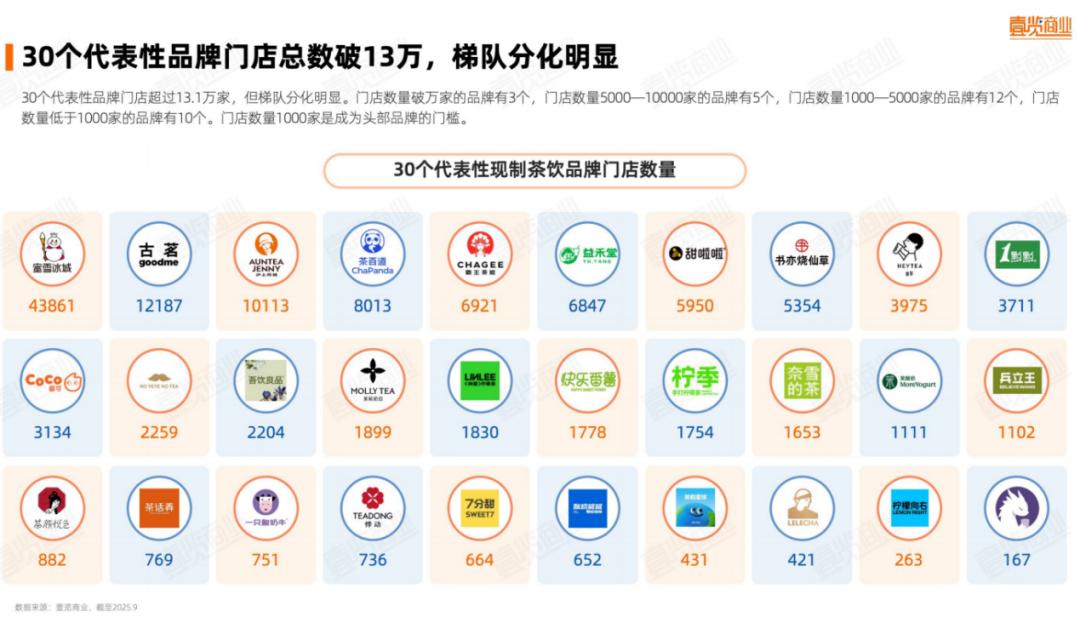
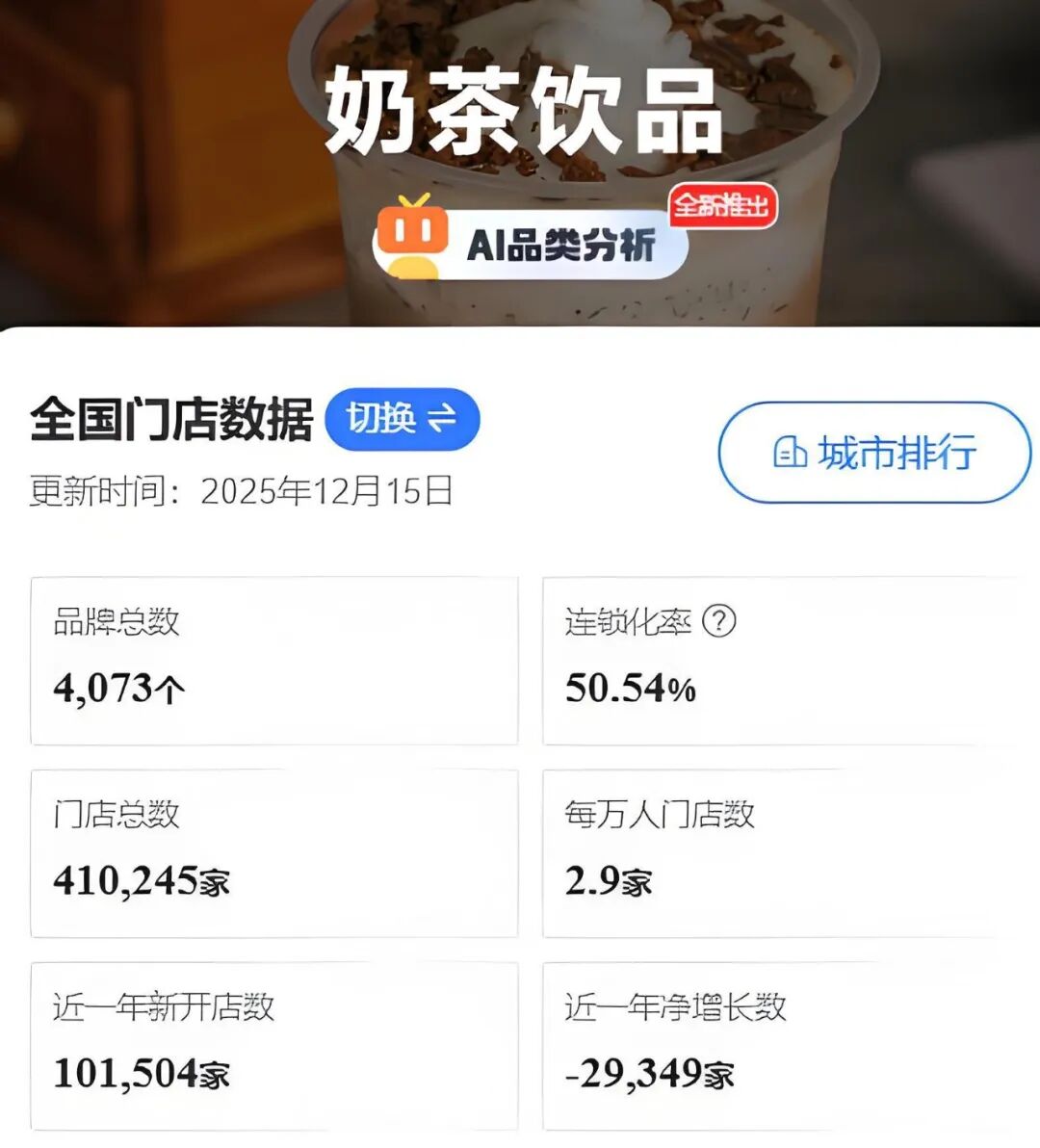
Core Insights - The new tea beverage sector in China has seen significant growth, with major brands like Mixue Ice City, Gu Ming, and others successfully going public, leading to the emergence of the "New Tea Beverage Six Dragons" [1][10] - The total number of tea beverage stores in China has surpassed 400,000, but the industry is experiencing a rapid "survival of the fittest" phase, with 157,000 stores closing in the past year [1][3] Industry Overview - The new tea beverage industry is characterized by a high chain rate of 50.54%, with a total of 410,245 stores and a net decrease of 29,349 stores in the past year [3] - The development of the tea beverage sector has evolved from low-cost, low-quality products in the 1980s to a focus on high-quality tea and innovative flavors in recent years [4][7] Brand Development - Major brands have adopted different strategies, with some focusing on single-hit products while others diversify their offerings [9][10] - The "single-hit" strategy has allowed brands like Shuyi Burned Fairy Grass to optimize their product development and operational efficiency, but it also poses risks if consumer preferences shift [11][13] Product Innovation - The introduction of unique products like cheese milk cap tea has revolutionized the market, leading to a focus on high-quality tea bases and innovative flavor combinations [5][7] - Brands are increasingly exploring the use of fresh fruits and unique ingredients to differentiate their products, although this also complicates supply chain management [8][17] Market Challenges - The rapid expansion of the new tea beverage market has led to intense competition and a high rate of store closures, indicating a need for brands to innovate continuously [1][13] - Supply chain complexities are increasing as brands strive to maintain quality and manage costs, with some companies investing in their own ingredient sourcing [17][18]
霸王茶姬还没做成“东方星巴克”,先得了星巴克的病
3 6 Ke· 2026-01-09 10:24
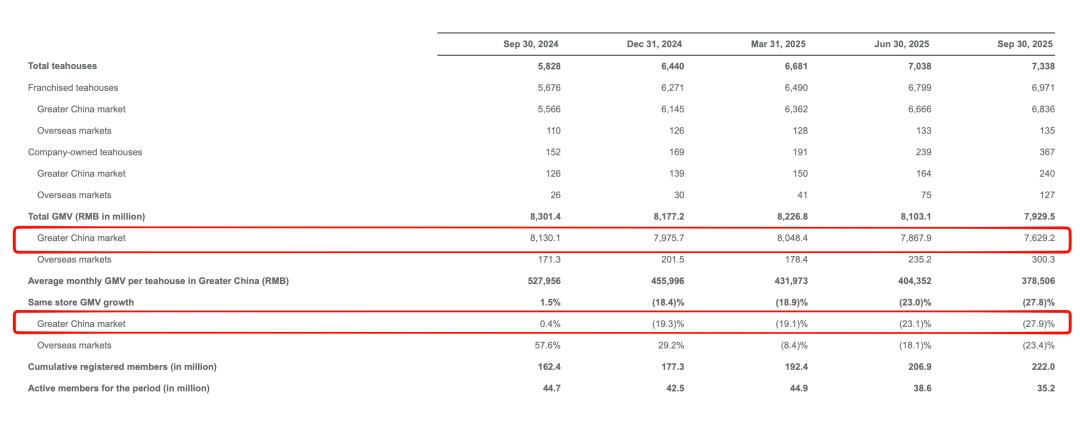
Core Viewpoint - The company BaWang Tea Ji, which went public on NASDAQ less than a year ago, is reportedly considering a secondary listing in Hong Kong, although it has denied these rumors. The company is experiencing a significant slowdown in revenue and profit growth, raising concerns about its market position and brand image [1][3][4]. Financial Performance - BaWang Tea Ji's revenue and profit growth have noticeably slowed over the past year, with growth rates declining for three consecutive quarters. In Q3 of the previous year, the company reported a revenue decline of 9.4% year-over-year and a nearly 40% drop in net profit, marking the first time its quarterly GMV turned negative [1][5]. - The average monthly GMV per teahouse in Greater China has been declining for seven consecutive quarters, with the same-store GMV growth rate falling into negative territory for four quarters, reaching a decline of nearly 28% in Q3 [1][2]. Market Position and Brand Image - BaWang Tea Ji has faced multiple public relations crises that have damaged its high-end brand image, including controversies over product ingredients and employee behavior. The company is known for its significant marketing expenditures, which have helped it establish a premium position in the market [3][4][11]. - The company has refrained from participating in the aggressive food delivery subsidy wars that have benefited competitors, which has contributed to its revenue decline. While other brands like MiXue Ice City and GuMing have seen substantial growth, BaWang Tea Ji's revenue growth has sharply decreased since Q2 of the previous year [5][6][7]. Expansion and Future Strategy - BaWang Tea Ji has expanded its store count significantly, from 1,087 in 2022 to 6,440 in 2024, but the pace of new store openings is expected to slow in 2025 [8][10]. - The company is exploring overseas markets, where it has seen better performance, with GMV in international markets exceeding 300 million RMB, reflecting a year-over-year growth of 75.3% [22]. Stock Performance - Since its peak market valuation of over $7 billion, BaWang Tea Ji's stock price has dropped by more than 60%, with a current market cap of approximately $2.366 billion [23].
霸王茶姬,不止困在“失眠”里
3 6 Ke· 2026-01-09 10:07
Core Viewpoint - The recent controversies surrounding Bawang Chaji, including concerns over high caffeine content in its products, have led to significant market reactions, including a drop of over 14% in its stock price, marking the largest single-day decline since its IPO. The company is facing declining performance metrics, raising questions about its competitive strength and the overall market for new tea beverages [1][8]. Group 1: Caffeine Controversy - The debate over Bawang Chaji's caffeine levels has been ongoing since the popularity of its product "Boya Juexian" in 2021, which was associated with sleep disturbances due to its high tea polyphenol content [2]. - A recent post by a blogger highlighted the caffeine content in Bawang Chaji's drinks, leading to widespread discussions on social media about the brand's "sleep assassin" reputation [2][3]. - Bawang Chaji claims that its caffeine content is lower than that of a cup of Americano, but the caffeine levels in its drinks, such as 117.2 mg in "Boya Juexian" and 210 mg in "Wanli Mulian," are significantly higher than common energy drinks [3][4]. Group 2: Market Performance - Since its peak market value of approximately $76.7 billion in April 2025, Bawang Chaji's stock has declined over 70%, with its third-quarter revenue dropping by 9.4% year-on-year to 32.08 billion yuan and net profit falling by 35.8% [8][9]. - The brand's rapid expansion has led to a decline in single-store performance, with average monthly GMV decreasing for five consecutive quarters [8]. - The company has struggled to introduce new blockbuster products following the success of "Boya Juexian," which previously accounted for 60%-70% of its total revenue [9][10]. Group 3: Consumer Awareness and Brand Strategy - Bawang Chaji has attempted to address caffeine concerns by launching "light caffeine" versions of its products, but the impact on sales has been limited compared to its regular offerings [6][7]. - Other brands, such as Heytea, have begun to disclose caffeine content more transparently, which has been well-received by consumers, highlighting a shift in consumer expectations for information on beverage ingredients [6][7]. - The current market trend indicates that consumers are increasingly concerned about health implications, leading to a demand for clearer labeling and information regarding caffeine content in beverages [7].
50万开店,1年半回本!这个快餐巨头要和蜜雪、瑞幸抢加盟商
Sou Hu Cai Jing· 2026-01-09 07:42
Core Viewpoint - The parent company of Yonghe Dawang, Jollibee Foods Corporation, is planning to spin off its international business into a new entity named Jollibee Foods International, with plans to list on the U.S. stock exchange by the end of 2027 [1]. Group 1: Business Performance in China - Jollibee's international business has over 10,000 stores globally, with nearly 70% located outside the Philippines, including approximately 553 in China [2]. - Yonghe Dawang has around 500 stores in China, making it the primary brand for Jollibee in the region, while other brands like Hongzhuangyuan and Tianhaowang have about 30 stores each [2]. - Jollibee's same-store sales growth in China reached 8.0%, outperforming competitors like McDonald's and Domino's Pizza, which had growth rates of 4.7% and 1.7%, respectively [5]. Group 2: Strategic Initiatives - The company is implementing a "price for volume" strategy, resulting in a 26% increase in transaction volume, which offsets an 11% decline in average ticket price [7]. - Jollibee's expansion strategy in China focuses on a light-asset model, primarily through franchising, with 77% of the 754 new stores opened in the first nine months of 2025 being franchise locations [8]. - The introduction of the "Super Value Model" has reduced the investment payback period from 2.5-3 years to approximately 1.5 years, with single-store investment costs dropping from around 800,000 RMB to below 500,000 RMB [11]. Group 3: Market Positioning and Future Plans - Jollibee is adjusting its store location strategy to focus on residential areas in second-tier cities, where rental costs are lower and operational hours can be extended [11]. - The company is taking a cautious approach with its brand Tianhaowang, pausing expansion while focusing on profitability in the Hong Kong market, where it has seen a fourfold increase in EBITDA cash contribution [12]. - The trend of multinational restaurant companies spinning off their international businesses for better market focus is becoming prevalent, as seen with Yum China and Haidilao [12].
肯德基也加入,连锁餐企为何都扎堆在地铁站内开店?
3 6 Ke· 2026-01-09 03:55
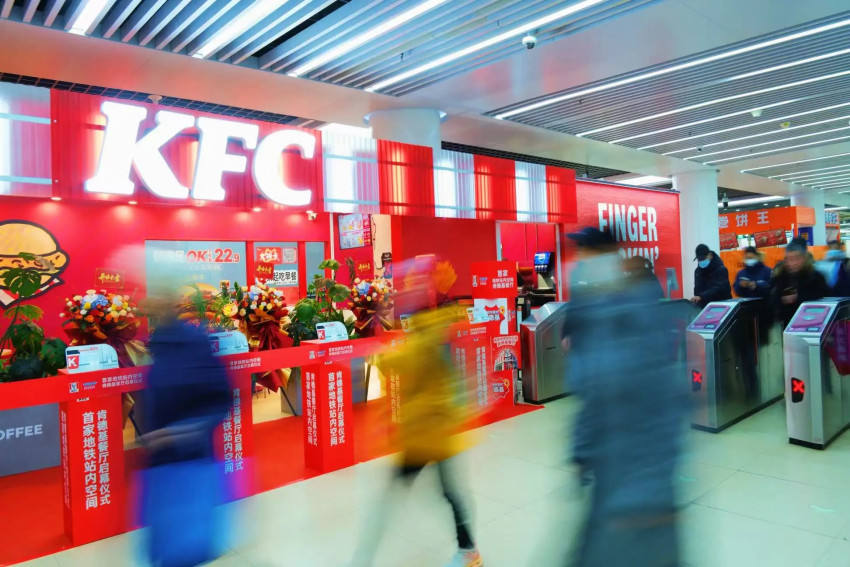
Core Insights - KFC has opened its first subway space store in Tianjin, targeting commuters and local residents, indicating a shift in restaurant location strategy towards public transport hubs [1][3] - The trend of opening stores in subway and bus stations is gaining momentum among various chain restaurant brands, moving away from traditional locations like airports and train stations [6][7] Group 1: KFC's Subway Store Launch - KFC's new store is located at the Tianjin Tumor Hospital Station, a transfer point for subway lines 5 and 6, designed to attract high foot traffic from commuters and travelers [1] - The store offers a full range of services throughout the day, including coffee, burgers, and snacks, catering to diverse dining needs [3] - KFC plans to expand this "rail + dining" model to other subway stations in Tianjin, indicating a strategic focus on high-traffic areas [3] Group 2: Industry Trends - Other brands like Luckin Coffee and McDonald's are also expanding into subway stations, with Luckin planning to open 200 stores in collaboration with Tianjin's transit authority [6][7] - The operational costs at subway and bus stations are lower compared to airports, making them attractive for restaurant brands seeking to optimize expenses while capturing stable commuter traffic [7] - The current trend reflects a broader strategy among chain restaurants to tap into the underutilized market potential of public transport hubs, which are seen as a blue ocean market with significant growth opportunities [7]