呷哺呷哺

Search documents
金字火腿拟跨界半导体;西贝投资成立新公司;百事任命首席科学官
Sou Hu Cai Jing· 2025-09-28 03:18
Investment Dynamics - McDonald's China plans to invest over 400 million RMB in talent training and development over the next three years, focusing on upgrading its Hamburger University with three main directions: "smarter, more open, and more focused on holistic growth" [3] - Jinzi Ham announced a plan to acquire up to 300 million RMB for a 20% stake in Zhongsheng Microelectronics, indicating a strategic shift towards the semiconductor industry due to slow growth in its main business [5] - Heineken announced a cash acquisition of Florida Ice and Farm Company (FIFCO) for 3.2 billion USD (approximately 227.52 billion RMB), expanding its beverage and retail business in Central America [7] Brand Dynamics - Xibei has established a new restaurant management company, Fan Jiji, with a registered capital of 500,000 RMB, aiming to isolate risks from its main brand due to declining customer traffic [9] - Xiaobing Xiaobing has formed a new restaurant management company, Xiaoniu, with a registered capital of 50 million RMB, marking a shift towards a "headquarters platform + partner" model [13] - Starbucks has launched a limited edition product line inspired by Dunhuang murals, enhancing store efficiency and providing a replicable model for "coffee + cultural tourism" [16][17] Product Development - Magnum Ice Cream plans to utilize AI technology from NotCo to reformulate products and develop new offerings, marking a significant step in AI-driven food research [20] Personnel Dynamics - René Lammers has been appointed as Executive Vice President and Chief Research and Innovation Officer at Estée Lauder, effective October 1, indicating a shift in R&D strategy to a board-level decision-making process [23] - The CFO of China Resources Beer, Zhao Wei, has resigned, creating a potential gap in financial decision-making at a critical time [26] - Wei Zhe has been appointed to the Food Safety and Sustainability Committee of Yum China, reflecting an upgrade of ESG and food safety oversight to the board level [29]




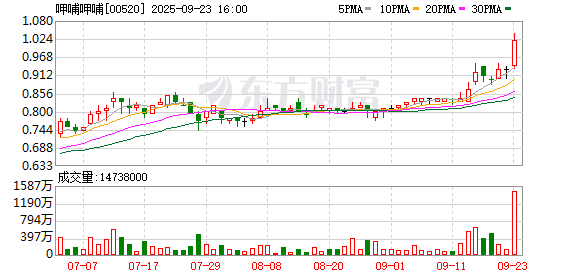
呷哺呷哺(00520) - 2025 - 中期财报
2025-09-25 08:30
Financial Performance - The reporting period ended on June 30, 2025, covering six months of financial performance[16] - The company achieved a revenue of RMB 1.2 billion, representing a year-over-year increase of 15%[16] - The Group's revenue decreased by 18.9% from RMB2,394.5 million in the first half of 2024 to RMB1,942.4 million for the Reporting Period[22] - The Group recorded a pre-tax loss of RMB75.7 million for the Reporting Period, a significant decrease of 71.6% from RMB267.0 million in the first half of 2024[22] - The Group recorded a net loss of RMB80.8 million for the Reporting Period, reflecting a substantial reduction of 70.5% from RMB273.7 million in the first half of 2024[22] - As of June 30, 2025, total net revenue for the Group was RMB 1,028,863 thousand, a decrease of 18.0% from RMB 1,254,525 thousand in 2024[40] Customer Metrics - User data indicates a growth in active customers to 5 million, up 20% from the previous year[16] - The average spending per customer decreased to RMB 53.7 in 2025 from RMB 59.6 in 2024, reflecting a decline of 3.2%[40] - The customer turnover rate increased by 13.0% from 2.3x in the first half of 2024 to 2.6x in 2025[42] - Same-store sales in Tier 1 cities dropped by 16.4% to RMB 458.8 million in 2025 from RMB 548.6 million in 2024[46] - The number of same-store restaurants increased to 732 in 2025, compared to the previous year[46] Market Expansion and Strategy - The company plans to expand its market presence by opening 50 new locations in the next fiscal year[16] - A strategic acquisition of a local competitor is in progress, expected to enhance market share by 5%[16] - The Group is advancing a restaurant network renewal strategy to improve operational efficiency and resource allocation[23] - The Group is deepening its on-demand delivery service ecosystem to drive high-quality business expansion and operational efficiency improvements[23] - The Group's core strategy focuses on market expansion, brand elevation, and operational optimization, including the launch of new delivery products and closing underperforming restaurants[64] Product Development - New product launches are expected to contribute an additional RMB 300 million in revenue by the end of 2025[16] - Coucou launched four new hot pot soup bases and a series of Longjing tea-flavored products, enhancing its menu diversity[67][69] - The brand's collaboration with the internationally renowned IP Miffy aims to expand brand awareness and attract new customers, marking a strategic entry into new markets[67][69] Operational Efficiency - Research and development expenses increased by 10% to RMB 150 million, focusing on innovative menu items[16] - The amount of provision for asset impairment losses on closed and continuously loss-making restaurants significantly decreased by approximately 64.1% compared to the same period in 2024[22] - The Group's table turnover rate decreased from 1.6 times in the first half of 2024 to 1.4 times in the first half of 2025, reflecting a 12.5% year-on-year decline[52] Employee Metrics - The total staff cost for the Group was RMB 666.5 million, a decrease of 18.1% from RMB 814.1 million in the previous year, representing approximately 34.3% of total revenue[132] - As of June 30, 2025, the Group employed a total of 17,930 employees, a decrease from 24,606 employees as of December 31, 2024[127][130] - The group provides competitive salaries and benefits to restaurant employees to control turnover rates[134] Financial Management - The Group intends to finance its expansion and operations through organic growth and bank financing[100] - The Group's gearing ratio was 47.8% as of June 30, 2025, calculated by dividing bank and other borrowings by total equity[114][120] - The Group recorded finance costs of RMB26.4 million, a decrease of 40.8% compared to RMB44.6 million in the same period last year[98] Shareholder Information - As of June 30, 2025, Mr. Ho Kuang-Chi holds 396,234,500 shares through a discretionary trust, representing approximately 36.48% of the company's shareholding[139] - Ms. Chen Su-Yin, as the spouse of Mr. Ho Kuang-Chi, is deemed to have an interest in 421,911,860 shares, which is approximately 38.84% of the company's shareholding[139] - The company had a total of 1,086,174,481 issued shares as of June 30, 2025[141] Corporate Governance - The Company complied with the Corporate Governance Code, except for the deviation regarding the separation of roles of chairman and CEO[184] - The Audit Committee reviewed the unaudited interim results for the six months ended June 30, 2025[192] - The independent auditor, Deloitte Touche Tohmatsu, conducted a review of the interim financial information[192]
让宠物和人一起吃饭,海底捞拼了
Xin Lang Cai Jing· 2025-09-24 04:33
Core Viewpoint - Haidilao has opened its first pet-friendly restaurant in Shenzhen, tapping into the growing pet economy and allowing customers to dine with their pets [1][3]. Group 1: Pet-Friendly Restaurant - The pet-friendly restaurant features a dedicated area for pets, with separate entrances for pet owners and non-pet customers [3]. - On its opening day, nearly 40 tables were occupied by pet owners, and over 150 tables were filled during the first weekend [1][3]. - The restaurant offers a "cute pet exclusive package" with daily specials like chicken breast and duck meat dishes, priced around 23 to 46 yuan [3][4]. Group 2: Industry Trends - Many restaurants in major cities like Beijing, Shanghai, and Chengdu are also embracing the pet dining trend [4]. - Other brands, such as Xiaobuxiang and Coucou Hotpot, have opened pet-friendly locations, although they do not yet offer pet-specific meals [5]. Group 3: Business Strategy - Haidilao has diversified its offerings by launching various themed restaurants, including night snack and community stores, and has introduced 14 sub-brands in recent years [6][7]. - The company aims to meet diverse consumer needs and increase revenue by exploring new market segments [7][9]. - The "Red Pomegranate Plan" encourages internal entrepreneurship, allowing employees to innovate and test new concepts [8][11]. Group 4: Financial Performance - Haidilao's revenue and net profit growth have slowed, with a 3.7% decline in revenue to 20.7 billion yuan and a 13.7% drop in profit to 1.755 billion yuan in the first half of 2025 [9][10]. - The decline in the hotpot segment is attributed to increased competition and changing consumer preferences [9][10]. Group 5: Challenges and Opportunities - Despite the challenges, Haidilao has sufficient cash reserves of 6.407 billion yuan to support new ventures and employee projects [11][12]. - The company has seen mixed results with its sub-brands, with nearly half of the 26 launched by March 2025 having closed, indicating the risks associated with rapid expansion [12].


蜜雪冰城,如何度过柠檬水危机?丨消费参考
2 1 Shi Ji Jing Ji Bao Dao· 2025-09-24 02:47
Group 1 - The core issue is a supply crisis of lemons affecting the flagship product, lemon water, of the company Mixue Ice City [1][7] - The shortage of lemons has been reported in multiple cities including Zhengzhou, Shanghai, and Changsha [2] - The internal discussions regarding the lemon supply issue began as early as May this year [4] Group 2 - Climate change has led to significant fluctuations in lemon production, with major production areas like Sichuan experiencing a reduction of 30%-60% due to adverse weather conditions [5] - The wholesale price of lemons has surged to 14.98 yuan per kilogram, nearly double the price of 7.87 yuan per kilogram from the previous year [6] - The demand for lemons has increased by 200% due to rising summer temperatures, further exacerbating the supply issue [5] Group 3 - The lemon shortage is expected to persist due to limited domestic production areas [8] - The company remains optimistic about overcoming the lemon water crisis, with expectations of imported lemons arriving soon [9] - Some leading tea brands are considering using concentrated lemon juice as a substitute during the supply crisis [10][11]
研判2025!中国小火锅行业发展历程、市场政策、产业链、市场规模、竞争格局及发展趋势分析:“一人食”消费场景占比高达44.2%[图]
Chan Ye Xin Xi Wang· 2025-09-24 01:36
Overview - The small hot pot industry is characterized by its strong fast-food attributes and lower social interaction compared to traditional hot pot, catering to the "light social" needs of the younger generation [1][5] - The "one-person meal" trend aligns with the independent dining preferences of single consumers, and the high cost-performance ratio meets the demands of the lower-tier market [1][5] - The market size of China's small hot pot industry is projected to reach 58.8 billion yuan in 2024, with a year-on-year growth of 12.07%, accounting for 9.52% of the overall hot pot market [1][10] Development History - The small hot pot concept originated in Japan and was introduced to Taiwan in the 1990s, with the first store in mainland China opened by Xiaobuxia in 1999 [3][11] - The rise of the "one-person meal" culture since 2020 has led to increased demand for small hot pots, especially during the pandemic, which has created new growth opportunities [3][4] - Major traditional hot pot brands are now entering the small hot pot market, enhancing competition and quality standards [4][10] Market Policies - The Chinese government has issued various policies to support the development of the restaurant industry, including small hot pots, creating a favorable environment for growth [4][5] Industry Chain - The upstream of the small hot pot industry includes suppliers of vegetables, fruits, meats, seafood, and kitchen equipment, while the downstream consists of dining and takeaway channels [5][6] - China's agricultural output remains stable, providing sufficient raw materials for the small hot pot industry [7][8] Consumer Insights - Female consumers dominate the small hot pot market, accounting for 51.4%, with the majority aged between 20-39 years [9] - The "one-person meal" scenario represents 44.2% of consumption, indicating a strong preference for individual dining experiences [9] - Price sensitivity is high among consumers, with the most accepted price range being 20-40 yuan [9] Competitive Landscape - The small hot pot market is becoming increasingly competitive, with major brands launching their own small hot pot products [10][11] - Xiaobuxia leads the market, followed by other brands like Qianwei Yiding and Weila Xiaohotpot [10][11] Future Trends - The small hot pot industry is expected to undergo rapid consolidation, with leading brands emerging based on supply chain advantages and brand influence [12] - Integration with new retail models and advancements in technology, such as smart ordering systems, will drive innovation in the industry [12][13]

呷牛餐饮管理(天津)有限公司成立
Zheng Quan Ri Bao· 2025-09-23 14:09
Group 1 - A new company named Xiangniu Catering Management (Tianjin) Co., Ltd. has been established with a registered capital of 50 million yuan [2] - The business scope of the company includes catering services, food sales, and catering management [2] - The company is wholly owned by Xiabuxiabu Investment Group Co., Ltd. [2]
预制菜风波背后:西贝与海底捞们的副牌焦虑
3 6 Ke· 2025-09-22 11:34
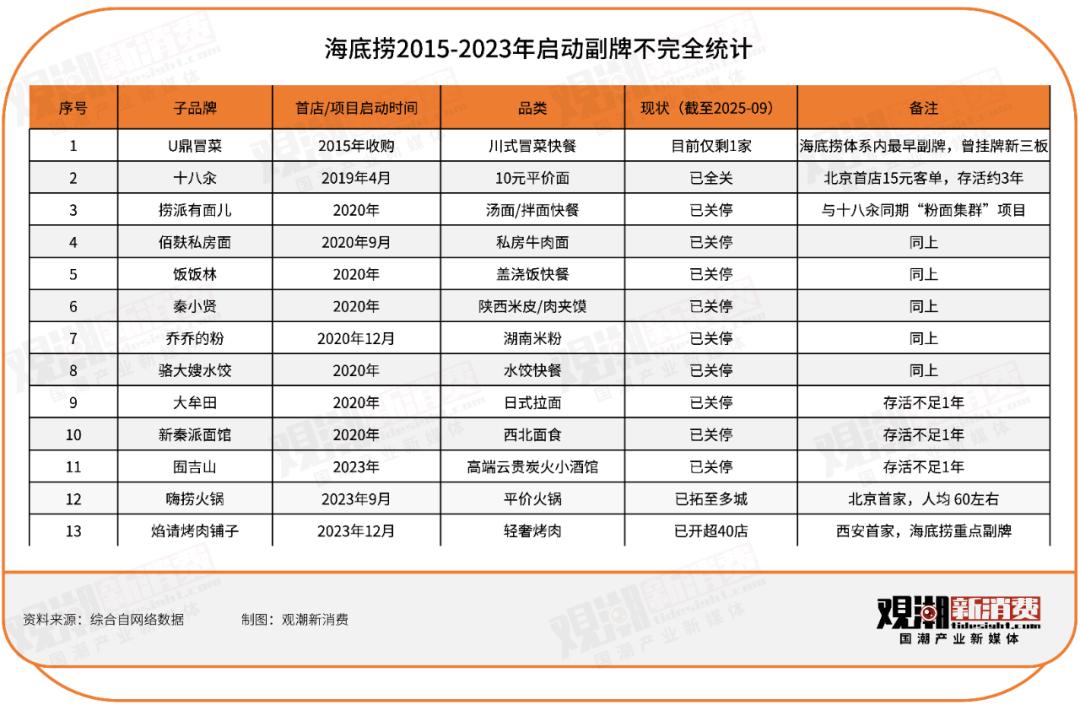
Core Viewpoint - The restaurant industry is shifting from a "many brands, many blessings" strategy to a focus on "quality over quantity" in brand development, particularly in the context of a low-margin environment [1][27]. Group 1: Brand Strategy - Leading restaurant companies are adopting a "main brand holds the fort, sub-brands charge forward" strategy, but the success of sub-brands depends on strategic consistency and resource synergy [2][27]. - Haidilao, despite being a hotpot giant, is aggressively exploring sub-brands, having launched over 20 sub-brands across various categories, including baking and barbecue [1][3]. Group 2: Performance and Challenges - Haidilao's rapid expansion led to a significant increase in store count to 1,205 by 2020, resulting in operational challenges and a record loss of 4.2 billion yuan in 2021 [3][4]. - The company has since reassessed its sub-brand strategy, focusing on fewer launches and prioritizing its main brand, with only three sub-brands introduced in 2023 [3][4]. Group 3: Sub-Brand Development - The "Red Pomegranate Plan" encourages internal entrepreneurship among employees, allowing for quicker market adjustments and reducing trial costs for new sub-brands [5][27]. - By the end of 2024, Haidilao's other restaurant revenues reached 483 million yuan, showing a year-on-year growth of 39.6%, indicating initial success from its sub-brands [6]. Group 4: Pricing Strategy - The restaurant market is experiencing a structural shift towards lower price points, with average hotpot spending dropping from 86.7 yuan in 2022 to 77.1 yuan in 2025, a decline of 11% [13][16]. - Haidilao's sub-brands are strategically priced to attract a broader consumer base, with offerings like "Little Hi Hotpot" and "High High Self-Service Hotpot" focusing on affordability [14][15]. Group 5: Industry Trends - The competitive landscape is forcing companies to refine their sub-brand strategies, with many opting to consolidate resources and focus on core brands rather than spreading themselves too thin [23][26]. - West B's sub-brand exploration has resulted in cumulative losses of 700-800 million yuan over 7-8 years, leading to a strategic retreat to focus on its main brand [26][27].
海底捞、杨国福纷纷入局小火锅,年轻人为何愿为“一人食”买单?
Xin Lang Cai Jing· 2025-09-22 11:17
Group 1 - The core viewpoint of the article highlights the emergence of a new trend in the hot pot industry, driven by the rise of the "one-person economy" and changing consumer preferences, particularly among young people who prefer individual dining experiences [2][4] - The article notes that by 2030, the number of people living alone in China is expected to reach between 150 million to 200 million, with the highest proportion being young adults aged 20-39, indicating a significant shift in consumer demand [2] - Major restaurant chains are entering the self-service hot pot market due to three main factors: the evolution of consumer demographics, growth anxiety among companies, and the attractive market potential [2][3] Group 2 - The article discusses the competitive landscape of the hot pot market, which has formed distinct price segments: below 30 yuan is dominated by regional brands, while the mid-range market is led by giants like Haidilao and Yang Guofu, priced at 59.9 yuan [3][4] - The rise of self-service hot pot addresses modern social issues, particularly the discomfort associated with dining alone, by providing features such as independent cooking stations and transparent partitions that enhance the dining experience [2][4] - The article emphasizes that the popularity of self-service hot pot is not merely a product innovation but a response to demographic changes, with the need for personal dignity in consumption becoming a key driver for both low-end and mid-range offerings [4]
国金证券:餐饮行业步入复苏阶段 供给侧调改驱动利润上行
Zhi Tong Cai Jing· 2025-09-22 06:17
Core Viewpoint - The restaurant industry is experiencing a recovery characterized by "overall pressure and internal differentiation," with significant variations in same-store performance and a shift from low-base recovery logic to genuine supply-side adjustments since 2025 [1][2]. Group 1: Industry Performance - The restaurant industry's revenue showed signs of pressure and differentiation in H1 2025, with fluctuations in year-on-year growth rates for social retail dining and above-limit dining since 2025, including negative growth in July for above-limit dining [1]. - The national restaurant industry prosperity index was 104.1 in June 2025, slightly down by 0.1% from May, indicating slight volatility despite strong demand in specific scenarios like graduation banquets and summer night markets [1][2]. - The performance of same-store sales varied significantly, with resilient performance in cost-effective categories like tea drinks and fast food, while high-ticket hot pot categories faced notable pressure [1][2]. Group 2: Company Strategies - Leading brands are focusing on cost reduction and efficiency improvement, adapting store types to local markets, and prioritizing profit over revenue growth [2][3]. - Companies with supply chain advantages or refined operational capabilities, such as Yum China and Gu Ming, are showing stable profitability, with some brands like Gu Ming achieving a net profit increase of 121.5% year-on-year [2]. Group 3: Expansion and Profitability - The profitability of individual stores is crucial for supporting expansion, with the logic of opening new stores being based on whether the combined profits of new and existing stores exceed previous profits [3]. - Successful examples include Xiao Cai Yuan, which achieved a net increase of 55 stores in H1 2025 with a profit margin of 23.8%, demonstrating a positive cycle of store expansion and profit growth [3]. Group 4: Investment Recommendations - The industry outlook remains positive for cost-effective dining segments, with a recommendation to focus on leading companies like Xiao Cai Yuan, which is expected to accelerate store openings and achieve positive same-store growth in the current market environment [4].

山姆上架太二酸菜鱼预制菜,九毛九4年市值蒸发480亿
21世纪经济报道· 2025-09-21 07:06
Core Viewpoint - The article discusses the challenges faced by Jiumaojiu (09922.HK) and its brand Taier Suancaiyu amid the intensifying competition in the prepared food market, highlighting a significant decline in performance and market value over recent years [1][4][8]. Financial Performance - Jiumaojiu's market value has decreased by over 520 billion HKD (approximately 480 billion RMB), a 94% drop from its peak of nearly 550 billion HKD in early 2021 to just 30 billion HKD by September 2025 [5][8]. - For the first half of 2025, Jiumaojiu reported a revenue of 2.753 billion RMB, a year-on-year decline of 10.1%, and a net profit of 61 million RMB, down 16.05% [7]. - Taier Suancaiyu's revenue for the first half of 2025 was 1.949 billion RMB, a 13.3% decrease, with the number of stores reducing from 612 to 547, marking the first significant closure of stores since 2019 [9][10]. Brand Performance - The three main brands under Jiumaojiu, including Taier Suancaiyu, Song Hotpot, and Jiumaojiu (Northwest Cuisine), have all experienced declines in performance [9]. - Taier Suancaiyu's table turnover rate has dropped from 4.9 times per day in 2019 to 2.2 times per day, with the average customer spending decreasing from 80 RMB to 73 RMB [13]. Market Trends - The article notes a broader trend in the Chinese restaurant industry, with many companies facing similar challenges, including a significant increase in restaurant closures, reaching a closure rate of 61.2% in 2024 [20]. - Despite the challenges, some segments, such as tea beverage brands, have shown strong growth, indicating a shift in consumer preferences [19]. Strategic Adjustments - In response to declining performance, Taier Suancaiyu has initiated a comprehensive overhaul, introducing a new store model focused on fresh ingredients and enhancing customer experience [17]. - The company has also begun selling prepared Taier Suancaiyu dishes through channels like Sam's Club, with sales from this segment increasing by 140% year-on-year [17].