大疆创新

Search documents
64家粤企携手共赴第三届链博会,广东以“链”为媒对话世界
2 1 Shi Ji Jing Ji Bao Dao· 2025-07-14 05:34
Group 1 - The third China International Supply Chain Promotion Expo will be held from July 16 to 20 in Beijing, with Guangdong Province as the guest province, featuring a dedicated exhibition area and a series of events [1] - A total of 64 Guangdong enterprises, including notable companies like BGI Genomics, ZTE, TCL, and Guangzhou Pharmaceutical Group, will showcase innovative products at the expo, highlighting the province's supply chain capabilities [1] - Key Guangdong "chain master" enterprises such as Xpeng Motors, DJI, UBTECH, and EHang will present new products and innovations, demonstrating the new heights and momentum of Guangdong's supply chain development [1] Group 2 - On the opening day of the expo, Guangdong will organize the International Supply Chain Cooperation Conference themed "Yue Chain Yue Strong, Chain Leading the World," aimed at establishing a high-level international cooperation platform [2] - The conference will feature the release of new products in robotics, biomedicine, and digital trade, showcasing Guangdong's leadership in smart manufacturing, health, and digital technology [2] - Guangdong will also hold a series of promotional meetings on July 17, including those for Guangzhou and Shenzhen, to attract more enterprises and strengthen its role as a core node in the global supply chain [2]
朱克力 |“十四五”新质生产力:数字浪潮、AI觉醒与低空起飞
Sou Hu Cai Jing· 2025-07-09 14:10
Core Viewpoint - The "14th Five-Year Plan" period has seen China’s economy grow steadily despite challenges, with emerging fields like digital economy, artificial intelligence, and low-altitude economy becoming core drivers of high-quality development [1] Digital Economy - The digital economy has achieved a dual leap in scale and quality during the "14th Five-Year Plan," with its size reaching 50.2 trillion yuan by 2024, accounting for 41.5% of GDP, an increase of approximately 20 trillion yuan and 6.5 percentage points from the end of the "13th Five-Year Plan" [2] - The online retail scale is projected to reach 15.3 trillion yuan in 2024, growing by 11.8% year-on-year, with leading companies like Alibaba and JD.com innovating to evolve from simple transactions to a "consumption + service" ecosystem [2] - The integration of digital economy with the real economy is crucial, exemplified by SANY Heavy Industry's "lighthouse factory," which improved production efficiency by 30% and reduced unit costs by 20% through smart production decisions [4] Artificial Intelligence - Breakthroughs in AI, particularly large models, are a hallmark of technological innovation during the "14th Five-Year Plan," with significant advancements in natural language processing and knowledge question answering [6][8] - AI large models have shown strong capabilities in various sectors, enhancing medical diagnosis accuracy by 10%-20%, improving risk assessment in finance, and personalizing education [8] - The "three new" economy, driven by AI, has generated over 24 trillion yuan in added value by 2024, indicating a shift towards high-end, intelligent industrial structures [9] Low-altitude Economy - The low-altitude economy has emerged as a new growth area, supported by favorable policies and technological innovations, with 380 general airports established by the end of 2024, an increase of 120 from the end of the "13th Five-Year Plan" [10][12] - Innovations in drone technology have positioned China as a global leader, with applications in agriculture that enhance efficiency by over 30 times compared to manual methods [12] - The low-altitude economy's applications are expanding, with drone delivery improving logistics efficiency and low-altitude tourism projects boosting related industries [13] Conclusion - The "new quality productivity" demonstrated during the "14th Five-Year Plan" showcases the strong driving force of technological innovation and application scenarios, which are expected to release greater potential in the future [13]


“工业具身智能第一股”,供应链依赖进口
阿尔法工场研究院· 2025-07-08 12:22
Core Viewpoint - Stand Robot has submitted its prospectus to the Hong Kong Stock Exchange, aiming to become the first "industrial embodied intelligence stock" through the "Chapter 18C" listing process [1] Group 1: Industry Status and Company Overview - The global industrial intelligent mobile robot market is expanding at a compound annual growth rate (CAGR) of 27.5%, expected to reach $3.003 billion by 2029 [2] - Stand Robot, as a leading Chinese industrial mobile robot company, anticipates revenue growth from 96 million yuan in 2022 to 251 million yuan in 2024, with a CAGR of 61.3%, significantly surpassing the industry growth rate of 26.8% [2] - The company's gross margin improved from 12.9% to 38.8%, indicating enhanced product competitiveness [2] - However, Stand Robot has incurred a cumulative net loss of 273 million yuan over three years, primarily due to high R&D investments (18-21% of revenue) and market expansion costs [2] - By 2024, Stand Robot is projected to rank fifth globally in industrial mobile robots and fourth in embodied intelligent robots, holding the second position in the 3C electronics and automotive sectors [2] Group 2: Technical Advantages and Market Performance - Stand Robot's core competitiveness lies in providing customized robotic solutions for diverse industrial scenarios, being the first in China to achieve "world model" and "swarm intelligence" in industrial robot systems [3] - The modular design concept ("1+N+X") significantly reduces total ownership costs for customers, with high-end models priced at 250,000 yuan per unit, well above the industry average of 80,000 to 100,000 yuan for low-end products [3] - The company serves over 400 clients, including Xiaomi Automotive and Foxconn, with a customer retention rate exceeding 60% [4] - In the semiconductor sector, its wafer handling solution boasts vibration control precision of less than 0.1G and a failure rate of less than 0.1 occurrences per thousand hours, optimizing five times better than the industry average [4] Group 3: Peer Comparison - Stand Robot is compared with other companies in the industry, highlighting its position as the fifth largest mobile robot manufacturer globally and second in the 3C/automotive sector [6] - Key challenges include ongoing losses and supply chain stability risks, as evidenced by delivery delays in 2022 due to shortages of imported components [6] Group 4: Development Prospects - Stand Robot plans to allocate 40% of its IPO proceeds to R&D and 30% to global expansion [7] - The company's overseas revenue has grown at a CAGR of 150% over three years, with the Japanese market accounting for 15% of its revenue [7] - The industrial embodied intelligence sector is expected to grow at a CAGR of 61.1%, reaching 15.2 billion yuan by 2029, providing significant growth opportunities for the company [7]

粤港澳大湾区人口与经济密度领跑全国 密度+生态助力大湾区领飞低空经济
Shen Zhen Shang Bao· 2025-06-28 16:43
Core Insights - The low-altitude economy is emerging as a trillion-dollar industry, with the Guangdong-Hong Kong-Macao Greater Bay Area (GBA) having a unique advantage due to its high population and economic density [1][4] - The blue paper highlights that the GBA leads in both population density (1,536 people/sq km) and economic density (2,500 billion yuan/sq km), significantly surpassing other major urban areas in China [2][4] Group 1: Density Advantage - The GBA's population density is 2.3 times that of the Yangtze River Delta and 3 times that of the Beijing-Tianjin-Hebei region, while its economic density is 2.7 times and 5 times higher than the same regions respectively [2][4] - The GBA's per capita GDP is 162,800 yuan, higher than the Yangtze River Delta (138,700 yuan) and Beijing-Tianjin-Hebei (94,900 yuan), indicating a more efficient and prosperous economic activity [2] Group 2: Industry Ecosystem - The GBA has developed a leading and globally recognized innovation and industrial ecosystem in the low-altitude economy, attracting influential companies across various sectors [5][6] - Companies like EHang and SF Express are pioneering in air transportation and logistics, respectively, with EHang being the first to receive global airworthiness certification for its eVTOL aircraft [5][6] Group 3: Collaborative Innovation - Shenzhen, known as the "Drone Capital," is actively practicing collaborative innovation, with initiatives like the establishment of international drone standards and various low-altitude economic scenarios [7][8] - The GBA is expected to become an international model for the low-altitude economy, with platforms like the Guangdong Low Altitude Economic Industry Development Co. and the Bao'an Low Altitude Economic Public Service Center leading the way [8]
如何看待市场空间?影石创新深度系列(2):记录的革命与裂变
Huafu Securities· 2025-06-27 08:21
Investment Rating - The report maintains an "Outperform" rating for the industry [6]. Core Insights - The panoramic camera and action camera segments are still in the early stages of category cultivation, with panoramic cameras offering unique advantages such as capturing 360° panoramic images and enabling "shoot first, compose later" functionality. The rise of short videos globally is expected to drive the growth of the VLOG camera category, which has significant development potential [4]. Summary by Sections 1. Pain Points Addressed by Panoramic Cameras - Panoramic cameras provide a distinct advantage over traditional cameras by capturing three-dimensional space, allowing users to retain more exciting moments without the limitations of traditional camera angles [3][14]. - The current demand for panoramic cameras primarily includes three scenarios: extreme sports like skydiving and skiing, travel situations requiring quick captures, and creative perspective pursuits during filming [27][28]. 2. Market Potential Assessment - The global action camera market is projected to grow from $2.7 billion in 2020 to $6.6 billion by 2027, with a compound annual growth rate (CAGR) of 13.5%. The volume of action cameras is expected to increase from 13.4 million units to 29.9 million units during the same period, indicating a strong market expansion [43][46]. - The potential annual sales volume for VLOG cameras is estimated at 40 million units for the sports user segment and 16 million units for content creators, suggesting a robust demand driven by outdoor activities and content creation [54][60]. 3. Channel and Marketing Analysis - The company employs a balanced online and offline sales strategy, with significant contributions from major markets such as China, Europe, and the United States. In 2024, the revenue distribution is expected to be 24% from China, 23% from Europe, and 23% from the U.S. [70][79]. - Marketing efforts include collaborations with professional athletes and international celebrities to enhance brand visibility, alongside engaging users through content challenges that leverage the social media landscape [69][113].

消费与医药分论坛 - 新格局 新供给 2025年中期策略报告会
2025-06-24 15:30
Summary of Key Points from Conference Call Records Industry Overview - The conference call primarily discusses the **pharmaceutical industry** and its recovery driven by **policy support**, **funding inflow**, **AI technology**, and **innovation in drug development**. [1][2][4] Core Insights and Arguments 1. **Pharmaceutical Sector Recovery**: The pharmaceutical sector has shown signs of recovery, with the biopharmaceutical index outperforming the CSI 300 index, and the pharmaceutical sector increasing by **28%**. This recovery is attributed to supportive policies, funding inflow, AI technology advancements, and the international expansion of innovative drugs. [2][4] 2. **Innovative Drug Development**: In the first four months, the total amount of business development (BD) events in innovative drugs reached **$55 billion**, with upfront payments exceeding **$5 billion**, indicating strong market recognition of China's innovative drug development capabilities. [1][3][5] 3. **Investment Focus for H2 2025**: The main investment themes for the second half of 2025 include innovative drugs, AI medical technology, the silver economy, and emerging medical technologies empowered by AI, such as protein prediction. [1][4] 4. **Demographic Changes Impacting Consumption**: The decline in newborn population is weakening traditional consumption demand, while the pet economy is rapidly growing. The increasing proportion of elderly people is driving the development potential of the silver economy and health industry. [1][6] 5. **AI Technology in Pharmaceuticals**: AI technology is enhancing the pharmaceutical industry by improving research efficiency and reducing costs, particularly in protein prediction and innovative therapy development. [2][7] Additional Important Insights 1. **Clinical Data Driving Market Confidence**: The performance of innovative drug companies is expected to remain strong, with significant BD activities and impressive financial reports anticipated for the second half of 2025. [9][10] 2. **Challenges in the Pharmaceutical Supply Chain**: Hospitals face challenges in drug supply, emphasizing the need for innovative drugs to demonstrate significant clinical value and effectiveness. [18] 3. **Insurance and Policy Developments**: The introduction of commercial insurance policies is expected to stimulate the innovative drug sector positively, with ongoing adjustments to the medical insurance directory providing negotiation opportunities for companies. [11][21] 4. **Emerging Consumer Trends**: The rise of new consumer demographics, particularly among younger generations, is reshaping consumption patterns, with a notable increase in spending on pet-related products and services. [30][31] 5. **Pet Industry Growth**: The pet industry is experiencing rapid growth, with the market size reaching **300.2 billion yuan** by 2024, driven by an increase in pet ownership and spending on pet care. [53][54] This summary encapsulates the key points discussed in the conference call, highlighting the pharmaceutical industry's recovery, the impact of AI technology, demographic changes, and emerging consumer trends in the pet industry.
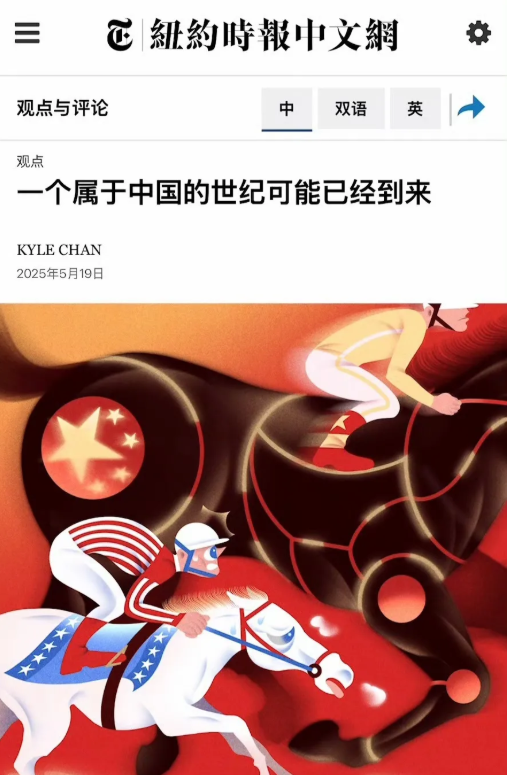
纽约时报猛文预警,中国45%制造份额改写“美国世纪”终章
Feng Huang Wang Cai Jing· 2025-06-24 11:18
Core Viewpoint - The article discusses the potential dominance of China in global manufacturing and technology sectors, warning that the U.S. may be left with a "high-priced, low-quality" domestic market due to its current policies and trade wars [1][3][4]. Group 1: China's Industrial Dominance - China is projected to hold a 45% share of global manufacturing by 2030, significantly surpassing the combined output of the U.S., Japan, and Germany [5][8]. - Key industries where China leads include steel, aluminum, shipbuilding, batteries, solar energy, electric vehicles, wind turbines, drones, 5G devices, consumer electronics, active pharmaceutical ingredients, and high-speed rail [5][9]. - By 2024, China's manufacturing output is expected to reach 31.6%, with a trajectory to 45% by 2030, while the combined share of the U.S., Japan, and Germany will drop to 19% [5][8]. Group 2: Impact of U.S. Policies - U.S. tariffs and reduced research funding are undermining its innovation base, leading to a talent drain and missed opportunities in the competition with China [3][12]. - The article highlights a strategic paradox in U.S. policy, where a zero-sum mindset is eroding its core competitiveness and risking a decline similar to that of Detroit [12][13]. - The U.S. is increasingly isolating itself from global supply chains, which could lead to a broader economic decline [12][16]. Group 3: Global Supply Chain Dynamics - China's integration into global supply chains has allowed it to transform from a "world factory" to a "global innovation hub," contributing over 30% to global economic growth [15][16]. - The article emphasizes that the rise of Chinese industries is a result of creative transformation of globalization benefits, contrasting with the U.S. approach of building trade barriers [12][16]. - The ongoing shift in global industrial power dynamics is evidenced by increasing foreign investments in Chinese technology sectors, as countries seek partnerships with China [17].

基于产教融合的职业教育体系建构策略与实践探析
Yang Shi Wang· 2025-06-24 11:12
Group 1 - The core task of vocational education is to build a system that integrates education and industry, aiming to cultivate skilled talents to support economic and social development [1] - The demand for high-skilled talents is surging as companies shift towards high value-added sectors, emphasizing product quality, brand image, and technological innovation [2][4] - Enterprises, regardless of their size, are actively participating in school-enterprise cooperation to cultivate innovative and composite high-skilled talents [3][4] Group 2 - The mechanism of integration between education and industry shows a multi-dimensional effect on regional economic development, focusing on optimizing human capital and talent supply structure [4][5] - Collaborative innovation platforms between schools and enterprises are essential for overcoming technological barriers and enhancing industrial capabilities [4][5] - A diversified training service system is constructed through resource integration, providing customized training solutions to meet the skill upgrade needs of different stakeholders [4][5] Group 3 - Establishing a community for education-industry integration is crucial for gathering economic development forces, involving universities, enterprises, and industry associations [6][7] - New productive forces, such as digital technologies, are driving deeper integration between education and industry, moving beyond simple connections to a more profound collaboration [8] - A comprehensive policy framework is necessary to support the development of education-industry integration, particularly in key industries and regions [9]
第25届中国专利奖广东获金奖数居首,多家粤企公告报喜
Nan Fang Du Shi Bao· 2025-06-09 08:11
Core Points - The 25th China Patent Award has been announced, with 30 patents winning the Gold Award and 10 designs winning the Gold Award for Appearance Design [1] - Guangdong Province leads with 11 Gold Awards, with several listed companies such as Nanfang Technology, Jiayuan Technology, and Guangfeng Technology among the winners [1] - The China Patent Award is the highest honor in the field of intellectual property in China, with a total of 30 Gold Awards, 60 Silver Awards, and 607 Excellent Awards for patents, as well as 10 Gold Awards, 15 Silver Awards, and 47 Excellent Awards for design [1] Company Highlights - Nanfang Technology's core patent, "A Wire Tracking Method and Device Based on Non-Vector Space Control Strategy," won a Gold Award and is applied in various devices, leading the domestic market in the field of power unmanned inspection [2] - Nanfang Technology holds a total of 536 authorized patents, including 394 invention patents, focusing on new energy storage, artificial intelligence, and smart power distribution technologies [2] - Chipsea Technology's award-winning patent addresses key technical challenges in achieving high precision and low power consumption in signal measurement, with applications in industrial automation and electric vehicle charging systems [2]


周鸿祎:我准备干掉360整个市场部;腾讯QQ出现全球首位256级用户;比亚迪王传福:我们绝不拉踩同行,这是原则丨邦早报
创业邦· 2025-06-08 01:03
完整早报音频,请点击标题下方小耳机收听 【周鸿祎:我准备干掉 360 整个市场部】 360 集团创始人、董事长兼首席执行官周鸿祎发视频称,"我准备干掉 360 整个市场部,这样一年可以给公司 省下几千万。""听起来像天方夜谭,但这次我准备动真格的了。"周鸿祎表示,"从今天起我要准备做一个挑战,我一个人要完成一场完整的新产品发布会 ——测试公司 6 月 11 号即将发布的纳米 AI 超级搜索智能体。""这件事我如果干成了,就意味着 AI 智能体确实有颠覆性的发展,传统的效率模型可能要 被淘汰了, 360 市场部也可以全部转岗到其它部门或者都给我编智能体去。"周鸿祎表示。(上游新闻) 【娃哈哈集团几成 "空壳"!媒体调查:利润被转移,国有股东权益被"悬空"】 据报道,部分娃哈哈集团前高管称,国资作为第一大股东的娃哈哈集团,在 企业治理方面存在诸多问题,娃哈哈产品的利润已转移至娃哈哈集团高管掌控的体外企业,娃哈哈集团几成"空壳"。 "确切地说, 2002 年以后娃哈哈出现了大量绕开国资的体外公司。"一位老员工透露:"这些公司主要是由管理层和职工持股会共同成立的投资公司对外投 资的,还有一部分是管理层和中层干部共同成 ...