蒙牛乳业

Search documents
对赌失败出局?“蒙牛系”职业经理人正式接手妙可蓝多,柴琇时代结束
3 6 Ke· 2026-01-26 03:28
Core Viewpoint - The sudden dismissal of founder Chai Xiu from her positions at Miaokelando (600882.SH) marks a significant shift in the company's leadership and direction, indicating a potential end to the entrepreneurial spirit of the "Chai Xiu era" and a transition into a more structured management under Mengniu's influence [1][3]. Group 1: Leadership Changes - Chai Xiu was removed from her roles as Vice Chairman, General Manager, and legal representative, with the announcement emphasizing the term "dismissal" rather than a more amicable "resignation," suggesting a serious internal conflict [1][2]. - The new CEO, Kuai Yulong, previously served as CFO for five years and is characterized as a professional manager from the Mengniu system, indicating a shift towards a more corporate governance style [2][3]. Group 2: Financial Implications - The dismissal of Chai Xiu is linked to unresolved debts from a fund she established, which has resulted in significant financial repercussions for Miaokelando, with projected net profit reductions of 119 to 127 million yuan for 2025 [4][7]. - Kuai Yulong's strategy upon taking office involves clearing historical debts to start with a clean balance sheet, a common tactic among professional managers [7]. Group 3: Company History and Market Position - Miaokelando experienced rapid growth during Chai Xiu's leadership, particularly from 2018 to 2021, when the company capitalized on the emerging cheese market in China, leading to a tenfold increase in stock price [10][11]. - However, the company now faces a declining revenue trend, with an 8.99% drop reported in 2024, marking its first negative growth since going public [16]. Group 4: Competitive Landscape - The cheese market has shifted from a blue ocean to a red ocean, with increased competition and changing consumer preferences, particularly in the children's cheese stick segment, which is facing saturation [16][18]. - Kuai Yulong is expected to implement strategies focused on compliance, cost reduction through Mengniu's supply chain, and expanding B2B channels to adapt to the current market challenges [18]. Group 5: Future Outlook - The transition from Chai Xiu's leadership to a more structured management under Kuai Yulong raises questions about the company's ability to innovate and grow in a competitive market, potentially leading to a more stable but less dynamic future [19]. - While the company may become safer under Mengniu's governance, the loss of Chai Xiu's entrepreneurial spirit could hinder its ability to navigate future growth opportunities [19].



牛系列-一体化企业如何看奶价-看消费
2026-01-26 02:49
Summary of Key Points from Conference Call Records Industry Overview - The Chinese dairy industry is undergoing structural adjustments, with a projected elimination of approximately 200,000 cows in 2026 due to insufficient heifer supply, accelerating industry reshuffling [1][11] - The scale of dairy farms is increasing, although full costs remain in loss, the loss margin is narrowing, and group enterprises are enhancing their self-controlled milk source ratio [1][2] Core Insights and Arguments - The cash cost for large-scale dairy farms is around 2.8 RMB per kg, while the total cost is approximately 3.3-3.4 RMB per kg, including depreciation costs of about 0.6 RMB [2] - The loss rate among dairy farms has decreased from 95% to 65%, indicating an improvement in financial health [2] - Group enterprises like Mengniu and Yili have achieved a self-controlled milk source ratio of 50%-70%, focusing on cost reduction to gain market advantage [3] - The rapid expansion of deep processing enterprises in Ningxia is notable, although it poses risks of blind expansion [4][5] Market Trends - The Chinese dairy product market is experiencing structural changes driven by consumer preferences for high cost-performance products, with exports becoming increasingly competitive [1][6] - The average price of bulk fresh milk is expected to fluctuate between 3.2-3.6 RMB per kg over the next two years [6] - The demand for deep processing is pushing farms to focus on milk components, with major companies enhancing protein content to meet the needs of specialized foods and health products [1][7][9] Competitive Landscape - China's dairy industry is facing competition from international food companies like Nestlé and Danone, which are experiencing profit erosion due to China's decreasing production costs [14][23] - The average production cost of milk in China has dropped to around 1.7 RMB per kg, with some regions like Ningxia achieving costs as low as 1.5 RMB per kg, enhancing international competitiveness [13][16] Future Development and Strategies - To enhance competitiveness, Chinese dairy farms should focus on continuous cost reduction, improving breeding technologies, and embracing digital agriculture [15][18] - The solid milk sector is growing rapidly, with a projected annual growth rate of about 20%, driven by increasing consumer demand for high-quality dairy products [19][20] - The export of Chinese dairy products is supported by favorable policies and strong industrial capabilities, with significant potential in Southeast Asia and the Middle East markets [21][22] Additional Insights - The upcoming consumption peak around the Spring Festival may have varying impacts on milk prices across regions, with a general expectation of a smoother price cycle due to changing consumer perceptions [12] - The meat cattle industry is expected to experience a bullish cycle in the next two to three years due to tight supply and increasing domestic demand [24]
信达国际控股港股晨报-20260126
Xin Da Guo Ji Kong Gu· 2026-01-26 02:15
Market Overview - The Hang Seng Index (HSI) faces short-term resistance at 27,188 points, with expectations of two interest rate cuts in 2026 following the Federal Reserve's recent rate reduction of 0.25% [1] - The market anticipates increased monetary policy support from mainland China in early 2026, focusing on expanding domestic demand and achieving technological self-reliance [1] - Recent adjustments in financing margin ratios by the Shanghai and Shenzhen stock exchanges may lead to short-term market corrections, affecting the inflow of foreign capital into Hong Kong stocks [1] Sector Focus - The macroeconomic outlook indicates that China is reportedly considering tightening IPO standards for mainland companies seeking to list in Hong Kong, although this has been denied by local media [2][6] - Companies such as BYD have set ambitious overseas sales targets, aiming for 1.3 million vehicles this year, while China’s beverage manufacturer Dongpeng is looking to raise up to 10.1 billion RMB through its IPO [2] - The banking sector shows a slight profit increase for China Merchants Bank, reporting a 1.21% rise in net profit to 150.181 billion RMB [2] Economic Indicators - The U.S. Federal Reserve has adjusted its GDP growth forecast for 2026 to 2.3%, while inflation expectations have been slightly lowered to 2.4% [2] - The Chinese Ministry of Commerce reported a 20.5% increase in online retail sales of mobile phones and an 18% increase for smart robots in 2025 [6] - Foreign Direct Investment (FDI) in mainland China fell by 9.5% year-on-year in 2025, marking the lowest level since 2014, despite a 19.1% increase in the number of newly established foreign-invested enterprises [6] Company Performance - The insurance sector in Hong Kong saw a significant increase in gross premiums, totaling 637 billion HKD, a rise of 32.5% in the first three quarters of 2025 [7] - The performance of major tech companies like Tencent and Alibaba has shown mixed results, with Alibaba's stock price declining by 2.23% [3][4] - The recent price adjustments for Apple’s iPhone Air in mainland China indicate a significant discount of approximately 30% within three months of its launch [6] Global Market Trends - The U.S. stock market showed mixed results, with the Dow Jones falling by 0.6% while the S&P 500 and Nasdaq experienced slight gains [4] - The Japanese economy is projected to continue its moderate recovery, with the Bank of Japan maintaining its interest rate at 0.75% while adjusting growth and inflation forecasts [8] - The European Union has extended the suspension of retaliatory trade measures against the U.S. for an additional six months, reflecting ongoing trade negotiations [8]


研判2026!中国药食同源行业政策汇总、销售额、销量、竞争格局及发展趋势分析:市场需求爆发,新兴成分表现出强劲增长势头[图]
Chan Ye Xin Xi Wang· 2026-01-26 01:21
Core Insights - The health-conscious consumer trend is driving demand for food products that offer health benefits, leading to increased interest in "food-medicine" products like goji berries, yam, and red dates [1][3][4] Industry Overview - The "food-medicine" concept is rooted in traditional Chinese medicine, emphasizing the dual role of certain foods as both nutrition and medicine [3] - The market for "food-medicine" products in China is projected to reach 56.78 billion yuan in 2024, with a year-on-year growth of 3% [1][6] Market Dynamics - The nutritional health food market in China is expected to grow to 678 billion yuan in 2024, reflecting a 7.3% increase year-on-year, providing a solid foundation for the "food-medicine" industry [6][7] - Sales of traditional ingredients like bird's nest and goji berries remain strong, while new ingredients like poria and astragalus are gaining traction, with astragalus seeing a 75.2% increase in sales [7][8] Competitive Landscape - The "food-medicine" industry features diverse competition from traditional pharmaceutical companies, food enterprises, new retail businesses, and internet health companies [9][10] - Major players include Tongrentang, Yunnan Baiyao, and Kang En Bei, which leverage their traditional medicine expertise to develop health-oriented food products [10][11] Development Trends - Future product development will focus on functional and scenario-specific offerings, catering to various consumer needs, such as liver health for night owls and digestive health for the elderly [12][15] - Cross-industry collaborations will become common, integrating "food-medicine" with baked goods, beverages, and other food categories to enhance flavor and health benefits [14][15] - Young consumers are emerging as a new growth segment, with increased interest in health products and innovative formats appealing to their preferences [15][16] - Stricter regulatory policies are expected to drive the industry towards higher quality standards, with ongoing support for traditional health culture and product innovation [16]


上海妙可蓝多食品科技股份有限公司 关于参股并购基金进展及相关风险的提示性公告
Zhong Guo Zheng Quan Bao - Zhong Zheng Wang· 2026-01-25 23:10
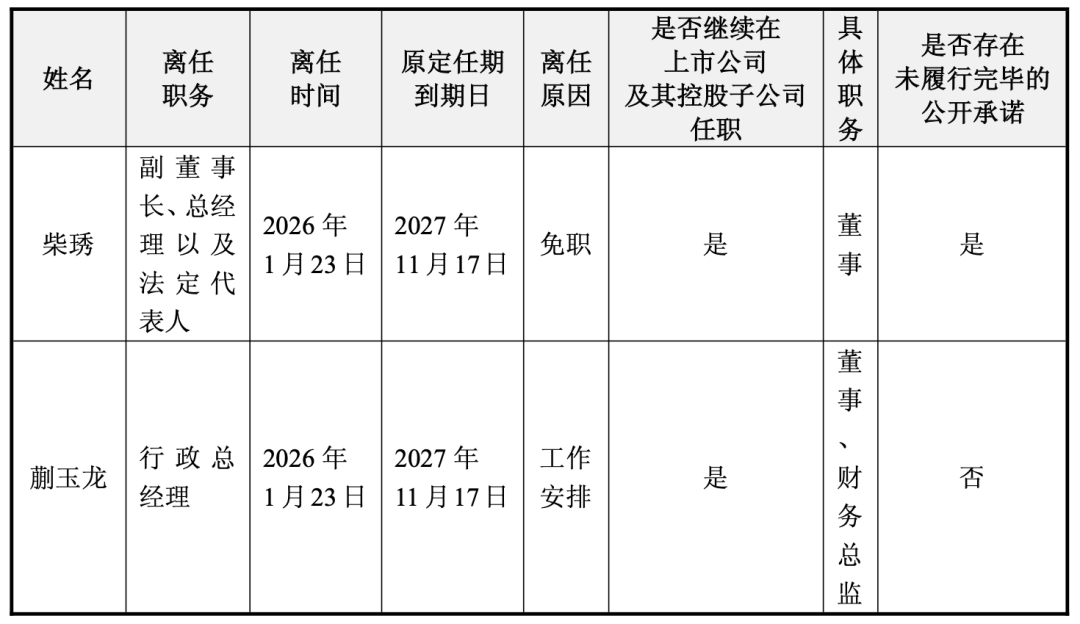
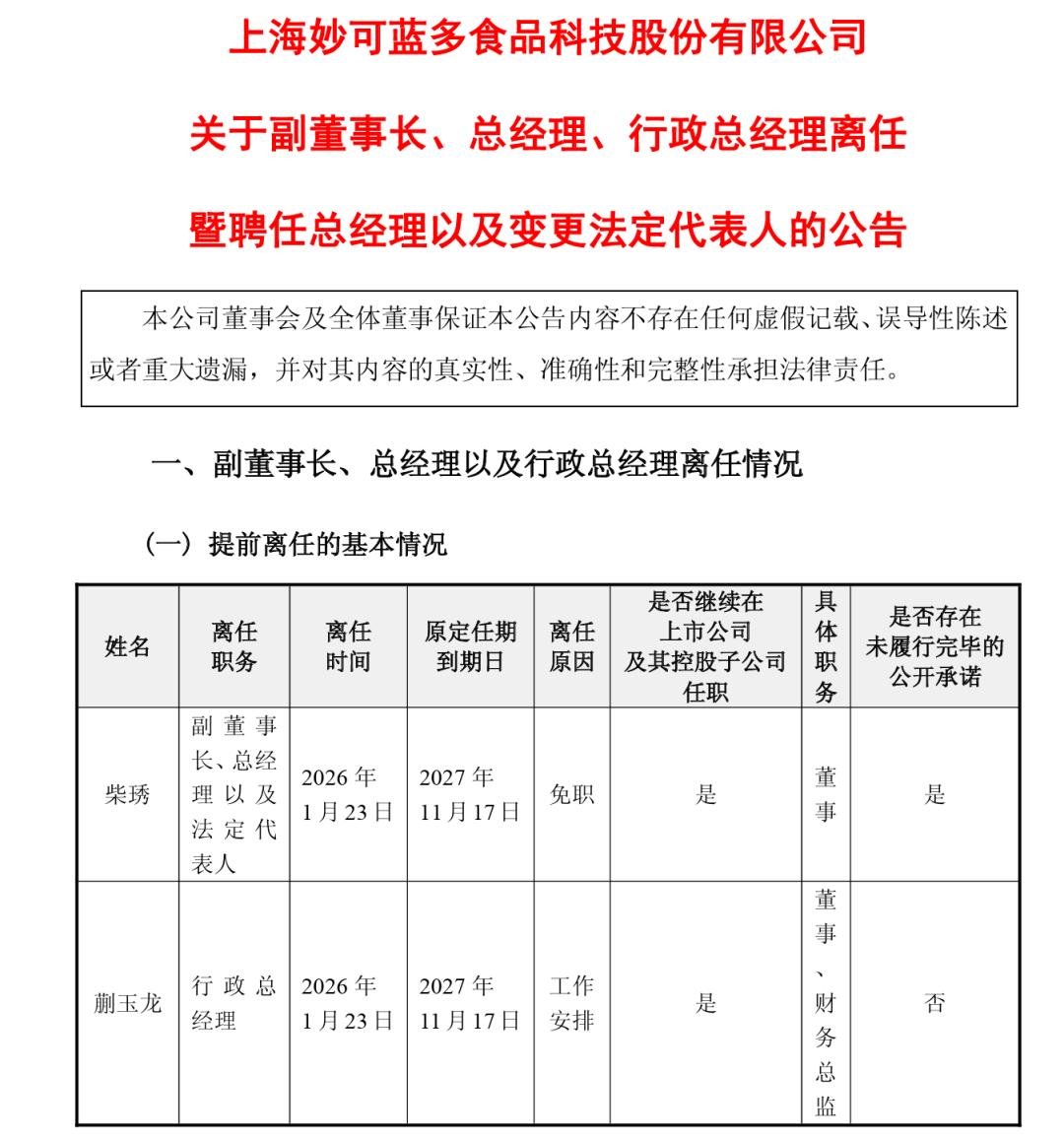
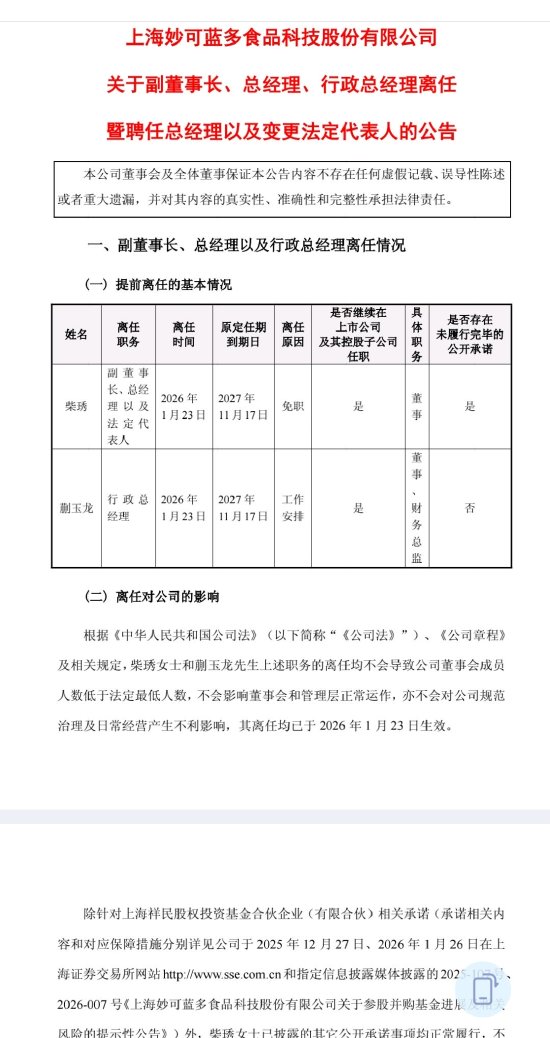
Group 1 - The company, Shanghai Miaokelan Duo Food Technology Co., Ltd., is facing challenges related to its investment in a merger and acquisition fund due to overdue debts from a related entity, Jilin Yaohua, which has affected the company's ability to recover its principal and returns from the fund [2][4] - The company has initiated arbitration against Ms. Chai Xiu for failing to fulfill her commitment to provide adequate compensation related to the fund, and has received a notice of acceptance for the arbitration application [2][4] - The company has invested a total of RMB 100 million in the merger and acquisition fund, with a cash distribution of RMB 14 million received in April 2020, and the current book value of the investment is approximately RMB 128.72 million as of December 31, 2024 [5][11] Group 2 - The company plans to recognize a fair value change loss for its non-current financial assets related to the merger and acquisition fund, which is expected to significantly impact its net profit for the year 2025 [15][16] - The fair value change loss is estimated to reduce the company's net profit attributable to shareholders by approximately RMB 119.11 million to RMB 126.61 million for the year 2025 [15] - The company has held board meetings to discuss and approve the recognition of fair value changes, ensuring compliance with accounting standards and reflecting the company's financial status accurately [16][17] Group 3 - The company has undergone management changes, with the resignation of the vice chairman and general manager, Ms. Chai Xiu, and the appointment of Mr. Kuai Yulong as the new general manager and legal representative [20][22] - The management transition is expected to maintain the normal operation of the board and management without adverse effects on corporate governance or daily operations [20][21] - Mr. Kuai Yulong, who has a background in finance and management, will oversee the company’s operations following his appointment [22]
突发,妙可蓝多创始人被免职
Xin Lang Cai Jing· 2026-01-25 14:37
Group 1 - The company announced the resignation of its Vice Chairman, General Manager, and legal representative, Chai Xiu, who will continue to serve as a board member. Kuai Yulong has been appointed as the new General Manager and legal representative [1][4] - Chai Xiu, the founder of the company, had a reported annual salary of 4.8663 million yuan for 2024. His departure was described as "dismissal" rather than "voluntary resignation," indicating potential unresolved issues [1][3] - The company is facing financial challenges due to debts owed by Jilin Yaohua, a company under the Shanghai Xiangmin Equity Investment Fund, which has not repaid its obligations to Inner Mongolia Mengniu Dairy [1][2] Group 2 - Inner Mongolia Mengniu Dairy has initiated arbitration against Jilin Yaohua and related parties for debt recovery, and has started asset takeover procedures for the overseas underlying assets of the merger fund [1][2] - The company holds priority rights to recover debts from the auction or sale of shares in Changchun Lianxin Investment Consulting Co., Ltd. and Jilin Zhiran Dairy Technology Co., Ltd. [2] - Chai Xiu had previously committed to compensate the company for any losses arising from the merger fund's guarantees, but has not fulfilled this commitment as of the announcement date [3][7]
中国乳业「老三」要IPO了,年营收近200亿,负债率77%
Sou Hu Cai Jing· 2026-01-25 13:48
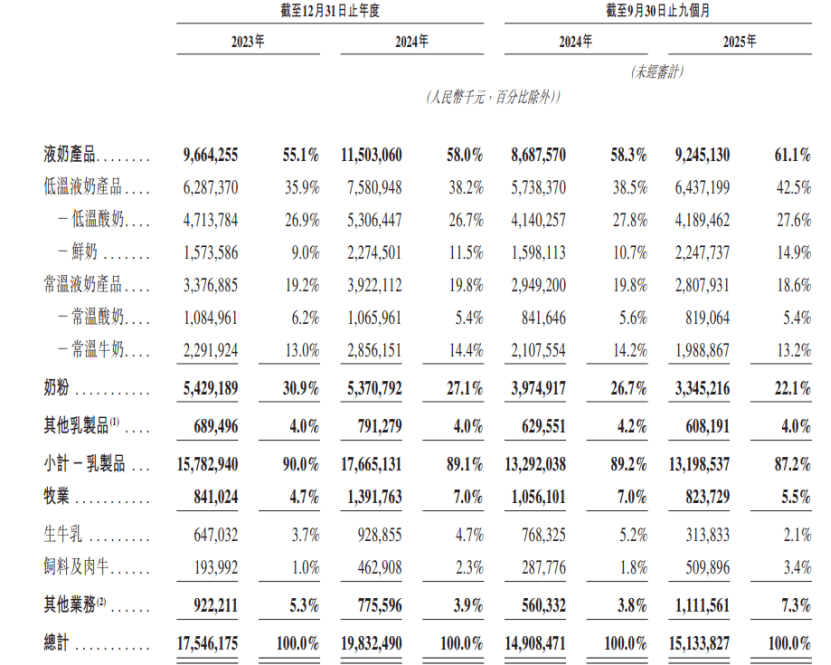
Core Viewpoint - Junlebao Dairy Group has submitted an application for a mainboard listing on the Hong Kong Stock Exchange, shifting focus from A-share listing to overseas market expansion [1] Group 1: Company Overview - Junlebao was founded in 1995 by Wei Lihua in Shijiazhuang, Hebei, initially having a tripartite shareholding structure with Wei holding 33%, Hongqi Dairy holding 33%, and Sanlu Group holding 34% [3] - After Sanlu's bankruptcy, Wei repurchased shares in 2009, increasing his stake to 83.53% [3] - In December 2010, Junlebao introduced strategic investor Mengniu, transferring 51% control for 469.2 million yuan [3] - Junlebao regained independence in 2019 when Mengniu divested its shares, leading to new investments from various institutions including Sequoia China and Ping An Capital [3] Group 2: Shareholding Structure - Prior to the IPO, Wei Lihua held 37.54% of shares, while management controlled 59.26% through various employee incentive platforms [4] - Sequoia China is the largest external institutional shareholder with an 8.59% stake, followed by Springhua Capital at 7.68% and Ping An Capital at 4.84% [4] Group 3: Financial Performance - Junlebao's revenue for 2023, 2024, and the first nine months of 2025 was approximately 17.546 billion yuan, 19.832 billion yuan, and 15.134 billion yuan, respectively, with net profits of 5.58 million yuan, 1.115 billion yuan, and 902 million yuan [10] - The company has a high debt level, with total liabilities reaching 17.57 billion yuan and a debt-to-asset ratio of 77.1%, significantly above the industry average of 50%-60% [10] - Junlebao has paid out approximately 1.625 billion yuan in dividends from 2023 to the first nine months of 2025, with a total of over 2.6 billion yuan in dividends over three years [10] Group 4: Product Portfolio - Junlebao's main revenue comes from dairy products, including low-temperature yogurt, fresh milk, and milk powder, with brands such as Junlebao and Yuxianhuo [6] - As of the first nine months of 2025, low-temperature dairy products contributed 15.134 billion yuan in revenue, accounting for 42.5% of total revenue [7] - The company holds a 5% market share in the infant formula market, ranking fifth among competitors [7] Group 5: Market Trends and Challenges - The overall dairy product market in China is experiencing a decline, with a projected market size of 659 billion yuan in 2024, down 3.1% year-on-year [14] - Junlebao has been actively pursuing mergers and acquisitions to explore new growth opportunities, completing eight investments since 2021 [15] - Despite the potential in cheese and yogurt markets, Junlebao faces challenges due to low consumer demand for dairy products in traditional diets [15][16]
什么是企业护城河,常见的企业护城河有哪些呢?|投资小知识
银行螺丝钉· 2026-01-25 13:42
Core Insights - The article discusses various types of competitive advantages, referred to as "moats," that companies can possess to maintain their market position and profitability [3][9][13]. Group 1: Types of Competitive Advantages - **Scale Advantage**: Companies like BlackRock, Vanguard, and State Street dominate the index fund market, collectively holding over 80% of the global market share. Larger funds can lower management fees, attracting more investors and creating a positive feedback loop [3]. - **Network Effect**: Industries such as stock exchanges and e-commerce benefit from network effects, where the value of the network increases with the number of users. For instance, the Hong Kong Stock Exchange has a significant market share, making it difficult for new entrants to compete [6][7]. - **Brand Advantage**: In sectors like consumer goods and pharmaceuticals, brand recognition plays a crucial role. Consumers often remember only a few brands, such as Moutai in liquor or Yili in dairy products, which illustrates the power of brand loyalty [9]. - **Switching Costs**: Companies that create ecosystems, like Apple with its product matrix, increase switching costs for users. Once consumers are accustomed to a particular ecosystem, it becomes challenging to switch to competitors [10][12]. - **Resource Advantage**: Industries such as mining and energy benefit from unique resources that are difficult to replicate. Companies with low extraction costs can maintain profitability and market dominance [13]. Group 2: Financial Characteristics of Companies with Moats - Companies with established moats typically exhibit strong financial metrics, indicating their ability to sustain profits over time [13].

一周新消费NO.345|六个核桃官宣马丽为品牌代言人;「认养一头牛」官宣品牌代言人赵丽颖
新消费智库· 2026-01-25 13:03
New Product Launches - Water Otter launched its first low GI fiber fruit tea, featuring a blend of seven NFC fruit and vegetable juices for a naturally sweet taste [2] - Mengniu introduced a new light yogurt bowl with reduced sugar content (25%) and approximately 282 kcal per serving, suitable for fitness and meal replacement [2] - White Elephant entered the health tea market with its new "Eighteen Tea," emphasizing clean ingredients and a visually appealing design [2] - Fengxing released a new "Ginger Scallion White Cut Chicken Flavor Milk," suitable for social gatherings and afternoon tea [3] - Yili launched multiple ice cream products, including various flavors that highlight quality milk sources and real fruit ingredients [5] - PepsiCo collaborated with the Chinese animation "Little Monster's Summer" to launch a themed can featuring popular characters [5] - Woji Fresh and Xiaohongshu introduced "Mahjong Cookies," made with New Zealand whole milk powder and zero trans fats [5] - Yuanqi Forest launched an apple hawthorn juice, fermented with probiotics and featuring a blend of apple and hawthorn juices [8] - Hema introduced a new low-sugar taurine-flavored beverage, suitable for outdoor activities and long drives [8] Brand Endorsements - Six Walnuts announced actress Ma Li as its brand ambassador, promoting a positive New Year message [33] - "Adopt a Cow" appointed actress Zhao Liying as its brand ambassador, with projected revenue exceeding 7 billion yuan in 2025 [33] - Zegna announced actor Chen Weiting as its global ambassador, enhancing its brand image in contemporary menswear [33] Industry Developments - JD's Seven Fresh Kitchen established a new company in Xiamen, focusing on food services and internet sales [10] - Chow Tai Fook opened a flagship store in Bangkok's Siam Paragon, showcasing Chinese craftsmanship and aesthetics [13] - Meituan Travel launched a "Safe Travel Plan" for seniors, providing free guidance services for passengers aged 55 and above [10] - Bosideng entered the Parisian market with a new high-end product line, collaborating with British designer Kim Jones [10] Investment and Financing - Boyu Capital acquired a 75% stake in Beijing Badaling Outlet, continuing its investment strategy in retail [20] - L Catterton invested in the high-end perfume brand Ex Nihilo, anticipating significant retail growth by 2025 [22] - OMOWAY completed a multi-million dollar Pre-A round financing, focusing on product delivery and global market expansion [22] - NoBull raised $50 million, achieving a valuation of $1 billion, with plans to expand into the nutrition sector [22] - Fangyuan Capital announced the acquisition of 92% of Jixiangju, a pickled vegetable and seasoning company [22]
妙可蓝多创始人遭免职!
Shen Zhen Shang Bao· 2026-01-25 12:30
内蒙蒙牛所享有的该等债权,在并购基金所持长春市联鑫投资咨询有限公司(简称"长春联鑫")99.99%股权、长春联鑫所持吉林芝然乳品科技有限公司(简 称"吉林芝然")90%股权经拍卖或变卖后所得价款享有优先受偿权。内蒙蒙牛后续将根据该仲裁案件的执行情况、接管程序的落实情况,酌情依法申请强 制执行,包括但不限于可能通过启动对祥民基金所持长春联鑫99.99%股权、长春联鑫所持吉林芝然90%股权等担保物的拍卖、变卖程序实现债权清偿。 据了解,柴琇曾出具《关于并购基金相关事项的说明》并承诺: 由于并购基金上述担保事项导致公司面临直接或间接损失的(包括但不限于无法在合伙协议约定期限内足额、及时回收在并购基金中的出资及应得收益), 其本人承诺将向公司足额补偿,并确保公司不至于因担保事项而出现损失。 1月25日,妙可蓝多(600882)公告,公司副董事长、总经理以及法定代表人柴琇离任,辞职后继续担任公司董事。 值得一提的是,柴琇离职的原因不是通常所见到的主动离职,而是"免职",其还存在未履行完毕的公开承诺。 同时,公司聘任蒯玉龙为总经理,法定代表人亦相应变更为蒯玉龙,其不再兼任公司行政总经理。 | 妙可蓝多在公告中依然对柴琇表 ...