地平线

Search documents
汽车视点丨“代差”优势显现 中国汽车智能科技企业出海跑出“加速度”
Xin Hua Cai Jing· 2025-12-07 15:04
Core Viewpoint - Since 2025, Chinese automotive intelligent technology companies have accelerated their overseas expansion, focusing on areas such as Robotaxi, intelligent assisted driving, and smart cockpits, creating a diverse overseas landscape of "technology output + scenario implementation + ecosystem co-construction" [1][2] Group 1: Market Expansion - Chinese Robotaxi companies like Baidu, WeRide, Pony.ai, and Didi have obtained full autonomous commercial operation licenses in several Middle Eastern countries this year [2] - Companies believe that the Middle East, with its relatively relaxed regulations and various funding supports, has become the preferred market for Robotaxi commercialization, while Europe promotes technology implementation through strict compliance and partnerships with traditional automakers [2] - Pony.ai has 1,000 Robotaxi vehicles in mass production in China and has begun operations in markets such as South Korea, Singapore, the UAE, Qatar, and Luxembourg [2] Group 2: Competitive Advantages - Chinese automotive intelligent solutions have formed three major "generation advantages" compared to overseas markets: - Product advantage: Over 85% of new cars in China are equipped with central screens, while this figure is below 50% in Europe [4] - Technology advantage: The penetration rate of L2 level assisted driving in China exceeds 65%, with L3 and L4 technologies set for large-scale application [4] - Industry chain advantage: Rapid transformation from technological innovation to large-scale production, with costs for high-quality lidar dropping from 200,000 yuan in 2017 to under 1,000 yuan today [4] Group 3: Market Potential - The Robotaxi market is projected to reach $4.4 billion by 2025 and exceed $18 billion by 2034, with a compound annual growth rate of over 50% [5] - The overseas Robotaxi market is still in its infancy, requiring significant investment to establish pilot projects before broader replication [5][6] Group 4: Challenges in Globalization - Chinese automotive intelligent technology faces specific challenges when entering global markets, including: - Technical adaptation issues due to differing road environments and user habits [7] - Regulatory barriers regarding data flow, which is crucial for the iterative development of intelligent driving systems [7] - The need to build new ecosystems for critical services like mapping and cloud services in overseas markets [7] Group 5: Strategic Recommendations - To address these challenges, companies should avoid solitary efforts and actively establish win-win relationships with overseas partners [8] - Deepening cooperation with multinational companies and leveraging their global networks can facilitate overseas expansion [8] - Establishing nearshore R&D centers in target markets can help utilize local resources and achieve collaboration between offshore and nearshore development [8]
中资券商“必答题”:中信建投证券蒋月勤详解国际化破局之道
2 1 Shi Ji Jing Ji Bao Dao· 2025-12-07 01:49
Core Viewpoint - Internationalization is a crucial strategy for Chinese securities firms to achieve the goal of becoming world-class investment banks, as emphasized by the chairman of CITIC Securities International, Jiang Yueqin [1][2]. Group 1: Internationalization Strategy - Jiang Yueqin highlighted that the internationalization process of Chinese securities firms is aligned with national strategies and industry development, marking it as a necessary path to achieve international competitiveness [1][2]. - The China Securities Regulatory Commission has set a goal to establish 2 to 3 investment banks with international competitiveness by 2035, indicating that internationalization is not optional but essential for achieving top-tier status [1][2]. - As of mid-2025, the total assets of leading securities firms' overseas subsidiaries have increased by over 20%, reaching HKD 1.64 trillion, with most firms experiencing year-on-year growth in international business revenue [3]. Group 2: Historical Context and Current Opportunities - The internationalization of American investment banks began in the 1960s and 1970s, driven by internal competition and external globalization opportunities, which created significant demand for cross-border financial services [2]. - Chinese securities firms are currently facing unprecedented strategic opportunities for internationalization, responding to high-level opening-up policies and serving national strategies, with Hong Kong as the starting point for their international expansion [2]. Group 3: Practical Implementation - CITIC Securities International has successfully executed several high-impact projects, showcasing its cross-border comprehensive service capabilities, including significant IPOs and bond issuances [3][4]. - The firm has played a leading role in the Hong Kong IPO market, with notable projects such as the listing of "Lao Pu Gold" and "Horizon Robotics," achieving record speeds and substantial oversubscriptions [3][4]. Group 4: Future Development Trends - The development of internationalization should focus on becoming a "value investment bank," integrating financial functionality with profitability while creating comprehensive value for stakeholders [5][6]. - The transition to a "new quality investment bank" is necessary, emphasizing a shift from traditional services to a partnership model that supports clients throughout their lifecycle [7][8]. - Embracing the "digital investment bank" concept is essential, where data becomes a core asset, and leveraging AI and adaptive algorithms enhances decision-making precision [9]. Group 5: Pathways for Internationalization - The first pathway involves focusing on core advantages and developing differentiated strategies based on unique market positioning and resource endowments [11]. - The second pathway emphasizes strengthening local connections, moving from mere physical presence to deep integration within local business ecosystems [12]. - The third pathway stresses the importance of establishing compliance and risk management frameworks to navigate complex international environments effectively [13].

中国汽车的真正考验,才刚开始
Xin Lang Cai Jing· 2025-12-06 07:04
Core Viewpoint - The Chinese automotive industry is facing a significant downturn, with 2026 expected to be one of the most challenging years in its history due to declining sales and market conditions [5][37]. Group 1: Market Performance - Retail sales of passenger cars in China saw a 15% year-on-year increase earlier this year, but growth has rapidly declined since July, with October experiencing an overall negative growth [7][39]. - In November, daily retail sales averaged 4.6 million units, down 19% year-on-year in the first week, and 6.7 million units, down 9% in the second week [8][39]. - Major automakers are struggling to meet their sales targets, with only a few smaller new players achieving their goals by November [8][40]. Group 2: Industry Challenges - The automotive industry is transitioning from subsidy-driven growth to competition based on real demand and efficiency, indicating a significant shift in market dynamics [40][41]. - The impact of subsidies is diminishing, with over 50% of sales in 2025 attributed to trade-in programs, highlighting a reliance on government incentives [9][41]. - The market is experiencing a "strategic waiting" phase among consumers, leading to a decline in new orders as buyers anticipate better deals [15][48]. Group 3: Future Outlook - The expected decline in new energy vehicle purchase tax incentives in 2026 is anticipated to further exacerbate market challenges [15][47]. - The penetration rate of new energy vehicles is slowing, with a notable drop in total retail volume despite high growth rates in percentage terms [15][47]. - The industry is likely to undergo a significant restructuring, with weaker companies facing exit from the market, marking a shift from scale expansion to value competition [32][65]. Group 4: Technological Developments - The automotive sector is exploring various technological advancements, including smart driving and battery innovations, but progress varies across different areas [51][54]. - The introduction of solid-state batteries and centralized computing is underway, but widespread adoption is not expected until 2026 or later [54][55]. - The smart driving sector is experiencing a technological leap, with new models expected to enhance user trust and influence purchasing decisions in 2026 [57][60].






中国汽车的真正考验,才刚开始
虎嗅APP· 2025-12-06 03:32
Core Viewpoint - The article highlights that 2026 is expected to be a challenging year for the Chinese automotive industry, with significant declines in sales and a shift from subsidy-driven growth to competition based on real demand and efficiency [2][9]. Sales Performance - Retail sales of passenger cars in China saw a 15% year-on-year growth at the beginning of the year, but the growth rate has sharply declined since July, with October experiencing an overall negative growth [4][8]. - In November, the average daily retail sales of passenger cars were 46,000 units, down 19% year-on-year in the first week, 9% in the second week, and 7% in the third week [6]. Company Targets and Achievements - BYD aimed for 4.6 million units and achieved 4.18 million units by November, facing challenges to meet its target [7]. - SAIC Group set a target of 4.5 million units, with 4.11 million units sold by November, likely to meet its goal [7]. - Chery and Li Auto are unlikely to meet their targets, while Xiaomi and Leap Motor have already achieved theirs [11]. Market Dynamics - The automotive industry is experiencing its lowest profit margins in five years, with an average profit margin of only 3.8%, leading to significant price reductions [8]. - The market is shifting from a subsidy-driven model to one focused on genuine consumer demand and efficiency, indicating a potential industry "cold wave" in 2026 [8][41]. Subsidy Impact - The impact of subsidies is diminishing, with over 50% of sales in 2025 attributed to trade-in programs, which are now facing adjustments and reductions in many regions [10][13]. - The withdrawal of subsidies is leading to a significant drop in consumer purchasing activity, as many are adopting a "wait-and-see" approach [19][23]. Technological Developments - The article discusses various technological advancements in the automotive sector, including developments in autonomous driving and battery technology, which are seen as potential growth areas for 2026 [26][30]. - The shift towards "software-defined vehicles" and advancements in intelligent driving systems are expected to play a crucial role in the market's future [30][40]. Industry Outlook - The automotive industry is facing a structural adjustment, with weaker companies likely to exit the market as competition intensifies [47]. - The transition from scale expansion to value competition is seen as essential for the long-term health of the industry, with a focus on innovation and efficiency [47][48].

对话多个行业大佬!VLA与RL方案在真机上的部署怎么样啦?
具身智能之心· 2025-12-05 16:02
Core Viewpoint - The article discusses the implementation challenges and advancements of VLA (Variable Latent Action) algorithms and Reinforcement Learning (RL) in robotics, focusing on their practical applications and future developments in the field of embodied intelligence [3][13]. Group 1: Guest Speakers - Wei Sui, Vice President of Diguo Robotics, has extensive experience in developing 2.5D and 3D vision algorithms for robotics and autonomous driving, leading a team that created a comprehensive 4D labeling system, with millions of chips shipped [5]. - Zhang Qiang, Chief Researcher and Academic Committee Director at Beijing Humanoid Robotics, specializes in humanoid robot motion control and multimodal perception, contributing to the development of core RL algorithms for humanoid robots [6][8]. - Wang Tiancai, Partner at Yuanli Lingji, has published over 30 papers in top international conferences and is a core author of notable algorithms in end-to-end autonomous driving [9][10]. - Yu Chao, Assistant Professor at Tsinghua Shenzhen Research Institute, focuses on decision intelligence driven by reinforcement learning, with over 50 published papers and significant academic recognition [11][12]. Group 2: Key Topics Discussed - The article addresses the pain points in the architecture and models of VLA, exploring how to enhance the overall motion control of robots [16]. - It discusses the integration of VLA with RL for better real-world application, including considerations for hardware selection and lightweight implementations [16].
前瞻拿下地平线、率先出手宇树科技!祥峰投资VC版图曝光
Zheng Quan Shi Bao Wang· 2025-12-04 12:33
Core Insights - Yushu Technology has gained global attention in 2025 for its advanced humanoid robots, marking a significant event in the tech industry. The company was initially questioned for its potential but received early investment from Xiangfeng Investment during its Pre-A round [1] - Xiangfeng Investment, a member of Singapore's Temasek Group, has strategically invested in various hard-tech sectors in China, including artificial intelligence, biotechnology, and smart hardware, focusing on long-term value in hard technology [1][2] Investment Strategy - Xiangfeng Investment has been active in China since 2009, initially focusing on semiconductor investments, which have resulted in the cultivation of 10 unicorn-level companies in the sector [2][3] - The firm has recently increased its focus on robotics, with Yushu Technology being its first investment in this area. The decision was based on the belief that China would develop similar high-tech companies as seen with Boston Dynamics [3] Market Trends - The investment logic of Xiangfeng Investment emphasizes long-term technological innovation over short-term trends, believing that true value lies in core technology rather than merely following market fads [9] - The current environment for exits in the Chinese capital market is improving, with more active IPOs and mergers, which is crucial for attracting foreign investment [7][8] Future Outlook - The firm believes that the potential of AI and robotics is still underestimated, and the market is entering a new phase where AI will create significant value beyond current applications [10][12] - Xiangfeng Investment aims to continue supporting innovative companies that possess technological barriers and real application value, focusing on the long-term vision of technological advancement [12]
大行评级丨招商证券国际:中长线继续看好“AI+汽车”及“AI+机器人”赛道龙头
Ge Long Hui· 2025-12-04 05:29
Core Viewpoint - The report from China Merchants Securities International indicates a weakening in wholesale numbers for some domestic car manufacturers in November, with a forecasted year-on-year decline of 8.7% in retail sales of passenger vehicles due to high base effects and reduced subsidies impacting the industry in Q4 [1] Automotive Sector Summary - The overall retail sales of passenger vehicles in November are expected to remain flat month-on-month but show a significant year-on-year decline [1] - China Merchants Securities International suggests that market sentiment is currently very pessimistic, indicating a potential opportunity for forward-looking investments [1] Stock Recommendations - The firm recommends Geely Automobile as the top pick due to high earnings certainty and undervaluation, with a target price of HKD 32 [1] - BYD and Xpeng Motors are also recommended with target prices of HKD 130 and HKD 115 respectively [1] - In the automotive parts sector, Minth Group and Fuyao Glass are recommended with target prices of HKD 42 and HKD 86 respectively [1] - All five stocks are rated as "Buy" [1] Long-term Outlook - The company maintains a positive long-term outlook on the "AI + Automotive" and "AI + Robotics" sectors, highlighting potential catalysts in Q1 of the following year, including the IPO of Yushutech and the release of Tesla's third-generation robot [1] - Recommended stocks in the AI sector include Youbixuan, Horizon Robotics, and Hesai Technology, with target prices of HKD 172, HKD 13.8, and USD 28 respectively, all rated as "Buy" [1] - The report also includes a recommendation for Extreme Wisdom [1]


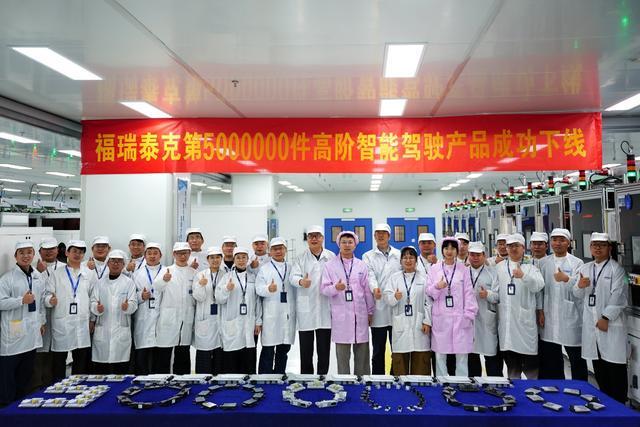
福瑞泰克500万件ADAS量产落地 张林拆解“中算力技术+软硬一体”突围密码
Huan Qiu Wang Zi Xun· 2025-12-04 02:57
Core Insights - The Chinese intelligent driving industry is transitioning from reliance on imports to domestic production and scaling, marked by the milestone of 5 million high-level intelligent driving products produced by Fureitech [1][3] - Fureitech's rapid growth reflects a significant shift in the market, breaking the international Tier 1 monopoly and achieving commercial viability for domestic intelligent driving solutions [1][3] Technology Breakthroughs - Fureitech's ADC25 product, developed on the ODIN3.0 platform, integrates multiple sensors and achieves L2.9 level driving assistance without relying on high-definition maps, utilizing a mid-computing power platform [3][4] - The dual perception solution combining vision and millimeter-wave radar ensures performance in adverse weather conditions, enhancing safety and facilitating the widespread adoption of intelligent driving features [3][4] Production Efficiency - The company has significantly reduced its production cycle from 1 million to 5 million units through a unique software-hardware integration and platform-based approach, exemplified by the rapid production timeline of the ADC25 controller [4][6] - The highly automated production lines at the Wuzhen manufacturing base enable efficient output, with advanced digital management contributing to rapid capacity expansion and cost optimization [6][4] Industry Positioning - Fureitech has established partnerships with 51 automotive companies, with over 380 projects initiated and more than 290 projects in mass production, positioning itself as a leading domestic supplier in the L2 driving assistance market [7][9] - The company is simultaneously advancing its global strategy, focusing on localized teams and tailored product strategies to meet diverse market needs [9][7] Future Outlook - Fureitech aims to reach a production target of 10 million units and is focused on advancing from L2+ to L3 level intelligent driving technology, leveraging extensive pre-production data for algorithm iteration [9][7] - The company plans to expand its focus beyond intelligent driving to broader mobility and robotics sectors, capitalizing on China's leading position in AI and electrification technologies [9][7]
汽车智能化系列专题之决策篇(7):各厂商技术持续突破,robotaxi商业化进展迎拐点
Guoxin Securities· 2025-12-03 11:58
Investment Rating - The report maintains an "Outperform" rating for the industry [1] Core Insights - The development of intelligent driving is an inevitable trend supported by national strategies and policies, leading to multi-dimensional improvements in society and industry [2] - Tesla and Huawei are leading the breakthrough in L4 autonomous driving with their end-to-end algorithms, significantly enhancing performance and capabilities [2] - The Robotaxi global market is projected to reach nearly 10 trillion, with ongoing commercialization efforts [2] Summary by Sections 01 Intelligent Driving Regulations: Gradual Policy Implementation - Domestic and international policies are progressively supporting the automation of driving applications, with various local governments exploring intelligent driving scenarios [6][7] 02 High-End Intelligent Driving: Tesla and Huawei's End-to-End Technology - Tesla's FSD V12 and Huawei's ADS 3.0 are leading advancements in L4 capabilities, with significant improvements in algorithm performance and urban coverage [2][20] 03 Intelligent Driving Equality: 2025 Penetration Rate Inflection Point - The penetration rates for highway NOA are expected to grow from 11.3% in 2024 to 39.0% in 2025, while urban NOA is projected to increase from 6.1% to 9.6% [41] - The high-end intelligent driving market is anticipated to reach 23,866 billion by 2025, doubling from 2024 due to increased penetration and market expansion [41] 04 Industry Chain and Component Manufacturer Analysis - BYD's "Tian Shen Zhi Yan" system is set to penetrate the mid-range market, with plans to offer intelligent driving features in vehicles priced below 100,000 [25][29] 05 Robotaxi: The Best Commercialization Scenario for Intelligent Driving - Companies like Waymo and Apollo are leading in the Robotaxi sector, with PONY AI achieving operational cost balance and WeRide aiming for a fleet of 100,000 by 2030 [2]


福瑞泰克港股IPO:原材料成本占总收入的八成以上 与吉利深度绑定但L4进展显著掉队 是否可能沦为“弃子”?
Xin Lang Cai Jing· 2025-12-03 03:41
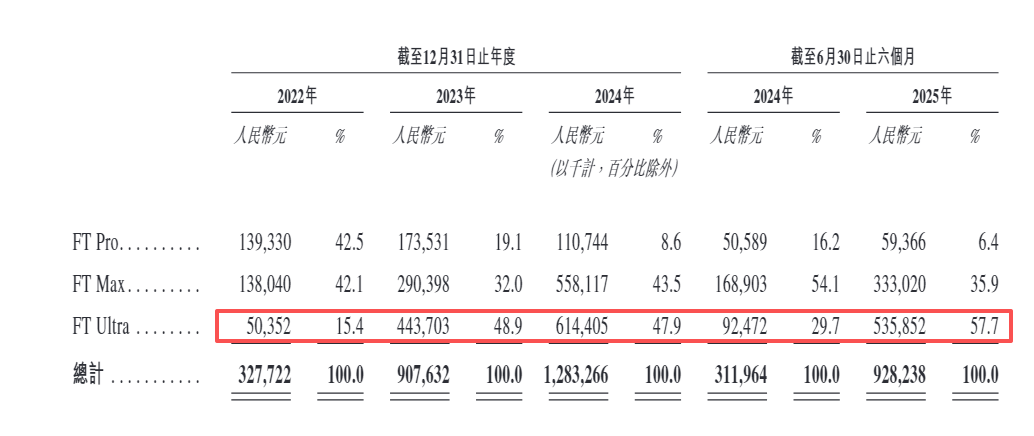
Core Viewpoint - Furuitek (Zhejiang) Intelligent Technology Co., Ltd. is experiencing rapid revenue growth but is also facing significant losses, with a net loss exceeding 1.9 billion RMB over the past three and a half years, raising concerns about its financial health and operational independence due to its deep ties with Geely [1][21]. Financial Performance - Furuitek's revenue for 2022, 2023, and 2024 was 328 million RMB, 908 million RMB, and 1.283 billion RMB, respectively, reflecting a compound annual growth rate of 97.9%. In the first half of 2025, the company achieved revenue of 928 million RMB, a year-on-year increase of 197.5% [3][22]. - The adjusted net profits for the company were -692 million RMB, -627 million RMB, -445 million RMB, and -152 million RMB for the years 2022 to 2025, totaling a net loss of 1.916 billion RMB [9][27]. Cost Structure - The cost of raw materials and consumables accounted for 76.2%, 88.1%, 93.9%, and 96.1% of the sales costs from 2022 to 2025, indicating a rising trend that significantly impacts profitability [9][27]. - Research and development expenses were 515 million RMB, 561 million RMB, 447 million RMB, and 202 million RMB for the same period, showing a declining trend in R&D investment relative to revenue [28]. Product and Revenue Breakdown - Furuitek's main revenue sources are its products FT Max, FT Pro, and FT Ultra, with FT Max accounting for 42.1%, 32%, 43.5%, and 35.9% of total revenue from 2022 to 2025 [4][23]. - FT Ultra, which accounted for nearly 60% of revenue in the first half of 2025, has a lower gross margin of 9.7% compared to FT Max's 18.3% [5][24]. Dependency on Geely - Furuitek is heavily reliant on Geely, which is both its largest customer and supplier. Revenue from Geely represented 19.7%, 43.3%, 59.4%, and 76% of total revenue from 2022 to 2025 [11][29]. - The company’s relationship with Geely raises concerns about its operational independence, as Geely's control extends to significant ownership stakes in Furuitek [21][32]. Market Position and Challenges - Furuitek's L4-level autonomous driving technology is lagging behind competitors, with many industry leaders already achieving large-scale commercialization of L4 solutions [36]. - The capital market's valuation logic for autonomous driving has shifted, with average price-to-sales ratios dropping from 8-10 times in 2023 to 3-5 times in 2025, indicating a challenging environment for new entrants like Furuitek [37].