宝马

Search documents
全球最大的液冷展会来了|2026深圳国际液冷产业展会及论坛
Sou Hu Cai Jing· 2026-01-13 01:51
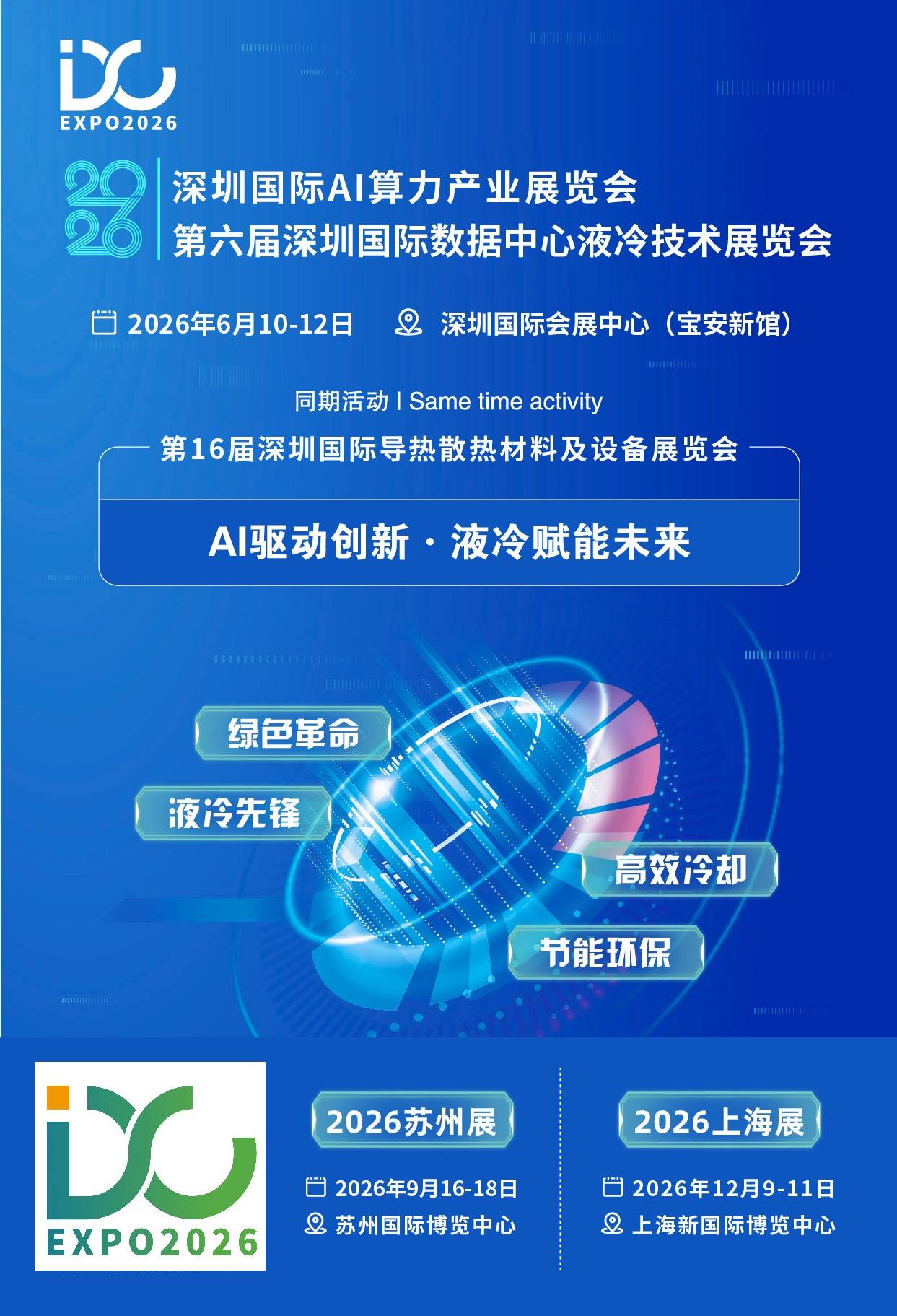
Group 1 - The 2026 Shanghai International Liquid Cooling Industry Exhibition will take place from December 9-11, 2026, at the Shanghai New International Expo Center [3] - The 2026 China (Shenzhen) International Liquid Cooling Industry Technology Exhibition is scheduled for June 10-12, 2026, at the Shenzhen International Convention and Exhibition Center [3] - The 2026 Suzhou Exhibition will occur from September 16-18, 2026, at the Suzhou International Expo Center [5] Group 2 - The rapid growth of big data has increased the demands on data center servers, necessitating higher power density in server cabinets [14] - Liquid cooling technology is becoming essential for data center efficiency, especially with the rise of 5G, edge computing, and AI applications [14][18] - The exhibitions aim to showcase the latest products and technologies in the liquid cooling industry, attracting professional audiences from data centers, power, electronics, edge computing, AI, and renewable energy sectors [14] Group 3 - The 2026 IDC exhibition is expected to cover an area of 15,000 square meters and will feature participation from major organizations such as the National Supercomputing Center in Shenzhen and Tencent [18] - Various technical exchange activities will be held during the IDC 2026 exhibition, focusing on industry hot topics and promoting diversified marketing strategies [19] - The exhibition will include a wide range of products covering cooling liquids, refrigerants, and various cooling devices, showcasing over a thousand new products across the entire industry chain [56] Group 4 - Shenzhen Angpai Technology Co., Ltd. is currently in the A-share IPO guidance stage, with plans to expand production capacity and R&D investment to capture market growth in liquid cooling [66] - The company has a registered capital of 90 million RMB and aims to leverage its professional R&D team and partnerships with universities to enhance its technological capabilities [66][68] - Angpai Technology's product offerings include liquid cooling module design, thermal management system integration, and innovative compressor technologies, with a focus on high reliability and efficiency [71][72]

中大型企业相继陷入困境企业破产数量创新高 德国经济结构性压力加大
Xin Lang Cai Jing· 2026-01-12 21:04
(来源:经济参考报) 企业申请破产数量创20年来新高 德国权威经济研究机构哈雷经济研究所日前发布的报告显示,2025年12月德国企业破产数量显著上升, 当月共记录企业破产1519起,较2016年至2019年新冠疫情前同期平均水平高出75%。从全年看,2025年 德国企业破产总数达17604起,比2009年全球金融危机期间高出约5%,为2005年以来最高水平。 值得注意的是,破产规模的扩大正对就业市场造成严重冲击,直接波及约17万个工作岗位。与2024年类 似,2025年受影响最严重的仍是制造业,共有约6.2万个岗位受到冲击。此外,报告还显示,2025年12 月受破产影响的岗位数量较往年大幅增加,仅当月规模最大的前10%破产公司就波及全德约1.5万个工 作岗位。这表明,本轮"破产潮"已不再局限于小微企业,更多中大型企业也陷入困局。 另一项研究显示,2025年德国大型企业破产数量同比增长约25%,达到471起。受影响的企业中,不乏 年营业额超过1000万欧元的公司。该结论来自企业咨询公司Falkensteg的分析。研究作者、Falkensteg合 伙人约纳斯·埃克哈特直言:"德国经济已不仅是头痛,而是发烧了。"自 ...
每两天就有一次关键岗位调整,2025年车圈人事密集调整背后:有人奔向芯片机器人 有人跨界入局
3 6 Ke· 2026-01-12 12:57
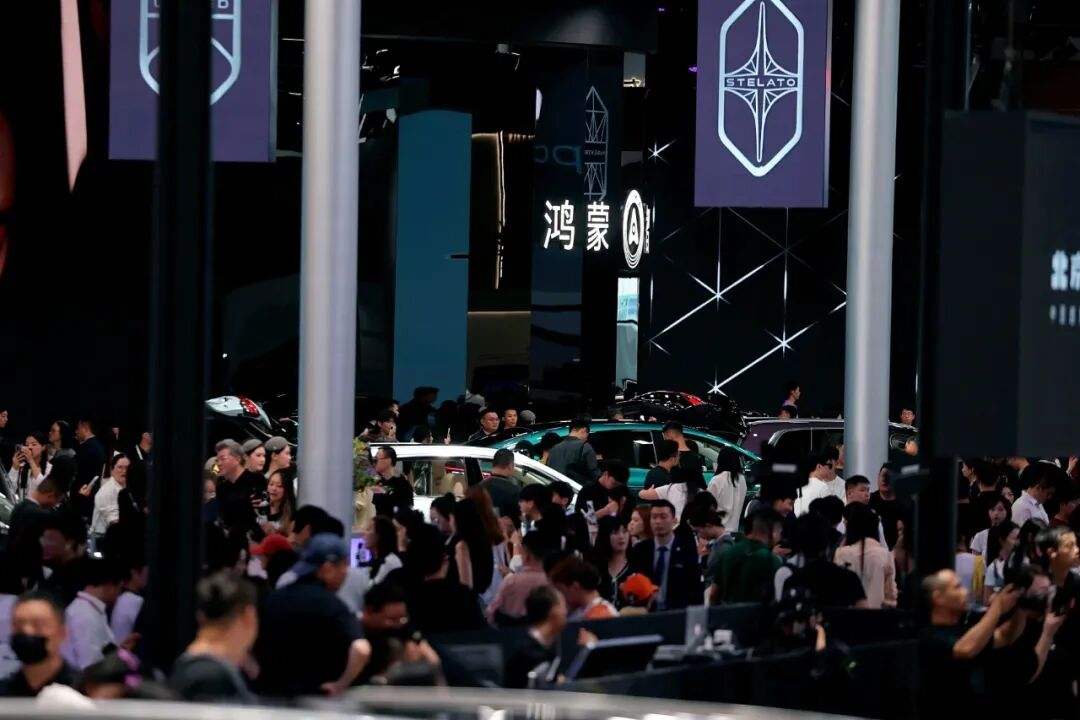
而当部分汽车人选择"下车"离场时,另一群跨界者正带着全新基因"上车"入局。一场双向的人才迁徙,正在汽车行业悄然上演。 当汽车产业加速穿越"电动化、智能化、全球化"三重变革周期,人才的流动与迭代也在快速进行。 从2025年初广汽集团"掌门人"更迭,到4月蔚来上演"人事地震";随后东风、长安、比亚迪等多家车企均出现高管变动;进入第四季度,宝马、保时捷、 通用中国变更CEO,直至长安汽车在12月正式任命公司总裁⋯⋯ 据不完全统计,2025年仅10月至12月,短短两个月内,就有约327位高管岗位发生变动。如果将时间线拉长至2025年全年,仅截至9月中旬的统计就显示, 汽车圈平均每两天就有一次关键岗位调整。 这些关键岗位的调整波及范围之广前所未有:从传统车企到造车新势力,从国内品牌到跨国巨头,从整车厂到供应链企业,整个汽车产业都在经历深刻的 人员重组。 图片来源:每经记者 张建 摄 资料图 《每日经济新闻》记者在采访中发现,越来越多的汽车人已经迈出转型脚步:手握资源的车企高管,放下多年积累投身AI(人工智能)赛道自主创业; 一线技术员工则转向汽车周边领域,寻求更稳定的工作节奏。曾经泾渭分明的行业边界,正随着这批人才的流 ...

【招商电子】CES 2026跟踪报告:AI赋能依旧是主旋律,聚焦穿戴/IoT、智能车、机器人等新品创新
招商电子· 2026-01-12 12:03
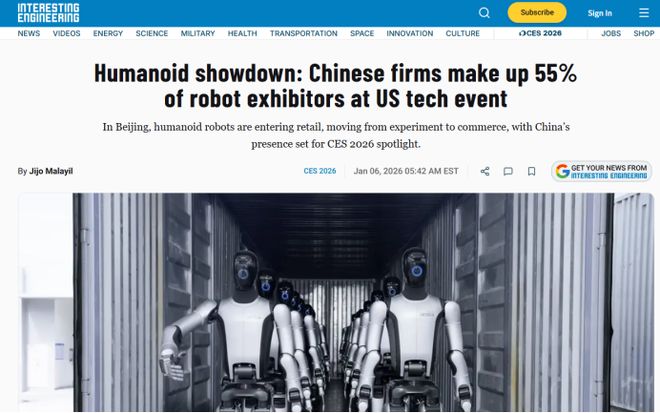
Core Viewpoint - CES 2026 showcased significant advancements in AI-driven consumer electronics, with a focus on wearable devices, automotive technology, robotics, and IoT innovations, highlighting the integration of AI across various sectors [2][5][6]. Group 1: Wearable/IOT - AI glasses and camera headphones remain focal points in wearable technology, with over 50 companies participating, primarily from mainland China, emphasizing design improvements and multi-modal interactions [2][10]. - Headphone innovations shifted from audio performance to a combination of sound quality, AI integration, and multi-modal capabilities, with products featuring cameras and environmental awareness [2][13]. - New IoT categories, including smart imaging devices and AI home products, are gaining traction, with many startups entering the market [2][16]. Group 2: Automotive - AI is driving a comprehensive upgrade in automotive technology, with high-level autonomous driving expected to scale commercially [3][19]. - NVIDIA introduced the Alpamayo series of open-source AI models, enhancing the development of autonomous driving capabilities [3][19]. - Major automotive companies like Geely and Great Wall showcased their AI systems, while international brands are partnering with AI giants to enhance their offerings [3][24][26]. Group 3: Robotics - The robotics sector is evolving from household and service robots to humanoid collaboration, with significant participation from electronic companies [4][34]. - Innovations in household robots include advanced cleaning capabilities and a broader range of applications, while humanoid robots are becoming more sophisticated in interaction and movement [4][34]. - Chinese electronic companies are increasingly showcasing key components and technologies in robotics at CES 2026 [4][34]. Group 4: PC/Smartphone - Lenovo launched its first personal super intelligent system, Lenovo Qira, and announced a partnership with NVIDIA for AI infrastructure [4][36]. - Chip manufacturers like Intel, Qualcomm, and AMD are upgrading their products to enhance AI performance and user experience in PCs [4][39]. - The focus on AI integration in smartphones and PCs is expected to drive innovation and market growth in the coming years [4][39].







全球电动车转型走到十字路口:中国、欧盟与美国路径分化
Counterpoint Research· 2026-01-12 02:45
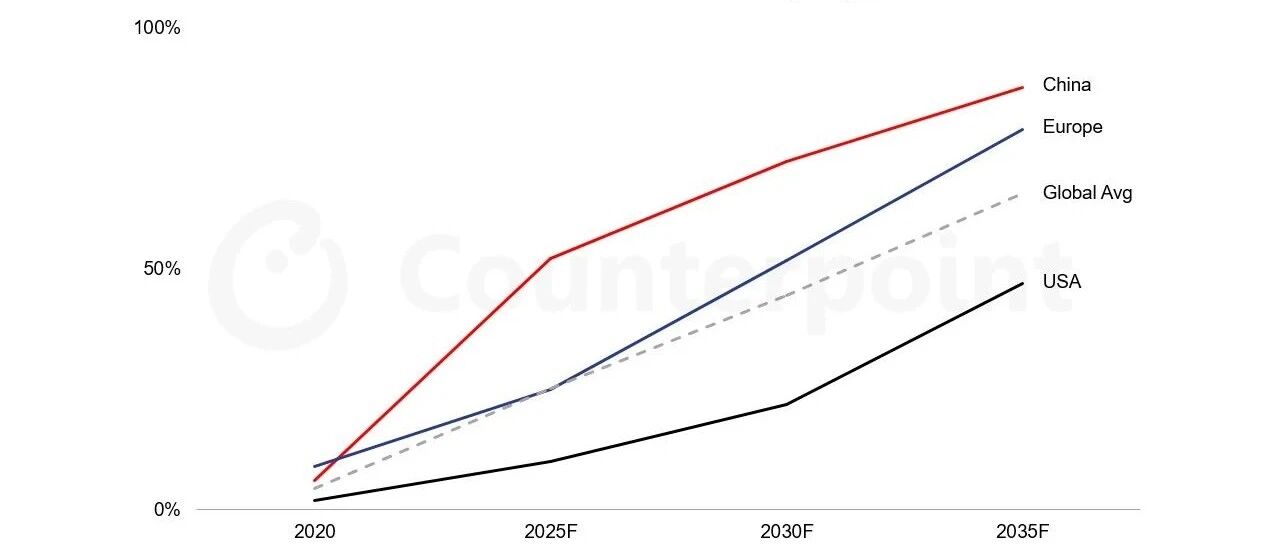
Core Viewpoint - The global electric vehicle (EV) market is entering a phase of significant differentiation, with China rapidly advancing while the EU and the US exhibit hesitance and policy adjustments that may slow their electric vehicle transitions [4][5][7]. Group 1: Electric Vehicle Market Dynamics - China's electric vehicle sales have surpassed 50% of total passenger car sales, indicating a shift from policy-driven to market-driven growth [4][7]. - The US electric vehicle market is experiencing a slowdown due to the potential rollback of federal EV purchase subsidies and weakened emissions regulations, leading manufacturers to refocus on hybrid and internal combustion engine (ICE) vehicles [5][11]. - The EU is recalibrating its electric vehicle strategy by relaxing the 2035 ban on ICE vehicles and introducing the M1E category for small electric cars, aiming to balance decarbonization goals with industry pressures [8][9][10]. Group 2: EU Policy Adjustments - The EU's new policy allows for a 90% reduction in CO2 emissions by 2035 instead of a complete ban, enabling the continued sale of hybrid and ICE vehicles under certain conditions [8][9]. - The introduction of the M1E category aims to promote affordable small electric vehicles, which could mirror the success seen in China's compact EV market [9][10]. - The EU's "super credit" system for M1E vehicles incentivizes local production and sales, potentially benefiting companies like BYD that are expanding in the EU market [10]. Group 3: Challenges for Global Automakers - The differentiation in regional policies forces automakers to adapt their strategies, impacting economies of scale and increasing overall costs [11]. - Companies like Ford and General Motors are facing significant financial challenges, with Ford reporting approximately $19.5 billion in EV-related losses and adjusting their strategies towards hybrids [11]. - The need for regional adaptability in strategy is becoming as crucial as global scale, influencing the competitive landscape of the electric vehicle market [11].
CES 2026 汽车领域发布要点:媒体日回顾
Counterpoint Research· 2026-01-12 02:45
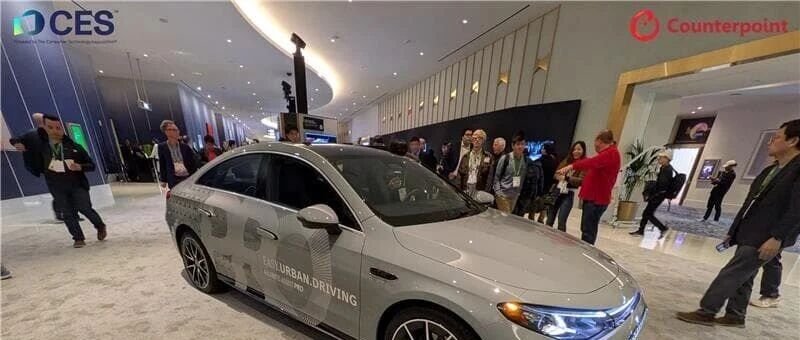
Core Insights - The article discusses the significant advancements in the automotive industry showcased at CES 2026, focusing on the integration of AI, software-defined vehicles, and advanced driver-assistance systems (ADAS) [5][6][7]. Group 1: NVIDIA and AI Developments - NVIDIA launched Alpamayo, an open-source AI model and tools aimed at accelerating the development of safe, inference-based autonomous driving systems. The model features a Vision-Language-Action architecture with 10 billion parameters, enhancing decision-making capabilities to resemble human reasoning [4][5]. - NVIDIA also introduced AlphaSim, an end-to-end open-source simulation framework for validating autonomous driving systems, along with over 1,700 hours of real driving data [5]. Group 2: Collaborations and New Technologies - ZF and Qualcomm announced a partnership to develop a scalable ADAS platform integrating the ZF ProAI supercomputer and Snapdragon Ride platform, enabling up to Level 3 autonomous driving capabilities with 1,500 TOPS of computing power [6][7]. - Aptiv showcased its next-generation AI driving system capable of L2++ level autonomous driving, expanding its technology from automotive to robotics [9][11]. Group 3: Automotive Innovations - BMW introduced the iX3, featuring a new AI-driven personal assistant and the sixth-generation eDrive technology, which supports a range of advanced functionalities including fast charging and a WLTP range of up to 805 kilometers [13]. - Sony Honda Mobility unveiled the Afeela 1 electric vehicle, equipped with a dual-motor system and a 91 kWh battery, featuring AI-driven voice and infotainment capabilities [15][16]. Group 4: Battery Technology and Connectivity - Donut Lab launched the world's first mass-produced solid-state battery, achieving a high energy density of 400 Wh/kg and rapid charging capabilities, set to be used in the 2026 Verge electric motorcycle [30]. - Quectel introduced the 5G-Advanced AR588MA module, enhancing vehicle safety and connectivity with dual SIM support and satellite communication features [32]. Group 5: Mapping and Navigation - HERE Technologies presented AI maps integrated with the Snapdragon Ride platform, enhancing L2 and L2+ level ADAS capabilities and expanding its navigation services in over 100 countries by 2026 [25].


“死了么”APP一夜估值千万,最新回应;佐香园与闫学晶解约;鸿蒙智行首款MPV定档,定位50万级豪华市场丨邦早报
创业邦· 2026-01-12 00:13
Group 1 - The "Did You Die?" app has gained significant popularity, ranking first in Apple's paid tools category, and is designed as a safety tool for individuals living alone, requiring users to check in regularly [3] - The app's creator revealed that it was developed in less than a month with an initial investment of only over 1,000 yuan, and it has already become profitable with a download increase of over 100 times in recent days [3] - The app's valuation is estimated at 10 million yuan based on a proposed sale of 10% equity for 1 million yuan [3] Group 2 - Elon Musk announced that the X platform will open-source its content recommendation algorithm within a week, covering all code used for recommending content and ads [4] - Musk stated that this process will be repeated every four weeks, providing developers with explanations and updates on algorithm changes [4] Group 3 - BYD has launched a new automotive brand called Linghui, which includes four new models, three of which are pure electric sedans and one is a plug-in hybrid MPV [8] - The Linghui brand aims to cater to B-end market demands and is part of BYD's strategy to differentiate between B-end and C-end market vehicles [8] Group 4 - SanDisk is reportedly planning to increase prices by over 100% and has introduced a strict payment policy requiring 100% cash prepayment for future storage chip allocations [10] - This unprecedented move challenges traditional payment practices in the semiconductor supply chain, driven by strong demand for storage devices in AI infrastructure [10] Group 5 - CATL's service brand, NING Service, has opened the largest new energy after-market experience center in the Middle East, providing comprehensive lifecycle services for various battery types [10] - The center aims to support the growing demand for electric vehicle maintenance and battery recycling in the region [10] Group 6 - The Beijing-Tianjin-Hebei region has emerged as a leader in the production of new energy vehicles, with a total automotive output of 285,000 units in 2024, marking an 11.8% year-on-year increase [23] - The production of new energy vehicles in the region surged by 154% year-on-year, highlighting the area's strong industrial growth and leadership in the sector [23]

广汽与华为终端达成全面合作,吉利获L3级测试牌照
CMS· 2026-01-11 08:04
Investment Rating - The report maintains a "Recommended" rating for the automotive industry, indicating a positive outlook for the sector's fundamentals and expectations for the industry index to outperform the benchmark index [5][28]. Core Insights - The automotive industry experienced an overall increase of 2.7% from January 4 to January 10, 2026, with all secondary segments within the automotive sector also showing positive growth [1][2][9]. - Key developments include GAC Group signing a comprehensive cooperation framework with Huawei, and Geely obtaining an L3 level autonomous driving road test license, indicating advancements in smart driving technologies [1][23]. - The market is witnessing a promotional battle led by luxury brands like Tesla and BMW, with various automakers offering significant discounts and financing options to stimulate sales [20][21]. Market Performance Overview - The Shanghai Composite Index rose by 3.8%, while the Shenzhen Composite Index increased by 5.1%, and the ChiNext Index saw a 3.9% rise during the same period [2][9]. - Within the automotive sector, the automotive services segment led with a weekly increase of 6.0%, while the passenger vehicle segment had the lowest increase at 0.3% [2][9]. Individual Stock Performance - Notable stock performances include JunDa Co., which increased by 29.4%, JinGu Co. by 26.3%, and KaiZhong Co. by 23.3% [3][13]. - Among covered stocks, DaoShi Technology saw a rise of 29.5%, XuSheng Group by 18.0%, and XinQuan Co. by 16.2% [3][15]. Recent Vehicle Launches - Key new vehicle launches include the Xiaopeng P7+ with advanced driving capabilities and the Wuling Xingguang 560, which offers multiple powertrain options [18][19]. Industry News and Policies - The Ministry of Commerce projects over 11.5 million vehicles to be replaced under the old-for-new policy by 2025, with significant sales expected in related sectors [20]. - GAC Group and Huawei's collaboration aims to enhance smart vehicle technologies, while Chery Group targets a sales goal of 3.2 million vehicles for 2026, reflecting a 14.03% increase from 2025 [22][23].
碳纤维行业进入“高端转型”关键期
中国能源报· 2026-01-11 00:38
Core Viewpoint - The carbon fiber industry is transitioning from "incremental expansion" to "high-end transformation" due to slowing demand in downstream sectors like wind power and electric vehicles, leading to a potential oversupply crisis [1][3]. Group 1: Industry Demand and Supply - Carbon fiber, known for its low weight, high strength, and corrosion resistance, is increasingly used across various industries, including automotive and aerospace [3]. - China's carbon fiber demand reached 84,000 tons last year, a year-on-year increase of 21.7%, with expectations that domestic supply will account for 80.1% of total demand by 2024, up 27.6% [6]. - The global demand for carbon fiber in the wind power sector is projected to exceed 100,000 tons by 2025, representing over 60% of total demand [5]. Group 2: Production and Technology - The production of high-performance carbon fiber is complex, requiring precise control over multiple steps in the manufacturing process, with significant technical barriers [8]. - The cost of producing higher-grade carbon fibers increases exponentially, with T1000 potentially costing 10 to 20 times more than T300 [8]. - Current production capabilities in China have advanced to stable mass production of T800 and experimental production of T1000, but high-grade carbon fiber still lacks a systematic approach [10]. Group 3: Market Opportunities and Future Trends - The industry is at a critical juncture where transitioning to high-end, high-performance products is essential for overcoming homogenization and driving energy security [10]. - The C919 aircraft, China's first domestically produced large passenger aircraft, utilizes 11.5% carbon fiber, with future models expected to increase this to 50%, indicating a rapid growth in demand for high-end carbon fiber [10]. - The carbon fiber sector is encouraged to explore new markets and applications, particularly in areas like energy safety, vehicle lightweighting, and hydrogen energy [10].
环球直击美国CES展:更少和更强大的中国企业正在重新定义AI竞争的规则
Huan Qiu Wang Zi Xun· 2026-01-10 05:33
Core Insights - The CES 2026 showcased AI as the central theme, emphasizing human-centric applications and the integration of AI into various sectors [1][3][6] - The competition in the chip industry was highlighted, with major players like NVIDIA, AMD, Intel, and Qualcomm presenting their advancements in AI infrastructure [3][9] - The exhibition marked a shift from hardware-centric displays to a focus on ecosystem definition and strategic collaboration among companies [4][16] AI and Robotics - CES 2026 introduced a dedicated area for AI and quantum innovation, showcasing practical applications of embodied intelligence and advancements in autonomous driving [3][4] - The event demonstrated a transition from conceptual robot designs to practical solutions addressing real-world challenges in home services and industrial logistics [3][11] - Chinese companies showcased significant advancements in robotics, with a focus on self-developed core components and solutions for logistics and manufacturing [11][13] Chinese Companies' Participation - The number of Chinese exhibitors in the core professional pavilion decreased to 207 from 1,475 in 2025, indicating a structural adjustment in participation [4][5] - The remaining Chinese companies at CES were required to demonstrate AI-related functionalities, reflecting a shift towards more innovative and integrated product offerings [5][6] - Major Chinese firms like Lenovo showcased their global influence by hosting large-scale events, indicating a strategic focus on ecosystem development [6][16] Competitive Landscape - The competition is evolving from hardware specifications to a comprehensive narrative that includes both foundational technology and application capabilities [7][16] - The contrasting approaches of Chinese and American tech companies in building AI ecosystems highlight differences in strategic thinking and resource allocation [8][15] - Chinese automotive companies emphasize full-stack self-research and vertical integration, while Western firms focus on open software ecosystems and long-term evolution [15][16] Future Implications - The CES 2026 signals a shift in global tech competition towards defining future technology ecosystems and industry standards [16][17] - Companies that can navigate the complexities of AI and contribute to ecosystem building are likely to remain at the forefront of technological advancement [17]