
南钢股份

Search documents
年,月:金属的分化
GOLDEN SUN SECURITIES· 2025-12-07 08:18
Investment Rating - The report maintains a "Buy" rating for several key companies in the steel sector, including Hualing Steel, Nanjing Steel, Baosteel, and New Steel [9]. Core Insights - The steel industry is experiencing a divergence in performance compared to non-ferrous metals, with non-ferrous metals benefiting more from manufacturing sectors like electrical machinery and telecommunications, while steel is more reliant on real estate and automotive industries [2]. - The average daily pig iron production has decreased, with a notable drop in steel output, particularly in rebar production [12][18]. - Total steel inventory has seen a significant reduction, with a week-on-week decline of 2.5% [24]. - Apparent consumption of steel has weakened, with rebar demand declining more than hot-rolled coil demand [40]. - Iron ore prices have strengthened, influenced by supply adjustments and market dynamics [50]. Summary by Sections Supply - Daily pig iron production has decreased by 23,000 tons to 2.323 million tons, with a significant drop in steel output [12][18]. - The capacity utilization rate for blast furnaces across 247 steel mills is at 87.1%, down 0.9 percentage points from the previous week [18]. Inventory - Total steel inventory has decreased by 2.5% week-on-week, with social inventory down 2.9% and steel mill inventory down 1.6% [24][26]. Demand - Apparent consumption of the five major steel products is 8.642 million tons, down 2.7% week-on-week [51]. - Weekly average transaction volume for construction steel is 99,000 tons, reflecting a 5.3% decrease [41]. Raw Materials - The iron ore price index for 62% Fe is at $107.1 per ton, with a week-on-week increase of 1.0% [61]. - Australian iron ore shipments have decreased slightly, while Brazilian shipments have increased [61]. Prices and Profits - The comprehensive steel price index has increased by 0.6% week-on-week, indicating a slight improvement in the industry's profitability [75]. - The current cost of long-process rebar is 3,533 RMB per ton, with a loss of 233 RMB per ton [75][81].


钢价震荡偏强运行,继续看多钢铁板块
Xinda Securities· 2025-12-07 07:42
Investment Rating - The investment rating for the steel industry is "Positive" [2] Core Insights - The steel sector has shown a slight increase of 0.54% this week, underperforming compared to the broader market, which rose by 1.28% [10] - The report indicates that while the steel industry faces supply-demand imbalances, the implementation of "stability growth" policies is expected to support steel demand, particularly in real estate and infrastructure sectors [3] - The report suggests that the overall industry structure is likely to improve, with specific companies being undervalued and presenting structural investment opportunities [3] Supply Summary - As of December 5, the capacity utilization rate for blast furnaces among sample steel companies is 87.1%, a decrease of 0.90 percentage points week-on-week [27] - The average daily pig iron production is 2.323 million tons, down 2.38% week-on-week [27] - The total production of five major steel products is 7.187 million tons, a decrease of 3.78% week-on-week [27] Demand Summary - The consumption of five major steel products is 8.642 million tons, down 2.68% week-on-week [35] - The transaction volume of construction steel among mainstream traders is 99,000 tons, a decrease of 5.31% week-on-week [35] Inventory Summary - The social inventory of five major steel products is 9.785 million tons, down 2.86% week-on-week [43] - The factory inventory of five major steel products is 3.871 million tons, down 1.64% week-on-week [43] Price & Profit Summary - The comprehensive index for ordinary steel is 3,473.6 CNY/ton, an increase of 0.60% week-on-week [49] - The profit for rebar produced in blast furnaces is 34 CNY/ton, an increase of 383.33% week-on-week [55] - The profit for electric arc furnace-produced construction steel is -25 CNY/ton, an increase of 59.02% week-on-week [55] Raw Material Summary - The spot price index for Australian iron ore (62% Fe) is 790 CNY/ton, down 0.75% week-on-week [71] - The price of primary metallurgical coke is 1,880 CNY/ton, down 55 CNY/ton week-on-week [71]
产量占全球一半,利润却被日本制铁吊打,中国钢铁产业的病根在哪
Sou Hu Cai Jing· 2025-12-05 15:11
Core Viewpoint - The Chinese steel industry, despite being the largest producer globally, faces challenges such as low profit margins and worker salaries significantly lower than those in developed countries. The industry is undergoing restructuring to enhance its bargaining power and transition from a manufacturing giant to a strong nation [1]. Group 1: Worker Compensation and Conditions - Steel workers in China earn significantly less than their international counterparts, with average monthly salaries ranging from 8,000 to 12,000 RMB, compared to 35,000 RMB in Germany and 28,000 RMB in Japan [3][5]. - The average steel worker in Hebei works over 400 more hours annually than office workers, with a threefold higher incidence of workplace injuries, highlighting the need for better compensation [5][6]. - The disparity in wages has led to financial strain on workers, with many struggling to cover basic living expenses, indicating a pressing need for wage increases in the industry [6][8]. Group 2: Industry Challenges and Internal Competition - The steel industry is experiencing a "double loss" game due to internal competition, where companies lower prices below cost to secure orders, ultimately harming both workers and businesses [8][10]. - In 2024, major steel companies reported a 30% decline in net profits despite producing 20% of the national steel output, reflecting the adverse effects of price wars [8][10]. - The export data shows a 12% increase in steel exports, but a corresponding 8% decrease in export prices, indicating that the industry is selling more but earning less [10][12]. Group 3: Need for Innovation and Investment - The steel industry's research and development investment is only 1.2%, significantly lower than international competitors like South Korea's POSCO, which invests 3.5% [12][14]. - The lack of innovation and reliance on low-cost production methods hinder the industry's ability to move up the value chain and compete effectively [12][14]. Group 4: Path to Recovery and Value Realignment - A proposed solution to the industry's challenges is to increase worker wages, aligning their compensation with the value of their labor, which could lead to improved productivity and morale [14][15]. - Companies like Shandong Steel have successfully increased wages, resulting in a 15% reduction in waste and an 8% increase in production efficiency, demonstrating the benefits of investing in labor [15][17]. - The industry is encouraged to shift focus from low-price orders to high-end products, as seen with Baosteel's 25% increase in high-end steel sales, which has significantly improved profit margins [17][19].


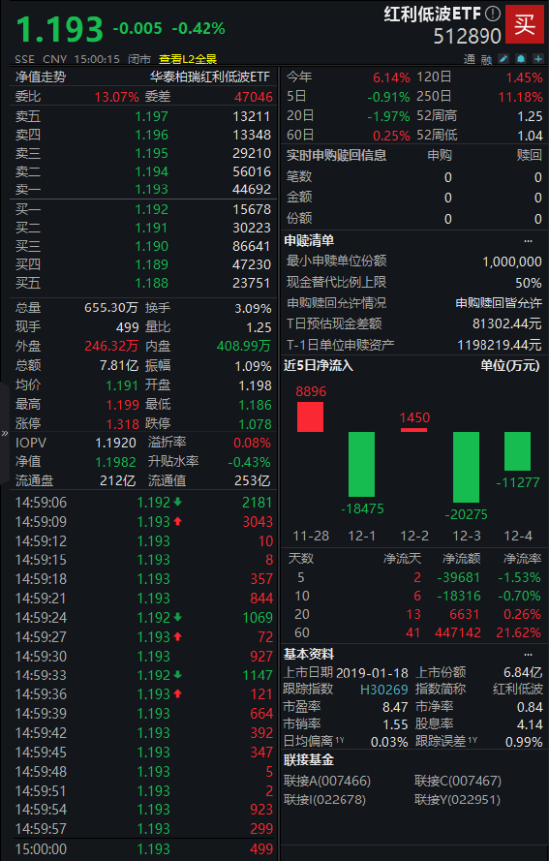
红利低波ETF(512890)年内累计成交额超千亿元,长期彰显红利资产“压舱石”属性
Xin Lang Cai Jing· 2025-12-05 07:21
数据来源:Wind 截止 最新定期报告显示,红利低波ETF(512890)前十大重仓股具体包括中粮糖业、南钢股份、成都银行、 大秦铁路、南京银行、兴业银行、农业银行、建设银行、中信银行、四川路桥,持仓占比如下: | 量仓括股 (2025-09-30) | | | | | | | | ਲਿੰਦ | | --- | --- | --- | --- | --- | --- | --- | --- | --- | | 設置名称 | 特色电脑(元) | 将在数据 | 相对上期增城 | 占鉴赏布幅比 | 古都當中國比 | 占值得版本找 利润行业 | 区间分类型 | 行业区间设置 | | 中德维亚 (D | 695,289,225,56 | 43.591.801 | | 3.47% | 3.45% | 2.04% 日前角图 | 7.5.11% | -2.68% | | 廣明露出 | 570 DE9,953.25 | 908 584,753 | | 2.85% | 2.83% | 1.76% 8794 | 26.0% | 28.34% | | 同期的行 | 567,817,070.50 | 32.916.970 | 12.0 ...
连续19个月分红,红利国企ETF(510720)核心价值解读
Mei Ri Jing Ji Xin Wen· 2025-12-05 04:24
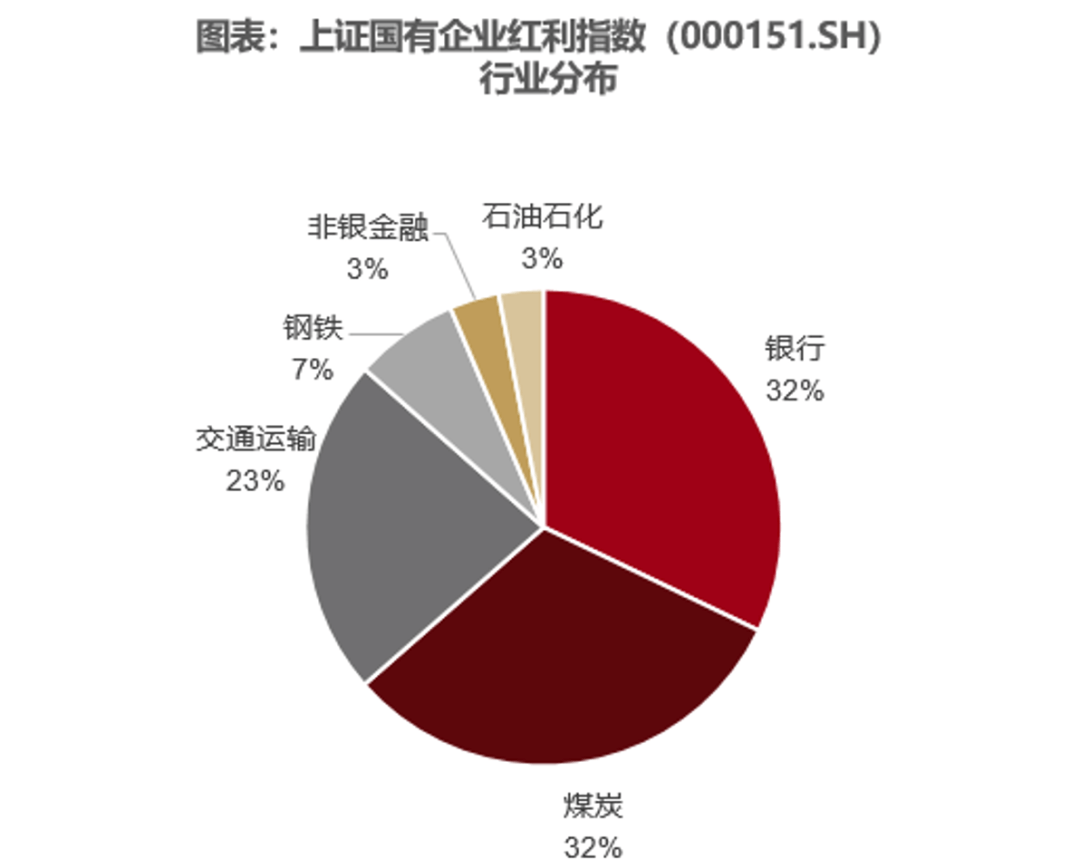
Group 1 - The core focus of the article is on the performance and characteristics of the Dividend State-Owned Enterprise ETF (510720), which has consistently provided monthly dividends since its launch, with a current monthly dividend rate of approximately 3‰ to 4‰ [1][9] - The ETF tracks the Shanghai Stock Exchange State-Owned Enterprises Dividend Index, which has a relatively high dividend yield compared to similar indices, historically ranging from 4% to 7% [3][7] - The index is expected to undergo annual adjustments in December, which may lead to the removal of certain large-cap bank stocks that have not maintained a competitive dividend yield [2][3] Group 2 - The current industry distribution of the index is primarily focused on high-dividend sectors such as banking, coal, and transportation, with potential for future diversification as some component stocks' dividend yields decline [3][8] - Historical performance indicates that the Shanghai State-Owned Enterprises Dividend Index has outperformed other similar indices in terms of absolute returns from 2021 to 2024 [5][7] - The article suggests that the current market environment, characterized by low-risk returns and a focus on dividend-paying stocks, presents a favorable opportunity for long-term investment in dividend strategies [8][9]
煤炭现货交易规则发布,红利市场获三重支撑,国企红利ETF(159515)盘中蓄势
Sou Hu Cai Jing· 2025-12-05 02:33
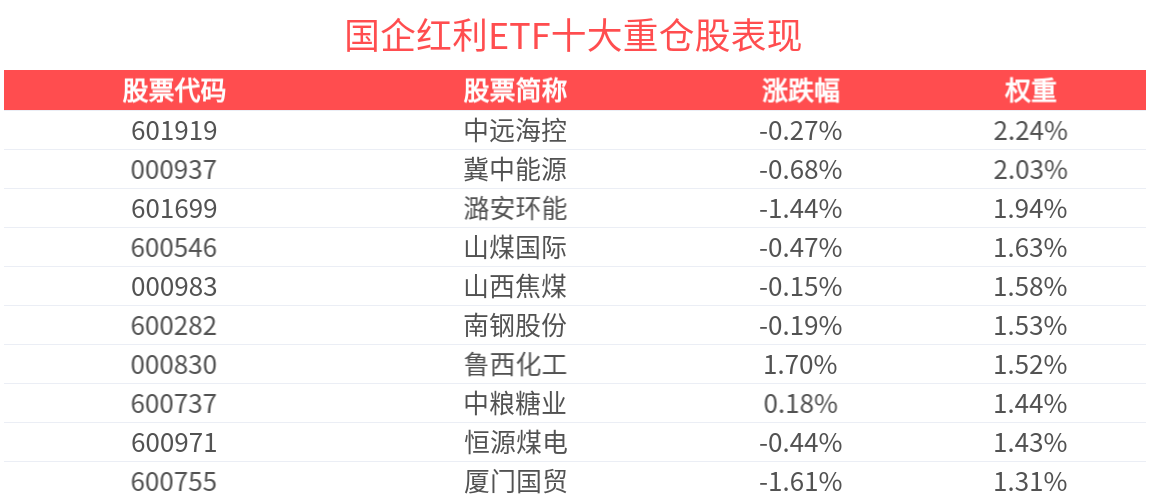
Core Viewpoint - The release of the first national coal spot trading rules is expected to enhance the operational efficiency and profitability of state-owned coal enterprises, thereby supporting the performance of the State-Owned Enterprise Dividend ETF [1][2]. Group 1: Market Performance - As of December 5, 2025, the China Securities State-Owned Enterprise Dividend Index decreased by 0.20%, with Shenhua Holdings leading the gains and Sichuan Road and Bridge leading the losses [1]. - The latest scale of the State-Owned Enterprise Dividend ETF reached 47.53 million yuan, with a total of 40.89 million shares [1]. Group 2: Regulatory Developments - The newly published coal trading rules, developed by major coal trading centers and state-owned enterprises, aim to fill a regulatory gap and enhance market transparency and efficiency [1][2]. - The four major coal-producing regions control 81% of national output and 95% of external supply, indicating a significant concentration of market power [1]. Group 3: Industry Outlook - The coal industry is characterized by stable cash flows and high dividend rates among state-owned listed companies, making it an attractive investment option [2]. - The new rules are expected to provide fundamental support by improving operational efficiency and enhancing the sustainability of profits for coal enterprises [2]. - There is an increasing market focus on high-dividend, low-volatility assets, with expectations for resilient dividend performance as the year-end approaches [2]. Group 4: ETF Composition - The top ten weighted stocks in the China Securities State-Owned Enterprise Dividend Index account for 16.99% of the index, with companies like COSCO Shipping and Jizhong Energy among the leaders [3]. - The ETF closely tracks the index, selecting 100 listed companies with high and stable cash dividend rates [2].
平均每6分钟即可下线1台挖掘机 中联重科跻身国家首批领航级智能工厂
工程机械杂志· 2025-12-04 09:27
Core Viewpoint - The 2025 World Intelligent Manufacturing Conference opened in Nanjing, where 15 leading intelligent factories, including Zoomlion, jointly released an initiative to outline a new blueprint for intelligent manufacturing development. Zoomlion has been recognized for overcoming challenges in the heavy equipment industry and establishing a world-class collaborative intelligent factory cluster for construction machinery, representing the highest level of Chinese manufacturing [1][2]. Group 1: Intelligent Factories - The 15 leading intelligent factories span various industries, including equipment manufacturing, raw materials, electronic information, and consumer goods [2]. - In the equipment manufacturing sector, notable factories include Shanghai Aerospace Equipment Manufacturing Factory, XCMG Heavy Machinery, Weichai, and Zoomlion's excavator sharing manufacturing intelligent factory [2][3]. - Zoomlion's excavator sharing manufacturing intelligent factory boasts an AI technology application rate exceeding 80%, achieving a production cycle of just 6.5 days from steel plate cutting to complete machine delivery, with a production rhythm of one excavator every six minutes, marking the shortest core indicators in the global construction machinery sector [3]. Group 2: Industry Trends - The engineering machinery industry is showing signs of recovery, with improved sales data for excavators and loaders anticipated in 2025 [5][6]. - The industry is transitioning to "National IV" standards starting December 1, indicating regulatory changes that may impact production and sales [5]. - Domestic sales have seen a continuous decline for 13 months, while exports have surged over 70%, suggesting a potential shift in market dynamics [5].

首批15家领航级智能工厂出炉!长三角成智造标杆集聚高地
Guo Ji Jin Rong Bao· 2025-12-03 13:04
Core Insights - The Ministry of Industry and Information Technology, along with five other ministries, has announced the first batch of 15 leading smart factories for 2025, showcasing advancements in key industries such as equipment manufacturing, raw materials, electronic information, and consumer goods [1] - The Yangtze River Delta region, particularly Shanghai, Jiangsu, and Zhejiang, has excelled in this initiative, with Shanghai leading the nation in the number of selected factories [1][3] - The establishment of a tiered cultivation system for smart factories began in 2024, categorizing them into four levels: basic, advanced, excellent, and leading, with the leading level representing the pinnacle of smart manufacturing in China [1][4] Industry Developments - Leading smart factories are demonstrating significant innovation value, with Shanghai Aerospace Equipment Manufacturing Factory achieving a reduction in launch costs through an intelligent full-process chain model [2] - In the raw materials sector, Nanjing Steel has achieved a 98.5% on-time delivery rate for customized steel production using digital twin and AI technologies, while Baosteel has gained a competitive edge through data-driven manufacturing [2] - Hikvision in the electronic information sector has reduced production line changeover time by 50% through self-developed IoT, AI, and big data technologies, providing replicable solutions for the electronics manufacturing industry [2] Regional Performance - Shanghai has cultivated 2 national leading smart factories, 28 national excellent smart factories, and over 300 advanced smart factories, maintaining its position as the top city in China for smart manufacturing [3] - The city plans to focus on a three-pronged development strategy that includes tiered cultivation of smart factories, providing smart manufacturing system solutions, and building a standard framework for smart manufacturing [3] - Leading smart factories serve as demonstration models, promoting innovation and transformation across the supply chain, with modular solutions available for small and medium-sized enterprises to facilitate their own smart upgrades [3] Construction Achievements - As of now, China has established over 35,000 basic smart factories, more than 7,000 advanced smart factories, 230 excellent smart factories, and 15 leading smart factories [4] - Smart factory upgrades have led to an average reduction of 29% in product development cycles, a nearly 22% increase in production efficiency, and a 20% decrease in carbon emissions [4] - Leading smart factories are positioned as integrated platforms for technological innovation, standard output, and industry collaboration, aligning with the core demands of high-quality manufacturing development during the 14th Five-Year Plan [4]

中信集团旗下南京钢铁项目入选全国首批领航级智能工厂项目培育名单
Zhong Zheng Wang· 2025-12-03 11:12
中证报中证网讯(记者赵白执南)记者12月3日从中信集团获悉,近日召开的2025世界智能制造大会上公 布了全国首批领航级智能工厂项目培育名单,共15家企业上榜。中信集团旗下南京钢铁股份有限公司凭 借"产业链深度协同的特殊钢个性化定制智能工厂"项目入选,并与其他入选企业共同发起领航行动计划 联合倡议。 据悉,未来中信集团将依托"磐石"行动科技创新集群,加强产学研合作,紧密围绕产业需求开展联合攻 关,推动科技创新与产业创新深度融合。探索开放应用场景,为新技术、新产品试验和迭代提供"首用 舞台"。支持中信泰富特钢和南钢集团更好发挥链主企业作用,加强AI在材料设计、敏捷生产、智慧运 营、绿色低碳等典型场景应用,带动产业链上下游智能升级,加快培育新质生产力。 中信集团副董事长、总经理张文武在会上表示,中信集团持续加大科技创新投入,于2025年启动科技创 新"磐石"行动,全力建设以智能矿山重型装备、数字钢铁2个全国重点实验室为龙头,先进材料等4个集 团级科创中心为中坚,人工智能等N个领域级研发中心为基础的"2+4+N"科技创新集群,以核心技术筑 牢科创根基。 据介绍,工信部等六部门自2024年起联合启动智能工厂梯度培育行动 ...
地产链:26年投资价值分析
2025-12-03 02:12
Summary of Key Points from Conference Call Records Industry Overview - **Real Estate Industry**: The real estate sector is supported by policies aimed at high-quality development, with state-owned enterprises (SOEs) expected to avoid significant losses. It is projected that real estate investment growth may decline to around 8 trillion yuan by 2025, with the contribution of real estate and its industrial chain to GDP dropping to 8-10% from a peak of approximately 30% [1][2][3]. Core Insights and Arguments - **Investment Trends**: The construction industry is facing negative growth in investment, with infrastructure, manufacturing, and real estate investments all declining. In October, new home sales fell by 30% year-on-year, and second-hand home sales dropped by 18% [1][4]. - **Future Projections**: The real estate sector's contribution to GDP is expected to decrease to about 4.2%, with a potential drop in investment to the 7 trillion yuan range if the fourth quarter sees significant declines [2][4]. - **Policy Support**: The emphasis on high-quality development suggests that a number of quality companies will emerge as market benchmarks over the next three to five years, particularly among SOEs [2][3]. Investment Recommendations - **Construction Sector**: It is advised to selectively invest in SOEs in the construction sector to capitalize on potential short-term policy boosts. Key companies to watch include: - **Planning and Design**: Huayang International, Shenzhen Ruijie - **EPC and General Contracting**: China State Construction, China Railway, China Railway Construction - **Construction**: Shanghai Construction, Honglu Steel Structure - **Completion**: Jintai Long, Jianghe Group [5][6]. - **Building Materials Sector**: The building materials industry is expected to show significant divergence by 2025, with some companies maintaining growth while others decline. Companies with unique growth advantages or low valuations and high dividend yields will be favored by the market [7][8]. Notable Companies in Consumer Building Materials - **Oriental Yuhong**: Growth driven by overseas markets, with improving gross margins due to raw material price declines [8]. - **Hankow Group**: Expected to maintain over 30% growth [8]. - **San Ke Shu**: Benefiting from rural revitalization and renovation markets [8]. - **Beijing New Materials, Rabbit Baby, and North New Materials**: Notable for their valuation or dividend advantages [8]. Glass Fiber and Cement Sectors - **Glass Fiber**: The sector is experiencing a split between high-end and low-end demand, with leading companies showing strong profitability. Recommended companies include China Jushi and China National Materials [9][10]. - **Cement**: The cement sector is expected to face limited demand elasticity, with supply-side restrictions anticipated to be implemented by the end of next year. Recommended companies include Conch Cement and Huaxin Cement [10]. Steel Industry Outlook - **Steel Demand**: The steel industry is expected to see demand bottoming out, contingent on policy support. Recommended leading companies include Baosteel, Nanjing Steel, and CITIC Special Steel [11][12]. Aluminum Industry Insights - **Aluminum Demand**: The aluminum sector is benefiting from increased demand due to renewable energy needs, with domestic production nearing capacity limits. Companies like Yunnan Aluminum are favored for long-term investments [13]. Coking Coal Market Analysis - **Coking Coal Trends**: The coking coal market is expected to recover from a poor first half of 2025, with prices anticipated to rise due to supply constraints and resource depletion. Recommended companies include North China Mining and Shanxi Coking Coal [14][15].