
万辰集团

Search documents
万辰集团(300972) - 华兴证券有限公司关于福建万辰生物科技集团股份有限公司2026年1-2月日常关联交易预计的核查意见
2026-01-06 07:44
华兴证券有限公司 (一)日常关联交易概述 关于福建万辰生物科技集团股份有限公司 2026 年 1-2 月日常关联交易预计的核查意见 华兴证券有限公司(以下简称"华兴证券"或"保荐机构")作为福建万辰生物 科技集团股份有限公司(以下简称"公司")向特定对象发行股票并在创业板上市 的持续督导保荐机构,根据《证券发行上市保荐业务管理办法》、《深圳证券交 易所创业板股票上市规则》、《深圳证券交易所上市公司自律监管指引第2号—— 创业板上市公司规范运作》等相关法律、法规和规范性文件的规定,对公司2026 年1-2月日常关联交易预计事项进行了审慎核查,具体如下: 一、日常关联交易的基本情况 (二)预计日常关联交易类别和金额 结合公司 2025 年度关联交易的执行情况,对 2026 年 1-2 月的日常关联交易 情况进行了预计,预计总金额不超过 5,400.00 万元,具体内容如下: 1 福建万辰生物科技集团股份有限公司(以下简称"公司")及控股子公司因日 常经营、业务发展及生产经营需要,2026 年 1-2 月预计与关联方江苏含羞草农业 有限公司(以下简称"江苏含羞草")发生采购商品类别日常关联交易,总额不超 过 5,4 ...
万辰集团(300972) - 第四届董事会第四十三次会议决议公告
2026-01-06 07:44
二、董事会会议审议情况 全体与会董事经认真审议,形成以下决议: (一)审议通过《关于公司 2026 年 1-2 月日常关联交易预计的议案》 证券代码:300972 证券简称:万辰集团 公告编号:2026-001 福建万辰生物科技集团股份有限公司 第四届董事会第四十三次会议决议公告 本公司及董事会全体成员保证信息披露的内容真实、准确、完整,没有虚假 记载、误导性陈述或重大遗漏。 一、董事会会议召开情况 福建万辰生物科技集团股份有限公司(以下简称"公司")第四届董事会第 四十三次会议于 2026 年 1 月 6 日在公司会议室以现场结合通讯方式召开,本次 董事会会议通知于 2025 年 12 月 31 日以书面、电子邮件的形式向公司全体董事 发出。会议应出席董事共 9 人,实际出席董事 9 人。本次会议由公司董事长王丽 卿主持,公司高级管理人员列席会议。本次会议的召开符合《中华人民共和国公 司法》等相关法律、法规以及《福建万辰生物科技集团股份有限公司章程》(以 下简称"《公司章程》")的规定。 1、第四届董事会第四十三次会议决议; 2、第四届董事会独立董事第十四次专门会议审核意见。 特此公告。 福建万辰生物科技集 ...
2025年食品行业并购盘点:从万辰的“联邦”到涪陵的“败局”,有钱花不出去的“大厂”与被榨干的效率
3 6 Ke· 2026-01-06 05:36
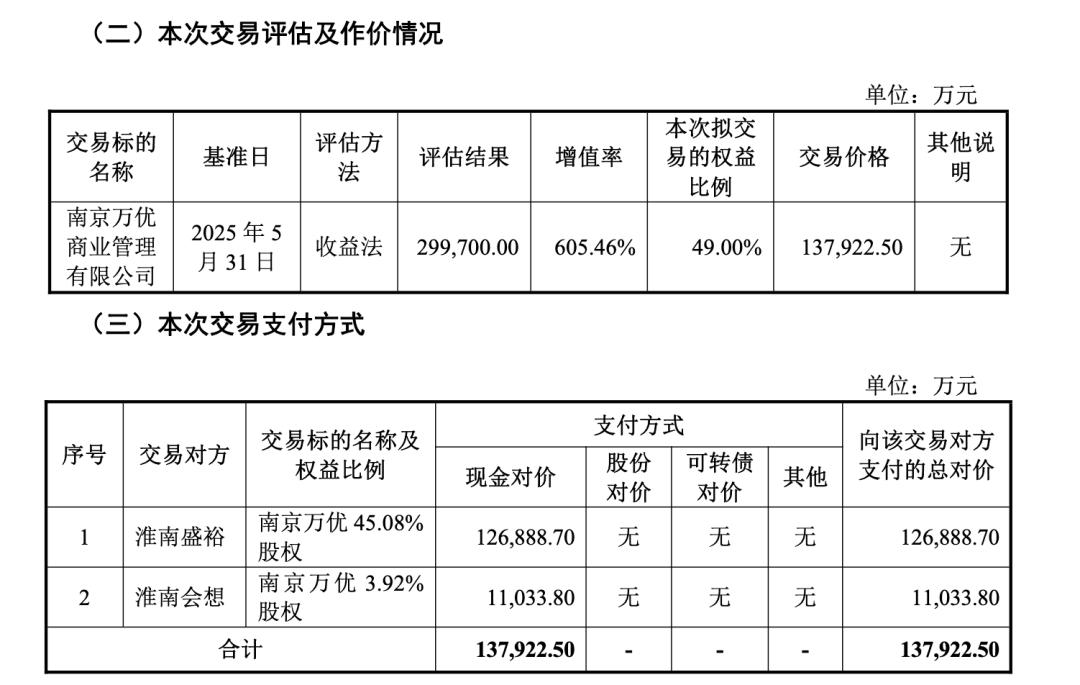
Core Insights - The mergers and acquisitions (M&A) in the Chinese food industry in 2025 are characterized by a focus on necessary integrations rather than large-scale deals, reflecting a shift towards survival in a saturated market [1] Group 1: Snack Industry Developments - Wanchen Group has transformed from a grassroots brand into a significant capital player, acquiring 49% of Nanjing Wanyou for 1.379 billion yuan, which is crucial for its brand integration strategy [2][3] - Nanjing Wanyou, under the "Good Idea" brand, generated 4.1 billion yuan in revenue in the first five months of 2025, highlighting its importance in Wanchen's portfolio [2] - The rapid expansion strategy of Wanchen has slowed significantly, with daily store openings dropping from 26 to less than 7, indicating market saturation and operational challenges [4] Group 2: Dairy Industry Trends - New Hope Dairy's acquisition of Fuzhou Aoni has taken six years to finalize, reflecting a cautious approach in a changing dairy market [7][9] - The acquisition is seen as a strategic move to solidify New Hope's presence in the southern market, but the company has shifted its focus from aggressive acquisitions to more sustainable growth strategies [9] - Junyao Health has adopted a different strategy by acquiring Runying Biotechnology, focusing on probiotic products, which saw a 60% revenue increase in the first three quarters of 2025 [9][10] Group 3: New Tea Beverage Sector - Mixue Ice City has made headlines by acquiring a 53% stake in the craft beer brand "Xianpi Fulu Jia" for nearly 300 million yuan, aiming to create a "day tea, night beer" business model [11][13] - The acquisition has faced criticism for its high premium, but the company leverages its extensive cold chain logistics to address the challenges of craft beer distribution [11] - In contrast, Heytea has paused its expansion plans, reflecting the industry's struggle with over-saturation and declining profitability [13] Group 4: Condiment Industry Challenges - Fuling Mustard's attempt to acquire Sichuan Weizimei has failed due to valuation disagreements, highlighting the difficulties traditional food companies face in finding growth opportunities [14][16] - The condiment industry is experiencing stagnation, with Fuling Mustard holding significant cash but struggling to identify viable growth avenues [16] - Industry leader Haitian Flavoring has opted for a Hong Kong listing to enhance its international presence and repair its reputation following regulatory challenges [16] Group 5: Overall Industry Trends - The 2025 M&A wave in the Chinese food and beverage sector reflects a broader theme of disillusionment, with consumers prioritizing value over brand prestige [17] - Companies are increasingly focusing on cost efficiency and profitability, as evidenced by Wanchen's and New Hope's strategic shifts [17] - The industry is moving towards consolidation, with larger firms dominating the market and employing data-driven strategies to optimize costs across the supply chain [17][18]





太平洋证券:建议关注餐饮链低基数下的修复 四大方向把握明年消费投资脉络
智通财经网· 2026-01-06 01:56
Core Viewpoint - The report from Pacific Securities suggests that the food and beverage sector, particularly frozen food, is expected to recover due to low base effects and reduced competition, leading to improved profitability. The sector's low valuation may benefit from a "Davis Double" effect as demand recovers and leading companies explore new product opportunities [1][3]. Group 1: Industry Performance and Trends - In 2025, consumer demand is under pressure, with the liquor and restaurant chains lagging behind. The overall consumption has been flat, with retail sales and CPI data at low levels, impacting traditional consumption [2]. - The liquor sector has shown a decline in performance, with major brands like Moutai experiencing a drop in prices from 2200 yuan to 1550 yuan. Most liquor companies, except for a few leaders, have reported declining revenues and profits [2]. - The snack and beverage sectors have shown resilience, characterized by high-frequency consumption and low average transaction values. New products and channels have positively impacted their performance [2][3]. Group 2: Future Outlook and Recommendations - The central economic work conference has prioritized boosting domestic demand, with expectations for policy support to stimulate recovery. There is potential for improvement in consumer spending if housing prices stabilize and supportive policies are implemented [3]. - For 2026, the focus is on the recovery of the restaurant chain sector, particularly frozen foods, as competition eases and profitability improves. The beverage sector, especially low-cost and high-frequency items, is also expected to perform well [3][4]. - Investment opportunities are identified in four areas: overseas demand, cost benefits, new product launches, and value-for-money consumption. Companies like Moutai, Anqi Yeast, and various beverage brands are highlighted for their potential [4].

食品饮料行业跟踪报告:茅台加速营销市场化转型,普飞上架i茅台
Shanghai Aijian Securities· 2026-01-05 11:03
Investment Rating - The industry investment rating is "Outperform the Market" [3][18]. Core Insights - The liquor industry is entering a phase of rapid performance clearing, with demand expected to show weak recovery as policy pressures ease. The industry is currently at a low valuation, and pessimistic expectations are fully priced in. The top liquor companies are stabilizing prices and increasing dividend ratios, making them attractive for investment. Long-term focus should be on high-quality leading companies with strong performance certainty, such as Kweichow Moutai and Shanxi Fenjiu [2][3]. - In the consumer goods sector, there are still high-growth opportunities in certain segments, with new products and channels expected to drive growth. Companies like Wancheng Group and Dongpeng Beverage are recommended for their strong growth trends [2]. Summary by Sections Industry Performance - The food and beverage industry index decreased by 2.26% in the week of December 29 to January 2, underperforming the Shanghai Composite Index, which increased by 0.13%. Among the sub-sectors, soft drinks led with a gain of 0.55%, while liquor experienced the largest decline at 2.79% [3][4]. Kweichow Moutai's Market Strategy - Kweichow Moutai is accelerating its market-oriented transformation, with a focus on balancing supply and demand. The company aims to optimize its product structure and implement market price reforms. The introduction of the i Moutai product is a significant step in this transformation, allowing direct sales to consumers and reducing speculation. The company is also adjusting its distribution model to enhance channel profitability and stimulate market demand [3][2].

量化大势研判 202601:宜攻守兼备:成长+质量
Minsheng Securities· 2026-01-04 07:25
- The report introduces a quantitative framework for market trend analysis, emphasizing the inherent attributes of assets and their lifecycle stages, categorized into five styles: external growth, quality growth, quality dividend, value dividend, and bankruptcy value[6][7][10] - The framework prioritizes asset comparison using metrics such as expected growth (gf), actual growth (g), profitability (ROE), high dividend (D), and bankruptcy value (PB/SIZE), each tailored to specific lifecycle stages[7][10] - The quantitative model has demonstrated strong historical performance, achieving an annualized return of 27.45% since 2009, with notable positive excess returns in most years, particularly post-2017[17][20][18] - The report recommends three dominant styles for January 2026: expected growth, actual growth, and profitability, supported by metrics like Δgf, Δg, and ΔROE, all showing expansion trends[15][33][29] - Expected growth strategy selects industries with the highest analyst forecasted growth rates, achieving significant excess returns since 2019. Recommended sectors for January 2026 include automotive sales, home appliances, tungsten, emerging financial services, and lithium[37][39][36] - Actual growth strategy focuses on industries with the highest Δg and related factors (sue, sur, jor), showing strong long-term excess returns. Recommended sectors for January 2026 include photovoltaic equipment, electronic chemicals, lithium battery chemicals, aerospace military, and home appliances[39][40][36] - Profitability strategy targets industries with high ROE and low PB-ROE valuation residuals, with notable excess returns from 2016 to 2020. Recommended sectors for January 2026 include agriculture, liquor, power distribution equipment, non-dairy beverages, and network connection/tower setup[42][43][36] - Quality dividend strategy uses DP+ROE scoring to select industries, with significant excess returns in 2016, 2017, and 2023. Recommended sectors for January 2026 include forestry/processing, boiler equipment, public transportation, fuel cells, and network connection/tower setup[45][46][36] - Value dividend strategy employs DP+BP scoring, achieving notable excess returns in 2009, 2017, and 2021-2023. Recommended sectors for January 2026 include security, daily chemicals, pet food, buses, and network connection/tower setup[48][50][36] - Bankruptcy value strategy selects industries with the lowest PB+SIZE scores, showing strong excess returns in 2015-2016 and 2021-2023. Recommended sectors for January 2026 include automotive sales, ceramics, cotton textiles, dyeing, and building decoration[52][53][36]
IP 系列报告一:情绪消费风起,IP趣玩行业快速增长-国泰海通
Sou Hu Cai Jing· 2026-01-02 17:32
Group 1 - The report focuses on the development of the IP fun food industry under the trend of emotional consumption, analyzing industry scale, core competitiveness, competitive landscape, and investment opportunities [1] - The IP fun food market in China is expected to grow from 18.1 billion yuan in 2020 to 35.4 billion yuan in 2024, with a CAGR of 18.2%, while the IP fun food segment is projected to grow from 5.6 billion yuan to 11.5 billion yuan, achieving a CAGR of 19.6% [1][9] - The growth is driven by the younger generation, particularly those born in the 90s and 00s, who are becoming the main force in emotional consumption, with nearly 90% of youth having experience in emotional spending [1][21] Group 2 - The core competitiveness of the industry lies in supply chain management and IP operation, with the ability to control raw material costs and efficient production and distribution being fundamental barriers [2][12] - The competitive landscape is fragmented, with many small and medium-sized enterprises participating, and the leading company, Jintian Animation, holding only 7.6% market share in 2024 [2][12] - The rise of domestic brands is notable, with Jintian Animation entering the top five in the industry by 2024, indicating a shift in market dominance from foreign to local brands [2][12] Group 3 - Jintian Animation focuses on the 0-12 age group and has 26 popular IP licenses, with revenue expected to grow from 596 million yuan in 2022 to 877 million yuan in 2024, and net profit increasing from 37 million yuan to 131 million yuan [3] - The company has a gross margin of 33.7%, with over 70% of its revenue coming from the Ultraman and My Little Pony IPs, and is rapidly expanding its direct sales channels [3]


新年好!送你2025国产好仪器全名单
仪器信息网· 2026-01-01 09:01
Core Viewpoint - The 2025 list of "Domestic Good Instruments" has been announced, highlighting 38 domestic scientific instruments across various fields, with 7 new additions recognized for their performance and user satisfaction [2][3][10]. Group 1: New Instruments - Seven new instruments have been awarded the title of "Domestic Good Instruments," including models such as the OIL-510D automatic infrared oil analyzer and the QX96M real-time fluorescence quantitative PCR system [3][4]. - The selection process involved evaluations from at least 30 users over a period of more than six months, focusing on performance, satisfaction, cost-effectiveness, service experience, and recommendation willingness [4][10]. Group 2: User Feedback and Research - The project emphasizes the importance of user feedback, stating that "good instruments are those that are used," and aims to help manufacturers optimize their products based on real-world applications [4][12]. - Over the past decade, the initiative has surveyed more than 30,000 frontline users and visited thousands of laboratories, resulting in the selection of over 500 instruments that have passed market tests [10][14]. Group 3: Application Demonstration Centers - The introduction of application demonstration centers aims to enhance the visibility and usability of domestic instruments, allowing researchers to experience the instruments firsthand and provide feedback for continuous improvement [8][15]. - Collaborating with top institutions across various regions, these centers will facilitate direct communication between researchers and manufacturers, promoting the integration of research and application [9][15]. Group 4: Industry Trends - The trend of "domestic substitution" is becoming a reality, with continuous improvements in the performance, reliability, and service of domestic instruments [11][12]. - The initiative reflects the growing strength of China's scientific instrument industry and its potential to contribute to research innovation and industrial upgrades [10][12].

过去的一年,消费彻底变了
首席商业评论· 2026-01-01 04:42
Core Viewpoint - The article discusses the evolving landscape of consumer behavior in China, highlighting the coexistence of emotional and rational consumption trends, and the implications for investment opportunities in the market [5][22]. Group 1: Consumer Trends - Despite perceptions of a cooling consumer market, data shows that final consumption expenditure contributed 53.5% to economic growth in the first three quarters of 2025, an increase of 9 percentage points from 2024 [6]. - Social retail sales grew by 4.0% year-on-year in the first 11 months of this year, surpassing the 3.5% growth expected for the entire year of 2024 [6]. - A McKinsey survey indicates that the expected share of domestic consumption in disposable income for 2025 is stable at 0.0%, a significant improvement from the previous year's expectation of -0.5% [9]. Group 2: Emotional and Rational Consumption - The article identifies two main trends in consumer behavior: emotional consumption, which focuses on personal satisfaction and identity, and rational consumption, which emphasizes quality and cost-effectiveness [13]. - A Nielsen IQ report reveals that 47% of respondents in China purchased only essential items to avoid waste, while 68% were willing to spend more on products that help relieve stress [13]. - The rise of the second-hand economy is noted, with platforms like Xianyu seeing a daily average of 7 million items listed, reflecting a growing acceptance of "recycling consumption" among young consumers [14]. Group 3: Future Consumption Landscape - The emotional economy in China is projected to reach a market size of 2.3 trillion yuan in 2024, with expectations to exceed 4.5 trillion yuan by 2029 [15]. - The article suggests that the health and wellness industry, as well as the pet economy, will benefit from shifting consumer spending towards self-investment and emotional fulfillment [20]. - The emergence of AI-driven emotional technology and virtual consumption is anticipated to create new market opportunities, as consumers increasingly seek personalized emotional experiences [21].

万辰集团(300972) - 国浩律师(北京)事务所关于福建万辰生物科技集团股份有限公司2025年第八次临时股东会之法律意见书
2025-12-31 09:18
国浩律师(北京)事务所 关于 福建万辰生物科技集团股份有限公司 2025 年第八次临时股东会 之 法律意见书 北京市朝阳区东三环北路 38 号泰康金融大厦 9 层 邮编:100026 9 th Floor, Taikang Financial Tower, No. 38 North Road East Third Ring, Chaoyang District, Beijing, 100026, China 电话/Tel: 010-65890699 传真/Fax: 010-65176800 网址/Website: http://www.grandall.com.cn 二零二五年十二月 国浩律师(北京)事务所 法律意见书 国浩律师(北京)事务所 关于福建万辰生物科技集团股份有限公司 法律意见书 国浩京证字【2025】第 0709 号 致:福建万辰生物科技集团股份有限公司 国浩律师(北京)事务所接受福建万辰生物科技集团股份有限公司(以下简 称"公司"或"万辰集团")的委托,指派律师出席并见证了公司 2025 年 12 月 31 日召开的 2025 年第八次临时股东会(以下简称"本次股东会"),并依据《中华 人民共 ...