
朗新集团

Search documents
山西证券研究早观点-20250902
Shanxi Securities· 2025-09-02 00:30
Core Insights - The solar energy industry is experiencing a significant decline in new installations, with July 2025 seeing a 47.6% year-on-year decrease in new photovoltaic installations, totaling 11.0 GW [7] - Despite the decline in installations, inverter exports have maintained growth, with July 2025 inverter export value reaching 6.51 billion yuan, a 16.3% increase year-on-year [7] - The overall solar power generation in July 2025 increased by 28.7% year-on-year, contributing to 8.03% of the total national industrial power generation [7] Industry Analysis - **Photovoltaic Installations**: In July 2025, the cumulative new photovoltaic installations for the first seven months reached 223.25 GW, reflecting an 80.7% year-on-year increase [7] - **Component Exports**: The export value of photovoltaic components in July 2025 was 15.89 billion yuan, a 13.7% decrease year-on-year, while the cumulative export value for the first seven months was 111.25 billion yuan, down 22.6% year-on-year [7] - **Inverter Exports**: The cumulative export value of inverters for the first seven months of 2025 was 37.11 billion yuan, showing a 9.0% year-on-year increase [7] Company Performance - The company reported a revenue of 4.597 billion yuan for H1 2025, a 43.92% decrease year-on-year, but the net profit attributable to shareholders was 594 million yuan, only a 1.27% decline [9] - The company plans to distribute a cash dividend of 2.5 yuan per 10 shares, resulting in a mid-term payout ratio of 45.7% [9] - The company's gross profit margin improved significantly to 30.34%, an increase of 11.96 percentage points year-on-year, driven by product structure optimization and rising gold prices [9] Sales Channels - The revenue distribution for H1 2025 was as follows: self-operated offline channels contributed 19.37%, online channels 25.41%, and franchise channels 52.76% [9] - The self-operated offline channel revenue was 890 million yuan, a 7.56% decline year-on-year, while the franchise channel revenue dropped significantly by 59.12% to 2.425 billion yuan [9] Product Performance - The revenue from embedded products in H1 2025 was 286 million yuan, down 23.08%, while the revenue from pure gold products was 3.415 billion yuan, down 50.94% [9] - The gross profit margins for embedded and pure gold products improved to 30.40% and 16.77%, respectively, reflecting increases of 4.38 and 6.98 percentage points year-on-year [9]
阿里系金融概念迎新进展 云锋金融携手蚂蚁数科布局RWA
Zhi Tong Cai Jing· 2025-09-01 13:28
Group 1 - Yunfeng Financial announced a strategic cooperation agreement with Ant Digital Technology on September 1, 2025, and a strategic investment in Pharos Network Technology Limited, focusing on real-world asset (RWA) applications [1] - The collaboration aims to integrate Ant Digital's blockchain and digital finance technology with Yunfeng Financial's expertise in asset management, securities, insurance, and new energy carbon assets [1][2] - The partnership will leverage the Pharos high-performance blockchain platform to expand compliance in RWA tokenization and next-generation internet (Web3) sectors, enhancing Yunfeng Financial's digital finance positioning and supporting Ant Digital's blockchain technology applications [1] Group 2 - Yunfeng Financial's subsidiary holds multiple financial service licenses from the Hong Kong Securities and Futures Commission, enabling it to conduct securities trading, consulting, institutional financing, and asset management [2] - Ant Digital has been operating independently since 2024, focusing on foundational technologies such as blockchain, artificial intelligence, and privacy computing, with its Ant Chain leading the Chinese BaaS market with a 26.5% market share for four consecutive years [2] - According to a Boston Consulting report, the global tokenized asset market is projected to reach $16 trillion by 2030, representing 10% of global GDP, indicating a significant growth potential for the RWA market [2]
公用事业行业跟踪周报:9月江苏电价不及预期,关注新能源对火电发电量的挤占影响-20250901
Soochow Securities· 2025-09-01 08:04
Investment Rating - The report maintains an "Overweight" rating for the utility sector [1]. Core Insights - The weighted average price of electricity in Jiangsu for September 2025 was 319.48 RMB/MWh, which is lower than market expectations. The total electricity traded was 8.111 billion kWh, with various sources contributing different amounts and prices [4]. - The report highlights a continued increase in electricity demand, with a 3.7% year-on-year growth in total electricity consumption for the first half of 2025 [15]. - The report suggests investment opportunities in green energy, photovoltaic assets, charging station assets, thermal power, hydropower, and nuclear power, emphasizing the potential for value reassessment in these areas [4]. Summary by Sections 1. Market Review - The SW utility index decreased by 0.67% from August 25 to August 29, 2025, underperforming compared to the ChiNext index [9]. - The top five gainers included Zhaoxin Co. (+33.6%) and Tianlun Gas (+13.2%), while the top five losers included ST Shengda (-9.5%) and Jiawei New Energy (-7.9%) [13]. 2. Electricity Sector Tracking 2.1. Electricity Consumption - Total electricity consumption in H1 2025 reached 4.84 trillion kWh, reflecting a 3.7% year-on-year increase [15]. - The growth rates for different sectors were: primary industry (+8.7%), secondary industry (+2.4%), tertiary industry (+7.1%), and urban-rural residential consumption (+4.1%) [15]. 2.2. Power Generation - Total power generation in H1 2025 was 4.54 trillion kWh, with a year-on-year increase of 0.8%. However, thermal and hydropower generation saw declines of 3.1% and 2.9%, respectively [23]. 2.3. Electricity Prices - The average electricity purchase price in August 2025 was 388 RMB/MWh, down 2% year-on-year but up 1.3% month-on-month [41]. 2.4. Thermal Power - The price of thermal coal at Qinhuangdao port was 690 RMB/ton as of August 29, 2025, a decrease of 17.76% year-on-year [46]. - The cumulative installed capacity of thermal power reached 1.47 billion kW, with an increase of 4.7% year-on-year [49]. 2.5. Hydropower - The water level at the Three Gorges Reservoir was 162.19 meters, which is normal compared to previous years. Inflow and outflow rates increased by 35.48% and 47.46% year-on-year, respectively [55]. 2.6. Nuclear Power - In 2024, 11 new nuclear units were approved, indicating a positive trend in the development of nuclear power [67]. 2.7. Green Energy - New installations of wind and solar power in H1 2025 increased by 99% and 107% year-on-year, respectively [4]. 3. Investment Recommendations - The report recommends focusing on companies like Changjiang Electric for high dividend yield assets, and suggests monitoring companies involved in green energy and charging stations for potential value reassessment [4].




光伏行业月度报告:7月光伏新增装机同比下降47.6%,逆变器出口额同比维持增长-20250901
Shanxi Securities· 2025-09-01 05:33
Investment Rating - The report maintains a "Buy" rating for several companies in the solar sector, with specific ratings as follows: - Aishuo Co., Ltd. (600732.SH) - Buy-B - Longi Green Energy (601012.SH) - Buy-B - Daqian Energy (688303.SH) - Buy-B - Flat Glass Group (601865.SH) - Buy-A - Hengdian East Magnetic (002056.SZ) - Buy-A - Sungrow Power Supply (300274.SZ) - Buy-A - Canadian Solar (688472.SH) - Buy-A - Deye Technology (605117.SH) - Buy-A - Langxin Group (300682.SZ) - Buy-B - Quartz Co., Ltd. (603688.SH) - Buy-A [1] Core Insights - In July 2025, the domestic photovoltaic (PV) new installed capacity was 11.0 GW, a year-on-year decrease of 47.6% and a month-on-month decrease of 23.1%. Cumulatively, from January to July, the new installed capacity reached 223.25 GW, representing an increase of 80.7% year-on-year [2][12]. - The export value of PV components in July was 15.89 billion yuan, down 13.7% year-on-year but up 0.5% month-on-month. The cumulative export value from January to July was 111.25 billion yuan, down 22.6% year-on-year [2][14]. - In contrast, the inverter export value in July was 6.51 billion yuan, showing a year-on-year increase of 16.3% but a slight month-on-month decline of 1.2%. The cumulative export value from January to July was 37.11 billion yuan, up 9.0% year-on-year [3][29]. - Solar power generation in July increased by 28.7% year-on-year, with a total generation of 74.43 billion kWh, accounting for 8.03% of the total industrial power generation in the country [4][42]. Summary by Sections 1. Installed Capacity - In July 2025, the domestic PV new installed capacity was 11.0 GW, reflecting a year-on-year decline of 47.6% and a month-on-month decline of 23.1%. The cumulative installed capacity from January to July reached 223.25 GW, marking an 80.7% increase year-on-year [12]. 2. Exports - **Components**: The export value of PV components in July was 15.89 billion yuan, down 13.7% year-on-year but up 0.5% month-on-month. The cumulative export value from January to July was 111.25 billion yuan, down 22.6% year-on-year [14]. - **Inverters**: The inverter export value in July was 6.51 billion yuan, with a year-on-year increase of 16.3% and a month-on-month decrease of 1.2%. The cumulative export value from January to July was 37.11 billion yuan, up 9.0% year-on-year [29]. 3. Solar Power Generation - In July, solar power generation increased by 28.7% year-on-year, totaling 74.43 billion kWh, which accounted for 8.03% of the total industrial power generation in the country [42]. 4. Investment Recommendations - The report recommends focusing on companies based on various strategic directions: - New technology: Aishuo Co., Ltd., Longi Green Energy - Supply-side improvement: Daqian Energy, Flat Glass Group - Overseas expansion: Hengdian East Magnetic, Sungrow Power Supply, Canadian Solar, Deye Technology - Market-oriented power: Langxin Group - Domestic substitution: Quartz Co., Ltd. - Additional companies to watch include Xinyi Solar, GCL-Poly Energy, Tongwei Co., Ltd., TCL Zhonghuan, New Special Energy, Dier Laser, Foster, Haiyou New Materials, JA Solar, Trina Solar, JinkoSolar, CITIC Bo, Maiwei, Jinglong Technology, Shanghai Ailu, and Guangxin Materials [47].





十问RWA
Sou Hu Cai Jing· 2025-08-31 06:46
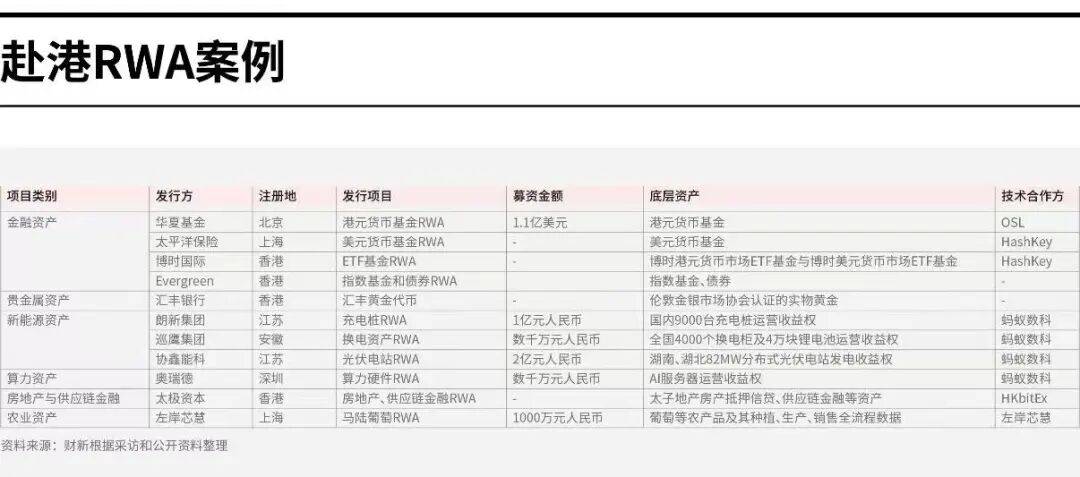
Core Viewpoint - The article discusses the ongoing trend of Real World Assets (RWA) tokenization in the financial sector, emphasizing its potential to democratize investment opportunities by allowing fractional ownership of high-value assets through blockchain technology [1][2]. Group 1: Understanding RWA - RWA, or Real World Assets-tokenization, refers to the process of digitizing physical assets like real estate, gold, and stocks on the blockchain, enabling them to be traded, mortgaged, and transferred in a digital format [1][2]. - Tokenization is likened to securitization, where assets are divided into smaller units (tokens) to lower investment barriers, allowing more people to invest in high-value assets [2][3]. Group 2: Advantages of RWA - RWA offers several advantages over traditional investment methods, including: - Fragmented ownership, allowing investors to buy tokens representing a fraction of an asset, significantly lowering the investment threshold [3]. - Instant financing and settlement through smart contracts, which automate issuance, trading, and clearing processes, enhancing capital turnover efficiency [3]. - Global accessibility, enabling anyone with internet access to invest in assets from anywhere in the world [3]. Group 3: Stages of RWA Development - The development of RWA can be categorized into three stages: - The first stage involves the tokenization of fiat currencies, such as stablecoins like USDT, which are pegged to the US dollar [4]. - The second stage focuses on financial asset tokenization, including stocks and bonds [4]. - The third stage encompasses the tokenization of physical assets, such as commodities like gold and oil [4]. Group 4: RWA Projects and Examples - Various RWA projects have emerged, including: - Charging station RWA by Longxin Group, which tokenizes the revenue rights from charging stations [6]. - Real estate and supply chain finance RWA projects that convert valuable but illiquid assets into liquid capital [6][7]. - The article highlights that RWA is suitable for businesses with valuable but hard-to-sell assets, transforming them into liquid capital [6]. Group 5: RWA Process and Compliance - The process for issuing RWA involves several steps, including asset verification, auditing, and the establishment of a Special Purpose Vehicle (SPV) for risk isolation [9][11][12]. - Compliance with local regulations is crucial, particularly regarding data security and the legality of cross-border transactions [14]. Group 6: Market Landscape - The current market for RWA includes various asset classes, such as renewable energy assets, real estate, and intangible assets like carbon credits and intellectual property [7][8]. - The article notes that while RWA presents innovative opportunities, it also faces challenges related to asset ownership clarity and legal protections [15].

朗新集团发布10亿元金融赋能计划 加速新能源资产价值释放
Zheng Quan Shi Bao Wang· 2025-08-29 05:58
Group 1 - The core viewpoint of the news is that Langxin Group is launching a financial empowerment initiative for new energy assets, aiming to enhance financing channels and operational efficiency in the context of China's low-carbon energy transition [1][2] - The initiative involves a financial scale of approximately 1 billion yuan, with participation from over a hundred financial institutions and representatives from new energy companies [1] - The backdrop of this initiative is China's "14th Five-Year Plan," which has led to the establishment of the world's most comprehensive and largest modern energy system, with annual energy industrial investments exceeding 6 trillion yuan [1] Group 2 - Langxin Group's Vice President Wang Weihong stated that the new energy industry is entering a new stage of large-scale development, and the company aims to connect and service high-quality assets in wind, solar, storage, and charging [2] - The company plans to build an energy asset management platform and evaluation system that covers the entire service chain from asset selection to professional evaluation, value enhancement, and efficient disposal [2] - Industry insiders believe that the combination of finance and industry will not only broaden the financing space for new energy assets but also enhance asset management and operational efficiency, with innovative financial tools being gradually implemented [2]
直播间找0ffer 如何实现人岗“真实”匹配
Zhong Guo Qing Nian Bao· 2025-08-27 23:37
Core Viewpoint - The rise of live-streaming recruitment has transformed the job market, providing a new platform for real-time interaction between job seekers and employers, enhancing the efficiency of job matching [1][4][6]. Group 1: Live-streaming Recruitment Growth - Live-streaming recruitment has become a new digital recruitment product in the human resources service industry, with over 2.5 billion users seeking job opportunities on platforms like Kuaishou in 2023, and nearly 550 million live-streaming sessions held [1]. - By the end of 2024, various human resources departments have published 178,400 short videos related to recruitment activities and conducted 73,600 live-streaming sessions, accumulating 405 million viewers [1]. Group 2: Role of Live-streaming Recruiters - Live-streaming recruiters play a crucial role in bridging the gap between job seekers and employers, requiring them to understand both the employer's needs and the job seekers' expectations [2][4]. - Recruiters prepare extensively for each session, including creating presentations and filtering resumes post-event, to ensure effective communication of job opportunities [2][3]. Group 3: Interactive Features and Trust Building - The interactive nature of live-streaming recruitment allows for real-time Q&A, enhancing engagement and providing job seekers with immediate feedback on their inquiries [4][5]. - To build trust, all recruiting companies must register and undergo verification through official platforms, ensuring compliance and legitimacy [5][6]. Group 4: Challenges and Future Directions - Despite the popularity of live-streaming recruitment, challenges remain, such as the need for in-person job environment assessments and the potential for misinformation [6][7]. - The industry is moving towards incorporating AI and VR technologies to improve job matching accuracy and provide immersive experiences for job seekers [8].
朗新集团(300682):核心业务稳步推进 AI赋能平台交易
Xin Lang Cai Jing· 2025-08-27 06:48
Core Viewpoint - The company reported its 2025 semi-annual results, showing a slight decline in revenue and net profit, but significant growth in non-recurring net profit, indicating stable core business performance and progress in AI applications [1][2]. Financial Performance - In the first half of 2025, the company achieved revenue of 1.542 billion yuan, a decrease of 0.39%, and a net profit of 29 million yuan, down 23.02%. The non-recurring net profit was 14 million yuan, up 199.94% [1]. - For Q2 2025, revenue was 876 million yuan, down 0.60%, with a net profit of 25 million yuan, down 55.22%, and a non-recurring net profit of 18 million yuan, down 64.63% [1]. - The overall gross margin for the first half of 2025 was 46.05%, an increase of 2.23 percentage points, while the expense ratio decreased to 45.83%, down 1.50 percentage points [2]. Business Segments - The energy digitalization business generated revenue of 472 million yuan, a year-on-year increase of 0.73%. The energy internet business revenue was 864 million yuan, up 10.46%, while the internet TV business revenue fell to 207 million yuan, down 30.62% [1]. - The energy internet business's gross margin improved to 54.44%, an increase of 3.32 percentage points, with a transaction volume growth of over 8% in the life payment platform [3]. AI and Technological Advancements - The company has implemented multiple AI pilot projects, achieving positive progress in areas such as load control, new energy management, and electricity marketization [1]. - In July 2025, the company launched its self-developed "Langxin Jiugong AI Energy Model," which received global recognition for execution accuracy and query efficiency [4]. Market Expansion and Future Outlook - The company is actively engaged in electricity market transactions across multiple provinces, with a total trading volume of nearly 2 billion kWh, a year-on-year increase of approximately 2.5 times [4]. - The green electricity direct connection policy is expected to significantly boost electricity trading demand, leading to revised revenue forecasts for 2025-2027 [4].
RWA再上新,被区块链改变的融资成本、门槛和信任机制
3 6 Ke· 2025-08-27 02:59
Core Insights - The article discusses the recent issuance of Real World Assets (RWA) on the blockchain, highlighting the successful launch by Aorui De based on AI server assets, marking a significant development in the tokenization of physical assets [1][2] - RWA allows traditional illiquid assets to be converted into digital tokens, enabling fractional ownership and easier trading, thus opening new financing channels for asset holders and new investment products for investors [2][6] RWA Definition and Mechanism - RWA stands for "Real World Assets tokenization," which refers to the process of converting physical assets into digital tokens using blockchain technology, allowing for enhanced liquidity and tradeability [1][6] - The process typically involves a technical partner to support the issuance, ensuring that assets are digitized and standardized for trading [3] Market Trends and Regulatory Environment - The RWA market is gaining traction, with significant developments in regulatory frameworks, such as the establishment of technical standards for asset tokenization and the introduction of stablecoin regulations in Hong Kong [4][5] - The RWA market is projected to grow significantly, with estimates suggesting a total market value exceeding $10 trillion by 2030 [13] Asset Categories Suitable for RWA - The report identifies five main asset categories suitable for RWA issuance: financial assets (gold, bonds, receivables), renewable energy assets (charging stations, solar power), real estate, intangible assets (carbon credits, data), and computing power assets (AI servers) [6][7] - The recent issuance by Aorui De exemplifies the potential of computing power assets, which are highly digitalized and can provide real-time data for verification [6][7] Advantages of RWA - RWA can significantly reduce financing costs and investment barriers by simplifying traditional financing processes through smart contracts, which automate many steps and reduce reliance on intermediaries [9][10] - The digitization of high-value assets into smaller, standardized tokens allows broader access for ordinary investors, lowering the minimum investment thresholds [10][11] Challenges and Considerations - Despite the advantages, the RWA market faces regulatory challenges, as different countries have varying approaches to virtual asset regulation, which could hinder cross-border financing [11][12] - The complexity of RWA structures may pose risks similar to those seen in asset-backed securities (ABS), highlighting the need for clear regulatory frameworks to ensure transparency and stability [12]
优必选牵头两项人形机器人国家技术标准,光伏反内卷会议再召开
Shanxi Securities· 2025-08-26 09:46
Investment Rating - The report maintains an investment rating of "Synchronize with the market - A" for the electric equipment and new energy industry [1]. Core Viewpoints - The report highlights that the electric equipment and new energy industry has shown stable market performance over the past year, with key developments including the establishment of national technical standards for humanoid robots led by UBTECH and the ongoing discussions to prevent price wars in the photovoltaic sector [1][3][4]. Summary by Sections Preferred Stocks - The report lists several preferred stocks with their ratings, including: - Aishuo Co., Ltd. (600732.SH) - Buy - B - Longi Green Energy (601012.SH) - Buy - B - Daqian Energy (688303.SH) - Buy - B - Fulete (601865.SH) - Buy - A - Hengdian East Magnet (002056.SZ) - Buy - A - Sungrow Power Supply (300274.SZ) - Buy - A - Canadian Solar (688472.SH) - Buy - A - Deyang Co., Ltd. (605117.SH) - Buy - A - Langxin Group (300682.SZ) - Buy - B - Quartz Co., Ltd. (603688.SH) - Buy - A [2]. Industry Developments - UBTECH has led the approval of two national standards for humanoid robots, focusing on positioning navigation and human-machine interaction [3]. - A meeting held by the Ministry of Industry and Information Technology emphasized the importance of maintaining fair competition in the photovoltaic industry and called for the orderly exit of outdated production capacity [5]. - The China Photovoltaic Industry Association has proposed initiatives to strengthen industry self-discipline and maintain a fair market order [4]. Price Tracking - The report provides price tracking for various components in the photovoltaic supply chain: - Polysilicon prices remain stable at 44.0 CNY/kg [6]. - Silicon wafer prices are stable, with N-type wafers priced at 1.20 CNY/piece [7]. - Battery cell prices are also stable, with N-type cells priced at 0.290 CNY/W [8]. - Module prices for TOPCon dual-glass components are stable at 0.685 CNY/W [8]. - Glass prices for photovoltaic applications remain unchanged [8]. Investment Recommendations - The report recommends focusing on companies in various strategic directions: - BC new technology: Aishuo Co., Ltd., Longi Green Energy - Supply-side improvement: Daqian Energy, Fulete - Overseas layout: Hengdian East Magnet, Sungrow Power Supply, Canadian Solar, Deyang Co., Ltd. - Market-oriented electricity: Langxin Group - Domestic substitution: Quartz Co., Ltd. [9].

