Momenta

Search documents
智能驾驶,造不如买?
3 6 Ke· 2025-10-14 00:15
Core Insights - The competition in the new energy vehicle market is intensifying, with smart driving transitioning from an "add-on" to a "must-have" feature, leading to a "arms race" in smart driving technology [1] - Traditional automakers are increasingly opting to acquire mature smart driving technologies rather than developing them in-house, as evidenced by recent investments from companies like FAW and Mercedes-Benz [1][2] - The market for smart driving is becoming a "game for the strong," with leading suppliers gaining significant advantages in data, computing power, and algorithm iteration [10][12] Group 1: Investment Trends - FAW has acquired a 35.8% stake in Zhuoyue Technology, becoming its largest single shareholder, while Mercedes-Benz invested 1.34 billion yuan in Qianli Technology, acquiring a 3% stake [1][2] - Traditional automakers are shifting their strategies to focus on acquiring proven smart driving technologies rather than investing in startups [1][2] - Companies like BYD and Geely are also making significant investments in smart driving firms, indicating a trend towards deeper collaboration and investment in third-party technologies [2][5] Group 2: Strategic Shifts - Many traditional automakers are consolidating their internal smart driving teams to enhance efficiency and focus on strategic partnerships with third-party suppliers [4][5] - The approach of "two-pronged betting" is becoming common, where companies maintain partnerships with third-party suppliers while also developing their own smart driving strategies [5][7] - The urgency of the market is pushing automakers to collaborate with established smart driving suppliers to mitigate risks and accelerate development [7][8] Group 3: Market Dynamics - The smart driving market is witnessing a division into three main camps: ecosystem giants like Huawei and Horizon Robotics, algorithm-focused suppliers like Momenta, and automaker-backed firms [8][9] - The competitive landscape is narrowing, with leading players like Momenta and Huawei capturing significant market shares in the navigation-assisted driving sector [9][10] - The emergence of advanced models like VLA (Vision-Language-Action) is reshaping the smart driving landscape, requiring substantial data and computing resources, thus raising the entry barriers for smaller suppliers [10][12][14] Group 4: Future Outlook - As automakers increasingly acquire smart driving capabilities, the competition will shift back to core aspects such as cost efficiency, user experience, and data iteration capabilities [21] - The collaboration between automakers and smart driving suppliers is evolving from simple partnerships to deeper, more integrated development efforts [21] - The future of smart driving will depend on how effectively companies can translate acquired technologies into tangible user benefits, emphasizing the need for both capital investment and strategic insight [21]



BBA在华销量失守 加速布局纯电赛道
2 1 Shi Ji Jing Ji Bao Dao· 2025-10-13 23:17
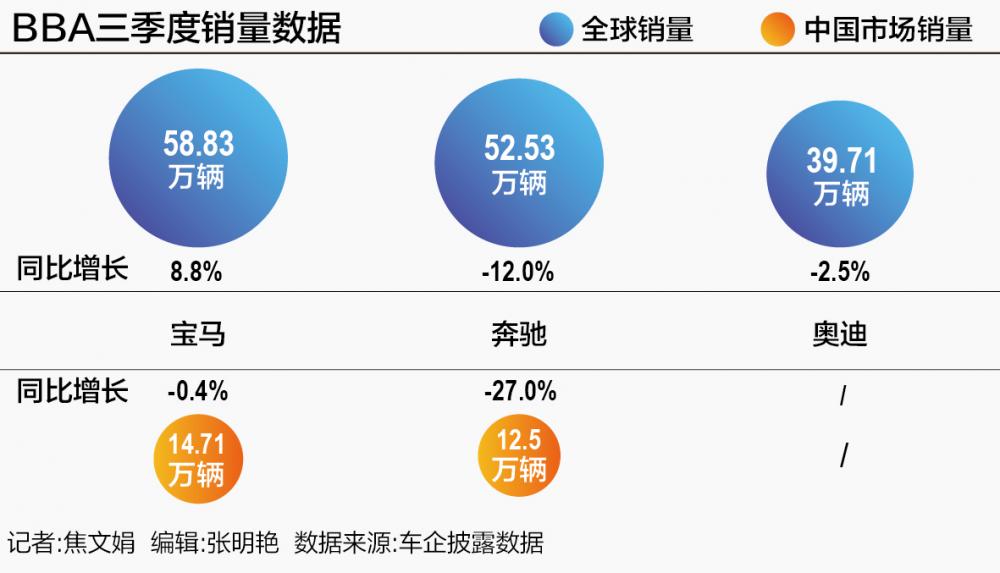
Group 1: Market Dynamics - The luxury car market is undergoing a significant adjustment, with BBA (BMW, Mercedes-Benz, Audi) showing a differentiated trend: BMW is leading, Mercedes-Benz is under pressure, and Audi is catching up [1] - BMW is the only company among BBA to achieve positive sales growth, with global deliveries reaching 588,300 units in Q3, up 8.8% year-on-year, and a total of 1,795,900 units in the first three quarters, up 2.4% [1] - In contrast, Mercedes-Benz's Q3 global sales fell to 525,300 units, down 12% year-on-year, with a total of 1,601,600 units in the first three quarters, down 9% [1][3] - Audi's Q3 global sales were 397,100 units, a decrease of 2.5%, with a total of 1,191,100 units in the first three quarters, down 4.8% [1] Group 2: Challenges in the Chinese Market - The Chinese market poses a significant challenge for BBA, with BMW's Q3 deliveries in China slightly declining by 0.4% to 147,100 units, and a cumulative drop of 11.2% to 464,000 units in the first three quarters [3] - Mercedes-Benz faced a more severe decline, with Q3 deliveries in China plummeting 27% to 125,000 units, and a total drop of 18% to 418,000 units in the first three quarters [3] - Audi's sales in China showed signs of recovery, with its joint venture reporting a 13.5% increase in sales to 58,000 units in the first three quarters [3] Group 3: Pricing and Competitive Pressure - The pricing structure of BBA is under pressure, particularly in the 200,000 to 400,000 RMB price range, where local brands are challenging entry-level models [4] - In the 200,000 to 300,000 RMB segment, brands like Zeekr and Tesla are eroding BBA's market share with better performance and value [4] - BMW has revised its profit forecast for 2025, expecting a pre-tax profit "slightly below" last year's 10.97 billion euros (approximately 90.98 billion RMB) due to increased tariff costs and support for local dealers [4][5] Group 4: Electrification Strategies - BBA's electrification strategies are diverging, with BMW leading, Mercedes-Benz aggressively pushing forward, and Audi taking a more pragmatic approach [6] - BMW's electric vehicle sales reached 323,000 units in the first three quarters, up 10% year-on-year [7] - Mercedes-Benz is launching a significant product offensive, with plans to introduce at least 40 new models by the end of 2027, including the new electric GLC targeting the Chinese luxury electric SUV market [8] - Audi is adjusting its electric strategy, focusing on a balanced approach between long-term electric goals and flexible product offerings, with new models like the Q6L e-tron [9] Group 5: Current Market Trends - The hybrid market remains a crucial support for BBA, with BMW's hybrid vehicle sales growing 8% to 152,000 units in Q3 [9] - The pure electric market is outpacing hybrids in China, with a year-on-year growth of 32.4% in September, indicating a shift in consumer preference [9] - As BBA collectively intensifies its focus on electric products, a competitive battle for market share in the future landscape is unfolding in China [9]
Robotaxi赛道升温:滴滴自动驾驶再获20亿元融资 将推动L4自动驾驶应用落地
Mei Ri Jing Ji Xin Wen· 2025-10-11 08:49
Core Insights - The Robotaxi sector is experiencing a new wave of development as autonomous driving technology accelerates towards commercialization [1][2] - Didi Autonomous Driving has secured a Series D funding round totaling 2 billion yuan, aimed at enhancing AI research and promoting L4 autonomous driving applications [1] - The competition in the domestic Robotaxi industry is intensifying, with multiple companies announcing plans for mass production by 2025 [2] Funding and Investment - Didi's recent funding round follows a previous Series C round of approximately 2.98 million USD (around 213 million yuan) announced last October [2] - The investment will be utilized to increase R&D in AI and support the deployment of L4 autonomous driving technology [1] Industry Trends - The Robotaxi industry is shifting from technology validation to large-scale operational competition, with companies like Didi and Hello planning to deploy thousands of vehicles by 2026-2027 [2] - The market for Robotaxi is expected to expand significantly as operational maturity increases, positively impacting existing ride-hailing platforms [2] Technological Developments - Didi has initiated full-scenario, fully driverless testing in Beijing and Guangzhou, demonstrating stable performance in complex travel conditions [1] - A new generation of pre-installed autonomous vehicles developed in collaboration with GAC Aion is set for delivery by the end of 2025 [1] Competitive Landscape - The competition among companies in the Robotaxi sector is described as a "battle of the gods," where the integration of technology and business models will be crucial for success [3] - As the 2025 mass production milestone approaches, the competition is expected to intensify, involving technology, capital, and operational strategies [3]

Waymo自动驾驶最新探索:世界模型、长尾问题、最重要的东西
自动驾驶之心· 2025-10-10 23:32
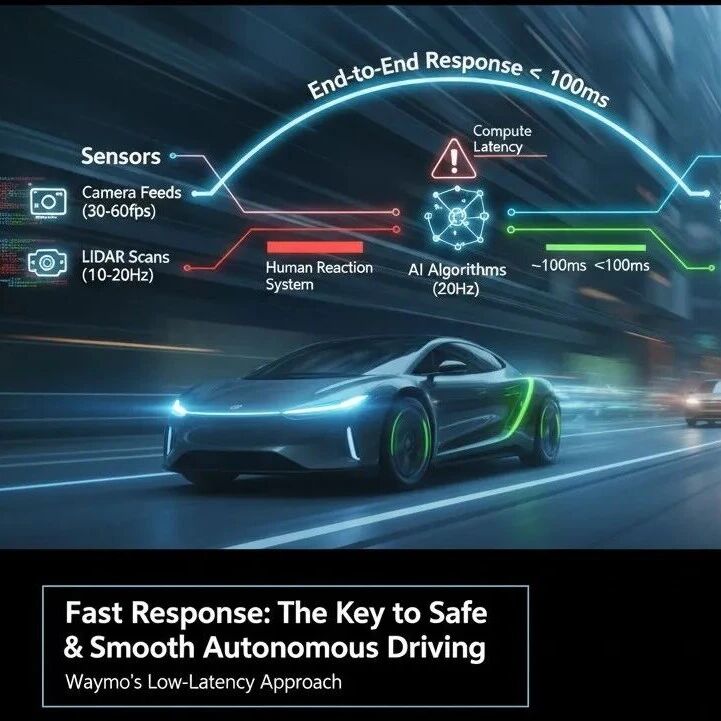
Core Insights - Waymo has developed a large-scale AI model called the Waymo Foundation Model, which supports vehicle perception, behavior prediction, scene simulation, and driving decision-making [5][11] - The model integrates data from multiple sensors to understand the environment, similar to how large language models operate [5][11] - The focus on data quality and selection is crucial for ensuring that the model addresses the right problems effectively [25][30] Group 1: World Model Development - Waymo's world model encodes all sensor data and incorporates world knowledge, enabling it to decode driving-related tasks [11] - The model allows for real-time perception and decision-making on the vehicle while simulating real driving environments in the cloud for testing [7][11] - The long-tail problem in autonomous driving, which includes complex scenarios like adverse weather and construction, remains a significant challenge [11][12] Group 2: Addressing Long-Tail Problems - Weather conditions such as rain and snow present unique challenges for autonomous driving, requiring high precision in judgment [12][14] - Low visibility scenarios necessitate the use of multi-modal sensors to detect objects effectively [15] - Occlusion reasoning is critical for understanding hidden objects and ensuring driving safety [18][21] Group 3: Complex Scene Understanding - Understanding complex scenes like construction zones and dynamic environments requires advanced reasoning capabilities [24] - Real-time responses to dynamic signals, such as traffic officer gestures, are essential for safe navigation [24] - The use of large language models is being explored to enhance scene understanding and decision-making [24] Group 4: Importance of Data, Algorithms, and Computing Power - The three critical components for successful autonomous driving are data, algorithms, and computing power, with a strong emphasis on data quality [25][30] - Efficient data mining from vast video datasets is vital for understanding driving events [30] - Quick decision-making is essential for safety and smooth operation, with a focus on reducing response times across the algorithmic chain [30][31] Group 5: Operational Infrastructure - Waymo's operational facilities, including depots and modification workshops, are crucial for the efficient deployment of Level 4 autonomous vehicles [33] - Vehicles can autonomously navigate to charging stations and begin operations after sensor installation [33] - The engineering challenges of scaling autonomous driving technology require collaboration with traditional automotive engineers [34] Group 6: Sensor and Algorithm Response - The responsiveness of sensors, such as camera frame rates, is critical for effective autonomous driving [36] - Algorithms must process data at high frequencies to ensure timely execution of driving commands [36] - The evolution of vehicle control systems is moving towards higher frequency responses, particularly in electric and electronically controlled systems [36]
某新势力智驾一号位的离职始末......
自动驾驶之心· 2025-10-10 23:32
Core Insights - The recent OTA incident in a new force's autonomous driving system has catalyzed the departure of its top autonomous driving executive, highlighting significant issues in user satisfaction and brand reputation [5][6] - The internal dynamics of the company have shifted, with a new leader in the autonomous driving sector being appointed, indicating a need for urgent change to regain competitive advantage [6][7] Summary by Sections Incident Overview - The latest OTA update was met with strong user dissatisfaction due to numerous bugs, negatively impacting the company's reputation [5] - A previous OTA incident last year led to the dismissal of the technical development head and a reorganization of the testing department, raising questions about accountability for the recent failure [5] Internal Dynamics - The autonomous driving executive was already in a precarious position, overshadowed by a newly appointed head of world modeling, who has taken control of key algorithm developments [6] - The absence of the autonomous driving executive from a recent high-level meeting signified a decisive leadership change, reflecting the company's urgent need for transformation in the competitive landscape [6] Competitive Landscape - The company faces intensified competition not only from Huawei but also from leading autonomous driving firms like Momenta, Yuanrong, and Horizon, which have demonstrated strong performance in advanced algorithms [7] - Historically, the company and Huawei were leaders in algorithm development, but now they are at risk of being outperformed by these emerging competitors, which could have disastrous consequences for their market position [7]
中国“自动驾驶第一人”,竟因1.5万元破产?
电动车公社· 2025-10-10 17:20
Core Viewpoint - The article discusses the challenges faced by the autonomous driving industry, highlighting the contrasting fates of companies like Zhongzhixing and Wenyan Zhixing, and emphasizes the importance of commercial viability in technology adoption [1][92]. Group 1: Industry Overview - The autonomous driving industry has seen intense competition, with some brands successfully emerging while many others have failed [1]. - Companies like Huawei dominate the autonomous driving supplier market, while others struggle to survive [2][3]. Group 2: Zhongzhixing's Downfall - Zhongzhixing recently declared bankruptcy due to a labor dispute involving a mere 15,000 yuan, which exposed its larger financial issues [4][6]. - The company had accumulated nearly 50 million yuan in debt, with insufficient assets to cover it, leading to its liquidation [6][88]. Group 3: Wang Jin's Background - Wang Jin, the founder of Zhongzhixing, is a prominent figure in the autonomous driving field, having held key positions at Alibaba, Google, and Baidu [9][32]. - His contributions significantly impacted the growth of these companies, particularly in technology and product development [17][30]. Group 4: Technological Approaches - Zhongzhixing adopted an aggressive "vehicle-road collaboration" approach, which aimed to enhance autonomous driving through extensive infrastructure investment [64][67]. - In contrast, Wenyan Zhixing pursued a more mainstream "single-vehicle intelligence" strategy, focusing on equipping individual vehicles with advanced sensors and computing power [62][64]. Group 5: Challenges in Implementation - Despite some initial success, Zhongzhixing's projects struggled to achieve commercial viability due to the high costs and long timelines associated with infrastructure development [81][83]. - The company faced significant hurdles in convincing automakers to adopt its vehicle-road collaboration technology, especially as competitors focused on more flexible solutions [90][92]. Group 6: Conclusion - The article concludes that the failure of Zhongzhixing illustrates the need for emerging technologies to find a balance between innovation and market practicality [92][93]. - It suggests that while cutting-edge technologies like vehicle-road collaboration may have potential, they require a solid commercial foundation to succeed [95].


四维图新拟18亿投资重塑智驾格局 子公司出表15亿投资收益助力扭亏
Chang Jiang Shang Bao· 2025-10-10 01:25
Core Viewpoint - The company Siwei Tuxin is advancing a significant acquisition in the intelligent driving sector by investing 1.8 billion yuan in PhiGent Robotics Limited, becoming its largest shareholder with a 39.14% stake, which is expected to reshape the domestic intelligent driving market landscape [1][2][6]. Group 1: Transaction Details - The total transaction amount is 1.8 billion yuan, marking it as the largest intelligent driving acquisition case in the A-share market [2]. - The investment will be executed in two steps: a cash increase of 250 million yuan and an asset injection involving the transfer of 100% equity of Tuxin Intelligent Driving Technology [5][6]. - The cash increase will involve subscribing to approximately 138 million C+ class preferred shares at a price of 0.2538 USD per share, translating to approximately 1.8061 yuan per share [5]. Group 2: Financial Impact - The acquisition is projected to bring about 1.5 billion yuan in investment income, significantly improving the company's operating performance [2][9]. - The company reported a loss of 311 million yuan in the first half of 2025, but the acquisition is expected to help turn around its financial situation by potentially achieving profitability for the entire year [9][10]. Group 3: Market Position and Competition - The acquisition is anticipated to intensify competition in the intelligent driving market, which is currently dominated by companies like Baidu, Huawei, and BYD [2][8]. - The newly formed entity "New Jian Zhi" will focus on high-performance intelligent driving software algorithms, enhancing the company's core competitiveness in the sector [8]. Group 4: R&D Investment - The company has been actively investing in research and development, with an expenditure of 655 million yuan in the first half of 2025, accounting for 37.19% of its operating revenue [3].

宝马的「新世代」之路:孤独向前、起大早赶晚集、远水难解近渴
3 6 Ke· 2025-10-09 11:05
Core Viewpoint - BMW officially announced the launch of a direct sales model, set to begin implementation in 2027, marking a significant shift away from traditional dealership partnerships [1] Group 1: Transformation and Strategy - BMW is transitioning from a fuel-centric product era to a new generation of products, focusing on self-developed technologies such as the Panoramic iDrive system and sixth-generation eDrive technology [1] - The new generation represents a culmination of European automotive transformation, showcasing both ambition and a disconnect with global market trends, particularly in smart technology [3][5] - The new generation's energy performance is impressive, featuring an 800V high-voltage platform and an expected range of 900 kilometers, but its smart technology appeal is perceived as weak [3][5] Group 2: Challenges and Comparisons - BMW's new generation is likened to Volkswagen's ID series, facing challenges due to its European roots and a lack of software development capabilities [5][7] - Compared to competitors like Audi and Nissan, which have rapidly developed their new models, BMW's timeline has been slower, with the iX3L model only beginning testing in April 2023, despite the new generation platform being proposed in 2021 [7] - BMW's collaboration with Chinese partners has been less effective than that of its competitors, as its partner, Brilliance, lacks the competitive edge of other Chinese automotive firms [7][8] Group 3: Design and Market Perception - The design of the new generation has sparked controversy, particularly regarding the rear design of the 5 Series and the narrowed kidney grille, which reflects a struggle to balance tradition with modernity [8][10] - The narrowing of the kidney grille is a nod to BMW's historical design, but it raises questions about the brand's ability to innovate while retaining its identity [10][12] Group 4: Recent Developments and Market Performance - In 2023, BMW announced several strategic partnerships aimed at enhancing its technological capabilities, including collaborations with Alibaba and Momenta for AI and autonomous driving systems [14][15] - Despite a recent sales increase of 42% for Brilliance BMW, overall sales for BMW in the first half of the year fell by over 15%, indicating ongoing market challenges [15][17] - BMW's pricing strategy has shifted, with the 5 Series and 3 Series seeing significant price reductions, reflecting a reliance on competitive pricing to maintain market presence [15][17]
传Momenta将回港IPO,官方回应:尚未作出任何最终决定
Ju Chao Zi Xun· 2025-10-09 09:19
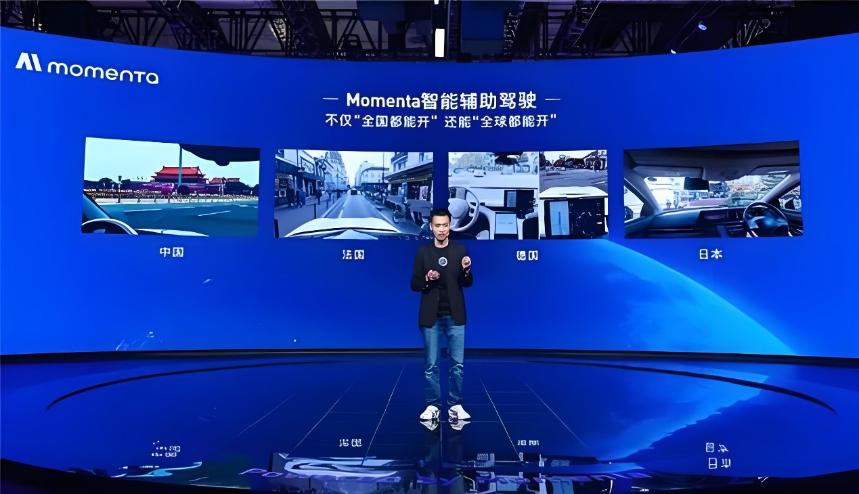
Group 1 - Momenta is considering changing its IPO location from New York to Hong Kong due to ongoing tensions in US-China trade relations and threats from US lawmakers regarding the delisting of Chinese companies from US exchanges [2] - The regulatory approval for Momenta's US IPO, obtained in mid-2024, has expired as of June this year, which may have influenced the decision to consider a different listing location [2] - Momenta has not made any final decisions regarding its IPO plans, including the listing location, timing, fundraising scale, and valuation [2] Group 2 - Momenta is recognized as a leading supplier of advanced driver-assistance systems in China, with technology comparable to Tesla's autonomous driving technology [3] - The company has achieved a significant breakthrough with its self-developed driver assistance chip, which has been tested in vehicles and is competitive with industry-leading chips from Nvidia and Qualcomm [3] - As of April this year, Momenta has partnered with over 130 vehicle models and various automotive brands, including Nissan, BMW, and Volkswagen, and is also collaborating with major investors like Tencent and Toyota [3]
自动驾驶Ask Me Anything问答整理!VLA和WA的路线之争?
自动驾驶之心· 2025-10-08 23:33
Core Insights - The article discusses the current state and future prospects of autonomous driving technology, emphasizing the importance of AI and various modeling approaches in achieving higher levels of automation [4][6][9]. Group 1: Industry Development - The autonomous driving industry is rapidly evolving, with significant advancements expected in the next few years, particularly in AI and related fields [4]. - Companies like Waymo and Tesla are leading the way in achieving Level 4 (L4) automation, while Level 5 (L5) may take at least five more years to realize [4][6]. - The integration of Vision-Language Models (VLA) is seen as a key to enhancing decision-making capabilities in autonomous vehicles, addressing long-tail problems that pure end-to-end models may struggle with [6][9]. Group 2: Technical Approaches - The article outlines different modeling approaches in autonomous driving, including end-to-end models and the emerging VLA paradigm, which combines language processing with visual data to improve reasoning and decision-making [5][9]. - The effectiveness of current autonomous driving systems is still limited, with many challenges remaining in achieving full compliance with traffic regulations and safety standards [10][14]. - The discussion highlights the importance of data and cloud computing capabilities in narrowing the performance gap between domestic companies and leaders like Tesla [14][15]. Group 3: Talent and Education - There is a recognized talent gap in the autonomous driving sector, with a strong recommendation for students to pursue AI and computer science to prepare for future opportunities in the industry [4][6]. - The article suggests that practical experience in larger autonomous driving companies may provide better training and growth opportunities compared to smaller robotics firms [16][20].