瑞幸咖啡

Search documents
COSTA普洱茶标注“百年保质期”引争议,客服称“茶越久越好”
Xi Niu Cai Jing· 2026-01-09 08:47
Group 1 - The core issue revolves around the controversy regarding the 100-year shelf life of COSTA's organic Pu'er tea, which has led to significant public scrutiny and the subsequent removal of the product from e-commerce platforms [2] - COSTA's business in China has been under pressure, with reports indicating that the company closed 111 stores in 2023 and an additional 97 stores by November 2024, while only opening 33 new stores, resulting in a total of 389 stores [3] - The company has struggled to compete with major players like Starbucks and Luckin Coffee, which have significantly larger store counts in China, with Starbucks operating 7,596 stores and Luckin over 26,000 stores [3] Group 2 - The acquisition of COSTA by Coca-Cola for $5.1 billion in 2018 aimed to enhance its presence in the ready-to-drink coffee market, but has led to challenges in store innovation and operational efficiency [3] - The appointment of a new manager to oversee the retail business in China comes amid difficulties related to operational segmentation and slow progress in franchise plans, complicating efforts to revitalize the brand [3] - The recent controversy surrounding the tea product adds to the negative perception of COSTA's operations in China, further complicating its market position [2][3]

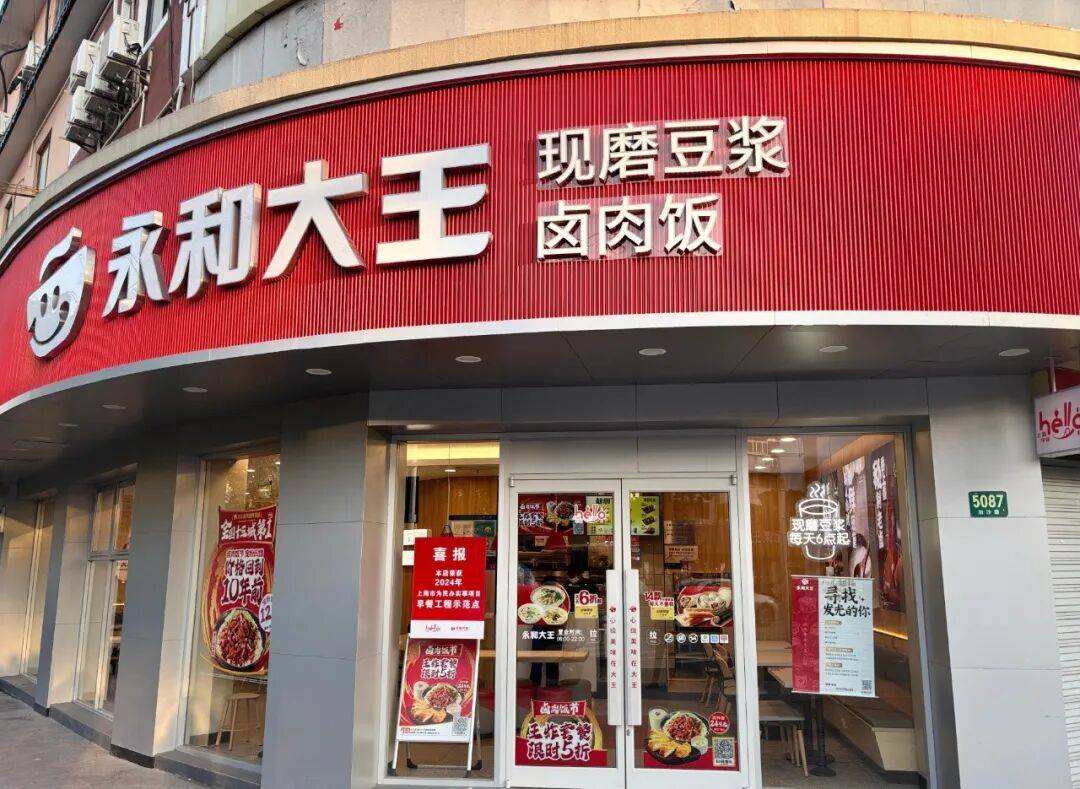
50万开店,1年半回本!这个快餐巨头要和蜜雪、瑞幸抢加盟商
Sou Hu Cai Jing· 2026-01-09 07:42
Core Viewpoint - The parent company of Yonghe Dawang, Jollibee Foods Corporation, is planning to spin off its international business into a new entity named Jollibee Foods International, with plans to list on the U.S. stock exchange by the end of 2027 [1]. Group 1: Business Performance in China - Jollibee's international business has over 10,000 stores globally, with nearly 70% located outside the Philippines, including approximately 553 in China [2]. - Yonghe Dawang has around 500 stores in China, making it the primary brand for Jollibee in the region, while other brands like Hongzhuangyuan and Tianhaowang have about 30 stores each [2]. - Jollibee's same-store sales growth in China reached 8.0%, outperforming competitors like McDonald's and Domino's Pizza, which had growth rates of 4.7% and 1.7%, respectively [5]. Group 2: Strategic Initiatives - The company is implementing a "price for volume" strategy, resulting in a 26% increase in transaction volume, which offsets an 11% decline in average ticket price [7]. - Jollibee's expansion strategy in China focuses on a light-asset model, primarily through franchising, with 77% of the 754 new stores opened in the first nine months of 2025 being franchise locations [8]. - The introduction of the "Super Value Model" has reduced the investment payback period from 2.5-3 years to approximately 1.5 years, with single-store investment costs dropping from around 800,000 RMB to below 500,000 RMB [11]. Group 3: Market Positioning and Future Plans - Jollibee is adjusting its store location strategy to focus on residential areas in second-tier cities, where rental costs are lower and operational hours can be extended [11]. - The company is taking a cautious approach with its brand Tianhaowang, pausing expansion while focusing on profitability in the Hong Kong market, where it has seen a fourfold increase in EBITDA cash contribution [12]. - The trend of multinational restaurant companies spinning off their international businesses for better market focus is becoming prevalent, as seen with Yum China and Haidilao [12].
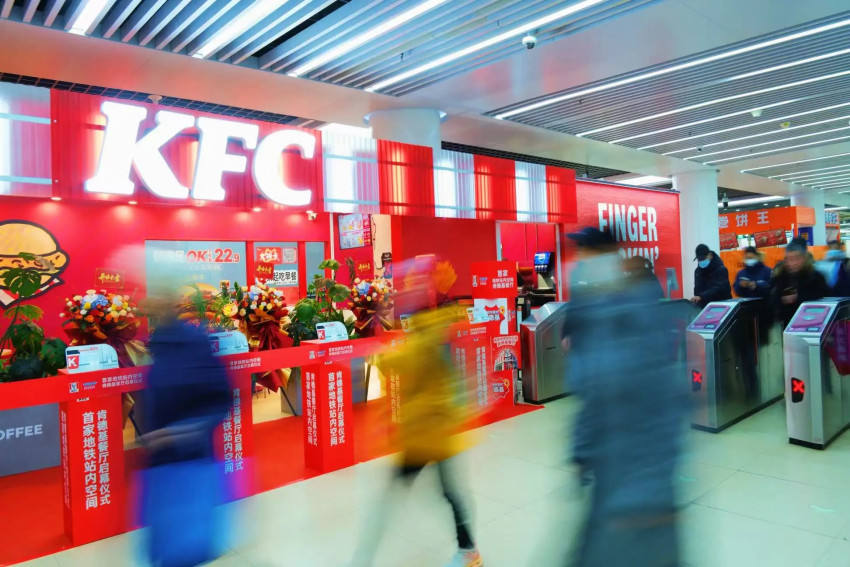
肯德基也加入,连锁餐企为何都扎堆在地铁站内开店?
3 6 Ke· 2026-01-09 03:55
Core Insights - KFC has opened its first subway space store in Tianjin, targeting commuters and local residents, indicating a shift in restaurant location strategy towards public transport hubs [1][3] - The trend of opening stores in subway and bus stations is gaining momentum among various chain restaurant brands, moving away from traditional locations like airports and train stations [6][7] Group 1: KFC's Subway Store Launch - KFC's new store is located at the Tianjin Tumor Hospital Station, a transfer point for subway lines 5 and 6, designed to attract high foot traffic from commuters and travelers [1] - The store offers a full range of services throughout the day, including coffee, burgers, and snacks, catering to diverse dining needs [3] - KFC plans to expand this "rail + dining" model to other subway stations in Tianjin, indicating a strategic focus on high-traffic areas [3] Group 2: Industry Trends - Other brands like Luckin Coffee and McDonald's are also expanding into subway stations, with Luckin planning to open 200 stores in collaboration with Tianjin's transit authority [6][7] - The operational costs at subway and bus stations are lower compared to airports, making them attractive for restaurant brands seeking to optimize expenses while capturing stable commuter traffic [7] - The current trend reflects a broader strategy among chain restaurants to tap into the underutilized market potential of public transport hubs, which are seen as a blue ocean market with significant growth opportunities [7]

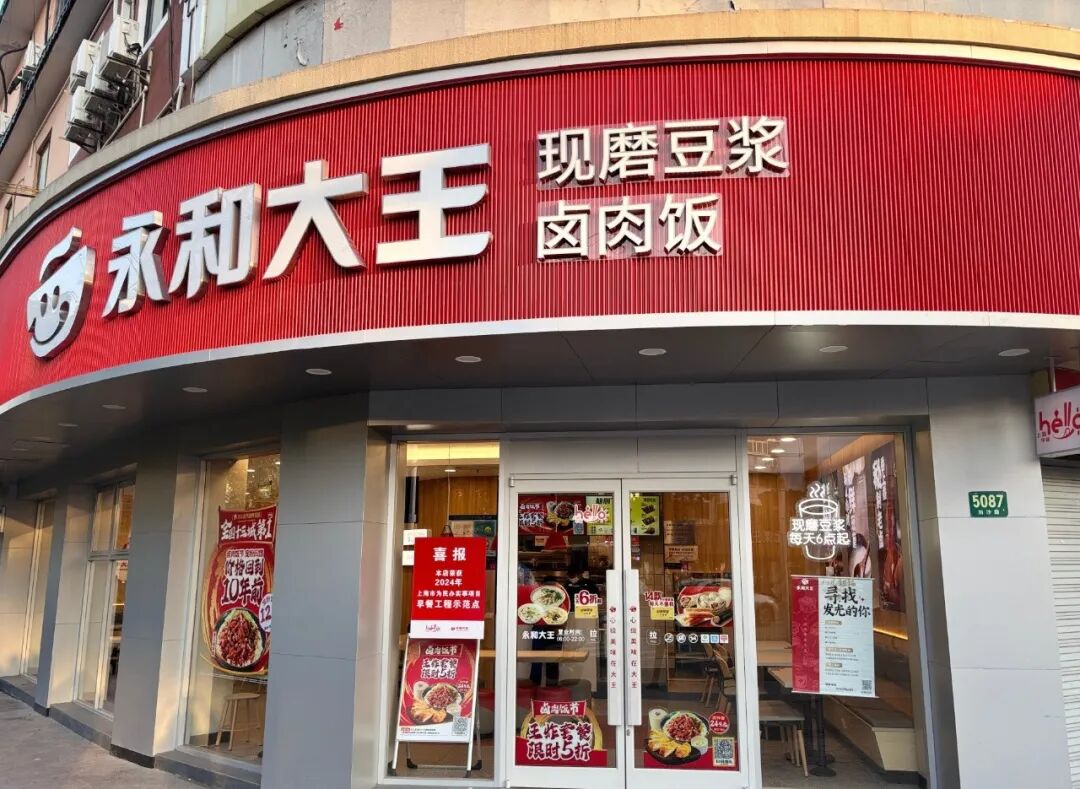
50万开店,1年半回本,这个快餐巨头要和蜜雪、瑞幸抢加盟商
3 6 Ke· 2026-01-09 03:55
Core Viewpoint - Jollibee Foods Corporation, the parent company of "Yonghe Dawang," plans to spin off its international business into a new entity named Jollibee Foods International, aiming for a U.S. stock exchange listing by the end of 2027. This move is part of a strategy to enhance growth and operational efficiency in overseas markets, particularly in China [1][7]. Group 1: Business Performance and Strategy - Jollibee's international business has shown strong performance, with same-store sales growth of 6.2% in Q3 2025, outperforming competitors like McDonald's and Domino's Pizza [4]. - In China, same-store sales growth reached 8.0%, driven by the expansion of third-party delivery platforms and improved dine-in performance [4]. - The company adopted a "price for volume" strategy, resulting in a 26% increase in transaction volume, which offset an 11% decline in average transaction value [6]. Group 2: Expansion and Market Positioning - Jollibee's expansion strategy includes a focus on a light-asset model, primarily through franchising, with 77% of the 754 new stores opened in the first nine months of 2025 being franchise locations [8][11]. - The introduction of the "Super Value Model" has reduced the investment payback period from 2.5-3 years to approximately 1.5 years, lowering the investment cost per store significantly [11]. - The company is strategically selecting locations in second-tier cities, focusing on residential areas to reduce rental costs and extend operating hours [11][12]. Group 3: Brand Management and Future Outlook - Jollibee is cautious with its brand "Tian Haowang," pausing expansion due to intense competition in the casual dining sector, while focusing on profitability in existing markets [12]. - The company aims to leverage its international business's scale post-spin-off to enhance profitability, similar to trends seen in other multinational restaurant chains [13].
上市即赚57亿,“瑞幸操盘手” 黎辉重仓天数智芯,回报率超340%
3 6 Ke· 2026-01-09 03:13
Core Viewpoint - Tensent Intelligent Chip (天数智芯) successfully listed on the Hong Kong Stock Exchange, achieving a closing price of HKD 156.8 per share, an increase of 8.44%, with a total market capitalization of approximately HKD 40 billion [1]. Group 1: Company Overview - Tensent Intelligent Chip is a major player in the domestic AI chip industry, issuing 25.43 million H-shares at an initial price of HKD 144.6 per share, raising approximately HKD 3.7 billion for R&D and market expansion [1]. - It is the fourth domestic GPU company to go public, following Moer Thread, Muxi Co., and Birran Technology [1]. - Despite being one of the earliest companies to launch general-purpose GPUs, Tensent's price-to-sales ratio is significantly lower at around 56 times compared to its peers [1]. Group 2: Shareholder Structure - The largest shareholder group consists of employee and passive financial investors holding 21.25% of shares, while the largest external shareholder group, led by Dazhong Capital, holds 20.62% [2]. - Dazhong Capital, founded by investor Li Hui, has invested approximately CNY 1.67 billion in Tensent, resulting in a floating profit of over CNY 5.7 billion based on the first-day closing price [3]. Group 3: Management Dynamics - The company has experienced management turbulence, with founder Li Yunpeng resigning in 2021, followed by the appointment and subsequent resignation of CEO Diao Shijing in 2022 [5]. - The current chairman and CEO, Gai Lujian, lacks a GPU background and comes from a financial institution, with operational decisions made by a management committee [6]. Group 4: Product and Financial Performance - Tensent's product lineup includes training and inference GPUs, with significant revenue growth expected from the Tianhuai series, projected to increase from CNY 189 million in 2022 to CNY 370 million in 2024 [7]. - The company has not yet turned a profit, with cumulative losses reaching CNY 2.5 billion over three and a half years, despite raising over CNY 5.6 billion through 10 financing rounds [8].
2025年第53周:食品饮料行业周度市场观察
艾瑞咨询· 2026-01-09 00:05
Group 1: Industry Trends - The condiment industry is seeing a surge in companies going public, focusing on overseas markets to combat rising costs and intense competition, with the industry expected to reach a scale of 498.1 billion yuan by 2024 [2][3] - The popularity of turmeric drinks is rising among young consumers, driven by health trends, with sales strong despite higher prices, and social media engagement showing over 13.2 million views on platforms like Xiaohongshu [4] - The food waste issue is prompting the emergence of the Upcycled Food industry, which is projected to reach a market size of 74.8 billion USD by 2029, utilizing innovative technologies to convert waste into high-value products [6][7] Group 2: Consumer Behavior - A survey indicates that 97.2% of young people have tried "light health" practices, with dietary health and fragmented exercise being the most popular methods, highlighting a shift towards more manageable health solutions [8] - The rise of health-conscious beverages, including sugar-free teas and functional drinks, is attributed to increased consumer awareness and the psychological need for immediate satisfaction in fast-paced lifestyles [10] - The trend of "punk health" in the health liquor sector is attracting younger consumers, with sales of health liquor on e-commerce platforms surging by 75.8% in the first eight months of 2025 [15] Group 3: Market Innovations - The introduction of cooking robots in restaurants is rapidly expanding, with the market expected to exceed 3.7 billion yuan by 2025, driven by AI technology and efficiency improvements [9] - The flavored water market is projected to grow from 22.1 billion USD in 2025 to 57.3 billion USD by 2035, with a compound annual growth rate of 10%, driven by health trends and innovative flavors [16] - The bottled water industry is facing intensified competition, with brands needing to diversify their product offerings and improve supply chain efficiency to maintain market share [17] Group 4: Brand Dynamics - The brand "Guozi Shule" is expanding its product line in the sugar-free tea market and has seen significant growth in its large bottle sales, indicating a strategic shift towards channel expansion [19] - "Tai Er" is undergoing a brand upgrade to focus on fresh ingredients and new dishes, responding to market changes and performance pressures, with a notable decline in revenue [20] - Danone's beverage brand "Pulse" is expected to reach nearly 7 billion yuan in revenue by 2025, with plans to expand into health drinks and face competitive pressures [21]





刚换帅、裁员又全球召回,雀巢中国能否破局?
阿尔法工场研究院· 2026-01-09 00:04
Core Viewpoint - Nestlé faces a significant challenge in the Chinese market due to a global food safety alert that has led to the recall of infant formula products, coinciding with strategic adjustments within the company [2][4]. Group 1: Product Recall and Safety Concerns - Nestlé announced a preventive recall of infant formula in 31 countries, including China, due to potential contamination from a supplier's raw material [2][4]. - The recall involves 30 batches of products from four brands, including "Liduo Jing" and "Platinum Neng En," while major products like "Super Q Neng En" and "Qifu" remain unaffected [4]. - The recall is a precautionary measure, with no reported consumer illnesses, but it raises concerns about consumer trust in Nestlé's products [4][15]. Group 2: Management Changes and Strategic Adjustments - A new management team for Nestlé's nutrition business in China has been established, led by CEO Xie Guoyao, who faces immediate challenges due to the recall [5][8]. - The merger of Nestlé's infant nutrition business with Wyeth aims to enhance operational efficiency, but the recall tests the new team's ability to manage crises and maintain consumer trust [5][8]. - The new CEO, Kais Marzouki, has been tasked with reversing a trend of declining sales in the Chinese market, which has seen a drop from 6.913 billion Swiss francs in 2019 to 5.558 billion Swiss francs in 2024 [10]. Group 3: Market Performance and Competitive Landscape - Nestlé's infant nutrition business has struggled, with market share dropping from approximately 13% in 2019 to 10.7% in 2022, facing competition from local brands like Feihe and Junlebao [5][7]. - The company has experienced a -6.1% organic growth rate in the Greater China region, with the infant nutrition segment being a significant contributor to this decline [7][10]. - Local brands are gaining market share by leveraging localized formulas and lower prices, further challenging Nestlé's position in the market [13]. Group 4: Global Restructuring and Cost-Cutting Measures - Nestlé plans to lay off 16,000 employees globally, aiming for annual cost savings of 1 billion Swiss francs by 2027, with a focus on replacing human labor with technology [12][14]. - The restructuring includes optimizing overlapping white-collar positions, which may provide financial flexibility for investment in technology and food safety in China [12][14]. - Despite these efforts, there are concerns about the impact of layoffs on research and development capabilities, as well as the potential for increased scrutiny from consumers regarding product safety [13][15]. Group 5: Future Outlook and Challenges - The year 2026 is seen as a critical period for Nestlé in China, as the effectiveness of the merged nutrition business and the new management strategies will be tested [15]. - The company must address the immediate fallout from the recall while also adapting to changing consumer demands and accelerating product innovation to regain market share [15].
茉酸奶收购酸奶罐罐,成为行业“新发展”缩影
Mei Ri Jing Ji Xin Wen· 2026-01-08 13:48
Group 1 - The acquisition of the yogurt brand "酸奶罐罐" by "茉酸奶" reflects the ongoing capital restructuring in the ready-to-drink tea and coffee industry, as the market transitions from high growth to a phase of stock competition [1] - In 2025, key events in the tea and coffee market included several brands going public and the rise of instant retail platforms, which significantly impacted sales but also created challenges for franchisees [1][3] - The market size of the new-style tea market reached 374.93 billion yuan in 2025, growing by 5.7% year-on-year, indicating a slowdown compared to previous years [7] Group 2 - The intense subsidy war initiated by instant retail platforms led to a significant increase in transaction volume but a decrease in average order value, with tea and coffee market consumption growing by 39.2% and 42.6% respectively, while average prices fell by 16.3% and 10.7% [3] - Franchisees are becoming more cautious in their investments, focusing on prime locations, cost control, and partnering with leading brands, as the market becomes increasingly competitive [7][8] - The trend of product homogenization continues, with fewer collaborations between brands and IPs, indicating a need for differentiation and stability in supply chains [8][10]
复盘十年:我们终于看清了商业的“底牌”
混沌学园· 2026-01-08 13:06
Core Viewpoint - The article reflects on the significant changes and constants in the business landscape over the past decade, emphasizing the need for a shift in mindset and strategies to adapt to the evolving environment as we approach 2026 [2][24]. Marketing Changes - Marketing has transitioned from "hunting for traffic" to "anchoring in mindset," with a focus on AI-driven precision, personalized emotional value, and private trust rather than just aesthetics and cash for traffic [6][7]. - The enduring need for users to feel "understood" and the principle that "LTV (Customer Lifetime Value) is greater than customer acquisition cost" remain unchanged [8]. Business Changes - The era of "burning money for market share" has ended, with companies like Meituan, Luckin Coffee, and Huawei restructuring their cost structures and focusing on "hardcore innovation" and self-sustainability [10][11]. - The formula "Gross Profit = Value - Cost" continues to hold true, highlighting that only companies that understand the "first principles" of business can thrive in adversity [12]. Technological Changes - The focus has shifted from "functional connectivity" to "AI reconstruction," where businesses are not just adding AI but fundamentally reinventing their operations with it [13][14]. - The essence of technology in reducing transaction costs and improving productivity remains unchanged, emphasizing the importance of understanding the philosophy of technological evolution [15]. Individual Changes - The individual’s role has evolved from being dependent on organizations for opportunities to possessing organizational-level capabilities through AI and tools, allowing for self-generated opportunities [16][18]. - The fundamental human drive for greater survival resources and leverage remains constant, with competition now centered on who can continuously generate opportunities [19]. Conclusion - The article stresses the importance of adapting to the changing landscape while holding onto timeless principles, warning against using outdated logic in future endeavors [25][30].

董责险走热:1700多家上市公司投保,理赔有多少?
经济观察报· 2026-01-08 12:16
Core Viewpoint - The implementation of the new Securities Law and the increase in civil liability cases have heightened the awareness and necessity of Directors and Officers Liability Insurance (D&O Insurance) among A-share listed companies, with the insurance coverage rate expected to rise from 12% in 2020 to 32% by 2025 [1][2]. Group 1: D&O Insurance Market Trends - By the end of 2025, the number of listed companies that purchased D&O Insurance reached 1,753, with a market penetration rate increasing from 28% in 2024 to 32% [2]. - In 2025, 643 A-share listed companies announced plans to purchase D&O Insurance, a year-on-year increase of 19% [5]. - The average D&O Insurance premium rate has decreased to below 0.05% by the end of 2025, indicating a "rate trough" in the market [15][16]. Group 2: Industry and Company Insights - The highest D&O Insurance penetration rates are found in the real estate and electricity sectors, exceeding 60%, reflecting a correlation between industry risk and insurance demand [6]. - Companies with assets over 50 billion yuan have a D&O Insurance purchase rate of 68%, significantly higher than the 20% rate for companies with assets below 2 billion yuan [6]. - Private enterprises account for nearly 60% of new D&O Insurance purchases in 2025, but state-owned enterprises have the highest penetration rates [7]. Group 3: Legal and Regulatory Impact - The new Securities Law and Company Law have established a legal foundation for the proliferation of D&O Insurance, with high-profile cases like the Kangmei Pharmaceutical scandal driving increased awareness and adoption [11]. - The number of companies facing administrative investigations has risen significantly since 2020, with 366 companies having received warning letters after previously purchasing D&O Insurance [11][12]. - The long-tail effect of D&O Insurance claims means that while regulatory scrutiny and potential lawsuits are increasing, large-scale payouts have not yet fully materialized [16].