
欣旺达

Search documents
L9上猛料,理想要打增程翻身仗 |36氪独家
3 6 Ke· 2026-01-22 07:04
Core Viewpoint - Li Auto plans to rebound in 2026 after a projected decline in 2025, targeting a 40% growth with a sales goal of approximately 550,000 units, up from around 410,000 units last year [2][3]. Group 1: Strategic Focus - The company is refocusing on its core business, aiming to regain its leading position in range-extended products by simplifying its product strategy and reducing the number of model variants [3][4]. - The new L9 model will undergo significant upgrades, including a larger size, enhanced battery capacity exceeding 70 kWh, and improved electric range of over 400 kilometers [5][12]. - Li Auto anticipates that the upgraded L9 will contribute over 100,000 units to its sales forecast [5]. Group 2: Market Position and Competition - Li Auto faces increased competition in the range-extended market, with other companies like Xpeng and Xiaomi planning to launch their own range-extended models [11][12]. - The company acknowledges that it has lost market share and aims to stabilize its sales before pursuing further growth [10][13]. - The shift towards larger battery capacities in the industry has prompted Li Auto to consider more aggressive upgrades, although it remains cautious compared to competitors [11][12]. Group 3: Product and Organizational Adjustments - Li Auto's product focus has shifted towards pure electric models, but the company plans to return to its range-extended roots, with only one new pure electric SUV expected in 2026 [6][14]. - Recent organizational changes include the departure of key personnel and a restructuring of product lines to enhance competitiveness [15][16]. - The sales system is undergoing a comprehensive review, with a focus on improving store efficiency and closing underperforming locations [18][19].


张坤等知名基金经理罕见发声!
天天基金网· 2026-01-22 05:20
Group 1 - The core viewpoint of the article highlights the strategic adjustments made by prominent fund managers at E Fund in their investment portfolios for Q4 2025, focusing on sectors like AI, healthcare, consumer goods, and technology [2][4][6][10] Group 2 - Zhang Kun adjusted the structure of investments in the healthcare, consumer, and technology sectors while maintaining a stable position in top holdings, which include Tencent Holdings, Kweichow Moutai, and Alibaba-W [4][5] - Zhang Kun expressed confidence in the improvement of living standards and social security in China over the next decade, suggesting a narrowing gap with developed countries [4] - The AI wave is seen as a significant driver for innovation, with strong domestic demand expected to attract global resources and talent [4][5] Group 3 - Chen Hao focused heavily on AI-related sectors, increasing allocations in power equipment, new energy, non-bank financials, and chemicals, which yielded positive returns [7][8] - Chen Hao anticipates a transition of the AI industry from an acceleration phase in 2025 to a stable growth phase in 2026, emphasizing the importance of structural opportunities and the integration of AI with local applications [7][8] Group 4 - Xiao Nan reduced allocations in high-end and sub-high-end liquor sectors while increasing investments in the livestock industry, anticipating inflation-driven cost increases over the next two years [10] - The top holdings in Xiao Nan's consumer sector fund remained unchanged, including Kweichow Moutai and Midea Group [10]





知名基金经理,重仓股出炉
Zhong Guo Zheng Quan Bao· 2026-01-22 04:05
Core Viewpoint - The report highlights the strategic adjustments made by prominent fund managers at E Fund in their investment portfolios for Q4 2025, focusing on sectors such as pharmaceuticals, consumption, technology, AI, and agriculture. Group 1: Zhang Kun's Strategy - Zhang Kun has adjusted the structure of investments in the pharmaceutical, consumer, and technology sectors while maintaining a stable overall position in the E Fund Blue Chip Select Fund [2] - The top ten holdings include Tencent Holdings, Kweichow Moutai, Wuliangye, Alibaba-W, Shanxi Fenjiu, Luzhou Laojiao, Yum China, CNOOC, JD Health, and Focus Media, with no changes from Q3 2025 [2] - Zhang Kun expresses confidence in the improvement of living standards and social security in China over the next decade, which will narrow the gap with developed countries [2] - The AI wave is seen as a significant driver for innovation, with strong domestic demand enhancing the ability to attract global resources and talent [2][3] Group 2: Chen Hao's Focus - Chen Hao has heavily invested in AI-related sectors, as well as increasing allocations in power equipment, new energy, non-bank financials, and chemicals, yielding notable returns [4] - The top ten holdings include Dongshan Precision, Zhongji Xuchuang, Mingyang Smart Energy, Xinyi Technology, Juhua Co., Century Huatong, Xinwangda, Huazhu High-tech, Kairun Co., and Meinian Health [4] - Chen Hao anticipates a transition of the AI industry from an acceleration phase in 2025 to a stable growth phase in 2026, with a focus on structural opportunities and the implementation of AI applications [4][5] Group 3: Xiao Nan's Adjustments - Xiao Nan has reduced allocations in high-end and sub-high-end liquor while increasing investments in the agriculture sector [6][7] - The top ten holdings in the consumer sector include Kweichow Moutai, Midea Group, Shanxi Fenjiu, Fuyao Glass, Sailun Tire, Great Wall Motors, Dongpeng Beverage, Luzhou Laojiao, Gujing Gongjiu, and Wuliangye, with no changes from Q3 2025 [7] - Xiao Nan believes that if inflation rises as expected, the likelihood of cost-push inflation will be greater than demand-pull inflation, influencing future investment strategies [7]
2025年12月国内电池产量和装车量同比高增,六氟磷酸锂价格下降
Zhong Guo Neng Yuan Wang· 2026-01-22 01:21
Core Viewpoint - The lithium battery industry is expected to see significant growth in production and demand in 2025, with domestic battery and lithium iron phosphate (LFP) cathode material output notably higher than in 2024 [1][2] Production - In December 2025, domestic battery production is projected to reach 201.7 GWh, representing a year-on-year increase of approximately 62% and a month-on-month increase of about 14% [1][2] - The output of domestic lithium iron phosphate cathode materials in December 2025 is expected to be 26.93 million tons, showing a year-on-year growth of 32.48% and a month-on-month increase of 0.16%, with a capacity utilization rate of 59.85% [1][2] Pricing - As of January 16, 2026, the price of industrial-grade lithium carbonate has risen to 153,000 yuan per ton, with a weekly increase of 10.87% [3] - The price of lithium iron phosphate (power type) was reported at 47,100 yuan per ton on January 9, 2026, up 4.43% from January 4 [3] - The average price of square lithium iron phosphate energy storage cells remained stable, with specific capacities showing slight increases in price [3] Demand - In December 2025, the monthly loading volume of lithium iron phosphate batteries reached 79.8 GWh, a year-on-year increase of 30.82% and a month-on-month increase of 5.98%, marking a new high for the year [4] - The monthly loading volume of ternary power batteries was 18.2 GWh, remaining stable compared to November and showing a year-on-year increase of 27.27% [4] - In November 2025, global sales of new energy vehicles reached 2 million units, reflecting a year-on-year growth of 8.53% and a month-on-month increase of 4.63% [4] Investment Recommendations - The report suggests focusing on companies involved in the production of lithium batteries and related materials, particularly those with strong positions in both domestic and overseas markets [5] - Recommended companies include CATL (300750.SZ), EVE Energy (300014.SZ), Xinwangda (300207.SZ), Hunan Youneng (301358.SZ), Tianci Materials (002709.SZ), and Dofluorid (002407.SZ) [5]






沃尔沃搞“双标”? EX30因电池隐患全球召回,中国除外! | 次世代车研所
Xin Lang Cai Jing· 2026-01-22 00:40
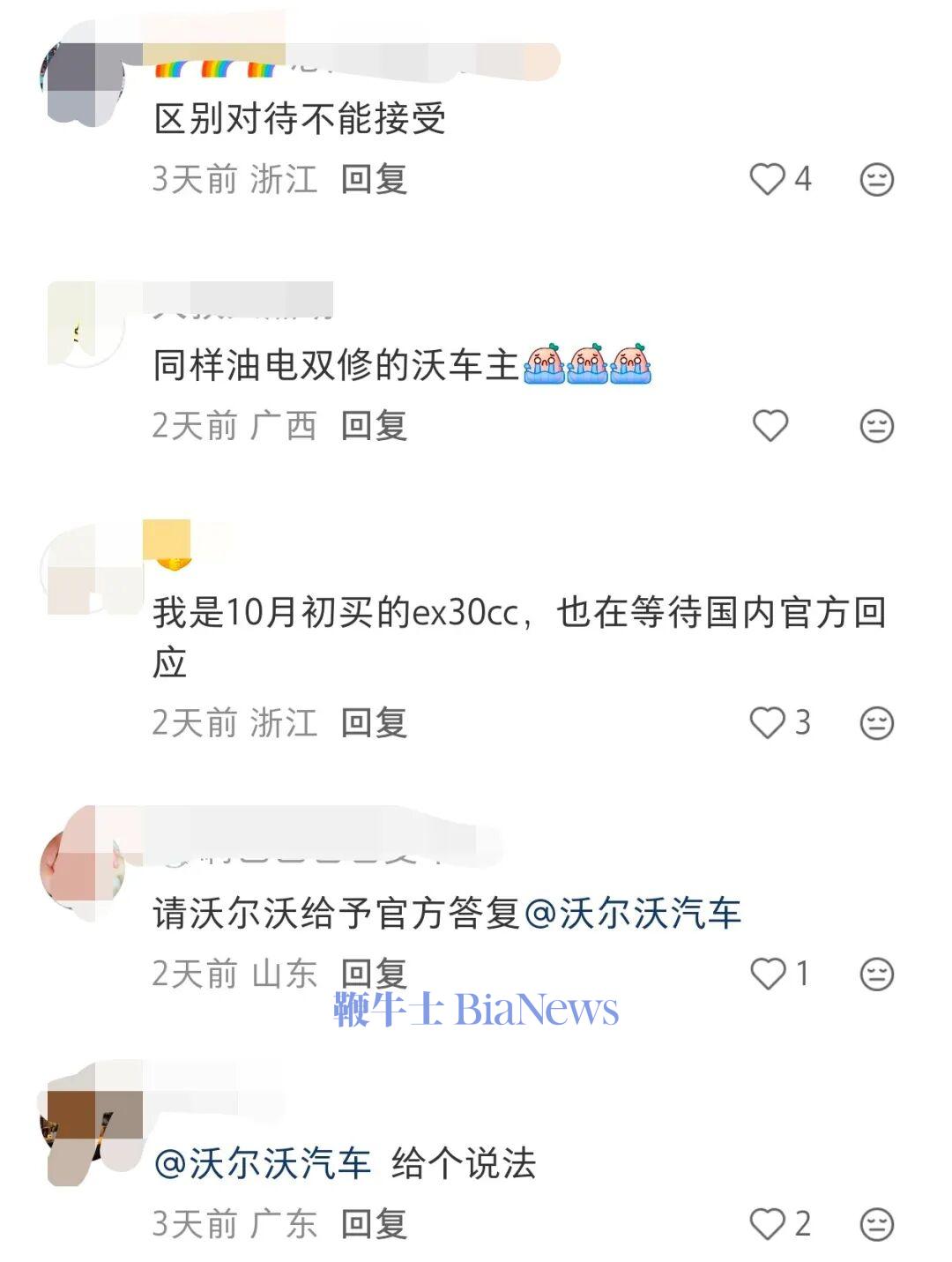
Core Viewpoint - Volvo is facing criticism over battery safety issues related to its EX30 model, which uses batteries from the supplier Sunwoda, leading to recalls in multiple countries but not in China, causing dissatisfaction among Chinese customers [2][3][6]. Recall and Safety Concerns - Volvo has initiated a global recall for the EX30 model due to fire risks associated with Sunwoda batteries, affecting vehicles produced between September 6, 2024, and October 25, 2025 [2][3][6]. - The recall includes 40 vehicles in the US, 2,815 in Australia, and 10,440 in the UK, while no recall has been announced for the Chinese market, raising concerns of differential treatment [2][3][6]. - Reports of a fire incident involving a Volvo EX30 in Brazil have prompted Volvo to advise owners in affected markets to limit battery charging to 70% until a comprehensive recall plan is established [3][16]. Customer Reactions - Chinese EX30 owners express frustration over the lack of recall information and feel neglected compared to international customers, questioning Volvo's commitment to safety [5][20]. - Social media platforms have seen a surge of complaints from EX30 owners demanding explanations from Volvo regarding the perceived disparity in treatment [5][20]. Sales and Pricing Pressure - Volvo is experiencing significant sales pressure in the Chinese market, with a reported 4% decline in overall sales in 2025, totaling 149,549 units [9][24]. - The company has resorted to heavy discounts on several models, with the S60 being offered at nearly half its original price, indicating a struggle to maintain market share [7][23]. - The XC70 and XC60 models are also being sold at substantial discounts, reflecting the broader challenges Volvo faces in the competitive automotive market [8][23]. CEO Statements and Company Position - Volvo's CEO has previously stated that the company will not compromise on safety and quality to gain market share, emphasizing a commitment to sustainable business practices [10][27]. - However, the current situation with the EX30 recalls and aggressive pricing strategies raises questions about the alignment of the company's actions with its stated values [28].
沃尔沃搞「双标」?EX30因电池隐患全球召回,中国除外!
Xin Lang Ke Ji· 2026-01-22 00:24
Core Viewpoint - Volvo is facing significant backlash due to safety concerns related to the battery supplier, CATL, which has led to a global recall of the EX30 model, while Chinese customers feel neglected as no recall has been announced for the domestic market [1][2][6][18]. Recall and Safety Concerns - Volvo has initiated a recall for the EX30 model globally, specifically for vehicles produced between September 6, 2024, and October 25, 2025, due to fire risks associated with CATL batteries [1][2]. - The recall affects multiple countries, including the United States (40 vehicles), Australia (2,815 vehicles), and the UK (10,440 vehicles) [1]. - In response to the fire incidents, Volvo has advised owners to limit battery charging to 70% until a comprehensive recall plan is established [2]. Customer Sentiment and Response - Domestic Volvo EX30 owners are expressing dissatisfaction over the lack of communication and action regarding the recall, feeling that they are being treated differently compared to international customers [3][5][6]. - Social media platforms have seen a surge of complaints from EX30 owners demanding explanations from Volvo regarding the perceived disparity in treatment [6][8]. Sales and Market Performance - Volvo is experiencing significant sales pressure in the Chinese market, with a reported 4% decline in overall sales for 2025, totaling 149,549 units [12]. - The sales of fully electric models have plummeted by 46%, indicating a broader trend of declining demand for Volvo's electric vehicles [12]. - In an effort to boost sales, several Volvo models are being offered at steep discounts, with some vehicles being sold at nearly half their original price [9][11][20]. Corporate Statements and Strategy - Volvo's leadership has previously emphasized a commitment to safety and quality, stating that the company would not compromise on these values for short-term market gains [17]. - However, the current situation with the EX30 recalls and aggressive discounting raises questions about the company's adherence to these principles [18][20].
被指“双标” 沃尔沃EX30因电池隐患全球召回:中国除外
Xin Lang Ke Ji· 2026-01-22 00:21
Core Viewpoint - Volvo is facing criticism over battery safety issues related to its EX30 model, which uses batteries from the supplier, CATL. The company has initiated recalls in several countries but has not yet addressed the concerns of Chinese customers, leading to allegations of differential treatment [1][3][4]. Group 1: Recall Information - Volvo has launched a global recall for the EX30 model due to fire risks associated with CATL batteries, affecting vehicles produced between September 6, 2024, and October 25, 2025 [3]. - The recall includes 40 vehicles in the United States, 2,815 in Australia, and 10,440 in the UK, among others [3]. - A fire incident involving a Volvo EX30 occurred in Brazil, prompting the recall and safety warnings for owners to limit battery charging to 70% until a full recall plan is established [3][4]. Group 2: Customer Concerns - Chinese EX30 owners are expressing dissatisfaction over the lack of recall information in China, feeling neglected compared to international customers [4][6]. - Social media discussions among Volvo EX30 owners indicate a strong demand for official responses from the company regarding the perceived differential treatment [6][8]. Group 3: Sales and Pricing Pressure - Volvo is experiencing significant sales pressure in China, with a reported 4% decline in overall sales for 2025, totaling 149,549 units [10]. - The company has resorted to heavy discounts on multiple models, with some vehicles being offered at nearly 50% off their original prices, indicating a struggle to maintain market share [8][9]. - The decline in sales is attributed to a 46% drop in fully electric vehicle sales and a 13% decrease in fuel vehicle sales, despite a rise in hybrid model sales [10]. Group 4: Corporate Statements and Credibility - Volvo's senior executives have previously stated that the company would not compromise on safety and quality to gain market share, yet the current situation raises questions about the credibility of these claims [11][13]. - The ongoing battery safety issues and aggressive pricing strategies suggest a potential disconnect between corporate messaging and operational realities [14].
储能中场战事,宁王份额缩水,海辰远景突进
3 6 Ke· 2026-01-21 10:32
Core Insights - The global energy storage market is experiencing rapid growth, with shipments exceeding 500GWh and a market growth rate of over 80%, yet CATL's market share has significantly dropped from 39% to 26% [1][2] - The competitive landscape is shifting, with companies like Hichain and Envision Energy making significant gains, indicating a transformation in market dynamics [1][4] Group 1: CATL's Market Position - CATL remains the leader in global energy storage cells, achieving over 130GWh in shipments for 2025, a growth of over 20% year-on-year, but its market share has declined by nearly 13 percentage points [2][3] - The traditional close partnerships with major integrators like Tesla are evolving, as system integrators seek diverse cell suppliers to ensure delivery security and cost advantages [2][3] Group 2: Rise of Competitors - Hichain Energy has emerged as a notable competitor, rapidly increasing its production capacity to over 100GWh and achieving profitability with a net profit of 213 million yuan in the first half of 2025 [4][5] - Envision Energy is leveraging its global presence and AI storage solutions, enhancing its competitive edge in the market [5] Group 3: Evolving Competition Landscape - The competition is shifting from merely GWh output to a multidimensional battle involving technology, globalization, and business models [6][7] - The focus is now on large cell technology, with companies racing to produce cells over 500Ah, which will impact energy density and lifecycle costs [6][7] Group 4: Globalization and Localization - The necessity for globalization is underscored by the significant increase in overseas orders, with Chinese storage companies signing contracts totaling nearly 284.26GWh in 2025, a 3.49 times increase from the previous year [6][7] - Localized operations are becoming essential for survival, as companies establish manufacturing bases closer to key markets to mitigate risks and enhance responsiveness [7]
2025移动电源洗牌:罗马仕们自救与最严新规“撬动”电池供应新变
高工锂电· 2026-01-21 10:29
Core Viewpoint - The article discusses the upcoming implementation of the "Mobile Power Safety Technical Specification," which aims to address safety concerns surrounding lithium batteries in power banks, particularly in light of recent fire incidents involving brands like Romoss and Anker [1][4]. Group 1: Safety Concerns and Regulations - Lithium batteries have become a focal point for safety issues in the consumer electronics market, particularly due to low-cost competition leading to the use of inferior products [3]. - The new regulations will introduce stringent safety tests, including a needle penetration test to simulate internal short circuits, which is expected to reduce the likelihood of safety incidents [7][8]. - The introduction of the needle penetration test is a significant aspect of the new regulations, marking it as one of the strictest standards in the industry [8][10]. Group 2: Company Responses and Market Dynamics - Anker has responded to safety incidents by partnering with ATL, a major battery supplier, to enhance its product safety and reputation [4]. - Romoss is planning to re-enter the market with a focus on high-end products using quality materials and reliable manufacturing processes after the new regulations are implemented [5]. - The new regulations are anticipated to reshape the battery supply landscape, with companies like Lishen and Yiwei securing new orders amid the changes [6]. Group 3: Battery Technology and Innovations - The article highlights the importance of battery form factors, noting that cylindrical and soft-pack batteries dominate the market, with advancements in safety technologies such as hybrid solid-liquid batteries [9][19]. - Several battery manufacturers, including BYD and CATL, participated in drafting the new safety standards, indicating a collaborative effort to enhance safety across the industry [7]. - The article mentions that outdoor power sources are evolving with innovations like sodium-ion batteries and larger cylindrical batteries, which are also subject to the new safety tests [19].

瑞达期货碳酸锂产业日报-20260121
Rui Da Qi Huo· 2026-01-21 09:09
| 项目类别 | 数据指标 最新 | 最新 | 环比 数据指标 | | 环比 | | --- | --- | --- | --- | --- | --- | | | 主力合约收盘价(日,元/吨) | 166,740.00 | +6240.00↑ 前20名净持仓(日,手) | -155,524.00 | -8121.00↓ | | 期货市场 | 主力合约持仓量(日,手) | 427,928.00 | +12577.00↑ 近远月合约价差(日,元/吨) | -1,660.00 | -100.00↓ | | | 广期所仓单(日,手/吨) | 27,681.00 | 0.00 | | | | 现货市场 | 电池级碳酸锂平均价(日,元/吨) | 158,500.00 | +6000.00↑ 工业级碳酸锂平均价(日,万元/吨) | 155,000.00 | +6000.00↑ | | | Li₂CO₃主力合约基差(日,元/吨) | -8,240.00 | -240.00↓ | | | | 上游情况 | 锂辉石精矿(6%CIF中国)平均价(日,美元/吨) | 1,845.00 | -45.00↓ 磷锂铝石平均价(日,元/吨 ...