小鹏

Search documents
AI机器人首秀,发布20余款新车!2025青岛国际车展开幕
Qi Lu Wan Bao Wang· 2025-05-15 02:33
Group 1 - The 24th Qingdao International Automobile Exhibition opened on May 14, 2025, featuring over 90 global automotive brands and nearly 1,000 vehicle models, with more than 60% dedicated to new energy vehicles [1][2] - The exhibition covers an indoor area of 60,000 square meters and is recognized as one of China's top five auto shows, having been held continuously since 2002 [2][3] - A total of 26 brand press conferences were held on the first day, unveiling 29 new vehicle models, including notable brands such as BYD, Volkswagen, and NIO [3] Group 2 - The exhibition showcased advanced automotive technology, including AI robots and smart vehicles, highlighting the industry's shift towards intelligent and connected vehicles [4] - The presence of humanoid AI robots and robotic dogs for safety inspections indicates a growing trend of integrating technology into automotive exhibitions [4] - The event also featured a significant number of promotional activities with over 300 top models participating, enhancing the exhibition's appeal [5]



信达国际控股港股晨报-20250514
Xin Da Guo Ji Kong Gu· 2025-05-14 02:03
Market Overview - The Hang Seng Index is expected to rise to 24,300 points due to the recent US-China trade talks resulting in a significant reduction of tariffs, with US tariffs on Chinese goods dropping from 145% to 30% and Chinese tariffs on US goods from 125% to 10% for a period of 90 days [2] - The market anticipates a new cycle of financial policies from mainland China, including potential interest rate cuts and reserve requirement ratio reductions, aimed at stabilizing market expectations and boosting investor confidence [2] Sector Outlook - Positive sentiment towards export stocks due to breakthroughs in the tariff war [7] - Domestic demand stocks are expected to benefit from anticipated stronger policy support for consumption [7] Company News - JD.com (9618) reported a 15.8% year-on-year revenue increase for Q1, with adjusted net profit reaching 12.8 billion RMB, exceeding expectations [4][9] - Tencent Music (1698) saw a remarkable 201.8% increase in net profit for Q1, driven by strong growth in online music services [4][9] - Meituan (3690) plans to invest 1 billion USD in Brazil over the next five years to expand its food delivery service [9] - MicroPort (2252) announced a share placement at a 14% discount to raise approximately 4 billion RMB for business development [9] - Nocera (9969) reported a net profit of 17.97 million RMB for Q1, marking a turnaround from a loss in the previous year [9] Macroeconomic Focus - The US April CPI rose by 2.3% year-on-year, lower than expected, indicating a cautious economic outlook [3][8] - The US Federal Reserve is expected to maintain interest rates, with projections for two rate cuts later in the year [5] - The European Central Bank noted that uncertainty in the global economy may persist even if trade tensions ease [8] Regulatory Environment - Chinese regulators have begun discussions with major food delivery platforms, including JD.com and Meituan, regarding competition issues in the food delivery market [8] - The US Commerce Department has issued guidelines prohibiting the global use of Huawei's AI chips, reflecting ongoing tensions in technology trade [8]
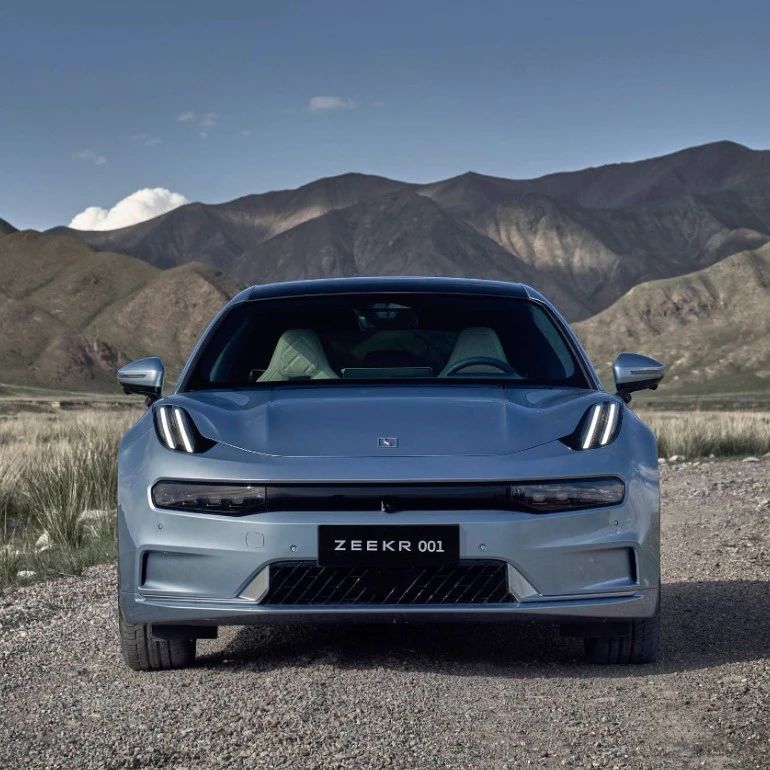
回归“一个吉利”:上市未满一年 极氪将被私有化
Cai Jing Wang· 2025-05-13 09:54
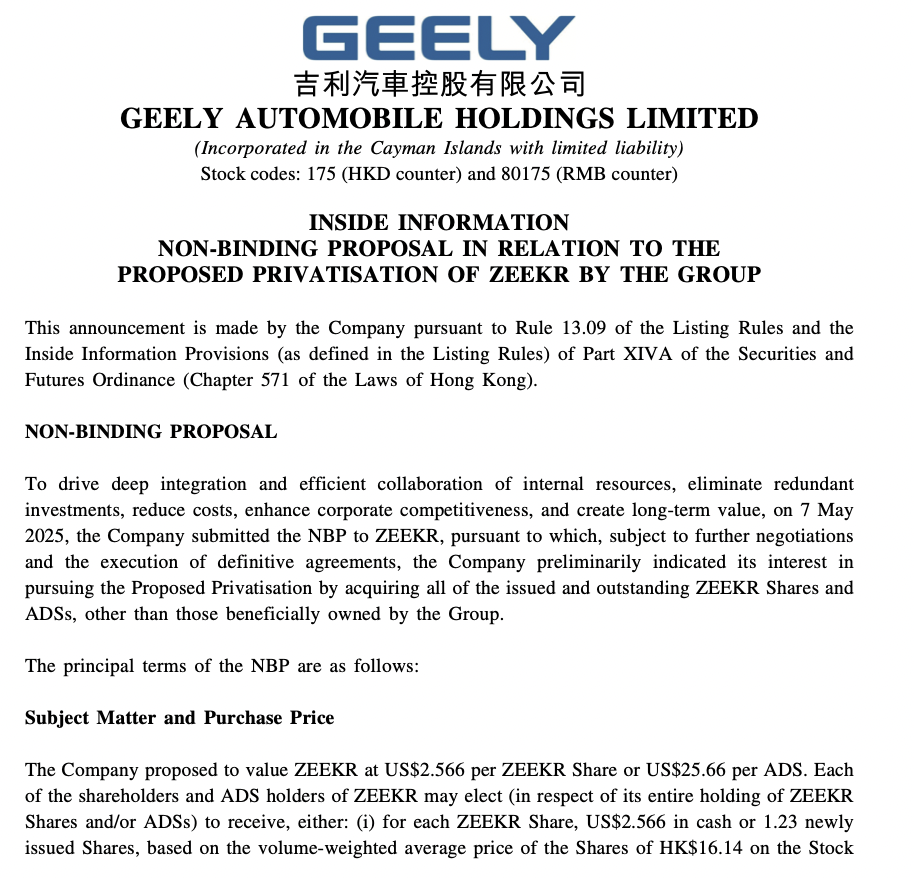
Core Viewpoint - Geely plans to acquire all outstanding shares of Zeekr, aiming for a complete merger, which is expected to enhance asset utilization efficiency and strengthen market competitiveness [1][4]. Summary by Sections Acquisition Details - Geely currently holds approximately 65.7% of Zeekr's shares and intends to purchase the remaining shares at a price of $25.66 per American Depositary Share (ADS), representing a 13.6% premium over the previous closing price [9]. - The total acquisition cost is estimated at $2.24 billion, which is less than 40% of Geely's cash and cash equivalents projected to exceed 40 billion yuan by the end of 2024 [9]. Market Context - As of May 8, Zeekr's market capitalization was $6.624 billion, significantly lower than its initial public offering valuation of nearly $7 billion and its A-round financing valuation of $13 billion [4]. - Compared to other Chinese electric vehicle companies listed in the U.S., NIO has a market cap of $8.894 billion, Li Auto at $27.592 billion, and Xpeng at $18.624 billion [5]. Financial Performance - Zeekr is facing challenges with performance and sales, having achieved only 23% of its annual sales target in Q1 2024, with total sales of 165,300 units against a target of 710,000 units [8]. - The company aims to achieve profitability by 2024, with projected total revenue of 75.912 billion yuan, a year-on-year increase of 46.9%, and a net loss of approximately 5.791 billion yuan, a reduction of 29.9% compared to the previous year [6][7]. Strategic Implications - The privatization of Zeekr is expected to allow it to escape short-term market fluctuations and enhance decision-making efficiency, enabling more flexible strategic planning [5]. - Geely's restructuring efforts include integrating various brands and focusing on core competencies, which is seen as a response to the challenges posed by a multi-brand strategy [12][13].

布局智能汽车广阔前景 恒生汽车ETF将于5月14日结募
Quan Jing Wang· 2025-05-13 01:28
Group 1 - The People's Bank of China has implemented a "zero reserve requirement" policy for auto finance and financial leasing companies, reducing the reserve requirement ratio from 5% to 0%, aimed at boosting auto consumption and industry upgrades [1] - The automotive industry in China is experiencing favorable policies and advancements in smart driving technology, leading to increased investment opportunities [1] - The launch of the Hang Seng Automotive ETF (159239) is designed to help investors easily access the automotive sector, with fundraising ending on May 14 [1] Group 2 - The Hang Seng Hong Kong Stock Connect Automotive Theme Index includes leading companies in smart driving, with over 50% concentration in new energy vehicle manufacturers like BYD, Xpeng, Geely, Li Auto, and Leap Motor [2] - The index has shown strong performance, with a 61.86% increase over the past six months, outperforming other indices such as the Hong Kong Stock Connect Automotive Index and the Hang Seng Index [2] Group 3 - The profitability of companies within the Hang Seng Hong Kong Stock Connect Automotive Theme Index is improving, with a projected return on equity (ROE) rising from -0.6% in 2021 to 8.4% in 2024 [3] - The index offers a favorable investment valuation, with a price-to-earnings (PE) ratio of 23.81 compared to 24.89 for the CSI All Share Automotive Index, indicating a higher safety margin [3] - The global market for intelligent connected vehicles is expected to reach 80 million units by 2030, with China projected to account for 27 million units, suggesting significant growth potential for the automotive sector [3]
人形机器人企业爆单!宇树机器人最新发声,机器人ETF基金(159213)再度飙涨超2%,全球资管巨头唱多人形机器人!
Xin Lang Cai Jing· 2025-05-12 03:17
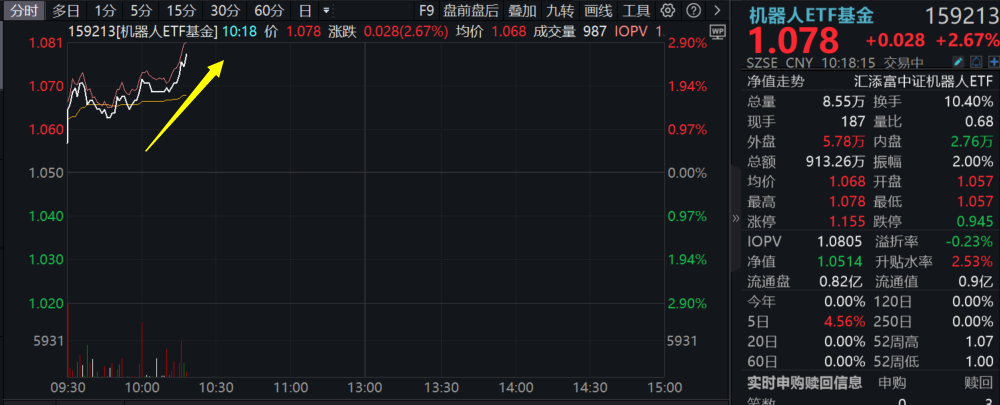
Core Viewpoint - The humanoid robot market is experiencing significant growth, driven by favorable government policies and increasing demand across various sectors, with projections indicating a potential market size of over 15 trillion yuan by 2025 [4][9]. Group 1: Market Performance - The A-share market showed an upward trend on May 12, with the robot sector rebounding, particularly the Robot ETF fund (159213), which opened high and rose by 2.67% [1]. - Major components of the Robot ETF fund saw substantial gains, with companies like Tuosida reaching a 20% limit up, and others like Koli'er and Xinjie Electric also experiencing significant increases [3]. Group 2: Industry Advantages - The humanoid robot industry in China benefits from strong policy support, with various national and local initiatives aimed at fostering development, including the inclusion of robots in key work reports and the establishment of industry funds [5][6]. - China's competitive edge in the humanoid robot market is highlighted by its leading position in patent applications, with 5,925 patents filed from 2020 to 2024, significantly outpacing other countries [4][5]. Group 3: Production and Supply Chain - The domestic robot industry is witnessing a rise in localization, with the domestic production rate of key components increasing from 17.5% in 2015 to 35.7% in 2022, indicating a trend towards cost reduction and efficiency [7]. - Major companies are preparing for mass production of humanoid robots, with 2025 expected to be a pivotal year for the industry, as several manufacturers are on the brink of entering small-scale production [7][8]. Group 4: Application Scenarios - The demand for robots is driven by manufacturing upgrades and demographic changes, with the global aging population creating a pressing need for robotic solutions to address labor shortages [9]. - The potential market for humanoid robots is projected to exceed 1 billion units, corresponding to a market space of over 15 trillion yuan, as the industry prepares for widespread adoption across industrial, commercial, and domestic applications [9].
极氪:上市不到一年,“纯电黑马” 为何选择私有化退市?
美股研究社· 2025-05-08 10:32
Core Viewpoint - Geely Auto has submitted a privatization proposal for Zeekr, aiming to acquire the remaining 34.4% of shares to make Zeekr a wholly-owned subsidiary and delist it from the NYSE, with a proposed purchase price of $25.66 per share, representing a 13.6% premium over the last closing price [3][4]. Summary by Sections Privatization Proposal - Geely currently holds approximately 65.7% of Zeekr's equity and plans to buy out the remaining shares [3]. - The acquisition price of $25.66 per share is a 13.6% premium compared to Zeekr's closing price of $22.6 on May 6 [3][4]. - Shareholders can choose to accept cash or stock exchange, with the stock exchange option offering 12.3 shares of Geely for each Zeekr ADS [3]. Reasons for Privatization - Zeekr's valuation is significantly lower than other new energy vehicle companies, with a P/S ratio of 0.7 compared to 0.9 for the automotive business and 1.5 for competitors like Xpeng [4][6]. - The market perceives Zeekr as undervalued, especially given its initial strong sales performance and the expectation of a P/S ratio of at least 1 for its automotive business [6][7]. Current Challenges - Zeekr's valuation has declined, with projected sales for 2025 being around 500,000 units, leading to an estimated valuation of 0.4-0.5 times [7][8]. - The company has been heavily reliant on Geely for support, leading to a high debt-to-asset ratio of 1.31, one of the highest in the industry [8][9]. - Internal coordination issues may arise post-merger with Lynk & Co, as both brands have overlapping strategies and product lines [9][10]. Sales Performance - Zeekr's sales have been declining, with the Zeekr 001 model dropping from 14,000 units per month to 3,000 units, and the Zeekr 007 also experiencing a significant drop [12][13]. - The competitive landscape has intensified, with rivals like Xiaomi and Xpeng gaining market share, further impacting Zeekr's sales [12][13]. Financial Implications - Zeekr's cash flow is low at approximately $9 billion, compared to competitors like Xpeng and NIO, which have significantly higher cash reserves [15]. - The total acquisition cost of $2.24 billion could strain Geely's cash flow, which was $43.6 billion at the end of 2024, potentially requiring new financing methods [16].
极氪:上市不到一年,“纯电黑马” 为何选择私有化退市?
海豚投研· 2025-05-08 00:58
Core Viewpoint - Geely Auto has submitted a privatization proposal for Zeekr, aiming to acquire the remaining 34.4% of shares to make Zeekr a wholly-owned subsidiary and delist it from the NYSE, with a proposed purchase price of $25.66 per share, representing a 13.6% premium over the last closing price of $22.6 [1][2][18]. Summary by Sections Acquisition Details - Geely currently holds approximately 65.7% of Zeekr's equity and plans to buy the remaining shares from minority shareholders [1]. - The acquisition price of $25.66 per share is a significant premium compared to Zeekr's recent trading price [1]. - Shareholders have the option to receive cash or exchange their shares for Geely stock at a ratio of 12.3 shares of Geely for each Zeekr ADS [1][2]. Reasons for Privatization - Zeekr's valuation is perceived to be significantly lower than that of other new energy vehicle companies, with a P/S ratio of 0.9 compared to competitors like Xiaopeng at 1.5 [3][5]. - The market has consistently undervalued Zeekr, leading to the decision for privatization as a means to address this issue [5]. - Zeekr's reliance on Geely for resources and production has resulted in a high debt-to-asset ratio, which is unattractive to investors [6][8]. Financial Implications - The total acquisition cost is estimated at $2.24 billion, which could exert cash flow pressure on Geely, as it represents 37% of its cash flow as of the end of 2024 [18]. - Geely plans to finance the privatization through a combination of new stock issuance, cash reserves, and debt financing if necessary [2][18]. Strategic Considerations - Geely aims to enhance internal resource integration and operational efficiency post-privatization, addressing internal conflicts and improving competitiveness [17]. - The merger with Lynk & Co. has not gone as planned, with ongoing production of fuel vehicles potentially confusing the brand's positioning in the electric vehicle market [10][16]. - Zeekr's declining sales and competitive position in the market have raised concerns about its future viability, necessitating a strategic overhaul [12][15].
美股科技巨头资本支出大幅增加,或强化港股AI产业链的投资情绪
Mei Ri Jing Ji Xin Wen· 2025-05-07 02:30
Group 1 - The core viewpoint of the news highlights a positive market reaction in Hong Kong stocks, driven by a significant monetary policy easing from the People's Bank of China, which includes a 0.5% reduction in the reserve requirement ratio and a 0.1% cut in policy interest rates, injecting approximately 1 trillion yuan into the market [1] - The Hang Seng Index opened up by 2.24% and the Hang Seng Tech Index rose by 2.72%, with leading stocks such as Tencent Music, BYD Electronics, JD Health, Trip.com, Li Auto, and Meituan showing notable gains [1] - The recent earnings reports from major US tech companies, including Microsoft, Google, Meta, and Amazon, indicate a significant increase in capital expenditures and a sustained optimistic outlook on AI demand, which is expected to enhance investment sentiment in Hong Kong's AI industry chain [1] Group 2 - The Hang Seng Tech Index ETF (513180) is leading in both scale and liquidity among its peers in the A-share market, supporting T+0 trading, and it combines hard technology and new consumption attributes [2] - The ETF represents core assets in China's AI sector, focusing on the upstream, midstream, and downstream of the AI industry chain, with potential "seven giants" including Alibaba, Tencent, Xiaomi, Meituan, SMIC, and Lenovo [2] - Over half of the ETF's weight is in discretionary consumption sectors such as e-commerce, automotive, home appliances, and travel, featuring companies like NIO, Xiaopeng Motors, Xiaomi, Lenovo, Trip.com, and leading home appliance brands like Haier and Midea [2]
汽车行业24Q4&25Q1业绩综述 - 总体符合预期,内外需均有韧性
2025-05-06 15:27
Summary of Automotive Industry Conference Call Industry Overview - The automotive industry performance for Q4 2024 and Q1 2025 is generally in line with expectations, showing resilience in both domestic and international demand [1][2] - The "old-for-new" policy significantly boosts retail sales, although the growth rate of new energy vehicle penetration is slowing down [1][9] - The heavy truck sector began to recover from Q4 2024, benefiting from the "old-for-new" policy, with Q1 2025 wholesale sales down 3% year-on-year but insurance volume up 14% [1][27][29] Key Points on Passenger Vehicle Sector - The passenger vehicle segment saw improved single-vehicle profits, particularly for leading brands like Li Auto and Geely, which exceeded expectations [1][4] - The average selling price (ASP) for most manufacturers showed year-on-year growth in Q4 2024 but declined quarter-on-quarter in Q1 2025 due to seasonal factors [1][11][12] - The performance of new energy vehicles is under pressure, with penetration growth slowing down and ASP trends reflecting a downward trajectory [10][12] Key Points on Parts Sector - The parts sector's overall performance met expectations, but there is a noticeable internal differentiation, with high-quality companies performing well [1][5][16] - Stable raw material prices and a decrease in shipping costs positively impacted the exchange gains for parts companies due to a stronger USD against RMB [1][16] - The profitability of the parts industry remains stable, although accounting policy adjustments have caused some fluctuations in gross margins [3][17] Heavy Truck Sector Insights - The heavy truck industry is recovering, with significant growth in wholesale sales in Q4 2024, driven by domestic demand and the "old-for-new" policy [27][29] - Key players like Sinotruk and Weichai performed better than the industry average, although gross margins have declined [1][30][31] Bus Sector Performance - The bus sector is in a phase of full performance realization, with leading companies like Yutong showing strong results [1][32] - Q1 2025 bus industry sales grew 7% year-on-year, driven by the "old-for-new" policy, with significant growth in public transport vehicle sales [1][33] Company-Specific Highlights - Yutong's 2024 performance exceeded expectations, with profit growth doubling and a strong dividend potential [3][35] - Jinlong is expected to turn positive in non-recurring profits in 2025, while Zhongtong anticipates double-digit profit growth [3][36] - The profitability of parts companies like Desay SV and others remains robust, with some companies benefiting from improved capacity utilization [19][23] Future Outlook - The trends of rising domestic brands, new energy development, and deepening intelligence are expected to continue until 2027, with leading companies likely to benefit from domestic electrification and intelligence dividends [3][26] - The overall sentiment for the bus sector is positive, with expectations of continued growth and no significant need for additional capacity investments [37]
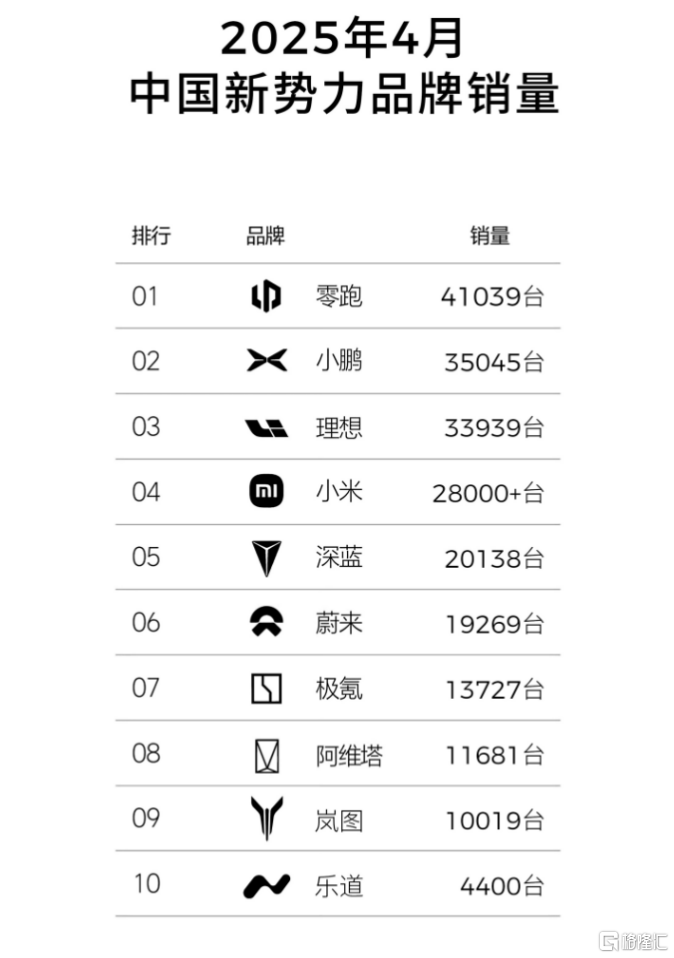
零跑(09863.HK)蝉联销冠,再获创始人增持!“黑马”的下一程在哪?
Ge Long Hui· 2025-05-02 01:17
Core Insights - The article highlights the impressive sales performance and profitability of Leap Motor, marking it as a significant player in the competitive automotive industry, particularly in the electric vehicle sector [1][4][33] Sales Performance - Leap Motor achieved a monthly delivery of over 40,000 units, with a gross margin of 13.3%, making it the third global and second domestic new energy vehicle company to turn profitable [1][4] - Cumulative sales exceeded 700,000 units by April 2025, with expectations to reach one million units in the second half of the year [4] Stock Performance - The company's stock price has surged nearly twofold over the past six months, leading the Hong Kong stock market's new energy sector [6][12] - Founders and key stakeholders have significantly increased their shareholdings, demonstrating confidence in the company's future [8][12] Global Expansion - Leap Motor's B series, including the B01 and B10 models, debuted at the Shanghai Auto Show, targeting the 15-35 age demographic and aiming for global market penetration [16][19] - The company plans to localize production in Europe and Southeast Asia by 2026, with a target of 50,000 to 80,000 units in overseas sales this year [19][20] Strategic Positioning - Leap Motor focuses on the mainstream domestic passenger car market, avoiding direct competition with established luxury brands, which allows for a strategic advantage [27][31] - The company emphasizes high cost-performance ratios and self-research capabilities, with 65% of vehicle components developed in-house [31][32] Market Adaptability - The company has shown agility in responding to market demands, successfully launching models that resonate with consumer preferences [32] - Leap Motor's growth trajectory reflects a commitment to technological innovation and value creation, positioning it as a formidable competitor in the evolving automotive landscape [33]