中欧基金

Search documents
给AI投资算笔帐,知名私募人周应波最新对话:AI的机会一定不会1、2年就结束
Xin Lang Cai Jing· 2025-12-23 11:40
Group 1: AI Investment Opportunities - AI is viewed as a long-term opportunity spanning 20 to 30 years, with investment potential that will not conclude in just 1 or 2 years [4][67][72] - The global capital expenditure on AI over the past 2 to 3 years is approximately $1 trillion, although it has not yet generated corresponding profits [5][23][84] - There are around 2 billion daily users of AI tools globally, most of whom do not pay, while several million programmers are beginning to pay for AI services, indicating a low penetration rate [7][25][30][91] Group 2: Economic Impact of AI - If AI can improve global GDP efficiency by 20%, it could potentially add $20 to $30 trillion to the economy [36][95] - The current global GDP is projected to be $110 trillion in 2024, highlighting the significant potential for AI to enhance productivity across various industries [33][94] Group 3: Chinese Asset Valuation - The valuation of excellent Chinese companies is considered to be at an early stage, akin to "just starting to rise" from the base of a mountain [8][40][102] - The trade surplus accumulated in China, along with funds from the real estate sector, indicates a substantial amount of investable capital in the market [48][50][108] - The A-share market is expected to have sustained upward momentum in the long term, driven by confidence in domestic companies [51][110] Group 4: Investment Strategies - For retail investors, a recommendation is made to invest in broad-based index funds, which may yield better returns than traditional retirement products [9][53][111] - The investment philosophy emphasizes focusing on growth and value investing, with a strong understanding of asset pricing [57][118]

昔日“牛基”今何在?
Zheng Quan Shi Bao Wang· 2025-12-23 09:20
Core Viewpoint - The article discusses the performance of actively managed equity funds in the Chinese stock market, highlighting the emergence of new "bull funds" and the fading glory of past top-performing funds, emphasizing the need for a shift towards long-term investment strategies and stable fund management practices [1][9]. Group 1: Performance of Active Equity Funds - As of December 22, the Shanghai Composite Index has increased by 12.67% in 2024, with an additional 16.87% rise for the year, indicating a likely two consecutive years of gains [1]. - Nearly 40 actively managed equity funds have doubled their annual returns, with Yongying Technology Smart Selection A achieving approximately 219% annual return, marking it as the first "double fund" since 2008 [1]. - Historical analysis shows that only 5 out of 30 top-performing funds from previous bull markets have maintained strong performance, while the majority have returned to mediocre status [2]. Group 2: Reasons for Declining Performance of Past "Bull Funds" - Many former "bull funds" have lost their luster due to excessive growth in fund size, which hampers investment flexibility and increases transaction costs [4]. - Over-reliance on a single star fund manager has led to significant performance declines when key personnel leave or fail to adapt to market changes [5]. - Short holding periods and frequent style shifts have also contributed to the underperformance of many funds, as they chase short-term trends without a stable investment framework [6]. Group 3: Structural Changes in the Fund Industry - The public fund industry is undergoing a structural transformation, moving from a short-term ranking focus to a value investment approach aimed at achieving stable returns [7]. - Successful long-term funds are characterized by stable research teams, strong risk control capabilities, and robust company support systems [8]. - The industry is exploring new active investment models, integrating industrialized concepts into research processes to enhance efficiency [8]. Group 4: Long-Term Investment Philosophy - The fate of past "bull funds" reflects the evolution of the A-share market and the industry's changing development philosophy, emphasizing the importance of long-term investment strategies [9]. - Investors are encouraged to focus on funds with clear investment philosophies, stable teams, and proven cross-cycle capabilities rather than chasing annual performance champions [10]. - Funds that may not shine in a single bull market can still create value through solid strategies, rigorous research, and strict risk control [11].
昔日“牛基”今何在?
券商中国· 2025-12-23 09:03
Core Viewpoint - The article discusses the performance of actively managed equity funds in the context of the A-share market, highlighting the emergence of new "bull funds" and the fading glory of past top-performing funds, emphasizing the need for a shift from short-term performance to long-term investment strategies [1][11]. Group 1: Performance of Active Equity Funds - As of December 22, the Shanghai Composite Index has increased by 12.67% in 2024, with an annual increase of 16.87%, indicating a likely two-year consecutive rise in annual K-line [1]. - Nearly 40 actively managed equity funds have doubled their annual returns, with Yongying Technology Smart Selection A achieving approximately 219% annual return, marking it as the first "double fund" since 2008 [1]. - Historical analysis shows that only 5 out of 30 top-performing funds from previous bull markets have maintained strong performance, while 25 have returned to mediocre status [2]. Group 2: Reasons for Declining Performance of Former "Bull Funds" - Many former "bull funds" have lost their luster due to excessive scale growth, which reduces investment flexibility and increases transaction costs, making it harder to achieve excess returns [5][6]. - Over-reliance on a single star fund manager has led to significant performance drops when key personnel leave or fail to adapt to market changes [6]. - Short holding periods and frequent style shifts have hindered many funds from accumulating long-term returns, as they chase short-term trends without a stable investment framework [7]. Group 3: Structural Changes in the Fund Industry - The public fund industry is undergoing a structural transformation, moving from a "star-making" model focused on short-term rankings to a "systematic approach" that emphasizes value investing and stable returns [8][12]. - Successful long-term funds often have stable research teams and strong risk control capabilities, which help them navigate market downturns effectively [8][9]. - Companies are increasingly adopting innovative investment models and enhancing their research capabilities to adapt to market changes, indicating a shift towards a more collaborative and systematic investment approach [9]. Group 4: Long-term Investment Philosophy - The fate of past "bull funds" reflects the evolution of the A-share market and the investment philosophy of the industry, highlighting the importance of a stable investment strategy over reliance on individual fund managers [11]. - Investors are encouraged to focus on funds with clear investment philosophies, stable teams, and proven cross-cycle capabilities, rather than chasing annual performance champions [12].

从这些关键词中寻找确定性:科技、长期主义、多元配置|2025雪球嘉年华
雪球· 2025-12-23 08:27
Core Insights - The 2025 Xueqiu Carnival highlighted "long-termism" and "asset allocation" as key themes, emphasizing the need for diverse and forward-looking strategies for investors in 2026 [1] - AI emerged as a central topic across discussions, indicating its pervasive influence on various sectors and investment strategies [1][17] Macroeconomic Trends - China's economic positioning is seen as a "fast variable" and "stabilizer" in the global economy, with a systematic comparative advantage that suggests a value reassessment of Chinese assets [3] - The ongoing "East rises, West declines" trend is expected to continue, with a focus on the integration of investment in both material and human capital as a core strategy for understanding Chinese modernization and future investment opportunities [3] Market Structure and Investment Strategies - The Chinese market is characterized by excess liquidity chasing "scarce return assets," with a notable divergence in asset performance despite a bullish market [5] - Credit expansion is identified as a key explanatory factor for market behaviors, influencing the relative performance of tech stocks and global asset flows, providing guidance for 2026 investment directions [5] - A recommendation for 2026 includes pairing AI investments with dividend-paying sectors to optimize returns [6] Diversified Investment Strategies - The rise of passive investment strategies, particularly ETFs, is emphasized as a crucial tool for investors, with China becoming the largest ETF market in Asia [9] - For aggressive investors, equity assets are expected to show significant advantages driven by corporate profit improvements and global liquidity, suggesting a "tech-first, then cyclical" market approach [9] - Conservative investors are advised to adopt a multi-asset, multi-strategy approach to smooth out volatility in their portfolios [9] AI and Technology Investments - AI is anticipated to drive significant changes across various industries, with a focus on long-term investment in companies that can define the future and possess strong competitive advantages [20] - The AI sector is viewed as being in the early to mid-stage of technological explosion, with high certainty for the next few quarters, although caution is advised regarding potential interest rate hikes impacting high-valuation sectors [21] Semiconductor and Robotics - The semiconductor industry is expected to continue benefiting from AI-driven demand, with investment logic not solely based on valuation but also on technological advancements and market dynamics [24] - The robotics sector is predicted to enter a critical industrialization phase, with significant investment opportunities arising from mass production and application scenarios [27] Thematic Investment Opportunities - Gold is highlighted as a long-term structural investment, influenced by monetary policy and geopolitical factors, with a recommendation for a balanced approach between safety and growth [30] - The consumer sector is undergoing industrialization, with opportunities emerging from new demand and international expansion strategies [30] - The healthcare sector, particularly innovative pharmaceuticals, is seen as a key area for investment, with a focus on companies that can leverage technological breakthroughs for growth [31]

震荡与风格轮动常态化,500指增配置价值提升 | 市场观察
私募排排网· 2025-12-23 03:47
Core Viewpoint - The A-share market is experiencing significant structural fluctuations, with a rotation between technology growth and dividend value, highlighting the importance of structural allocation as a key strategy to navigate through market volatility [3]. Group 1: Index Configuration Value - The China Securities 500 Index (CSI 500) has re-emerged as a central asset due to its balanced exposure to mid-cap companies, avoiding the concentration seen in the CSI 300 and the high volatility of smaller cap indices [8]. - The index covers emerging industries such as electronics, power equipment, pharmaceuticals, computers, and new energy, with these sectors accounting for nearly 50% of the index, indicating strong growth potential driven by technological innovation and policy support [9]. - The average market capitalization of the CSI 500 constituents is approximately 33.4 billion, with a median of 29.5 billion, providing a balance of stability and growth potential compared to small and large-cap stocks [13]. - As of December 17, 2025, the CSI 500's price-to-earnings ratio is about 25 times, and the price-to-book ratio is approximately 2.2 times, positioning it at a medium valuation level compared to historical data, making it more attractive than larger indices [14]. Group 2: Enhanced Index Funds - Enhanced index funds based on the CSI 500 aim to improve return stability while maintaining a balanced exposure to the index, introducing systematic alpha sources to optimize risk-return structures [15]. - The China Europe CSI 500 Enhanced Index Fund A, established on May 6, 2022, has achieved a return of 44.01% over three years, significantly outperforming its benchmark [16]. - The fund employs a diversified, low-correlation factor strategy, utilizing extensive data and machine learning models to construct a return prediction system, aiming to reduce drawdowns and enhance return stability [17].

支持科技创新 为投资者提供更多选择
Jin Rong Shi Bao· 2025-12-23 03:38
Group 1 - The Central Economic Work Conference has outlined the direction for economic work in 2026, emphasizing the role of public funds in serving the real economy and national strategies [1] - The public fund industry is expected to fully engage in high-quality development in 2026, integrating its growth with national development goals to contribute to the stable and healthy development of the capital market [1] Group 2 - The conference highlighted the importance of innovation-driven growth and the need to cultivate new economic drivers, urging the public fund industry to enhance research on new technologies and industries [2][3] - Public funds are encouraged to act as patient capital, supporting long-term investments in technology and innovation to foster a healthy market ecosystem [2][3] Group 3 - The conference stressed the need to expand domestic demand and combat "involution" in competition, with public funds playing a crucial role in helping residents achieve wealth growth through capital markets [4][5] - The public fund industry is tasked with improving investor experience and promoting the conversion of savings into capital market investments, addressing the challenges posed by an aging population and wealth accumulation [4][5] Group 4 - The focus on expanding domestic demand and addressing "involution" is expected to be a key investment theme for the market in 2026, with significant potential for growth in service consumption [5][6] - Financial market reforms and the establishment of a unified national market are seen as essential for high-quality economic development, with public funds positioned to benefit from these changes [6]
凯格精机股价涨5.34%,中欧基金旗下1只基金位居十大流通股东,持有124.93万股浮盈赚取567.18万元
Xin Lang Cai Jing· 2025-12-23 03:16
Group 1 - The core viewpoint of the news is that Keg Precision Machinery has experienced a significant stock price increase, rising 5.34% to 89.54 CNY per share, with a total market capitalization of 9.527 billion CNY and a cumulative increase of 38.71% over the past four days [1] - Keg Precision Machinery, established on May 8, 2005, and listed on August 16, 2022, specializes in the research, production, sales, and technical support of automated precision equipment [1] - The company's main business revenue composition includes solder paste printing equipment (64.37%), dispensing equipment (13.34%), packaging equipment (13.05%), flexible automation equipment (5.40%), and others (3.85%) [1] Group 2 - Among the top ten circulating shareholders of Keg Precision Machinery, a fund under China Europe Fund, specifically the China Europe Prosperity Selected Mixed A (020876), has entered the list, holding 1.2493 million shares, which accounts for 2.11% of the circulating shares [2] - The fund has generated a floating profit of approximately 5.6718 million CNY today and a total of 29.6334 million CNY during the four-day price increase [2] - The China Europe Prosperity Selected Mixed A fund, established on April 23, 2024, has a current scale of 1.052 billion CNY and has achieved a year-to-date return of 47.01%, ranking 1269 out of 8088 in its category [2]

基金早班车丨公募基金新发数量创近4年新高,QDII高溢价警报不断
Jin Rong Jie· 2025-12-23 00:45
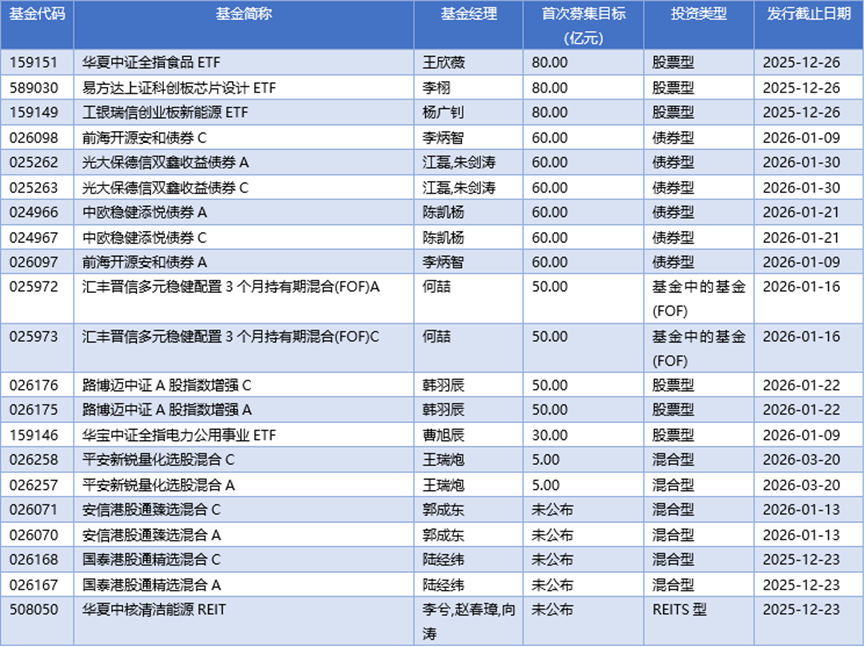
Group 1 - The core point of the article highlights a significant increase in the establishment of new public funds, with 1,468 funds launched in 2024, marking a 29.3% growth compared to the previous year, setting a record for the past four years [1] - The A-share market showed positive performance on December 22, with major indices rising: Shanghai Composite Index up 0.69% to 3,917.36 points, Shenzhen Component Index up 1.47% to 13,332.73 points, and ChiNext Index up 2.23% to 3,191.98 points, with total trading volume reaching 1.86 trillion yuan [1] - The tightening of QDII quotas has led to several products reducing the RMB subscription limit to 10 yuan, with some market premiums exceeding 20%, indicating potential risks for investors [1] Group 2 - On December 22, 21 new funds were launched, primarily focusing on bond and equity funds, with the Huaxia CSI All-Share Food ETF aiming to raise 8 billion yuan [2] - Public funds have invested a total of 34.088 billion yuan in 85 A-share companies in 2025, reflecting a year-on-year increase of over 14%, with the electronics sector being a key focus [2] - The public fund management scale is expected to reach new records in 2025, with a shift towards quality over quantity, driven by fee reforms and a diverse range of ETF offerings [2] Group 3 - A detailed list of new funds launched on December 22 includes various ETFs and bond funds, with several funds targeting 6 billion yuan or more [3] - The list of funds also includes specific details such as fund codes, managers, and investment types, indicating a broad range of investment strategies being employed [3] Group 4 - A summary of fund dividends on December 22 shows that 38 funds distributed dividends, with the highest payout being 3.1 yuan per 10 shares for the Huabao CSI 300 Index Enhanced Fund [4] - The dividend distribution reflects a growing trend in fund payouts, enhancing the perceived value for fund holders [4]
以信筑梁 公募改革回应“获得感”之问
Zhong Guo Zheng Quan Bao· 2025-12-22 20:19
Core Insights - The Chinese public fund management scale reached 36.96 trillion yuan by October 2025, highlighting the industry's global influence and the importance of investor trust as a foundation for development [1] - The China Securities Regulatory Commission (CSRC) introduced a comprehensive reform plan in May 2025 aimed at enhancing the quality of public funds, focusing on fee structures, performance benchmarks, long-term assessments, and sales ecosystems [1][2] - The industry is undergoing a transformation to ensure that investor trust translates into predictable and sustainable returns, with a focus on collaborative efforts across product, research, sales, and customer service [1][3] Investment Research Innovation - The reform emphasizes the need for stable performance metrics, with the CSRC's guidelines on performance benchmarks aiming to enhance the reliability of historical performance as a reference for future investments [2] - Fund managers are encouraged to anchor their strategies to performance benchmarks, ensuring style stability and clear product positioning to improve investor confidence [2][3] Research Methodology Transformation - The investment research approach is shifting from individualistic strategies to a more integrated, systematic framework, promoting a platform-based, multi-strategy research system [3] - The focus is on clarifying sources of returns and defining risk boundaries, which helps in rationalizing investor expectations and building long-term trust [3] Sales Transformation - The sales model is evolving from a traditional agent role to a guardian role, emphasizing the importance of investor experience and aligning sales practices with long-term investor interests [4][6] - The industry is adopting a floating fee structure linked to fund performance, which has led to a significant increase in the issuance of floating fee funds since the reform plan was announced [5][6] Assessment Mechanism Overhaul - The reform plan mandates the establishment of a performance-centric assessment system for fund companies, reducing the emphasis on scale and short-term metrics [6][7] - Long-term performance assessments are prioritized, with a requirement that at least 80% of the evaluation weight be based on three-year performance, promoting stability and precision in fund management [6][7] Investor Experience Focus - Companies are increasingly incorporating investor experience metrics into their assessment frameworks, aiming to enhance long-term investor engagement and satisfaction [7] - The industry recognizes the importance of creating value for clients, as the management of public funds directly impacts the financial well-being of countless households [7]
公募基金“质效双升” 买方力量重塑市场定价逻辑
Shang Hai Zheng Quan Bao· 2025-12-22 18:23
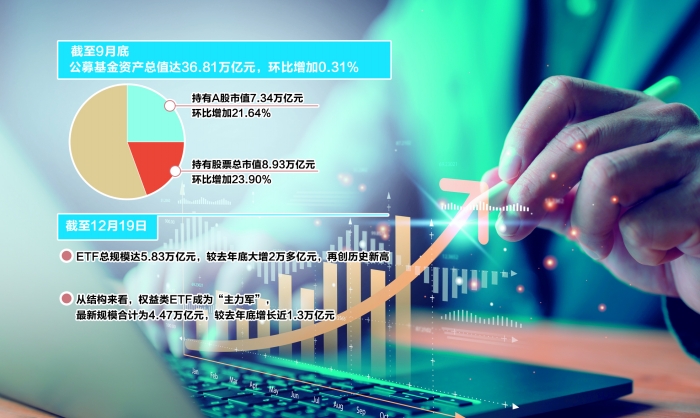
Group 1 - The core viewpoint of the articles highlights the significant growth and influence of public funds, particularly ETFs, in the Chinese capital market, with total public fund assets nearing 37 trillion yuan and ETF assets reaching 5.8 trillion yuan, marking a substantial increase over the past year [2][3] - ETFs have experienced explosive growth, with their total scale increasing by over 2 trillion yuan since the end of last year, establishing a new historical high [3] - Equity ETFs have emerged as the main force, with a total scale of 4.47 trillion yuan, reflecting a growth of nearly 1.3 trillion yuan since the end of last year, driven by regulatory encouragement for long-term capital to enter the market [4][5] Group 2 - The rapid growth of public funds has led to an increase in their market influence, with total public fund assets reaching 36.81 trillion yuan, a 0.31% increase, and stock holdings valued at 8.93 trillion yuan, a 23.90% increase [7] - The presence of ETFs in the top ten shareholders of several popular technology companies indicates their growing impact on listed companies, with significant capital flows affecting stock prices [7] - The number of ETFs with over 100 billion yuan in scale has expanded significantly, from 44 to 119, indicating a trend towards larger ETF products in the market [8] Group 3 - The China Securities Regulatory Commission has initiated policies to promote the high-quality development of public funds, encouraging innovation in equity fund products and the development of various index funds [9] - Public funds are becoming core value discoverers in the capital market, with a notable shift in the top holdings of active equity funds towards technology sector stocks [9][10] - The rapid growth of public funds is reshaping the A-share market's ecology and structure, injecting long-term stable capital into the market, which enhances overall stability and pricing efficiency [10]