零跑

Search documents
零跑经济学:「车圈红米」如何高配低价还高毛利?
3 6 Ke· 2025-05-21 00:48
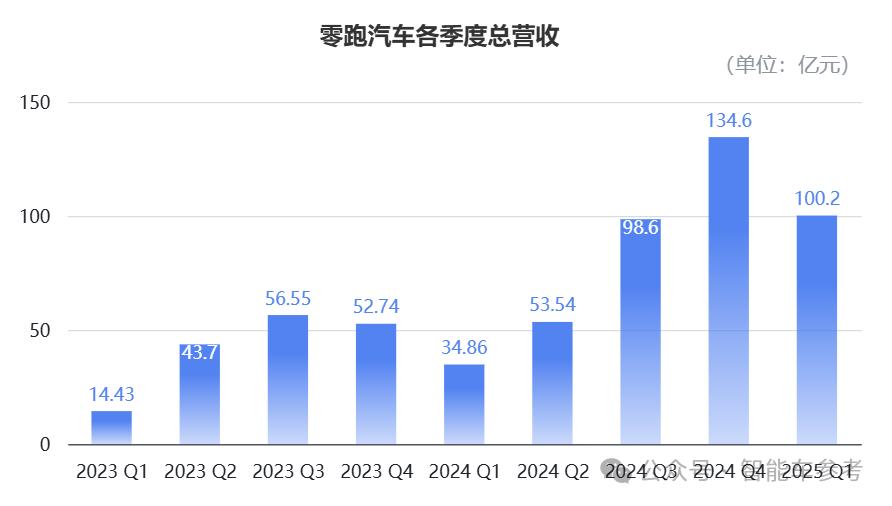
Core Viewpoint - The article discusses the emergence of a new survival logic in the Chinese automotive industry, particularly focusing on the success of the new player, Leap Motor, which has gained significant market traction through its "high configuration, low price" strategy [1][19]. Financial Performance - In Q1 of this year, Leap Motor achieved revenue of 10.02 billion yuan, a year-on-year increase of 187%, with an average vehicle price of 114,000 yuan, up 9.7% from the same period last year [2]. - The gross margin for Q1 reached 14.9%, marking a historical high and surpassing competitors like Xiaopeng and NIO, which had a gross margin of -1% in Q1 of the previous year [5][11]. Cost Management and Supply Chain - Leap Motor's ability to manage costs effectively is attributed to its dual role as both a manufacturer and a Tier 1 supplier, allowing for strong control over the supply chain [6]. - Approximately 60% of core components, including the three electric systems and intelligent systems, are self-developed, with a parts commonality rate of 88% [6][10]. - The company adopts a cautious self-research approach, opting for a "light asset" production model for certain components, such as sourcing battery cells externally while manufacturing battery packs in-house [8]. Sales and Market Strategy - Leap Motor delivered 87,552 vehicles in Q1, a year-on-year increase of 162.1%, ranking third among new forces in the automotive sector [11]. - The company aims to capture the 100,000 to 200,000 yuan price range, which accounts for over 50% of passenger vehicle sales, leveraging high sales volume to dilute fixed costs and enhance bargaining power [10][19]. Future Outlook - Despite a return to a loss of 130 million yuan in Q1 due to seasonal effects, the loss was significantly reduced from 1.01 billion yuan in the same quarter last year [17]. - The company expects to achieve sales of 130,000 to 140,000 vehicles in Q2, aiming for a return to breakeven and striving for overall profitability by the end of the year [17][19]. - Leap Motor's approach signifies a shift in the automotive industry towards cost control and efficiency, moving away from the previous focus on financing and product dreams [21].

奥迪的中产神车,跌到13万多了
36氪· 2025-05-20 13:25
Core Viewpoint - The article discusses the significant price reductions in the luxury car market, particularly focusing on brands like Audi, BMW, and others, as they struggle to maintain sales amidst the rise of electric vehicles and changing consumer preferences [4][10][22]. Group 1: Price Reductions and Market Dynamics - Luxury car brands are experiencing drastic price cuts, with Audi A3 being advertised at prices as low as 12.49 million yuan, leading to comparisons with lower-end vehicles [7][17]. - The article highlights the emotional impact on existing car owners who purchased vehicles at higher prices, now facing depreciation and feelings of being undervalued [20][24]. - The overall sales figures for Audi show a decline, with global sales expected to drop by 11.8% in 2024, indicating a broader trend of struggling luxury brands [22][30]. Group 2: Consumer Sentiment and Brand Perception - The frequent price changes are likely to damage the brand image of luxury car manufacturers, as consumers may perceive them as lower quality or less prestigious [26][28]. - The article notes that traditional luxury brands are at risk of losing their market position as new consumer preferences shift towards technology and smart features over traditional luxury attributes [31][32]. Group 3: Strategic Responses from Luxury Brands - In response to market pressures, luxury brands are adopting strategies such as partnerships with technology companies like Huawei to enhance their offerings [39][40]. - The article mentions the importance of localization in production and technology to better meet the demands of the Chinese market, with brands like Lexus investing in local manufacturing [44]. - Financial strength is highlighted as a key advantage for traditional luxury brands, with BBA (BMW, Benz, Audi) planning to invest over 350 billion euros in 2024 to support their transition and innovation efforts [47].
宁德时代锁定港股市值前十;小米本周发布纯电SUV;特斯拉计划明年推出第二代Dojo超算丨百亿美元公司动向
晚点LatePost· 2025-05-20 13:18
Group 1: Ningde Times IPO - Ningde Times' dark market price has increased by over 9% to 284 HKD ahead of its IPO, leading to a market valuation of 1.3 trillion HKD, ranking it eighth in the Hong Kong stock market [1] - The IPO price is set at 263 HKD, with no significant discount compared to its A-share price, and the company aims to raise 5 billion USD, primarily subscribed by major institutions [1] - The public offering has seen a subscription rate exceeding 120 times, with over 280 billion HKD in funds raised [1] Group 2: Xiaomi's New Product Launch - Xiaomi will hold a strategic product launch on Thursday, introducing the Xiaomi Xuanjie O1 chip, Xiaomi 15S Pro, Xiaomi Pad 7 Ultra, and its first SUV YU7 [2] - The Xuanjie project has seen over 13.5 billion CNY in R&D investment, with a team of over 2,500 people, and an expected R&D expenditure of over 6 billion CNY this year [2] - The Xuanjie O1 chip utilizes second-generation 3nm technology and aims to compete in the flagship experience tier, also being used in other Xiaomi products [2] Group 3: Tesla's Dojo Supercomputer - Tesla plans to launch its second-generation Dojo supercomputer cluster (D2) in 2026, featuring self-developed cloud training chips that are more efficient and cost-effective than the first generation [3] - The performance of the D2 is expected to still lag behind similar products from Nvidia, with a third-generation Dojo planned for 2028 to further close the performance gap [3] - The first-generation Dojo was introduced in 2021, designed with ASIC chips to provide performance and cost advantages over Nvidia's offerings [3] Group 4: Google Search Redefinition - Google CEO Sundar Pichai stated that the company is redefining the search experience to become more predictive and personalized, transitioning from merely responding to user queries [4] - The integration of AI is expected to drive significant advancements in the search domain, with Pichai emphasizing that challenges only arise when viewed as such [4] Group 5: Nvidia's AI Supercomputer Production - Nvidia has announced the mass production of the world's smallest AI supercomputer, DGX Spark, which will be ready in a few weeks [5] Group 6: AI Computing Demand Surge - With the explosion of generative AI applications, there is a significant increase in demand for localized computing power, with predictions that global AI inference computing demand will exceed training computing demand by more than three times by 2025 [6] - The introduction of DGX Spark allows small and medium enterprises and individual developers to access supercomputing capabilities at consumer-level costs, lowering the barriers to AI innovation [6] Group 7: Apple and Alibaba AI Collaboration Scrutiny - Apple is seeking to collaborate with Alibaba to enhance the Apple Intelligence feature for iPhones in China, but this plan is under scrutiny from the White House and Congress due to concerns about boosting Chinese AI capabilities [7] Group 8: Walmart Price Increase Controversy - Walmart announced price increases for its products due to thin retail margins and rising tariffs, which has drawn criticism from former President Trump, who argues that Walmart should absorb the costs [8] Group 9: China's Consumer Spending Growth - In April, China's consumer spending rose by 5.1% year-on-year, with retail sales excluding automobiles increasing by 5.6% [9] - Key sectors leading the growth include communication equipment (+19.9%), furniture (+26.9%), and home appliances (+38.8%) [9] Group 10: Leap Motor's Financial Performance - Leap Motor reported a revenue of 10.02 billion CNY in Q1, a year-on-year increase of 187.1%, with a gross margin of 14.9%, up 16.3 percentage points [10] - The company attributes the gross margin increase to sales growth, cost control, and product structure optimization [10] Group 11: Nvidia and Mercedes-Benz Collaboration - Nvidia is collaborating with Mercedes-Benz to launch a fleet of autonomous vehicles using Nvidia's end-to-end technology, with plans to roll out globally this year [11] - Nvidia's role remains as a technology provider rather than directly operating the autonomous fleet [11] Group 12: Huawei's New Product Launch - Huawei has launched its first HarmonyOS foldable laptop, MateBook Fold, which features an 18-inch display when unfolded and weighs only 1.16 kg [12] - The MateBook Pro starts at 7,999 CNY, while the MateBook Fold is priced from 23,999 CNY [12] Group 13: EU Economic Growth Forecast Revision - The EU has revised its economic growth forecast for this year down to 1.1% from 1.5%, and for next year to 1.5% from 1.8% [13] - The report suggests that easing trade tensions with the US or accelerating trade growth with other countries could support economic growth [13] Group 14: US Debt Concerns and Treasury Yield Increase - Concerns over US debt have led to a sell-off in US assets, with Moody's downgrading the US credit rating, predicting a federal deficit that could reach nearly 9% of GDP by 2035 [14] - The 10-year Treasury yield rose to 4.52%, and the 30-year yield reached 5.00%, indicating a decline in bond prices [14] Group 15: Kweichow Moutai Dividend Announcement - Kweichow Moutai announced a cash dividend of 34.671 billion CNY for shareholders, with a reduction compared to last year's total of 38.786 billion CNY [15] - The company aims for a revenue growth target of 9% this year, following a 15.66% increase last year [16]

百公里油耗1.8L?欧盟排放新规,官方作秀还是逼宫电动车?
电动车公社· 2025-05-19 15:59
Core Viewpoint - The EU has made concessions on carbon emission regulations for car manufacturers, allowing them to exceed limits in one or two years as long as the three-year average meets standards, providing a temporary relief for the struggling European automotive industry [1][3][9]. Group 1: EU Concessions and Industry Impact - The EU's decision to relax carbon emission regulations was anticipated due to internal disagreements among member states regarding strict adherence to the new rules [4][8]. - The stringent regulations require an average carbon emission of 93.6 grams per kilometer by 2025, which translates to extremely low fuel consumption for traditional vehicles, making compliance nearly impossible without significant changes in vehicle types [6][10]. - The potential fines for non-compliance could reach €124 billion, translating to an average price increase of €10,000 per vehicle, which may not be as burdensome given the average income in Europe [8][10]. Group 2: Future of Electric Vehicles and Market Dynamics - The automotive industry can still meet the 2030 targets by increasing electric vehicle sales to lower average carbon emissions, but there are concerns about the marketability of electric vehicles in the coming years [10][18]. - The EU's compromise may lead to a cycle of leniency, where future regulations are also relaxed, hindering the necessary transition to electric vehicles [10][11]. - The collaboration between European and Chinese automotive manufacturers is becoming more frequent, with Chinese electric vehicles potentially filling the gap in the European market [14][28][33]. Group 3: Tesla's Market Position and Competition - In the first quarter, the sales of electric vehicles in the EU increased by 23.9%, but Tesla's sales plummeted by 45%, indicating a significant shift in market dynamics [21][26]. - European manufacturers are regaining market share, with Volkswagen and other brands showing substantial growth in electric vehicle sales, while Tesla struggles to maintain its previous dominance [25][26]. - The rise of Chinese electric vehicle brands in Europe, such as BYD and Xpeng, highlights the competitive landscape and the potential for increased collaboration between European and Chinese companies [26][28][31].



对话禾赛科技CEO李一帆:禾赛没有一天选择过代工
2 1 Shi Ji Jing Ji Bao Dao· 2025-05-16 12:49
Group 1 - The trend of intelligent driving is leading to more advanced features being integrated into lower-priced vehicles, with safety becoming a critical focus [1] - The "LiDAR" technology is now available in vehicles priced around 120,000 yuan, exemplified by the Leapmotor B10, which utilizes Hesai's ATX [1] - Hesai Technology launched the "Thousand Eyes" perception solution for L2 to L4 level intelligent driving, offering three different combinations tailored for mainstream L2 level auxiliary driving systems [1] Group 2 - Hesai also introduced a series of automotive-grade LiDAR products, including ETX ultra-long-range LiDAR, AT1440 ultra-high-definition LiDAR, and FTX pure solid-state blind-spot LiDAR [1] - Hesai is recognized as the leading player in the domestic LiDAR industry, with major clients including Li Auto, Xiaomi Auto, and BYD, with Li Auto equipping all its models with Hesai's LiDAR this year [1] - On the international front, Hesai announced a significant long-term exclusive partnership with a top European OEM, marking the largest order in the overseas front-end production LiDAR sector to date [2]
靠MO3和P7+两款爆品驱动高增,小鹏(09868)还能走多远?
智通财经网· 2025-05-14 07:16
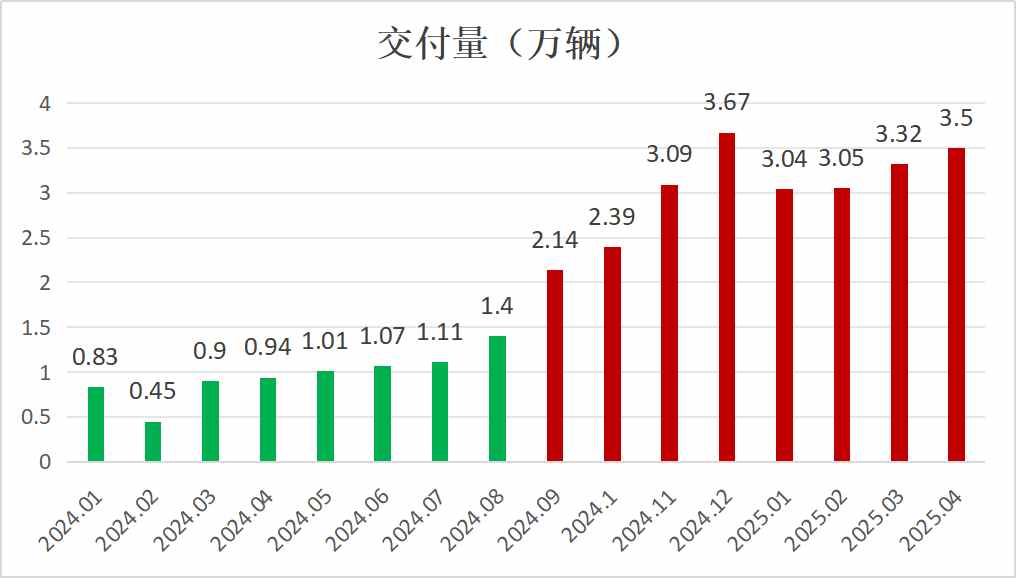
Core Viewpoint - Xiaopeng's sales performance has significantly improved, with a delivery volume of 35,000 units in April, representing a year-on-year growth of 273%, making it the second-best seller in the new energy vehicle market after Leap Motor [1] Group 1: Sales Performance - In the first four months of the year, Xiaopeng's total delivery volume reached 129,000 units, a year-on-year increase of 313%, positioning it as the champion among new forces [1] - The success is attributed to the popular models MO3 and P7+, which have driven sales growth [1] - The monthly sales of P7+ are expected to stabilize around 8,000 units by 2025, with both models accounting for over 70% of total monthly sales [1] Group 2: Market Competition - The new energy vehicle market is experiencing intensified competition, with over 40% penetration, leading to the exit of several brands [2] - Despite the competition, BYD remains the strongest leader in the market, while new forces are stabilizing [2] - Xiaopeng's two popular models are nearing the end of their order backlog, with delivery cycles shortening to 1-2 weeks [2] Group 3: Product Strategy - Xiaopeng focuses on creating cost-effective models targeting young consumers, with MO3 priced between 100,000 to 130,000 yuan and P7+ between 180,000 to 200,000 yuan [3] - The company plans to launch around 30 new models or major updates within three years, including the G7 SUV and G01 six-seat SUV by 2025 [6] Group 4: Financial Performance - Xiaopeng's sales growth has led to a significant increase in revenue, with a projected revenue growth of over 100% in Q1 2025 [6] - The gross margin improved to 14.44% in Q4 2024, with a net loss ratio narrowing to 8.26% [6] - The company has a cash reserve of 32.72 billion yuan, providing a healthy cash flow situation compared to peers [9] Group 5: Future Outlook - Xiaopeng is expected to maintain its competitive edge by leveraging its self-developed technologies and cost reduction strategies [8] - The company is also exploring new business areas, such as flying cars and humanoid robots, which may provide future revenue streams [9] - The ability to sustain high sales growth and maintain market share will be crucial for Xiaopeng's success in the competitive landscape [10]
布局智能汽车广阔前景 恒生汽车ETF将于5月14日结募
Quan Jing Wang· 2025-05-13 01:28
Group 1 - The People's Bank of China has implemented a "zero reserve requirement" policy for auto finance and financial leasing companies, reducing the reserve requirement ratio from 5% to 0%, aimed at boosting auto consumption and industry upgrades [1] - The automotive industry in China is experiencing favorable policies and advancements in smart driving technology, leading to increased investment opportunities [1] - The launch of the Hang Seng Automotive ETF (159239) is designed to help investors easily access the automotive sector, with fundraising ending on May 14 [1] Group 2 - The Hang Seng Hong Kong Stock Connect Automotive Theme Index includes leading companies in smart driving, with over 50% concentration in new energy vehicle manufacturers like BYD, Xpeng, Geely, Li Auto, and Leap Motor [2] - The index has shown strong performance, with a 61.86% increase over the past six months, outperforming other indices such as the Hong Kong Stock Connect Automotive Index and the Hang Seng Index [2] Group 3 - The profitability of companies within the Hang Seng Hong Kong Stock Connect Automotive Theme Index is improving, with a projected return on equity (ROE) rising from -0.6% in 2021 to 8.4% in 2024 [3] - The index offers a favorable investment valuation, with a price-to-earnings (PE) ratio of 23.81 compared to 24.89 for the CSI All Share Automotive Index, indicating a higher safety margin [3] - The global market for intelligent connected vehicles is expected to reach 80 million units by 2030, with China projected to account for 27 million units, suggesting significant growth potential for the automotive sector [3]
理想汽车,压力山大
虎嗅APP· 2025-05-09 13:14
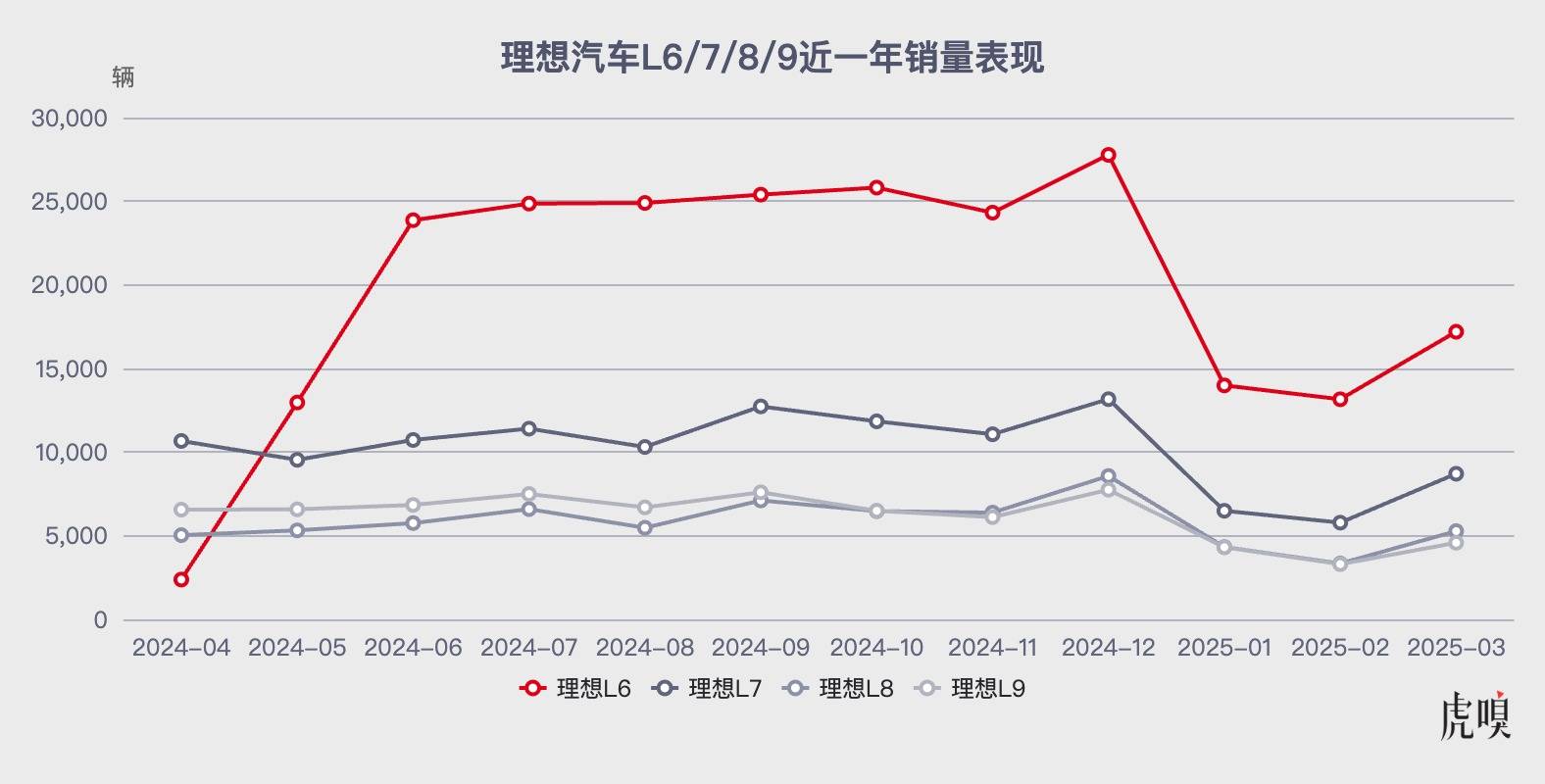
出品丨虎嗅汽车组 作者丨肖漫 头图丨视觉中国 尽管账上有千亿现金,但理想还没有迎来躺着数钱的时候。 理想今年的销量目标是70万辆,比去年多了20万,而理想规划的新车型仅有理想i8和理想i6两款,且都在下半年发布,其他均为改款焕新。销量的重 担,依然落在L系列上。然而,L系列的销量疲势已经出现,近4个月都未能突破月销4万辆的瓶颈,不及去年下半年的表现。 一季度承压明显,进入四月,理想逐渐出牌。先是在上海车展发布MEGA家庭版车型,并在 5 月 8 日发布了 L 系列的智能焕新版(即L系列的2025 款)。 理想的打法是"加量不加价",除了全系升级智能辅助驾驶硬件,L7/8 是全系标配魔毯双腔空悬、新增 52.3kWh 大电池,L9 则是用上了双枪双阀魔毯空 气悬架、十八点热石按摩等配置。 理想的刀法落得很精确,增配的目的显然是保量。理想手上的牌仅剩理想i8和理想i6,接下来的战,理想要怎么打? 理想L系列,尚能战否? 理想的第一道难关,是要守住增程车型的基本盘。 今年以来,理想L系列车型经历了不同程度的下滑,销量扛把子L6升至回到了去年刚上市的水平,L7的单月销量也都在一万以下。 数据来源: 车主之家 理想L系 ...


理想汽车,压力山大
Hu Xiu· 2025-05-09 10:58
Core Viewpoint - Despite having over 100 billion in cash, Li Auto has not yet reached a point of effortless profitability, facing significant challenges in achieving its sales targets for the year [1]. Group 1: Sales Performance and Targets - Li Auto's sales target for the year is set at 700,000 units, an increase of 200,000 units from the previous year, but the new models, Li i8 and Li i6, are only set to launch in the second half of the year, placing the sales burden primarily on the L series [1][2]. - The L series has shown signs of sales fatigue, failing to exceed 40,000 units per month for the past four months, which is below the performance of the second half of last year [1][3]. - The L series' market share for range-extended products is projected to decline by 2.1% in Q4 2024, indicating increasing competition [6]. Group 2: Competitive Landscape - Li Auto faces growing competition from various manufacturers, including Huawei, which has launched multiple models that directly compete with the L series [6][7]. - The introduction of over 10 new mid-to-large SUVs this year, such as the AITO M8 and Lynk & Co 900, is intensifying competition in the market [7]. - The AITO M8 has already accumulated over 70,000 pre-orders, positioning it as a strong competitor against the L8 and L9 models [7]. Group 3: Product Strategy and Innovations - Li Auto's strategy includes enhancing the L series with new features while maintaining price stability, aiming to preserve sales volume [2][8]. - The L series is undergoing significant upgrades in intelligent driving capabilities, with the introduction of the new Thor-U chip and advanced laser radar systems [8][9]. - The new VLA (Vision Language Action) model aims to differentiate Li Auto's intelligent driving technology from competitors, focusing on advanced capabilities that mimic human-like understanding and reasoning [9][11]. Group 4: Electric Vehicle Strategy - Li Auto's upcoming pure electric models, the i8 and i6, are seen as critical variables for the company's performance this year, with conservative internal sales expectations of 50,000 units for both [15][16]. - The company is exploring new growth avenues through channel transformations and expanding into overseas markets, although the complexity of international markets poses challenges [16][17]. - The domestic market remains the primary focus, but increasing competition and uncertainties in the electric vehicle segment make achieving sales targets difficult [17].
热点轮动军工股持续爆发 反弹行情仍将延续?
第一财经· 2025-05-09 04:04
Market Overview - On May 9, the three major stock indices opened lower, with the Shanghai Composite Index at 3350.41 points, down 0.05%, the Shenzhen Component Index at 10190.13 points, down 0.07%, and the ChiNext Index at 2028.43 points, down 0.05% [3] Industry Insights - Gold, retail, CPO, and semiconductor sectors experienced significant declines, while military stocks showed strength [3] - Recent mergers and acquisitions in the military sector, particularly by central enterprises, are expected to have a profound impact on the industry, with notable short-term stock price increases following the implementation of these capital operations [4] Sector Analysis - **Telecommunications Sector**: - The telecommunications sector is expected to benefit from increased investment in AI computing power, with a focus on optical communication performance growth through 2025. The sector is also anticipated to see stable growth in telecom operators' performance and a shift in capital expenditure towards intelligent computing [7] - **Automotive Sector**: - The automotive industry index showed a relative increase of 12.51% compared to the CSI 300 index in Q1 2025. The market is driven by policies supporting vehicle upgrades, leading to high sales growth. The proportion of automotive stocks in public fund holdings reached a historical high of 3.47%, with continuous increases over five quarters [8] - The upcoming Shanghai Auto Show is expected to showcase numerous new energy vehicles, likely boosting consumer purchasing enthusiasm and sustaining high market activity in the automotive sector [8]