欣旺达

Search documents
光伏及电池产品出口退税调整点评:抢出口驱动显现,光伏、锂电、集运影响几何?
Guo Tai Jun An Qi Huo· 2026-01-15 10:15
1. Report Industry Investment Rating - No relevant information provided. 2. Core Viewpoints - The photovoltaic sector may experience a significant rush - to - export market in the first quarter, which will marginally benefit the demand for related products. The lithium - battery sector, including batteries and ternary materials, has short - term rush - to - export drivers. The "rush - to - export" in the photovoltaic sector will have a certain impact on the container shipping index (European line) [4][18][36]. 3. Summary by Directory 3.1 Photovoltaic Sector - **Export Tax Rebate System**: The export tax rebate system for photovoltaic products dates back to 2013. It has been adjusted several times, and from April 1, 2026, the export tax rebate for photovoltaic cells and modules will be cancelled. The expected cancellation of the tax rebate in 2025 Q3 led to a 10% quarter - on - quarter increase in component exports [7]. - **Impact on the Industry**: China's photovoltaic exports are mainly components, with about 40% going to Europe. After the cancellation of the tax rebate in April, the export cost per watt of components is expected to increase by $0.008 (equivalent to RMB 0.06 per watt), and the export profit per watt will drop to -$0.012, leading to potential losses in component exports [10]. - **European Market Situation**: The overall economic weakness in Europe, subsidy reduction, and limited grid capacity will lead to a 3% year - on - year decline in new photovoltaic installations in 2026. However, there is a clear peak - off - peak cycle. Before the policy adjustment on April 1, there will be a significant rush - to - export market, and component exports in Q1 2026 are expected to increase by 8 - 10GW compared to previous expectations [14]. - **Demand for Related Products**: In the first quarter, domestic installation demand is weak, but the rush - to - export of components will improve overall demand. It is expected to bring about 8 - 10GW of component demand increment, which will marginally benefit the demand for main and auxiliary materials of photovoltaic components [17]. 3.2 Lithium - Battery Sector - **Export Tax Rebate Policy**: The export tax rebate for lithium - ion batteries will be reduced to 9%, 6%, and 0% in December 2024, April 2026, and January 2027 respectively. The first reduction had no obvious impact, and in November 2025, the cumulative year - on - year exports of power and energy - storage batteries increased by 47% and 74% respectively [20]. - **Impact on Leading Enterprises**: The export tax rebate cancellation may reduce the policy support for enterprises by $1.8 billion. However, enterprises with a stable overseas market and strong bargaining power can better withstand the impact [21]. - **Export Demand of Power Batteries**: Power and energy - storage lithium - ion batteries rely on the export market by about 16% and 24% respectively. The core export area for power batteries is Europe. Although affected by US tariffs, the demand has strong resilience, and there will be a moderate "rush - to - export" demand [24]. - **Energy - Storage Batteries**: The domestic energy - storage battery market is highly competitive. With the cancellation of the 9% export tax rebate, there will be a strong "rush - to - export" demand in the Middle East, Chile and other regions. However, the current production capacity of battery factories is nearly saturated, so short - term export increments are limited [28]. - **Ternary Materials**: The export tax rebate for ternary materials and precursors will be reduced from 13% to 0%, with a greater impact on profits. NCM and NCM precursor materials mainly rely on exports to Japan and South Korea. The export tax rebate cancellation will have a greater impact on the upstream of the ternary lithium - battery industry chain and may stimulate a "rush - to - export" demand [31][35]. 3.3 Container Shipping Sector - **Transport Demand**: In 2025, the export of photovoltaic components to 12 European countries decreased by 6% compared to the same period in 2024. It is estimated that the "rush - to - export" of components may lead to the pre - shifting of 20,000 - 50,000 TEU of transport demand on the European line from Q2 to Q1, and the total transport demand on the European - Mediterranean route may increase by 40,000 - 70,000 TEU [39]. - **Impact on Container Shipping European Line**: The concentrated "rush - to - export" may occur from late February to March. The 20,000 - 50,000 TEU transport increment in the photovoltaic industry is difficult to change the monthly - level over - capacity situation. It will have a marginal positive impact on the loading rate from February to March but is negative for the transport demand after April. For the futures market, EC2602 is basically unaffected, and EC2604 has a downward - driving force, but it may not show an overly pessimistic discount [42].
证监会同意尚水智能深交所创业板IPO注册
智通财经网· 2026-01-15 09:31
Group 1 - The China Securities Regulatory Commission has approved Shenzhen Shangshui Intelligent Co., Ltd.'s application for an initial public offering, with plans to raise 587.39 million yuan [1][2] - Shangshui Intelligent aims to list on the Shenzhen Stock Exchange's ChiNext board, with Guolian Minsheng Securities as its sponsor [1][2] Group 2 - The company focuses on the manufacturing of new energy battery electrode sheets and new material preparation, providing intelligent equipment for research, design, production, and sales [4] - Shangshui Intelligent's self-developed efficient pulping system has achieved a 60% market share in the domestic market for pulping systems, ranking first, while its lithium battery pulping system holds a 12.77% market share, ranking third [4] - The company has established partnerships with major players in the new energy battery and vehicle sectors, including BYD, CATL, and Samsung SDI, among others [4][5] Group 3 - In the new material preparation sector, the company has developed a comprehensive system for mixing, dispersing, grinding, coating, drying, and film preparation, with products applied in various fields such as battery materials and semiconductor packaging [5] - Shangshui Intelligent has created a new material preparation platform that is both versatile and scalable, serving multiple industries and applications [5]


电池故障应进行系统性归因分析
Di Yi Cai Jing· 2026-01-15 06:54
作为被提及的关联方之一,欣旺达动力随后澄清:召回事件所涉电芯由其与某车企电池集团的合资公司 (后者控股)生产并供应,该交易主体与欣旺达动力无关。在新能源汽车保有量快速增长的背景下,电 池故障与安全事故频发。从技术角度看,电池包是一个包含电芯、BMS(电池管理系统)、热管理、 结构设计及整车集成的复杂系统。质量事故发生后,责任应如何划分?本次事件正推动行业对供应链责 任边界进行更深层的思考。 也正因为电池是一项系统性工程,电芯与其他系统的适配性和一致性可能是其质量的关键影响因素。因 此,为了造出安全可靠的电池,整车厂与电池供应商的合作模式,必须从简单的"零件采购"以及"事后 追责"转向"事前协同开发"模式。 【#电池故障应进行系统性归因分析#】#新能源汽车供应链应制定事前协同开发模式#近期,关于动力电 池安全责任的讨论再次成为行业焦点。2026年初,一家国际车企发起全球召回,市场关注随之指向电池 供应链。 有分析人士指出,电池故障的归因分析应分为三部分:全链条追溯(分析从电芯生产、成组、装车到故 障前的全生命周期数据)、系统性验证(不仅测试电芯,还需复现BMS控制策略、热管理回路工况、 机械振动条件等)以及交叉 ...
从“零件思维”到“科学归因”:新能源汽车电池安全的责任边界之问
Di Yi Cai Jing Zi Xun· 2026-01-15 05:49
Core Viewpoint - The recent discussions surrounding the safety responsibilities of power batteries have become a focal point in the industry, particularly following a global recall initiated by an international automaker in early 2026, which has drawn attention to the battery supply chain [1] Group 1: Battery Safety and Responsibility - The recall event has prompted deeper reflections on the boundaries of responsibility within the supply chain, especially as battery failures and safety incidents have become more frequent amid the rapid growth of new energy vehicle ownership [1] - A lawsuit was filed against a battery supplier, XWANDA, by a domestic automaker claiming quality issues with the supplied battery cells, seeking over 2.3 billion yuan in damages [3] - XWANDA emphasized that the battery system issues cannot be solely attributed to the battery cells without comprehensive technical validation, highlighting the complexity of the battery pack as a system [3] Group 2: Market Position and Performance - XWANDA holds a significant position in the industry, with a reported domestic new energy passenger vehicle installation volume of 21.32 GWh and a market share of 3.93% for the period from January to November 2025, marking an increase of 0.57 percentage points year-on-year, ranking fifth [3] - Globally, XWANDA's battery installation volume is projected to reach 18.8 GWh in 2024, representing a year-on-year growth of 74.1%, with a market share of 2.1%, ranking tenth [3] Group 3: Systematic Analysis of Battery Failures - Analysts suggest that the analysis of battery failures should encompass three parts: full lifecycle data tracing, systematic verification of components, and cross-comparison of performance across different battery pack designs [4] - Responsibility for failures may stem from various factors, including manufacturing defects in battery cells, unreasonable BMS overcharge protection logic, insufficient coolant flow, or excessive vibration loads at installation points [4] Group 4: Collaborative Development Model - The industry is urged to shift from a simple "parts procurement" and "post-factum accountability" approach to a "pre-collaborative development" model to ensure the safety and reliability of batteries [6] - An example of this model is XWANDA's collaboration with a new energy vehicle company, where both parties formed a joint team from the early stages of vehicle definition to ensure compatibility and consistency between battery cell characteristics and system requirements [6] Group 5: Call for Industry Standards - The recent events surrounding XWANDA have highlighted the need for a "joint responsibility sharing agreement" within the industry, advocating for a shift from post-event accountability to proactive collaboration to prevent technical risks [8] - Industry organizations are encouraged to establish standard processes for attributing technical issues, ensuring a neutral stance until third-party testing and judicial conclusions are reached, while also enhancing data collection and sharing throughout the battery lifecycle [8]

从“零件思维”到“科学归因”:新能源汽车电池安全的责任边界之问
第一财经· 2026-01-15 05:39
Core Viewpoint - The recent discussions surrounding the safety responsibilities of power batteries have become a focal point in the industry, particularly following a global recall initiated by an international car manufacturer in early 2026, which has drawn attention to the battery supply chain [1]. Group 1: Battery Safety and Responsibility - The recall incident has prompted deeper reflections on the boundaries of supply chain responsibility, especially as battery failures and safety incidents have been on the rise amid the rapid growth of new energy vehicle ownership [1]. - A domestic car manufacturer filed a lawsuit against XINWANGDA, claiming quality issues with the supplied battery cells, seeking compensation exceeding 2.3 billion yuan. XINWANGDA responded that the third-party testing and judicial processes are not yet complete, emphasizing the need for a comprehensive technical validation rather than attributing battery system issues solely to the battery cell segment [4]. - XINWANGDA's market position is significant, with a domestic new energy passenger vehicle installation volume of 21.32 GWh and a market share of 3.93% in the first 11 months of 2025, reflecting a year-on-year increase of 0.57 percentage points, ranking fifth in the industry [4]. Group 2: Systematic Analysis of Battery Failures - A systematic approach to fault attribution is necessary, which includes full lifecycle data analysis from battery cell production to failure, systematic verification of BMS control strategies, and cross-comparison of performance across different battery pack designs [5]. - The responsibility for battery failures may lie in various components, including manufacturing defects in battery cells, unreasonable BMS overcharge protection logic, insufficient coolant flow leading to localized overheating, or excessive vibration loads at installation points [5]. Group 3: Collaborative Development Models - The collaboration model between vehicle manufacturers and battery suppliers must shift from simple "parts procurement" and "post-factum accountability" to a "pre-collaborative development" model to ensure the safety and reliability of batteries [8]. - An example of this is XINWANGDA's partnership with a new energy vehicle manufacturer, where both parties formed a joint team from the early stages of vehicle definition, ensuring that battery cell characteristics align perfectly with BMS control strategies and thermal management needs [9]. Group 4: Industry Call for Responsibility Sharing - The recent public relations incident involving XINWANGDA has highlighted the need for the industry to establish a "shared responsibility agreement" and to promote the "joint venture" model to shift accountability from post-event to preemptive measures through deep collaboration [11]. - The industry should develop standard processes for attributing technical issues, ensuring that all parties maintain a neutral technical stance until third-party testing reports and judicial conclusions are released, while also enhancing the collection and sharing of battery lifecycle data to provide a reliable data foundation for scientific attribution [11].
2026年固态电池产线建设元年,电池ETF嘉实(562880)一键布局电池产业链机遇
Xin Lang Cai Jing· 2026-01-15 03:52
Group 1 - The core viewpoint of the news highlights the strong performance of the battery sector, particularly the solid-state battery technology, which is expected to see significant advancements and applications by 2028 [1][2] - The China Securities Battery Theme Index has risen by 1.61%, with notable increases in stocks such as Weixin Materials (up 8.92%) and Xiamen Tungsten (up 7.99%) [1] - The EIA reports a projected increase in wholesale electricity prices in the U.S., with a 23% rise in 2025 and an additional 8.5% in 2026, indicating a growing demand for energy solutions [1] Group 2 - Tianfeng Securities forecasts that the demand for power and energy storage batteries will reach 1,872 GWh in 2025 and 2,236 GWh in 2026, representing year-on-year increases of 45% and 25% respectively [2] - The top ten weighted stocks in the China Securities Battery Theme Index account for 51.77% of the index, with leading companies including CATL and Sungrow Power [2] - The solid-state battery production line and supply chain establishment are expected to be critical in 2026, with equipment and core materials showing significant growth potential [1]



汇聚全球产业链,CIBF2026助推动力储能电池行业转向“价值竞争”
Zhong Guo Jin Rong Xin Xi Wang· 2026-01-15 01:55
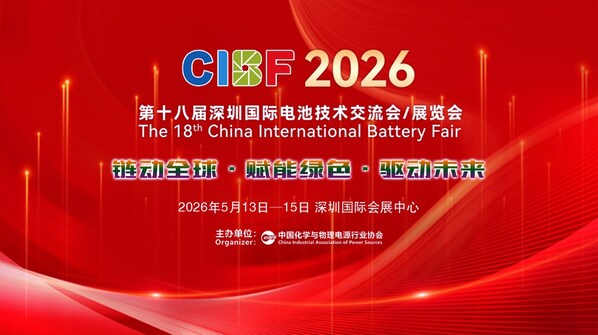
Core Viewpoint - The 18th Shenzhen International Battery Technology Exchange Conference/Exhibition (CIBF2026) will be held from May 13 to 15, 2026, focusing on global collaboration and high-quality development in the battery industry [1][3]. Industry Overview - CIBF2026 is expected to attract over 3,000 exhibitors and cover an exhibition area of 280,000 square meters, featuring leading companies such as CATL, BYD, and others [3]. - The event aims to shift the industry focus from scale competition to value competition, promoting high-quality development [1][3]. Forum and Activities - High-level forums will be held during the event, including discussions on advanced battery technologies and next-generation battery technologies for electric aviation, attracting over 2,000 industry experts and representatives [5]. - The forums will facilitate sharing of successful experiences and guide resources towards high-value areas, addressing the issue of low-price competition [5]. Technological Innovations - CIBF2026 will showcase cutting-edge technologies such as solid-state batteries, sodium-ion batteries, and lithium-metal batteries, along with key materials and automated production equipment [7]. - The exhibition will present a comprehensive view of the entire industry chain, from material research to recycling, accelerating the transition of technologies from laboratory to large-scale industrialization [7]. Global Market and Compliance - The event aims to create a collaborative ecosystem across the entire industry chain, serving as a connector for international cooperation, with an expected attendance of over 350,000 professional visitors from more than 50 countries [9][10]. - Special international exhibition areas will address compliance challenges posed by new regulations in the EU and the US, facilitating the entry of Chinese brands into international markets [10]. Industry Growth and Challenges - In the first 11 months of 2025, China's power and other battery production and sales reached 1,468.8 GWh and 1,412.5 GWh, respectively, with year-on-year growth exceeding 50% [10]. - The battery export volume reached 260.3 GWh, a 44.2% increase, while the export of Chinese brand new energy vehicles grew by 139%, indicating strong global demand for Chinese new energy products [11]. Strategic Importance - CIBF2026 is viewed as a barometer and accelerator for the global new energy industry, exploring the vast market potential brought by national strategies for large-scale development of new energy storage [11]. - The event is expected to enhance industry concentration and resource utilization efficiency in the short term, while promoting a healthy and sustainable new industry pattern in the long term [11].



突发!美国白宫宣布对特定半导体等加征25%关税;大厂80亿资产遭侵吞?宝能董事长姚振华实名举报;梁文锋旗下幻方量化,去年收益率56.6%
雷峰网· 2026-01-15 00:35
Key Points - The U.S. White House announced a 25% tariff on certain imported semiconductors and related products starting January 15, 2026, following a previous statement by former President Trump regarding tariffs on chips and semiconductors [4][5] - Baoneng Group's chairman, Yao Zhenhua, accused local authorities of undervaluing assets of Qoros Auto, claiming a third-party evaluation valued the assets at approximately 8 billion yuan, while they were set to be auctioned at 1.5 billion yuan [7][8] - Ctrip Group is under investigation for alleged monopolistic practices by the State Administration for Market Regulation, with the company stating it will cooperate with the investigation [10] - RoboSense announced it expects to sell 303,000 units of its robotic lidar products in 2025, marking a 1141.8% year-on-year increase [13] - Liang Wenfeng's company, Huanfang Quantitative, achieved a 56.6% return in 2025, with assets exceeding 70 billion yuan [10][11] - Tesla will discontinue the one-time purchase option for its Full Self-Driving (FSD) software, transitioning to a subscription-only model starting February 14, 2026 [39][40] - The Chinese smartphone market saw Huawei leading in shipments with 46.7 million units, followed closely by Apple with 46.2 million units, while the overall market experienced a slight decline of 0.6% year-on-year [27][28] - Meta plans to double its production capacity for AI smart glasses to 20 million units by 2026, focusing on AI integration [46][47] - TSMC is reportedly planning to invest significantly in the U.S. by building at least five new semiconductor factories, despite facing high production costs compared to its Taiwan facilities [50]





2025汽车供应链十大年度热点 | 精进2025——汽车行业10个十大年度盘点
Jing Ji Guan Cha Wang· 2026-01-15 00:31
Core Insights - The automotive industry in 2025 has experienced significant growth driven by proactive policies that enhance consumption, stimulate internal growth, and improve the competitive environment [2] - The industry is undergoing a transformation characterized by electric and intelligent vehicle development, geopolitical challenges, and supply chain restructuring [4] Group 1: Supply Chain Developments - The takeover of Nexperia by the Dutch government has disrupted the global automotive chip supply chain, leading to production halts and capacity adjustments among major automakers [5][6] - The introduction of a 60-day payment term for suppliers aims to alleviate financial pressures on small and medium-sized enterprises, fostering a healthier supply chain ecosystem [7][8] - Chinese automotive supply chain companies are increasingly focusing on overseas markets, with significant investments in Southeast Asia, North America, and Europe to enhance local production capabilities [11][12] Group 2: Financing and Market Trends - A surge in Chinese automotive technology companies listing in Hong Kong reflects a growing trend towards capitalizing on the smart vehicle sector, with several firms successfully raising funds for technological advancements [9][10] - The automotive supply chain is witnessing a wave of mergers and acquisitions, with companies seeking to enhance their market positions and technological capabilities [13][14] Group 3: Technological Innovations - The automotive industry is moving towards an "oil-electric intelligence" model, with advancements in technology enabling the integration of intelligent features into traditional fuel vehicles [15][17] - The battery industry is experiencing rapid advancements, particularly in solid-state battery technology, which is crucial for the future of electric vehicles [20][21] - The proliferation of L2+ level advanced driver-assistance systems (ADAS) is reshaping the automotive supply chain, emphasizing the importance of safety and compliance [22][23] Group 4: Industry Challenges and Opportunities - A wave of bankruptcies among European and American automotive suppliers highlights the challenges faced during the transition to electric vehicles, revealing vulnerabilities in traditional supply chains [18][19] - The 2025 China Automotive Supply Chain Conference has set the stage for future developments, focusing on internationalization and innovation within the industry [24][26]

【深圳特区报】“广货行天下”春季行动今日在佛山启幕 广货已备好 等您来采购
Sou Hu Cai Jing· 2026-01-15 00:11
Core Viewpoint - The article highlights the significant growth and transformation of Guangdong's manufacturing industry, particularly in the context of the upcoming Spring Festival, showcasing the region's products and innovations to global consumers [3][12]. Group 1: Overview of Guangdong's Manufacturing - Guangdong's industrial economy has evolved from small-scale operations to a leading position, with classic products like home appliances and textiles now complemented by high-tech goods such as drones and 5G smartphones [8][10]. - The "Guangdong Goods Going Global" initiative aims to promote local products through various online and offline activities, enhancing visibility and sales on major e-commerce platforms [8][9]. Group 2: Technological Advancements - Guangdong produces 70% of the world's consumer drones, 40% of smartphones, and significant portions of industrial robots and integrated circuits, indicating its strong manufacturing capabilities [9][10]. - Traditional industries in Guangdong are undergoing transformation through technological innovation, with companies like Gree and TCL achieving remarkable efficiency improvements [10][11]. Group 3: Focus on Foshan - Foshan, as the first stop for the "Guangdong Goods Going Global" campaign, exemplifies the region's manufacturing strength, contributing nearly 30% of Guangdong's revenue in the home appliance sector [12][13]. - The city is actively promoting the transformation of traditional industries and has seen an average production efficiency increase of 16% through digitalization [12].