
蜜雪冰城

Search documents
外资品牌扎堆找合伙人?转型背后算盘曝光!背后策略引人关注
Sou Hu Cai Jing· 2025-12-16 10:22
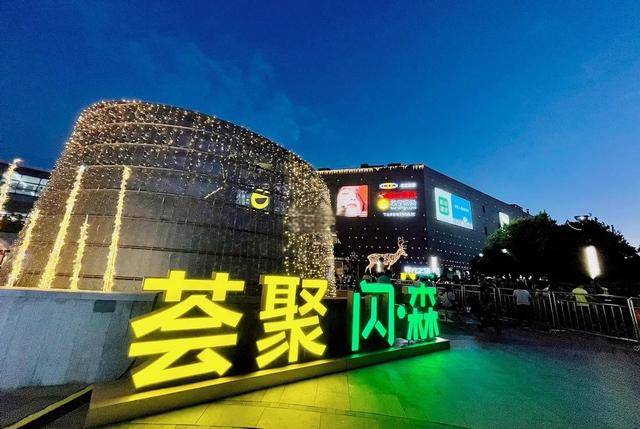
Core Insights - Foreign brands are increasingly partnering with local capital in China, as seen with Ingka Group's collaboration with Gaohe Capital to manage three shopping centers in Wuxi, Beijing, and Wuhan [1][3] - This trend reflects a strategic move by foreign brands to adapt to the evolving Chinese market and leverage local expertise [12][15] Group 1: Ingka Group and Gaohe Capital Partnership - Ingka Group's shopping centers in China have reached a stable profitability phase, with Beijing's occupancy rate consistently above 99% [3] - The partnership allows Ingka to quickly recoup funds to support new projects while retaining brand ownership and exclusive operational rights [5][7] - This collaboration is seen as a "light asset transformation," benefiting both parties through shared operational gains [7][15] Group 2: IKEA's Challenges and Adaptation - IKEA is undergoing a transformation, facing declining revenues and profits, with a 5.5% drop in global revenue and a 46.5% fall in net profit for 2024 [5][10] - The partnership with local capital is expected to alleviate financial pressures and support IKEA's adaptation to the Chinese market [10][15] - Despite the changes, IKEA's core tenant status in the shopping centers remains unaffected, indicating a strong collaboration [8][10] Group 3: Broader Trends Among Foreign Brands - Starbucks and Burger King's majority stake sales to local investors highlight the challenges foreign brands face in adapting to the Chinese market [12][14] - Local capital can enhance operational efficiency and decision-making speed, enabling faster expansion and adaptation to market demands [14][15] - The collaboration between foreign brands and local capital signifies a shift towards a more integrated approach in the Chinese market, enhancing the overall market vitality [15]

中企“出海”面临系统重构,如何规避合规风险
第一财经· 2025-12-16 05:14
Core Viewpoint - Chinese enterprises are undergoing a transformation in their internationalization process, evolving from low-value manufacturing to product export and now to brand globalization, which presents new challenges in compliance and market adaptation [3]. Group 1: System Reconstruction and Core Logic Changes - The shift in internationalization requires a comprehensive "system reconstruction" across three dimensions: moving from "single store output" to "platform-driven," from "experience-based decision-making" to "data-driven decision-making," and from "individual operations" to "ecosystem collaboration" [5]. - Companies must ensure smooth flows of capital, information, and logistics in foreign markets, which demands enhanced platform coordination and compliance capabilities [5]. - The current logic of "going global" emphasizes high value through brand and innovation, integrating cultural elements and local adaptations rather than relying solely on low-cost manufacturing [6][7]. Group 2: Compliance Risk Management - The challenges faced by Chinese companies in international markets vary significantly by region, with compliance and operational hurdles being prominent [9]. - For instance, regulatory requirements in the U.S. have extended the approval and renovation periods for new stores, while markets like Malaysia and Thailand allow for quicker expansion but present their own local operational challenges [9][10]. - Successful international expansion hinges on adapting management practices to local conditions and leveraging digital tools to optimize supply chains [10]. Group 3: Digitalization and Market Adaptation - The need for a unified digital management system is critical for managing consumer behavior, cash flow, and supply chain operations across different markets [11]. - The penetration of online ordering and electronic payments in Southeast Asia remains low, complicating the integration of local payment systems for cross-border operations [11]. - New Chinese retail and restaurant brands are leveraging their inherent digital capabilities and robust supply chain systems to establish themselves as potential global leaders [12].

中企“出海”面临系统重构,调度与合规能力受考验
Di Yi Cai Jing· 2025-12-16 01:27
Group 1 - The core viewpoint of the articles emphasizes the transformation of Chinese companies' internationalization from low-value manufacturing to brand globalization, highlighting the need for compliance and adaptation to regional market differences [1][3][4] - Companies are shifting from a "single store output" model to a "platform-driven" approach, requiring enhanced data-driven decision-making and ecosystem collaboration to navigate complex overseas environments [2][3] - The essence of "going global" for Chinese enterprises is evolving from a focus on low-cost products to high-value brand and cultural integration, with an increasing reliance on local talent for operational efficiency [3][4] Group 2 - The report indicates that Chinese manufacturing is transitioning from merely exporting products to exporting brand culture, with a growing emphasis on local adaptation in various sectors, including food and beverage [4][5] - Companies face diverse challenges in different regions, such as regulatory compliance and cultural differences, which necessitate tailored management strategies and digital solutions to optimize supply chains [5][6] - In Southeast Asia, the low penetration of online ordering and electronic payments presents significant challenges for cross-border operations, highlighting the need for a unified digital management system to facilitate expansion [7][8]
香薰、盲盒与古法金:观夏、泡泡玛特、老铺黄金的"千亿情绪生意",是怎样炼成的?
新消费智库· 2025-12-15 15:49
Core Insights - The article discusses a significant shift in consumer behavior in China, moving from "tool-based consumption" to "toy-based consumption," where products are valued for their emotional and aesthetic significance rather than just functionality [2][4]. Group 1: Changes in Consumer Behavior - Consumers are increasingly willing to pay for products that offer emotional value, stories, and unique experiences rather than just functionality [4]. - The competition among brands has shifted from price and functionality to the lifestyle and values represented by the products [4][5]. Group 2: Psychological Drivers - Two major psychological drivers are identified: the pursuit of "instant gratification" and the feeling of "atomized existence" in urban life, leading to a desire for emotional connection through consumption [5][6]. - The fast-paced nature of modern life has reduced consumers' patience, making them favor products that provide immediate emotional satisfaction [6][8]. Group 3: Emotional Value Layers - The article outlines three layers of emotional value in consumption: 1. **"Little Happiness"**: Consumers pay for small, certain pleasures that provide immediate emotional relief [10][11]. 2. **Identity Construction**: Consumption becomes a means for individuals to define themselves and find belonging in a fragmented society [14][16]. 3. **Co-creation and Participation**: Consumers seek to engage in the creation of products and brand narratives, valuing their input and influence [25][30]. Group 4: Case Studies - **Case Study 1: Guansha**: This brand creates a "New Orientalism" aesthetic, allowing consumers to express cultural identity and taste through its products [17][18]. - **Case Study 2: Luckin Coffee**: The brand leverages limited edition collaborations to create social currency, allowing consumers to feel part of a trendy community [21][22]. Group 5: Strategies for Brands - Brands are encouraged to create "instant joy" through appealing designs, storytelling, and user empowerment [32]. - Engaging consumers as active participants in the brand narrative is essential for building loyalty and emotional connection [39][30].

7.9元早餐套餐被嫌贵?蜜雪冰城回应:目前没有收到价格调整通知
Xin Lang Cai Jing· 2025-12-15 13:48
Core Viewpoint - The company is facing consumer backlash regarding the pricing of its new breakfast combo, which is perceived as expensive compared to competitors, despite its recent expansion into breakfast offerings and a significant acquisition in the fresh beer sector [1][2]. Group 1: Breakfast Offering - The company has launched a breakfast combo priced at 7.9 yuan, which includes "breakfast milk + bread," in four pilot cities: Dalian, Xi'an, Nanning, and Hangzhou [1]. - The breakfast milk options include Five Red Milk and Corn Milk, with a standalone price of 5 yuan, while the bread is sourced from brands like Carlton and Le Jin Ji [1]. - Staff at the stores reported no current price adjustment notifications and suggested that the price might not be considered too high by consumers [1]. Group 2: Acquisition and Business Expansion - In October, the company announced an investment of 297 million yuan to acquire a 53% stake in Fulu Family, marking its entry into the fresh beer market [2]. - Fulu Family, established in 2021, operates approximately 1,200 stores offering fresh beer products, including classic and innovative fruit beers [1][2]. - The acquisition aims to diversify the company's product offerings beyond fruit drinks, tea, ice cream, and coffee to include fresh beer [2]. Group 3: Financial Performance - For the first half of the year, the company reported revenue of 14.875 billion yuan, reflecting a year-on-year growth of 39.3% [2]. - The net profit attributable to shareholders was 2.693 billion yuan, with a year-on-year increase of 42.9% [2]. - As of June 30, 2025, the total number of global stores reached 53,014, an increase of 9,796 stores compared to the same period last year [2].
果味化、奶茶化、功能化,啤酒行业增长虽稳但竞争已入深水区
Di Yi Cai Jing· 2025-12-15 12:34
Core Insights - The beer industry is expected to maintain growth in 2025, driven by structural upgrades and flavor innovations, contrasting with the declining performance of the liquor and wine sectors [1][2] - High-end competition in the beer market is entering a new phase, focusing on quality and experience upgrades rather than just moving from low-end to high-end products [4] Industry Performance - From January to September, the beer sector is one of the few categories showing growth, while the domestic liquor and wine industries are experiencing declines in both production and sales [2] - The beer industry's revenue is projected to continue single-digit growth in 2025, with profits expected to grow in double digits [2] - Major brands like China Resources Beer, Tsingtao Brewery, and Yanjing Beer have reported revenue and net profit growth, primarily due to high-end product sales [3] Market Trends - The proportion of mid-to-high-end beer products has increased to over 40%, indicating a shift in consumer preferences towards premium offerings [2] - The entry of non-beer companies into the beer market is increasing, with various food and beverage firms announcing their foray into beer production, driven by the beer sector's growth amidst declines in other alcoholic beverages [3] Consumer Preferences - The younger generation (Z generation) is showing a higher participation rate in drinking, with 73% in 2025 compared to 66% in 2023, indicating a shift in drinking habits and preferences [6] - Young consumers prioritize taste, health, and aroma in their drinking choices, leading to a rise in low-alcohol, non-alcoholic, and functional beers [6] Innovation and New Products - The beer industry is witnessing rapid innovation in flavors, with fruit-flavored and tea-infused beers gaining popularity, reflecting a trend towards beverage-like characteristics [5] - The rise of instant retail channels is reshaping the beer market, allowing for quicker product development and consumer insights [7]

商场餐饮“排队王”,扎堆去新疆捞金
3 6 Ke· 2025-12-15 12:32
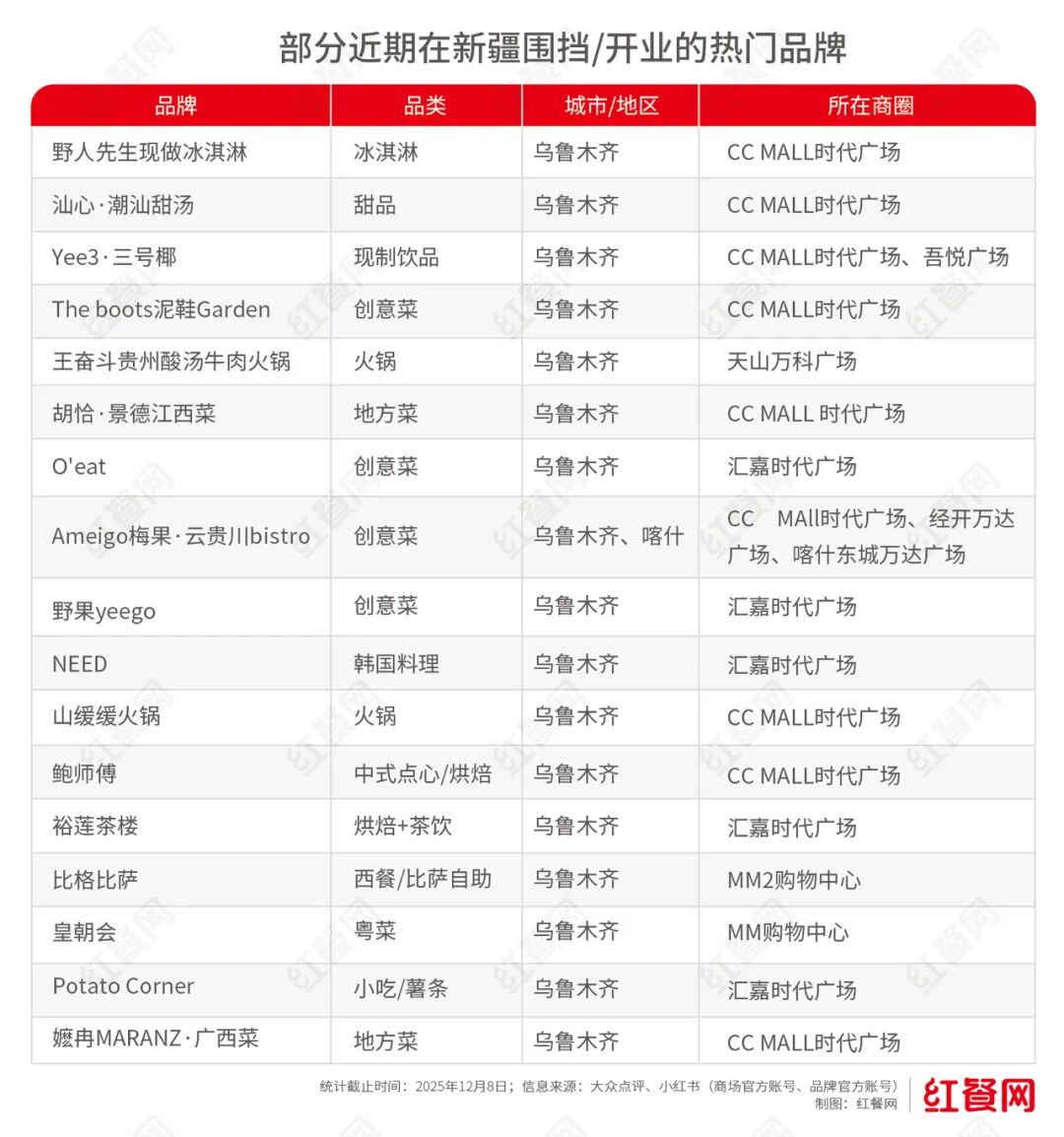
最近,新疆迎来了一轮餐饮品牌首店开业潮。 "昨天去买瑞幸,我的订单居然要排两个多小时。"阿聪告诉红餐网,最近哈密市开了一家瑞幸咖啡,生意火得不得了。他还表示,现在哈密的年轻人已经 实现了"奶茶自由","蜜雪冰城、霸王茶姬、喜茶、爷爷不泡茶这些品牌都能喝到。" 越来越多新疆的消费者发现,那些在北上广深大排长队的餐饮品牌,已经悄悄在新疆开店,尤其是省会城市乌鲁木齐,餐饮大牌首店正在扎堆上围挡。 据红餐网不完全统计,山缓缓火锅、The boots泥鞋Garden、Ameigo梅果·云贵川bistro、野果yeego等新晋"排队王"的新疆首店均已开业,鲍师傅、野人先生 现做冰淇淋、NEED创意韩国料理等热门品牌也上了围挡。 | 品牌 | 品类 | 城市/地区 | 所在商圈 | | --- | --- | --- | --- | | 野人先生现做冰淇淋 | 冰淇淋 | 乌鲁木齐 | CC MALL时代广场 | | 汕心·潮汕甜汤 | 甜品 | 乌鲁木齐 | CC MALL时代广场 | | Yee3 · 三号椰 | 现制饮品 | 乌鲁木齐 | CC MALL时代广场、吾悦广场 | | The boots泥鞋Garden ...
87位亿万富翁最新投向:北美降温,亚太与新兴市场回归
3 6 Ke· 2025-12-15 12:10
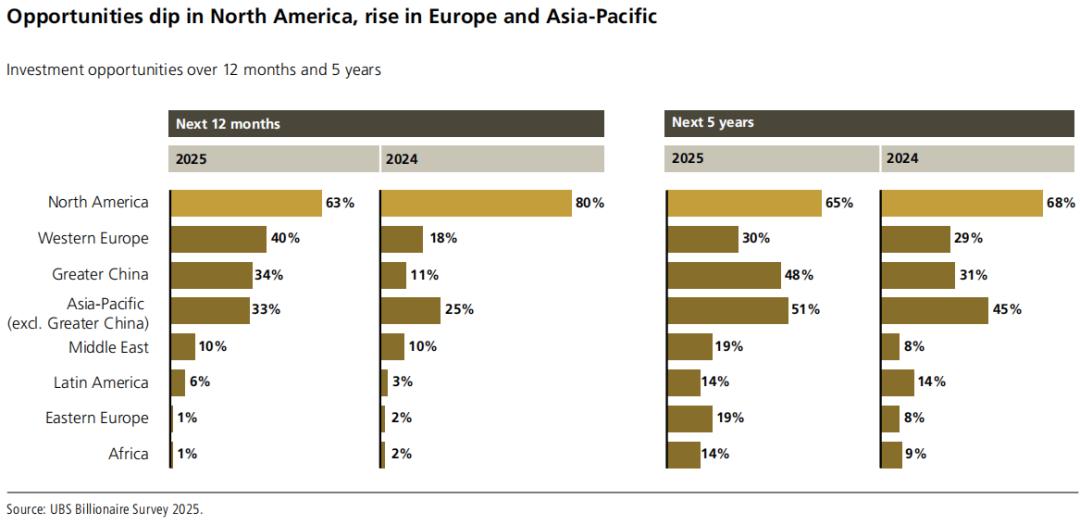
Group 1 - The report indicates a new wave of wealth creators and inheritors is emerging, reshaping family connections, collaboration models, and cross-border opportunities [1] - By 2025, the number of self-made billionaires is expected to reach the second-highest level in the report's history, driven by entrepreneurs and heirs amid a global wealth transfer [1] Group 2 - North America remains the preferred investment destination, although its attractiveness has decreased from 80% to 63% among billionaires for the highest investment returns in the next 12 months [2] - In contrast, Western Europe has seen an increase in attractiveness, with 40% of billionaires viewing it as a top investment opportunity, up from 18% in 2024 [2] Group 3 - Over 42% of billionaires plan to increase their allocation to emerging market stocks in the next 12 months, indicating a recovery in this sector [5] - In developed markets, 43% of billionaires intend to increase their stock allocations, while 7% plan to reduce exposure [6] Group 4 - In the private equity market, 49% of billionaires plan to increase direct private equity exposure, while 20% plan to decrease it [7] - For hedge funds, 43% of billionaires intend to increase their allocation, reflecting a growing interest in this asset class [8] Group 5 - Infrastructure and precious metals are areas of focus for billionaires, with 35% increasing investments in infrastructure and 32% in gold/precious metals [9] Group 6 - The number of billionaires is projected to increase by 8.8% to 2,919 by 2025, with total wealth reaching a record high of $15.8 trillion, a 13% increase [13] - The Asia-Pacific region is expected to see significant growth, with the number of billionaires rising from 981 to 1,036 [13] Group 7 - In 2025, 196 self-made billionaires will emerge, with a total wealth of $386.5 billion, driven by innovation across various sectors [22] - The report highlights that 91 heirs will inherit a record $2.978 trillion, marking a 36% increase from the previous year [17][26] Group 8 - The report predicts that by 2040, approximately $6.9 trillion in wealth will be transferred globally, with at least $5.9 trillion expected to be passed to heirs [30] - The majority of wealth transfer is anticipated to occur in the U.S., with significant amounts also expected in India and China [30][31]
上市即巅峰的蜜雪冰城还有机会吗?
Sou Hu Cai Jing· 2025-12-15 05:45
它的同行有多少?奈雪的门店只有1906家,喜茶4477家,茶百道8385家,沪上阿姨5435家, 古铭6705 家,在雪王面前,一个能打的都没有! 而蜜雪冰城招股说明书显示,公司超99%门店由加盟商开设及经营。正是这些加盟商为蜜雪冰城在2024 年前9个月,创造了187亿元的营收,以及35个亿的净利润! 所以蜜雪冰城赚的是加盟费吗? 为什么雪王一上市就吊打另外三家(奈雪、茶百道、古茗),市值是他们总和的2.5倍。 很简单,它背后有五名顶级基石投资者,M&G是欧洲资管巨头;红杉中国投出过阿里、美团、拼多 多;博裕资本偏好对高增长行业的持续关注;高瓴堪称长期主义头号玩家;美团龙珠则精通中国下沉市 场逻辑。 这五名基石投资者合计认购了2亿美元股份,且设有6个月禁售期,相当于给蜜雪冰城的股价注入了"定 海神针"。 除此之外,它还赶上了好风口,今年港股这波科技牛大家都看到了,截至到2月末,2025年以来南下资 金高达2391亿港元,蜜雪冰城就正好出生在天量资金的涌入之下。 很多人都认为之所以它生意好是因为性价比高,在我看来,性价比当然是蜜雪冰城的护城之一,但做性 价比的奶茶品牌有很多,规模做到这么大的却只有雪王这一家, ...
耐心资本投资河南不妨更多些
Sou Hu Cai Jing· 2025-12-14 23:05
当前,河南正按照省委十一届十次全会部署,围绕高质量发展与高效能治理,系统谋划资金入豫路径, 大力引育长期资本、耐心资本。刚刚召开的中央经济工作会议也强调,要"引导金融机构加力支持扩大 内需、科技创新、中小微企业等重点领域",一系列政策举措正在指方向、增信心。 上一周,岁末寒冬中,2025年"保险资管河南行"产融对接会在郑州航空港区火热举行。会上传来的消息 令人振奋:截至今年10月末,河南累计引入保险资金突破万亿元大关,连续四年增量超千亿元,险资运 用余额超7000亿元,超额完成"十四五"目标。数字背后,不仅是"险资入豫"的阶梯式跨越,更是耐心资 本与河南高质量发展同频共振的生动见证。 "十五五"时期是河南扬长补短、全面崛起的关键阶段。我们乐见,更多金融机构正深刻感知中原大地的 潜力与诚意,更多耐心资本选择河南、深耕河南,不仅能为现代化河南建设引入源源活水,也能在支持 实体经济、助推产业升级中实现自身价值的持续增长。期待这样的耐心资本不妨更多些,当它们的长线 优势与河南发展的长远规划紧密结合,当资本的"耐心"与地方的"恒心"彼此呼应,就能在这场双向奔赴 中实现共赢。 保险资金素有"耐心资本"之称,其规模大、期限 ...