Shein

Search documents
Africa Social Commerce Market Databook 2025 | Expansion of E-commerce Platforms into Social Commerce: Focus on Shein, Jumia and Takealot
GlobeNewswire News Room· 2025-05-28 08:59
Market Overview - Africa's social commerce market is projected to grow at an annual rate of 26.7%, reaching USD 4.45 billion by 2025, following a robust CAGR of 38.4% from 2021 to 2024 [2][3] - The market is expected to expand from USD 3.51 billion in 2024 to approximately USD 9.43 billion by 2030, indicating sustained growth [2] Key Drivers - The rapid evolution of Africa's social commerce landscape is driven by mobile-first internet adoption, fintech integration, and the increasing role of social media platforms in online shopping [4] - A young, tech-savvy population and rising smartphone penetration create an ideal environment for businesses to engage with consumers through social channels [4] Platform Engagement - Platforms such as Facebook Marketplace, Instagram Shopping, and WhatsApp Business are essential for SMEs to access the digital economy [5] - Over 40% of internet users in key African markets have made purchases via social commerce platforms, highlighting the growing engagement [9] Fintech Integration - Mobile money and fintech innovations are breaking down barriers to digital transactions, making social commerce more accessible [6] - The introduction of Buy Now, Pay Later (BNPL) solutions and digital wallets enhances consumer participation in e-commerce [6][10] Competitive Landscape - The social commerce sector is becoming increasingly competitive, with local and international players striving for market share [13] - Jumia's strategic exit from South Africa and Tunisia aims to focus on high-growth markets in West and East Africa [16] - Takealot is expanding into underserved markets by hiring personal shoppers to increase e-commerce penetration [16] Influencer Marketing - Influencer marketing, particularly through micro-influencers, is driving social commerce growth, with brands increasing spending on partnerships [12][16] - The rise of live shopping and short-form video content on platforms like TikTok is reshaping consumer interactions with brands [12][16] Regulatory Developments - South African authorities are exploring regulatory "sandboxes" to foster innovation in social commerce, particularly in digital lending and AI-driven customer support [16]



四足机器人领域公司寻求并购;转让头部AI芯片公司LP份额|资情留言板第162期
3 6 Ke· 2025-05-28 05:31
Group 1 - The article discusses various asset transactions in the market, highlighting the challenges faced by buyers and sellers in connecting with potential trading partners and market information [1] - A total of 162 issues have been published in this column since its inception, indicating a sustained effort to facilitate asset trading [12] Group 2 - The article lists several assets available for transfer, including: - Transfer of old shares of Suiyuan Technology with an expected valuation of 20.2 billion RMB [1] - A company in the quadruped robot field seeking acquisition with an expected valuation of 30 million RMB, showcasing diverse products and advanced technology [1] - Transfer of shares in Jinan Satellite Industry Development Group with a total investment of 450 million RMB for a satellite factory [4] - Transfer of shares in ByteDance with an expected valuation of 300 billion USD [4] - Transfer of shares in Shein with an expected valuation of 60 billion USD [4] Group 3 - The article mentions the acquisition requirements for various sectors, including: - Seeking acquisition targets in the medical device sector with a focus on profitable companies in Jiangsu province [5] - Looking for acquisition targets in the small home appliance sector with a valuation under 2 billion RMB [6] - Seeking acquisition targets in the food and beverage sector, particularly in the snack and beverage industry [20] Group 4 - The article emphasizes the importance of a strong team behind the companies involved, highlighting the academic and practical backgrounds of founders and team members in the robotics field [2] - The article notes that the companies have achieved significant academic success, including numerous patents and publications in top journals [2]

DeepSeek透视:杭州市跨境电商发展全景分析报告(2025)
Sou Hu Cai Jing· 2025-05-27 12:55
Regional Development and Industry Structure - Hangzhou's cross-border e-commerce industry has developed a distinct regional differentiation, with Jianggan and Binjiang districts as core areas, accounting for over 200 billion yuan in import and export volume, representing 35% of the city's total [1] - Yuhang District focuses on AI and big data-driven cross-border e-commerce services, with digital technology service companies making up 40% of the cross-border e-commerce sector, significantly higher than other areas [2] - Xiaoshan District's cross-border e-commerce is characterized by traditional manufacturing, with textile and apparel products making up 60% of transactions, highlighting a need for product innovation and brand building [4] - Emerging areas like Lin'an and Fuyang show strong growth in specialty agricultural products, with exports increasing by 45% in 2024, but face challenges due to higher logistics costs [4] Business Model Innovation and Technological Progress - The B2B platform model dominates, accounting for 65% of the market, with over 12,000 companies benefiting from integrated online exhibitions and supply chain financial services [5] - In the B2C sector, independent sites and DTC models are gaining traction, with a growth of 80% in self-built independent sites in 2024, enhancing direct consumer engagement [7] - Technological innovations like digital customs clearance and overseas warehouse construction have significantly improved operational efficiency, with customs clearance times reduced from 48 hours to 2 hours [9] Development Bottlenecks and Transformation Paths - High logistics costs, accounting for 25%-30% of expenses, pose a significant challenge for SMEs in Hangzhou, necessitating improvements in logistics efficiency [10] - A talent shortage of over 100,000 professionals in data analysis and compliance is impacting innovation and competitiveness in the industry [11] - Homogeneous competition has led to profit margins dropping below 5% in traditional sectors, emphasizing the need for brand awareness and product innovation [11] - Policy execution inconsistencies across districts create operational disparities, necessitating unified policy coordination to foster a fair competitive environment [13] Policy Environment and Market Opportunities - Hangzhou benefits from national policies supporting cross-border e-commerce, including tax incentives and streamlined customs procedures, enhancing the business environment [15] - Emerging markets in Southeast Asia, Africa, and Latin America present new opportunities for Hangzhou's cross-border e-commerce enterprises, driven by rising consumer demand [19] - The trend of consumption upgrading offers a chance for cross-border e-commerce platforms to meet the demand for high-quality and diverse products [19] - Technological advancements in big data, AI, and blockchain are enhancing operational efficiency and service quality in the cross-border e-commerce sector [20] Synergistic Effects of Policy and Market Opportunities - A favorable policy environment can stabilize market expectations and reduce operational costs, while market opportunities can drive enterprise growth and innovation [21] - Government initiatives like the establishment of cross-border e-commerce pilot zones facilitate innovation and market expansion for enterprises [21] - The collaboration between policy support and market opportunities is crucial for the rapid development of Hangzhou's cross-border e-commerce industry [21]


每周政经资讯丨港科大欢迎哈佛国际生就读;国有大行下调三年五年期存款利率25个基点;欧盟拟对快递小包裹征收2欧元费用
Sou Hu Cai Jing· 2025-05-26 14:01
Group 1 - Hong Kong University of Science and Technology (HKUST) welcomes international students from Harvard University, offering unconditional admission and support for transfer students amid changes in the global academic environment [4][5] - The International Mediation Institute will establish its headquarters in Hong Kong, enhancing the city's status as a global mediation hub and attracting more international organizations [5][6] - The New Capital Investor Immigration Scheme has received 1,257 applications, expected to bring over HKD 37 billion in investments to Hong Kong, reinforcing its position as a top international investment hub [6][8] Group 2 - The Hong Kong Legislative Council passed the Stablecoin Bill, establishing a licensing system for fiat-backed stablecoin issuers to enhance the regulatory framework for virtual asset activities [7][8] - Hong Kong Investment Company has invested in over 100 projects, with several companies planning IPOs, indicating a focus on AI and innovative technologies [8][9] - The Hong Kong government plans to provide tax incentives for eligible commodity trading activities, aiming to establish a commodity trading ecosystem [9][10] Group 3 - Major state-owned banks in China have lowered three- and five-year deposit rates by 25 basis points, with the Loan Prime Rate (LPR) also reduced by 10 basis points, reflecting a shift in monetary policy [10][11] - The People's Bank of China announced a MLF operation of CNY 500 billion to maintain liquidity in the banking system, indicating ongoing support for the economy [12][13] - The State Administration of Foreign Exchange is working on a draft to improve cross-border fund management for domestic companies listing abroad, aiming to enhance financing convenience [13][14] Group 4 - The European Union proposed a €2 fee on small parcels, primarily targeting e-commerce shipments from China, which accounted for over 90% of such imports [15][16] - The U.S. Congress passed a significant tax reform bill under the Trump administration, which includes various tax cuts and spending increases, potentially impacting the economy and federal debt [21][22] - Bitcoin reached a historic high of $110,000, driven by macroeconomic policies and structural factors, positioning it as the fifth-largest asset globally by market capitalization [26]

90天关税窗口期观察:跨境电商开启外贸618,买家囤货忙
Nan Fang Du Shi Bao· 2025-05-26 11:59
Core Insights - The recent tariff adjustment between China and the U.S. has led to a significant surge in container shipping bookings, with a nearly 300% increase in bookings from China to the U.S. [7] - The 90-day tariff window has sparked a "stockpiling wave" among U.S. buyers, with a 40% year-on-year increase in inquiries from American buyers on cross-border e-commerce platforms [1][3] - Various industries, particularly machinery, textiles, and consumer goods, are poised to benefit from the reduced tariffs, while high-tech products like chips remain constrained due to retained tariffs [1][13] Industry and Company Summaries - The 90-day tariff window is providing a valuable adjustment period for industries with significant tariff reductions, such as machinery, textiles, and consumer goods, enhancing their market competitiveness [1][13] - On May 14, the day the tariff adjustments took effect, Alibaba's international platform saw a double-digit increase in order volume across various categories, with automotive parts up 62% and machinery up 46% [2] - The demand for shipping has surged, leading to a shortage of shipping containers, with many shipping companies announcing price increases due to the high demand [7][8] - The new T86 customs policy has reduced the tax rate on small packages under $800, easing price pressures for Chinese online retail giants like Shein and Temu [6] - Companies are actively preparing for the upcoming holiday season, with many manufacturers ramping up production to meet the anticipated demand during the 90-day window [12][9] - The textile and consumer goods sectors are expected to see a rebound in orders, with companies like Midea reporting significant cost savings due to reduced tariffs [13][14] - Long-term risks remain as companies are advised to diversify their market strategies and reduce reliance on single markets due to potential future tariff changes [14][15]
同款商品Temu美国售价是国内7倍,中国制造优势明显
Di Yi Cai Jing· 2025-05-26 11:15
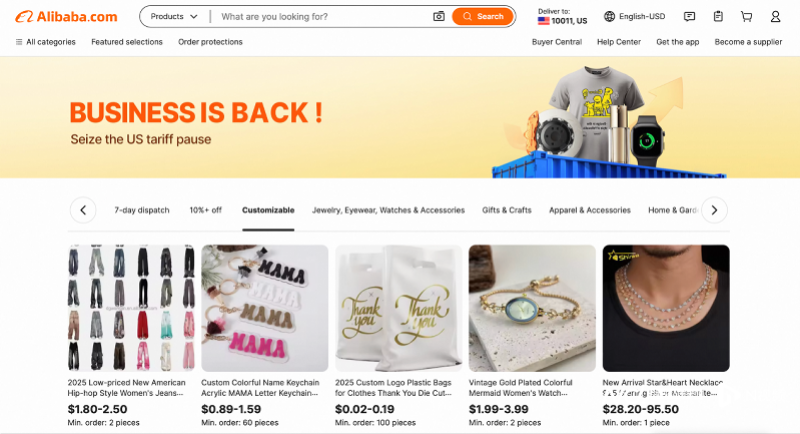
Group 1 - The high cost of manufacturing in the U.S. makes it difficult for Chinese manufacturing to be easily replaced, with significant price differences observed between U.S. and Chinese products [1][4] - Products sold on U.S. e-commerce platforms like Temu and Shein are often 2-3 times, or even 7 times, more expensive than their Chinese counterparts, indicating a substantial markup after logistics and operational costs [1][3] - Despite the high costs associated with shipping and tariffs, Chinese products still maintain a competitive pricing advantage in the U.S. market compared to local alternatives [3][4] Group 2 - Following the reduction of tariffs from 145% to 30% on May 14, there was a significant surge in orders on Alibaba International, with many U.S. buyers placing large orders without negotiating prices [4] - The push for manufacturing to return to the U.S. is challenged by high domestic costs, including environmental compliance and labor, which could lead to increased prices for consumers [4]


关税调整期,中国外贸企业如何突围
Huan Qiu Shi Bao· 2025-05-26 01:41
Group 1 - The core viewpoint of the articles highlights the positive impact of the recent U.S.-China tariff adjustments on Chinese foreign trade enterprises, leading to increased orders and a shift in export strategies [1][2][3] - The short-term effects of tariff reductions, particularly for small packages, are expected to stabilize cross-border e-commerce, benefiting small and medium-sized enterprises in China [1][2] - Chinese foreign trade enterprises are responding rationally to the surge in orders, focusing on export diversification and cautious strategies in the U.S. market [2][4] Group 2 - The long-term restructuring of China's foreign trade is accelerating, with companies recognizing the risks of relying on a single market and shifting towards regional diversification in Southeast Asia, Latin America, and the Middle East [2][3] - The Regional Comprehensive Economic Partnership (RCEP) is enhancing the feasibility of stable supply chains within the region, with significant export growth to ASEAN and EU markets [3] - Companies are optimizing their global supply chain structures, establishing assembly factories in Southeast Asia while retaining key manufacturing processes in China [3][4] Group 3 - Chinese foreign trade enterprises are adapting to price negotiations and risk-sharing mechanisms, with some companies increasing upfront payment requirements to mitigate potential risks [4][5] - The global restructuring of supply chains has led to misunderstandings in some countries regarding Chinese exports, particularly in electric vehicles and photovoltaic components [5] - Chinese companies are focusing on enhancing product value and local operational capabilities, as evidenced by the significant increase in BYD's electric vehicle registrations in Europe [5][6] Group 4 - The current tariff adjustment period provides a critical opportunity for Chinese foreign trade enterprises to accelerate structural transformation and strategic realignment [6] - Emphasis is placed on the importance of digital capability enhancement, regional market collaboration, and green transformation for future competitiveness [6] - The role of foreign trade is underscored as a barometer of economic performance and a key element in global economic governance [6]
专访吴晓波:大变局中的外贸四十年
吴晓波频道· 2025-05-24 19:06
Core Viewpoint - The article discusses the evolution of China's foreign trade over the past 40 years, highlighting the transition from a focus on low-cost manufacturing to a more comprehensive approach that includes technology, brand, and management exports. It emphasizes the challenges and opportunities faced by Chinese companies in the global market, particularly in light of recent geopolitical tensions and the need for compliance with international regulations [1][9]. Summary by Sections Historical Context of China's Foreign Trade - In 1978, China opened its doors to the world, driven by a strong desire for technology and capital, leading to the introduction of foreign investments and advanced production techniques [3][4]. - The 1980s saw the emergence of small-scale exports from brands like Tianjin's Flying Pigeon bicycles, but these efforts were largely experimental and lacked a clear international market strategy [3][4]. Key Turning Points - The year 1998 marked a significant shift as China faced overcapacity in industries like clothing and home appliances, prompting a need to seek new export markets [6]. - China's accession to the WTO in 2001 was a milestone, with trade volumes skyrocketing from $509.65 billion to over $4 trillion by 2013, establishing China as the world's largest goods trader [7]. Evolution of Export Strategies - The period from 1998 to 2008 was characterized by an export-driven economy, where Chinese manufacturers became global OEMs, producing goods for international brands without their own labels [6][7]. - The rise of cross-border e-commerce in 2013 marked a new phase, allowing companies like Anker to establish their own brands and directly engage with global consumers [7][8]. The "One Jiazi Theory" - Wu Xiaobo's "One Jiazi Theory" divides China's industrial evolution into three phases: 1. From 1978 to 1998, focusing on meeting domestic needs 2. From 1998 to 2008, emphasizing export-driven growth 3. Post-2018, where companies are expected to export all elements of their business, including supply chains and R&D [8][9]. Challenges of "All Elements Going Abroad" - The concept of "All Elements Going Abroad" signifies a shift from mere product exports to comprehensive international operations, including technology and management [9][10]. - Companies face significant compliance challenges in foreign markets, as seen in Brazil's complex tax system and the geopolitical tensions affecting the electric vehicle sector [10][11]. Domestic Market Transition - The idea of transitioning from foreign trade to domestic sales is critiqued as a "pseudo-proposition," as the skills required for each market differ significantly [12][13]. - Successful transitions are rare, with most companies struggling to adapt to the competitive domestic landscape, which demands a full-spectrum operational capability [14][15]. Future Outlook - The article predicts a period of "great elimination and great upgrading," where leading companies will thrive through innovation, while smaller firms may face extinction due to rising costs and market pressures [14][15]. - Emerging industries like electric vehicles and high-end manufacturing are expected to drive future growth, supported by favorable policies and technological advancements [15][18].
跨境电商卖家赶货忙,但行业已悄然生变
21世纪经济报道· 2025-05-23 08:45
Core Viewpoint - The article discusses the recent changes in the cross-border e-commerce landscape, particularly focusing on the impact of the T86 policy cancellation on different business models and the subsequent adjustments made by sellers in response to market dynamics [1][5][11]. Group 1: Impact of T86 Policy Cancellation - The cancellation of the T86 policy, which previously allowed for higher tax-free limits on low-value packages, has significantly affected platforms like Temu and Shein that relied on a full-service model [5][6]. - Sellers have shifted from a full-service model to a semi-service model, managing logistics and inventory themselves, which has led to a change in operational dynamics within the industry [3][5]. Group 2: Seller Adjustments and Market Dynamics - Sellers like Zhang Sheng have adapted by increasing inventory in overseas warehouses and returning to a more proactive management style, focusing on real-time monitoring and replenishment of popular products [3][5]. - The emergence of a "robust" market for cross-border e-commerce is noted, with sellers diversifying their strategies to reduce reliance on single platforms and exploring new markets, such as Latin America [6][11]. Group 3: Shipping and Logistics Trends - The logistics landscape has seen a significant increase in shipping demand, with inquiries rising by 300% as traditional foreign trade companies and cross-border e-commerce sellers rush to replenish stock [10]. - Despite the surge in shipping volume, sellers have not faced significant issues in securing shipping containers, indicating a resilient logistics network [10]. Group 4: Seller Experiences on Amazon - Amazon FBA sellers have reported a relatively stable shipping experience, with many opting for tax-inclusive shipping channels and preparing inventory well in advance of peak seasons [7][8]. - The overall impact of rising shipping costs has been manageable for sellers of lightweight products, allowing for flexible pricing strategies [7][8]. Group 5: Future Outlook - There is optimism regarding the recovery of shipping capacity, with expectations that normal operations will resume as the market stabilizes [10][11]. - Cross-border e-commerce companies are encouraged to optimize logistics models and enhance product value to adapt to the evolving market conditions [11].

特写|跨境电商赶货忙,但模式已悄然生变
2 1 Shi Ji Jing Ji Bao Dao· 2025-05-23 04:20
Core Insights - The cross-border e-commerce industry is undergoing significant changes, particularly following the cancellation of the T86 policy, which previously facilitated low-value package imports [7][9][12] Group 1: Industry Changes - The cancellation of the T86 policy has directly impacted platforms like Temu and Shein, which relied on a full-service model for low-cost shipping [7] - Temu has introduced the Y2 model as a transitional solution for sellers who have not yet established overseas warehouses but can ship small packages [7] - The market is seeing a diversification trend, with companies exploring independent sites and building private traffic to reduce reliance on single platforms [9] Group 2: Seller Experiences - Sellers have adapted to the new environment, with some transitioning from full-service to semi-service models to manage logistics more effectively [3][6] - Despite the challenges, some sellers report that their operations have returned to normal, focusing on real-time monitoring and inventory management [6][12] - Amazon FBA sellers have been less affected compared to self-fulfillment sellers, maintaining stable operations and preparing for upcoming sales seasons [10][12] Group 3: Logistics and Shipping - The logistics landscape is currently strained due to a surge in shipping demand, with inquiries and new customer transactions increasing significantly [12] - Shipping costs have risen, with reports of an 80% increase in peak shipping rates, but sellers are managing these costs effectively [11][12] - Overall, there is optimism regarding the recovery of shipping capacity, as the market is expected to stabilize with increased shipping routes and mature logistics systems [12]