南钢股份

Search documents
证券研究报告行业周报:修复低估-20251109
GOLDEN SUN SECURITIES· 2025-11-09 06:15
Investment Rating - The report maintains a "Buy" rating for the steel industry, indicating a positive outlook for selected companies [7]. Core Insights - The steel industry is currently experiencing a recovery from undervaluation, with significant potential for price and profit improvement as supply-side policies are implemented [2]. - The report highlights that the average daily pig iron production has decreased, while inventory reduction has slowed down, indicating a tightening supply [3][26]. - Demand for steel products has shown a decline in apparent consumption, particularly in rebar and hot-rolled coil, reflecting a temporary market adjustment [43]. - The report emphasizes the continued high growth rate of steel exports, with a net export increase of 7.6% year-on-year, suggesting robust international demand [4][14]. - The report identifies key companies that are expected to benefit from the current market conditions, including Hualing Steel, Nanjing Steel, Baosteel, and New Steel [2][10]. Summary by Sections Supply - Daily pig iron production has decreased by 21,000 tons to 2.342 million tons, with a reduction in production from long-process steelmaking [13]. - The capacity utilization rate for 247 domestic steel mills is at 87.8%, down 0.8 percentage points from the previous week [19]. Inventory - Total steel inventory has seen a reduced decline, with a week-on-week drop of 0.7%, indicating a tighter market [26]. - The social inventory of five major steel products stands at 10.75 million tons, down 0.2% week-on-week but up 29.8% year-on-year [28]. Demand - Apparent consumption of five major steel products has decreased by 5.4% week-on-week, with rebar consumption down by 5.9% [54]. - Weekly average transaction volume for construction steel has fallen to 96,000 tons, a decrease of 7.6% [44]. Raw Materials - Iron ore prices have declined, with the Platts 62% iron ore price index at $102.1 per ton, down 5.0% week-on-week [64]. - The report notes an increase in port iron ore inventory, suggesting a potential oversupply situation [53]. Prices and Profits - The comprehensive steel price index has decreased by 1.1% week-on-week, with current rebar prices in Beijing at 3,190 RMB per ton [76]. - The report indicates that the immediate gross profit margins for long-process rebar and hot-rolled coil remain relatively stable despite price fluctuations [76].


钢铁周报20251109:逐步进入淡季,品种表现分化-20251109
Minsheng Securities· 2025-11-09 02:37
Investment Rating - The report maintains a "Buy" rating for several steel companies, including Hualing Steel, Baosteel, Nanjing Steel, and others [3][4]. Core Views - The steel industry is gradually entering the off-season, with differentiated performance among various products. Steel production and apparent consumption are both declining, indicating seasonal characteristics. Inventory reduction rates are similar to previous years, but absolute inventory levels remain high. Steel mill profits are at low levels, and a seasonal downward trend is expected in both supply and demand [3][4]. - The report highlights that the production structure is changing, with some steel mills shifting from rebar production to plate production due to weak real estate demand. This has led to an increase in plate production and a decrease in rebar production, with supply changes outpacing demand changes in the short term [3][4]. Summary by Sections Price Trends - As of November 7, 2025, steel prices have decreased, with rebar priced at 3200 CNY/ton, down 10 CNY/ton from the previous week. Hot-rolled and cold-rolled prices also saw declines of 60 CNY/ton and 50 CNY/ton, respectively [1][10]. Production and Inventory - Total steel production for the week was 8.57 million tons, a decrease of 185,500 tons from the previous week. Social inventory decreased by 20,400 tons to 10.7383 million tons, while steel mill inventory fell by 80,900 tons [2][3]. Profitability - Steel mill profits have declined, with rebar, hot-rolled, and cold-rolled margins decreasing by 7 CNY/ton, 38 CNY/ton, and 10 CNY/ton, respectively. Electric arc furnace steel margins also fell by 14 CNY/ton [1][3]. Investment Recommendations - The report recommends several stocks, including Hualing Steel, Baosteel, Nanjing Steel, and others, highlighting their potential for recovery in profitability due to capacity regulation and precise management [3][4].


钢铁行业周报(20251103-20251107):淡季来临供需双弱,短期关注库存降库节奏-20251108
Huachuang Securities· 2025-11-08 14:04
Investment Rating - The report maintains a "Recommendation" rating for the steel industry, indicating a cautious outlook due to seasonal demand weakness and supply constraints [2][4]. Core Viewpoints - The steel industry continues to experience a dual weakness in supply and demand, with average daily pig iron production from sample steel mills decreasing by 21,400 tons. The industry is entering a traditional off-season, leading to a seasonal decline in demand, with weekly consumption of major materials dropping by 494,700 tons. Profit margins for sample enterprises have fallen below 40%, indicating ongoing profit contraction and potential for increased maintenance activities among steel mills. Consequently, the supply side may see further reductions, but weak demand during the off-season is unlikely to provide effective support for steel prices in the short term [3][10]. - The steel sector index closed at 2,736.97 points, reflecting a weekly increase of 4.39%, outperforming the broader market index which rose by 0.63% during the same period [4][6]. - The report emphasizes a long-term positive outlook on the "anti-involution" trend, which is expected to optimize the supply structure and align it better with demand changes, potentially leading to a revaluation of industry logic and recovery in sector valuations [10]. Summary by Sections Industry Overview - As of November 7, the steel industry comprises 53 listed companies with a total market capitalization of 1,086.616 billion yuan and a circulating market value of 971.138 billion yuan [6]. Production Data - The total production of the five major steel products reached 8,567,400 tons, with a week-on-week decrease of 185,500 tons. The average daily pig iron production from 247 steel enterprises was 2,342,200 tons, down by 21,400 tons week-on-week. The capacity utilization rate for blast furnaces was 87.81%, a decrease of 0.8 percentage points [9][10]. Consumption Data - Weekly consumption of the five major materials totaled 8,669,300 tons, reflecting a week-on-week decline of 494,700 tons. Specific product consumption changes included a decrease of 136,700 tons for rebar and 102,100 tons for wire rods [9][10]. Inventory Situation - Total steel inventory reached 15,035,700 tons, with a week-on-week decrease of 101,900 tons. Social inventory decreased by 21,000 tons to 10,750,000 tons, while steel mill inventory fell by 80,900 tons to 4,285,700 tons [9][10]. Profitability - As of November 7, the gross profit margins for high furnace rebar, hot-rolled sheets, and cold-rolled sheets were -39 yuan/ton, -80 yuan/ton, and -118 yuan/ton, respectively. The profitability rate among the sample steel enterprises was 39.83%, down by 5.19 percentage points week-on-week [9][10].
华创证券:钢铁迎来新一轮“反内卷” 行业格局有望重构
Zhi Tong Cai Jing· 2025-11-07 06:03
Core Viewpoint - The steel industry is facing a significant supply-demand imbalance, primarily due to a rapid decline in demand for construction steel since the second half of 2021, leading to an oversupply in the market [1][2][3]. Supply and Demand Analysis - Since the second half of 2021, domestic steel demand has sharply decreased following negative growth in real estate construction starts, while supply has not adjusted accordingly, resulting in an oversupply situation [2][3]. - The current oversupply cycle is characterized by a rapid decline in demand for construction steel, while demand for manufacturing steel remains resilient, causing a shift in some companies' product focus and exacerbating competition within the industry [2][3]. - The industry is trapped in a negative cycle of oversupply leading to price declines, which in turn compresses profits and limits the ability to reduce production significantly, further worsening supply-demand conditions [2][3]. Policy and Structural Changes - The macroeconomic environment shows a continuous decline in the Producer Price Index (PPI), with industrial profits significantly lower than during previous supply-side reforms, necessitating a resolution to the structural imbalance in supply and demand [3][4]. - Historical supply-side reforms during the "13th Five-Year Plan" and "14th Five-Year Plan" have led to positive changes in the industry, suggesting that similar policies could benefit the steel sector again [4][5]. - The upcoming "15th Five-Year Plan" aims to address the structural issues by promoting capacity control and supporting advanced enterprises while phasing out outdated production capacity [5][6]. Investment Opportunities - The shift towards high-end and green production since the 2016 supply-side reform has created differentiation among companies, with the current "anti-involution" policies expected to further optimize the industry structure and support leading enterprises [7]. - Companies such as Hualing Steel, Nanjing Steel, Baosteel, Shougang, Hebei Steel, and Xinxing Ductile Iron Pipes are highlighted as potential investment opportunities due to their favorable positioning in the evolving market landscape [7].
“耐心资本”青睐红利资产,国企红利ETF(159515)盘中上涨0.5%
Sou Hu Cai Jing· 2025-11-07 02:12
Core Viewpoint - The news highlights the increasing importance of dividend assets in the context of China's economic policies, particularly emphasizing the role of "patient capital" from insurance funds and the regulatory push for higher dividend payouts from listed companies [1][2]. Group 1: Market Performance - As of November 7, 2025, the CSI State-Owned Enterprises Dividend Index (000824) rose by 0.39%, with notable increases in constituent stocks such as Huayang Co. (600348) up by 2.58% and CITIC Bank (601998) up by 2.25% [1]. - The National Enterprise Dividend ETF (159515) also saw an increase of 0.50% [1]. Group 2: Policy and Regulatory Environment - The "14th Five-Year Plan" emphasizes the introduction of "patient capital," primarily from insurance funds, which favor dividend assets due to their stable cash flow characteristics [1]. - Policies like the "Nine National Policies" require listed companies to increase their dividend payout ratios, with state-owned enterprises' dividend scale exceeding 370 billion yuan [1][2]. - Regulatory focus on dividend payouts is expected to provide a solid institutional guarantee for the long-term investment value of dividend assets [1]. Group 3: Investment Strategy - Analysts suggest that the policy guidance injects significant vitality into dividend assets, with major brokerages recommending a dual strategy of technology and dividend stocks for 2025, positioning dividend stocks as defensive assets in a low-interest-rate environment [1].





钢铁反内卷:十年供给侧,行业新征程:\内卷\下的钢铁,总量与结构的失衡
Huachuang Securities· 2025-11-06 09:06
Investment Rating - The report maintains a "Recommendation" rating for the steel industry [4]. Core Viewpoints - The steel industry is currently facing an imbalance in both total supply and structural demand, leading to oversupply and price declines. The demand for construction steel has rapidly decreased since the second half of 2021, while supply has not adjusted accordingly, resulting in a negative cycle of oversupply and price drops [2][14]. - A "de-involution" in the steel industry is deemed necessary to address the structural imbalance and enhance competition. The report suggests that past supply-side reforms have positively impacted the industry, and similar measures could benefit the current situation [2][51]. Summary by Sections 1. Imbalance in Total and Structural Supply - Since the second half of 2021, the demand for construction steel has declined sharply due to negative growth in new housing starts, while supply has not decreased proportionately, leading to a clear oversupply situation [14][22]. - The structural issue arises as the demand for construction steel weakens, while the manufacturing sector shows resilience, causing a shift in supply from construction to manufacturing steel, exacerbating the competition in the manufacturing sector [2][25]. - The result has been a long-term decline in steel prices, with the CISA steel price index dropping by 47.82% from its peak in 2021 [33]. 2. Necessity of "De-involution" in the Steel Industry - The macroeconomic environment is under pressure, with the PPI in a downward trend for 36 consecutive months, leading to a significant drop in industrial profits [42][51]. - The report highlights that the previous supply-side reforms during the "13th Five-Year Plan" and "14th Five-Year Plan" brought about positive changes, suggesting that a new round of "de-involution" could similarly benefit the industry [51][52]. 3. Investment Recommendations - The report indicates that leading steel companies are likely to benefit in the long term from the "de-involution" policies, which are expected to optimize the supply structure and support advanced enterprises [8][28]. - The report recommends focusing on high-quality leading companies such as Hualing Steel, Nanjing Steel, Baosteel, Shougang, Hebei Steel, and Xinxing Ductile Iron Pipes, as they are expected to experience profit growth and improved operational conditions [8][28].
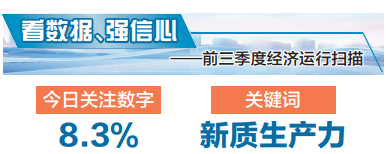
前三季度,全市高技术制造业增加值同比增长8.3%
Nan Jing Ri Bao· 2025-11-06 03:21
Group 1: Aerospace and Technology - The successful launch of the Shenzhou 21 manned spacecraft was supported by various sensor and monitoring systems developed by Nanjing Gaohua Technology Co., Ltd, ensuring the mission's success [1][2] - Gaohua Technology has a strong presence in aerospace, having participated in key projects such as manned spaceflight, lunar exploration, and the BeiDou project, showcasing its technological capabilities [2][3] - The aerospace industry in Nanjing is a key focus area, with policies aimed at creating a nationally influential aerospace research and manufacturing hub, leading to significant growth in high-tech manufacturing [3] Group 2: Medical Equipment - Nanjing Puhui Medical Equipment Co., Ltd has become the second-largest supplier of medical X-ray imaging systems in China, with a strong market presence in mobile C-arms [4] - The company recently received FDA approval for its large flat-panel C-arm product, marking a significant step in its global expansion strategy [4] Group 3: Internet and Modern Services - The rise of internet platforms in Nanjing is enhancing the modern service industry, with companies like Huitongda Network leveraging AI to improve retail operations for small businesses [5][6] - China Manufacturing Network, a core platform under Focus Technology, has seen significant growth, with a 35% increase in site traffic and a strong presence in emerging markets [6] Group 4: Innovation and Industry Development - Nanjing is fostering a modern industrial system through innovation, with companies like Tianchuang Intelligent Technology showcasing advanced robotics at international expos [8] - The city is also focusing on high-end manufacturing and digital transformation, with significant investments in R&D and technology innovation across various sectors [9]
向“新”图强,塑造产业竞争新优势
Nan Jing Ri Bao· 2025-11-06 02:19
Group 1 - The city's high-tech manufacturing industry added value increased by 8.3% year-on-year in the first three quarters, with aerospace and equipment manufacturing growing by 17.9% and medical equipment manufacturing by 12.6% [1][5] - The modern service industry is also experiencing rapid growth, with internet access and related services revenue increasing by 62.4%, internet production service platforms by 12.7%, and internet technology innovation platforms by 20.5% from January to August [6][7] - Nanjing's focus on building a trillion-level software industry and a 500 billion-level smart grid industry aims to enhance industrial innovation through technological advancements [2][10] Group 2 - High-tech manufacturing companies like Nanjing Gaohua Technology Co., Ltd. are contributing to significant aerospace projects, providing various sensor systems that ensure the success of missions like the Shenzhou 21 manned spacecraft launch [3][4] - Nanjing Puhui Medical Equipment Co., Ltd. has successfully passed FDA approval for its C-arm product, marking a significant step in its global strategy and expanding its market presence [5] - The city has established a robust aerospace industry cluster, focusing on key areas such as aircraft engines, onboard systems, and drone manufacturing, supported by various policy initiatives [4][10] Group 3 - The rise of internet platforms in Nanjing is facilitating the digital transformation of traditional industries, with companies like Huitongda Network leveraging AI to enhance retail operations for small businesses [6][7] - China Manufacturing Network, a key platform under Focus Technology, has seen a 35% increase in traffic, with significant growth in emerging markets, indicating a strong demand for Chinese suppliers [7] - Nanjing Tianchuang Intelligent Technology Co., Ltd. has gained attention for its innovative robots, including the world's first explosion-proof humanoid robot, showcasing the city's advancements in robotics [8][9]

钢铁板块盘初冲高,常宝股份2连板
Xin Lang Cai Jing· 2025-11-06 01:45
Group 1 - The steel sector experienced an initial surge, with Changbao Co., Ltd. achieving a consecutive two-day increase in stock price [1] - Jiuli Special Materials saw a rise of over 8% in its stock price [1] - Other companies such as Dazhong Mining, Fangda Carbon, Baodi Mining, and Nanjing Steel also experienced stock price increases [1]
四季度风格切换继续,成长与价值风格跷跷板效应明显,平安上证红利低波动指数A(020456)备受关注
Xin Lang Cai Jing· 2025-11-05 02:44
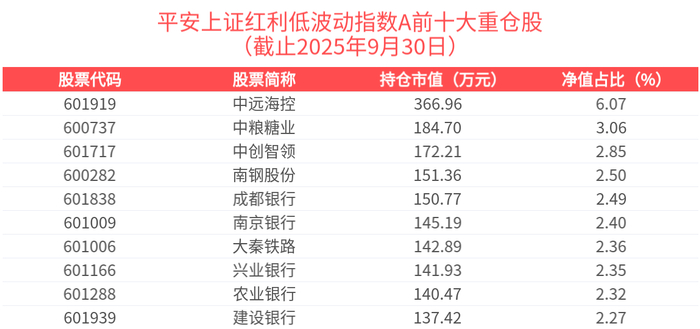
Core Insights - The Ping An Shanghai Stock Exchange Dividend Low Volatility Index A (020456) has shown a strong performance with a year-to-date return of 5.86%, ranking it in the top half of comparable funds [2] - The fund has a maximum drawdown of 6.70% over the past year, which is the lowest among its peers [2] - The fund's net asset value reached 1.13 yuan, marking a 0.84% increase from the previous trading day, achieving a one-month high [1] Fund Performance - The fund has recorded a total net inflow of 120.57 billion yuan over the past four days, with a peak single-day net inflow of 54.40 billion yuan [1] - The average daily net inflow over the last four days is 30.14 billion yuan [1] - Since its inception, the fund has achieved a maximum monthly return of 11.16% and an average monthly return of 3.63% [1] Investment Strategy - The fund aims to minimize tracking deviation and tracking error relative to its benchmark, which is a combination of the Shanghai Dividend Low Volatility Index and a bank deposit rate [4] - The fund's management fee is 0.50%, and the custody fee is 0.10%, resulting in a total fee rate of 0.60% [4] - The fund closely tracks the Shanghai Dividend Low Volatility Index, which selects 50 securities with good liquidity and stable dividend payments [4] Top Holdings - The top ten holdings of the fund account for 28.67% of the total portfolio, with significant positions in China COSCO Shipping, COFCO Sugar, and others [4][6] - The largest holding is China COSCO Shipping, representing 6.07% of the net asset value [6]