
现代牧业

Search documents
二十四节气看蒙牛丨大暑走进和林一牧看科技防暑与生态反哺
Zhong Guo Jing Ji Wang· 2025-07-22 06:57
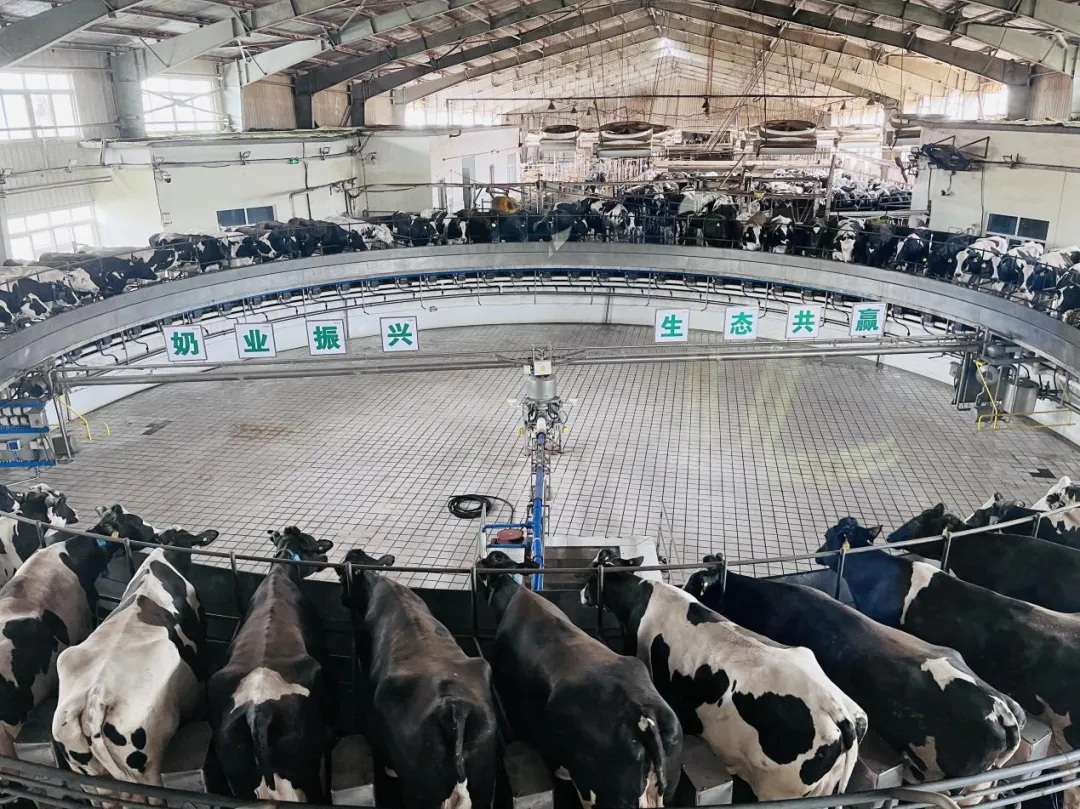
Core Insights - The article highlights the innovative practices in modern dairy farming, particularly in the context of high temperatures during the summer season, showcasing how technology and human care are utilized to maintain the comfort and productivity of dairy cows [1][3][5]. Group 1: Technological Innovations - The farm employs an automated sprinkler system and a fan system in the milking hall to maintain a comfortable temperature range of 16-18°C, ensuring that the cows' feed intake remains above 43 kilograms even during high temperatures [3][5]. - Each Holstein cow is equipped with a smart collar that captures real-time data on activity, rumination, and health, allowing for precise management and timely health alerts [5][9]. - The farm is transitioning to a "smart farm" model, implementing automated temperature control systems, precise feeding models, and health warning algorithms to enhance the quality assurance of milk production [9]. Group 2: Sustainable Practices - The farm utilizes a waste management system that converts cow manure into bedding material and organic fertilizer, promoting a green ecological cycle [7]. - A 300-acre windbreak forest of Xinjiang poplar trees, combined with an automated irrigation system, creates a unique microclimate that provides a comfortable environment for the cows and enhances the ecological value of the farm [7]. - The farm has been recognized as an "Ecological Circular Agriculture Demonstration Base" in Inner Mongolia for its sustainable practices [7]. Group 3: Production Efficiency - Despite the challenges posed by high temperatures, the farm maintains an average daily milk production of over 42 kilograms per cow [5]. - The farm has received multiple accolades, including being designated as a "National Standardized Demonstration Farm for Livestock and Poultry Breeding" and a "Source Base for Student Drinking Milk" [9].

原奶及牧业调研报告:肉奶周期共振,牧业弹性释放
GOLDEN SUN SECURITIES· 2025-07-22 01:03
Investment Rating - The report maintains an "Accumulate" rating for the industry [6] Core Insights - The current state of China's raw milk and beef industries is at the bottom of the cycle, with the dairy industry gradually clearing capacity towards a balance in supply and demand [1] - The beef industry has seen a price recovery, with live cattle prices rebounding since February 2025, driven by reduced imports and a tightening supply [2] - The report indicates that the dairy cycle's darkest moment is expected to end within 1.5 years, with signs of marginal improvement in the first half of 2025 [1] Summary by Sections Raw Milk Industry - As of July 10, 2024, the price of fresh milk is 3.04 CNY/kg, down 6.17% year-on-year, with over 90% of the dairy industry experiencing losses [1] - The China Dairy Association forecasts a 4.5% year-on-year decrease in dairy cow inventory for 2024, with further price declines expected in 2025 [1] - There are indications of a narrowing decline in raw milk prices in the first half of 2025, with a significant reduction in milk powder spray volume [1] Beef Industry - The beef industry is entering a replenishment phase, with a 2.9% growth in cattle inventory in 2023, but a projected 4.4% decline in 2024 [2] - Live cattle prices and market averages have increased by 8.3% and 7.4% respectively since February 2025 [2] - The industry is experiencing a culling cycle for breeding cows, leading to a decrease in the number of calves born [2] Company Performance YouRan Agriculture - In 2024, YouRan achieved revenue of 20.1 billion CNY, a year-on-year increase of 7.5%, with fresh milk production rising by 24.1% to 3.747 million tons [3] - Despite a decrease in average selling price of fresh milk to 4.1 CNY/kg, the company managed to improve its gross margin [3] - The company reported a loss of 690 million CNY for the year due to declining raw milk and beef prices [3] Modern Farming - Modern Farming's revenue decreased by 1.5% year-on-year to 13.25 billion CNY, with fresh milk production increasing by 13.6% [4] - The average selling price of fresh milk fell by 10.3% to 3.6 CNY/kg, resulting in a loss of 1.47 billion CNY for the year [4] - Future price increases in milk and beef are expected to positively impact the company's core business [4] China Shengmu - China Shengmu reported a revenue decline of 7.6% to 3.13 billion CNY in 2024, with fresh milk sales price down by 6.1% [7] - The company is positioned to benefit from the rising beef prices due to its dual focus on dairy and beef production [7] Tianrun Dairy - Tianrun's revenue for 2024 is projected at 2.8 billion CNY, a 3.3% increase, but net profit is expected to drop by 69.3% due to losses from cattle disposal [8] - The company is expected to improve its operations as it reduces cattle disposals in subsequent quarters [8]

易方达逆向投资混合A:2025年第二季度利润1956.73万元 净值增长率3.34%
Sou Hu Cai Jing· 2025-07-21 01:45
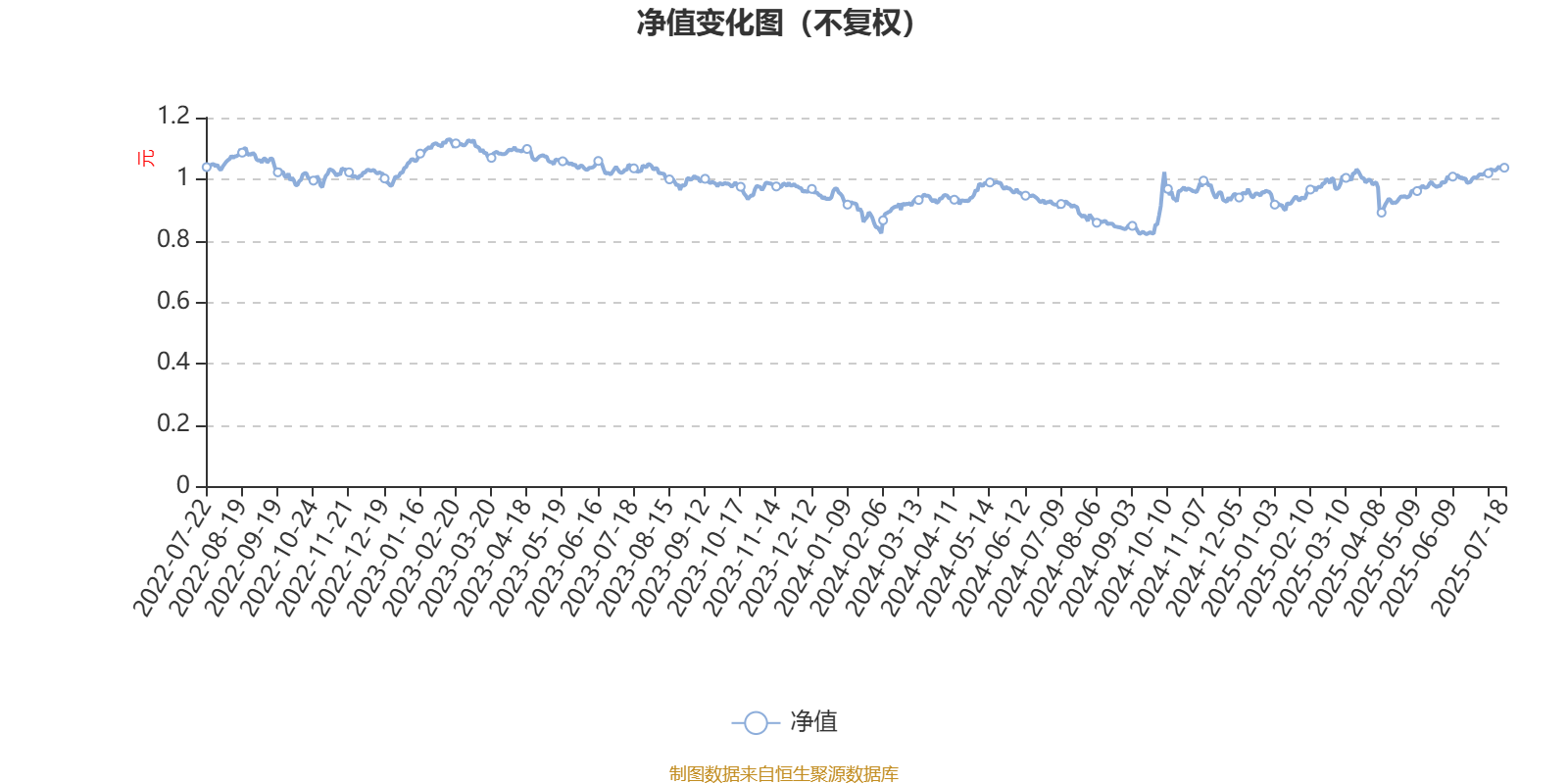
该基金属于偏股混合型基金。截至7月18日,单位净值为1.037元。基金经理是杨嘉文,目前管理5只基金近一年均为正收益。其中,截至7月18日,易方达平 衡视野混合A1近一年复权单位净值增长率最高,达23.83%;易方达科瑞混合最低,为6.16%。 基金管理人在二季报中表示,本基金在 2025 年第二季度股票仓位有所下降。截至报告期末,大部分主流指数的估值分位处于中位数附近。本基金二季度增 持的行业主要有环保、医药生物、基础化工,而减持的行业主要是电子、汽车、国防军工。在行业选择上,本基金会更关注和经济相关性不高且估值分位不 高的板块,同时在顺周期板块也会布局一些供需格局清晰的子行业或者有较强竞争力的个股。 AI基金易方达逆向投资混合A(011649)披露2025年二季报,第二季度基金利润1956.73万元,加权平均基金份额本期利润0.031元。报告期内,基金净值增 长率为3.34%,截至二季度末,基金规模为6.2亿元。 截至7月18日,易方达逆向投资混合A近三个月复权单位净值增长率为12.29%,位于同类可比基金103/256;近半年复权单位净值增长率为11.58%,位于同类 可比基金99/256;近一年复权单 ...
牛周期:剖析牧场股的投资逻辑,详细盈利拆解
2025-07-19 14:02
Summary of Conference Call on Cattle Industry and Dairy Market Industry Overview - The beef and dairy markets exhibit long-cycle characteristics influenced by physiological factors and insufficient capital confidence, leading to slow capacity recovery and potential price increases lasting up to two years [1][4] - Current asset prices are low, with some companies facing survival challenges due to declining dairy product demand [1] Key Insights and Arguments - The dairy price decline is primarily due to weak demand and low feed costs, resulting in a slower-than-expected decrease in herd numbers [7] - The original milk price has been in a downward trend since late 2021, currently around 3 RMB per liter, down from previous highs of 4-5 RMB [8] - A potential supply-demand balance for raw milk may occur in August 2025, with a more significant turning point expected by the end of 2025 or early 2026 [9] - The beef market is experiencing significant price increases, with wholesale prices rising 20%-30% in the first half of 2025 [17] - The cattle industry is characterized by a long breeding cycle, with a significant reduction in new calves, limiting supply [18] Financial Implications - Beef price increases significantly impact the financial statements of cattle companies, reducing biological asset impairment losses and improving actual income and cash flow [10] - The income from culling cows is substantial, with estimates of 900 million to 1 billion RMB from culling 90,000 to 100,000 cows annually at a price of around 10,000 RMB per cow [5][11] - The expected increase in beef prices could lead to an additional 300 million RMB in income from culling, directly affecting the fair value of biological assets [11] Market Dynamics - The current market is experiencing a significant downturn, with a 13% year-on-year decline in stock levels from January to May 2025 [17] - The domestic beef supply includes local cattle farming, culling, and imports, with imports accounting for about 30% of total demand [19] - The import of beef has been affected by trade policies and the pandemic, limiting short-term increases in import volumes [20] Investment Opportunities - The current low asset prices present an opportunity for investment, particularly in upstream cattle companies like YouRan, China Shengmu, and Modern Farming [16] - A strategy of early investment during market downturns is recommended, as the market is expected to recover [16] Additional Considerations - The long-term nature of the cattle breeding cycle means that even with increased investment, it will take time to see a significant supply response [18] - The relationship between biological asset impairment and cash flow is complex, with potential for higher reported profits if impairment is calculated differently [14] This summary encapsulates the key points from the conference call regarding the cattle and dairy markets, highlighting the cyclical nature of the industry, financial implications, market dynamics, and investment strategies.
全球市场导读刊物
2025-08-18 01:00
Summary of Key Points from Conference Call Industry Overview - **Industry**: Chinese Macro Economy and Real Estate Market - **Company**: Goldman Sachs (GS) Core Insights and Arguments 1. **Mixed Economic Data for May**: - Fixed asset investment growth was only 3.7%, below the expected 4.0% - Industrial value-added growth was 5.8%, slightly below the expected 6.0% - Retail sales of consumer goods grew strongly by 6.4%, exceeding the market expectation of 4.9% [2][3] 2. **Decline in Urban Housing Demand**: - GS revised the forecast for urban housing demand, estimating it will remain below 5 million units annually, a 75% decrease from the peak of 20 million units in 2017 - Current housing prices are still declining, indicating the real estate market has not yet bottomed out [3][4] 3. **Limited Impact of Export Front-Loading**: - Anticipated "reciprocal" tariffs led to front-loading of exports, with an estimated 5% increase in overall exports in March - The impact on exports for the second half of the year is expected to be limited to 1 percentage point, suggesting that trade surpluses will remain strong [5][4] 4. **Fiscal Policy and Economic Growth**: - May saw a slowdown in fiscal operations, with budgetary income growth at only 0.1%, significantly lower than April's 1.9% - Fiscal expenditure growth decreased from 5.8% in April to 2.6%, indicating that fiscal stimulus has not significantly strengthened [11][12] 5. **Real Estate Revenue Weakness**: - Land transfer revenue fell by 14.2% year-on-year, a stark contrast to April's growth of 3.9% - Budgetary real estate-related tax revenue decreased by 8.6%, reflecting ongoing weakness in the real estate market [11][12] 6. **Geopolitical Tensions and Energy Prices**: - Brent crude oil prices rose to nearly $80 per barrel due to escalating tensions in Iran, with a geopolitical risk premium of about $12 - Two scenarios for oil price increases were outlined, with potential peaks of $90 and $110 per barrel under different supply disruption scenarios [26][28] 7. **Copper Demand Driven by AI**: - AI-driven data center expansion is expected to become a new growth driver for copper demand, particularly in power distribution and cooling systems - Strong capital expenditure expectations for AI-related investments are anticipated to sustain demand for copper-intensive components [32][34] 8. **Modern Dairy Industry Forecast**: - Modern Dairy, a joint venture of Mengniu, expects a net loss of RMB 800-1,000 million in the first half of 2025, significantly higher than last year's loss of RMB 207 million - The core operations remain resilient, with EBITDA expected to remain stable due to lower raw milk sales costs [38][39] Other Important but Possibly Overlooked Content - **Fiscal Space for Expansion**: Despite current economic growth exceeding expectations, GS anticipates further fiscal expansion in the second half of the year to counter deflationary pressures and boost confidence [16][18] - **Market Sentiment and Currency Dynamics**: The report highlights a divergence in safe-haven currencies, with the dollar and Swiss franc performing strongly while Asian low-yield currencies face pressure [16][18] - **Potential for Future Trade Weakness**: High-frequency transport data indicates a potential weakening of Chinese exports to the U.S., particularly in container traffic, which may reflect the impact of new tariffs [35][37]
【干货】奶酪产业链全景梳理及区域热力地图
Qian Zhan Wang· 2025-07-19 03:11
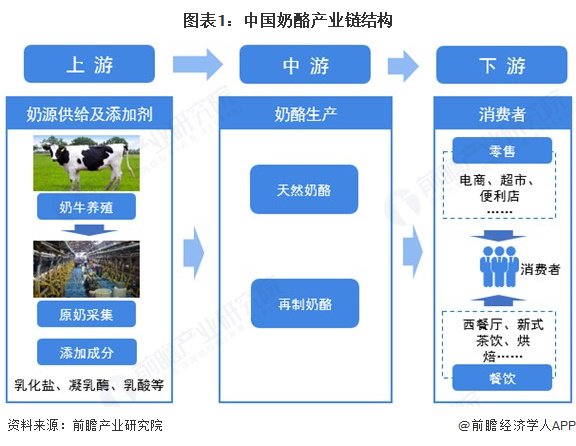
Core Insights - The cheese industry has a long supply chain that spans primary, secondary, and tertiary industries, with upstream focusing on milk supply and added ingredients, midstream on cheese production, and downstream on food service and retail channels [1][2][6] Industry Structure - The upstream segment consists of dairy farms and raw milk suppliers, with major players including YouRan Dairy, Modern Dairy, and others [2] - The midstream includes cheese manufacturers, with domestic participants like Mengniu, Yili, and Miaokelan Duo, and international brands such as Anchor and Kraft Heinz [2] - The downstream retail sector encompasses both online platforms like Taobao and JD.com, and offline supermarkets such as Walmart and Carrefour, as well as food service outlets like KFC and Starbucks [2][6] Regional Distribution - The upstream dairy supply is concentrated in regions like Inner Mongolia, Heilongjiang, and Shandong, while cheese production is primarily located in coastal areas [6] - Consumer demand is stronger in southern and coastal regions, indicating a north-south distribution pattern in the cheese industry [6] Cost Structure - The cost structure for processed cheese, such as cheese sticks, shows that raw material costs can exceed 50%, with packaging and processing costs accounting for approximately 17% and 28% respectively [9] - The cheese content in products often meets or exceeds 50%, impacting the overall cost structure [9] Price Transmission Mechanism - The cheese market price is influenced by supply-side costs, manufacturing costs, and consumer demand elasticity, creating a complex price transmission mechanism [12] - The final consumer price is affected by the cumulative costs from the supply chain, including raw material prices and brand premiums [12] Value Chain Analysis - The upstream segment has a higher profit margin, with companies competing for stable and quality milk supply [13] - Midstream cheese manufacturers like Miaokelan Duo have gross margins around 45%-50%, while downstream distributors have margins of 29%-33% [13]
提升质量效益和核心竞争力,为奶业振兴注入新动能
Zhong Guo Chan Ye Jing Ji Xin Xi Wang· 2025-07-18 00:41
Core Insights - The Chinese dairy industry is experiencing structural challenges and opportunities, with significant achievements during the 14th Five-Year Plan period, including improved production capacity and safety standards [2][3] - The industry faces bottlenecks such as insufficient consumer potential, structural supply-demand contradictions, and reliance on imports for core competitiveness [2][3] - The "15th Five-Year Plan" aims to enhance consumption, foster new production capabilities, optimize benefit-sharing mechanisms, strengthen brand competitiveness, and accelerate green transformation [3][4] Industry Developments - The dairy industry has seen a substantial increase in milk production capacity, with a projected output of 40.79 million tons by 2024, a 32.7% increase from 2018 [8] - The average number of dairy cows per farm has increased by 234%, with large-scale farming (over 100 cows) rising to 78% [8] - The quality of fresh milk has reached historical highs, with a compliance rate of 99.9% in quality inspections [8] Company Strategies - Yili Group plans to strengthen its supply chain, drive innovation, and pursue green development during the 15th Five-Year Plan [4] - Mengniu Group emphasizes improving the entire supply chain to achieve high-quality development [4] - Companies like Bright Dairy and Junlebao are focusing on innovation and meeting diverse consumer needs while enhancing international market presence [4][5] Future Outlook - The industry is expected to focus on sustainable practices, including the development of low-carbon "super bulls" and functional raw milk for specific consumer segments [5] - The integration of technology in dairy farming is crucial for enhancing productivity and sustainability [5][6] - The industry is advised to monitor key recovery signals, including consumer demand and milk prices, while implementing supportive policies for dairy farming [9]

现代牧业(1117.HK):现代智牧 奶业长青
Ge Long Hui· 2025-07-17 19:22
Group 1 - Modern Dairy is a pioneer in large-scale farming and is undergoing a digital transformation to enhance operational resilience through cost reduction and efficiency improvement [1] - The company has shifted its strategic focus from capacity expansion to technology-driven high-quality development, optimizing cost structure and resource utilization [1] - The cyclical nature of raw milk prices is influenced by supply expansion or contraction and the time lag in dairy cow reproduction and lactation [1][2] Group 2 - The supply-demand gap in dairy products is expected to narrow, with raw milk prices likely to stabilize and recover in mid to late 2025 [2] - Modern Dairy's core business is raw milk, which is projected to generate revenue of 10.454 billion yuan in 2024, accounting for 78.83% of total revenue [2] - The company has enhanced its vertical integration by launching feed and digital platform businesses to improve synergy within the industry chain [2] Group 3 - The productivity of dairy cows is improving, with an expected yield of 12.8 tons per head per year in 2024 [3] - Modern Dairy has strategically acquired FuYuan Dairy and ZhongYuan Dairy to achieve scale integration and diversify its operations across breeding, feed, deep processing, and digital platforms [3] - The company operates 47 dairy farms in China with over 490,000 dairy cows, focusing on core dairy farming regions, and has established quality forage bases in the U.S. [3] Group 4 - The tightening supply-demand gap in raw milk is expected to create investment opportunities, with profitability improvements anticipated in the second half of 2025 [3] - The company's projected EPS for 2025 and 2026 are 0.01 yuan and 0.10 yuan, respectively, with corresponding PE valuations of approximately 73 and 11 times, indicating significant upside potential [3]
现代牧业(01117):深度报告:现代智牧,奶业长青
Changjiang Securities· 2025-07-16 05:34
Investment Rating - The report gives a "Buy" rating for the company, marking its first coverage [9][11]. Core Insights - Modern Dairy is a pioneer in large-scale farming, with digital transformation and refined operations driving cost reduction and resilience. The company is positioned as a leader in China's raw milk production and full industry chain operations, with a clear trend of tightening raw milk supply and demand gap, suggesting potential profitability improvement by the second half of 2025 [3][6][9]. Summary by Sections Company Overview - Modern Dairy, established in 2005 and listed on the Hong Kong Stock Exchange in 2010, is headquartered in Ma'anshan, Anhui Province. The company aims to be a global leader in the dairy industry through a strategy focused on industry chain layout, digital innovation, and collaboration with strategic partner Mengniu [6][17]. Market Dynamics - The report discusses the cyclical nature of raw milk prices, indicating that prices may stabilize and improve by mid to late 2025 due to a combination of steady demand and accelerated capacity reduction in the upstream dairy sector [7][9]. Business Performance - In 2024, the company's raw milk business generated revenue of 10.454 billion yuan, accounting for 78.83% of total revenue. The company has also expanded into feed and digital platform businesses to enhance vertical synergy within the industry chain [8][54]. Financial Metrics - Modern Dairy's EBITDA for 2024 reached 2.986 billion yuan, a year-on-year increase of 19.6%. The company reported a total revenue of 13.254 billion yuan, a slight decrease of 1.52% year-on-year, with a net profit attributable to shareholders of -1.417 billion yuan [18][61]. Growth Strategy - The company has focused on high-quality development driven by technology, optimizing cost structures, and improving resource utilization efficiency. This strategic shift aims to consolidate its leading position in the industry amid increasing market concentration [30][37]. Future Outlook - The report anticipates that the tightening supply-demand gap in raw milk will create investment opportunities, with significant upside potential in the company's earnings and valuation expected in 2025 and 2026 [9][61].
中国圣牧(01432.HK):有机原料奶龙头 基本面亟待反转
Ge Long Hui· 2025-07-16 03:03
Group 1 - The core viewpoint is that China Shengmu, as a leading organic raw milk producer, is well-positioned to benefit from the growing demand for high-end organic milk driven by rising consumer spending levels [1][2] - China Shengmu is the first brand in China to obtain dual certification for organic standards from both China and the EU, covering the entire dairy industry value chain from pasture planting to high-end liquid milk production [1] - The company has a significant geographical advantage, operating in the Ulan Buh Desert of Inner Mongolia, recognized as a prime milk source, which enhances its competitive edge in ensuring milk quality and safety [1] Group 2 - Current raw milk prices have declined from a peak of 4.38 RMB/kg to 3.04 RMB/kg, but the decline has narrowed, indicating a potential stabilization in milk prices [2] - Beef prices have also stabilized after a decline in 2023, which, along with the expected recovery in milk prices, is anticipated to significantly improve the company's profit performance [2] - The company forecasts net profits for 2025-2027 to be -0.47 billion, 4.36 billion, and 7.09 billion RMB respectively, with a projected PE ratio of 5.5 for 2026, which is significantly lower than the average PE of comparable companies [2]