兴业证券

Search documents
A股商业航天10余股涨停,港股智谱、天数智芯飙升,国内金饰克价回落
21世纪经济报道· 2026-01-08 03:59
Market Overview - A-shares opened lower on January 8, with the Shanghai Composite Index slightly rising while the Shenzhen Component and ChiNext Index fell by 0.2% and 0.52% respectively. The total trading volume in the Shanghai and Shenzhen markets reached 1.78 trillion yuan, with over 3,700 stocks rising, including 80 stocks hitting the daily limit up [1]. Sector Performance - The commercial aerospace sector saw a surge, with over 10 constituent stocks hitting the daily limit up. Notable performers included Luxin Venture Capital with 8 consecutive limit ups and Galaxy Electronics with 4 consecutive limit ups [2]. - The brain-computer interface concept also gained traction, with stocks like Innovation Medical, Pulite, and Nanjing Panda achieving 4 consecutive limit ups. The controllable nuclear fusion concept was active, with China First Heavy Industries, China National Machinery Industry Corporation, and China Nuclear Engineering Group achieving 2 consecutive limit ups [2]. Declining Sectors - The securities sector experienced continuous adjustments, with Huayin Securities hitting the limit down. Other securities firms like Huatai Securities, GF Securities, and others also saw significant declines [3]. - Other underperforming sectors included energy metals, insurance, and dairy industries [3]. Hong Kong Market - Major indices in the Hong Kong market opened lower, with the Hang Seng Index, Hang Seng Technology Index, and Hang Seng China Enterprises Index all dropping over 1% [3]. - Domestic large model company Zhipu Technology debuted on the Hong Kong Stock Exchange, initially rising by up to 10% before retreating to a 7.4% increase. The chip stock Tianzhixin performed even better, soaring over 31% at the opening and currently showing a 12.31% increase [4]. Commodity Market - Gold and silver prices fell across the board, with spot gold dropping below $4,450 per ounce and domestic commodity futures reflecting similar declines. SHFE silver fell over 3% [7]. - Specific price movements included London gold at $4,442.098 per ounce, down 0.32%, and SHFE gold at 999.78 yuan per gram, down 0.55% [8][9]. Lithium Carbonate - Lithium carbonate prices surged, approaching 150,000 yuan per ton, indicating strong demand in the market [10].


关键职位更迭、团队“迁徙”不断,券商研究所开年迎高频人事调整
Xin Lang Cai Jing· 2026-01-08 03:24
Group 1 - The brokerage research sector is experiencing significant personnel changes at the beginning of 2026, with key positions being altered across multiple research institutions [1] - Notable departures include Huang Wentao, the chief economist of CITIC Securities, who is now acting as the head of the research development department, and the resignations of prominent figures such as Hua Xiaowei from Shanghai Securities and Zheng Zhenxiang from Guosheng Securities [1] - Zhang Yidong, the global chief strategy analyst at Industrial Securities, announced his departure to focus on overseas business, indicating a trend of prominent analysts transitioning to new roles [1] Group 2 - Smaller brokerages are actively recruiting external talent to enhance their research capabilities, as seen with Zhejiang Securities hiring Bi Chunhui from Caitong Securities as the deputy director of their research institute [2] - The overall number of analysts in the securities industry has seen a slight increase, with 5,898 analysts reported as of January 1, 2026, compared to 5,566 a year earlier [3] - Some brokerages, such as Dongfang Fortune, have significantly expanded their research teams, with their analyst count nearly doubling from 45 to 84 [3] Group 3 - Foreign securities firms have maintained a stable number of analysts, with slight fluctuations in personnel numbers among major firms like Goldman Sachs and UBS [4] - The trend of analysts moving in teams rather than individually is prevalent, which helps maintain continuity in research work and client relationships, but also amplifies the impact of talent loss on the departing firms [4][5] - Many brokerages are currently recruiting analysts, but smaller firms still struggle with low analyst counts and corresponding commission income [5] Group 4 - The competitive environment and pressure on analysts have led to decreased job security, prompting some to seek more promising platforms within the brokerage system or to leave the financial industry altogether [6] - Brokerages are compelled to rethink their management and compensation structures to retain core talent amidst high turnover rates [6]
证券板块持续调整 华林证券触及跌停
2 1 Shi Ji Jing Ji Bao Dao· 2026-01-08 02:32
Group 1 - The securities sector is experiencing a continuous adjustment, with several companies facing significant declines [1] - Huayin Securities has hit the daily limit down, indicating a severe drop in its stock price [1] - Other companies such as Huazhong Securities, Huatai Securities, GF Securities, Guotai Junan, and Industrial Securities are also among those with notable declines [1]

对话非银-保险的重估与券商的躁动
2026-01-08 02:07
Summary of Conference Call on Non-Bank Financial Sector Industry Overview - The conference call focused on the non-bank financial sector, particularly the insurance and brokerage industries, highlighting recent market trends and investment strategies. Key Points on Insurance Sector 1. **Market Performance and Expectations**: The A500 index has seen continuous capital inflow, especially around New Year, indicating positive market expectations for the insurance sector [1][3]. 2. **Insurance Sector Strength**: Since October 2025, the insurance sector has performed strongly due to several factors, including a reduction in preset interest rates, improvements in liabilities, and strong sales performance in early 2026 [1][4]. 3. **Investment Returns**: In Q3 2026, insurance companies reported stable investment returns, benefiting from increased allocations to high-dividend products, which contributed to overall profitability [7]. 4. **Future Outlook for 2027**: The insurance industry is expected to see synchronized expansion in both liabilities and assets, with a focus on dividend insurance products driving capital inflow and an increase in third-party asset management [8]. 5. **High Dividend Preference**: Insurance capital is increasingly favoring high-dividend and high-return assets, with approximately 20% of new funds allocated to stock investments [10]. 6. **A and H Share Valuation**: The valuation of A shares versus H shares is influencing investment decisions, with certain H shares being attractive due to their lower price relative to A shares [11]. 7. **Dividend Yields**: Current dividend yields for major insurance companies in the H share market are around 4% for China Ping An and 3.5% for China Pacific Insurance, making them appealing to investors [12]. 8. **Asset Allocation Trends**: Insurance companies are expected to increase their allocation to high-dividend assets in response to regulatory guidance on long-term capital market participation [14]. Key Points on Brokerage Sector 1. **Brokerage Sector Performance**: The brokerage sector has experienced sluggish growth due to regulatory pressures, limiting internal growth despite favorable market conditions [15]. 2. **M&A Importance**: Mergers and acquisitions are seen as crucial for driving performance in the brokerage sector, with a focus on high-quality development and enhancing competitiveness [16][17]. 3. **Investment Strategy for 2026**: The brokerage sector may see a structural rebound in 2026, particularly in the context of seasonal market movements and monetary policy easing [18]. Additional Insights - **ETF Launch**: A new ETF focusing on the non-bank sector, with a significant allocation to insurance stocks, has been introduced, reflecting a strategic investment approach in the current market environment [19]. - **Market Dynamics**: The call highlighted the rapid rotation in market sectors, with a need for investors to adjust their strategies based on evolving market conditions and performance metrics [3][18]. This summary encapsulates the key insights and projections discussed during the conference call, providing a comprehensive overview of the current state and future outlook of the non-bank financial sector.
港股开盘 | 恒指低开0.59% 银行股走强 招商银行涨近1%
智通财经网· 2026-01-08 01:40
Group 1 - The Hang Seng Index opened down 0.59%, while the Hang Seng Tech Index fell by 0.44%. Bank stocks strengthened, with China Merchants Bank rising nearly 1%, while the non-ferrous metals sector weakened, with China Aluminum dropping over 2%. Tech stocks were sluggish, with Alibaba and Baidu both declining by more than 1% [1] - CITIC Securities believes that due to the internal "14th Five-Year Plan" catalyst and external major economies' "fiscal + monetary" dual easing, the Hong Kong stock market is expected to welcome a second round of valuation repair and further earnings recovery by 2026. It suggests focusing on technology, healthcare, resource products, essential consumer goods, paper, and aviation sectors [1] - Everbright Securities indicates that with domestic policy efforts and a weaker US dollar, the Hong Kong stock market may continue to experience a volatile upward trend. The overall profitability of the Hong Kong market is relatively strong, and assets in the internet, new consumption, and innovative pharmaceuticals are relatively scarce. Despite several months of consecutive gains, the overall valuation remains low, making long-term allocation cost-effective [1] - Dongwu Securities believes that the Hong Kong stock market is entering a volatile upward phase, emphasizing the need to maintain dividends as a base and seize the technology growth market in the first half of the year. Potential incremental funds from southbound investments will continue to increase allocation to value dividends. Considering valuations and the AH comparison perspective, southbound funds will generally increase allocation to Hong Kong tech growth stocks, although the tech market will still be influenced by overseas interest rate cuts and US tech market trends, requiring dynamic observation [1] Group 2 - Industrial Securities suggests actively going long, as the Hong Kong stock market is expected to start a spring offensive led by the Hang Seng Tech Index. In the medium term, the bull market in Hong Kong stocks will continue into 2026, with earnings and liquidity likely to drive the market. Changes in risk appetite may present a pattern of "rise first, then fall, and rise again" [2] - In the first quarter of 2026, the risk appetite for Hong Kong stocks is expected to "rise first" [2]


证券板块短线走低,华林证券跌超7%
Xin Lang Cai Jing· 2026-01-08 01:39
Group 1 - The securities sector experienced a short-term decline, with Huayin Securities dropping over 7% [1] - Other securities firms such as GF Securities, Huatai Securities, Industrial Securities, and Guotai Junan also saw declines [1]
福建省青山纸业股份有限公司 关于理财产品到期赎回并拟继续使用部分闲置 募集资金进行现金管理的公告
Zhong Guo Zheng Quan Bao - Zhong Zheng Wang· 2026-01-07 23:06
Core Viewpoint - The company plans to utilize part of its idle raised funds for cash management, aiming to enhance the efficiency of fund usage and increase overall company performance, thereby providing better returns for shareholders [2][5]. Group 1: Investment Management - The company has received approval from its board and shareholders to use up to 600 million yuan of temporarily idle raised funds for cash management within one year from the date of approval [1][6]. - The total amount planned for cash management is estimated at 110 million yuan, which will be invested in low-risk financial products [2][3]. - The cash management products will include structured deposits with a maturity of 304 days from the Bank of Communications [3][4]. Group 2: Fund Sources and Usage - The funds for cash management will come from the company's idle raised funds, which were originally raised through a non-public offering of shares totaling approximately 2.1 billion yuan, netting about 2.05 billion yuan after expenses [3][5]. - The company has previously suspended its original fundraising project and redirected the remaining funds towards new projects, ensuring that the cash management does not affect the investment progress of the fundraising projects [5][6]. Group 3: Risk Management - The cash management strategy is designed to be low-risk, but it acknowledges potential market, liquidity, and credit risks that could affect the returns on the financial products [7][9]. - The company will implement strict risk assessment measures, including selecting reputable financial products and monitoring their performance to ensure compliance with investment plans [9]. Group 4: Impact on Company Performance - The decision to invest in low-risk bank financial products is expected to improve the efficiency of idle funds, increase company revenue, and enhance overall performance, ultimately benefiting shareholders [9]. - The purchased financial products will be classified as "trading financial assets" on the balance sheet in accordance with accounting standards [9].

2025年经济运行稳中有进 顺利收官
Sou Hu Cai Jing· 2026-01-07 17:15
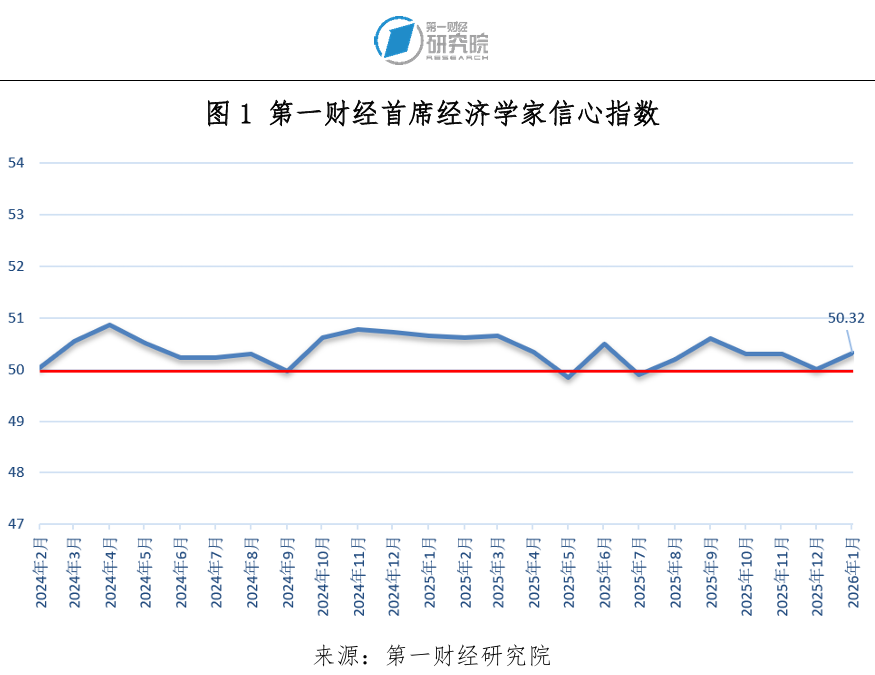
Economic Outlook - The global economy in 2026 is expected to exhibit a complex system characterized by non-linearity, path dependence, and adaptability, showing high instability but resilience [1] - The "First Financial Chief Economist Confidence Index" for January 2026 is reported at 50.32, indicating a recovery and maintaining a prosperous state [2][3] Inflation and Price Predictions - The average predicted year-on-year CPI growth for December 2025 is 0.8%, while the PPI is forecasted at -2% [5][6] - CPI predictions range from a minimum of 0.5% to a maximum of 0.9%, indicating a slight increase from November's 0.7% [6] - The PPI predictions range from -2.3% to -1.9%, showing a slight improvement from the previous month's -2.2% [6] Industrial and Investment Growth - The predicted growth rate for industrial added value in December 2025 is 4.9%, slightly above the previous month's 4.8% [9][10] - Fixed asset investment is expected to decline by an average of -2.2%, showing a recovery from November's -2.6% [11] - Real estate development investment is forecasted to decrease by -15.8%, with signs of a narrowing decline in transaction volumes [12] Trade and Export Forecasts - The trade surplus for December 2025 is predicted to be $1113.5 billion, remaining stable compared to the previous month [13][14] - Exports are expected to grow by 2.5%, down from 5.9% in the previous month, while imports are forecasted to increase by 0.7% [14][15] Financing and Monetary Policy - New loans are projected to reach 7182.5 billion yuan in December 2025, recovering from the previous month's 3900 billion yuan [15][16] - The total social financing is expected to average 1.8 trillion yuan, lower than the previous month's 2.5 trillion yuan [16][17] - M2 growth is predicted to remain at 8%, consistent with November's figures [18] Policy Directions - Fiscal policy is anticipated to become more proactive, with an increase in the scale of government debt and continued support for local debt initiatives [20][21] - Monetary policy is expected to remain moderately accommodative, with potential for further interest rate cuts and reserve requirement reductions [20][21]
一财首席经济学家调研:2025年经济运行稳中有进,顺利收官
Di Yi Cai Jing· 2026-01-07 11:52
Core Viewpoint - Economists expect future policies to maintain continuity, stability, and flexibility, with a focus on promoting high-quality economic development and reasonable price recovery [1][24][26]. Economic Indicators - The Chief Economist Confidence Index for January 2026 is reported at 50.32, indicating a recovery and maintaining a prosperous state [5]. - Predictions for December 2025 include a CPI year-on-year growth rate of 0.8%, a PPI year-on-year decline of 2%, and an industrial added value growth rate of 4.9% [1][7][10]. - Fixed asset investment is expected to decline by 2.2%, while social retail sales are projected to grow by 1.8% [1][9][11]. - The trade surplus is forecasted at $1113.5 billion, with new loans expected to reach 7182.5 billion yuan [1][15][18]. - M2 money supply is predicted to grow by 8% year-on-year [21][22]. Policy Outlook - The People's Bank of China emphasizes the use of various monetary policy tools, including potential interest rate cuts and reserve requirement ratio reductions, to support economic growth [1][24][25]. - Fiscal policy is expected to be more proactive, with an increase in central budget investments and a focus on optimizing expenditure structures [5][24][26]. Sector-Specific Insights - The real estate market continues to face challenges, with a predicted decline in real estate development investment of 15.8% [12][14]. - Consumer spending is under pressure, with retail sales growth expected to slow due to seasonal effects and high base comparisons from the previous year [9][10]. - Manufacturing investment remains stable, supported by exports and production, despite a decline in foreign investment impacting private sector investment [6][10].
兴业证券:2025年各行业上涨由何贡献?
智通财经网· 2026-01-07 11:17
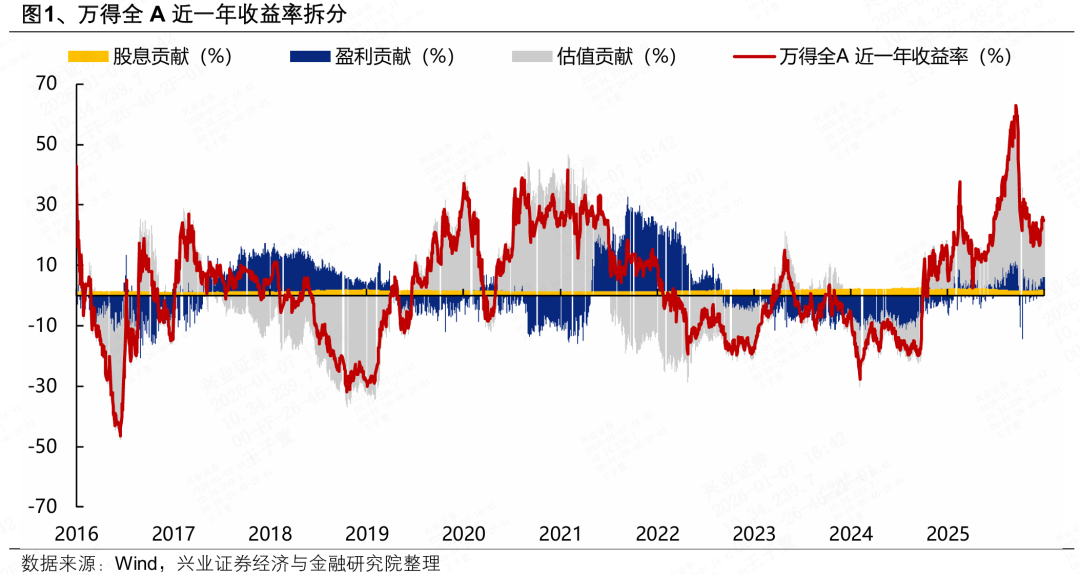
Group 1 - The core viewpoint of the report by Industrial Securities indicates that the overall A-share market is expected to rise by 27.65% in 2025, with profit contribution at 5.29%, valuation contribution at 20.44%, and dividend contribution at 1.91% [1][6][9] - In the primary industry analysis, profit is identified as the "watershed" determining the performance of various sectors in 2025, with leading sectors such as non-ferrous metals, AI hardware (communication, electronics), new energy, and machinery showing significant profit contributions [1][6][9] - Conversely, sectors like consumer goods, real estate, and dividends are expected to lag, primarily due to profit drag [1][6][9] Group 2 - In the secondary industry analysis, sectors with higher growth rates generally have positive profit contributions, while industries such as military (aerospace equipment, ground weapons, military electronics), steel raw materials, and decoration show negative profit contributions, mainly driven by valuation [9][12][14] - The report highlights that in the Hong Kong stock market, most leading sectors also exhibit positive profit contributions, particularly in non-ferrous metals, agriculture, pharmaceuticals, chemicals, and machinery, while lagging sectors like social services and construction are primarily affected by profit drag [12][14] - The secondary industries in the Hong Kong stock market show a similar trend, with leading sectors having positive profit contributions, while industries like motorcycles, traditional Chinese medicine, and glass fiber are negatively impacted by profit drag [14]