西门子

Search documents
将高铁品质延伸至氢能产业链 构建多维产业生态
Zhong Guo Jing Ying Bao· 2025-10-17 13:56
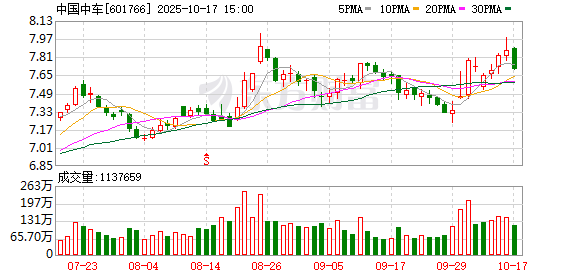
Core Insights - China CRRC has established over 38,000 partners in its supply chain, including more than 15,000 major suppliers and 6,900 core suppliers, with private enterprises accounting for 75% of the rail transit equipment suppliers, driving a trillion-yuan industry development [2] - The company aims to extend high-speed rail quality into clean energy and hydrogen energy industries, leveraging advanced technologies such as digital, intelligent, green, and circular to accelerate the construction of a multi-dimensional industrial ecosystem [2] - The shift from steam to electric and renewable energy reflects the evolution of productivity, with rail transit equipment being a key representative of new productive forces, providing ample application scenarios for energy development [2] Industry Developments - International companies like Siemens and Alstom are accelerating their green transformation by developing hydrogen trains and fully automated driving products, prompting China CRRC to leverage its inherent market perception advantages in rail transit equipment to promote hydrogen-based energy demand [3] - The National Railway Administration is planning the "14th Five-Year" railway technology innovation plan, focusing on high-quality development actions for rail transit equipment, and supporting the establishment of cross-industry innovation alliances to accelerate the industrialization and large-scale application of innovative results [3][4] - The integration of new-generation information technology, new materials, and new energy technologies with the equipment manufacturing industry is reshaping the industrial ecosystem and development pattern, emphasizing the importance of top-level design and strategic guidance [4] Product Innovations - China CRRC launched the country's first hydrogen-powered cultural tourism train, "Hydrogen Spring," which integrates green travel with urban cultural tourism features, supporting the entire hydrogen energy industry chain from production to application [4] - The "Hydrogen Spring" train features a zero-carbon environmental characteristic with an embedded hydrogen power system, enabling zero carbon emissions and providing customized green economic solutions for modern urban transportation [4][5]


稀土核弹炸穿光刻机命脉!阿斯麦断供反被掐脖全链崩塌在即
Sou Hu Cai Jing· 2025-10-16 05:59
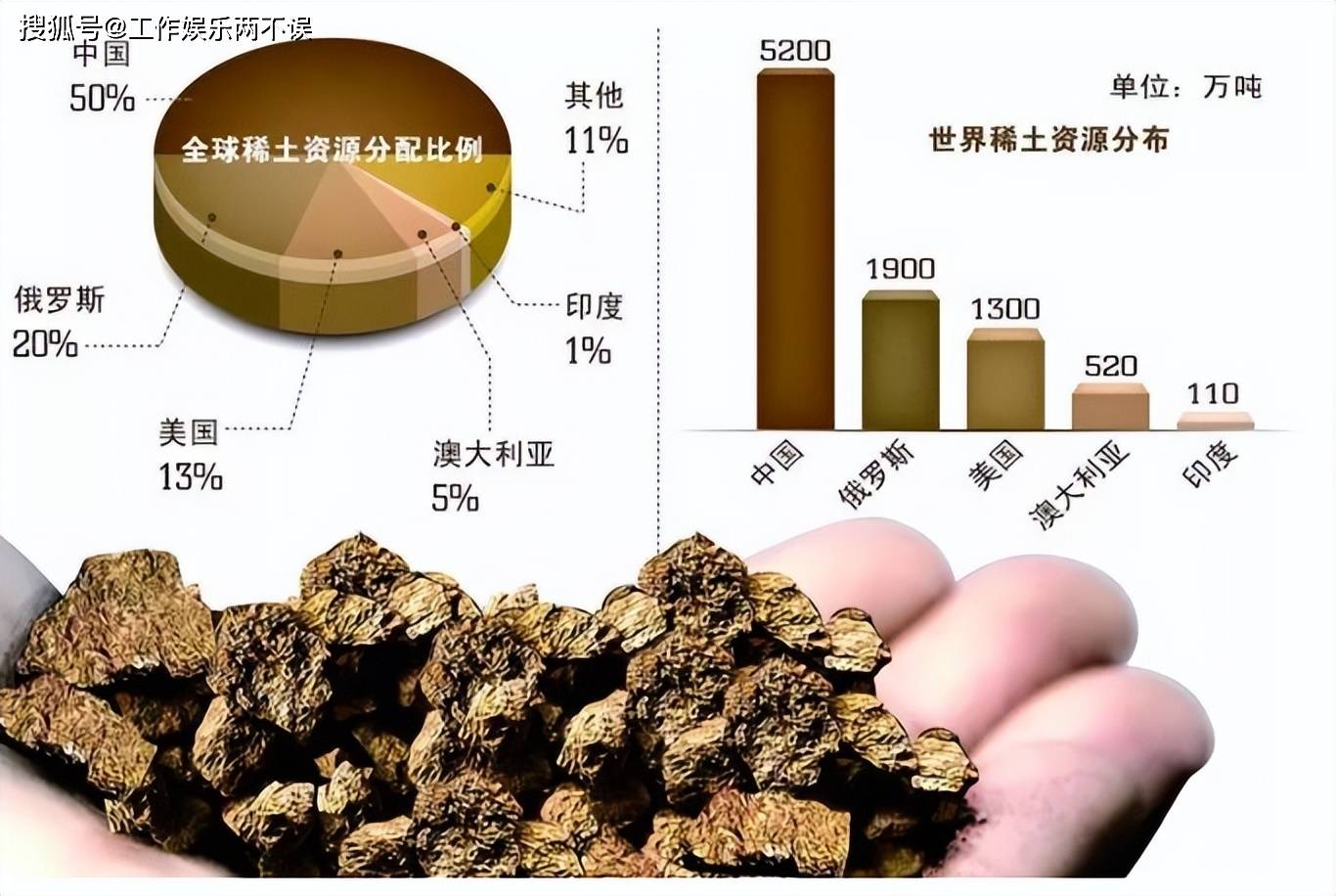
Core Viewpoint - The new rare earth export control regulations from China have significantly impacted ASML, jeopardizing its supply chain and operations, particularly concerning its EUV lithography machines [2][4][10]. Supply Chain Impact - ASML's EUV machines contain over 3,000 rare earth components, with 90% of their rare earth supply sourced from China, making it nearly impossible for ASML to bypass Chinese suppliers [4][7]. - The new regulations require approval for any equipment containing even 0.1% of Chinese rare earth elements, effectively controlling ASML's supply chain and limiting its operational flexibility [5][11]. Client Reactions - Major clients of ASML, including TSMC, Samsung, and Intel, are feeling the pressure from the rare earth restrictions, leading to production cuts and delays in chip manufacturing [7][11]. - TSMC has had to reduce its GaN chip production lines, while Samsung faces warnings about production capacity, highlighting the critical role of rare earth materials in lithography operations [7][11]. European Industry Response - European companies, including Volkswagen, BMW, and Siemens, are struggling with the implications of the rare earth regulations, as their electric motors rely heavily on Chinese rare earth magnets [8][11]. - The Dutch government is seeking exemptions for specific products, but China has firmly stated that there will be no exceptions to the new rules [8][11]. Strategic Dilemma for ASML - ASML is at a crossroads, facing the choice of either completely restructuring its supply chain, which could take over a decade, or seeking technical cooperation with China, which poses its own challenges [11][12]. - The situation reflects a broader narrative of the technology cold war, where supply chains are increasingly influenced by geopolitical tensions, emphasizing the need for strategic adjustments [10][12].

软件指数震荡回调,国产软件还有多大增长空间?
Di Yi Cai Jing· 2025-10-16 02:29
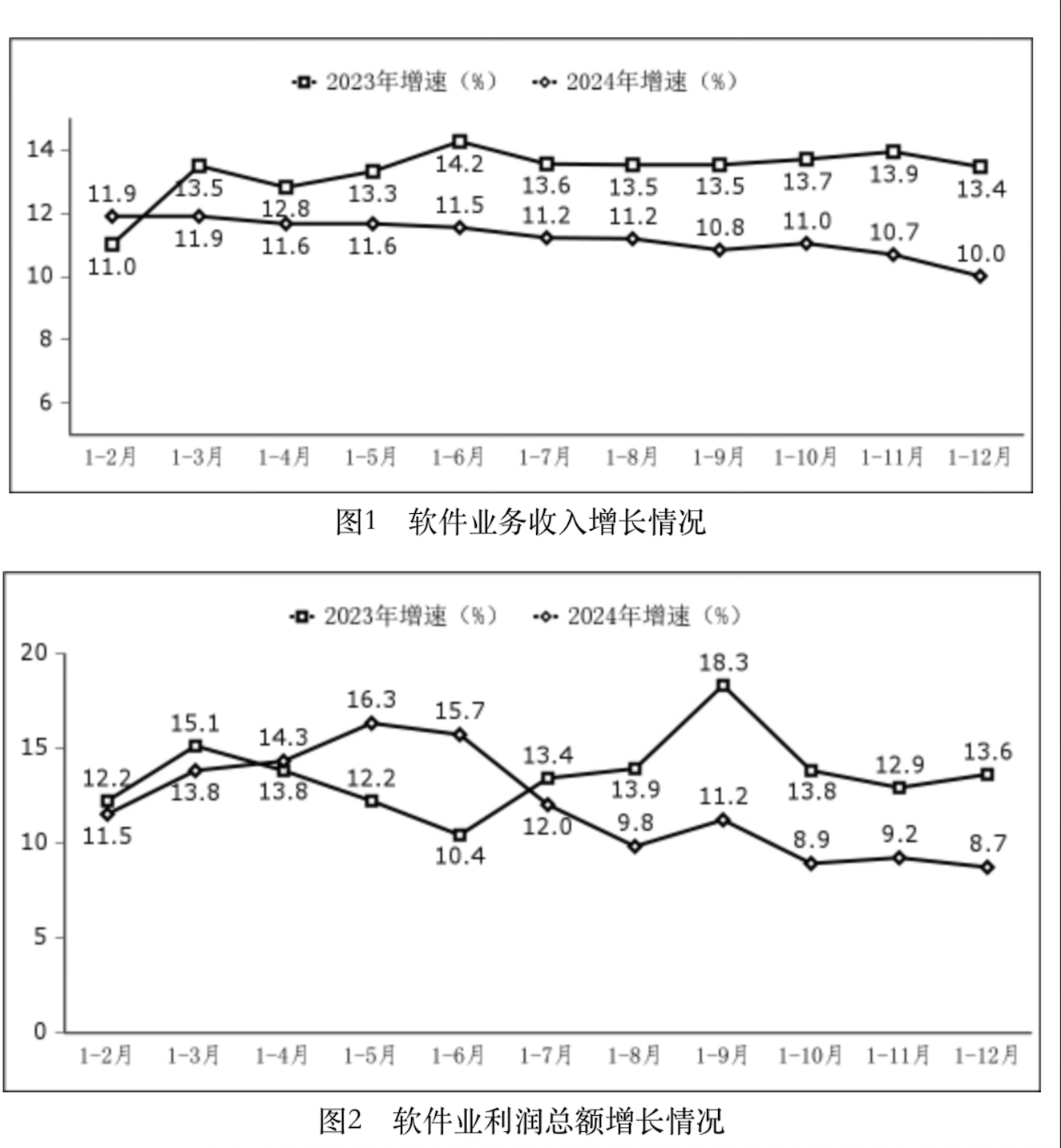
Core Viewpoint - The software industry in China is experiencing a phase of adjustment and growth, driven by policy support and the need for domestic software to replace international counterparts, despite ongoing challenges in commercialization and competition [1][2][4]. Market Performance - The software index opened lower on October 16, with a decline of 0.54% to 7471.11, having started the year at 5396.93 and peaking at 8374.64 in the first half [1]. - Year-to-date, notable stock performances include Kaipu Cloud (688228.SH) up 369.9%, Ruisheng Intelligent (688215.SH) up 360.5%, and Pinming Technology up 347.2% [3]. Industry Growth and Projections - The Chinese software market is projected to reach a revenue of 137,276 billion yuan in 2024, with a year-on-year growth of 10.0%, and software product revenue expected to grow by 6.6% [2]. - By 2025, software business revenue is anticipated to be 96,409 billion yuan, reflecting a 12.6% increase year-on-year [3]. Sector-Specific Insights - The industrial software sector, particularly 3D CAD, is gaining traction, with domestic firms like Haocen Software (688657.SH) and Zhongwang Software (688083.SH) emerging as competitors to established international players [4]. - Domestic CAD software has achieved performance parity with international products in 2D CAD, but still needs to enhance R&D investment and standard-setting to compete effectively in 3D CAD [4][5]. Challenges in Commercialization - The software industry faces challenges such as a subscription payment model that is still evolving, and a lack of unified management concepts among Chinese enterprises, which hampers efficiency in product delivery [8][10]. - The difference in payment habits between domestic and international markets is significant, with a tendency for customization in China, leading to slower adoption of SaaS products [10]. Policy Support and Future Outlook - The Chinese government is actively supporting the development of foundational software, aiming for significant market share increases by 2027 [2]. - The integration of AI technologies is expected to enhance productivity and potentially improve software payment rates in the future [10].
安世半导体事件反映出一个重要动向
Bei Jing Ri Bao Ke Hu Duan· 2025-10-16 00:15
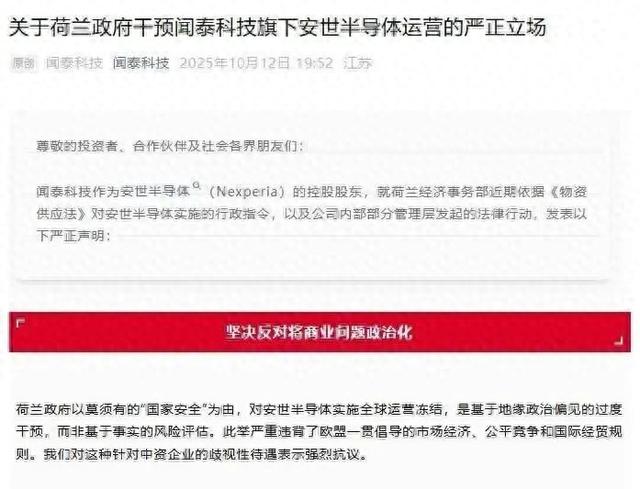
Group 1 - The Dutch government has taken control of Nexperia, a subsidiary of China's Wingtech Technology, citing "national security" concerns, freezing assets worth up to 14.7 billion yuan [1] - This action has sparked discussions about "cross-border industrial plunder," indicating a shift in global tech competition from isolation to alliance-based containment against China [2][4] - Nexperia, a leading player in the automotive power device sector, has a complete vertical integration in chip design, manufacturing, and testing, serving major clients like Samsung, Apple, and Tesla [3] Group 2 - The U.S. has been identified as the driving force behind this multinational crackdown, viewing Wingtech Technology as a strategic threat since its acquisition of Nexperia in 2019 [4] - The U.S. government has previously placed Wingtech Technology on an "entity list," restricting its access to U.S. technology and equipment, which facilitated the Dutch government's subsequent actions [4][6] - The Dutch government acted swiftly, issuing a global ban and freezing Nexperia's operational autonomy, leading to a court ruling that stripped the Chinese management of their control [6][7] Group 3 - In response to the Dutch government's actions, Wingtech Technology announced plans to seek legal remedies and engage with Chinese government departments for support [8][11] - The broader context involves the U.S. systematically blocking and suppressing Chinese semiconductor companies to maintain its technological dominance, aiming to achieve a strategy of "chip containment" against China [12][14] - The U.S. has expanded its restrictions from advanced chips to a wider range of semiconductor products and manufacturing equipment, indicating a comprehensive approach to limiting China's semiconductor capabilities [15][17]

国产EDA到底带来怎样的惊喜?
Ke Ji Ri Bao· 2025-10-15 23:23
Core Insights - The launch of two domestically developed EDA design software by Qiyunfang, a subsidiary of Xinkailai, marks a significant advancement in China's high-end electronic design software capabilities, filling a long-standing technological gap in the industry [1][3] Group 1: Importance of EDA - EDA is considered the "mother of chips," serving as a core toolchain for chip design that spans the entire process of integrated circuit design, manufacturing, and testing [1] - EDA tools are essential for converting abstract circuits into producible chip layouts, significantly enhancing design efficiency and supporting complex systems and advanced processes [1][2] Group 2: Domestic Software Level - The global EDA market has been dominated by three international firms: Synopsys, Cadence, and Siemens EDA, which collectively hold over 70% market share in China [3] - The domestic industry has been constrained by reliance on foreign EDA tools, but Qiyunfang's new software aims to fully replace these foreign products [3] - The development of EDA software faces challenges due to technical barriers, ecological challenges, and talent shortages, requiring breakthroughs in algorithms, ecosystems, and talent [3] Group 3: Highlights of Domestic EDA Software - Qiyunfang's EDA software utilizes a parallel operation model, allowing better design collaboration among hardware engineers, with schematic design software supporting 100 concurrent users and PCB design software supporting 20 [4] - The performance of the two new EDA products has improved by 30% compared to industry benchmarks, with the collaborative design model reducing hardware development cycles by 40% and increasing the success rate of intelligent design by 30% [4] - The software is compatible with various domestic operating systems, databases, and middleware, facilitating integration with numerous ecological software platforms [4]
第四波国补资金来了 叠加天猫双11家电家装3C数码打5折 今晚8点开卖
Guan Cha Zhe Wang· 2025-10-15 04:05
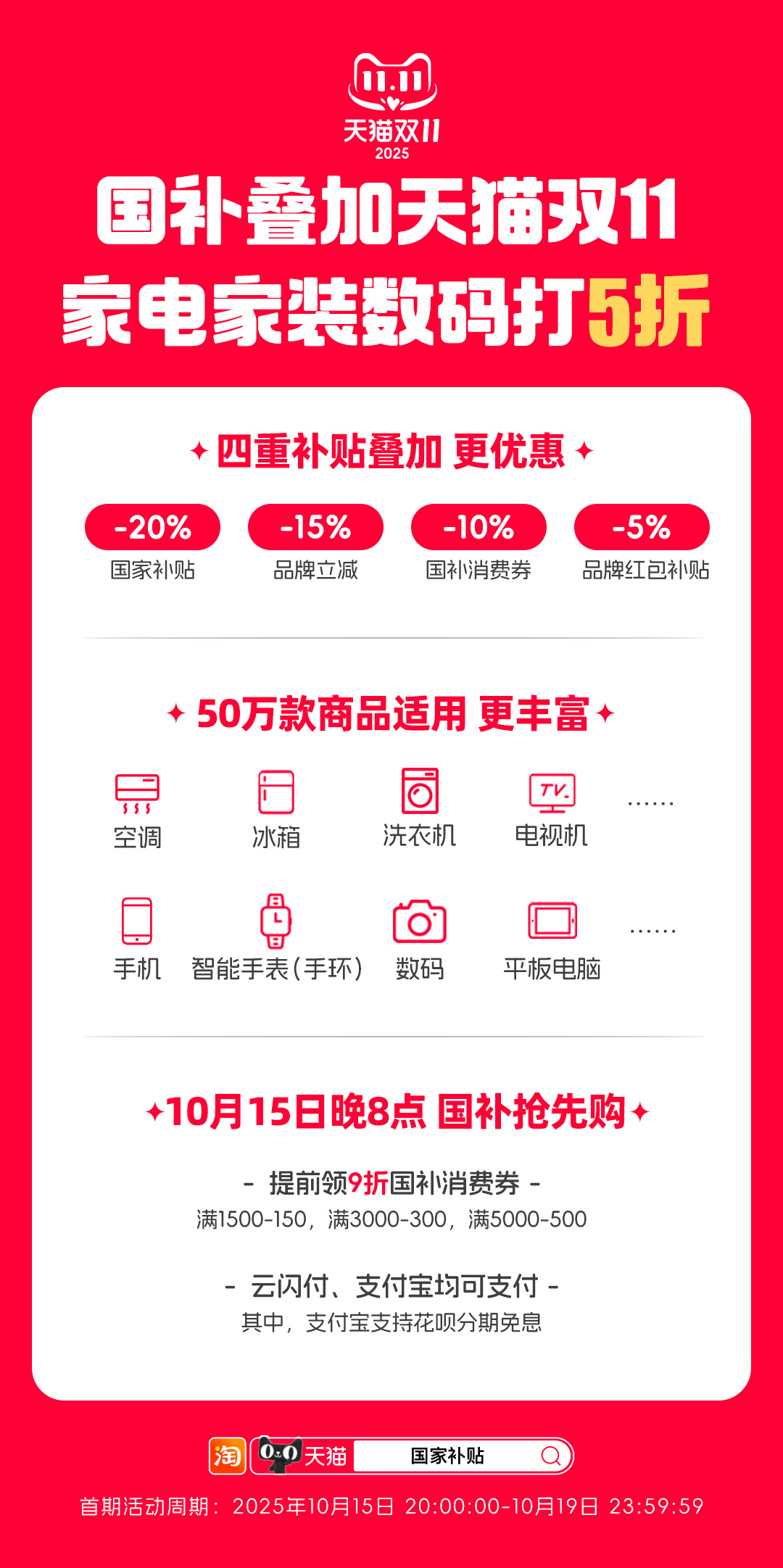
2025年第四波国补资金重磅落地,今晚8点,天猫双11国补5折开卖! 记者获悉,今年天猫双11,超3700个品类,9000个品牌商家,50万款品牌商品参与国补,覆盖家电、家装、家居、3C数码等全品类,支持双11优惠与国补 叠加,补贴商品数量较618翻倍,是全年优惠力度最大、规模最大的一次国补换新消费! 据悉,多款苹果产品参与国补,最新款苹果iPhone17,直接补贴500元!华为Pura80Ultra多重补贴后直降2400元!海尔一级能效燃气热水器K70A,原价6999 元,双11叠国补仅2959.2元,打42折!小米巨省电1.5匹空调,原价2899元,双11叠国补到手价1379元,打48折! | | 商品名 | 日常参考价 国补叠加 | | | --- | --- | --- | --- | | NEW | 四天 iPhone17 | 5999 | 5499 | | | (256G) | | | | | 华为 Pura 80 Ultra | 9999 | 7599 | | NEW | ூ门子 极浄魔盒3.0 | 9999 | 4552 | | | 洗碗机 | | | | NEW | 海尔 云溪4.0pro ...





【钛晨报】李强主持召开经济形势专家和企业家座谈会;入局造车?京东:联合宁德时代、广汽,新车将于11.11期间发布;沃尔玛与OpenAI合作,将在Chat...
Tai Mei Ti A P P· 2025-10-14 23:35
Group 1 - The meeting chaired by Premier Li Qiang highlighted the resilience and vitality of China's economy amidst challenges, with experts suggesting that favorable factors are accumulating despite existing difficulties [2][3] - Li emphasized the importance of implementing counter-cyclical adjustments and enhancing policy effectiveness to support economic recovery and high-quality development [3] - The focus will be on expanding domestic demand, strengthening the domestic circulation, and fostering a favorable industrial ecosystem to stimulate market vitality and increase quality supply [3] Group 2 - JD.com announced a collaboration with CATL and GAC to launch a new vehicle, aiming to integrate resources for enhanced safety, battery technology, and a comprehensive car ownership experience [6] - The departure of key executives from Wahaha raises concerns about leadership stability within the company, although official responses remain pending [8] - DJI is appealing a decision by the U.S. Department of Defense that classified it as a "Chinese military enterprise," asserting its commitment to preventing military misuse of its products [10][11] Group 3 - The Abu Dhabi Investment Authority signed a strategic cooperation agreement with Stellantis to develop an integrated automotive ecosystem in the UAE [11] - Ansem Semiconductor appointed its CFO as interim CEO following export control measures imposed by the Chinese Ministry of Commerce, indicating ongoing communication efforts to mitigate impacts [12] - Salesforce and OpenAI announced a partnership to enhance enterprise experiences through AI, integrating OpenAI's models with Salesforce's platform [13] Group 4 - Johnson & Johnson plans to spin off its orthopedic business to enhance strategic focus and create shareholder value, establishing a new independent company [14] - Walmart is collaborating with OpenAI to enable direct shopping through ChatGPT, expanding its digital presence and customer engagement [14] Group 5 - The Shanghai Municipal Economic and Information Commission released an action plan to enhance the scale of intelligent computing terminals, promoting the application of core components like GPUs [15] - The National Development and Reform Commission issued guidelines to support energy-saving and carbon reduction projects in key industries, including power and steel [17] - The Market Supervision Administration approved China's first national standard for livable cities, aiming to improve urban planning and management [18] Group 6 - The Shanghai Stock Exchange and China Securities Index Co. will launch the Shanghai Stock Exchange Sci-Tech Innovation Board Growth Strategy Index, reflecting the performance of innovative companies [20] - Pony.ai received approval for its Hong Kong IPO, marking a significant step in its dual listing strategy after its initial public offering in the U.S. [20] - Mindray Medical announced plans to issue H-shares and list on the Hong Kong Stock Exchange, pending shareholder and regulatory approvals [21] Group 7 - Sunac China Holdings' offshore debt restructuring plan received overwhelming support from creditors, paving the way for court approval [21] - The International Monetary Fund projected a global economic growth rate of 3.2% for 2025, highlighting the impact of rising tariffs on global uncertainty [22]

稀土核弹炸穿光刻机命脉!阿斯麦断供反被掐脖 全链崩塌在即
Sou Hu Cai Jing· 2025-10-14 13:52
Core Viewpoint - The new Chinese rare earth regulations have created significant challenges for ASML, the leading lithography machine manufacturer, by tightening control over the supply chain and requiring approvals for any use of Chinese rare earth materials, even in minimal amounts [1][3][4] Group 1: Impact on ASML - ASML's EUV machines contain over 3,000 rare earth components, with 90% of the supply chain dependent on China, making it nearly impossible for ASML to bypass Chinese suppliers [3][4] - The new regulations require ASML to disclose the origin and processing of any rare earth components, even if they constitute only 0.1% of the total material [3][4] - ASML's clients, including major semiconductor manufacturers like TSMC and Intel, are now facing production delays and are demanding transparency regarding rare earth content in their equipment [4][6] Group 2: Broader Industry Implications - The new regulations have caused panic among European companies reliant on Chinese rare earths, such as Volkswagen and Siemens, which are critical for their electric motors and wind turbines [4][6] - The situation highlights the risks of over-reliance on a single supply chain, as companies may find themselves vulnerable to geopolitical tensions [6][7] - The ongoing conflict between technology and politics is reshaping the global supply chain, emphasizing the need for companies to adapt and seek diversified sources [6][7][8]
阿斯麦慌了,欧洲裂了,中国动了
Sou Hu Cai Jing· 2025-10-13 10:08
2025年10月9日,中国商务部突然把稀土的开采、冶炼和磁材制造技术加进了出口管制名单,新规说得很明白,只要产品里有百分之零点一的中国稀土成 分,就得先找中国审批,不管你是在德国生产,还是在日本制造,只要用了中国的技术,就绕不开这一关,这一招正好打在了荷兰阿斯麦公司的软肋上。 欧洲这边更乱,德国最头疼,大众、宝马这些大车企,还有西门子的风力发电机,全靠稀土磁体,德国经济部嘴上说在评估,心里早慌了,不敢明着反对中 国,又怕被牵连,法国倒干脆,拿出一亿零六百万欧元,拉上日本建了个稀土回收厂,想彻底绕开中国供应链,这是欧洲唯一真动手去中的人。 欧盟内部吵个不停,北欧国家想着跟中国搭伙干活,东欧国家偏要联手施压,委员会发了个声明说有点担心,可谁也拿不出个能落地的法子,各人盘算各人 的,谁也不买谁的账,阿斯麦夹在中间,两边都不敢得罪,美国惹不起,中国也动不得,只能硬着头皮撑着。 数据不会说谎,2023年阿斯麦在中国赚了六十四亿多欧元,占它总收入的近三成,现在这笔钱基本没了,不是它不想卖,是中国不让卖,稀土不是普通东 西,它是机器的心脏,EUV光刻机的激光系统、磁悬浮平台、伺服控制器,全靠稀土永磁体撑着,全球眼下找不到替 ...
关税阴霾再临,“稀土牌”效力如何?股市能撑住吗?
虎嗅APP· 2025-10-13 09:44
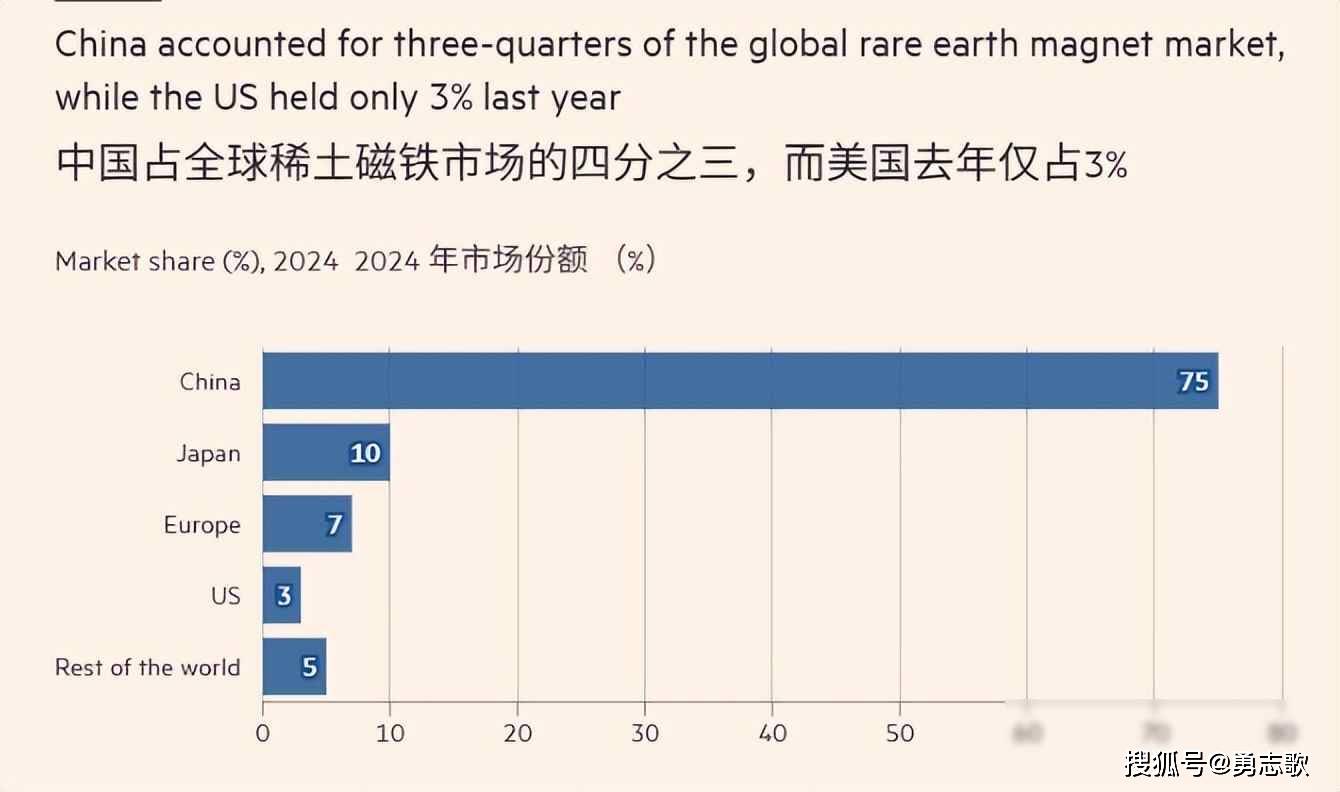
Core Viewpoint - The article discusses the escalating trade tensions between the US and China, particularly focusing on the implications of China's export controls on rare earth metals and the US's potential tariff increases on Chinese imports. It highlights the strategic importance of rare earths in global supply chains and the ongoing geopolitical maneuvering between the two nations [2][8][11]. Group 1: Trade Tensions and Market Reactions - Following the announcement of new tariffs by President Trump, global stock markets experienced significant declines, with the S&P 500 index dropping 2.4% in one week, marking the most severe sell-off since April [6][5]. - The Chinese government's decision to impose stricter export controls on rare earths is seen as a strategic move to enhance its leverage in trade negotiations with the US [9][10]. - The article notes that the market's reaction to these developments may present buying opportunities, particularly if the situation stabilizes post-APEC summit [3][20]. Group 2: Rare Earths Market Dynamics - China dominates the global rare earth market, accounting for approximately 88% of rare earth oxide production and 91% of rare earth metal production [8][9]. - The strategic importance of rare earths is underscored by their critical role in advanced manufacturing processes, including electric vehicle production [9][10]. - China's recent export control measures are part of a broader strategy to utilize its rare earth resources as a bargaining chip in international trade [11][12]. Group 3: US Export Controls and EDA Software - The US has implemented export controls on electronic design automation (EDA) software, which is crucial for semiconductor design, further complicating the technology landscape between the two countries [14][15]. - The restrictions on EDA software have significant implications for China's semiconductor industry, which relies heavily on foreign technology for advanced chip design [16][17]. - The article suggests that while the US has strong leverage through its technology controls, China's rare earth dominance provides it with a counterbalancing strategy [11][12]. Group 4: Future Market Outlook - The article anticipates that the fourth quarter will be critical for the Hong Kong stock market, influenced by US-China negotiations and macroeconomic factors [21]. - Despite current market volatility, there remains a willingness among investors to buy on dips, supported by low interest rates and favorable policy conditions in China [20][21]. - The ongoing AI theme in the US market continues to attract investment, with analysts suggesting that the current market dynamics do not yet indicate a bubble [22].