瑞幸咖啡

Search documents
再去美国上市,瑞幸还能讲什么故事? | 「钛度号」作品月榜第133期
Tai Mei Ti A P P· 2025-12-25 05:53
Core Insights - The article discusses the "Titanium Praise" ranking, which evaluates outstanding works on the Titanium Media APP based on various metrics such as popularity, content quality, and editorial recommendations. This ranking will be published across multiple channels and will serve as a reference for the annual "Titanium Media Author" awards [2]. Group 1: Rankings and Highlights - The top-ranked article discusses Luckin Coffee's potential for overseas expansion, emphasizing the need for the company to prove its ability to replicate its business model beyond the Chinese community [2]. - The second-ranked piece analyzes Google's energy efficiency in data centers, suggesting that the real issue for AI is not a lack of electricity but rather a lack of time [3]. - The third-ranked article examines the challenges faced by Seris on its first day of trading in Hong Kong, highlighting the difficulties of entering the high-end market amid intense domestic competition [4]. - The fourth-ranked work reflects on the impact of leaving New Oriental, likening it to graduating from a prestigious institution and emphasizing the need for adaptability in the current landscape [5]. - The fifth-ranked article discusses the competitive landscape for China's "four small dragons" in the GPU sector, indicating that successful IPOs will mark the beginning of a more challenging competition [6]. - The sixth-ranked piece delves into Lei Jun's struggles with Xiaomi, pointing out the risks associated with rapid growth and the pressures of maintaining a leading position [7]. - The seventh-ranked article critiques the capital market's hesitance towards trendy toys, suggesting that fleeting popularity and a thin consumer base hinder long-term success [8]. - The eighth-ranked work explores the competitive dynamics in the food delivery market, emphasizing the need for instant supply to redefine retail [9]. - The ninth-ranked article highlights the potential of short drama e-commerce as a new growth area, while reiterating that trust, efficiency, and supply chain remain foundational to e-commerce [10]. - The tenth-ranked piece discusses the evolution of venture capital into high-interest lending, reflecting on the narrowing paths for investment and the need for innovative funding solutions [11].


广州前11月社零总额破万亿元 消费品市场回暖
Zhong Guo Xin Wen Wang· 2025-12-25 05:43
Group 1 - The total retail sales of consumer goods in Guangzhou reached 1,007.8 billion yuan from January to November, with a year-on-year growth of 4.2%, indicating a recovery in the consumer goods market [1] - In November, the automotive retail market saw a significant boost due to year-end promotional activities, with retail sales of automotive goods reaching 114.4 billion yuan, a year-on-year increase of 4.2%, and a monthly growth rate of 64.1% [1] - The cumulative retail sales of new energy vehicles reached 50.7 billion yuan, with a year-on-year growth of 12.7% and a monthly growth rate of 118.3% in November [1] Group 2 - Online consumption in Guangzhou maintained strong growth, with retail sales through public networks amounting to 315.0 billion yuan, accounting for 31.3% of the total retail sales of consumer goods [2] - The restaurant sector experienced a boost, with online dining revenue reaching 16.6 billion yuan, a year-on-year increase of 16.2%, and a monthly growth rate of 23.7% in November [2] - Retail sales of sports and entertainment products and gold and silver jewelry reached 12.5 billion yuan and 16.3 billion yuan respectively, with year-on-year growth of 21.7% and 10.2% [2]
下一代中国顶级企业,或许将诞生于数字文明大航海
Sou Hu Cai Jing· 2025-12-25 05:33
Core Insights - The article highlights the rapid globalization of Chinese brands, exemplified by companies like Pop Mart, Xiaomi, and Miniso, which have achieved significant overseas revenue growth in a short period, contrasting with the lengthy globalization processes of traditional giants like Coca-Cola and McDonald's [3][6]. Group 1: Company Expansion - Pop Mart established its overseas business center in 2018, and within seven years, overseas markets contributed approximately 50% of its sales, achieving the founder's goal [3]. - Xiaomi's overseas revenue surged from 4.06 billion yuan in 2015 to 74.9 billion yuan in the first half of 2025, marking an increase of over 17 times [3]. - Miniso opened its first overseas store in Singapore in 2015, and by June 2025, it had expanded to 3,307 overseas stores, with overseas revenue reaching 3.534 billion yuan, accounting for 40.9% of total revenue [3]. Group 2: Digital Transformation - The article discusses a fundamental change in the driving forces of globalization, emphasizing a shift from traditional linear growth models to data-driven business models that allow for exponential growth [4][7]. - Chinese companies leverage their inherent digital capabilities to replicate systems quickly in new markets, bypassing lengthy talent training periods [7]. Group 3: Challenges in Globalization - Chinese brands face challenges in overseas markets due to fragmented payment systems and regulatory environments, which hinder their ability to operate efficiently [5][12]. - The article notes that each country has its own dominant local payment methods, leading to high adaptation costs for Chinese companies [12]. - The lack of unified systems across different regions complicates operations, making it difficult for companies to maintain a cohesive global network [13]. Group 4: PingPong's Role - PingPong is positioned as a solution to the complexities of global financial and compliance challenges, offering services that simplify these processes for Chinese companies [14][15]. - The company has obtained over 60 payment licenses globally, allowing brands to access localized payment capabilities without the need for extensive negotiations [15]. - PingPong's system enhances operational efficiency by providing real-time visibility into global funds, enabling data-driven decision-making for brands [19]. Group 5: Future Outlook - The article concludes that the future of Chinese brands will rely on digital transformation to achieve global brand recognition, transitioning from "Made in China" to "Global Brands" [20][21].

门店破万,跻身咖啡「四大天王」,前饿了么高管和瑞幸掰手腕
36氪· 2025-12-25 00:26
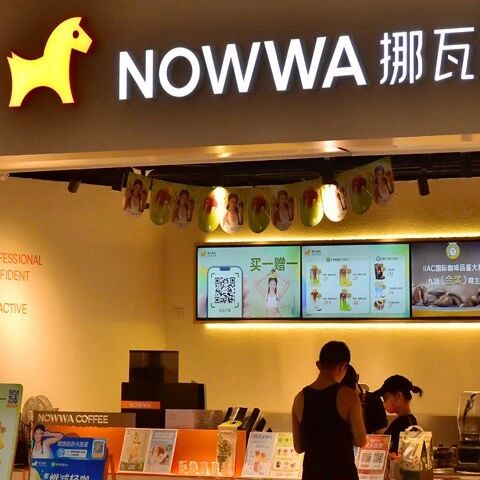
Core Viewpoint - The article discusses the rapid expansion of coffee brands in China, particularly focusing on the emergence of four major players: Luckin Coffee, Kudi Coffee, Lucky Coffee, and Nova Coffee, which have collectively reached over 10,000 stores, marking a significant milestone in the coffee industry [4][15]. Group 1: Market Dynamics - Nova Coffee has recently surpassed 10,000 stores globally, joining the ranks of other major coffee brands, with Luckin Coffee leading at 29,000 stores, Kudi at 15,000, and Lucky Coffee at 10,000 [4]. - The average consumer spending for these brands varies, with Luckin at 14.28 yuan, Kudi at 10.48 yuan, Lucky Coffee at 8.14 yuan, and Nova Coffee at 16.99 yuan, indicating a focus on affordable coffee options [4]. Group 2: Business Model and Strategy - Nova Coffee's unique approach involves a "store-in-store" model, allowing it to expand rapidly with minimal investment, leveraging existing foot traffic from partner establishments like restaurants and convenience stores [12][20]. - The initial investment to open a Nova Coffee outlet in a convenience store is approximately 1.6 million yuan, significantly lower than traditional standalone coffee shops, which can cost between 180,000 to 230,000 yuan [22][23]. Group 3: Competitive Landscape - The article highlights the competitive strategies of the four major coffee brands, noting that Kudi Coffee has achieved rapid expansion in just two years, while Nova Coffee has focused on a more gradual approach with a strong emphasis on online sales and partnerships [16][28]. - Nova Coffee's growth strategy includes a shift back to the "store-in-store" model after experimenting with independent stores, indicating a flexible approach to market demands [19][24]. Group 4: Future Outlook - Nova Coffee aims to reach over 30,000 stores by 2030, with a focus on maintaining profitability and brand integrity amidst rapid expansion [26]. - The article emphasizes the importance of sustainable growth models and the need for brands to differentiate themselves in a saturated market, questioning how they will maintain consumer loyalty as coffee becomes ubiquitous [29][30].
蜜雪翻车、古茗出圈,奶茶店卖早餐究竟有多难
3 6 Ke· 2025-12-25 00:25
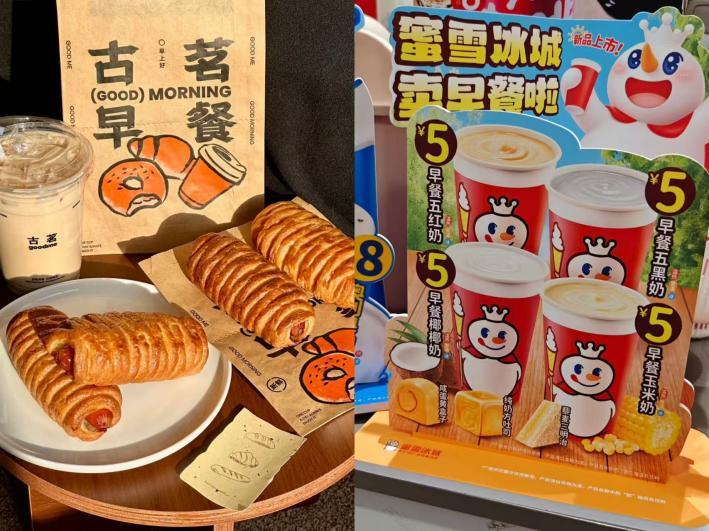
Core Insights - The tea beverage brands are entering the breakfast market to fill the operational gaps during morning hours, aiming to enhance store efficiency and increase average transaction value through breakfast combo offerings [1][8][12] - Despite the potential, the breakfast market presents challenges such as low average transaction prices, high convenience demands, and complex consumer preferences [2][13][15] Group 1: Market Dynamics - The new breakfast offerings from brands like Mixue Ice City and Gu Ming represent a significant shift as tea brands officially enter the breakfast segment, previously dominated by other food service providers [1][6] - The breakfast market is characterized by low average prices (6-10 yuan) and strong regional preferences, making it a challenging segment for tea brands to penetrate effectively [12][13][15] - The saturation of the tea beverage market has led to a slowdown in growth, with a projected market growth rate of only 6.4% in 2024 compared to 52% three years ago [8][9] Group 2: Product Offerings and Consumer Response - Mixue Ice City has introduced a breakfast menu featuring dairy drinks priced at 5 yuan and combo meals at 7.9 yuan, while Gu Ming offers a breakfast combo at 13 yuan, which has received a more favorable consumer response [6][18] - Consumer feedback indicates that while some breakfast offerings are perceived as expensive compared to local alternatives, others, like Gu Ming's coffee and bread combo, are viewed as more attractive [16][18] - The success of breakfast offerings may depend on aligning products with consumer expectations and preferences, particularly in terms of pricing and variety [15][19] Group 3: Strategic Considerations - The operational complexity of introducing breakfast items requires careful consideration of supply chain logistics, staffing, and product differentiation to meet consumer demands [2][13][19] - Brands must cultivate consumer habits around breakfast purchases at tea shops, similar to established practices in coffee shops, which may take time and consistent marketing efforts [19][20] - The experience of McDonald's in the breakfast segment highlights the importance of localizing offerings and maintaining competitive pricing to establish a strong market presence [20][24]
美团拼好饭与汉堡王合作定制早餐 价格战之后加码改造供应链
Nan Fang Du Shi Bao· 2025-12-24 14:55
Core Insights - The competition in the food delivery industry is shifting towards supply chain optimization rather than price wars, as evidenced by Meituan's "Pin Hao Fan" initiative [2][8] - Meituan's CEO Wang Xing stated that price wars do not create value and are unsustainable, indicating a strategic pivot towards enhancing supply-side capabilities [2][4] Group 1: Supply Chain Development - The "Pin Hao Fan" team is currently developing new dishes and will create a selection list and process standards for various cuisines, indicating a focus on improving product quality [3] - As of July 2025, "Pin Hao Fan" is projected to reach a peak daily order volume of over 35 million, showcasing its rapid growth since its launch in 2020 [3] - The introduction of "Pin Hao Fan" has led to a 30% increase in merchant orders and a 20% reduction in operational costs, highlighting its positive impact on business efficiency [3][4] Group 2: Strategic Partnerships - Meituan has launched a "10,000 Brands" initiative to support 10,000 well-known restaurant brands with traffic allocation and joint custom services, aiming to enhance brand collaboration [4] - The collaboration with Burger King to offer customized meal packages at competitive prices reflects a strategy to attract price-sensitive consumers while ensuring quality [5][7] - Other brands, including KFC and Haidilao, have also partnered with "Pin Hao Fan" to develop customized meal options, indicating a trend towards collaborative product development in the industry [7] Group 3: Industry Trends - The shift from price wars to supply-side competition is becoming a key focus in the food delivery sector, as companies seek to establish sustainable business models that balance cost and quality [8] - The collaboration model between "Pin Hao Fan" and brands is seen as a test of the platform's ability to define products and enhance supply chain efficiency [8] - The evolving consumer preferences towards value and quality over mere low prices are driving this transformation in the food delivery landscape [7][8]

新消费派|咖啡行业“万店之战” 的下半场,从“拼规模扩张”转向“拼综合能力”
Xin Hua Cai Jing· 2025-12-24 12:29
Core Insights - The coffee industry in China is experiencing significant expansion in 2025, with brands like Luckin, Kudi, Lucky Coffee, and Nova Coffee surpassing 10,000 stores, indicating accelerated competition [1] - The market is shifting from extensive expansion to layered competition, focusing on quality upgrades, efficiency optimization, and resource integration by 2026 [1][2] - The coffee market is projected to reach approximately 130 billion yuan in 2025, providing a prime opportunity for established brands to capture market share [2] Market Dynamics - Nova Coffee's rapid expansion is noteworthy, with its store count increasing from 3,258 in July 2025 to over 10,000 by December, showcasing a growth rate that outpaces industry averages [2][3] - The "parasitic" model employed by Nova Coffee, embedding coffee services within existing commercial entities, has allowed for efficient market penetration and reduced operational costs [3][4] - The coffee industry is undergoing a transformation where brands must either increase prices for premium positioning or expand to dilute fixed costs, with many opting for the latter [4] Competitive Landscape - The coffee sector is entering a structural reshuffle, with volume-driven brands like Luckin and Lucky Coffee focusing on lower-tier cities, while high-end brands may face contraction due to unclear positioning [6] - Starbucks leads globally with 40,990 stores, followed by Luckin with 29,214 and Kudi with 18,000, indicating a competitive hierarchy in the market [6] - Brands are increasingly recognizing the limitations of continuous expansion, with the "10,000 store" mark potentially serving as a ceiling for growth [7] Financial Performance - Luckin's third-quarter report for 2025 shows a net profit decline of 2% despite revenue growth, highlighting the challenges of maintaining profitability amid aggressive expansion [8] - Grid Coffee, focusing on high-quality offerings without engaging in price wars, has successfully expanded its store count to over 100, emphasizing a stable pricing strategy [9] Future Outlook - The coffee industry is evolving towards a focus on brand value and long-term sustainability, with companies needing to balance expansion efficiency with maintaining brand integrity [10] - Key competitive capabilities will include global supply chain management, digital operations, and the ability to adapt to market changes, particularly in overseas markets [11] - The future of competition will center on creating user value and addressing broader societal impacts, moving beyond mere scale and efficiency [11]

瑞幸拟竞购蓝瓶咖啡:高端化与全球化背后的战略豪赌
Xin Lang Cai Jing· 2025-12-24 10:04
Core Viewpoint - Luckin Coffee, China's largest coffee chain, is considering acquiring Blue Bottle Coffee, a premium brand owned by Nestlé, marking a significant move towards the global high-end coffee market [1][10]. Group 1: Strategic Implications - The potential acquisition is part of Luckin's globalization strategy, aiming to enhance its brand image and enter the high-end market dominated by Starbucks and independent cafes [2][11]. - Luckin Coffee has surpassed Starbucks in store count in China but is perceived as a budget brand, while Blue Bottle represents a premium positioning with a focus on quality and aesthetics [2][12]. - The acquisition could provide Luckin with over 100 international store locations, particularly in the U.S. and Japan, enhancing its global footprint [1][3][10]. Group 2: Financial Performance - As of Q3 2025, Luckin reported a net revenue of $2.1 billion, a 50% year-on-year increase, and a net profit of approximately $180 million, indicating strong financial health post-scandal [3][13]. - The financial strength supports the feasibility of a large-scale acquisition, allowing Luckin to pursue its strategic goals [3][13]. Group 3: Challenges and Risks - The acquisition faces significant challenges, including high valuation risks, as Blue Bottle's worth has likely increased since Nestlé's 2017 acquisition for approximately $425 million [4][14]. - Cultural integration poses a challenge, as Luckin's operational model differs significantly from Blue Bottle's emphasis on artisanal coffee and customer experience [4][15]. - Operational complexities arise from differing business models and supply chain management, which could hinder efficiency post-acquisition [4][15]. Group 4: Competitive Landscape - The coffee market in China is becoming increasingly competitive, with new entrants like Luckin's former executive's brand and aggressive pricing strategies from competitors [5][15]. - Luckin's profit margins are under pressure, with a reported 2.7% decline in net profit and a net profit margin of 8.26%, the lowest since 2022 [5][15]. - The global coffee industry is evolving, with major players like Starbucks expanding aggressively, indicating a shift from mere store count competition to brand positioning and capital strategies [7][17].
汉堡王与拼好饭合作“反向定制”模式,新款产品由用户决定
Jin Rong Jie· 2025-12-24 05:40
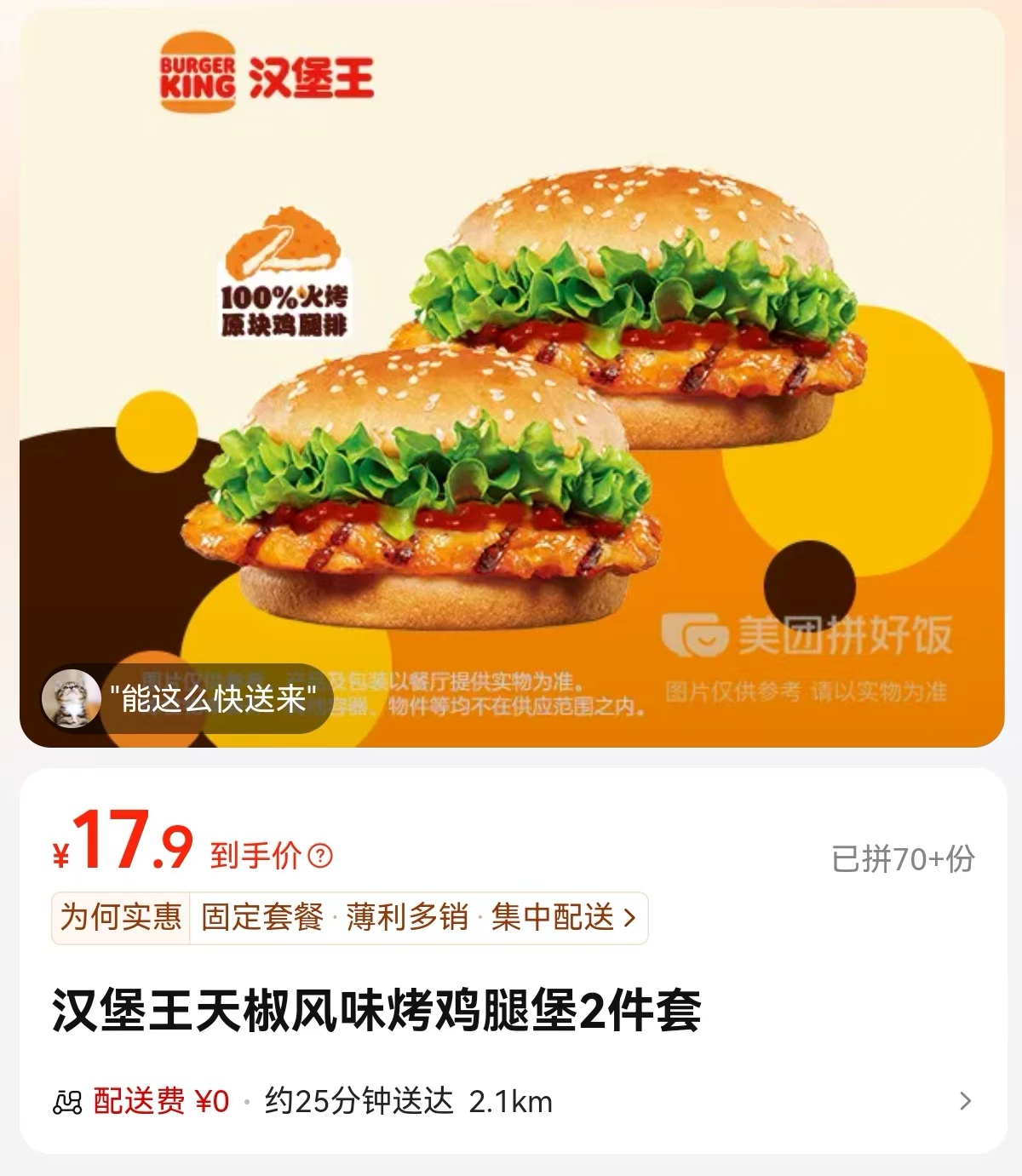
一份早餐汉堡豆浆套餐售价12.9元,两个天椒烤鸡腿堡售价17.9元,脆鸡双堡可乐三件套售价17.9元……近期,国际快餐品牌汉堡王联合美团拼好饭上线的 定制套餐,让很多职场白领直呼"真香"。 随着"拼团"外卖创新成为国内餐饮增长新亮点,汉堡王等国际快餐品牌巨头纷纷开始探索这一平价餐饮新模式,与拼好饭开展"C2M模式"(从消费者到生产 者)的深度合作,优化供应链、定制新产品。双方通过用户口味偏好和消费演变、用户评价与建议等数据的汇总分析,反向定制新产品,完全基于中国用户 真实需求推出新品。 "美团外卖作为汉堡王的核心合作伙伴之一,'拼好饭'业务在2025年为汉堡王带来了强劲的生意增长与显著贡献。"汉堡王中国相关负责人表示,这一增长背 后,是汉堡王对美团平台用户画像与需求演变的持续深耕。品牌调研发现,拼好饭活跃用户对于"超值"的定义正在快速进化:从过去单纯追求"低价吃饱", 已明确转向渴望在极具竞争力的价格内获得"味觉满足"与"品质体验"。 为直击这一核心痛点,汉堡王决定"多做一步",启动"C2M模式"反向定制战略。而拼好饭作为美团推出的平价外卖产品,正是借鉴电商零售行业的"C2M模 式",通过前端汇聚需求、后端摊 ...
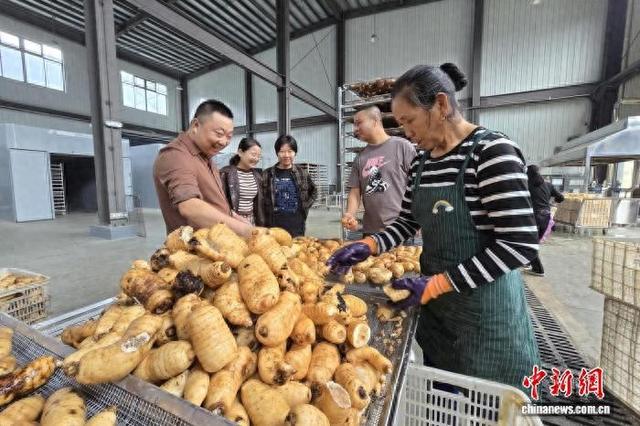
(乡村行·看振兴)湖北宜昌:特色农业扬帆远航
Xin Lang Cai Jing· 2025-12-24 04:24
Core Viewpoint - The article highlights the transformation of agriculture in Yichang, Hubei, focusing on the shift from traditional farming practices to modern, market-oriented approaches that enhance the value and identity of local agricultural products [1][3]. Group 1: Agricultural Development - Yichang is located at the junction of the middle and upper reaches of the Yangtze River, with significant vertical biological and climatic diversity, producing high-quality agricultural products such as tea, citrus, and vegetables [3]. - The local government has encouraged over 300 key leading enterprises to participate in national exhibitions, achieving direct sales exceeding 5 million yuan and establishing over 1,000 potential cooperation opportunities [3]. Group 2: Industry Integration - A cooperation agreement was signed between Luckin Coffee and the local government of Zhi Gui County to promote the cultivation of "Zhi Gui navel oranges," exemplifying resource complementarity and collaborative agricultural support [5]. - The city is accelerating the integration of agricultural industries, extending supply chains, and enhancing the added value of agricultural products [5]. Group 3: Specific Crop Success - In Longyang Tujia Autonomous County, the production of konjac has expanded from a small crop to a large industry, with nearly 50,000 acres of standardized bases and a surrounding planting area of 100,000 acres, exporting products to over 40 countries and regions, with a value increase of over three times [7]. - The agricultural processing sector in Yichang is projected to reach 497 enterprises with an annual output value exceeding 100 billion yuan in 2024, with 510 enterprises already achieving a processing output value of 897.83 billion yuan this year, expected to surpass 110 billion yuan by year-end [8].