
小米

Search documents
多家车企密集降价促销
YOUNG财经 漾财经· 2026-01-08 04:05
Core Viewpoint - Multiple automotive companies are launching aggressive discount promotions to counter the impact of the new energy vehicle purchase tax adjustments scheduled for 2026 [3][6]. Group 1: Promotions and Discounts - Tesla China has introduced purchase incentives for the Model 3/Y/Y L, offering a "7-year ultra-low interest" financing plan with a minimum down payment of 79,900 yuan and monthly payments starting at 1,918 yuan [3]. - GAC Group has announced promotional activities for its self-owned brands, including a maximum of 70,000 yuan in "government-enterprise subsidies" for vehicles like GAC Trumpchi [3]. - NIO's Firefly brand is providing benefits such as a 2,000 yuan purchase tax subsidy and rewards for repeat buyers [4]. - Xiaomi has launched promotions for its YU7 and SU7 Ultra models, with financing options including "3 years 0 interest" and a down payment starting at 74,900 yuan [4]. - BMW has implemented a significant price reduction across 31 models, with the BMW iX1 seeing a price drop from 299,900 yuan to 228,000 yuan, a reduction of 24% [5]. - Volvo is offering a limited-time promotion for the XC70, including a direct purchase tax subsidy of 14,000 yuan [5]. - Wuling Motors is providing full purchase tax subsidies for several new energy models, along with additional trade-in and financing incentives [5]. Group 2: Market Outlook - The automotive industry anticipates a decline in the market due to the new energy vehicle purchase tax policy changes and the withdrawal of national subsidies by the end of 2025 [6]. - Despite initial cautious forecasts, the introduction of vehicle scrappage and trade-in subsidies earlier than expected has led to a more optimistic outlook for the 2026 automotive market [6]. - The combination of substantial promotional efforts by car manufacturers and government incentives is expected to support continued growth in the Chinese automotive market in 2026 [6].



雷军再回应“1300公里只充一次电”争议;和府捞面否认使用预制菜;字节跳动辟谣跨界造车;马斯克:2026年将实现通用人工智能...
Sou Hu Cai Jing· 2026-01-08 01:35
Group 1 - The Chinese government aims to achieve a safe and reliable supply of key AI core technologies by 2027, with a focus on deep application in manufacturing and the creation of industry-specific large models [4] - The initiative includes the development of 3-5 general large models for manufacturing, 100 high-quality industrial data sets, and 500 typical application scenarios [4] - The plan also aims to cultivate 2-3 globally influential leading enterprises and a number of specialized small and medium-sized enterprises [4] Group 2 - Xiaomi's CEO Lei Jun addressed the controversy regarding the claim of driving 1300 kilometers on a single charge, stating that misinformation is being spread by "water armies" [7] - He emphasized that the original explanation was clear but has been misrepresented in fragmented media [7] - The company continues to face scrutiny over its marketing practices, particularly regarding the clarity of its claims [7] Group 3 - IKEA China announced the closure of 7 stores while planning to open over 10 smaller stores in key markets like Beijing and Shenzhen [10] - This strategic shift is aimed at refining its market presence and adapting to consumer needs [10] - The closures will take effect from February 2, 2026, as part of a broader evaluation of customer touchpoints [10] Group 4 - Google surpassed Apple in market capitalization for the first time since 2019, with a market cap of $3.88 trillion compared to Apple's $3.84 trillion [13] - This shift highlights the differing strategies of the two companies in the AI sector, with Google making significant advancements in AI technology [13] - The competition in AI has intensified since the launch of ChatGPT, with Google emerging as a strong player in the market [13] Group 5 - Major companies like JD.com and ByteDance are increasing employee salaries and bonuses, with JD's year-end bonus total rising over 70% [15] - This trend reflects a broader movement among large firms to enhance employee compensation amid competitive labor markets [15] - Companies are responding to market pressures and employee expectations by adjusting their compensation strategies [15] Group 6 - NIO's CEO Li Bin highlighted the rising costs of memory chips as a significant pressure point for the automotive industry, suggesting consumers consider purchasing vehicles sooner [13] - He noted that the automotive sector is competing for raw materials with AI and other industries, which could impact pricing [13] - The company is currently managing cost pressures while maintaining a margin for profitability [13] Group 7 - OpenAI launched ChatGPT Health, a dedicated space for health-related discussions, to enhance user experience and privacy [12] - This new mode aims to provide a safer environment for users to discuss health issues without mixing it with general conversations [12] - The initiative responds to the high volume of health inquiries on the platform, which exceeds 230 million weekly [12] Group 8 - The AI industry is witnessing significant advancements, with companies like MicroGenius completing the world's first autonomous surgery using a large model [25] - This breakthrough signifies a major step in integrating AI into medical practices, potentially transforming healthcare delivery [25] - The development reflects the growing intersection of AI technology and various sectors, including healthcare [25]
史无前例的小米之怒,一只熊引发的“血案”
Xin Lang Cai Jing· 2026-01-08 00:54
Core Viewpoint - The article discusses a significant public relations crisis involving Xiaomi and its fans, triggered by the company's collaboration with a controversial figure known as "Big Bear," leading to widespread backlash from the Xiaomi fan community [3][19]. Group 1: Background of the Incident - Xiaomi's collaboration with Big Bear, a figure who has had a contentious relationship with Xiaomi fans, sparked outrage when he was invited to a product launch and received a new phone from the company [7][19]. - The situation escalated when Big Bear publicly praised Xiaomi, which fans interpreted as a betrayal, leading to a wave of anger within the community [10][19]. Group 2: Fan Reactions - Xiaomi fans expressed their discontent on social media, with many threatening to unfollow the brand if the situation was not addressed [3][9]. - A prominent influencer, known as "Afternoon Sleep," publicly severed ties with Xiaomi, further igniting fan outrage and leading to a broader discussion about the company's public relations strategies [13][14]. Group 3: Company Response - In response to the backlash, Xiaomi issued unprecedented penalties, including the dismissal of the employee who coordinated with Big Bear and significant performance deductions for senior executives [19][20]. - The management's reaction indicates a serious concern over the brand's image and the loyalty of its fanbase, highlighting the delicate balance between influencer partnerships and community sentiment [21][22].

全球大公司要闻 | Anthropic洽谈按3500亿美元估值融资100亿美元
Wind万得· 2026-01-07 23:08
Group 1 - Eli Lilly announced the acquisition of biopharmaceutical company Ventyx Biosciences for over $1 billion to enhance its innovative drug pipeline and R&D capabilities in relevant therapeutic areas [2] - Qualcomm is in talks with Samsung Electronics regarding the outsourcing of 2nm chip manufacturing, planning to shift the Snapdragon 8 Elite processor from TSMC's 3nm to Samsung's 2nm process, with chip design completed and expected to enter mass production soon [2] - Nvidia is collaborating with Lenovo to launch the "Lenovo AI Cloud Super Factory" to accelerate AI deployment and expansion, and is also partnering with Caterpillar to transform heavy industry using physical AI and robotics technology [2] Group 2 - Ping An Life announced that its asset management arm will invest in Agricultural Bank of China H-shares, reaching a 20% stake by December 30, 2025, triggering a stake increase [5] - Baidu Kunlun Chip plans to raise up to $2 billion through a Hong Kong IPO to expand its AI chip business, aiding in technology development and market expansion [5] - Zhipu AI listed on the Hong Kong Stock Exchange under the code "2513," becoming the "first global large model stock" with a valuation expected to reach HKD 51.1 billion [5] Group 3 - Morgan Stanley has reached an agreement to take over Apple’s credit card business from Goldman Sachs, which plans to divest approximately $20 billion in outstanding credit card debt at a discount of over $1 billion [8] - Amazon's Ring will launch a commercial mobile surveillance vehicle priced at $5,000, equipped with 360-degree cameras and wireless connectivity, expected to enter the commercial security market this spring [8] - Alphabet's market capitalization reached $3.88 trillion, surpassing Apple for the first time since 2019, driven by growth in its search engine and AI business [8] Group 4 - Samsung Electronics reported an operating profit of 16.9 trillion KRW (approximately $12.7 billion) for Q4 2025, a 160% year-on-year increase, and announced a stock buyback of 250 trillion KRW (approximately $19 billion) for employee compensation [11] - Toyota's annual sales in the U.S. exceeded 2 million units, with strong performance in SUVs, while GAC Toyota is the only growth driver for GAC Group in 2025 [11] - Hyundai Motor selected Italy's Danieli to supply $650 million worth of metallurgical equipment for its U.S. green factory, accelerating its electrification transition [11]



宝马狂降30万元、特斯拉推5年0息政策
Mei Ri Shang Bao· 2026-01-07 23:00
Core Viewpoint - The automotive market is experiencing intensified competition as luxury brands initiate significant price reductions and promotional strategies to boost sales in 2026, with a focus on both traditional luxury and new energy vehicles [1][2]. Group 1: Traditional Luxury Brands - BMW has announced price cuts on 31 models, with reductions reaching up to 301,000 yuan, including a 20% drop on five models and a 24% drop on the iX1 eDrive25L [2][3]. - Cadillac is employing a "limited-time fixed price" strategy, offering discounts on models such as the CT5 and XT4, with reductions of up to 83,000 yuan [3]. - Other luxury brands like Volvo and Volkswagen are also participating in aggressive pricing strategies, with Volvo offering tax subsidies and Volkswagen providing significant price cuts on the Magotan [3]. Group 2: New Energy Vehicle Strategies - Tesla is focusing on financial incentives, offering low down payments and interest-free financing options for its Model 3 and Model Y, enhancing affordability for consumers [4]. - New energy brands like Xiaomi and NIO are enhancing customer loyalty through value-added packages, including financing options and additional features for their vehicles [4]. - Traditional domestic brands are also increasing their promotional efforts, with Chery and Wuling providing substantial subsidies and tax benefits to attract buyers [4].
手机业务如何应对内存风险、AIot、电车、研发布局.....一文读懂小米高管在高盛电话会发言
硬AI· 2026-01-07 15:35
Core Viewpoint - Xiaomi is focusing on increasing the average selling price of smartphones as a primary operational goal for 2026, while significantly boosting investments in artificial intelligence to transform its entire business line and setting an annual delivery target of 550,000 electric vehicles [1][3]. Group 1: Smartphone Business - Xiaomi's strategy to counter the unprecedented rise in memory chip costs involves increasing the average selling price (ASP) of its smartphones [5][6]. - The upcoming Xiaomi 17 Ultra will be priced 500-700 RMB higher than the Xiaomi 15 Ultra, reflecting the company's commitment to price increases [6]. - The company aims to improve its market share in China by 1 percentage point annually, emphasizing the strategic importance of the Chinese market for its premiumization strategy [8]. Group 2: AIoT Business - The AIoT segment is positioned as a profit stabilizer for Xiaomi, with expectations of approximately 20% year-on-year revenue growth in 2025 and a 2-2.5 percentage point expansion in gross margin [10]. - Xiaomi plans to increase the number of its retail stores from about 500 in 2025 to over 1,000 in 2026, while expanding product categories and exploring partnerships with cross-border e-commerce platforms [10][11]. - Currently, overseas AIoT revenue accounts for about 30% of total revenue, with the company viewing its overseas smartphone revenue (60%) as a long-term reference for AIoT business expansion [10]. Group 3: Electric Vehicle Business - Xiaomi has raised its 2026 delivery target for electric vehicles to 550,000, significantly higher than the previously set target of 410,000 for 2025 [13]. - The growth is driven by increased manufacturing capacity and consumer confidence in new vehicle models, including the SU7 and a new third model [14]. - The company aims to focus on the high-end electric vehicle market, which constitutes 50% of annual passenger car sales in China, while accounting for 80-90% of industry profits [15]. Group 4: R&D Investments - Xiaomi plans to invest 200 billion RMB in R&D from 2026 to 2030, focusing on AI, intelligent driving, and chip development [16]. - The company aims to leverage AI to empower its ecosystem and internal operations, with a significant portion of its code being AI-generated [17]. - Xiaomi has invested 135 billion RMB in the development of its XRING O1 chip over the past four years, with plans to enhance its self-developed smart electric vehicle chips [19][20].

东兴证券晨报-20260107
Dongxing Securities· 2026-01-07 09:34
Core Insights - The report emphasizes the significant potential for the revaluation of Chinese assets, indicating that the 2025 stock market performance reflects a process of asset revaluation in China [13] - It highlights the ongoing transformation of China's economy, with a shift from low-end manufacturing to high-value services, which is expected to enhance the profitability of Chinese assets [13] - The report suggests that the 2026 market will likely experience a transition from passive destocking to active restocking, providing support for both the economy and the stock market [16] Economic and Market Overview - The Chinese economy is entering a new phase of development with the "14th Five-Year Plan," which emphasizes technological innovation and the establishment of a modern industrial system [16] - The report notes that the liquidity environment is expected to remain relatively loose, which will facilitate the inflow of capital into the stock market [14] - It predicts that the A-share market will see a profit growth rate of around 12% in 2026, driven by improving economic fundamentals [17] Investment Opportunities - The report identifies key sectors for investment, including artificial intelligence, commercial aerospace, controlled nuclear fusion, and autonomous driving, which are expected to be at the forefront of technological advancement [17] - It also highlights the potential for overseas expansion of Chinese enterprises, particularly in sectors like photovoltaics, lithium batteries, new energy vehicles, and home appliances [18][19] - The report suggests that the insurance and brokerage sectors will see increased participation in the stock market, driven by policy reforms and a growing appetite for equity investments [14] Performance and Valuation - The report indicates that the A-share market is likely to enter a phase where both earnings and valuations will rise, providing further upward momentum for the slow bull market [15] - It notes that the overall return on equity (ROE) for A-shares has shown signs of bottoming out, with expectations for a rebound in 2026 [15] - The valuation of Chinese stocks is currently considered reasonable compared to U.S. stocks, with no significant bubble observed in the market [15]





手机业务如何应对内存风险、AIot、电车、研发布局.....一文读懂小米高管在高盛电话会发言
Hua Er Jie Jian Wen· 2026-01-07 08:54
Core Viewpoint - Xiaomi is focusing on increasing the average selling price of smartphones as a primary operational goal for 2026, while significantly boosting investments in artificial intelligence to transform its entire business line and setting an annual delivery target of 550,000 electric vehicles [1][2]. Group 1: Smartphone Business - Xiaomi's strategy to counter the rising costs of storage chips involves increasing the average selling price (ASP) of smartphones, with a clear focus on high-end models [3][4]. - The upcoming Xiaomi 17 Ultra will be priced 500-700 RMB higher than the Xiaomi 15 Ultra, reflecting this strategy [3]. - The company aims to increase its market share in China by 1 percentage point annually, emphasizing the strategic importance of the Chinese market for its high-end strategy [4]. Group 2: AIoT Business - The AIoT segment is positioned as a profit stabilizer for Xiaomi, with expectations of approximately 20% year-on-year revenue growth in 2025 and a margin expansion of 2-2.5 percentage points [5]. - Xiaomi plans to increase the number of its retail stores from about 500 in 2025 to over 1,000 in 2026, while expanding product categories and exploring partnerships with cross-border e-commerce platforms [5]. - Currently, overseas AIoT revenue accounts for about 30%, with overseas smartphone revenue at 60%, indicating potential for future growth in AIoT [5]. Group 3: Electric Vehicle Business - Xiaomi has raised its delivery target for electric vehicles to 550,000 units for 2026, significantly up from the previous target of 410,000 units for 2025 [6][7]. - The growth is driven by increased manufacturing capacity and consumer confidence in new models, including the SU7 facelift and a third model set for release in the second half of 2026 [6]. - The company aims for a healthy gross margin of over 20% in the electric vehicle segment, although margins may be lower in 2026 due to tax incentives and changes in product mix [6][7]. Group 4: R&D Investments - Xiaomi plans to invest 200 billion RMB in R&D from 2026 to 2030, focusing on AI, autonomous driving, and chip development [8][9]. - AI investments are expected to account for 25% of the 320-330 billion RMB R&D budget in 2025, with a commitment to maintaining reasonable levels of investment [9]. - The company has a strong focus on developing its own chips, with significant investments already made in the XRING O1 chip, which is expected to enhance its capabilities in the electric vehicle sector [11].
港股收评:全天低迷!恒指跌0.94%,科技股、金融股弱势,多只铝业股创新高
Ge Long Hui· 2026-01-07 08:17
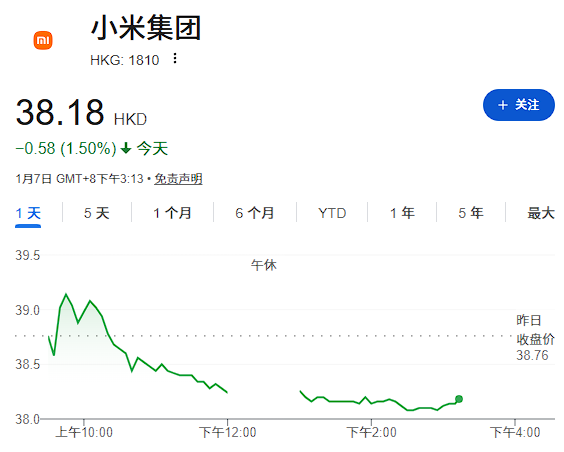
港股三大指数全天疲弱,市场连续反弹后做多情绪表现谨慎。恒生科技指数午后一度大跌至2.4%,最 终收跌1.49%,恒生指数、国企指数分别下跌0.94%及1.14%。 盘面上,大型科技股集体下跌拖累市场走低,其中,阿里巴巴跌超3%,网易、快手跌超2%,美团、小 米、腾讯、京东均跌超1%;昨日领衔大市上涨的中资券商股、保险股承压明显;机构预计2026年车市 销量下滑+车圈开年狂打价格战,汽车股板块跌幅居前,比亚迪股份、蔚来汽车、小鹏汽车跌幅明显; 国际原油短线走低,特朗普称委内瑞拉将向美国交付3000-5000万桶石油,石油股下跌,其中中海油跌 3%;脑机接口概念股继续昨日回调,军工股、锂电池股、内房股、银行股、苹果概念股、濠赌股纷纷 下跌。 另一方面,近期玖龙、五洲特纸、山鹰纸业等多家纸企调价信息,纸业板块领涨,其中玖龙纸业一度大 涨12%刷新阶段新高,生物医药股、光伏股、煤炭股、餐饮股齐涨,其中铝业股中国宏桥、创新实业、 南山铝业国际盘中均创新高。(格隆汇) ...
A股新年“第一战”,沿着三个确定性出击
Ge Long Hui· 2026-01-07 04:59
Group 1 - The core viewpoint emphasizes that 2026 presents three major certainties for investment opportunities, particularly in the Hong Kong internet sector, driven by AI's resurgence, continued liquidity from the Federal Reserve, and a return of southbound capital [1][2]. Group 2 - Certainty One: AI is expected to return to the market's core narrative in 2026, moving away from the "AI bubble" concerns, with Hong Kong internet companies playing a crucial role in AI infrastructure and applications [3]. Group 3 - Certainty Two: The Federal Reserve's continued easing, following three rate cuts in 2025 totaling 75 basis points, is anticipated to release significant liquidity into the market, benefiting growth sectors like Hong Kong internet [4]. Group 4 - Certainty Three: Historical patterns suggest that southbound capital will shift from a defensive retreat at the end of 2025 to aggressive accumulation in early 2026, favoring technology assets such as Hong Kong internet [4]. Group 5 - The Hong Kong Internet ETF, which tracks the Hong Kong Internet Index, is highlighted as a strategic investment tool, offering exposure to leading internet companies without QDII quota restrictions [5][6]. Group 6 - The Hong Kong Internet Index has shown high elasticity, outperforming the Hang Seng Index during previous market rallies, indicating potential for high returns [7]. Group 7 - The index is distinctly positioned, focusing on companies with internet platform ecosystems and technological innovation, while excluding non-internet sectors, thus providing a clear investment focus [9][10]. Group 8 - The index emphasizes leading companies with substantial market capitalization and liquidity, capturing long-term growth opportunities in the AI and internet sectors [10]. Group 9 - The current price-to-earnings ratio of the Hong Kong Internet Index stands at 22.08, which is lower than that of A-share and US tech indices, presenting a favorable investment opportunity [11][12].
