海澜之家

Search documents
北方“冷冷冷雨雨雨”模式开启 加厚家居服、秋衣秋裤、保暖内衣京东增长翻倍
Zhong Jin Zai Xian· 2025-10-11 10:17
Core Insights - The recent cold weather in northern China has significantly increased the demand for warm clothing, with sales of thermal underwear, autumn clothing, and thick homewear seeing a year-on-year increase of over 100% [1][2] - JD.com has launched a dedicated section for warm clothing to cater to consumer needs during this seasonal shift, promoting various products through its app [1][2] Product Highlights - Thermal underwear is a key category for autumn and winter, with brands like Hai Lan Zhi Jia and Jiao Nei offering innovative features such as antibacterial technology and temperature-locking technology [2][4] - Homewear is designed for both comfort at home and convenience for outdoor wear, with products like the "Plant Anti-Mite" homewear and children's homewear featuring soft materials and moisture-wicking properties [4][12] - Leggings and thermal pants are essential for women, with options that provide warmth and comfort without compromising on style, featuring advanced materials and designs [6][10] - Down jackets are highlighted as essential winter gear, with products designed for extreme cold conditions, ensuring high insulation and safety features for outdoor activities [8][10] Comprehensive Coverage - JD.com’s winter clothing collection addresses all scenarios from basic warmth to outdoor protection, ensuring consumers are equipped for home, commuting, and family outings during the colder months [14]



烟台海事服务保障全球最大固体运载火箭海上发射
Qi Lu Wan Bao Wang· 2025-10-11 07:51
Core Points - The "Yinli No.1" rocket successfully launched three satellites into orbit, marking its second mission and the 20th sea-based rocket launch supported by the Dongfang Spaceport [1][4] - The "Yinli No.1" is the largest solid rocket globally and the largest commercial rocket in China, capable of launching multiple satellites simultaneously [4] Group 1: Launch Details - The launch took place in the Haiyang sea area of Yantai, Shandong province, with significant support from local maritime authorities [1][3] - The Yantai Maritime Bureau has successfully ensured the safety of 20 sea-based launches of solid rockets and various tests for liquid rockets [5] Group 2: Safety and Coordination Measures - The Yantai Haiyang Maritime Office implemented a comprehensive safety plan, including real-time monitoring and traffic control during the launch [3] - Advanced technologies such as "Smart Maritime" and CCTV were utilized to enhance situational awareness and ensure a safe launch environment [3]
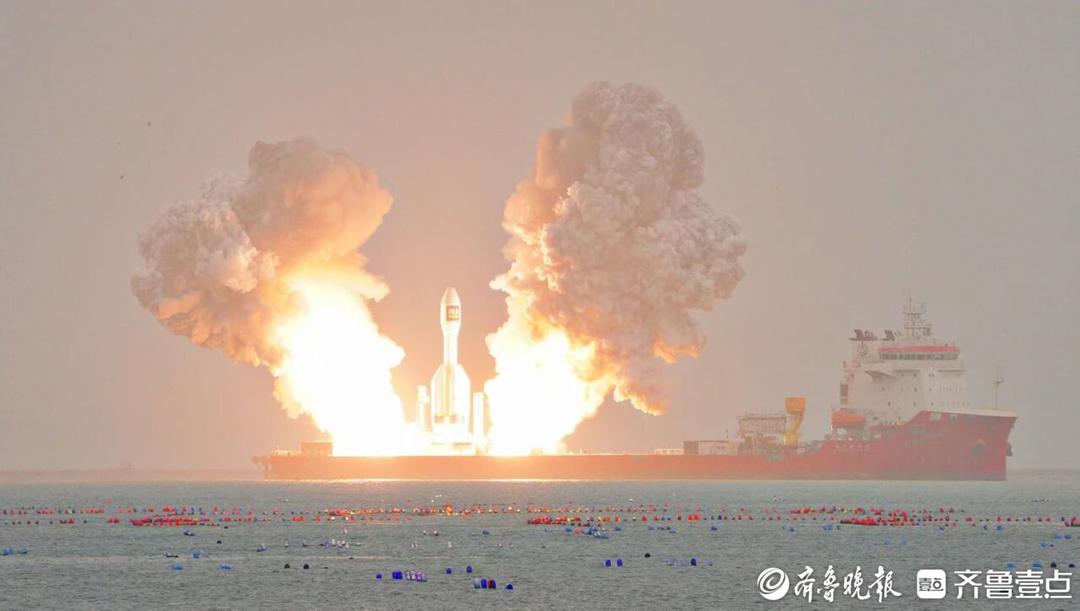
全球最大固体火箭海阳再问天!山东的“航天一盘棋”下得有多大?
Qi Lu Wan Bao Wang· 2025-10-11 07:12
Core Viewpoint - The successful launch of the "Gravitational No. 1" rocket marks a significant step for Shandong in establishing itself as a major player in the commercial aerospace industry, showcasing its ambitions and plans for development [4][16]. Group 1: Launch and Event Highlights - The "Gravitational No. 1" rocket was successfully launched, with the payload entering orbit within 10 minutes, generating applause from the command center and attendees [2][3]. - This event coincided with the first provincial-level conference on commercial aerospace in Shandong, highlighting the province's commitment to developing this industry [4]. Group 2: Infrastructure and Capabilities - The "Oriental Aerospace Port" has successfully supported 20 sea launches, placing Shandong at the forefront of maritime launch capabilities in China, with 127 satellites successfully deployed [5][6]. - The port features a comprehensive layout that includes various functional zones, allowing for a rapid response time of 2 hours from factory to launch [5]. Group 3: Industry Development and Policy Support - Shandong has established a complete aerospace industry chain, integrating rocket manufacturing, satellite production, and launch services, supported by favorable policies initiated since 2019 [6][10]. - The province aims to achieve a commercial launch capacity of over 30 launches per year by the end of the year, with plans for four additional launches in 2023 [6][10]. Group 4: Technological Innovations and Market Impact - The "Gravitational No. 1" rocket has set multiple records, including being the largest solid rocket globally and the largest commercial rocket in China, which will facilitate future mass production and high-frequency launches [7][8]. - The aerospace industry in Shandong is expected to generate a significant economic impact, with a projected output ratio of 1:10 for investments, leading to a rapid increase in the number of aerospace companies in the region [15]. Group 5: Talent and Ecosystem Development - The influx of talent from established aerospace experts has created a robust workforce in Shandong, enhancing the region's technological capabilities and fostering a collaborative environment among various aerospace enterprises [15]. - The establishment of multiple aerospace funds has attracted significant investment, further strengthening the ecosystem and supporting the growth of the commercial aerospace sector [14][13]. Group 6: Future Goals and Vision - By 2027, Shandong aims to produce 100 rockets and 150 commercial satellites annually, with the commercial aerospace industry projected to reach a scale of 50 billion yuan [16]. - The province is focused on advancing liquid rocket capabilities and developing reusable rocket technologies, marking the next milestones in its aerospace journey [16].
超1.7万家实体店,倒在2025上半年
Sou Hu Cai Jing· 2025-10-11 03:27
Retail Industry Overview - The total retail sales of consumer goods in China reached 24.55 trillion yuan in the first half of the year, with a year-on-year growth of 5.0%, slightly up from 3.7% in the same period last year [2] - Online retail sales amounted to 7.43 trillion yuan, growing by 8.5%, while offline retail sales were 17.12 trillion yuan, with a growth of 3.75%, indicating a shift in consumer shopping habits towards online platforms [2][5] Store Closures - In the first half of 2025, at least 1.71 million stores closed across various sectors, including major brands like Walmart, Starbucks, and Haidilao [2] - The supermarket sector saw at least 720 store closures, including national and regional brands such as Yonghui Supermarket and Hema [3][4] - The restaurant industry faced nearly 10,000 closures, while the apparel sector saw around 4,500 stores shut down [2][6] Supermarket Sector Challenges - Traditional supermarkets are experiencing accelerated closures due to increased competition from e-commerce and the rise of instant retail, which has grown from 36.6 billion yuan in 2017 to 650 billion yuan in 2023 [6] - Many supermarkets are closing underperforming stores and focusing on online business to adapt to changing consumer preferences [6][7] Department Store and Shopping Center Decline - The department store sector reported a year-on-year growth of only 1.2%, with at least 23 department stores and shopping centers closing in the first half of 2025 [8][9] - The decline is attributed to outdated business models and a lack of unique product offerings, leading to decreased foot traffic [11][12] Tea and Coffee Shop Closures - The tea and coffee sectors saw significant closures, with at least 6,673 tea and coffee shops shutting down in the first half of 2025 [13] - Brands like Heytea and Nayuki faced substantial store reductions, reflecting a market consolidation where only strong brands survive [15][20] Apparel Industry Adjustments - The apparel sector experienced a 3.1% year-on-year growth, with at least 4,563 clothing stores closing, including major brands like Semir and GU [21][24] - The closures are driven by high inventory levels, brand aging, and a shift towards larger store formats, which require higher operational efficiency [24][25][27] Cinema Industry Struggles - The cinema industry is facing a crisis, with a high vacancy rate of 30-40% and at least 38 cinemas closing in the first half of 2025 [28][30] - Factors contributing to this decline include high fixed costs, reliance on blockbuster films, and competition from streaming services [30][31][32] Other Industries - Various other sectors, including pet care, home improvement, and education, also experienced closures, indicating a broader trend of market contraction [34]



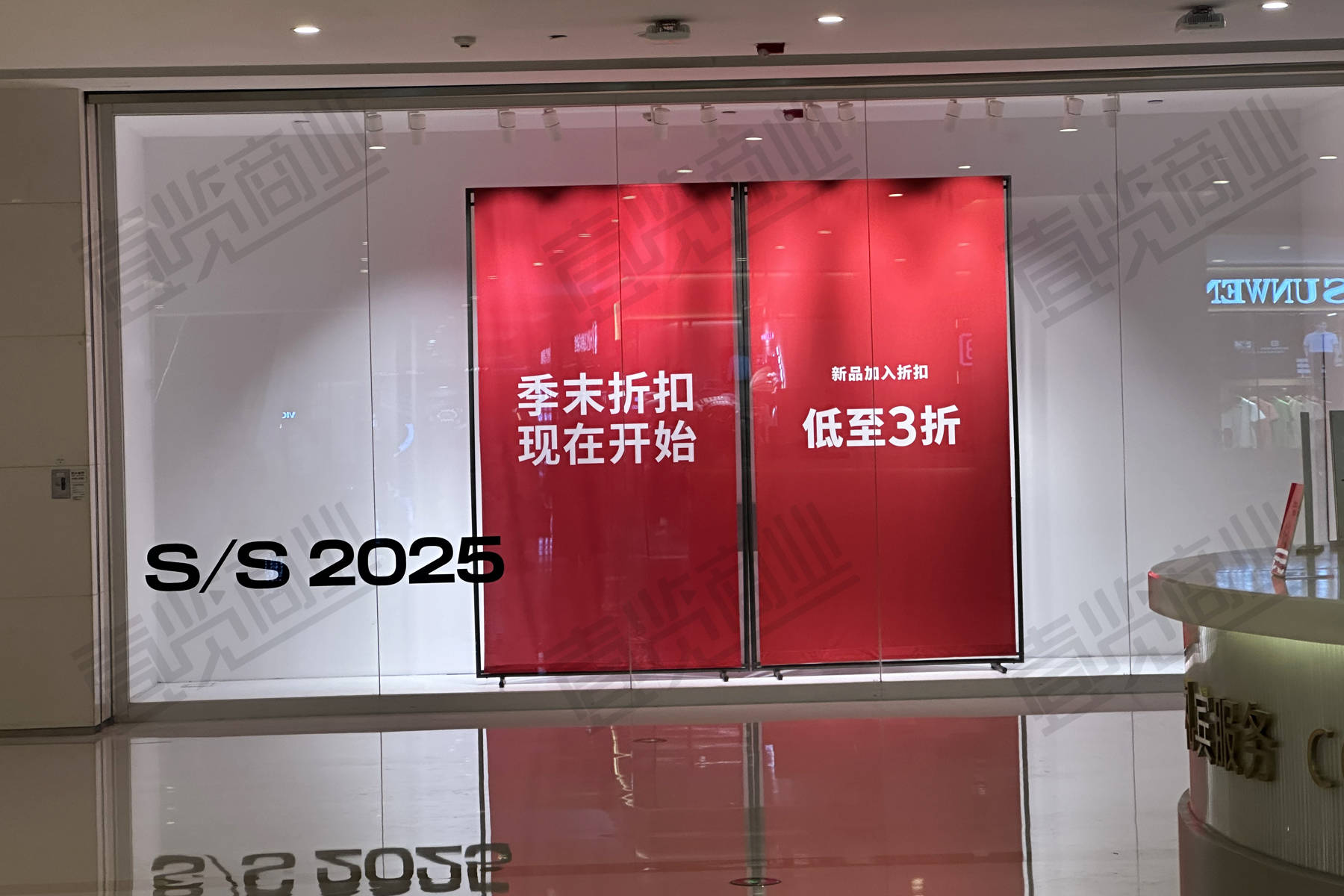
东南亚要“装不下”出海的国产服装品牌了
Hu Xiu· 2025-10-11 03:07
Core Viewpoint - The trend of A-share companies listing in Hong Kong is increasing, with 11 companies having done so this year, and over 50 more in the pipeline. The primary motivation for this move is to pursue global strategic expansion, as exemplified by the clothing brand HLA [1]. Group 1: Market Expansion - HLA has opened 50 stores in Malaysia since its first store in 2017, with a total of 78 stores across Southeast Asia as of January this year [2]. - Semir, another clothing brand, has also accelerated its overseas strategy, with 70 stores by the end of 2023 and plans to exceed 100 stores in 2024 [2][3]. - Major Chinese brands, including Anta and Li Ning, are also focusing on Southeast Asia for their international expansion, with Anta planning to establish 1,000 stores in the region over the next three years [5]. Group 2: Challenges in Overseas Markets - Despite the growth in overseas revenue for brands like HLA, the contribution to total revenue remains low, with HLA's overseas revenue accounting for only 1.76% in 2024 [7][8]. - Many traditional Chinese clothing brands struggle to achieve significant overseas market penetration, with most having less than 2% of their revenue coming from international sales [8][9]. - The slow urbanization process in Southeast Asia limits the effectiveness of the business models that have worked in China, as brands primarily target major cities, leaving smaller cities underserved [12][13]. Group 3: E-commerce and Retail Dynamics - The rise of e-commerce in Southeast Asia poses a challenge for traditional retail, as online platforms like Shopee and TikTok Shop gain traction [15][16]. - HLA has seen an increase in online sales, but overall revenue has declined, indicating difficulties in adapting to the online market [16]. - The reliance on physical stores in major cities may not be sustainable if e-commerce continues to grow, potentially impacting the profitability of brands that do not adapt [17].
东南亚“装不下”出海的国产服装品牌了
Xin Lang Cai Jing· 2025-10-11 02:42
Core Viewpoint - The trend of A-share companies listing in Hong Kong is increasing, with 11 companies having done so this year, including Haier Home, which plans to list in Hong Kong as part of its global strategy [1] Group 1: Company Expansion - Haier Home has opened 50 stores in Malaysia since its first store in 2017, with a total of 78 stores in Southeast Asia as of January this year [2] - Semir, another Chinese brand, has also accelerated its overseas expansion, with 70 stores by the end of 2023 and plans to exceed 100 stores in 2024 [2] - Other brands like UR, E-PRANCE, and Anta are also expanding aggressively in Southeast Asia, with Anta planning to open 1,000 stores in the region over the next three years [3] Group 2: Market Challenges - Despite the growth in store numbers, the overseas revenue for many Chinese apparel brands remains low, with Haier Home's overseas revenue accounting for only 1.76% of total revenue by 2024 [6] - Semir's overseas revenue is projected to be less than 1% of its total revenue in 2024, indicating a common struggle among Chinese brands to penetrate the Southeast Asian market [6][7] - The traditional business model that worked in China may not be effective in Southeast Asia, where brands are primarily targeting large cities, leaving smaller cities underserved [8] Group 3: E-commerce Impact - The rise of e-commerce in Southeast Asia, exemplified by platforms like Shopee, poses a challenge to traditional retail models, as many consumers are shifting towards online shopping [10][11] - Haier Home has seen an increase in online sales, but overall revenue has decreased, highlighting the difficulties in transitioning to an online model [11][12] - The potential for e-commerce growth in Southeast Asia could undermine the current strategy of Chinese brands that focus heavily on physical stores [12]

纺织服装 10 月投资策略:9 月越南纺织出口同比转正,羊毛价格上涨显著
Guoxin Securities· 2025-10-10 11:52
Market Overview - The textile and apparel sector has underperformed the broader market since September, with textile manufacturing outperforming branded apparel, showing +0.1% and -1.6% respectively as of October 9 [1][13] - Key companies that have seen significant gains since September include Xin'ao Co. (+16.9%), Fengtai Enterprise (+14.9%), Adidas (+11.6%), and others [1] Brand Apparel Insights - Retail sales of clothing in August grew by 3.1% year-on-year, with a 1.3 percentage point increase from the previous month [2] - The sales pressure is expected in September due to the absence of the Mid-Autumn Festival and high temperatures affecting consumer behavior [2] - E-commerce channels showed strong growth in outdoor apparel, with sportswear brands like Descente (+51%) and Lululemon (+35%) leading the way [2] Textile Manufacturing Insights - Vietnam's textile exports in September increased by 9.4% year-on-year, while footwear exports rose by 9.0% [3] - China's textile exports showed a slight improvement in August, with a 1.4% increase, although apparel and footwear exports declined significantly [3] - Wool prices saw a notable increase in September, rising by 17.5% month-on-month and 28.3% year-on-year [3] Investment Recommendations - Focus on the rebound opportunities in textile manufacturing, with expectations for order recovery in Q4 [5] - Companies like Shenzhou International, which is Nike's largest apparel supplier, and Huayi Group are highlighted as key beneficiaries of tariff changes and Nike's recovery [5] - The report suggests that the impact of tariffs will diminish in Q4, leading to a stabilization of orders [5] Key Company Forecasts - Shenzhou International is rated "Outperform" with an expected EPS of 4.37 in 2025 and a PE ratio of 13.9 [8] - Other companies such as Huayi Group and Kai Run Co. are also rated "Outperform" with positive growth forecasts [8]


纺织服装10月投资策略:9月越南纺服出口同比转正,羊毛价格上涨显著
Guoxin Securities· 2025-10-10 10:55
Market Overview - The textile and apparel sector has underperformed the broader market since September, with textile manufacturing showing better performance than branded apparel, with respective changes of +0.1% and -1.6% as of October 9 [1][13] - Key companies that have seen significant gains since September include Xin'ao Co. (+16.9%), Fengtai Enterprise (+14.9%), Adidas (+11.6%), and others [1] Brand Apparel Insights - Retail sales of clothing increased by 3.1% year-on-year in August, with a 1.3 percentage point improvement from the previous month. However, sales in September are expected to face pressure due to the absence of the Mid-Autumn Festival and continued warm weather [2] - E-commerce channels showed strong growth in outdoor apparel, with categories like sportswear and outdoor clothing growing by 22% and 51% respectively for leading brands [2] - On social media platform Xiaohongshu, the top three brands in the sports and outdoor category saw significant follower growth, indicating strong consumer interest [2] Textile Manufacturing Insights - Vietnam's textile exports saw a year-on-year increase of 9.4% in September, while footwear exports rose by 9.0%, indicating a recovery in the sector [3] - The price of wool significantly increased in September, with a month-on-month rise of 17.5% and a year-on-year increase of 28.3% [3] - Companies like Ruohong have visibility on orders extending to Q1 2026, maintaining a revenue target of over 3 billion yuan per month [3] Investment Recommendations - Focus on textile manufacturing rebound opportunities, particularly after the release of Q3 reports. The impact of U.S. tariffs is expected to diminish, with orders stabilizing [5] - Key companies to watch include Shenzhou International, Huayi Group, and Kai Run Co., which are positioned to benefit from tariff changes and recovery in demand [5][7] - In the branded apparel segment, long-term growth is anticipated in the sports category, with recommendations for brands like Anta Sports, Xtep International, and Li Ning [7]
卫星“家门口”搭车,火箭“走几步”发射!航天版图上崛起烟台新势力
Qi Lu Wan Bao Wang· 2025-10-10 00:03
Core Viewpoint - Yantai is rapidly developing a billion-level commercial aerospace industry cluster, highlighted by the successful launch of the "Yingli No. 1" rocket and the establishment of the Dongfang Spaceport as a key player in China's aerospace capabilities [1][2][5]. Group 1: Launch Capabilities - The "Yingli No. 1" rocket, capable of carrying 6.5 tons to low Earth orbit, has completed multiple successful launches, enhancing China's capacity for large-scale satellite deployment [1][2]. - Dongfang Spaceport has successfully supported 19 sea launch missions, placing a total of 127 satellites into orbit, showcasing its efficient launch organization capabilities [2][3]. Group 2: Infrastructure and Ecosystem - The development of Dongfang Spaceport is a strategic initiative leveraging Yantai's strong industrial and research foundation, including partnerships with leading companies in materials and aerospace [3][4]. - A 6-kilometer aerospace avenue connects various functional zones, facilitating rapid transitions from rocket assembly to sea launch within 48 hours [3][4]. Group 3: Industry Growth and Investment - The commercial aerospace sector in Yantai has attracted significant investment, with 30 aerospace projects totaling 32.2 billion yuan, creating a comprehensive industry chain from satellite development to launch services [5]. - The local government has prioritized the aerospace industry as one of its six key industrial chains, implementing action plans to foster growth and collaboration within the sector [5].
也许有一天,不再堵车
混沌学园· 2025-10-09 11:58
Core Viewpoint - The article discusses the ongoing revolution in China's transportation sector, driven by algorithms, data, and artificial intelligence (AI), fundamentally reshaping travel experiences and improving efficiency, safety, and user experience [2][4][25]. Group 1: Efficiency - The implementation of a unified "smart road network" platform in Zhejiang province allows for real-time analysis of road conditions, significantly enhancing traffic management [6]. - In Qingdao Port, an AI system can identify the optimal location for containers within milliseconds, leading to increased operational efficiency [7]. - The Wuhu Port has developed the first "vehicle-road-cloud-network-map" collaborative autonomous driving system, allowing for harmonious coexistence of manned and unmanned vehicles [8]. Group 2: Safety - The "Eagle Eye Guardian" system, developed by the China Academy of Safety Science and Technology and Amap, can predict 17 potential hazardous scenarios and issue warnings within seconds [11]. - In Guangxi, a multi-modal AI system has improved event recognition accuracy to 96% and reduced emergency response time to under 10 seconds [12]. - The essence of this transformation is that safety is now based on predictive capabilities rather than mere reaction speed [13]. Group 3: User Experience - The upgraded Zhejiang Zhilu Zhixing platform enhances travel by providing transparent road conditions, integrating rescue services, and proactively addressing user needs [15]. - Good technology simplifies complexity and presents straightforward solutions for users [14]. Group 4: Infrastructure - Transportation infrastructure is evolving from passive systems to intelligent entities with sensing, computing, and communication capabilities [17]. - Traditional port facilities in Wuhu have transformed into smart systems through the deployment of autonomous driving equipment and vehicle-road collaboration [18]. - Qingdao Port's automated bridge integrates AI and 3D point cloud technology to autonomously handle complex situations, improving efficiency and reducing energy consumption [19]. Group 5: Ecosystem - The application of AI in ports has led to significant improvements, with some ports reducing business processes by over 50% and increasing overall efficiency by 15% [23]. - The competition in the transportation industry is shifting from scale to intelligence, as AI redefines the underlying logic of the entire transportation system [24]. - The Chinese intelligent transportation market has surpassed 200 billion yuan and is expected to maintain rapid growth in the coming years [25].