
蜜雪冰城

Search documents
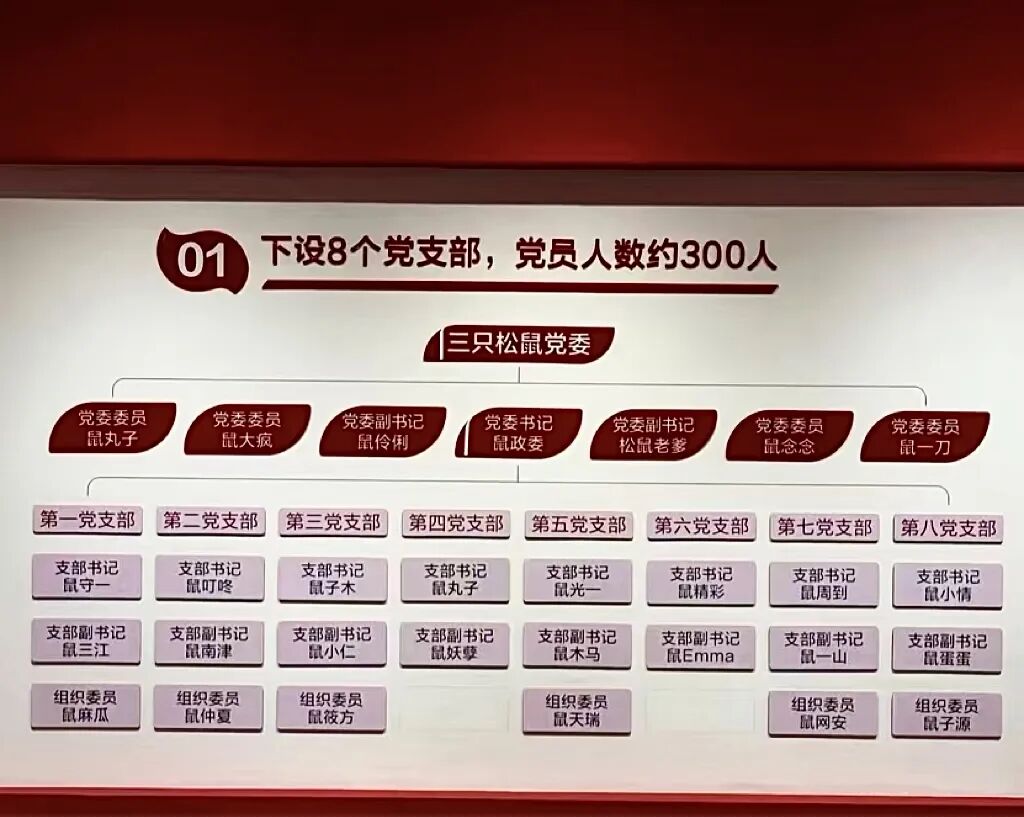
玩梗“鼠名文化”,三只松鼠是怎么火出圈的?
3 6 Ke· 2025-11-27 10:35
Core Insights - The article discusses how Three Squirrels leveraged a recent controversy regarding a return label named "Return Mouse" to enhance its brand visibility through meme marketing and cultural engagement [1][2]. Group 1: Crisis Management - Three Squirrels quickly addressed the potential public relations crisis by clarifying that the "mouse names" are part of the company's culture and not mandatory, with employees voluntarily adopting these names [3][4]. - The company promptly corrected the controversial label from "Return Mouse" to "Return Group" and engaged consumers through a live-stream event to discuss the mouse culture, which helped mitigate misinformation and foster interaction [3][8]. Group 2: Brand Engagement - The company initiated a "Squirrel Name Culture" campaign, encouraging fans to create humorous names, which resulted in a significant increase in online engagement and brand visibility [6][8]. - Employees actively participated in social media interactions, further enhancing the brand's presence and relatability [6][7]. Group 3: Brand Persona Development - The "Mouse Name Culture" reflects Three Squirrels' long-term efforts in building a brand persona characterized by humor and service orientation, which is evident in their unique naming conventions and customer interactions [9][10]. - The brand has established a distinct communication style that emphasizes entertainment and customer engagement, aligning with its vision of creating a joyful shopping experience [10][16]. Group 4: IP and Content Strategy - Three Squirrels has invested in creating brand IP through animated series and various content formats, aiming to deepen consumer connections and enhance brand value [13][14]. - The company is exploring cross-industry collaborations and product extensions to maximize the lifespan and commercial potential of its brand IP [32][33]. Group 5: Future Directions - To further capitalize on its brand persona, Three Squirrels is encouraged to adopt strategies similar to successful brands like Mixue Ice City, focusing on viral marketing, user-generated content, and immersive experiences [17][18][28]. - The brand should consider expanding its IP through licensing and partnerships, as well as developing non-food products to broaden its market reach and visibility [32][33].


“南北绿豆浆”全网断货,他迎来“泼天富贵”?
3 6 Ke· 2025-11-27 10:14
Core Insights - The article discusses the successful launch of Joyoung's new product "Haqimi North and South Mung Bean Milk," which gained unexpected market traction during the Double 11 shopping festival, driven by a viral marketing campaign featuring an AI orange cat as its mascot [1][3][7]. Product Performance - The new product achieved sales of 7.5 to 10 million yuan with a sales volume of 250,000 to 500,000 units shortly after its launch on Douyin [3]. - Due to overwhelming demand, Joyoung had to issue a sold-out notice, indicating that order volumes reached supply limits [3]. Stock Market Impact - The popularity of "Haqimi Mung Bean Milk" led to a significant rise in Joyoung's stock price, prompting the company to clarify that it no longer holds any equity in the product's operating entity, Joyoung Foods, since December 2023 [3][7]. Marketing Strategy - Joyoung's marketing strategy for "Haqimi" involved extensive preparations, including creative packaging and engaging promotional activities, such as live-streaming events and interactive music sessions [5][7]. - The product was priced at 29.9 yuan for 15 bags, appealing to consumers looking for novelty and fun [7]. Cultural Context - The term "Haqimi" originates from a Japanese anime and has evolved into a meme associated with cats, which resonated with younger audiences [4][10]. - The marketing campaign leveraged the popularity of cat memes and abstract cultural references, indicating a shift in Joyoung's approach towards more contemporary and youth-oriented marketing strategies [11][12]. Controversies and Risks - The campaign faced criticism for potentially exploiting sensitive cultural symbols, particularly the use of the orange cat image, which some users associated with animal cruelty memes [8][10]. - Joyoung's engagement with controversial memes highlights the risks brands face when navigating the fine line between humor and offense in marketing [18][19].

10月茶饮上新25款,咖啡上新39款
Ge Long Hui· 2025-11-26 14:48
Core Insights - The beverage industry is experiencing a seasonal shift with the introduction of autumn and winter-themed drinks, leading to a total of 77 new products launched by the top ten tea and coffee brands in October, an increase of 11.59% compared to August [2][4]. Tea Beverage Trends - Among tea brands, Cha Bai Dao leads with six new products, followed by Gu Ming with five, and Yi He Tang and CoCo with four each [4]. - The tea segment has seen a significant rise in milk tea offerings, with 30 new milk tea products launched in October, accounting for 83.33% of all new tea products, while fruit tea introductions have decreased to only three [8]. - Classic ingredients like taro and brown sugar pearls are being emphasized, with brands like Mi Xue Bing Cheng and Hu Shang A Yi focusing on multiple new taro products [21]. Coffee Beverage Trends - In the coffee sector, Lucky Coffee is the most active, launching ten new products, while Ruixing follows with seven [4]. - The trend towards richer flavors is evident, with 22 new milk coffee products introduced, making up 52.38% of all new coffee products [11]. - Innovative flavor combinations are being explored, such as salty-sweet boundaries and regional specialties, with products like Ruixing's salty milk tea and Ken Yue's rose milk latte [21]. Cross-Category Innovations - The boundaries between tea and coffee categories are increasingly blurred, with brands like Hu Shang A Yi and Gu Ming introducing coffee products, while coffee brands like Ruixing and Starbucks are venturing into non-coffee beverages [14]. - Green tea is the most frequently used base in new drinks, appearing in 10 products, which is 28.6% of the total, followed by black tea and flower tea [14]. Seasonal Ingredients - Seasonal ingredients are prominently featured, with cheese and pumpkin appearing in new products from multiple brands, enhancing the seasonal and comforting attributes of the drinks [20].

幸运咖门店破万,茶饮品牌集体“炖糖水”
Ge Long Hui· 2025-11-26 14:48
Industry Overview - The domestic tea and coffee market is undergoing continuous reshuffling, with leading brands accelerating their scale competition [2] - In October, 27 monitored coffee brands opened 3,341 new stores, a month-on-month decrease of 10.31% but a year-on-year increase of 94.47%, totaling 81,000 stores [2] - The tea beverage sector saw 30 monitored brands with a total of 133,800 stores, netting a growth of 186 stores in October, a month-on-month increase of 0.14% [2] Expansion and Challenges - Despite expansion, concerns are emerging as brands like Mixue Ice Cream and Tea closed 804 stores, followed by Sweet Lala with 341 closures [3] - Other brands such as Shuyi Burned Grass and Bawang Tea Sister also reported significant closures, indicating potential challenges in maintaining store profitability [3] Product Innovations - Tea brands are increasingly launching new sugar water products, with Gu Ming introducing a slow-cooked series and CoCo also launching a new sugar water bowl [4] - The advantages of tea shops venturing into sugar water include overlapping customer demographics and core ingredients, which help reduce material pressure [4] Marketing Collaborations - CoCo has partnered with the game "Ming Chao," while Tims Coffee collaborates with Avita Motors, showcasing a trend of innovative cross-industry marketing [5] - Notable product performances include Mixue Ice Cream's "Ice Fresh Lemonade" selling over 1.5 billion cups in ten months, indicating strong consumer demand [5] Leadership Changes - Eric Lauterbach, CEO of Piye Coffee, has announced his departure, with Stuart Heflin set to take over, bringing over 20 years of experience in global consumer brands [6] Financial Developments - Manner Coffee is reportedly considering an IPO in Hong Kong by 2026, while Luckin Coffee is monitoring the U.S. capital market for a potential return to the main board [7] - Luckin Coffee reported Q3 2025 revenue of 15.287 billion RMB, a year-on-year increase of 50.2%, with a total of 29,214 stores after opening 3,008 new locations [8] - Starbucks is facing a collective lawsuit from shareholders for allegedly concealing sales declines, highlighting operational risks in the fast-growing industry [8]
古茗高管再次套现16亿,钱都流向了海外信托
Xin Lang Cai Jing· 2025-11-26 13:02
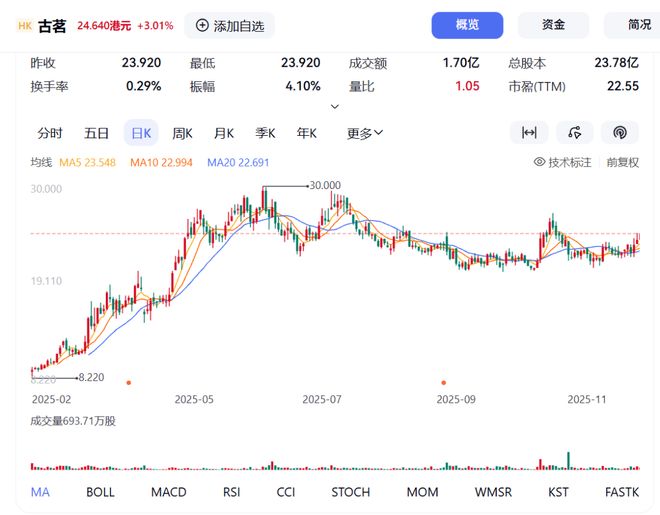
Core Viewpoint - The article discusses the financial performance and controversial dividend distribution of the tea company, Gu Ming, highlighting its rapid growth and the implications of its business model on investor confidence and market perception [2][4][21]. Financial Performance - Gu Ming reported a revenue growth of over 41% in the first half of the year, with a net profit margin close to 29%, making it a standout performer in the tea industry [2][3]. - The company achieved a revenue of nearly 57 billion yuan and a net profit exceeding 16 billion yuan, marking a year-on-year increase of over 121% [3][4]. - As of November 26, Gu Ming's total market capitalization exceeded 58 billion HKD, doubling since its IPO [5]. Dividend Distribution - Gu Ming announced a special dividend exceeding 22 billion HKD, which is more than the 18.13 billion HKD raised during its IPO [7][8]. - Over 70% of the dividend, approximately 16 billion HKD, will flow into the family trust accounts of its core shareholders, raising questions about the company's motives for going public [7][8][13]. - This marks the second significant dividend distribution within a year, totaling nearly 40 billion HKD, with core shareholders receiving over 28 billion HKD [13][21]. Business Model and Growth - Gu Ming's revenue primarily comes from selling goods and equipment to franchisees, rather than direct consumer sales, indicating that its growth is tied to the expansion of its franchise network [16][19]. - As of mid-2025, Gu Ming had over 11,000 stores, but the growth rate of new franchisees has shown signs of slowing down [16][17]. - The company experienced a decline in new store openings and an increase in store closures, with a closure rate of 6.8% in 2024 and a franchisee attrition rate of 15.18%, significantly higher than competitors [17][19]. Market Competition and Challenges - The saturation of the market has led to increased internal competition among Gu Ming's stores, which may negatively impact profitability for franchisees [19][20]. - The article suggests that the reluctance of experienced franchisees to open new stores indicates a lack of profitability in the current market environment [19][20]. Investor Sentiment - The actions of Gu Ming, particularly the large dividend payouts to major shareholders shortly after going public, have raised concerns among investors about the company's long-term intentions and financial health [21][22].
6点已过,华杉未道歉,罗永浩也未公布录音
新浪财经· 2025-11-26 11:07
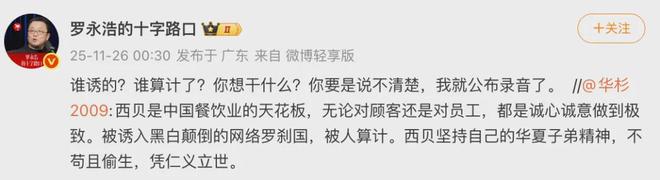
Core Viewpoint - The ongoing conflict between Luo Yonghao and Hua Shan highlights the challenges and controversies within the marketing consulting industry in China, particularly regarding the reputation and practices of Hua Yu Hua [2][3][4]. Group 1: Conflict Background - Luo Yonghao issued a "final ultimatum" to Hua Shan, demanding a public apology by 6 PM, or he would release recorded conversations [3][4]. - The dispute originated from Hua Shan's comments about the restaurant chain Xibei, which Luo Yonghao challenged, questioning the implications of Hua's statements [4][5]. - This conflict is not isolated; it follows a previous confrontation in September, where Luo criticized Hua Yu Hua's handling of public relations for Xibei amid controversies [5]. Group 2: Hua Yu Hua's Business Model - Hua Yu Hua, founded in 2002, has established itself as a leading marketing consulting firm, particularly in the restaurant industry, with clients including Xibei, Haidilao, and others [7][9]. - The firm charges significantly high fees for its services, with reported consulting fees exceeding 60 million yuan from Xibei alone over ten years [5][9]. - Hua Yu Hua's approach focuses on long-term partnerships, emphasizing that the value of their services increases over time [9]. Group 3: Controversies and Regulatory Issues - Hua Yu Hua has faced multiple controversies and regulatory penalties, including a fine for misleading advertising in 2021 and another for content deemed damaging to national dignity in 2017 [11]. - Despite its high-profile successes, the firm has been criticized for its marketing strategies and the high costs associated with its services [6][9].

中国最好的一批消费品牌是怎么诞生的?
36氪· 2025-11-26 09:27
Core Viewpoint - Luckin Coffee has demonstrated a remarkable turnaround, with its store count reaching 2,921, six times the number at the time of its delisting in 2020, and achieving a stable profit of 1.2 yuan per cup, contrasting with a loss of 5.6 yuan per cup five years ago [5][6]. Group 1: Company Recovery and Market Dynamics - The case of Luckin Coffee represents one of the most significant "turnaround" stories in Chinese business history, challenging the notion that delisting equates to failure and showcasing the resilience of the Chinese consumer market [8][9]. - Institutional investors, such as Snow Lake Capital and IDG Capital, have played a crucial role in supporting Luckin Coffee post-delisting, with significant investments and strategic changes that revitalized the brand [9][11]. - The market's response to Luckin's delisting was calm, indicating a strong underlying demand for its products, which remained unaffected by the delisting crisis [13][19]. Group 2: Shift in Consumer Investment Paradigms - The narrative surrounding Luckin Coffee reflects a broader shift in the Chinese consumer landscape, moving away from a model focused on aggressive spending and rapid growth towards one emphasizing product quality and sustainable profitability [16][19]. - The success of Luckin Coffee and other brands illustrates the emergence of a new generation of consumer entrepreneurs who prioritize product excellence and consumer insights over mere market share [25][26]. - The investment landscape is evolving, with a focus on long-term value creation and the importance of identifying companies with strong product capabilities and brand strength [30][31]. Group 3: Market Potential and Global Influence - China's consumer market is increasingly recognized as a significant source of global innovation, with a vast population allowing for extensive validation and iteration of niche products [34][44]. - The competitive environment in China is characterized by both high risks and high rewards, necessitating that local companies and their investors adapt to rapidly changing market conditions [35][39]. - Investment institutions are now more involved in the global expansion of Chinese brands, reflecting a shift from merely bringing foreign brands to China to actively participating in the global market [41][43].
罗永浩:今天下午6点前,必须公开道歉
Nan Fang Du Shi Bao· 2025-11-26 08:01
Core Viewpoint - The recent conflict between Luo Yonghao and Hua Shan regarding the marketing consultancy firm Hua Yu Hua has raised questions about the integrity of the public relations industry in China, with Luo threatening to disclose recordings if Hua does not publicly apologize by a specified deadline [1][2]. Group 1: Company Background - Hua Yu Hua, founded in 2002 by brothers Hua Shan and Hua Nan in Guangzhou, provides marketing consulting services and has been a partner to several well-known brands, including Xi Bei [4]. - Xi Bei's "I love You" brand logo was designed by Hua Yu Hua, and the two have collaborated since 2013, marking Hua Yu Hua's first client in the restaurant sector [4]. Group 2: Financial Aspects - The collaboration between Xi Bei and Hua Yu Hua has been financially significant, with over 60 million yuan in consulting fees paid over ten years, averaging more than 6 million yuan annually [6]. - Hua Shan has expressed a desire for the next decade of collaboration to yield 1 to 2 billion yuan in fees, indicating a substantial increase in expected revenue [6]. Group 3: Industry Impact - The ongoing dispute highlights potential vulnerabilities in the marketing and public relations industry in China, with Luo suggesting that the incident could tarnish the reputation of Hua Yu Hua if not resolved amicably [2]. - Luo's comments reflect a broader concern about the effectiveness and ethics of marketing practices in the Chinese market, emphasizing the need for education on marketing strategies for local business owners [2].
喜茶手绘定制杯贴走红,闲鱼代画5-25元价格不等
Xin Lang Cai Jing· 2025-11-26 05:23
Core Viewpoint - Recently, Heytea has reintroduced the "DIY Cup Sticker" feature in its WeChat ordering mini-program, allowing consumers to create personalized stickers for their drinks, which has led to the emergence of a drawing service industry on platforms like Xianyu [3][4]. Group 1: New Features and Consumer Engagement - The "DIY Cup Sticker" feature enables consumers to design their own stickers by hand or input text, which are then printed and attached to their drink cups, gaining popularity among users [4]. - The rise of this feature has stimulated a new service industry on Xianyu, where various merchants offer drawing services for these stickers, with prices ranging from 5 to 25 yuan depending on complexity [3][4]. Group 2: Market Trends and Competitive Landscape - Other coffee brands have previously experimented with similar interactive marketing strategies, such as hand-drawn cup stickers, indicating a trend in the beverage industry towards low-cost, engaging consumer interactions [7]. - Heytea's recent collaboration strategy has seen a contraction compared to previous years, with a notable partnership in August with a Japanese manga IP that resulted in high demand for limited edition products [7]. Group 3: Strategic Direction - In February, Heytea announced a strategic shift to avoid price wars and excessive expansion, aiming for a differentiated strategy by 2025, which includes not engaging in low-price competition and halting new partnership applications [8].
又一批“国家级”试点 两个消费大省“缺席”了
Mei Ri Jing Ji Xin Wen· 2025-11-25 15:25
Core Points - The Ministry of Commerce and the Ministry of Finance have announced the results of the selection of pilot cities for the construction of an international consumption environment, with 15 cities included in the list, indicating progress in building international consumption centers in China [1][2] - The pilot cities aim to cultivate an international consumption environment, enhance the "Buy in China" brand, and enrich the supply of quality goods and services [1][2] - The selection criteria for pilot cities include strong consumption driving effects, significant development potential, and a high number of foreign visitors [2][3] Summary by Sections Pilot Cities and Selection Criteria - 15 cities have been selected as pilot cities for international consumption environment construction, including 10 cities viewed as potential candidates for future international consumption centers [1][2] - The selection was made on a provincial basis, with each province recommending one city, and cities with independent planning status applying separately [1][2] Characteristics of Selected Cities - Most selected cities have previously proposed plans to promote international consumption center construction, indicating a proactive approach [2] - The support directions for the pilot cities include enhancing high-quality consumption supply, optimizing foreign payment services, and improving international service levels [2][3] Consumption Trends and Data - According to Visa's research, cities like Shenzhen, Chengdu, and Hangzhou rank high in Visa card transaction volumes from foreign tourists, with Chengdu showing a remarkable growth rate of over 90% [3] - Unique consumption strategies are being implemented in various cities, such as Kunming's focus on becoming a consumption window for South and Southeast Asia [3][4] Absence of Certain Cities - Notably, cities like Zhengzhou and Hefei, which have significant retail sales but did not make the pilot list, highlight the competitive landscape for international consumption center status [4][5] - Zhengzhou's challenges include a lower international profile and a lack of landmark consumption venues, while Hefei is focusing on improving its consumption supply to attract talent [5][6] Regional Competition - The competition among cities within provinces is evident, with cities like Qingdao and Jinan vying for recognition as international consumption centers, where Qingdao currently leads in retail sales [7][8] - In Fujian, cities like Xiamen and Fuzhou are also competing for international consumption center status, with Xiamen showing strong international visitor numbers despite lower overall consumption figures [9][10]