红旗连锁

Search documents
红旗连锁(002697) - 第五届董事会第二十六次会议决议公告
2025-11-24 09:00
证券代码:002697 证券简称:红旗连锁 公告编号:2025-036 成都红旗连锁股份有限公司 第五届董事会第二十六次会议决议公告 本公司及董事会全体成员保证信息披露的内容真实、准确、完整,没有 虚假记载、误导性陈述或重大遗漏。 一、董事会会议召开情况 成都红旗连锁股份有限公司(以下简称"公司")第五届董事会第二十六次会 议于 2025 年 11 月 24 日上午 10:00 时以现场与通讯相结合的方式在公司会议室 召开。本次会议通知于 2025 年 11 月 18 日以邮件通知方式发出,应出席会议的 董事 9 名,实际出席会议的董事 9 名(其中董事王庚先生、吴乐峰先生、独立董 事谭洪涛先生、贺立龙先生、周涛先生以通讯方式参会并表决),会议由董事长 袁继国先生主持。本次会议的召集、召开及表决符合有关法律、法规及公司《章 程》的规定,会议决议合法有效。 二、董事会会议审议情况 1、审议通过了《关于增加 2025 年日常关联交易预计额度的议案》 表决情况:本议案有效表决票 5 票,同意 5 票,反对 0 票,弃权 0 票 关联董事袁继国、李强、王庚、黄东镇回避表决。 为了日常经营业务的需要,结合公司实际情况, ...

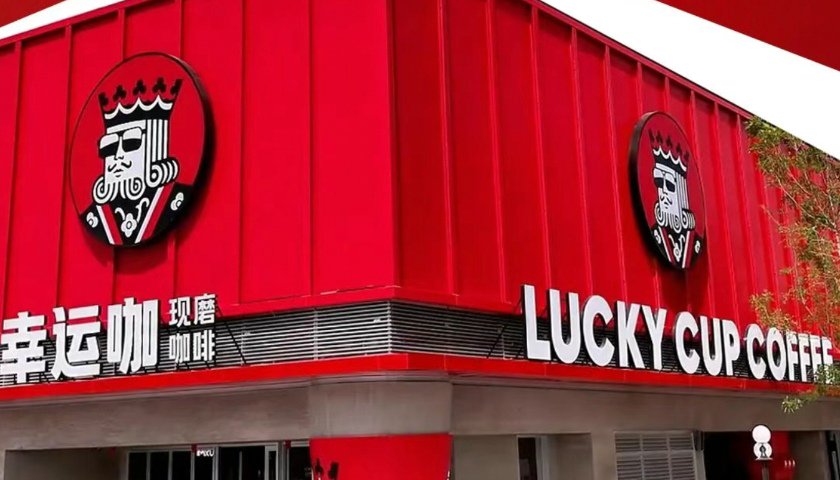
蜜雪冰城的幸运咖全球门店突破一万家,紧追瑞幸和库迪
Xin Lang Cai Jing· 2025-11-24 03:58
Core Insights - Lucky Coffee, a budget coffee brand under Mixue Group, has surpassed 10,000 global stores, rapidly rising in the domestic coffee chain market, closely following leading brands Luckin Coffee and Kudi Coffee [1] - The brand was established in 2017 and initially grew slowly, but after market research and brand positioning adjustments, it adopted a low-price strategy in 2020, leading to significant growth [1] - In 2022, Lucky Coffee experienced explosive growth, leveraging Mixue's supply chain advantages and targeting price-sensitive consumers, particularly in lower-tier markets and among students [1][4] Company Developments - Lucky Coffee opened over 2,800 new stores from 2022 to 2023, bringing the total to approximately 3,000 stores [1] - In 2023, the brand not only accelerated its domestic expansion but also began international growth, opening its first overseas store in Malaysia in August [1] - Currently, Lucky Coffee has over 1,000 stores in first-tier markets and 100 stores in Beijing, covering more than 300 cities nationwide [1] Competitive Landscape - Luckin Coffee leads the domestic market with nearly 30,000 stores, maintaining a strong performance through new product launches and optimized marketing strategies [2] - Kudi Coffee ranks second with over 15,000 stores, achieving rapid growth through aggressive franchise strategies and frequent marketing activities [4] - Lucky Coffee's recent growth has narrowed the gap with these competitors, as it added 1,100 stores in October alone, surpassing Luckin's 905 and Kudi's 597 new stores [4] Market Outlook - The domestic coffee chain market is highly competitive, with various brands like Kenyue Coffee, Nova Coffee, and Manner Coffee also vying for market share [4] - According to iMedia Consulting, the Chinese coffee market is expected to reach a scale of 470 billion yuan by 2025, with a compound annual growth rate of 28.8% from 2020 to 2025 [4] - Key challenges for coffee brands will include reducing operational costs and avoiding product homogenization in this competitive landscape [4]


2025年中国餐饮食品连锁加盟行业白皮书
艾瑞咨询· 2025-11-23 00:05
Core Insights - The Chinese catering and food chain franchise industry is undergoing significant transformation, driven by macroeconomic recovery and increasing consumer spending power, leading to market expansion and digital transformation [1][4][9] Market Overview - The Chinese catering food market reached a scale of 12.6 trillion yuan, with a compound annual growth rate (CAGR) of approximately 7.2% from 2020 to 2024, driven by both catering services and retail [9] - The average annual growth rate of GDP is projected at 6.9%, while the retail sales of consumer goods are expected to grow at about 5.5%, indicating a resilient domestic demand [4] Consumer Behavior - Urban and rural residents' per capita consumption expenditure is showing a recovery trend, with urban residents growing at 6.4% and rural residents at 8.9% annually, reflecting the ongoing vitality of the lower-tier markets [6] - The demand for food and beverages remains stable, with food and alcohol expenditures showing strong resilience, providing a solid demand foundation for the catering industry [6] Industry Trends - The chain rate in the catering service sector is expected to rise from 15% in 2020 to 24% by 2025, indicating a shift towards more standardized and digitalized operations [12] - The rise of "at-home dining" is reshaping the industry, with this market segment growing at an annual rate of 18.4%, significantly outpacing overall food retail growth [10][36] Competitive Landscape - The franchise market is dominated by the catering sector, which accounts for nearly 50% of the market, but most franchise businesses are still in early expansion stages, with nearly 80% of franchise companies having fewer than 10 stores [20][22] - Major brands like Mixue Ice City and Zhengxin Chicken are rapidly expanding their networks, joining the "10,000 stores" club through franchise models [22] Investment Considerations - Franchisees are increasingly focused on competition and financial returns, with a shift from broad expansion to refined operations and careful site selection [24] - The "at-home dining" segment is favored by franchisees due to its lower investment threshold and shorter return on investment period, making it an attractive option for new investors [34][36] Digital Transformation - The industry is moving towards digitalization to support scale expansion and profitability, with brands leveraging data-driven site selection and standardized operational systems to reduce risks for franchisees [44] Franchisee Dynamics - A growing number of professional franchisees are emerging, leading to a two-way selection process between brands and franchisees, emphasizing the importance of operational support and clear profit models [47][48]

9点1氪:小米回应“潜水手表不能潜水”;美的否认强制售后服务商排他性合作;红果短剧公布分账数据:三位演员分账超百万
36氪· 2025-11-22 01:11
Group 1 - Xiaomi faced criticism regarding its diving watch, with a blogger claiming water ingress during use, and customer service suggesting it is not recommended for diving [4][5] - Xiaomi clarified that the reported issues were false, stating that the watch in question was not the diving-certified model and that they would take legal action against misinformation [4][5] - The company confirmed that the watch was repaired and returned to its diving functionality, while acknowledging that customer service communication could have been clearer [4] Group 2 - Midea Group denied reports of forcing service providers to stop handling Xiaomi and Gree products, emphasizing a commitment to user experience without exclusivity in service partnerships [5] - The company stated that service providers still have the option to work with multiple brands, ensuring competition and service quality [5] Group 3 - Xiaomi's revenue for the third quarter reached 58 billion yuan, marking a 23% year-on-year increase, with adjusted net profit growing by 12% [21] - Walmart reported a strong performance in China, with net sales of 61 billion yuan in the third quarter, reflecting a 21.8% year-on-year growth [22]




9点1氪|小米回应“潜水手表不能潜水”;美的否认强制售后服务商排他性合作;红果短剧公布分账数据:三位演员分账超百万
3 6 Ke· 2025-11-22 01:05
Group 1 - Xiaomi responded to claims regarding the Xiaomi Watch S4 Sport's water resistance, stating that the product was not intended for diving and that the customer service recording was misleading [2][3] - Xiaomi confirmed that the watch in question was replaced under warranty after it was found to meet quality standards, and the company has since contacted the user to clarify the situation [2][3] - Midea Group denied reports of exclusive cooperation with service providers that would prevent them from servicing Xiaomi or Gree products, emphasizing their commitment to user experience [3] Group 2 - Redfruit Short Drama platform reported that three actors earned over 1 million yuan from revenue sharing, highlighting the success of their new revenue model [4] - The revenue-sharing model ties actor earnings to the performance of the content, incentivizing deeper involvement in creation and promotion [4] Group 3 - Xiaomi's Wang Hua confirmed his transfer to the company's Wuhan headquarters, with Xu Jieyun taking over as the new head of the public relations department [5] - The Sichuan branch of the company under Mixue Ice City has been officially deregistered [5] - The lingerie brand Triumph announced its exit from the mainland China market, effective December 31, 2025 [8] Group 4 - Eli Lilly became the first pharmaceutical company to reach a market capitalization of $1 trillion, driven by the success of its weight loss drug [16] - The company benefited from a deal with the Trump administration to lower drug prices in exchange for inclusion in federal insurance coverage [16] Group 5 - Nvidia's founder Huang Renxun expressed frustration that the market has not fully recognized the company's strong quarterly performance, indicating a disconnect between expectations and reality [12] - Nvidia's stock was bought by ARK's flagship fund for the first time since August, signaling renewed interest in the company [11]
10月现制茶饮:开店3247家、关店3062家
Ge Long Hui· 2025-11-21 14:45
Core Insights - The new tea beverage industry is experiencing a slowdown in store expansion, with a total of 13.38 million existing stores and a net increase of 186 stores in October 2025, reflecting a month-on-month growth rate of 0.14% [2][4]. Store Opening and Closing Summary - In October, 30 chain brands opened a total of 3,247 stores while closing 3,062, resulting in a net increase of 186 stores [2][4]. - The leading brand, Mixue Ice City, closed 804 stores, resulting in a net decrease of 68 stores, while maintaining 44,166 existing stores, a decline of 0.15% month-on-month [4][9]. - Gu Ming achieved a net increase of 215 stores, with a month-on-month growth rate of 1.69%, totaling 12,905 existing stores [4][9]. - Eleven brands reported positive net growth, with Hu Shang A Yi leading with a net increase of 271 stores, and Yi Dian Dian showing the fastest growth rate of 3.59% with a net increase of 140 stores, surpassing 4,000 stores [7]. Brand Performance - Significant closures were noted among brands, with Mixue Ice City leading in closures, followed by Tian La La with 341 closures and Gu Ming with 226 closures [9][14]. - Other brands like Shuyi Burned Immortal Grass and Bawang Tea Princess also saw closures exceeding 100 stores [14]. Market Expansion Trends - The expansion is primarily concentrated in second and third-tier cities, which account for 65.1% of new store openings, with third-tier cities leading with 754 new stores (23.2% of total) [17]. - In contrast, first-tier cities only saw 302 new stores, representing 9.3% of the total, indicating a continued penetration of new tea brands into lower-tier markets [17]. Special Location Insights - Campuses emerged as a key battleground for brand expansion, with Gu Ming adding 35 campus stores and Tian La La adding 30, contributing to a total of 125 new campus stores, which accounted for 71.84% of the total increase in campus stores for October [20]. - In shopping centers, brands like Bawang Tea Princess, Yi Dian Dian, and Hu Shang A Yi showed strong expansion, with net increases of 57, 43, and 40 stores respectively, while brands like Tea Hundred Road and Xi Tea experienced significant reductions [21]. Transportation Hub Expansion - Brands exhibited cautious expansion in transportation hubs, with only Bawang Tea Princess achieving a double-digit net increase, while other brands did not exceed six new stores [22].

当外卖带不动电商,茶饮行业开始入冬
雷峰网· 2025-11-21 09:31
Core Viewpoint - The takeaway from the article is that the current food delivery war mirrors the e-commerce subsidy wars of the past, characterized by aggressive price cuts and subsidies that disrupt industry norms and create unsustainable business models for tea beverage brands [4][40]. Group 1: Industry Dynamics - The tea beverage industry is experiencing a significant downturn as seasonal demand declines and platform subsidies wane, leading many businesses to express concerns about survival through the winter [4][6]. - The delivery war has resulted in a drastic increase in the number of tea beverage outlets, with a net addition of 26,000 stores in the third quarter alone, nearly doubling year-on-year [6]. - The high return rates and pressures faced by downstream e-commerce businesses, such as the 90% return rate in women's apparel, reflect the broader challenges within the industry [4]. Group 2: Financial Implications - Luckin Coffee reported delivery expenses of 2.89 billion RMB in Q3, significantly higher than the previous year, consuming all incremental profits for the season [5][16]. - The financial performance of brands like Mixue Ice City has also suffered, with stock prices dropping from 600 HKD to 376 HKD, indicating diminishing returns from delivery subsidies [5]. - The article highlights that during the peak of the subsidy war, brands like Nai Xue's Tea saw a 50% increase in delivery orders, but the profitability per order was severely compromised, averaging only 4-5 RMB after costs [11][30]. Group 3: Market Behavior and Consumer Trends - The article notes a shift in consumer behavior, with over half of the increased order volume during the delivery war coming from tea and coffee, compared to only 20% the previous year [10]. - The delivery war has altered the business model for tea brands, with the ratio of dine-in to delivery orders shifting dramatically from 3:1 to 1:7 for many businesses [21][22]. - There is a growing concern among tea beverage entrepreneurs that consumers may become accustomed to lower prices due to subsidies, making it difficult to revert to higher price points post-subsidy [16]. Group 4: Strategic Responses - To adapt to the changing landscape, tea brands are focusing on building membership systems and enhancing private domain operations to retain existing customers and attract new ones [32][34]. - The article suggests that effective supply chain management is crucial for brands to survive and thrive, emphasizing the need for higher cost-performance ratios rather than just low prices [33][36]. - Brands like Gu Ming have successfully leveraged their supply chain capabilities to handle sudden spikes in order volume, showcasing the importance of operational efficiency in a competitive market [36].

红旗连锁11月20日获融资买入2814.27万元,融资余额3.15亿元
Xin Lang Cai Jing· 2025-11-21 01:24
Core Viewpoint - Hongqi Chain experienced a decline of 3.26% in stock price on November 20, with a trading volume of 216 million yuan, indicating potential market concerns regarding its performance and investor sentiment [1] Financing Summary - On November 20, Hongqi Chain had a financing buy-in amount of 28.14 million yuan and a financing repayment of 22.56 million yuan, resulting in a net financing buy of 5.58 million yuan [1] - As of November 20, the total financing and securities lending balance for Hongqi Chain was 316 million yuan, with the financing balance accounting for 4.11% of its market capitalization, which is above the 70th percentile of the past year [1] - The company repaid 2,100 shares in securities lending on November 20, with a total sell amount of 68,700 yuan, while the securities lending balance was 946,400 yuan, indicating a lower position compared to the 50th percentile of the past year [1] Business Performance Summary - As of October 31, the number of shareholders for Hongqi Chain was 64,100, a decrease of 0.44% from the previous period, while the average circulating shares per person increased by 0.45% to 17,865 shares [2] - For the period from January to September 2025, Hongqi Chain reported a revenue of 7.11 billion yuan, a year-on-year decrease of 8.48%, and a net profit attributable to shareholders of 383 million yuan, down 1.89% year-on-year [2] - Since its A-share listing, Hongqi Chain has distributed a total of 1.56 billion yuan in dividends, with 926 million yuan distributed over the past three years [2] Shareholding Structure Summary - As of September 30, 2025, Hongqi Chain's fourth largest circulating shareholder was Hong Kong Central Clearing Limited, holding 35.23 million shares, a decrease of 19.98 million shares from the previous period [2] - The tenth largest circulating shareholder was the Southern CSI 1000 ETF, holding 6.23 million shares, which is a reduction of 250,500 shares compared to the previous period [2]
首富钟睒睒杀入600亿冰杯赛道
3 6 Ke· 2025-11-21 00:57
Core Insights - The ice cup market in China is experiencing rapid growth, with a projected market size of 63 billion yuan by 2026, driven by increasing consumer demand and strategic investments from major companies like Nongfu Spring [1][10][15] Supply Side - Ice cup production is characterized by a low-profit margin, with manufacturers like Ice Power and Ice Extreme selling ice cups at around 1 yuan each, where packaging costs account for 65% of the total cost [2][3] - The production process involves specific water treatment and freezing techniques to ensure quality, which adds to the operational costs [2][3] Demand Side - Retail channels such as convenience stores and supermarkets are the primary sales avenues for ice cups, with a retail price of 3-6 yuan per cup, yielding a gross margin of 40%-70% for these retailers [5][6] - Tea beverage shops adopt a different strategy by selling ice cups at cost price (1 yuan) to drive sales of other products, with data showing that 35% of customers who buy a low-cost ice cup also purchase additional items [7][8] Competitive Landscape - Major food industry players like Mengniu, Yili, and Nongfu Spring are entering the ice cup market, with Nongfu Spring investing 28.42 million yuan to expand its production capacity [9][10] - The entry of large companies is expected to lead to increased competition and potential price wars in the ice cup market [10] Market Potential - The ice cup market in China is still underdeveloped compared to Japan and South Korea, where annual per capita consumption exceeds 100 cups [14][15] - The growth of instant retail channels for ice products is projected to outpace overall retail growth, with an expected increase of 39% over the next three years [15]

矩阵股份(301365) - 2025年11月20日投资者关系活动记录表
2025-11-20 09:44
Group 1: Investor Relations Activities - The company participated in the 2025 Shenzhen Listed Companies Investor Online Reception Day on November 20, 2025 [2] - Key personnel included the General Manager, Wang Zhaobao, and the Independent Director, Zhang Chunyan [2] Group 2: Client Relationships - The company has established long-term partnerships with major clients in the residential sector, including China Resources Land and China State Construction Group [2] - In the non-residential sector, notable projects include the headquarters of Zhengzhou Mixue Ice City and Beijing China National Pharmaceutical Group [2] Group 3: Financial Performance - In the first half of 2025, the company reported space design revenue of approximately CNY 158 million, a year-on-year increase of 31.84% [3] - Soft decoration revenue was approximately CNY 139 million, with a year-on-year increase of 6.62% [3] - For the first three quarters of 2025, total revenue reached CNY 506 million, a year-on-year increase of 32.12%, and net profit attributable to shareholders was CNY 69 million, up 53.97% [4] Group 4: Accounts Receivable Management - The company employs a customer evaluation system to manage clients scientifically and focuses on high-credit clients [5] - Measures include strengthening accounts receivable management and establishing a settlement center for timely recovery of receivables [5] Group 5: AI Applications - The company is advancing digital transformation in space design and has initiated AIGC case practices [6][7] - An AI platform has been launched to provide cutting-edge tools for designers, leveraging high-quality industry data [7] Group 6: Disclosure Information - The investor relations activity did not involve any undisclosed significant information [7]