网易云音乐

Search documents
互联网传媒周报:谷歌Token翻倍,AI应用势不可挡,《恋与》验证游戏IP价值-20250727
Shenwan Hongyuan Securities· 2025-07-27 11:11
Investment Rating - The industry investment rating is "Overweight," indicating that the industry is expected to outperform the overall market [12]. Core Insights - The report highlights the rapid growth of AI applications, particularly in programming, recommendation, and creative generation, with Chinese companies focusing on emotional consumption and overseas expansion to drive revenue [5]. - Tencent is identified as a strong player in AI applications, leveraging its large daily active users (DAU) and rich content ecosystem, with expectations for significant future growth in its advertising and cloud computing segments [5]. - The gaming sector is noted for its potential, with Tencent's game "Delta Action" exceeding expectations in DAU, and the value of game IP, especially female-oriented games, remains underappreciated by the market [5]. - The report emphasizes the importance of AI in enhancing advertising efficiency and revenue generation, particularly for companies with untapped traffic potential [5]. Summary by Sections AI Applications - AI applications are driving growth in various sectors, with significant contributions from programming and creative tools [5]. - Tencent's AI capabilities are expected to enhance its advertising revenue, with a projected growth rate of 20% in Q1 2025 [5]. Gaming Sector - Tencent's "Delta Action" has maintained a strong position in the iOS game sales rankings, indicating robust growth potential [5]. - The report notes that the gaming IP value, particularly for female-targeted games, is not fully recognized by the market, suggesting potential investment opportunities [5]. Key Company Valuations - Tencent's market capitalization is reported at 45,907 million RMB, with projected revenue growth of 11% for 2025 [7]. - Other companies like NetEase and Giant Network are also highlighted, with respective market caps of 6,139 million RMB and 463 million RMB, showing varied growth rates [7].




喜马拉雅要靠山,腾讯音乐要希望
36氪· 2025-07-27 09:33
Core Viewpoint - The article discusses the valuation and challenges faced by Ximalaya, China's largest online audio platform, particularly in light of its acquisition by Tencent Music at a significantly reduced price, raising questions about its worth and the impact of copyright on its business model [4][18][46]. Group 1: Valuation and Market Position - Ximalaya was sold to Tencent Music for 209 billion, which is a one-third reduction from its last financing round valuation of 300 billion [4][18]. - Despite having a monthly active user base comparable to Xiaohongshu, Ximalaya's valuation is significantly lower than other platforms like Zhihu and Douyu, indicating a market perception of its worth [4][18]. - The platform has faced four unsuccessful attempts to go public and has incurred losses exceeding 3 billion over five years, which contributed to its discounted sale price [4][18]. Group 2: Importance of Copyright - Copyright is identified as the most valuable asset for online audio platforms, with Ximalaya's success heavily reliant on its exclusive content, particularly from popular figures like Guo Degang [5][11]. - Ximalaya has strategically secured a significant portion of the market's audio book rights, holding 70% of the available adaptations through partnerships with major content providers [8][9]. - The platform's content library includes over 5.2 million audio books and 1.6 million pieces of entertainment audio, showcasing its extensive copyright portfolio [10]. Group 3: Financial Performance and Challenges - Ximalaya's subscription revenue has been the primary income source, contributing over half of its total revenue, but the growth rate has declined from 57.1% in 2021 to 8.5% in 2023 [21][27]. - The platform's average monthly active users reached 300 million in 2023, but the willingness to pay among users remains low, with a payment rate of only 11.6% [18][24]. - High operational costs, particularly in content acquisition and revenue sharing, have strained profitability, leading to significant layoffs and cost-cutting measures [19][21][22]. Group 4: Industry Comparison - In contrast to Ximalaya, competitors like Litchi FM have struggled with monetization, highlighting the importance of having strong copyright assets to drive revenue [14][15]. - The online audio market lacks the broad audience and mature business models seen in the online music sector, which has higher user engagement and monetization potential [44][36]. - The article suggests that the online audio industry's ceiling for user engagement and revenue generation is lower than anticipated, limiting growth opportunities for platforms like Ximalaya [25][44].



GPT-5将在8月正式推出,AI应用有望进一步加速,线上消费ETF基金(159793)盘中蓄势
Xin Lang Cai Jing· 2025-07-25 03:31
Group 1 - OpenAI is set to officially launch GPT-5 in early August, along with mini and nano versions for API use [1] - An open-source language model, described as "similar to o3 mini," is expected to be released by OpenAI before GPT-5, marking the first public weight model since GPT-2 in 2019 [1] - The open-source model will be available for download through major cloud platforms like Azure and Hugging Face [1] Group 2 - As of July 25, 2025, the CSI Hong Kong-Shenzhen Online Consumption Theme Index (931481) has decreased by 0.80%, with mixed performance among constituent stocks [2] - Leading gainers include Yidian Tianxia (301171) up 5.15%, and Gao Xin Retail (06808) up 3.35%, while Kuaishou-W (01024) leads the decline at 4.40% [2] - The Online Consumption ETF (159793) has fallen by 0.92%, with a recent price of 0.97 yuan, but has seen a cumulative increase of 2.40% over the past week [2] Group 3 - As of June 30, 2025, the top ten weighted stocks in the CSI Hong Kong-Shenzhen Online Consumption Theme Index account for 52.54% of the index, including Tencent Holdings (00700) and Alibaba-W (09988) [3]
喜马拉雅要靠山,腾讯音乐要希望
远川研究所· 2025-07-24 09:53
Core Viewpoint - The article discusses the valuation of Ximalaya, questioning whether it is worth 20.9 billion yuan after its acquisition by Tencent Music, highlighting a significant drop from its previous valuation of 30 billion yuan during the last funding round [1][2]. Group 1: Valuation and Market Comparison - Ximalaya's valuation of 20.9 billion yuan is comparable to seven times that of Zhihu, eight times that of Keep, and eleven times that of Douyu, indicating a substantial reduction in perceived value [2]. - The company has faced four unsuccessful attempts to go public and has incurred losses exceeding 3 billion yuan over five years, making the discounted sale seem reasonable [2]. Group 2: Importance of Copyright - The article emphasizes that copyright is the most valuable asset for online audio platforms, similar to how Tencent Music cannot afford to lose Jay Chou, Ximalaya cannot afford to lose Guo Degang [5][3]. - Ximalaya has strategically invested in copyright since 2014, partnering with Guo Degang's company, and has secured 70% of the market's audio book adaptation rights through agreements with major copyright holders [9][11]. Group 3: Revenue Structure and Challenges - Ximalaya's revenue structure shows that subscription income contributes over half of its total revenue, with a significant reliance on audio books and traditional storytelling formats [12][13]. - Despite having a large user base, the platform struggles with monetization, as evidenced by a decline in subscription revenue growth from 57.1% in 2021 to 8.5% in 2023 [35]. Group 4: User Engagement and Market Limitations - Ximalaya's average monthly active users reached 300 million, but the user engagement metrics indicate a potential ceiling, with average listening time declining from 144 minutes in 2021 to 130 minutes in 2023 [22][30]. - The platform's user base includes a significant number of IoT and third-party platform users, which limits the monetization potential compared to video platforms [31]. Group 5: Competitive Landscape - The article compares Ximalaya's situation to that of its competitors, noting that platforms like Lizhi, which rely on user-generated content, have lower monetization rates, highlighting Ximalaya's relatively better performance [17][19]. - The online audio market faces challenges due to a lack of a broad audience and a mature commercial mechanism, making it difficult to balance high copyright costs with revenue generation [58]. Group 6: Acquisition Context - Tencent Music's acquisition of Ximalaya reflects a strategic move to consolidate its position in the online audio market, especially after struggling with its own platform, Penguin FM [62][64]. - The acquisition gives Tencent Music control over a significant portion of the online audio market, with Ximalaya holding a market share of 45.52% [64].

互联网传媒2025年中报业绩前瞻:悦己消费高景气,关注AI应用商业化
Shenwan Hongyuan Securities· 2025-07-21 12:46
Investment Rating - The report rates the industry as "Overweight," indicating a positive outlook for the internet media sector [2]. Core Insights - The report highlights a high level of activity in the consumer sector, particularly in areas such as trendy toys, music, and concerts, with companies like Pop Mart and Blok providing significant growth [5]. - The gaming industry is experiencing overall high activity, with a notable market size of 27.4 billion yuan in April 2025, reflecting a 22% year-on-year growth [5]. - AI applications are beginning to show commercial viability, with companies like Meitu and Kuaishou leading in AI creative tools and advertising, respectively [5]. - The cloud computing sector continues to grow, driven by advancements in AI models and decreasing costs, with Alibaba expected to lead in this area [5]. - The advertising industry is facing challenges, but companies like Focus Media are expected to benefit from collaborations and increased advertising budgets [5]. - The film industry is seeing a shift towards new consumer experiences, with companies like Light Media and Wanda Film adapting to market changes [5]. Summary by Sections Consumer Sector - Pop Mart's mid-year profit growth is projected to be no less than 350%, driven by global market expansion and IP development [5]. - Blok is achieving high growth through affordable products targeting younger demographics and international markets [5]. Gaming Industry - The gaming market size reached 27.4 billion yuan in April 2025, with a 22% year-on-year increase [5]. - Major companies like Tencent and NetEase have not released significant new titles, relying on existing games for revenue [5]. - Notable growth is expected from second-tier companies with new product launches in the latter half of the year [5]. AI Applications - Meitu is recognized as a leading AI creative tool provider, catering to the needs of Gen Z consumers [5]. - Kuaishou's AI initiatives have generated over 100 million yuan in monthly revenue within ten months of launch [5]. - AI is positively impacting advertising effectiveness for platforms like Tencent and Bilibili [5]. Cloud Computing - The cloud computing sector is expected to accelerate, with a focus on large model iterations and AI applications [5]. - Alibaba is anticipated to lead the domestic cloud market, with increased competition expected to stabilize [5]. Advertising Industry - The overall advertising sector is weak, but Focus Media's collaboration with Alipay is expected to generate additional revenue [5]. Film Industry - The domestic film market saw a box office of approximately 4.8 billion yuan in Q2 2025, with companies like Light Media and Wanda Film pivoting towards new consumer experiences [5].
港股影视娱乐股多数下跌,腾讯音乐(01698.HK)、猫眼娱乐(01896.HK)、欢喜传媒(01003.HK)跌超3%,网易云音乐(09899.HK)跌超2%。
news flash· 2025-07-21 01:50
Group 1 - The majority of Hong Kong's film and entertainment stocks experienced declines, with Tencent Music (01698.HK), Maoyan Entertainment (01896.HK), and Huayi Brothers Media (01003.HK) dropping over 3% [1] - NetEase Cloud Music (09899.HK) also saw a decline, falling more than 2% [1]
互联网传媒周报:AI应用+悦己消费+全球化+格局占优,重视AH泛娱乐行情持续性-20250720
Shenwan Hongyuan Securities· 2025-07-20 13:43
Investment Rating - The report maintains a positive outlook on the A-share and Hong Kong stock market for quality media companies, indicating a "Look Favorably" investment rating for the industry [2]. Core Insights - The report emphasizes the sustainability of the current market trend for quality media companies, driven by global resonance in AI application commercialization and the self-consumption trends of Generation Z [2]. - It highlights the global competitive strength of sectors such as gaming, trendy toys, and AI tools, along with differentiated competition based on category and tone [2]. - The report identifies specific opportunities within the AI application chain, particularly in areas like AI advertising, education, and productivity tools, which are expected to see accelerated commercialization [2]. Summary by Sections AI Application - The report notes that the globalization and commercialization of AI applications are progressing rapidly, with significant potential in AI advertising, education, programming, and enterprise-level AI [2]. - Specific companies like Meitu and Kuaishou are highlighted for their strong growth potential in AI applications, with Meitu being noted for its unique global positioning and Kuaishou for exceeding commercialization expectations [2]. Gaming Sector - The gaming sector is experiencing short-term volatility; however, the fundamentals of key companies remain strong. New product launches are expected to stabilize performance [2]. - Companies like Giant Network and G-bits are mentioned for their upcoming releases and strong market positions [2]. Cloud Computing - AI is driving a recovery in cloud computing revenue growth, with a focus on internet cloud computing firms that have clear advantages in their own scenarios [2]. - Alibaba is specifically mentioned for its cloud computing direction, which is expected to continue to deliver value [2]. Consumer Trends - The report continues to recommend consumer brands like Pop Mart and NetEase Cloud Music, which are expected to benefit from market expansion and increasing paid user growth [2]. Valuation Table - A detailed valuation table is provided, showing the market capitalization, revenue, and profit forecasts for key companies in the gaming, film, and entertainment sectors, indicating growth rates and PE ratios for 2025 and 2026 [4].
网易云音乐(9899.HK):社区生态护城河稳固 付费指标上升空间充足
Ge Long Hui· 2025-07-19 11:11
Core Viewpoint - The company focuses on "music community + technology empowerment" to build a differentiated advantage in the online music platform, actively expanding quality music content resources in the post-copyright era, targeting the younger demographic, and optimizing membership rights, leading to continuous growth in membership scale, with a strong recommendation rating given for initial coverage [1][4]. Group 1: Business Performance - The online music service revenue is expected to grow by 23.1% year-on-year to 5.355 billion yuan in 2024, accounting for 67.35% of total revenue, driven by membership service optimization and rich content [2]. - Membership subscription revenue increased by 22.2% year-on-year to 4.459 billion yuan, with the number of paid users reaching 44.12 million by the end of 2023, and the average revenue per paid user per month at 6.9 yuan [2]. - The company has been expanding channels and improving the membership system, including a strategic partnership with Alibaba's 88VIP to integrate music with e-commerce [2]. Group 2: Competitive Advantage - The company employs a "copyright procurement + original incubation" dual system to expand quality music content, boasting a library of 150 million licensed songs and 770,000 independent musicians, with 350 billion plays of original music [3]. - The platform emphasizes the music community concept, creating a social ecosystem that enhances emotional engagement, with over one million UGC comments generated daily and a stable daily-to-monthly active user ratio above 30% [3]. - Compared to industry leaders, the company shows excellent growth in payment rates, but the ARPPU value remains significantly lower than the industry average, indicating substantial potential for user value enhancement [3]. Group 3: Future Outlook - With the drive of innovative technologies like AI and continuous optimization of membership rights, the company is expected to achieve further increases in payment rates and ARPU values [4]. - Projected revenues for 2025 to 2027 are expected to reach 8.237 billion, 8.832 billion, and 9.663 billion yuan, with adjusted net profits of 1.923 billion, 2.222 billion, and 2.459 billion yuan, corresponding to PE ratios of 30, 26, and 24 times [4].
从流量到变现:在线音乐平台的商业逻辑
2025-07-16 00:55
Summary of Key Points from the Conference Call Industry Overview - The online music service industry has experienced significant growth over the past 20 years, characterized by streaming and globalization. According to IFPI, the global recorded music industry revenue is projected to reach approximately $30 billion in 2024, with a year-on-year growth of 5%. Streaming revenue accounts for nearly 70% of this total, with paid subscription revenue expected to reach $15.1 billion, growing by 9.5% year-on-year. Advertising revenue is anticipated to grow by 1.2% [2][3]. Key Characteristics of the Online Music Service Industry - The industry has high entry barriers due to high content copyright costs and strong two-sided network effects. High copyright costs make it difficult for new entrants to compete effectively in the short term. The market is dominated by major record labels, which control a significant portion of the content [3][4]. - The upstream of the industry is primarily controlled by record companies, which manage a large number of tracks. The downstream monetization relies on the user base of platforms, generating revenue through subscriptions and advertising. The three major music groups in the U.S. control 85% of the track count and 74% of the global digital music upstream [5][6]. Competitive Landscape - In the overseas market, platforms like Spotify, Apple Music, and Amazon Music dominate, with market shares of 36%, 31%, and 24% respectively. However, their profitability is affected by the monopoly of upstream record companies. In contrast, in the Chinese market, Tencent Music and NetEase Cloud Music hold the majority market share, approximately 70-80% combined, while the emerging platform, Soda Music, poses limited threat due to its recent establishment and lack of quality content [6][7][8]. Trends in the Domestic Online Music Market - The main trends in the domestic online music market focus on increasing the number of paid users and raising the average revenue per user (ARPU). Tencent Music's monthly active users are nearing their peak, with future growth relying on paid user numbers and pricing. NetEase Cloud Music and Soda Music are currently in the phase of expanding their user base [9][10]. - The domestic market has seen significant regulatory changes, such as the strict copyright regulations in 2015 and the administrative penalties against Tencent in 2021, which have allowed competitors like NetEase Cloud Music to accumulate more tracks [10]. Profit Growth Strategies - Online music platforms are achieving profit growth by optimizing content costs, expanding user bases, and increasing subscription revenues. The market is valuing internet companies highly due to their stable business models and favorable competitive landscapes. Tencent Music and NetEase Cloud Music have room for long-term profit margin improvements [11][12]. Valuation and Market Sentiment - The online music sector has seen significant stock price increases this year, driven by favorable policies, market regulatory guidance, and content cost optimization. Despite low double-digit revenue growth, investor confidence remains high due to these factors [13][14]. - In 2025, internet companies are receiving high valuations due to their stable business models and competitive environments. Tencent Music and NetEase Cloud Music are particularly well-positioned, with Tencent Music's non-GAAP P/E ratio around 26-27 times and NetEase Cloud Music's around 31-32 times [15][16]. Future Development Potential - Both Tencent Music and NetEase Cloud Music have significant growth potential, with opportunities to double their paid user bases. They are also actively expanding into long audio, artist management, and fan operations [16][17]. - Tencent Music has made strategic investments, including a $1.26 billion cash acquisition of Himalaya and a stake in South Korea's SM Entertainment, indicating its intent to strengthen its position in the long audio content and fan economy sectors [20]. Notable Developments in NetEase Cloud Music - NetEase Cloud Music is enhancing its social attributes and UGC ecosystem, showing considerable potential for profit improvement. The platform has a high proportion of users born after the 90s, and its recent features, such as "Music Notes," are expected to enhance its financial performance [21].
港股收评:午后强势拉升!科指大涨2.8%,稳定币、生物医药股走高





Ge Long Hui· 2025-07-15 08:41
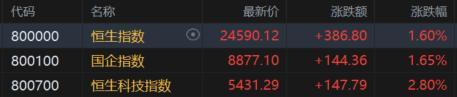
Group 1 - China's Q2 GDP growth reached 5.2%, exceeding expectations, leading to a rally in Hong Kong stocks [1] - The Hang Seng Technology Index surged by 2.8%, while the Hang Seng Index and the National Enterprises Index rose by 1.6% and 1.65% respectively [1][2] - Major technology stocks performed strongly, with Alibaba rising nearly 7%, Meituan and Baidu up over 4%, and Tencent increasing by 3.5% [2][4] Group 2 - The cryptocurrency sector faced challenges, with Bitcoin dropping below $117,000, leading to a decline in related stocks [2] - Real estate development investment in China fell by 11.2% year-on-year in the first half of the year, impacting domestic property stocks significantly [2][13] - The construction materials and cement stocks also saw declines, with major players like Jinyu Group and Anhui Conch Cement dropping over 6% and 4% respectively [11][12] Group 3 - The innovative drug sector showed strength, with companies like BeiGene and CSPC Pharmaceutical rising over 7% [7][8] - Stablecoin-related stocks performed well, with Yunfeng Financial increasing by 19.5% and Weishi Jiajie up by 11% [9][10] - The entertainment sector saw gains, with China Star Group rising over 10% and Tencent Music increasing by over 5% [15] Group 4 - Southbound funds recorded a net inflow of HKD 3.824 billion, indicating strong interest in Hong Kong stocks [18] - Analysts noted a shift in investor sentiment towards undervalued stocks, with some funds looking to capitalize on recent price corrections in major internet companies [17]