
问界

Search documents
国内芯片企业加速入局车规级UWB市场
Di Yi Cai Jing Zi Xun· 2025-06-15 12:19
Core Insights - The automotive industry is undergoing a transformation driven by the "new four modernizations," with increasing semiconductor content in vehicles, projected to rise from under $500 for traditional fuel vehicles to over $1,500 for smart electric vehicles [1] - The introduction of the "Dubhe" UWB SoC chip by Gateron aligns with the growing demand for high-precision, bidirectional positioning in smart vehicles, marking a significant opportunity in the automotive semiconductor market [1] Industry Trends - UWB technology, initially introduced in 1989, gained mainstream attention in 2019 with Apple's UWB chip, and has since penetrated the automotive sector, starting with BMW's digital key feature in 2021 [1] - The adoption of UWB technology is expanding among mid to high-end vehicles, with brands like BYD, Mercedes-Benz, and others incorporating UWB as standard or optional features [2] - The penetration rate of UWB digital keys was only 2.1% in 2022, with a market size of $0.96 million, but is expected to exceed 50% penetration and reach a market size of $22.56 million by 2027 due to technological advancements and cost reductions [2] Company Developments - Gateron has established a dedicated UWB development team of over 100 experts, including 50 specialists in wireless communication, to capitalize on the growing UWB market [2] - The company has filed over 60 patents in the UWB field, including two essential patents, indicating a strong commitment to innovation and market leadership [2] - The domestic UWB chip market is still in its early stages, with companies like NXP and Qorvo previously dominating, but local firms are now entering the space, aiming for domestic substitution opportunities [3] - Gateron's UWB chip, "Dubhe," is expected to begin mass production by the end of this year, following sample delivery in July [3]
激光雷达:AEBS新规催化标配预期,割草机+无人城配快速放量
2025-06-12 15:07
Summary of Key Points from Conference Call Industry and Company Involved - The conference call focuses on the **LiDAR (Light Detection and Ranging)** technology industry, particularly its applications in the automotive sector and emerging markets like smart lawn mowers and unmanned urban delivery vehicles. Core Insights and Arguments 1. **Impact of AEBS Regulations**: The release of the AEBS (Advanced Emergency Braking System) regulation draft is expected to catalyze the adoption of LiDAR in L2 and below vehicles, enhancing basic safety and perception functions [3][12][10]. 2. **Market Growth in Smart Lawn Mowers**: The demand for LiDAR in smart lawn mowers and unmanned urban delivery is rapidly increasing, with expected shipment volumes to expand significantly by 2025, potentially reaching a market size of **5 to 6 billion** [5][17]. 3. **High Potential in LiDAR Market**: The global automotive-grade LiDAR market is projected to cultivate companies with a market value of **hundreds of billions** of RMB, although current valuations of leading companies like Hesai and RoboSense do not fully reflect their growth potential [6][9]. 4. **Concentration of Supply and Demand**: The supply side is highly concentrated with strong certainty, while the pricing and valuation have not yet fully captured the accelerating demand, indicating a high potential for returns [8][7]. 5. **Trends in LiDAR Technology**: LiDAR technology is trending towards downscaling, diffusion, and high-end applications, with prices rapidly decreasing, making it more accessible for various vehicle types [4][14][16]. 6. **Unmanned Delivery Vehicles**: The use of LiDAR in unmanned delivery vehicles (RoboVan) is justified by significant cost savings in last-mile delivery, with potential reductions in delivery costs by **67%** [19][20]. 7. **Growth of Unmanned Freight Vehicles**: The unmanned freight vehicle market is expanding quickly, with major companies planning substantial deliveries in 2025, indicating a market potential of **200 to 400 billion** [21][23]. 8. **Technological Advancements**: The latest models of unmanned freight vehicles are equipped with multiple LiDAR units, with costs decreasing significantly, enhancing their commercial viability [22][23]. 9. **Future Market Dynamics**: The future of the unmanned delivery vehicle market is promising, with a focus on cost control and the need for stricter automotive-grade requirements as speeds increase [24][25]. Other Important but Possibly Overlooked Content 1. **LiDAR's Role in Technology**: LiDAR is crucial for simulating human interaction with the environment, serving as a key technology in various sectors including smart driving and safety monitoring [2]. 2. **Market Penetration of LiDAR in Smart Lawn Mowers**: The penetration rate of LiDAR in smart lawn mowers is expected to rise significantly, with a notable increase from **10% to 30%** in just one year [18]. 3. **Regulatory Changes**: The shift of AEBS from a recommended to a mandatory standard will require M1 and N1 class vehicles to install AEBS systems, directly impacting the adoption of LiDAR technology [12]. 4. **Long-term Investment Opportunities**: Companies like Hesai and RoboSense are positioned for long-term growth, with the potential for significant returns in the high-risk, high-reward segments of the market [26].
穿越“价格战”迷雾,中国汽车行业的破局锚点:用户、用户、还是用户
Qi Lu Wan Bao· 2025-06-12 08:47
Core Insights - The article highlights the challenges faced by the Chinese automotive industry, particularly the issue of price wars leading to declining profit margins, with an industry profit rate dropping to 3.9% despite sales exceeding 10 million units [1] - The shift in competition focus from technology to user-centric definitions is emphasized, indicating that understanding user needs is crucial for future success [1] User Safety - User safety is identified as a non-negotiable industry baseline, with companies like Volvo prioritizing safety through advanced materials and design, such as the XC90's use of 33% ultra-high-strength boron steel [2] - FAW Hongqi emphasizes its commitment to safety by developing all its products according to a five-star safety standard, with the Hongqi Tian Gong 08 successfully passing rigorous safety tests [2] User Demand - Differentiation based on user needs is crucial, with companies like Li Auto addressing range anxiety through extended-range technology, appealing to middle-class consumers [4] - GAC Trumpchi enhances service offerings to meet user demands, implementing an "aviation-grade service" standard and a comprehensive service ecosystem [4][5] - Changan Ford focuses on practical user needs by offering a five-seat version of the Explorer, catering to customers who do not require larger vehicles [5] User Co-creation - The concept of user co-creation is explored, with NIO exemplifying this through its app, which has over 12 million registered users contributing to content and product development [6] - Zeekr employs a KOC feedback mechanism to capture user emotions and needs, facilitating a direct line to product development [6] Corporate Responsibility - Changan Ford engages in community-driven initiatives, such as the "Futian Chang Action," which has involved over 65,000 participants in various ecological and social projects [7] - The article concludes that the future of the automotive industry lies in deeply understanding and meeting user needs, moving beyond price competition to establish lasting relationships with consumers [7]
徐长明:插电混动和增程车型短时间占比或将超过纯电车型
Zhong Guo Qi Che Bao Wang· 2025-06-12 05:58
Core Insights - The fifth International Forum on Automotive Power Systems was held in Shanghai, focusing on the diverse development of global automotive power systems [1] - Xu Changming presented a keynote report on the current status and future prospects of the hybrid vehicle market in China and abroad [1] Hybrid Vehicle Market in China - Since 2021, China's hybrid vehicle sales (including HEV, PHEV, REEV) have experienced exponential growth, with an annual growth rate of at least 50%, increasing from less than 1 million to nearly 6 million units [3] - PHEVs have seen a rapid increase in market share, reaching 62.6% last year and 62.7% in the first four months of this year, while HEV's share is declining [3] - The rapid development of PHEVs and range-extended vehicles is attributed to three main factors: supply-side push from brands like BYD and Li Auto, consumer preference for better economy and driving experience, and supportive government policies [3][4] Government Policies and Future Outlook - PHEVs and range-extended vehicles enjoy similar incentives as pure electric vehicles, with expectations that these policies will remain largely unchanged or slightly adjusted in the next 2-3 years [4] - There is a potential for PHEVs and range-extended vehicles to surpass pure electric vehicles in market share in the short term [4] Global Hybrid Vehicle Market Trends - The hybrid vehicle market overseas has also seen rapid growth, with a growth rate of 20%-30% in 2023, slightly lower than China's market [4] - In the overseas market, HEVs dominate with a share of about 78%, while PHEVs account for approximately 20% [4] - The only regions where hybrid vehicles have a higher market share than in China are Japan and South Korea, where hybrids account for about one-third of the market [4] Opportunities for Chinese Hybrid Vehicles Abroad - Chinese hybrid vehicles are expected to play a significant role in the global hybrid market, with Brazil projected to have the highest sales of Chinese brand hybrids at 59,000 units in 2024, primarily PHEVs [5] - Future opportunities for Chinese hybrid vehicles lie in countries with good home charging conditions and younger populations, such as Brazil, Russia, and Uzbekistan [5]


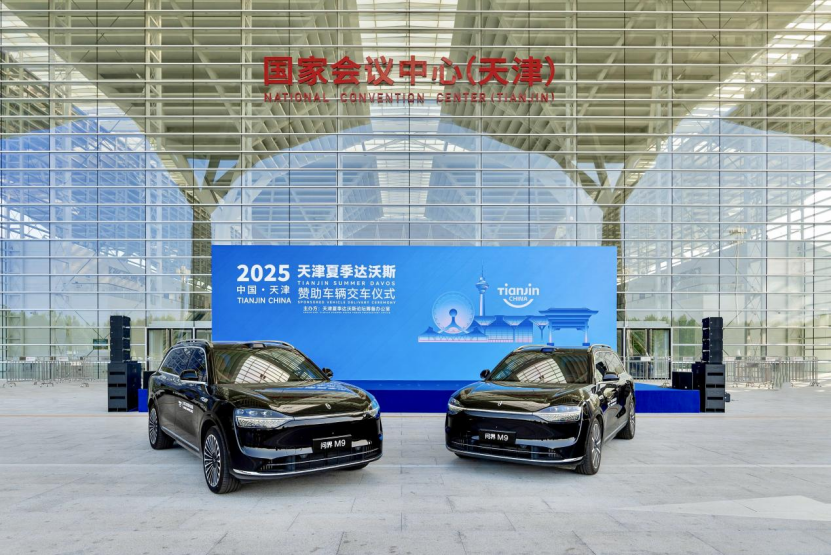
展现新豪华风采,问界M9成2025天津夏季达沃斯接待用车
Qi Lu Wan Bao· 2025-06-11 10:09
Core Insights - The 2025 Tianjin Summer Davos Forum will take place from June 24 to 26, gathering 1,500 leaders from business, politics, social organizations, and academia, promoting a "green conference" approach [3] - The AITO Wenjie M9 has been selected as the official vehicle for the forum, emphasizing luxury, safety, and environmental friendliness [3][10] Group 1: Product Features - The Wenjie M9 features a spacious cabin with the largest interior space in its class at 2,725 mm, equipped with high-quality Nappa leather seats and advanced comfort features like ventilation and massage [5] - The vehicle's design is inspired by the "Kunpeng spreading its wings" concept, showcasing a majestic aesthetic and unique welcoming light features [3][5] Group 2: Safety and Certification - The Wenjie M9 prioritizes safety with an 80% aluminum body structure and the use of high-strength steel, achieving a "super 4G safety certification" from the China Insurance Research Institute [7] Group 3: Market Performance - Since its launch, the Wenjie M9 has achieved over 200,000 cumulative deliveries, setting a new record for vehicles in the 500,000 range, and has been recognized as the top in net recommendation value among new energy SUVs with a score of 88.4 [8] - The Wenjie M9 has also received accolades for its high resale value and ranked first in the J.D. Power attractiveness index for luxury plug-in hybrid SUVs [8] Group 4: Brand Vision - The selection of the Wenjie M9 as the reception vehicle for the forum highlights the brand's commitment to showcasing China's advancements in new energy vehicle technology and its dedication to green and intelligent development [10]
乘用车终端销量跟踪分析
2025-06-10 15:26
Summary of Key Points from the Conference Call Industry Overview - Recent domestic passenger car terminal sales experienced a month-on-month decline of 20% to 360,000 units, but weekly average sales still showed a year-on-year increase of 10% [1][4] - Year-to-date cumulative sales have increased by over 10%, indicating the effectiveness of the vehicle replacement policy [1][4] - The penetration rate of domestic new energy vehicles (NEVs) reached 56%, close to this year's high, with an average penetration rate of 53% year-to-date, representing a nearly 20% increase compared to the same period last year [1][5] Market Performance by Price Segment - NEVs priced between 100,000 to 150,000 yuan saw a growth rate of 60%, driven by high-cost performance models such as BYD Qin PLUS DM-i series and Geely Galaxy series [1][6] - Sales of mid-to-high-end NEVs priced above 300,000 yuan remained flat or slightly increased, with some segments even experiencing a decline due to product cycle impacts from leading brands like Li Auto and Aito [1][6] Key Players and Market Share - BYD's terminal sales this week were 54,900 units, a 10% decrease month-on-month, but market share rebounded to around 15% [1][7][8] - The market concentration of the top 10 companies (CR10) decreased to 63%, down from 70% in the second half of last year, indicating increased competition from smaller brands due to subsidy policies [1][9] - Geely, including its Galaxy and Zeekr brands, emerged as a significant competitor with sales of approximately 30,000 units this week [1][10] Competitive Landscape - The overall trend in domestic passenger car demand is showing a steady upward trajectory, with both total and structural sales stabilizing [1][3] - Increasing discounts within the industry are noted, with a recommendation to prioritize technology-driven leading new forces while also tracking mid-to-low-priced, high-demand, and low-valuation car manufacturers [1][3] Other Notable Mentions - Wuling ranked second with total sales of 10,000 units, while Geely ranked third with around 30,000 units [1][10] - Tesla's sales for the period were 8,600 units, with a need to monitor the impact of the new Full Self-Driving (FSD) feature on its supply chain [1][2][10]

许敏:增程技术挑战和创新解决方案
Zhong Guo Qi Che Bao Wang· 2025-06-05 01:32
Core Insights - The rise of range-extended electric vehicles (REEVs) has led to increased competition among automakers, particularly in the mid-to-large SUV segment, which is nearing market saturation with slowing sales growth [3][4] - The development of REEV technology must diversify beyond mid-to-large SUVs to avoid market homogenization and promote innovation [4][6] Market Dynamics - REEVs are primarily concentrated in the mid-to-large SUV market, with many automakers investing heavily in this segment, leading to a near-saturation of market capacity and a noticeable slowdown in sales growth [3] - The success of China's REEV technology is attributed to its focus on high-income family needs, offering versatility for commuting and leisure, which aligns with the trend of consumer upgrading towards functionality and quality [5][6] Technical Recommendations - For A-segment vehicles, a configuration of a large battery combined with a small range extender is recommended to reduce costs while maintaining performance [6] - The proposed configuration of a 30kW engine with a 30kWh battery can lower costs by approximately 4,000 yuan compared to larger configurations, while still addressing range anxiety [6] Innovation and Development - The industry must redefine REEV technology by accurately identifying product needs and focusing on user experience-driven innovations [7][10] - Innovations in combustion technology, noise, vibration, and harshness (NVH), manufacturing processes, and AI-driven control systems are essential for advancing REEV technology [8][9][10]

【新能源周报】新能源汽车行业信息周报(2025年5月26日-6月1日)



乘联分会· 2025-06-04 08:38
Industry Information - In the first four months, Shaanxi's automobile production increased by 33.3% year-on-year, with a total output of 630,000 vehicles, surpassing the national growth rate of 22.2% [8] - China Automotive Research Institute signed a strategic cooperation agreement with Huawei's subsidiary, aiming to enhance collaboration in policy research, AI technology application, and digital model development [9] - Nvidia plans to launch a new AI chip for the Chinese market, priced significantly lower than the previous H20 chip, with production expected to start in June [10] - The Horgos port exported 106,000 vehicles from January to April, marking an 18% year-on-year increase [10] - A Guangzhou company has developed a fast-charging technology that can charge 70% of a vehicle's battery in just 5 minutes, leading the industry [10] - The automotive chip company Chuangzhan completed nearly 100 million yuan in angel financing [11] - CATL expects to achieve small-scale production of solid-state batteries by 2027, which are anticipated to address key issues in electric vehicle range and safety [12] - Geely's battery subsidiary plans to reach a production capacity of 70GWh by 2027, with multiple production bases established [12] - Hesai Technology reported Q1 revenue of 530 million yuan, with a gross margin of 41.7% and a delivery volume of 195,818 units [13] - Pony.ai has partnered with Dubai's RTA to launch Robotaxi testing operations by 2025 [14] - Nvidia's Q1 revenue reached $44.062 billion, with a 72% increase in automotive chip business [15] - UBS forecasts continued growth in electric vehicle sales, projecting a compound annual growth rate of 17% from 2024 to 2027 [16] Policy Information - Henan aims to complete the scrapping and replacement of approximately 500,000 vehicles by 2025, along with over 8 million home appliance replacements [25] - Shanghai's Jiading district has introduced policies to support the development of intelligent connected new energy vehicles [26] - Guangzhou has allocated over 2.986 million yuan in subsidies for electric vehicle charging infrastructure construction [27] - Beijing encourages foreign enterprises to participate in high-level autonomous driving demonstration zones [28] - Chongqing plans to establish 30 smart factories and 300 digital workshops by 2027 [28] - Harbin is launching a promotional campaign for automobiles, offering 48 million yuan in subsidies [28] - Guangdong's energy bureau has issued a notice for energy-saving and carbon reduction work for public institutions by 2025 [28] - Fujian supports automotive consumption activities and aims to build over 80,000 public charging piles by the end of 2025 [28] - Zhejiang Jiaxing has announced subsidy standards for personal charging piles and hydrogen stations [33]
鑫椤锂电一周观察 | 美国拟取消《通胀削减法案》电动汽车补贴对中韩电池产业的影响
鑫椤锂电· 2025-05-30 08:28
Core Viewpoint - The article highlights significant developments in the lithium battery and materials industry, including major contracts, market trends, and pricing dynamics, indicating a competitive landscape and evolving supply-demand conditions. Group 1: Major Contracts and Collaborations - Chuangneng New Energy signed a strategic cooperation agreement with Changzhou Lithium Source, committing to purchase approximately 150,000 tons of lithium iron phosphate materials over five years, valued at around 5 billion yuan [2] - Foton Motor announced a joint venture with EVE Energy to establish Beijing Foton EVE New Energy Technology Co., with a registered capital of 500 million yuan, aimed at expanding the new energy heavy truck business and providing diverse battery leasing solutions [3] Group 2: Market Conditions and Pricing Trends - The domestic lithium carbonate market continues to experience slight declines, with production adjustments leading to a total reduction of approximately 8,900 tons, while recovery efforts add around 9,000 tons, resulting in a marginal increase in supply [6] - As of May 30, the latest prices for battery-grade lithium carbonate are between 61,000 to 62,000 yuan per ton, and industrial-grade is between 58,900 to 59,400 yuan per ton [7] - The three-element material market showed a slight increase in June, primarily driven by leading companies, with total output around 4,000 tons, although limited demand may lead to further price declines [7] - The lithium iron phosphate market remains stable, with recent large orders from leading companies indicating a potential shift in market dynamics despite overall capacity excess [8] Group 3: Supply Chain and Material Prices - The negative sentiment in the negative electrode material market persists, with limited demand and slight increases from major manufacturers, while smaller firms maintain existing orders [10] - The latest prices for natural graphite negative materials range from 50,000 to 65,000 yuan per ton, while artificial graphite prices vary from 32,000 to 65,000 yuan per ton [11] - The separator market is stabilizing, with limited increases from leading companies and a joint production limit declaration helping to stabilize prices [12] - The electrolyte market is experiencing slight declines, with head companies reporting a 5-10% increase in demand, but overall prices are expected to decrease [13] Group 4: Battery and Vehicle Market Insights - The domestic lithium battery market remains stable, with production expected to increase in June due to pre-order deliveries and performance targets for leading companies [14] - In the new energy vehicle sector, sales reached 239,600 units, a year-on-year increase of 31.65%, with a penetration rate of 59.07% for the week [14] - The storage market is stable, with leading companies maintaining high capacity utilization rates, although concerns about future supply limits growth [15]



“满配、降维、白菜价”,自主品牌变革新品逻辑
Zhong Guo Qi Che Bao Wang· 2025-05-30 01:47
Core Viewpoint - Chinese automotive brands are redefining market standards by offering high configurations at competitive prices, challenging traditional pricing and technology barriers in the automotive industry [2][3][4]. Group 1: Product Logic Innovation - Chinese brands are adopting a new product logic where base configurations are equivalent to high configurations, making advanced features standard in entry-level models [3][4]. - For example, the 2025 IM L6 starts at 204,900 yuan, including features like an 800V high-voltage platform and Huawei ADS 3.0 driving system, which would typically cost an additional 200,000 yuan in traditional luxury brands [3]. - The coverage of intelligent configurations in Chinese brands is 2.3 times that of joint venture brands, enhancing user experience and pushing competitors to accelerate technological upgrades [3][5]. Group 2: Value Standard Reconstruction - The traditional vehicle classification system is being disrupted, with models like Chery Fengyun A9L offering C-class space standards at a 200,000 yuan price point, equipped with high-end technologies [4][5]. - The Aito M9, priced at 469,800 yuan, surpasses the value standards of luxury brands like the Mercedes-Benz GLS, showcasing a shift in high-end vehicle pricing and features [4][6]. Group 3: Cost Control and Pricing Strategy - Chinese brands achieve competitive pricing through cost control strategies, including supply chain integration and independent software development, resulting in a 30% reduction in battery costs [6][7]. - The implementation of transparent pricing strategies, such as nationwide uniform pricing, enhances competitiveness by returning consumer power to users [7][8]. - The transformation in pricing strategies is leading to a redefinition of market dynamics, as evidenced by a 7.3% year-on-year increase in China's automotive exports in Q1 2025 [7][8]. Group 4: Future Outlook - The ongoing transformation in the automotive industry is expected to continue, with Chinese brands needing to focus on technological innovation and global expansion to maintain their competitive edge [8]. - The ultimate goal for the Chinese automotive industry is to redefine global automotive value standards, transitioning from a "big automotive country" to a "strong automotive country" in the era of smart electric vehicles [8].
