Momenta

Search documents
汽车行业专题报告:辅助驾驶的AI进化论:站在能力代际跃升的历史转折点
Guohai Securities· 2025-07-22 11:26
Investment Rating - The report maintains a "Recommended" rating for the autonomous driving industry [1] Core Insights - The autonomous driving industry is at a pivotal point of capability evolution, with advancements in AI and high-performance computing driving the development of autonomous driving solutions [5][8] - The report identifies that the differentiation in autonomous driving capabilities among automakers is diminishing as the industry matures, leading to a focus on safety features and user experience [5][8] Summary by Sections 1. Industry Overview - The report outlines the current state of the autonomous driving industry, highlighting the convergence of technology paths and the need for enhanced safety features as the industry transitions to higher levels of automation [5][6] 2. Corporate Strategy and Organization - Companies are adjusting their organizational structures and research focuses to improve R&D efficiency and commercialization pace, with a notable shift towards AI applications [6][52] - The report emphasizes the importance of maintaining product strength and long-term operational capabilities in a price-sensitive competitive landscape [6][52] 3. Technical Capabilities - **Sensors**: The report discusses the parallel development of multiple sensing solutions, including LiDAR, cameras, and radar, to meet safety and reliability requirements [7] - **Computing Power**: It highlights the establishment of cloud-based computing centers for model training and algorithm iteration, with Tesla leading at over 75 Eflops and some Chinese automakers achieving around 10 Eflops [7] - **Vehicle-Cloud Models**: The report notes a shift from rule-based to data-driven models, enhancing decision-making capabilities through the integration of multimodal data [7] 4. Consumer Perception - The report indicates that autonomous driving products are becoming increasingly recognized by consumers, with features such as parking assistance and safety enhancements being continuously optimized [7][49] 5. Investment Recommendations - The report suggests focusing on automakers making significant advancements in R&D and functional deployment, including Tesla, Xpeng, Li Auto, NIO, and Xiaomi, as well as leading third-party solution providers like Momenta and Horizon Robotics [8][50]


市值第一英伟达,被中国汽车浇冷水|深氪
36氪· 2025-07-22 10:21
Core Viewpoint - The article discusses the challenges faced by NVIDIA in the automotive sector, particularly in the context of its partnerships with major car manufacturers and the increasing competition from Chinese companies developing their own chips and software solutions [3][5][18]. Group 1: NVIDIA's Automotive Business Challenges - NVIDIA's automotive business, while significant, accounts for less than 2% of its total revenue of $130.5 billion, indicating that it is a relatively small segment for the company [11][58]. - The collaboration between NVIDIA and General Motors has faced internal criticism, with GM executives describing NVIDIA's autonomous driving solutions as "very scary" [5][6]. - Other automakers, such as Mercedes-Benz, have also expressed dissatisfaction with NVIDIA's performance, leading to a shift towards competitors like Momenta for autonomous driving solutions [9][11]. Group 2: Competition from Chinese Companies - Chinese automakers are increasingly developing their own AI chips, with companies like NIO and Xpeng already delivering their self-developed chips, posing a significant threat to NVIDIA's market share [19][30]. - The article highlights that the delay in NVIDIA's Thor chip delivery has prompted companies like Xpeng to pivot towards their self-developed chips, indicating a loss of confidence in NVIDIA's ability to meet delivery timelines [24][25]. - The competitive landscape is shifting, with Chinese companies rapidly advancing in autonomous driving software and hardware, making it difficult for NVIDIA to maintain its previous dominance [66][68]. Group 3: Implications of Chip Development - The development of self-research chips by automakers is seen as a strategic necessity, driven by the need for cost reduction and better integration with AI capabilities [45][49]. - The article notes that the challenges faced by NVIDIA in delivering the Thor chip have inadvertently accelerated the self-development of chips among leading Chinese automakers [31][30]. - The long development cycle for automotive chips, which can take up to four years, contrasts sharply with the faster-paced software development cycles seen in the industry [33][50]. Group 4: Cultural and Operational Differences - NVIDIA's corporate culture, which emphasizes long-term technological advancements, may not align with the immediate delivery needs of automotive clients, leading to operational friction [51][62]. - The article points out that NVIDIA's team in China lacks decision-making power compared to its larger U.S. team, which may hinder its responsiveness to local market demands [65]. - The disparity in urgency and operational focus between NVIDIA and its automotive partners has created a gap that competitors are eager to exploit [67][68].


中国汽车市场一周行业信息快报——2025年7月第3期
Zhong Guo Zhi Liang Xin Wen Wang· 2025-07-21 07:49
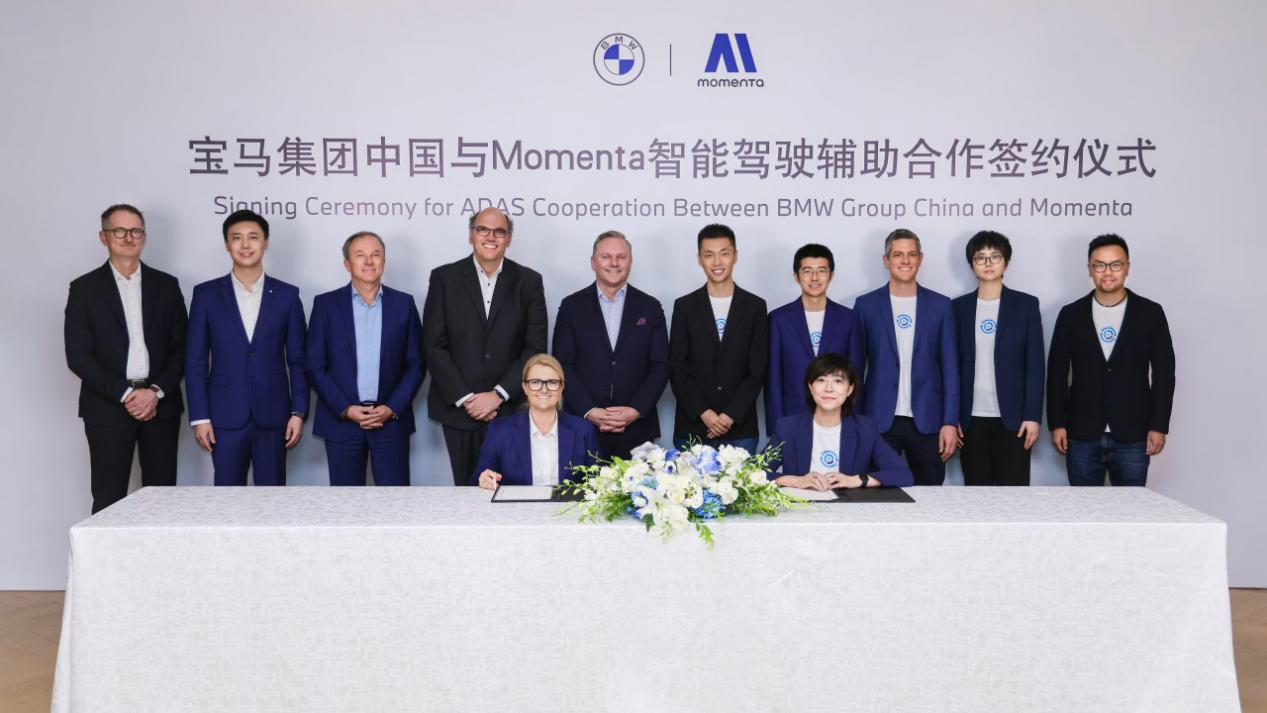
Group 1: New Energy Vehicle Market - In the first half of 2025, new registrations of new energy vehicles reached 5.622 million, marking a year-on-year increase of 27.86% and setting a new historical high [2] - As of June 30, 2025, the total number of new energy vehicles in China reached 36.89 million, contributing to a total vehicle ownership of 460 million [2] Group 2: BMW's Strategic Developments - BMW announced a partnership with Momenta to develop a new generation of intelligent driving assistance systems tailored for the Chinese market, featuring point-to-point navigation capabilities [5] - The new system will utilize large model technology and neural networks for enhanced environmental perception and vehicle control, allowing for continuous self-improvement through driving data [5] Group 3: Geely's Corporate Actions - Geely Holding Group signed a merger agreement with Zeekr, with Geely acquiring all remaining shares of Zeekr, allowing for a comprehensive coverage of various powertrain types and enhancing competitive positioning [6] - Following the merger, Zeekr will become a wholly-owned subsidiary of Geely, facilitating a unified corporate strategy [6] Group 4: Industry Collaborations - China FAW Group and Alibaba unveiled a joint laboratory to develop automotive industry-specific large models, focusing on improving model training efficiency and application performance [7] Group 5: New Product Launches - Geely launched the Bin Yue Super Max with a starting price of 71,800 yuan after cash subsidies, featuring a new design and advanced interior technology [10][12] - The Dongfeng Mengshi M817 began pre-sales with prices starting at 329,900 yuan, equipped with advanced driving assistance systems and a hybrid powertrain [15] Group 6: Tax Policy Changes - The Ministry of Finance and the State Administration of Taxation announced adjustments to the consumption tax policy for super luxury cars, lowering the threshold for taxation from 1.3 million yuan to 900,000 yuan [13]

我国100强独角兽企业董事长,都毕业于哪些院校?
Sou Hu Cai Jing· 2025-07-20 13:42
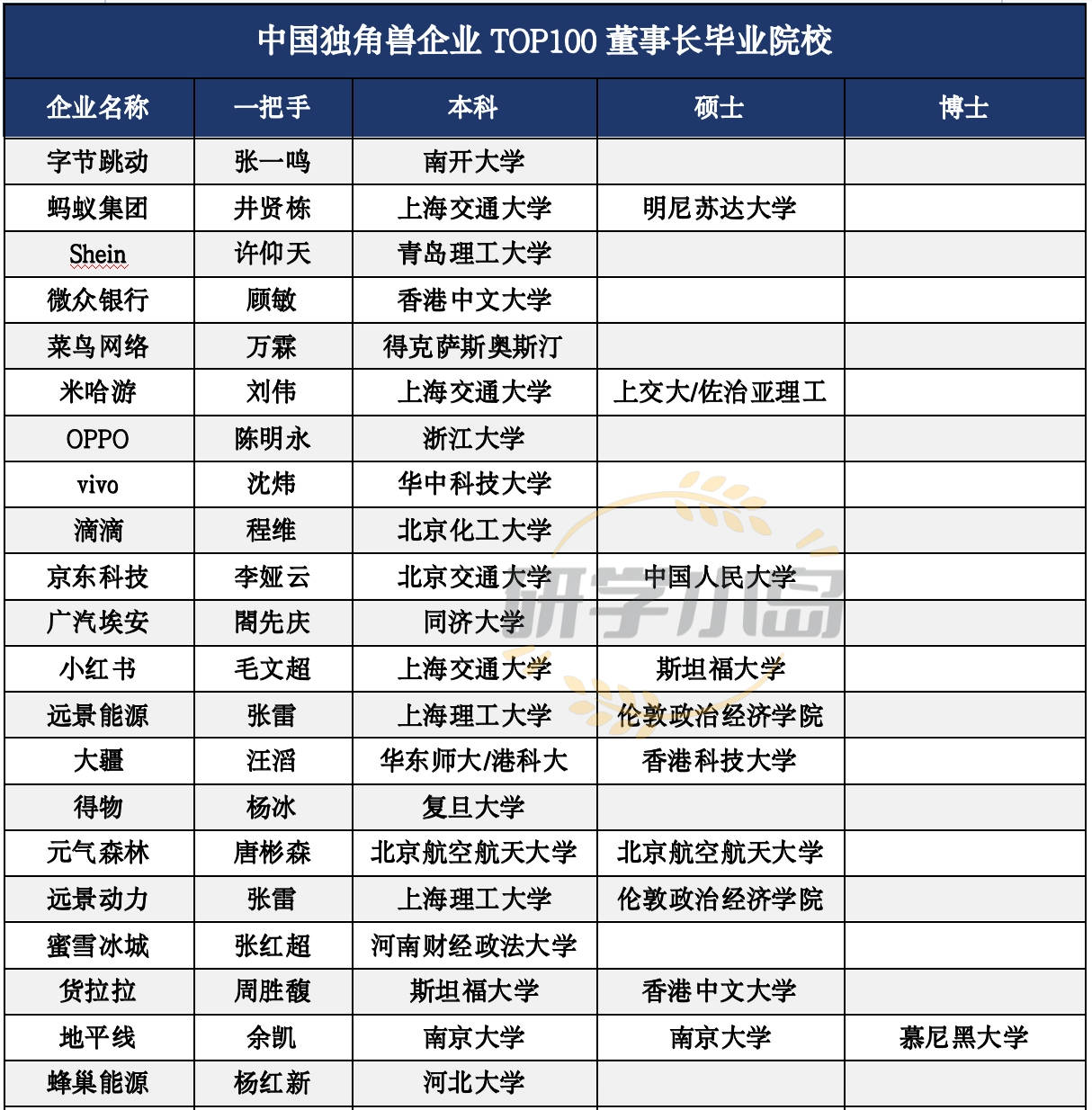
Core Insights - Tsinghua University has a significant influence on China's top 100 unicorn companies, with 14 CEOs being alumni, indicating its strong presence in the business sector [1][6][7] - The majority of the top 100 unicorns are concentrated in sectors such as information software, new energy vehicles, trendy food, biomedicine, and semiconductors, particularly in the internet technology industry [1][6] - Other notable universities contributing to the leadership of these unicorns include Peking University, Shanghai Jiao Tong University, and Stanford University, each with 4 alumni among the CEOs [1][7] Group 1: Educational Influence - Tsinghua University leads with 14 alumni among the CEOs of the top 100 unicorns, showcasing its dominance in the business landscape [1][7] - Peking University, Shanghai Jiao Tong University, and Stanford University each produced 4 CEOs, highlighting their competitive edge in producing business leaders [1][7] - Other universities like Nanjing University, Huazhong University of Science and Technology, and the Chinese Academy of Sciences also have notable representation among the CEOs [6][7] Group 2: Industry Representation - The information software sector has a high concentration of leaders from Tsinghua University, Peking University, and Shanghai Jiao Tong University [6] - The new energy vehicle sector shows a strong presence of leaders from Tongji University, indicating a specialized educational background in this field [6] - In industries like trendy food, biomedicine, and semiconductors, the educational backgrounds of CEOs are diverse, suggesting no single university dominance [6]
秋招上岸小厂,心满意足了。。。
自动驾驶之心· 2025-07-20 12:47
Core Viewpoint - The article discusses the advancements in AI technology, particularly in autonomous driving and embodied intelligence, highlighting the saturation of the autonomous driving industry and the challenges faced by job seekers in this field [2]. Group 1: Industry Developments - The autonomous driving sector has seen significant breakthroughs, with L2 to L4 functionalities being mass-produced, alongside advancements in humanoid robots and quadrupedal robots [2]. - The industry has a clear demand for technology and talent, as evidenced by the experiences shared by job seekers [2]. Group 2: Job Seeking Platform - A new platform called AutoRobo Knowledge Community has been launched to assist job seekers in the fields of autonomous driving, embodied intelligence, and robotics, currently hosting nearly 1,000 members [2][3]. - The community includes members from various companies such as Horizon Robotics, Li Auto, Huawei, and Xiaomi, as well as students preparing for upcoming recruitment seasons [2]. Group 3: Resources and Support - The platform provides a wealth of resources including interview questions, industry reports, salary negotiation tips, and resume optimization services [3][4]. - Specific interview questions related to autonomous driving and embodied intelligence have been compiled, covering various technical aspects and practical skills [9][10][11]. Group 4: Industry Reports - The community offers access to numerous industry reports that help members understand the current state, development trends, and market opportunities within the autonomous driving and robotics sectors [15][19]. - Reports include insights on trajectory prediction, occupancy perception, and the overall landscape of the embodied intelligence industry [14][19].
头部玩家格局加速重塑,智驾行业圈地运动不断升级
经济观察报· 2025-07-19 09:55
Core Viewpoint - The article discusses the emerging trend of collaboration between automotive manufacturers and intelligent driving solution companies, highlighting a shift from self-research to partnerships for developing advanced driving technologies [2][6][16]. Group 1: Industry Dynamics - Major players in the intelligent driving sector are engaging in a "land-grabbing" strategy, forming partnerships to enhance their technological capabilities [2][3]. - The collaboration model has evolved, with automotive companies increasingly relying on specialized intelligent driving firms to overcome technical challenges [2][6]. - The competition has shifted towards high-level intelligent driving, with "point-to-point" driving becoming a new benchmark for assessing capabilities [8][9]. Group 2: Key Players and Market Share - Companies like Momenta, Huawei, and Horizon Robotics have emerged as leading players in the intelligent driving market, each forming partnerships with various automotive manufacturers [3][11]. - As of 2023, Momenta holds a market share of 60.1%, followed by Huawei's Hi model at 29.8%, with other players like Baidu and Bosch+WeRide holding smaller shares [12]. - The landscape is dominated by six key players: Huawei, Zhuoyue Technology, Horizon Robotics, Momenta, Qingtou Zhihang, and Yuanrong Qihang, with significant market activity and partnerships [13][14]. Group 3: Investment Trends - Automotive companies are increasingly investing in intelligent driving solution providers to secure reliable partnerships, as seen with significant investments from companies like Anbofu and Great Wall Motors [9][10]. - The trend indicates a move towards deeper equity relationships and ecosystem development between automotive manufacturers and intelligent driving suppliers [16]. Group 4: Future Outlook - The intelligent driving sector is expected to see rapid growth, with companies like Momenta planning to increase their production from 8 models in 2023 to 26 models in 2024 [11]. - Qingtou Zhihang aims for a production target of one million units of its intelligent driving solutions by 2025, indicating a strong growth trajectory in the sector [14].
头部玩家格局加速重塑,智驾行业圈地运动不断升级
Jing Ji Guan Cha Wang· 2025-07-19 04:38
Core Insights - The smart driving sector is experiencing a "land grab" phase as major players prepare for an imminent explosion in advanced intelligent driving technology [2] - BMW China has partnered with Momenta to develop a China-specific intelligent driving solution, marking another instance of collaboration between automakers and intelligent driving companies [2][4] - The development model for intelligent driving has shifted towards collaboration between automakers and intelligent driving solution providers, moving away from the previous focus on in-house development [2][5] Industry Dynamics - Several intelligent driving solution companies, including Huawei, Momenta, and Horizon Robotics, have emerged as leaders in the field, each forming partnerships with various automakers [3][8] - The competition has intensified, with a notable shift towards high-level intelligent driving capabilities, as "point-to-point" driving becomes the new benchmark for assessing advanced driving capabilities [6][8] - The trend of "intelligent driving equality" is emerging, with leading automakers like BYD pushing for widespread adoption of intelligent driving technologies, putting pressure on slower-moving companies [5][6] Company Collaborations - BMW began recruiting suppliers for advanced driver assistance systems in early 2025, with Momenta winning the bid [4] - Automakers are increasingly opting to collaborate with leading intelligent driving solution providers to quickly address their technological gaps [5][6] - Momenta has secured partnerships with major luxury brands, including BMW, Mercedes-Benz, and Audi, enhancing its credibility in the market [7] Market Positioning - Momenta has achieved significant market share, with 60.1% in the domestic third-party intelligent driving supplier market, followed by Huawei with 29.8% [7] - The competitive landscape is evolving, with a focus on deepening partnerships between automakers and intelligent driving suppliers, moving towards equity-based collaborations [9] - Companies like Lightyear and Yuanrong Qixing are gaining traction, with Lightyear aiming for a million units of advanced driving solutions by 2025 [8][9]


宝马合作Momenta,将推中国专属高阶辅助驾驶方案
news flash· 2025-07-18 05:32
Group 1 - BMW has partnered with Momenta to develop AI-based driving assistance software for various domestic models, including the new generation vehicles [1] - The driving assistance solution is specifically designed for the Chinese market, supporting full-scenario, point-to-point navigation assistance [1] - The future capabilities will include cross-city travel, enabling functions from parking out of a space, navigating through urban areas and highways, to parking into a destination [1] Group 2 - Previously, BMW's intelligent driving assistance systems had limited functionalities, lacking support for advanced features such as highway on/off ramps and traffic light navigation [1] - Momenta, established in 2016, is a Chinese autonomous driving company that has invested in mass production of driving assistance and autonomous robotaxi services [1] - Momenta has formed partnerships with over ten global automakers, with more than 100 mass-produced models [1]
AI驱动汽车行业新竞赛
Zhong Guo Zheng Quan Bao· 2025-07-17 21:03
Core Insights - The global competition in automotive intelligence has fully commenced, with China's L2-level assisted driving penetration exceeding 50%, the highest globally [1] - The automotive industry's competitiveness is shifting from mechanical hardware to intelligence and AI, with cross-industry integration becoming a core driving force for ecosystem reconstruction [2] - The period from now until 2030 is critical for cultivating intelligent driving culture and popularizing low-level intelligent driving technologies [2] Group 1: Current Market Trends - In the first four months of this year, the installation rate of L2-level and above assisted driving functions in new energy passenger vehicles reached 77.8%, while traditional fuel passenger vehicles exceeded 52% [1] - The installation rate of automatic parking systems (APA) in passenger vehicles reached 31.2%, with models priced above 240,000 yuan exceeding 50% [1] Group 2: Strategic Development Paths - China's future intelligent development can follow two paths: focusing on higher-level autonomous driving (L3 and above) and shifting core competitiveness to intelligence and AI [2] - Companies are encouraged to accelerate the popularization of low-level assisted driving technologies and cultivate user habits and industry ecosystems [2] Group 3: Collaboration and Innovation - The collaboration between vehicle manufacturers and component suppliers is deepening, with many intelligent driving companies binding their technologies with vehicle manufacturers [3] - The automotive industry is encouraged to adopt a collaborative model similar to that of Europe and Japan, where vehicle manufacturers unite to tackle major technological challenges [2][3] Group 4: Technological Challenges - The mainstream autonomous driving technology still faces significant challenges in advancing from L3 to L4 and L5 levels, with issues such as "black box" decision-making and strong data dependency needing resolution [3] - The transition to intelligent vehicles must ensure safety while avoiding significant cost increases for manufacturers [3] Group 5: AI Operating Systems - The development of automotive intelligence relies on AI operating systems, with a consensus forming around three stages: AI in OS, AI for OS, and AI as OS [4] - More companies are building multi-agent intelligent systems that operate in parallel and coordinate with each other [4] Group 6: Global Perspective - For high-quality development, the Chinese automotive industry must shift from parameter competition to value creation and upgrade management models from transactional to partnership relationships [4] - Recent years have seen Chinese automotive companies achieving reverse technology transfer through joint ventures and investments, creating new pathways for industry cooperation [5]
Uber makes multi-million-dollar investment in Lucid and Nuro to build a premium robotaxi service
TechCrunch· 2025-07-17 12:31
Investment Overview - Uber is investing $300 million in Lucid and plans to purchase at least 20,000 of Lucid's new Gravity SUVs over the next six years, which will be equipped with Nuro's autonomous vehicle system [2][3] - Additionally, Uber is investing a multi-hundred-million dollar amount into Nuro, reportedly exceeding its investment in Lucid [3] Production and Launch Timeline - Production of the modified Lucid Gravity vehicles is expected to begin in late 2026 [3] - Uber aims to launch its robotaxi service in a major U.S. city next year [2] Partnership and Development - The agreement between Uber, Lucid, and Nuro took a year to finalize, indicating a significant commitment to the robotaxi program [3][4] - Engineers from Lucid and Nuro have already made progress, testing a prototype driverless vehicle at Nuro's proving grounds in Las Vegas [6] Broader Industry Context - Over the past two years, Uber has established partnerships with more than 18 autonomous vehicle technology companies globally, covering various applications in ride-hailing, delivery, and trucking [7] - Uber's notable partnership with Waymo is currently operational, offering a "Waymo on Uber" service in Austin and Atlanta, showcasing Uber's willingness to invest heavily in the autonomous vehicle market [8]