美的

Search documents
QuestMobile2025年中国AI终端生态发展研究报告:AI终端三大领域格局初定,场景跃迁与品类爆发共振,大厂发力空间智能
QuestMobile· 2025-11-25 02:02
Core Insights - The article discusses the rapid development trends in the AI terminal industry, highlighting the emergence of AI smartphones, AI PCs, and wearable devices as central components of a smart living model, leading to the creation of intelligent spaces such as smart homes and smart cars [4][6][11]. Group 1: AI Terminal Development - The "end-edge-cloud" architecture is identified as a key driver for the scalable development of AI terminals, with significant breakthroughs expected by 2025 [10][18]. - AI smartphones and AI PCs are positioned as the primary entry points for personal digital life, with AI wearable devices extending their functionality [11][41]. - The domestic smartphone shipment reached 220 million units from January to September 2025, indicating a strong growth trajectory [34]. Group 2: Smart Home and Smart Car Integration - The smart home app user base reached 383 million by October 2025, with an average usage frequency of 60.7 times per month, reflecting a shift towards personalized and scenario-based smart experiences [6][45]. - In the smart car sector, L2 level assisted driving configurations accounted for 69.4% of vehicles by October 2025, showcasing the mainstream adoption of advanced driving technologies [52]. - The integration of smart homes and smart cars is leading to the development of a "super space intelligence" model, enhancing user interaction and experience [45][50]. Group 3: Emerging AI Technologies - The field of embodied intelligence is experiencing explosive growth, with 409 financing events recorded from January to October 2025, indicating strong investor interest [12][60]. - Embodied intelligence is seen as a critical leap for AI, transitioning from virtual to physical applications, with industrial manufacturing being the initial focus area [62]. - Space intelligence is defined as the next significant milestone in AI development, providing a foundational framework for AI terminals to achieve comprehensive intelligent behavior in the physical world [64][66]. Group 4: Market Dynamics and Competitive Landscape - The competition among smartphone manufacturers, internet companies, and home appliance firms is intensifying as they vie for control over user interaction interfaces [6][47]. - Major tech companies are rapidly entering the space intelligence sector, with their investments reflecting their core business strengths [68][70]. - The article emphasizes that the future of AI terminals will be shaped by their ability to integrate seamlessly into users' lives, enhancing the overall experience [72].


有人被拖欠工资!毫末智行北京总部人去楼空,员工抱着显示器离开;曝ASML为美国监控中国客户!官方否认;雷军斥资超1亿港元增持小米
雷峰网· 2025-11-25 00:32
Group 1 - ASML has denied allegations that it proposed to the US government to monitor its Chinese customers, stating that such claims are misleading and untrue [4][5] - The autonomous driving company Haomo has reportedly ceased operations, leaving its headquarters empty and employees unpaid, with speculation about a failed bet leading to legal issues [7][8] - Xiaomi's founder Lei Jun has invested over HKD 100 million to increase his stake in the company to 23.26%, coinciding with a period of stock buybacks amid market challenges [15][16] Group 2 - The domestic GPU company Moer Thread has launched its IPO with a record issuance price of CNY 114.28 per share, attracting significant investor interest with a subscription rate of 4126.49 times [16][17] - JD Industrial has passed the hearing for its IPO on the Hong Kong Stock Exchange, marking it as the sixth company under JD Group to go public [22][23] - The partnership between GAC and Huawei has led to the launch of a new automotive brand, with GAC's management asserting that there is no risk of homogenization among their various brands [26][27] Group 3 - Apple CEO Tim Cook is reportedly not planning to step down, despite media speculation about a potential transition in leadership [43] - Tesla's Full Self-Driving (FSD) feature has officially launched in South Korea, expanding its global presence to seven countries [44][45] - Nvidia's CEO Jensen Huang has stated that the company has evolved from a gaming GPU manufacturer to a foundational infrastructure provider for AI data centers, marking a significant strategic shift [52]
斯菱股份(301550):收购增强精密轴承生产能力 产业协同推动机器人业务发展
Xin Lang Cai Jing· 2025-11-20 04:33
Core Viewpoint - The company plans to acquire a 24.3% stake in Ningbo Yinqiu Technology Co., Ltd. for 390 million yuan, enhancing its precision bearing production capacity and promoting the development of its robotics business [1] Group 1: Acquisition and Business Expansion - The acquisition aims to strengthen the company's precision bearing business, leveraging synergies to enhance collaboration in key areas such as automotive components and humanoid robot precision bearings [1] - Yinqiu Technology specializes in micro, small, and integrated precision bearings, serving major clients like Dyson, Nidec, Midea, Wolong Electric, and Gree, and holds a leading position in the precision bearing industry [1] - In the first half of 2025, Yinqiu Technology is projected to generate revenue of 560 million yuan and a net profit of 70 million yuan [1] Group 2: Globalization and Production Capacity - The company is accelerating its global layout, with production bases in Xinchang and Thailand, supporting future performance growth [1] - The Xinchang base is expected to gradually release production capacity in the second half of 2025, with an annual output of 6.29 million sets of high-end automotive bearings [1] - The Thailand base completed its second phase of investment in 2024, enhancing equipment utilization and progressing smoothly with the third phase of investment [1] Group 3: Robotics Sector Development - The company has established a robotics division to capitalize on the upcoming mass production in the robotics industry, which is expected to resonate with the automotive supply chain [2] - The company is expanding its product offerings to include harmonic reducers, actuator modules, and lead screws, leveraging its precision manufacturing capabilities [2] - The first production line for harmonic reducers has been launched, and the company is developing actuator modules in parallel [2] Group 4: Profit Forecast - The company is expected to see further growth in performance due to its global expansion and proactive positioning in the robotics sector [2] - Projected net profits for 2025, 2026, and 2027 are 220 million yuan, 260 million yuan, and 350 million yuan, respectively, with corresponding price-to-earnings ratios of 90, 76, and 57 times [2]

天猫实现四年来双11最好增长,线上消费ETF基金(159793)红盘向上
Sou Hu Cai Jing· 2025-11-17 02:18
Core Insights - Tmall achieved its best growth in four years during the Double 11 shopping festival, with nearly 600 brands surpassing 100 million in sales and significant year-over-year growth for many brands [1] - The China Securities Index for online consumption shows mixed performance among its constituent stocks, with BlueFocus leading the gains [1][2] - Structural opportunities in the consumption chain are emerging due to ongoing growth policies, with service consumption and online shopping showing resilience [1] Group 1: Tmall Double 11 Performance - Tmall's Double 11 event saw 34,091 brands doubling their sales compared to last year, with 18,048 brands growing over three times and 13,081 brands growing over five times [1] - Major brands like Apple, Haier, and Xiaomi each surpassed 1 billion in sales during the event [1] - Tmall's president attributed the growth to support for quality brands and significant consumer investment [1] Group 2: Online Consumption Index - The CSI Online Consumption Theme Index includes 50 companies involved in online shopping, digital entertainment, online education, and telemedicine [2] - As of October 31, 2025, the top ten weighted stocks in the index accounted for 55.69% of the total index weight [2] - The top stocks include Alibaba, Tencent, and Kuaishou, with Alibaba holding an 11.77% weight despite a slight decline [4]







中概股爆发,小鹏汽车涨近10%,加密货币超17万人爆仓
21世纪经济报道· 2025-11-06 15:34
记者丨 曾静娇 见习编辑张嘉钰 编辑丨谢珍 美东时间周四,美股三大指数集体低开,截至22:50,道指跌0.26%,标普500指数跌0.15%,纳指跌0.28%。 | 道琼斯 | 纳斯达克 | 标普500 | | --- | --- | --- | | 47187.29 | 23433.28 | 6786.02 | | -123.71 -0.26% | -66.52 -0.28% | -10.27 -0.15% | | 中国金龙 | 纳指100期货 | 标普500期货 | | 8256.29 | 25637.25 | 6815.50 | | +118.64 +1.46% | -109.00 -0.42% | -9.75 -0.14% | 科技七巨头跌多涨少,脸书跌近2%,特斯拉高开低走,截至发稿跌近2%,公司即将召开年度股东大会,其中马斯克的万亿美元薪酬包投票万 众瞩目。 谷歌小幅上涨,据上海证券报报道,谷歌正在推出其最强大的AI芯片Ironwood,未来几周将全面上市。另从国内PCB产业链相关人士获悉,谷 歌方面最近相继去胜宏科技等国内几大PCB巨头考察,或洽谈采购人工智能芯片用的PCB。如果这些意向订单未来 ...

营收净利双降,格力提前“入冬”
Bei Jing Shang Bao· 2025-11-02 13:25
Core Viewpoint - Gree Electric Appliances has reported significant declines in revenue and net profit for the third quarter of 2025, highlighting the company's struggles amid a challenging industry environment [3][4]. Financial Performance - For the first three quarters of 2025, Gree achieved revenue of 137.18 billion yuan, a year-on-year decrease of 6.5%, and a net profit attributable to shareholders of 21.461 billion yuan, down 2.27% [3]. - In the third quarter alone, Gree's revenue was 39.855 billion yuan, reflecting a more severe decline of 15.09% year-on-year, while net profit dropped by 9.92% to 7.049 billion yuan [3]. Industry Context - The air conditioning industry is currently in a downturn, with retail sales in September 2025 down 21.2% year-on-year, and production for domestic sales and exports also experiencing significant declines [4]. - The industry faces challenges such as product homogenization and intense competition, which complicate consumer decision-making [4]. Competitive Landscape - Gree's heavy reliance on air conditioning, which accounted for 78.38% of its revenue in the first half of 2025, makes it particularly vulnerable to fluctuations in this segment [3]. - Xiaomi's new smart appliance factory in Wuhan poses a direct threat to Gree, as it shifts from an OEM model to in-house production, enhancing supply chain efficiency and product quality [5][6]. Future Outlook - Despite current challenges, analysts suggest that Gree still has growth potential through continued focus on air conditioning and heating, as well as expansion into new energy sectors [5]. - To overcome internal and external pressures, Gree needs to innovate in channels and ecosystem development to regain growth momentum [7].

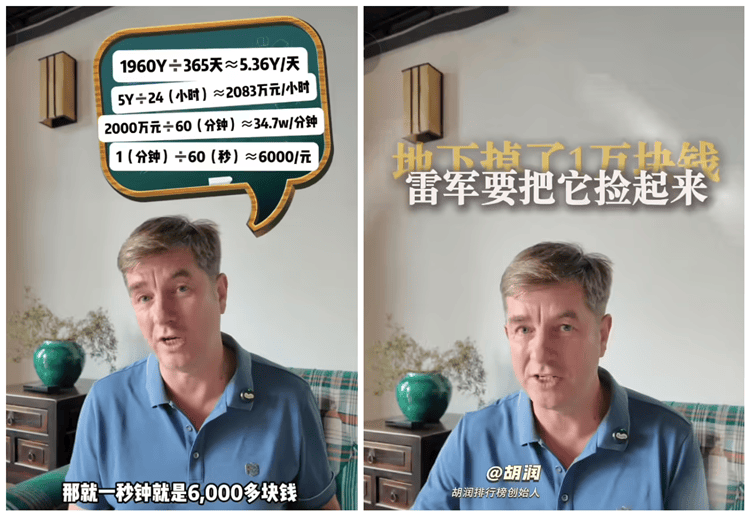
每秒6000元!雷军身价3260亿,成胡润百富榜财富增长最多的企业家
Sou Hu Cai Jing· 2025-10-30 08:13
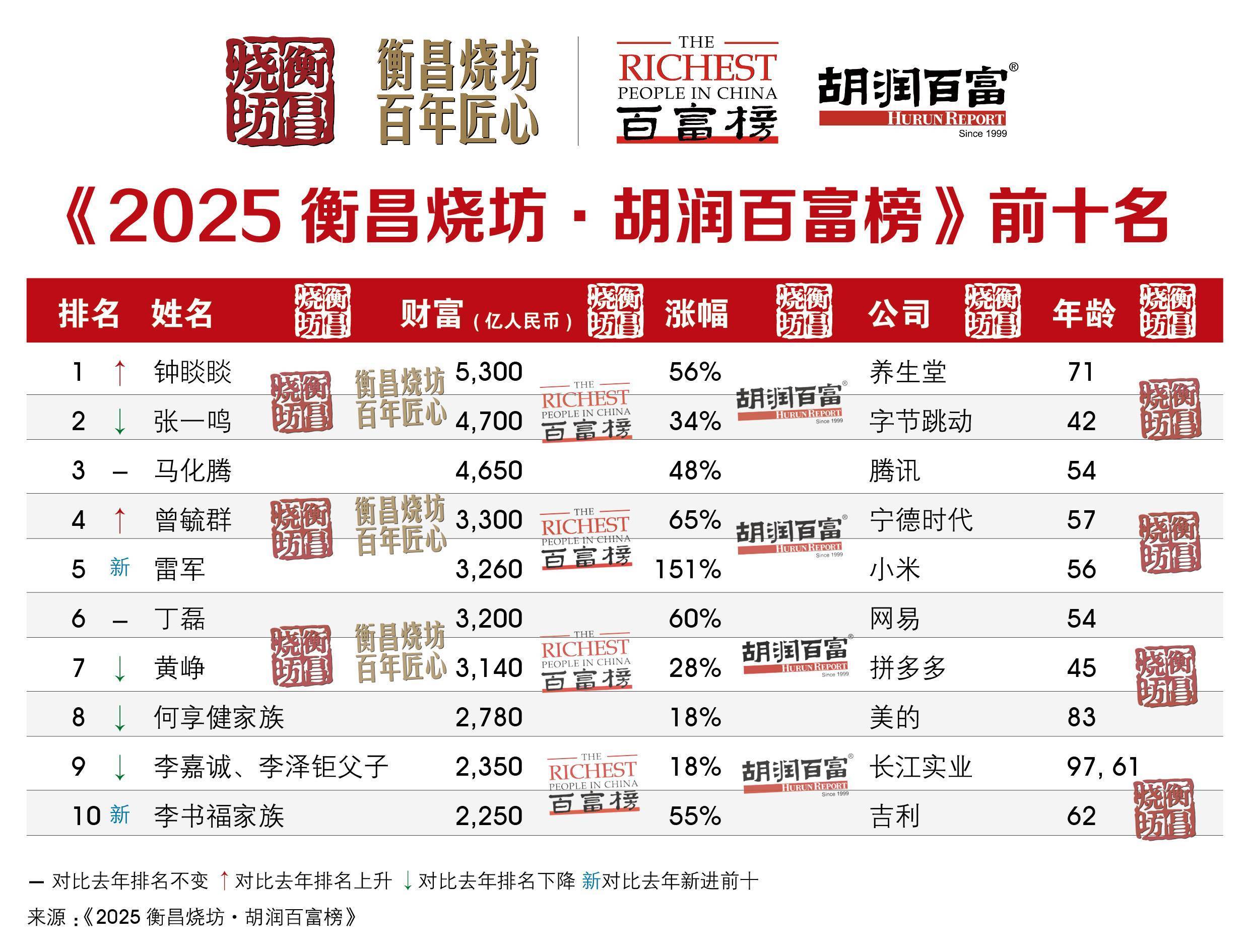
Core Insights - The 2025 Hurun Rich List has been officially released, with Lei Jun entering the top five with a wealth of 326 billion RMB, marking the highest wealth increase among entrepreneurs on the list [1][8] - Lei Jun's wealth increased by 151% compared to the previous year, amounting to a growth of 196 billion RMB [1][5] Company Performance - Lei Jun's wealth surge is primarily attributed to the growth of Xiaomi, particularly in its automotive business and high-end smartphone market [5] - Xiaomi's revenue for the first half of 2025 reached 227.2 billion RMB, a year-on-year increase of 38%, while net profit was 21.5 billion RMB, up 70% [5] - Xiaomi's stock price rose from 16.6 HKD last March to 58.7 HKD in February this year, although it has since decreased to around 44 HKD [5] Wealth Rankings - The top ten rankings in the Hurun Rich List include: 1. Zhong Shanshan - 530 billion RMB, 56% increase 2. Zhang Yiming - 470 billion RMB, 34% increase 3. Ma Huateng - 465 billion RMB, 48% increase 4. Zeng Yuqun - 330 billion RMB, 65% increase 5. Lei Jun - 326 billion RMB, 151% increase 6. Ding Lei - 320 billion RMB, 60% increase 7. Huang Zheng - 314 billion RMB, 28% increase 8. He Xiangjian family - 278 billion RMB, 18% increase 9. Li Ka-shing and family - 235 billion RMB, 18% increase 10. Li Shufu family - 225 billion RMB, 55% increase [6][8]
以5300亿身价再成中国首富,钟睒睒为何每次都踩对风口?
Sou Hu Cai Jing· 2025-10-29 23:08
Core Insights - Zhong Shanshan has regained the title of China's richest person with a wealth of 530 billion yuan, marking his fourth time at the top of the Hurun Rich List, equaling the record for the most times held by a single individual since the list's inception in 1999 [2][4]. Company Performance - Nongfu Spring, founded by Zhong Shanshan, remains the leader in China's packaged drinking water market, achieving a revenue of 25.62 billion yuan in the first half of the year, a year-on-year increase of 15.56%, and a net profit of 7.622 billion yuan, up 22.16% [4][10]. - The company's stock price has seen a significant increase, rising from 31.13 HKD at the beginning of the year to 52.55 HKD by October 28, resulting in a total increase of 69% for the year [3][4]. Wealth Growth - Zhong Shanshan's personal wealth increased by 56% in 2025, from 340 billion yuan to 530 billion yuan, marking a growth of 190 billion yuan [4][7]. - The number of billionaires in China has increased significantly, with 1,434 individuals having a wealth exceeding 5 billion yuan, a 31% increase from 2024 [4][6]. Market Trends - The top ten wealth threshold has risen, with the tenth position now held by the Li Shufu family at 225 billion yuan, an increase of 600 billion yuan from the previous year [6][7]. - The wealth of the top ten billionaires has shown substantial growth, with the lowest increase being 18% [6][7]. Strategic Insights - Zhong Shanshan's success is attributed to his ability to identify and capitalize on market trends, particularly in the health and wellness sectors, as evidenced by the launch of sugar-free tea drinks and the expansion into the ice cup market [8][9][13]. - The company has invested in innovative technologies, such as micro-molecular water crystallization, enhancing product quality and safety standards [13][14]. Future Prospects - Nongfu Spring is expanding into the ice cup market, with plans to invest 28.42 million yuan to build a production base capable of producing 7,000 tons of ice annually, indicating a strategic move to tap into a rapidly growing segment [11][13]. - The ice cup market is projected to reach 6 billion yuan by 2025, with significant growth potential as consumer preferences shift [11][12].

钟睒睒登顶胡润百富榜,王宁成河南首富
3 6 Ke· 2025-10-28 08:45
Group 1 - The core point of the article highlights the emergence of a new generation of entrepreneurs in China, significantly altering the wealth landscape, as evidenced by the 2025 Hurun Rich List, which features 1,434 individuals with wealth exceeding 5 billion yuan, a 31% increase from last year, and a total wealth nearing 30 trillion yuan, reflecting a 42% year-on-year growth [1][2]. Group 2 - There are 376 new faces on the list this year, representing about 26% of the total, with notable newcomers including Lei Jun of Xiaomi and Li Shufu of Geely [2]. - The surge in the number of wealthy individuals is largely attributed to a significant recovery in the stock market, with major indices like the Shanghai Composite Index and the Shenzhen Component Index rising by approximately 40-50% compared to the previous year [2]. - The industry structure has notably shifted, with a decline in real estate entrepreneurs, as only one remains in the top 100, while new entrants primarily come from industrial products, health, and consumer goods sectors [3]. - Zhong Shanshan retains the title of China's richest person for the fourth time with a wealth of 530 billion yuan, marking a 56% increase from last year, driven by the success of Nongfu Spring [3]. - Lei Jun's wealth surged by 151% to 326 billion yuan, making him the highest wealth gainer this year, with Xiaomi having ten representatives on the list [3][4]. - Li Shufu's wealth increased by 55% to 225 billion yuan, as Geely's stock price doubled over the past year [3]. - Wang Ning of Pop Mart saw a staggering 562% increase in wealth, amounting to 154.5 billion yuan, placing him in the top 20 [4]. Group 3 - The geographical distribution of the listed entrepreneurs shows that 1,210 are from mainland China, with Shanghai leading at 152 individuals, followed by Shenzhen and Beijing [5]. - The list also features three "post-80s" provincial billionaires, indicating a trend of younger entrepreneurs gaining wealth [6]. - Founders in the consumer electronics sector, such as DJI's Wang Tao, have also seen significant wealth increases, benefiting from the global demand for smart hardware [7]. - The new consumption sector is thriving, with several new entrants in various fields, including tea drinks and beauty products, showcasing the impact of young entrepreneurs [8].
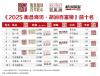
胡润百富榜公布!41名企业家资产超千亿元 | 名单
Sou Hu Cai Jing· 2025-10-28 04:38
Core Insights - The 2025 Hurun Rich List was released, marking the 27th edition since its inception in 1999, with wealth calculations as of September 1, 2025 [1] - A total of 1434 individuals with wealth exceeding 5 billion RMB were included, representing a 31% increase from the previous year [1] - The number of billionaires increased by 268 to reach 1021, while the number of billionaires worth over 100 billion RMB rose by 15 to 41 [1] Group 1: Top Billionaires - The threshold for the top ten increased by 60 billion RMB to 2250 billion RMB, with an average age of 62, which is 3 years younger than last year [1] - New entrants in the top ten include Lei Jun from Xiaomi and Li Shufu from Geely [1] - Jack Ma dropped to 11th place, while the late Li Ka-shing's sons ranked 44th [1] Group 2: Notable Wealth Increases - Zhong Shanshan's wealth grew by 190 billion RMB (+56%) to 530 billion RMB, making him the richest person in China for the fourth time [5] - Zhang Yiming's wealth increased by 120 billion RMB (+34%) to 470 billion RMB, placing him second [6] - Ma Huateng's wealth rose by 150 billion RMB (+48%) to 465 billion RMB, maintaining third place [6] Group 3: Industry Performance - Zhong Shanshan's company, Nongfu Spring, continues to lead the Chinese bottled water market with sales exceeding 25 billion RMB in the first half of the year, a 15% increase year-on-year [5] - ByteDance, led by Zhang Yiming, reported revenues exceeding 650 billion RMB in the first half of the year, a 25% increase, with AI business driving valuation growth [6] - NIO's stock surged, contributing to a 65% increase in the wealth of its founder, Zeng Yuqun, who ranked fourth with 330 billion RMB [7] Group 4: Regional Representation - Zhejiang entrepreneurs dominated the list with four representatives, including Zhong Shanshan and Ding Lei [1] - Guangdong entrepreneurs accounted for three spots, including Ma Huateng and He Xiangjian [1] - Fujian and Hunan also had notable representations with Zhang Yiming and Zhang Hongchao, respectively [1][10]