问界

Search documents
新能源乘用车周度销量报告-20250529
Dong Zheng Qi Huo· 2025-05-29 15:29
1. Report Industry Investment Rating No relevant content provided. 2. Core Viewpoints of the Report - In the 21st week of 2025 (from May 19th to May 25th), the domestic passenger car retail sales reached 394,000 units, a year - on - year increase of 10.6%; new energy passenger car retail sales were 220,000 units, a year - on - year increase of 19.7%. The new energy penetration rate was 55.9%, up 4.3 percentage points from the same period last year and down 0.4 percentage points from the previous week. Since the beginning of this year, cumulative passenger car retail sales were 8.1 million units, a year - on - year increase of 4.8%; cumulative new energy passenger car retail sales were 4.008 million units, a year - on - year increase of 30.4%, with a cumulative new energy penetration rate of 49.5% [1][12]. - The demand in the new energy vehicle market is clearly differentiated. Leading brands have consolidated their leading positions through product advantages and market strategies. New brands like Xiaomi have brought new variables, and traditional automakers such as Chang'an and Chery have achieved remarkable new energy sales [2][22]. 3. Summary by Relevant Catalogs 3.1 Passenger Car Market Weekly Overview - **Overall Sales**: In the 21st week of 2025, domestic passenger car retail sales were 394,000 units (up 10.6% year - on - year), and new energy passenger car retail sales were 220,000 units (up 19.7% year - on - year). The new energy penetration rate was 55.9% [1][12]. - **By Power Type**: In passenger cars, traditional fuel, hybrid, and new energy vehicles sold 157,000, 17,000, and 220,000 units respectively, with year - on - year changes of - 0.8%, 17.7%, and 19.7%, accounting for 39.8%, 4.4%, and 55.9% of passenger cars. In new energy passenger cars, pure - electric, plug - in hybrid, and extended - range vehicles sold 133,000, 59,000, and 28,000 units respectively, with year - on - year changes of 17.1%, 15.6%, and 46.4%, accounting for 60.5%, 27.0%, and 12.5% [17]. - **By Production Attribute**: In passenger cars, domestic and joint - venture brands sold 257,000 and 137,000 units respectively, with year - on - year changes of 20.6% and - 4.4%, accounting for 65.3% and 34.8%. In new energy passenger cars, domestic and joint - venture brands sold 197,000 and 23,000 units respectively, with year - on - year changes of 24.0% and - 8.1%, accounting for 89.6% and 10.4% [17]. 3.2 Key New Energy Automakers' Sales Analysis 3.2.1 BYD - **Weekly Sales**: 59,000 units, with BYD brand selling 53,000 units, Denza and Fangchengbao about 3,000 units each, and Yangwang 37 units [23]. - **Business Strategy**: Stopped producing fuel vehicles in March 2022. Since March this year, it released the super e - platform and launched new models. On May 23rd, it announced price cuts of up to 53,000 yuan for 22 models. The 2025 sales target is 5.5 million units. The sales of pure - electric and plug - in hybrid (including extended - range) models are evenly split [23]. 3.2.2 Geely Auto - **Weekly Sales**: 39,000 units, with 25,000 new energy vehicles (4,000 units from Zeekr). The electrification rate is about 64% [26]. - **Business Strategy**: In 2024, it released the "Taizhou Declaration". In 2025, it announced the acquisition of Zeekr. The 2025 sales target is 2.71 million units, with 2 million for Geely, 320,000 for Zeekr, and 390,000 for Lynk & Co. The new energy vehicle sales target is 1.5 million units [26]. 3.2.3 SAIC - GM - Wuling - **Weekly Sales**: 14,000 units, with 12,000 new energy vehicles. The electrification rate is about 87% [34]. - **Business Strategy**: This year, Wuling Hongguang launched an extended - range model, and Baojun launched the "Baojun Xiangjing" with plug - in hybrid and pure - electric options, but pure - electric models dominate sales [34]. 3.2.4 Chang'an Auto - **Weekly Sales**: 20,000 units, with 12,000 new energy vehicles. The electrification rate is about 58%. Its new energy brands Shenlan and Qiyuan each sold about 4,000 units, and Avatr sold over 2,000 units [39]. 3.2.5 Chery Auto - **Weekly Sales**: 20,000 units, with 7,000 new energy vehicles. The electrification rate is about 37%. Its new energy brands iCAR, Chery New Energy, and Zhijie each sold over 1,000 units [47]. 3.2.6 Tesla - **Weekly Sales**: 11,000 units in China, with Model 3 and Model Y selling over 3,000 and over 7,000 units respectively. Sales have strong seasonal fluctuations, with a significant week - on - week increase but little year - on - year growth [53]. - **Business Strategy**: This year, Tesla launched multiple promotions, including a "record - breaking discount package" for Model 3 after the Spring Festival and new offers in April [53]. 3.2.7 New - Force Automakers - **Sales**: Li Auto sold about 10,000 units, Wenjie 9,000 units, Leapmotor, Xiaomi, and NIO 7,000 units each, XPeng 6,000 units, and Aion 5,000 units. Most of Li Auto's sales are from the L series. Wenjie's sales have increased significantly, with the M8 launched and delivered recently [57].


假“热销” 套补贴?商务部开座谈会:研究“零公里二手车”
Nan Fang Du Shi Bao· 2025-05-29 02:36
Core Viewpoint - The Ministry of Commerce has initiated an investigation into the "zero-kilometer used car" phenomenon, emphasizing the need to combat false sales and subsidy exploitation, while aiming to regulate market order [1][2]. Group 1: Industry Issues - The "zero-kilometer used car" issue is seen as a distortion of market rules, where new cars are registered but not actually sold, creating a misleading impression of sales figures [3][5]. - Data manipulation is prevalent, with manufacturers and dealers registering unsold new cars as sold to inflate sales figures, misleading investors [5]. - The practice of exploiting subsidies is highlighted, where used car dealers acquire "zero-kilometer used cars" at low prices and then claim government subsidies for trade-ins, undermining the original intent of the subsidy policies [5]. Group 2: Market Dynamics - The return of exported vehicles due to saturated overseas markets is impacting domestic pricing structures, leading to reduced profits for traditional used car dealers and fostering unhealthy competition [5]. - The phenomenon of "zero-kilometer used cars" reflects a broader issue of price wars and capital pressures within the automotive industry, necessitating regulatory intervention [10]. Group 3: Industry Responses - Some industry insiders suggest that the existence of "zero-kilometer used cars" is a result of mutual agreements between manufacturers and dealers, where both parties benefit from the arrangement [6][8]. - The market is witnessing a shift, with some used car dealers beginning to sell new cars, raising questions about how the regulation of "zero-kilometer used cars" will affect their operations [10].
新能源车的激光雷达,竟然会扫坏你的镜头
3 6 Ke· 2025-05-28 23:47
Core Viewpoint - The article discusses the potential damage caused by automotive lidar systems to smartphone cameras, highlighting incidents where laser emissions have resulted in physical damage to camera lenses and sensors [1][4][17]. Group 1: Lidar Technology and Functionality - Automotive lidar systems emit laser pulses to measure distances and shapes of objects by analyzing the time and intensity of reflected signals [8]. - The precision of lidar is determined by the number of laser lines it can emit, with higher line counts resulting in greater accuracy [10]. - Typical lidar systems scan a horizontal field of 120° and a vertical field of 25° over distances of several hundred meters [10]. Group 2: Damage Mechanism - When lidar lasers hit a smartphone camera lens, they can penetrate through the lens's micro-lenses and damage components like the CMOS sensor, leading to various degrees of damage [12]. - The energy density required to damage a CMOS sensor varies with the wavelength of the laser, with 532nm and 1064nm lasers needing 28.95 mJ/cm² and 40.79 mJ/cm² respectively [13]. - Current automotive lidar systems typically operate at wavelengths of 905nm and 1550nm, with the latter requiring higher energy densities to cause damage [15]. Group 3: Safety and Standards - Lidar systems are designed to meet Class 1 safety standards for human eye safety, ensuring that single pulse energy is below 8mJ/cm² [15]. - The 1550nm wavelength lasers are less harmful to human eyes due to their absorption by water, which is present in the human body, thus reducing the risk of retinal damage [19][21]. - The 1550nm lidar systems can achieve detection ranges over 300 meters, surpassing the 200 meters typical for 905nm systems, albeit at the cost of potential damage to camera sensors [21]. Group 4: Industry Implications - The incidents of camera damage from lidar systems have raised concerns about the trade-offs between enhanced lidar performance and the safety of consumer electronics [23]. - Companies like NIO, which utilize advanced lidar technology, may need to address these issues to maintain consumer trust and product integrity [23].



汽车价格战也有“一鼓作气,再而衰,三而竭”
Zhong Guo Qi Che Bao Wang· 2025-05-27 09:40
Core Viewpoint - The article discusses the ongoing price wars in the Chinese automotive market from 2023 to 2025, highlighting the cyclical nature of these price reductions initiated primarily by Tesla and followed by other manufacturers, including BYD, which has significantly impacted both the market and the supply chain [2][3][4][5]. Group 1: Price War Timeline - The first round of price wars began in January 2023 when Tesla announced a price reduction of 20,000 to 48,000 yuan for its Model 3/Y, leading to a chain reaction among competitors like BYD, which launched the Qin PLUS at under 100,000 yuan [3]. - By March 2023, over 40 automakers and hundreds of models participated in the price cuts, with significant reductions such as the Citroën C6 dropping by 90,000 yuan, prompting responses from major brands like Volkswagen and Toyota [3]. - Despite attempts by 16 automakers to halt the price war in July 2023, the competition continued unabated through the end of the year [3]. Group 2: 2024 Price War Developments - In 2024, Tesla reignited the price war, but it was BYD's "electric cheaper than oil" strategy that truly sparked market activity, with the launch of the Qin PLUS Glory Edition DM-i at a starting price of 79,800 yuan, 30% lower than comparable fuel vehicles [4]. - The price war in 2024 unfolded in three phases: early January to March, June to August, and November to December, each featuring distinct promotional strategies [4]. - The impact of the price war extended beyond manufacturers to include parts suppliers and dealerships, resulting in increased challenges for small suppliers and a rise in dealership closures [4]. Group 3: 2025 Market Dynamics - In 2025, expectations for a reduction in price war intensity were disrupted when BYD announced price cuts for multiple models in May, with subsidies reaching up to 53,000 yuan [5]. - Although the price cuts garnered industry attention, consumer demand had diminished due to previous price wars, leading to less urgency in purchasing decisions [5]. - The National Development and Reform Commission monitored price fluctuations closely, implementing measures to regulate market behavior and prevent excessive competition, aiming for healthier market development [5]. Group 4: Overall Market Trends - The price wars from 2023 to 2025 illustrate a transition from aggressive competition to a gradual softening, with market demand slowly being released [5]. - The automotive industry is urged to explore new growth opportunities and business models to achieve sustainable development in the face of changing market dynamics [5].

大额消费要慎重,中年同事花70万买车后悔不已
集思录· 2025-05-26 14:24
Core Viewpoint - The article emphasizes the importance of careful consideration before making large purchases, particularly in the context of consumer loans and the financial burden they can create [3][12]. Group 1: Personal Financial Decisions - A former colleague regrets purchasing two cars, spending a total of 700,000 yuan, which has become a financial burden due to decreased income and high depreciation rates [2]. - The colleague's current income is approximately 200,000 yuan per year, leading to increased pressure from loan repayments and impacting his investment mindset [2]. - The article suggests that large expenditures should be justified as necessities rather than for appearances, especially in a challenging economic environment [3]. Group 2: Consumer Behavior Insights - There is a trend of high-income families struggling with credit issues, indicating that financial management is not solely dependent on income levels [12]. - The article highlights a shift in consumer behavior where individuals prioritize image over financial prudence, leading to unnecessary debt [12][14]. - It discusses the notion that many people are willing to take on debt for luxury items, which can lead to long-term financial stress [3][12]. Group 3: Investment Mindset - The pressure of debt can lead to a short-term investment approach, where individuals focus on quick gains rather than long-term strategies [2]. - The article suggests that maintaining a balanced approach to spending and investing is crucial for financial health [16]. - It advocates for using investment profits for discretionary spending rather than relying on loans for large purchases [7].

深蓝S09上市 冲击大六座SUV市场 靠这三招够不够?
Nan Fang Du Shi Bao· 2025-05-25 15:26
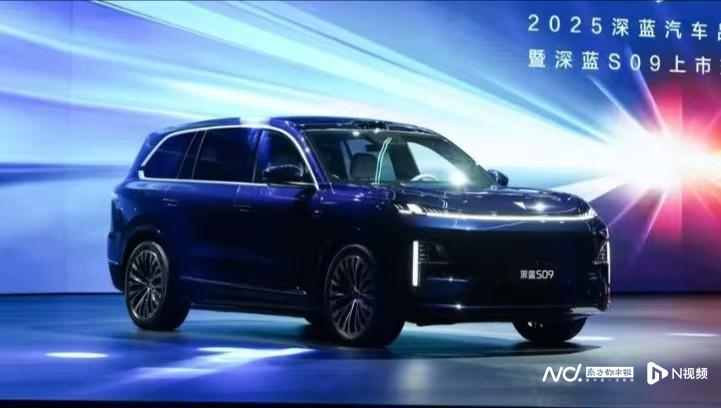
Core Insights - The deep blue S09 has officially launched with a price range of 239,900 to 309,900 yuan, targeting the growing six-seat SUV market and competing against models like Li Auto L9 and AITO M9 [1] Group 1: Product Features - The deep blue S09 emphasizes "three-row safety," addressing the industry's challenge of weak safety in the third row by passing high-speed collision tests at 100 km/h, which is double the national standard [2] - The vehicle features a submarine-level cage body and a 53% proportion of hot-formed steel, enhancing passive safety performance, making it particularly appealing to the 85 post-80s elite users focused on family protection [4] Group 2: Pricing and Consumer Assurance - The "one-year price guarantee" policy aims to alleviate consumer anxiety regarding price drops, a common complaint in the automotive industry, thereby boosting buyer confidence and showcasing the brand's pricing rigor [5] - The deep blue S09 offers up to 35,000 yuan in comprehensive subsidies, lowering the entry price to 204,900 yuan, and positions itself as a high-value option with premium features at a competitive price [6] Group 3: Market Positioning and Challenges - The deep blue S09 aims to capture market share in the mid-to-high-end six-seat SUV segment through superior configurations and aggressive pricing, but its long-term competitiveness will depend on brand enhancement and technological advancements [7] - The vehicle's unique selling points, including three-row safety and competitive pricing, fill a market gap, but the brand must overcome established competitors like Li Auto and AITO, which have already built strong reputations [8]
汽车视点 | 小米入局SUV市场:遭遇舆论危机后,YU7能否再破局?
Xin Hua Cai Jing· 2025-05-23 01:30
Core Viewpoint - Xiaomi held its 15th anniversary strategic product launch event, introducing several flagship products including the new smartphone SoC chip "Xuanjie O1," flagship model Xiaomi 15S Pro, Xiaomi Pad 7 Ultra, and the first pure electric SUV Xiaomi YU7 [2] Product Launch and Features - The launch event lasted 130 minutes, with a significant focus on the Xiaomi YU7, highlighting the company's emphasis on the new vehicle [3] - Xiaomi YU7 will feature a panoramic display, variable damping shock absorbers, laser radar, and the Nvidia Thor chip with 700 TOPS computing power, surpassing the first model SU7 in configuration [3] - Safety features include a reinforced body structure and high-strength steel materials, having passed over 50 passive safety performance tests [3] - The YU7 will be available in three versions: YU7 Long Range RWD, YU7 Pro Long Range AWD, and YU7 Max High Performance AWD, with a planned launch in July [3] Market Expansion and Sales Performance - Xiaomi is expanding its automotive sales channels, adding 34 new stores in April, bringing the total to 269 across 74 cities, with plans to enter lower-tier cities [4] - Despite facing a public relations crisis, the impact on sales has been limited, with monthly deliveries maintaining above 20,000 units since the beginning of 2025 [6] - In May, Xiaomi YU7's sales performance showed recovery, with over 7,000 units delivered in the third week, ranking second in sales among new energy vehicle brands [6] Industry Context and Challenges - The automotive industry is facing a trust crisis, with issues such as false advertising and safety concerns being prevalent [9] - Regulatory tightening is occurring, with new safety requirements for electric vehicle batteries and a shift in marketing from "high-level driving" to "assisted driving" [11] - The industry is urged to balance innovation with responsibility, emphasizing the importance of safety in the development of intelligent vehicles [11] Future Outlook - The SUV market is projected to grow, with SUVs accounting for 49.4% of total passenger vehicle sales in 2024, indicating a favorable environment for the Xiaomi YU7 [4][6] - If Xiaomi can successfully establish a reputation for quality and safety with the YU7, it may enhance its brand value and market position [12]

Model Y的红利,特斯拉快吃完了
创业邦· 2025-05-22 10:06
Core Viewpoint - Tesla's sales in China are declining, with a significant drop in weekly insurance registrations, indicating a broader trend of reduced demand for the brand compared to the overall growth in the electric vehicle market in China [3][10]. Sales Performance - In the first quarter of 2025, Tesla's retail sales in China were 134,000 units, a mere 1.7% increase year-on-year, while the overall domestic new energy vehicle sales reached 3.075 million units, growing by 47.1% [10]. - Tesla's weekly insurance registration was only 3,070 vehicles, lagging behind many new energy brands, with the Model Y registering 1,290 units [7][10]. Market Dynamics - Tesla's sales staff are experiencing increased pressure to meet sales targets, with reports of extended working hours and aggressive sales tactics [6][7]. - The company has seen a shift in consumer perception, with potential buyers becoming more cautious and critical of Tesla's design and features compared to competitors [18]. Competitive Landscape - Tesla's market share is being challenged by domestic brands like BYD and Xpeng, which are gaining traction in the electric vehicle segment [9][18]. - The introduction of new models from competitors, such as the Xiaomi SU7 and others, is expected to further intensify competition in the market [18]. Financial Performance - Tesla's first-quarter revenue was $19.335 billion, down 9.2% year-on-year, with operating profit declining by 66% to $399 million, resulting in an operating margin of only 2.1% [21]. - The company's market capitalization has dropped from $1.5 trillion to $900 billion in a short period, raising concerns among investors [19]. Future Strategies - Elon Musk has indicated a renewed focus on Tesla, promising to reduce his commitments elsewhere and concentrate on the company's future [21]. - There are plans for a more affordable version of the Model Y, which could be crucial for reversing the current sales decline [25][26].


小米YU7,拼了
2 1 Shi Ji Jing Ji Bao Dao· 2025-05-22 08:32
今晚,小米首款SUV YU7将正式揭开面纱。 小米CEO雷军一天前便为这款新车预热,他称YU7 "有不可替代的独特魅力"。新车定位豪华高性能 SUV,与 SU7 一脉相承。"小米YU7,就是我们为先进的时代精英,潜心打造的先进SUV",雷军说。 面对竞争更加激烈的家用SUV市场,YU7似乎有复制SU7成功的潜力。据蓝鲸新闻报道,5月21日小米 YU7还未发布,网上就出现了代抢的黄牛,最高加价万元,号称能优先提车。摩根士丹利则上调小米集 团目标价至62港元,予"增持"评级,认为YU7可能成为今年小米的"重要催化剂"。 但过去一个多月,小米从云端跌落,本该在4月底上海车展发布的小米YU7,也被推迟。雷军坦言,"这 是创办小米以来最艰难的一段时间"。 直到5月10日,雷军重新在微博分享健身日常,这是他停更微博一个月后的首次发声。 消失在公众视野这段时间,雷军跟小米集团管理层、汽车同事开了很多次会。"会议的主旨只有一条 ——我们如何系统地去解决问题?如何拿出更有说服力的经营和治理表现,去回应公众对我们更高的要 求。"5月15日,雷军的内部演讲中说。他表示,"小米已不再是行业新人,在任何产业里都没有新手保 护期,要有更 ...
比亚迪领跑 4 月智驾车型销量榜,全民智驾战略成效显著
Huan Qiu Wang Zi Xun· 2025-05-22 02:37
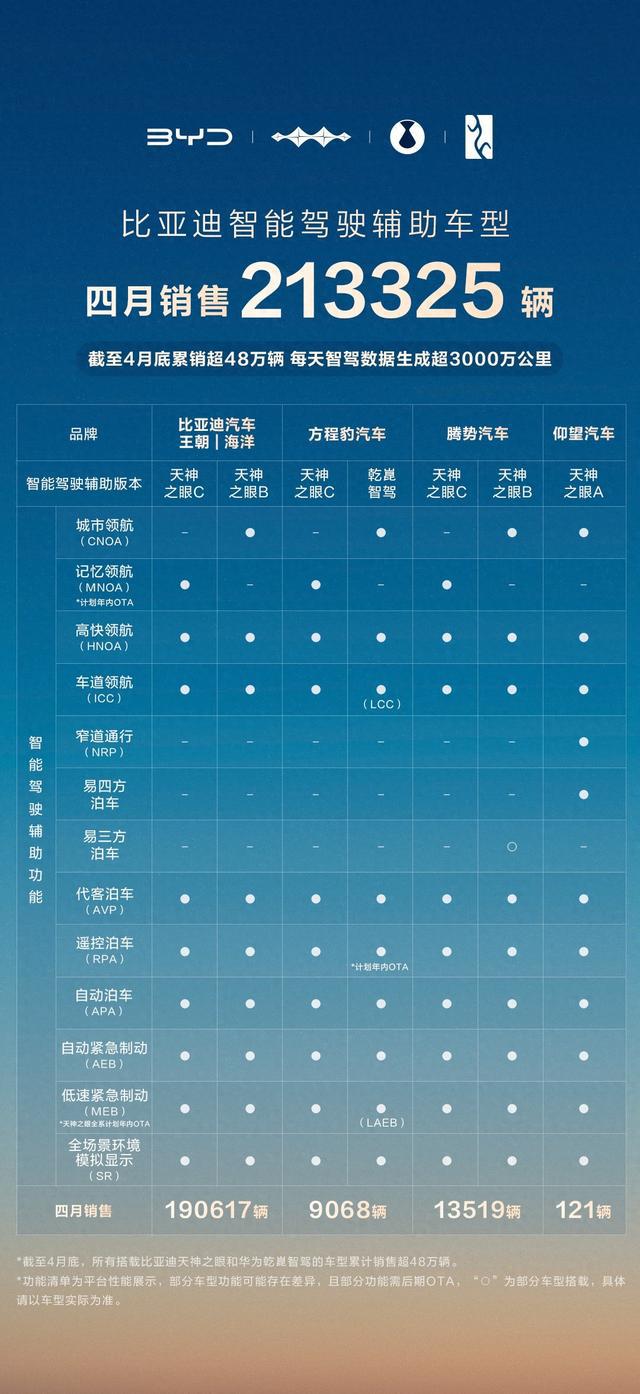
Core Insights - BYD's smart driving models achieved a monthly sales volume of 213,325 units in April, capturing 71% of the domestic passenger car market, and a cumulative sales figure exceeding 480,000 units as of the end of April 2025, maintaining its position as the leader in the smart assisted driving vehicle segment [1][4] Sales Performance - In April, BYD's Dynasty and Ocean series contributed 190,617 units, while its sub-brands, including Fangchengbao and Tengshi, sold 9,068 and 13,519 units respectively, resulting in a smart driving model penetration rate of 71%, showcasing an industry-leading adoption speed [1][4] - The sales ranking for smart driving models in April shows BYD leading with 190,617 units, followed by Leap Motor with 34,582 units and Li Auto with 33,939 units, indicating a significant competitive advantage for BYD [5][6] Strategic Initiatives - BYD's strong performance in the smart driving market is attributed to its "Universal Smart Driving" strategy launched in February 2025, which centers around the "Heavenly Eye" intelligent driving assistance system technology matrix [7] - The strategy includes various versions of the "Heavenly Eye" system tailored for different market segments, from high-end to mainstream, contrasting with other automakers' tiered feature strategies [8] Data and R&D Capabilities - BYD generates over 30 million kilometers of smart driving data daily, which supports the evolution of its smart driving systems and establishes a technological moat [8] - The company boasts the largest automotive cloud database in China, a research team of over 120,000 personnel (including more than 5,000 smart driving engineers), and a comprehensive manufacturing system, all of which enhance its ability to innovate and reduce costs [8] Safety and Market Trends - BYD emphasizes that safety is the utmost luxury in electric vehicles, integrating features like Automatic Emergency Braking (AEB) and Lane Keeping Assist (ICC) into its smart driving systems to meet consumer safety demands [8] - The data indicates that technological inclusivity is a trend in smart driving development, with cost reduction driving the widespread adoption of advanced technologies, while safety remains a fundamental requirement [9]