
小红书

Search documents
种草支付闭环,小红书在生活里找生意
3 6 Ke· 2025-11-18 04:06
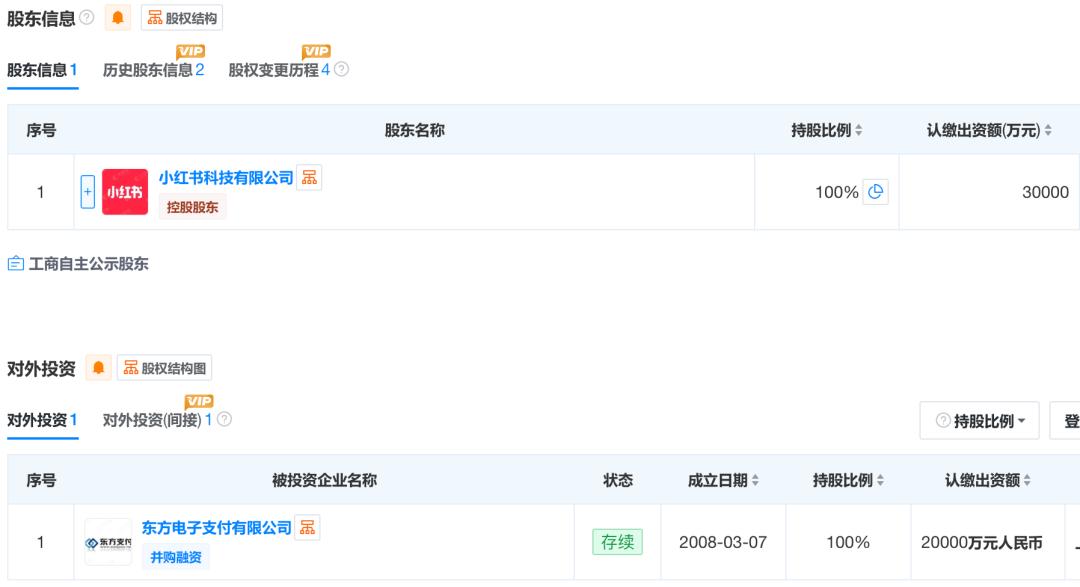
Core Insights - Xiaohongshu is accelerating its commercialization efforts by launching new features such as "Direct Grass Planting" and "Quick Sale," and has obtained a third-party payment license to enhance its e-commerce ecosystem [1][4][5] - The platform's valuation has increased from $26 billion to $31 billion within a few months, indicating growing investor interest and pressure to monetize its user base of 350 million monthly active users [1][4] - Xiaohongshu aims to create a closed-loop ecosystem that integrates content, transactions, and finance, which is essential for its long-term growth strategy [1][4][5] Payment License Acquisition - Xiaohongshu acquired the payment license through its wholly-owned subsidiary, with a reported cost of approximately 148 million yuan [4][5] - The payment license is crucial for Xiaohongshu to eliminate reliance on third-party payment platforms, thereby reducing transaction fees and enhancing user retention [1][4] - The platform's gross merchandise volume (GMV) is projected to exceed 400 billion yuan in 2024, highlighting the need for a self-sufficient payment system [4][5] E-commerce Strategy - Xiaohongshu's community-driven content, characterized by user-generated experiences, is a key differentiator that drives purchasing intent among users [6][7] - The platform has introduced various initiatives to enhance its e-commerce capabilities, including partnerships with major e-commerce platforms and the introduction of a marketplace feature [10][12] - Despite efforts to balance community authenticity with commercialization, there are concerns about the increasing presence of hidden advertisements affecting user experience [11][12] User Engagement and Content Creation - Xiaohongshu's user engagement strategy focuses on building interest-based communities, which allows for targeted marketing and content recommendations [6][7] - The platform is exploring ways to lower content creation barriers for merchants, including providing templates and guidelines to encourage user-generated content [18] - There are challenges related to user perception of limited visibility for product-linked content, which may hinder sales conversion [17][18] Local Services Expansion - Xiaohongshu is also venturing into local services with initiatives like the "Xiaohong Card," which offers discounts at selected niche stores [14] - The platform's approach to local services aims to enhance user engagement and diversify revenue streams, although it faces challenges in user adoption and experience [14] Competitive Landscape - Xiaohongshu's payment license acquisition aligns with trends among major internet platforms that have also sought to establish their own payment systems [5][6] - The platform's growth trajectory is compared to competitors like Douyin, which has a significantly higher GMV due to its integrated content and commerce model [10][12]

“被忽略”的牛市
2025-11-18 01:15
Summary of Key Points from Conference Call Records Industry or Company Involved - The discussion primarily revolves around the **AI industry**, **U.S. stock market**, **Hong Kong stock market**, and **nuclear fusion technology**. Core Insights and Arguments 1. **Credit Cycle and Market Trends** - The credit cycle is peaking and beginning to decline, as evidenced by weak financial credit data in October. Structural income expectations and cost-return inversion are the main causes. If policy responses are not timely, market volatility may persist. The optimistic scenario for the Hong Kong stock market is around 26,000 points by year-end, with a recommendation to focus on dividend configurations and low-priced stock opportunities [2][7][8]. 2. **AI Industry Valuation and Sensitivity** - The AI industry currently has high short-term valuations and expectations, making it sensitive to negative news. However, the widespread adoption of generative AI in enterprises and households can significantly reduce costs, with an average cost reduction of 10% across U.S. industries. This indicates substantial growth potential for the AI sector despite short-term volatility [2][5]. 3. **U.S. Stock Market Outlook** - The S&P 500 index is expected to fluctuate around 6,700 points in the short term due to high valuations and lack of new catalysts. If the fundamentals, credit cycle, and profit trends improve next year, short-term volatility may present better entry opportunities. By 2026, the U.S. credit cycle is anticipated to recover or even overheat, supported by Federal Reserve actions and liquidity from TGA [2][6]. 4. **Lessons from Japan's 1990s Real Estate Bubble** - The experience of Japan's three overlooked bull markets post-1990s real estate bubble offers valuable lessons. Relying solely on liquidity is insufficient for sustaining long-term bull markets; fundamental improvements and policy support are crucial. Current A-shares and Hong Kong stocks are highly valued, with total policy-driven growth but no significant fundamental improvement, raising concerns about potential risks [2][9][11]. 5. **Nuclear Fusion Technology Development** - Nuclear fusion is seen as a key energy revolution with advantages such as environmental friendliness, minimal resource bottlenecks, and high safety. Most global nuclear fusion technologies are still in experimental stages, with significant progress reported in China's and the U.S.'s projects. Cost reduction is critical for commercialization, with high-temperature superconducting material costs decreasing significantly [26][27][28][29]. Other Important but Possibly Overlooked Content 1. **Macroeconomic Environment Challenges** - The current macroeconomic environment faces challenges from weak financial credit data, rising inflation, and uncertainties regarding the Federal Reserve's interest rate decisions. Concerns about an AI bubble are also significant, as AI-related sectors are central to global markets, particularly in the U.S. and China [3][4]. 2. **Investment in U.S. Manufacturing** - U.S. manufacturing is experiencing a gradual return, driven by policy incentives, but construction investments have not yet significantly translated into output. The manufacturing sector's investment in electronics and electrical equipment has increased, but overall production value may lag behind construction investment growth [17][19]. 3. **Market Valuation Concerns** - Current market valuations for A-shares and Hong Kong stocks are high, with the Hong Kong market exceeding its historical average. The divergence between financial market enthusiasm and weak fundamentals raises questions about the sustainability of current market trends [9][13]. 4. **Potential for AI Industry Growth** - Despite high valuations, the AI industry has considerable growth potential due to its ability to lower operational costs significantly. The overall SG&A expenses for the S&P 500 could see a substantial reduction if AI is widely adopted [5][6]. 5. **Future of Nuclear Fusion Projects** - China is making strides in nuclear fusion with projects like EAST and BEST, which are expected to drive market interest and investment in related companies. The focus on domestic production and engineering integration is crucial for the success of these projects [31][32][33].
小红书提出社交大模型RedOne 2.0:兼听、敏行
量子位· 2025-11-18 00:59
Core Insights - The article discusses the launch of RedOne 2.0, a large model designed for social networking services (SNS), which utilizes reinforcement learning (RL) and lightweight supervised fine-tuning (SFT) to enhance user intent understanding and adaptability to diverse languages and cultures [1][6][35]. Group 1: Model Performance and Training Framework - RedOne 2.0 outperforms its predecessor in the SNS-Bench, demonstrating higher knowledge density and requiring less training data while achieving superior overall performance [2][20]. - The training framework of RedOne 2.0 is based on a three-stage progressive training method: exploration, targeted fine-tuning, and continuous optimization, which addresses the limitations of traditional SFT methods [8][23]. - The model shows significant improvements in various benchmarks, including General-Bench, SNS-Bench, and SNS-TransBench, indicating its strong generalization and domain-specific capabilities [18][20][21]. Group 2: Addressing Traditional Model Limitations - Traditional SFT methods often lead to performance imbalances, where improvements in one area can degrade performance in others, a challenge that RedOne 2.0 aims to overcome [5][8]. - The model's RL-driven approach allows for rapid adaptation to new trends and policies in the SNS environment, addressing the issue of slow model updates associated with traditional methods [5][6]. - RedOne 2.0's training strategy significantly reduces the need for large-scale labeled data, making it more efficient for deployment in various scenarios [7][8]. Group 3: User Experience and Business Value - The implementation of RedOne 2.0 has led to a 0.43% increase in core business metrics, indicating a measurable enhancement in user engagement and community activity [27][28]. - The model has improved content quality, with a reduction in vague titles by 11.9% and increases in practical, authentic, and interactive titles by 7.1%, 12.9%, and 25.8% respectively [27][28]. - Case studies demonstrate that RedOne 2.0 generates more engaging and interactive content compared to baseline models, effectively aligning with user preferences [31][34]. Group 4: Future Prospects - The team plans to expand RedOne 2.0's capabilities in multi-modal and multi-language contexts, exploring applications in complex scenarios such as cross-cultural communication [35][36]. - There is an intention to apply the RL-based training framework to other verticals like finance, healthcare, and education, addressing the balance between domain adaptation and general capabilities [35][36].

平台内容治理的破局之道
经济观察报· 2025-11-17 13:47
Core Viewpoint - The resolution of content governance lies not only in responsibility allocation and technical optimization but also in shaping a healthy public opinion ecosystem. Platforms should actively guide the production and dissemination of quality content rather than merely acting as "post-deletion machines" [3][26]. Group 1: Current Governance Challenges - The central internet authority has been conducting "Clear and Bright" actions targeting misinformation from self-media, malicious marketing in short videos, and the misuse of AI technology [4]. - The responsibility boundaries of platforms have become increasingly prominent, with issues such as low violation costs for individual users and the disparity between societal expectations and governance capabilities complicating content review efforts [5][7]. - The responsibility for content review is difficult to ascertain, as platforms face significant challenges in managing vast amounts of user-generated content, which lacks the clear contractual obligations seen in e-commerce [8][9][10]. Group 2: Real-World Dilemmas - The sheer volume of content generated daily makes it nearly impossible for platforms to pre-screen all potentially harmful information, leading to a management gap [13]. - The low cost of individual violations encourages risky behavior among users, as the consequences for them are minimal compared to the significant penalties faced by merchants in e-commerce [14][15]. - There is a mismatch between the high expectations placed on platforms by society and their actual capabilities, leading to a "high responsibility, weak means" paradox [16][18]. Group 3: Path to Resolution - A shift from "single-point accountability" to "layered responsibility" is necessary, distributing accountability among individuals, platforms, and society [22]. - Increasing the cost of individual violations and enhancing traceability through improved user identification and behavior monitoring can help mitigate risks [23]. - Platforms should adopt a proactive approach to governance, focusing on "prevention" rather than "post-incident response" to reduce the spread of harmful content [25]. - The ultimate goal of governance should be to cultivate a healthy public opinion ecosystem, where quality content is promoted and becomes mainstream, rather than merely eliminating violations [26].


都想去香港 IPO
Sou Hu Cai Jing· 2025-11-17 12:32
" 转道港股 " 几乎成了中概公司心照不宣的 Plan B。 现在,感觉所有的中概股企业都想去香港 IPO。 近日,有自媒体报道称,茶颜悦色可能要从美股转到港股 IPO 了。还有 Shein,历经波折后,此前也被传出可能要去港股上市。 这不是错觉。从 2024 年下半年开始," 转道港股 " 几乎成了中概公司心照不宣的 Plan B:美元基金需要退出、境外架构已经搭好、A 股 门槛一时半会儿迈不过去,港交所自然成了 " 公约数 "。 明面上,茶颜悦色和 Shein 可能只是两条最容易被看见的船——水面下,还有更多公司已经悄悄调头。 茶颜悦色 IPO,已被传 5 次 还是得等官方通告 若算上本次,就是第 5 次了,且仅仅 2024 年就有 3 次传言。感觉无论真假,茶颜悦色压根也没辟谣的必要," 狼来的次数太多 ",即便 真的 IPO 也没人再敢信。还是得等官方通告。 截至 2024 年 11 月,茶颜悦色全国在营门店 732 家,其中 60% 在湖南。据报道,公司 2023 年净利润超过 6 亿元,2024 年「略高于去 年」。对比已经递表的古茗(9001 家店、2023 年净利 10.5 亿元)和蜜雪冰城( ...

公园里的文学节:小红书文学节引发民众写作热情
Bei Jing Shang Bao· 2025-11-17 10:22
Core Insights - The first Xiaohongshu Literary Festival was held in Shanghai, attracting over ten thousand literature enthusiasts and generating over 100 million views on related topics, making it one of the most popular cultural events recently [1][15] Group 1: Event Overview - The festival featured over twenty unique literary activities, exhibitions, and a book market, all free to the public [1] - Notable cultural figures such as writers, poets, and philosophers participated, showcasing non-fiction works from ordinary people [1][3] - The event included interactive installations that encouraged attendees to find writing inspiration from everyday life [3] Group 2: Writing Competition - The Xiaohongshu Literary Festival evolved from a nationwide writing initiative called the "Writing Around Us" competition, which received over 12 million words from thousands of participants [5] - The second edition of the competition saw increased enthusiasm, with over 20,000 submissions totaling more than 40 million words [8] - Participants ranged widely in age and background, highlighting the diversity of voices in the competition [8][14] Group 3: Global Participation - The festival included a special unit called "A Day in the World," inviting contributions from 44 countries, showcasing a global tapestry of daily life experiences [10][12] - The event featured a large "world clock" displaying these contributions, emphasizing the shared human experience across cultures [10] Group 4: Community and Connection - The festival served as a platform for writers and readers to connect, fostering a sense of community among participants [15] - The event was characterized as a celebration of literature and life, moving away from traditional literary gatherings to include everyone [17]

双十一的“成人礼”:当狂欢节走向理性深耕
3 6 Ke· 2025-11-17 02:48
Core Insights - The article discusses the evolution of the Double Eleven shopping festival, highlighting a shift from rapid growth and GMV obsession to a focus on quality and efficiency in the e-commerce industry [3][6][13] Group 1: GMV Competition and Industry Changes - The GMV (Gross Merchandise Volume) competition has reached a turning point, with platforms extending promotional periods to maintain growth amid market saturation [4][6] - Major platforms like Alibaba and JD.com have stopped emphasizing GMV figures, focusing instead on metrics like user growth and order volume [6][12] - The promotional periods for major platforms have significantly increased, with Douyin, Suning, JD.com, and Taobao/Tmall extending their sales periods to 57, 44, 37, and 31 days respectively [4][12] Group 2: New Market Dynamics - The competition has intensified in traditional categories like 3C, apparel, and beverages, prompting platforms to innovate through cross-industry collaborations and technology integration [7][10] - JD.com's "car ecosystem" initiative, including a partnership with GAC and CATL, exemplifies the shift towards creating comprehensive service offerings beyond mere sales [9][10] - Instant retail has seen explosive growth, with total sales reaching 67 billion yuan during Double Eleven, marking a 138.4% increase year-on-year [10] Group 3: Consumer Behavior and Market Sentiment - Consumers are shifting from impulsive buying to more rational and practical purchasing decisions, reflecting a broader change in shopping behavior [11][13] - The perception of Double Eleven as the lowest price shopping event has diminished, with consumers increasingly seeking value and comparing prices online [11][13] - The overall growth in package deliveries during the promotional period has slowed, indicating a weakening of the promotional pull [11][12]



天猫、京东、小红书交出“双11”成绩单; 阿里启动“千问”项目|一周未来商业
Mei Ri Jing Ji Xin Wen· 2025-11-16 23:15
E-commerce and Retail - Xiaohongshu's "Double 11" event saw a 73% year-on-year increase in sales contribution from buyers, with the number of merchants exceeding 10 million growing by 140% and products exceeding 1 million growing by 145% [1] - JD.com reported a 40% increase in the number of users placing orders and nearly 60% growth in order volume during "Double 11," with logistics automation covering over 95% of the supply chain [2] - Tmall's "Double 11" achieved its best growth in four years, with nearly 600 brands surpassing 100 million yuan in sales, and over 34,000 brands seeing year-on-year growth [3] - Walmart's CEO Doug McMillon will step down at the end of January, with John Furner taking over, signaling a strategic transition for the retail giant [4] Logistics and Supply Chain - China Mobile participated in the D-round financing of New Stone's unmanned vehicles, indicating a collaboration in AI and autonomous driving technology [5][6] Food and Beverage - Xibei stated that opening and closing stores is a normal business practice, with recent closures being part of a dynamic adjustment strategy in response to market conditions [7] Instant Retail - Meituan's flash purchase platform reported over 800 brands doubling their sales during "Double 11," reflecting the growing importance of instant retail channels [8] Autonomous Driving - Didi's autonomous driving division announced a strategic partnership with Abu Dhabi to support smart transportation and sustainable traffic ecosystems [9] AI and Technology - Alibaba has launched the "Qianwen" project to develop a personal AI assistant, aiming to compete directly with ChatGPT, highlighting the company's commitment to AI technology [10][11] Investment and Innovation - "Wujie Power" completed a 300 million yuan angel round of financing, indicating strong investor confidence in the embodied AI robotics sector [12]
都想去香港IPO
Sou Hu Cai Jing· 2025-11-16 07:08
Core Viewpoint - The trend of Chinese companies considering a shift from U.S. IPOs to Hong Kong IPOs has become an unspoken Plan B, driven by various market conditions and regulatory challenges [2][4][12]. Group 1: Companies Considering Hong Kong IPOs - Companies like Cha Yan Yue Se and Shein are reportedly planning to transition to Hong Kong for their IPOs, reflecting a broader trend among Chinese firms [2][11]. - Cha Yan Yue Se has been rumored to be planning a Hong Kong IPO multiple times, with the latest reports indicating potential collaboration with investment banks like CICC and Morgan Stanley [6][7][12]. - Shein's IPO journey has been particularly tumultuous, having attempted listings in the U.S. and London before considering Hong Kong, with a current estimated valuation of around $50 billion [11][12]. Group 2: Other Companies in the Pipeline - Other companies such as Ba Wang Cha Ji, Mi Xue Bing Cheng, and ByteDance are also reported to be shifting their focus to Hong Kong for potential IPOs [13][15]. - Ba Wang Cha Ji initially planned to raise $300 million in the U.S. but has now signed agreements with banks for a Hong Kong listing [13]. - Mi Xue Bing Cheng and Hu Shang A Yi have submitted applications to the Hong Kong Stock Exchange, although they faced setbacks with their prospectuses [13][14]. Group 3: Market Context and Implications - The shift to Hong Kong is seen as a response to the challenges faced by Chinese companies in the U.S. market, including regulatory scrutiny and market conditions [2][12]. - The increasing number of companies considering Hong Kong listings suggests a significant change in the landscape for Chinese IPOs, with many firms now viewing it as a more viable option [2][12].

不再冲动下单,今年“双十一”消费更理性
Sou Hu Cai Jing· 2025-11-16 04:43
Core Insights - The 17th "Double Eleven" event concluded with a total online sales figure of 1.695 trillion yuan, reflecting a year-on-year growth of 14.2%, although the growth rate has slightly declined compared to previous years [1] - Consumer behavior has shifted from impulsive buying driven by low prices to more rational spending, focusing on the overall value and service quality [2][3] - E-commerce platforms are now competing on reliability and service rather than just price, indicating a maturation of the consumer market [8] Consumer Psychology Shift - The traditional urgency associated with "Double Eleven" has diminished, leading to a more extended promotional period across platforms, allowing consumers to make more thoughtful purchasing decisions [2] - Consumers are increasingly considering factors such as comprehensive costs, service quality, and after-sales support rather than just price [2][3] Platform Competition Dynamics - E-commerce platforms like Tmall and JD.com are emphasizing price stability and product authenticity, with new initiatives such as price protection mechanisms and integrated delivery services [3] - The average transaction value on platforms has increased, with significant sales in durable goods, reflecting a consumer preference for quality and long-term value [3][5] Changes in Consumption Structure - Home appliances lead the sales categories with a 16.5% market share, followed closely by mobile devices and clothing, indicating a trend towards durable goods [5] - Instant retail has seen a significant rise, with sales reaching 67 billion yuan, a year-on-year increase of 138.4%, while community group buying has declined by 35.3% [5][6] Value Transformation of "Double Eleven" - The focus has shifted from price competition to reliability and trustworthiness, with consumers prioritizing after-sales service and product quality [7][8] - The overall sales performance this year has been stable compared to last year, with some categories experiencing slight declines, highlighting the need for the industry to reassess promotional strategies [7][8]
