地平线

Search documents
“2025凤凰之星”评委万喆:“卷”本质是一种“激烈竞争”
Feng Huang Wang Cai Jing· 2025-09-16 02:56
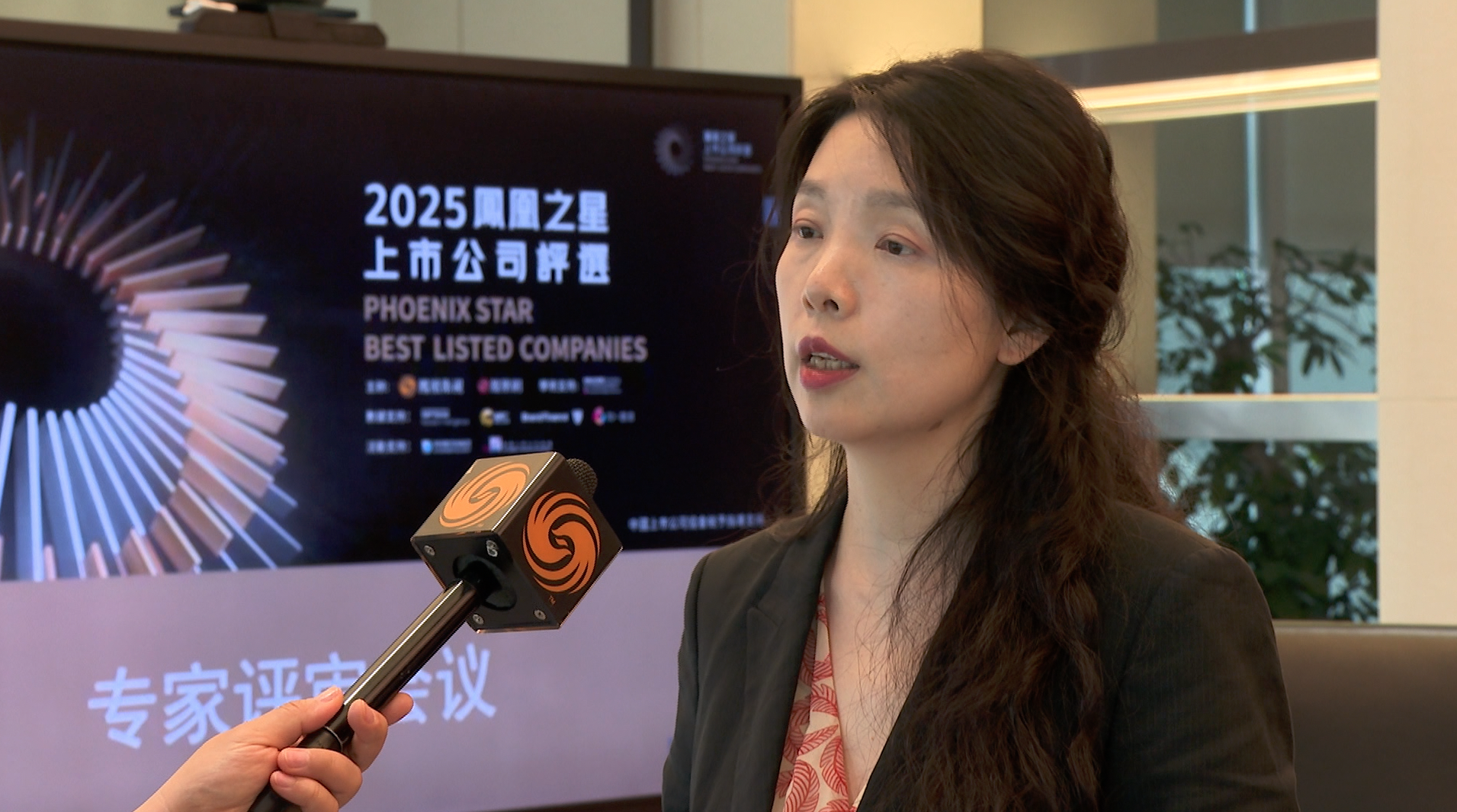
Group 1 - The "2025 Phoenix Star Listed Company Selection" aims to highlight the core competitiveness and influence of Chinese listed companies, supporting the healthy development of mainland and Hong Kong stock markets [1] - The selection process includes multiple phases: registration, preliminary evaluation, and public voting, with results to be announced on September 23 [1][9] - The evaluation will cover nine major awards, including Best Innovative Listed Company and Best Shareholder Return Listed Company, utilizing big data models and five evaluation dimensions [3][4] Group 2 - The selection's unique value lies in its comprehensive evaluation approach, which includes operational efficiency, innovation capability, social responsibility, and international performance, moving beyond traditional revenue-focused metrics [4][5] - The evaluation emphasizes a global perspective, assessing companies' capabilities to compete internationally and integrate into global supply chains [4][5] Group 3 - The selection process encourages companies to develop long-term strategies for global competition, moving from low-cost competition to resource integration and localized cooperation [5][6] - The concept of "localized cooperation" is highlighted, where companies engage with local markets through training and collaboration, transforming from outsiders to participants in local economies [6][7] Group 4 - The evaluation aims to distinguish between healthy competition and detrimental "involution," advocating for compliance with local laws and fostering cooperative relationships with local communities [7] - The "Belt and Road" initiative is identified as a platform for Chinese companies to engage in high-level international cooperation, enhancing their global competitiveness [7] Group 5 - Brand building is emphasized as a long-term endeavor, with companies encouraged to focus on sustainable strategies rather than short-term gains [8][9] - Successful examples of brand development include companies like Pop Mart and BYD, which leverage cultural creativity and innovation to enhance their global brand recognition [8][9] Group 6 - The selection is supported by various institutions, including the China Listed Companies Association and the American Drucker Management Institute, with results to be revealed at the "Phoenix Bay Area Financial Forum 2025" [9]

【新华财经调查】中国车企出海面临三大关口 本土化已成趋势
Xin Hua Cai Jing· 2025-09-16 01:35
Group 1: Industry Overview - The 2025 IAA in Germany showcased 748 exhibitors, with 116 from China, representing nearly one-third of overseas participants, surpassing local German companies [1] - Chinese automotive exports reached 3.083 million units in the first half of 2025, with a 75.2% increase in new energy vehicle exports [2] - BYD's sales in Europe exceeded 130,000 units in 2025, marking a 210% year-on-year growth [2] Group 2: Challenges and Strategies - Chinese automakers face significant entry costs, operational costs, and geopolitical challenges when entering the European market [4] - To address these challenges, companies like BYD plan to localize production in Europe, with a factory in Hungary expected to start production this year and another in Turkey by 2026 [4][5] - Other companies, such as Leap Motor and Xpeng, are also pursuing local production and establishing R&D centers in Europe [5] Group 3: Technological Advancements - Chinese companies are leading in technology development, with Momenta showcasing AI-driven Robotaxi technology at the IAA [3] - Partnerships with international giants like Bosch and Qualcomm are being formed to enhance technological integration within the German automotive ecosystem [6] Group 4: Data Compliance and Regulations - The EU's stringent data protection regulations, including GDPR and the upcoming AI Act, pose compliance challenges for Chinese companies [7][8] - Companies are advised to integrate data compliance into their strategic planning to navigate complex international regulations effectively [9] Group 5: Service Network Development - Establishing a robust service network is crucial for building consumer trust in Europe, as local service capabilities impact brand sustainability [10] - Leap Motor has established around 1,700 sales and service points globally, emphasizing the importance of local service networks for market penetration [10]

汽车芯片的预制菜陷阱
Hu Xiu· 2025-09-16 00:32
Core Viewpoint - The article discusses the ongoing debate between the expectations of consumers regarding fresh dishes in restaurants and the reality of pre-prepared meals, drawing parallels to the automotive chip industry where performance and reliability are questioned against standards and consumer trust [2][9][16]. Group 1: Pre-prepared Meals vs. Fresh Cooking - The controversy arises from the perception that pre-prepared meals are being marketed as fresh, leading to consumer disappointment when expectations are not met [2]. - The restaurant's marketing strategy, which suggests that all dishes are freshly cooked, is challenged by revelations that many are actually pre-prepared [2][9]. - The need for transparency in food preparation is emphasized, similar to the automotive industry's need for clear standards regarding chip quality and classification [11][15]. Group 2: Automotive Chip Industry Challenges - The automotive chip industry faces a "trilemma" of balancing performance, cost, and compliance with automotive standards, similar to the challenges faced by pre-prepared meals in meeting consumer expectations [6][21]. - The market for automotive chips is projected to reach 95.07 billion yuan (approximately 13.2 billion USD) by 2025, but the actual market size may be inflated due to issues like duplicate statistics and inventory [16]. - The dominance of foreign companies in the high-performance chip market is highlighted, with over 90% of core chips being controlled by firms like NVIDIA and Qualcomm [16][17]. Group 3: Industry Standards and Regulations - The article mentions the introduction of a comprehensive standard system for automotive chips by the Ministry of Industry and Information Technology, aiming to cover the entire lifecycle of chips [14]. - The need for clear labeling of chip types and their intended use is compared to the requirement for pre-prepared meals to disclose their nature [15]. - The automotive chip industry is undergoing a consolidation phase, with a focus on reliability, cost, and supply stability becoming critical for manufacturers [21][28]. Group 4: Future Outlook and Industry Dynamics - The article suggests that the automotive chip industry must evolve beyond mere storytelling and focus on technological advancements to remain competitive [29][30]. - The competitive landscape is shifting, with leading companies gaining market share while smaller firms struggle with profitability and product differentiation [27][28]. - The potential for the Chinese automotive chip industry is noted, given its favorable market conditions and consumer willingness to adopt new technologies [32][33].

2025慕尼黑车展上的“中国主场”:从产品出口到生态出海
2 1 Shi Ji Jing Ji Bao Dao· 2025-09-15 13:09
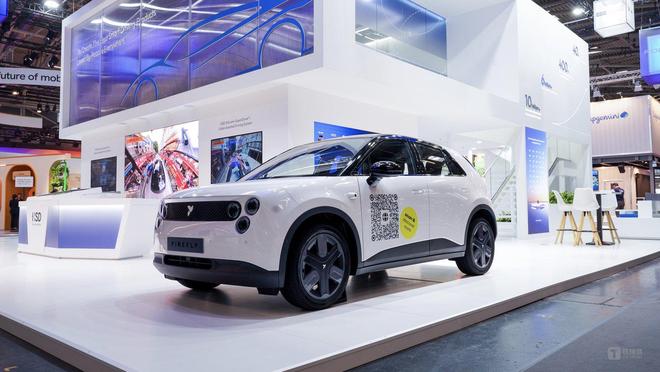
Core Insights - Chinese automotive companies have significantly increased their presence at the 2025 Munich Auto Show, showcasing a larger and more active participation compared to previous years, effectively becoming the focal point of the event [1][2][5] Group 1: Participation and Exhibits - The 2025 Munich Auto Show featured 748 exhibitors, with 116 from China, accounting for nearly one-third of all overseas exhibitors, marking a 40% increase from 2023 [2] - Major Chinese automotive brands such as BYD, Xpeng, Changan, and others presented new models and technologies, positioning themselves as key players rather than mere participants [2][3] - Notable exhibits included BYD's new vehicles and fast-charging technology, Xpeng's advanced models and robotics, and Changan's new concept car, highlighting the innovation and competitiveness of Chinese brands [2][3] Group 2: Strategic Shifts - Chinese automotive companies are transitioning from simple product exports to localized production and ecosystem development in Europe, with five companies announcing plans to build factories in Europe by 2025, involving over €20 billion in investments [3][5] - Collaborations with major European automakers like Volkswagen and Stellantis are facilitating faster adaptation to local market demands for companies like Xpeng [3][4] Group 3: Supply Chain and Technology - Chinese supply chain companies are emerging as key technology providers, particularly in battery and smart technology sectors, with firms like CATL showcasing advanced battery solutions that meet significant European demand [4][5] - Innovations in smart technology were highlighted by companies such as Horizon Robotics and Heisai Technology, which presented cutting-edge products and established partnerships with global automakers [4][5] Group 4: Future Outlook - The shift towards localized production and ecosystem development is expected to enhance the long-term competitiveness of Chinese automotive companies in the global market, moving from product output to ecosystem output [5][6] - The competitive landscape between Chinese and German automotive companies is evolving, with a focus on strategic collaboration and understanding user needs as key to success in the future [6]
无人物流车上市即交付,佑驾创新开拓增长新曲线
Ge Long Hui· 2025-09-15 12:45
Core Viewpoint - Youjia Innovation (2431.HK) has launched its unmanned logistics brand "Xiaozhu Unmanned Vehicle," marking a significant evolution from L1 to L4 autonomous driving technology, aimed at providing advanced logistics solutions in complex scenarios [1][2]. Group 1: Product Launch and Features - The launch event showcased two models, T5 and T8, with T5 offering a cargo space of 5.5m³, a maximum load of 1000kg, and a range of 180km, targeting express delivery and retail sectors [1][2]. - The T8 model features an 8.5m³ cargo space, a maximum load of 1700kg, and a range of 240km, suitable for urban distribution and industrial logistics [2]. - Both models utilize a multi-sensor fusion approach, including 3 LiDARs and 11 cameras, ensuring 360° visibility and precise road condition recognition [2]. Group 2: Strategic Partnerships and Collaborations - The next generation of Xiaozhu unmanned vehicles will integrate advanced technologies from partners like Horizon Robotics, Sutonju, and 4D Mapping, enhancing product capabilities [3]. - The stable supply chain and procurement needs of Youjia Innovation's front-end business help reduce the BOM costs of Xiaozhu unmanned vehicles, creating a cost advantage in the market [3]. Group 3: Market Deployment and Recognition - The company has initiated "release and delivery" for the first batch of unmanned vehicles, with key cities like Shenzhen, Chengdu, and Xi'an identified for initial deployment [4]. - Youjia Innovation's L4 autonomous driving iRobo business has shown significant progress, achieving over 10 million in revenue within six months, and has successfully launched unmanned buses in multiple cities [5]. Group 4: Future Outlook and Market Position - The company aims to continue its growth trajectory by adhering to its "root down, iterate up" philosophy, collaborating with ecosystem partners to expand the application of autonomous driving [5]. - Recent positive developments have led to renewed confidence from the capital market, with Citic Lyon reaffirming a "outperform" rating for Youjia Innovation, setting a target price of HKD 32 [5].
智能化新升级,高增长下的机遇与挑战并存
Zhong Guo Qi Che Bao Wang· 2025-09-15 09:10
Core Viewpoint - The rapid development of China's advanced driver-assistance systems (ADAS) is marked by a 62.1% growth rate in the first half of 2025, indicating a shift from laboratory research to industrial application, despite facing challenges in safety, reliability, and standardization [1][3][5]. Technological Advancements - The growth in the ADAS market is driven by significant reductions in hardware costs and breakthroughs in algorithms, with laser radar costs decreasing by up to 1000 times over the past decade and computing power increasing by 1000 times from 2014 to 2024 [3][4]. - The transition from rule-based algorithms to data-driven models using deep learning is enhancing system performance, particularly in perception, prediction, planning, and control [3][4]. Application Scenarios - City Navigation Assistance (City NOA) is becoming a competitive focal point, utilizing multi-sensor fusion and high-precision mapping to enable automated driving in complex urban environments [4]. - Despite advancements, interoperability issues among different vehicle models and systems remain a challenge, complicating cross-model and cross-regional compatibility [4]. Safety and Reliability - Safety is a critical concern, with over 90% of traffic accidents attributed to human error, and ADAS aims to mitigate these risks [5][6]. - Current systems still face reliability issues, as evidenced by incidents where systems failed to recognize traffic signs or obstacles, highlighting the need for improved user education and clearer communication of system capabilities [6][7]. Standardization and Collaboration - The industry is experiencing fragmentation due to varying regional standards and infrastructure, which hampers widespread adoption of ADAS technologies [8]. - Experts advocate for a unified "vehicle-road-cloud" standard and data exchange protocols to facilitate interoperability and reduce redundant investments [8][9]. Industry Cooperation - Collaboration among automakers, chip manufacturers, and technology providers is essential for enhancing system performance and reducing costs, with some companies already achieving total costs for urban ADAS systems below 10,000 yuan [9]. - Regulatory oversight and industry self-regulation are crucial to ensure transparency and accountability, particularly regarding safety and system limitations [9].

中国智能辅助驾驶方案加速进入国际赛道
Xin Hua Wang· 2025-09-13 16:27
Group 1 - The core focus of the 2025 Munich Auto Show is on intelligent assisted driving, showcasing the rapid evolution of this technology from concept to implementation, and from local to global markets [1] - Chinese companies are presenting mature mass production solutions and advanced technologies, demonstrating breakthroughs and collaborative advantages across the intelligent assisted driving industry chain [2] - Companies like Zhi Yu Technology and FAW-Volkswagen are launching intelligent assisted driving systems in models such as the Sagitar L and Tayron L, achieving A-SPICE CL2 certification, indicating maturity in international market processes and quality systems [2] Group 2 - European traditional automakers are facing transformation challenges, with many falling behind in the electric vehicle market due to slow product launches and technological reserves [3] - Collaboration with Chinese companies is seen as a way to accelerate the implementation of intelligent assisted driving technologies [3] - Chinese enterprises are establishing a presence in Europe, including setting up headquarters or R&D centers, and forming local teams to enhance collaboration with international automakers and suppliers [3] Group 3 - Safety is paramount for the future of intelligent assisted driving, with companies emphasizing the need for mass production verification and process certification to ensure technology reliability [4] - A survey by the German Association for Information Technology, Telecommunications and New Media highlights ongoing concerns regarding safety, accident liability, and data privacy in intelligent assisted driving [4] - Companies are encouraged to regularly disclose metrics such as disengagement rates and incident rates to build trust in their technologies [4] Group 4 - Chinese companies are adapting to overseas markets through collaboration and technological innovation, with companies like Lingzhou Zhihang partnering with Qualcomm to launch intelligent assisted driving products in Europe, the US, Japan, and South Korea by 2026 [5] - The focus on a unified architecture and cross-platform compatibility is seen as crucial for successful overseas deployment in the next three years [5]

综述|中国智能辅助驾驶方案加速进入国际赛道
Xin Hua She· 2025-09-13 14:19
Core Viewpoint - The article highlights the rapid advancement of Chinese intelligent assisted driving solutions entering the international market, particularly showcased at the 2025 Munich Auto Show, emphasizing the transition from concept to implementation and from local to global [1]. Group 1: Chinese Solutions Implementation - The Munich Auto Show has evolved into a platform for showcasing software, chips, and mobility solutions, with Chinese companies presenting mature mass production solutions and advanced technologies [2]. - Zhuoyue Technology and FAW-Volkswagen have launched an intelligent assisted driving system, set to be available on models like the Sagitar L and Tayron L, achieving A-SPICE CL2 certification, indicating maturity in international market processes and quality systems [2]. - Qingzhou Zhihang has demonstrated its intelligent assisted driving solutions, which have been widely applied in China, with an automatic emergency braking system false trigger rate lower than the industry average, approaching a million units in mass production [2]. - Horizon Robotics showcased its automotive-grade AI chip, the Journey 6 series, which is being used by Bosch in developing the fourth-generation multifunctional camera, expected to start mass production in 2026 [2]. - Some Chinese automakers are exploring comprehensive self-research paths, with Leap Motor proposing a "full-domain self-research" approach covering electric drive, batteries, cabins, and intelligent assisted driving [2]. Group 2: Accelerated Sino-European Cooperation - European traditional automakers are facing transformation challenges, with product launches and technology reserves lagging, leading to a competitive disadvantage in the electric vehicle market [3]. - Collaboration with Chinese companies is seen as a way to accelerate the implementation of intelligent assisted driving technologies [3]. - Chinese enterprises are increasingly establishing a presence in Europe, including setting up headquarters or R&D centers and forming local teams, such as Horizon Robotics and Qingzhou Zhihang establishing European headquarters in Munich [3]. Group 3: Safety, Compliance, and Innovation - The future of intelligent assisted driving must be built on safety, with companies emphasizing the need for mass production validation and process certification to ensure technology reliability [4]. - A survey by the German Association for Information Technology, Telecommunications, and New Media indicates that safety, accident liability, and data privacy are critical concerns among respondents [4]. - Industry experts suggest that companies need to regularly disclose metrics such as disengagement rates, incident rates, and false trigger rates of automatic emergency braking systems to build trust [4]. Group 4: Market Expansion through Collaboration and Innovation - To expand into overseas markets, Chinese companies are adjusting and adapting through collaboration and technological innovation, with Qingzhou Zhihang announcing a partnership with Qualcomm to launch intelligent assisted driving products in Europe, the US, Japan, and South Korea by 2026 [5]. - The unified architecture and cross-platform adaptability are seen as key to overseas deployment in the next three years [5].
自动驾驶的“4G时刻”,正在十几万的车上爆发
Tai Mei Ti A P P· 2025-09-13 02:39
Core Insights - The article discusses the strategic positioning of Horizon Robotics in the global smart driving industry, emphasizing its role as a "non-car manufacturer Tesla" that focuses on providing comprehensive solutions in the smart driving ecosystem [3][4] - Horizon's approach is characterized by a collaborative philosophy, aiming to empower automotive manufacturers by filling the gaps in the smart driving value chain, thus achieving a significant market share in China [4][5] - The company is poised for a technological leap, likening the current moment in smart driving to the "4G moment" in mobile communications, with its HSD system set to revolutionize the market by making advanced driving assistance accessible to mainstream vehicles [5][6][8] Company Strategy - Horizon Robotics is recognized for its "four quadrants" strategy, encompassing chips, software, cockpit, and intelligent driving, positioning itself as a comprehensive enabler for automotive companies [3][4] - The company has achieved a 45.8% market share in China's ADAS front-view integrated machine market in the first half of 2025, collaborating with over 40 manufacturers and enabling more than 400 models [4][5] - Horizon aims to transition from "millions of chips" to "millions of HSD systems," focusing on delivering a fully integrated autonomous driving solution that combines perception, decision-making, and execution [11][12] Technological Advancements - The HSD system, which debuted at the Munich Auto Show, integrates advanced algorithms and low-latency processing, marking a significant step in the evolution of smart driving technology [5][6][7] - Horizon's chips, such as the Journey 6P, boast a processing power of 560 TOPS, placing them in the same league as competitors like Mobileye and NVIDIA [7] - The company emphasizes making high-level driving assistance a standard feature in affordable vehicles, aiming to democratize access to advanced driving technologies [6][8] Global Expansion - Horizon has established a European headquarters in Munich and formed deep partnerships with major Tier-1 suppliers, completing extensive overseas testing [15][16] - The company has secured collaborations with nine joint venture automakers for 30 models, projecting over 7.5 million overseas orders in the future [15][16] - Horizon's strategy for international expansion focuses on building trust and ecological partnerships rather than merely increasing shipment volumes, reflecting a long-term vision for global market integration [15][16]
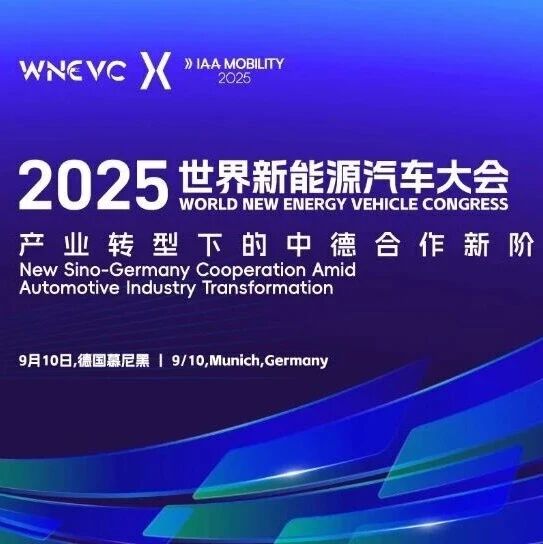
2025世界新能源汽车大会(IAA Mobility专场)在德成功召开
半导体芯闻· 2025-09-12 10:12
Core Viewpoint - The 2025 World New Energy Vehicle Congress (IAA Mobility Special) successfully held in Munich highlights the deep collaboration between the Chinese and German automotive industries in addressing global challenges and leading the technological revolution in electrification and intelligence [1][4]. Group 1: Event Overview - The congress was organized by the China Society of Automotive Engineers (China-SAE), the German Association of the Automotive Industry (VDA), and the World New Energy Vehicle Development Organization (WNEVDO) [1]. - Key leaders from the automotive sectors of China and Germany attended, including Hildegard Müller, the President of the VDA, and other prominent figures [3]. Group 2: Industry Collaboration - Hildegard Müller emphasized the complementary strengths of the German automotive industry's global layout and China's innovative vitality, which together form a robust industrial ecosystem [4]. - The deep integration of the automotive supply chain between China and Germany is highlighted, with a focus on mutual benefits and cooperation in areas such as automated driving and data cross-border flow [5]. Group 3: Future Directions - The congress aims to foster a new chapter in the comprehensive strategic partnership between China and Germany, focusing on addressing risks and seizing opportunities in the automotive sector [5]. - The event serves as a platform for promoting global policy coordination, deepening open cooperation, and facilitating technological and industrial innovation [8]. Group 4: Upcoming Events - The 7th World New Energy Vehicle Congress will take place from September 27-29, 2025, in Haikou, featuring nearly 20 meetings and forums to discuss future transportation and sustainable development [9][10].