小红书

Search documents
新力量NewForce总第493期
First Shanghai Securities· 2025-11-14 08:13
Financial Performance - Robinhood Markets reported total revenue of $1.274 billion for Q3 2025, doubling year-over-year and increasing nearly 30% quarter-over-quarter[5] - Net profit reached $556 million, a significant increase of 271% year-over-year and 44% quarter-over-quarter[5] - Adjusted EBITDA was $742 million, up 177% year-over-year, with a profit margin of 58%[5] Revenue Breakdown - Trading revenue amounted to $730 million, with cryptocurrency revenue tripling year-over-year to $268 million; options and stock revenues increased by 50% and 132%, respectively[6] - Net interest income grew by 66% to $456 million, while securities lending income surged by 193%[6] User Metrics - Average revenue per user increased to $191, an 82% year-over-year rise[6] - Retirement account assets grew by 144% to $24.2 billion, with adoption rates 2.5 times higher than regular accounts[6] Market Expansion and Product Development - The company is on track for annualized revenue of nearly $300 million by October 2025, a significant acceleration from $115 million in Q3[7] - New features targeting professional traders and international clients are being rolled out, with nearly 700,000 international customers[7] Financial Guidance and Valuation - The adjusted operating expense guidance for 2025 is raised to approximately $2.28 billion, reflecting ongoing investments in products and technology[8] - The target price for Robinhood is set at $150.00, representing a 23% upside from the previous closing price, with a PE ratio of 65x[9] Risks - Potential decline in retail user engagement and regulatory changes affecting payment for order flow (PFOF) could impact future performance[10]


QuestMobile2025年双十一流量数据快报:规则简单化、用户年轻化、营销智能化,三大特点驱动变局
3 6 Ke· 2025-11-14 03:51
Group 1 - The 2025 "Double Eleven" shopping festival features an earlier start and a longer duration, with JD.com extending its promotional period to 37 days, while Tmall/Taobao also follows suit. Content platforms like Kuaishou began pre-sales on October 7, with Douyin and Xiaohongshu joining later [2][4]. - Major e-commerce platforms simplified promotional rules through methods like "direct discounts" and "no need to meet minimum purchase requirements," which ignited consumer enthusiasm and drove traffic growth. Taobao and JD.com introduced "minute-level delivery" in instant retail, contributing to new consumption growth [4][8]. - The extended promotional periods and simplified rules led to an increase in the proportion of post-00s and users from first-tier cities across various platforms compared to the previous year [7]. Group 2 - Various platforms set multiple promotional waves to stimulate consumer purchases and increase usage frequency. Additionally, AI technology has been deeply integrated into the entire consumption process this year, enhancing user experience [8]. - On November 11, 2025, Taobao's app traffic increased by 4.2% year-on-year to 508 million, Pinduoduo's app traffic grew by 2.5% to 414 million, and JD.com's app traffic rose by 9.8% to 227 million [4].



QuestMobile2025年双十一流量数据快报:规则简单化、用户年轻化、营销智能化,三大特点驱动变局
QuestMobile· 2025-11-14 02:04
Core Insights - The 2025 Double Eleven shopping festival is characterized by an earlier start and a longer duration, with major platforms extending their promotional periods to attract users [7][10] - E-commerce platforms are simplifying promotional rules to enhance consumer engagement, while content platforms are leveraging user interest to drive conversions [5][10] E-commerce Platform Strategies - JD.com has extended its promotional period to 37 days, while Taobao and other platforms have also lengthened their sales cycles [7] - Major platforms like Douyin and Kuaishou began pre-sales early in October, with Kuaishou starting on October 7 [7] User Engagement and Growth - The early launch of Double Eleven has led to significant growth in monthly active users across platforms, with Taobao's traffic surpassing 1 billion for the first time [8] - In October 2025, the monthly active user growth rates for major apps were as follows: Taobao (3.7%), Douyin (14.4%), Pinduoduo (0.9%), JD.com (14.4%), Kuaishou (3.7%), and Xiaohongshu (6.4%) [8] Promotional Tactics - E-commerce platforms are using simplified promotional strategies such as direct discounts and no minimum purchase requirements to stimulate consumer spending [10] - Instant retail services, like "minute-level delivery," are being introduced by Taobao and JD.com to drive new consumption growth [10] Content E-commerce Performance - Content e-commerce platforms like Douyin, Kuaishou, and Xiaohongshu have seen significant traffic growth on November 11, leveraging their ability to activate user interest and demand [12] User Demographics - The proportion of post-00s users on platforms like JD.com and Xiaohongshu has increased, with JD.com at 18% and Xiaohongshu at 26.1%, reflecting a year-on-year growth of 2.7% and 2.4% respectively [5][15] Technology Integration - AI technology is deeply integrated into the consumer experience across platforms, enhancing user engagement and satisfaction during the shopping festival [14] Market Outlook - The report anticipates a continued evolution in the market landscape, with insights into industry trends and growth strategies for 2025-2026 [19]


告别烧脑 省时省心
Jin Rong Shi Bao· 2025-11-14 02:03
Core Insights - The "Double Eleven" shopping festival is evolving from a focus on low prices to a more experience-oriented approach, reflecting changing consumer demands [2][3] - The event in 2025 will feature three significant changes: extended duration, simplified discounts, and expanded shopping scenarios to meet consumer expectations [1][4] Group 1: New Mechanisms and Scenarios - The "Double Eleven" event has transitioned from a single-day celebration to a longer shopping season, allowing consumers more time to make decisions [3] - Major platforms like Taobao Tmall, JD, and Pinduoduo have extended their promotional periods, with Taobao Tmall running from mid-October to mid-November, JD from October 9 to November 14, and Pinduoduo from October 16 to November 11 [3] Group 2: Simplified Discounts - The simplification of discount rules is a key strategy to enhance consumer satisfaction, moving away from complex discount structures to straightforward offers like "official discounts" and "direct price reductions" [4] - This shift aims to cater to rational consumers who prefer clear and direct pricing without complicated calculations [4] Group 3: Instant Retail Focus - Instant retail has emerged as a new focal point during this year's "Double Eleven," with a wide range of products available for quick delivery, enhancing consumer shopping efficiency [5] - Platforms like Taobao and JD have expanded their instant retail offerings, with JD's daily order volume from top restaurant partners increasing 13 times compared to the first month of their launch [5] Group 4: AI Integration - AI technology is being leveraged by e-commerce platforms to enhance consumer experience and differentiate offerings, particularly in search functionalities [6][7] - AI applications are evolving from traditional keyword searches to more contextual and semantic searches, improving the precision of product recommendations [6] - The integration of AI is also enhancing backend operations, such as supply chain management, with significant improvements in product information richness [7] Group 5: Financial Support for Consumption - The implementation of the personal consumption loan subsidy policy is expected to boost consumer spending during the "Double Eleven" season [8][9] - Financial institutions are offering various promotional activities, including interest-free installments and cashback offers, to stimulate consumer interest [9] - The introduction of a "national subsidy" product section allows consumers to benefit from government support when choosing specific payment methods for installment purchases [9]
2025年中国私域电商行业趋势白皮书
艾瑞咨询· 2025-11-14 00:06
Core Insights - The private domain e-commerce industry is experiencing rapid growth due to the saturation of user growth and rising customer acquisition costs, necessitating refined and differentiated operational strategies to meet user demands and enhance brand competitiveness [1][2][12] Industry Overview - Development Background and Drivers - The number of online shopping users in China reached 970 million in 2024, with a penetration rate close to 90%, indicating limited natural growth potential. This shift has led the e-commerce industry to transition from acquiring new users to managing existing ones [2] - Private domain e-commerce, characterized by lower customer acquisition costs and a focus on long-term user value, aligns with the industry's current demand for lifecycle management and refined operations [2] Demand Side - User Needs - Users are increasingly prioritizing service and personalized experiences, with a significant emphasis on after-sales service, product variety, and personalized fulfillment, which aligns with the refined operational strategies of private domain e-commerce [4] Supply Side - Brand Focus - In the era of stock competition, brands are increasingly focusing on digital and channel operational capabilities to enhance competitiveness through private domain layouts [6][7] Policy Environment - The government has introduced various policies to promote the healthy development of the private domain e-commerce sector, encouraging participation from individuals and small businesses to stimulate new consumption and individual economic growth [9][10] Industry Characteristics - Stages of Development - The private domain e-commerce industry has evolved through several stages, currently entering an AI-driven phase where digital capabilities and innovative models are key growth engines [12][13] Operational Model - Private domain e-commerce drives growth through a comprehensive refined operation model that enhances user lifecycle value, from multi-channel customer acquisition to user asset management and trust-building through personalized content [15] Market Space - The industry is projected to grow at a rate of 6.3% in 2024, reaching a scale of 2.3 trillion yuan, with expectations of surpassing 3 trillion yuan by 2025 due to consumption incentives and technological advancements [18][19] Participant Ecosystem - The private domain e-commerce ecosystem consists of brands, store owners, platforms, and consumers, with various player types contributing to a diverse operational landscape [21][24] Platform Insights - Player Types - Different player types, including comprehensive, vertical, and brand platforms, serve as core suppliers of goods and services, while tool players provide the necessary operational infrastructure [24] Market Landscape - Survival Player Advantages - Leading platforms in the private domain e-commerce space focus on marketing innovation, user recognition, and supply chain capabilities to establish core competitive advantages [27] User Insights - User Demographics - The majority of private domain e-commerce users are women aged 24-39, with a high level of education and income, indicating a broad reach across various city tiers [41] User Behavior - Purchasing Patterns - Users primarily purchase daily consumables, with price discounts, product variety, and personalized service experiences driving increased purchase frequency [43][44] User Experience Feedback - User satisfaction is high, with over 80% expressing satisfaction with their shopping experiences, indicating potential for further enhancement through refined operations [48] Store Owner Insights - Profile - Female store owners, primarily aged 31-40 and well-educated, are motivated by self-improvement and economic independence through private domain e-commerce [51][54] Merchant Private Domain Layout - Nearly 90% of surveyed merchants have initiated private domain layouts, indicating positive early results in revenue contributions and operational efficiency [59] Future Trends - Operational Refinement - The shift from traffic-oriented to user-centric operations is essential for sustainable growth, emphasizing long-term relationships with users [68] Future Trends - Technology Integration - The application of AI technology across various operational aspects is expected to enhance efficiency and optimize industry development [71] Future Trends - Model Export - Leading players are exploring overseas markets by leveraging successful domestic models, indicating a trend towards international expansion [73]

“免密支付”怎么关闭?记者多平台实测:一步开通,关掉步骤繁琐
Mei Ri Jing Ji Xin Wen· 2025-11-13 22:32
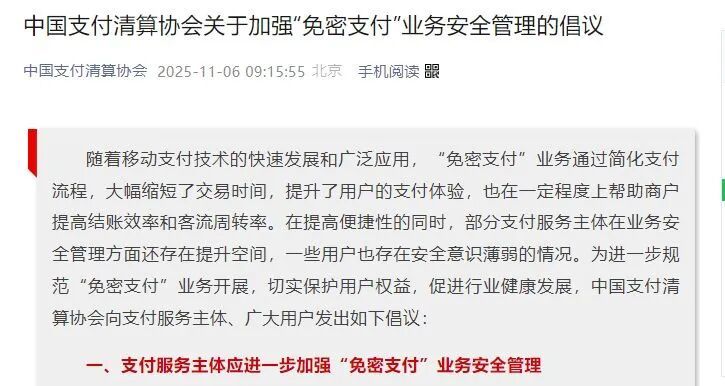
Core Viewpoint - The China Payment and Clearing Association has emphasized the need for enhanced security management in "no-password payment" services, highlighting existing vulnerabilities in both service providers and user awareness [1][3]. Group 1: Security Management Recommendations - The association advocates for payment service providers to strengthen security management for "no-password payment" by eliminating default activation, offering limit management features, and prominently providing a one-click cancellation option [3][20]. - Users are encouraged to regularly check their agreements for no-password payment services [3]. Group 2: User Experience and Feedback - Users have reported difficulties in canceling no-password payment services, with an average of 5 to 6 page jumps required on various platforms to deactivate the service [4][6]. - Many users have expressed frustration on social media about unintentionally activating no-password payment due to misleading interfaces or accidental clicks [5][6]. Group 3: Payment Limits and Merchant Practices - Different merchants have varying single transaction limits for no-password payments, with platforms like Xiaohongshu allowing up to 1,000 yuan, while others like Xianyu only support transactions below 100 yuan [8][9]. - Some platforms impose daily limits on the number of no-password transactions, enhancing security through transaction restrictions [9]. Group 4: Safety Concerns and Comparisons - Concerns regarding the safety of no-password payments include risks associated with lost devices and erroneous transactions, similar to issues previously raised about traditional bank card no-password payments [11][12]. - The security of no-password payments is supported by multiple safeguards, including chip card technology, trusted merchant selection, transaction limits, intelligent risk control, and full compensation for verified losses [12][14]. Group 5: User Choice and Functionality - The functionality of no-password payments is deemed reasonable in high-frequency, low-value transaction scenarios, where entering a password can hinder user experience [16][20]. - The emphasis is placed on respecting user choice, with a call for platforms to avoid default selections that may lead to unintended activations [15][20].

小红书“杀”进闲鱼后院
Guan Cha Zhe Wang· 2025-11-13 15:42
Core Insights - Xiaohongshu has acquired 100% control of Dongfang Payment for approximately 148 million yuan, obtaining a payment license, which is seen as a significant step in its commercialization strategy [1] - The platform's entry into the second-hand e-commerce market, projected to reach a transaction scale of 645.02 billion yuan in 2024, is unique as it adopts a reverse path from content to transaction [1][2] - The acquisition of the payment license allows Xiaohongshu to enhance its e-commerce ecosystem by integrating payment solutions, thereby improving user experience and retention [2][6] Group 1: Strategic Implications of Payment License - The payment license enables Xiaohongshu to manage high-frequency transaction scenarios, enhancing merchant engagement through features like revenue sharing and automatic settlement [2] - Control over the payment process provides threefold value: data tracking from content to purchase, significant cash flow potential from transaction conversions, and improved user retention through seamless experiences [2] - The payment license is essential for Xiaohongshu's second-hand trading business, addressing trust issues that have historically plagued the platform [2][5] Group 2: Challenges in Second-Hand Trading - Second-hand trading presents unique operational challenges, including the uniqueness of each item, lack of standardization, and complex pricing systems [5] - Dispute resolution in second-hand transactions is complicated due to the absence of standards, necessitating robust platform capabilities for handling conflicts [5] - Xiaohongshu's payment license allows it to offer secure transaction services, which could mitigate trust issues in second-hand trading [5] Group 3: Market Positioning and Competitive Landscape - The second-hand e-commerce market is at a turning point, with competitors like Zhuanzhuan exiting certain business models, allowing Xiaohongshu to enter with a compliance advantage [6] - Xiaohongshu's unique content-driven approach may allow it to capture a niche market between high-end and general second-hand platforms, focusing on categories like beauty and fashion [9][11] - The platform's "Million Commission-Free Plan" aims to attract sellers by eliminating fees on the first 1 million yuan of transactions, contrasting with competitors like Xianyu [10] Group 4: Integration of Content and Commerce - Xiaohongshu's content-driven model provides a competitive edge in second-hand trading, as users are more likely to purchase items they have seen positively reviewed [7][9] - The platform's community culture encourages detailed sharing of product experiences, enhancing transparency compared to traditional second-hand platforms [7] - However, integrating content and commerce poses challenges, requiring a balance between maintaining content quality and driving transaction habits among users [8][10] Group 5: Future Market Potential - The second-hand e-commerce market in China is expected to exceed 1.5 trillion yuan by 2025, with a compound annual growth rate of over 20% [11] - Xiaohongshu's strategy may not aim to completely replace Xianyu but rather to establish a differentiated position in high-end and niche markets [11] - The success of Xiaohongshu in leveraging its content ecosystem for transactions will be crucial in determining its competitive stance against Xianyu [11]

小红书上的双11,藏着中国消费的秘密
3 6 Ke· 2025-11-13 14:04
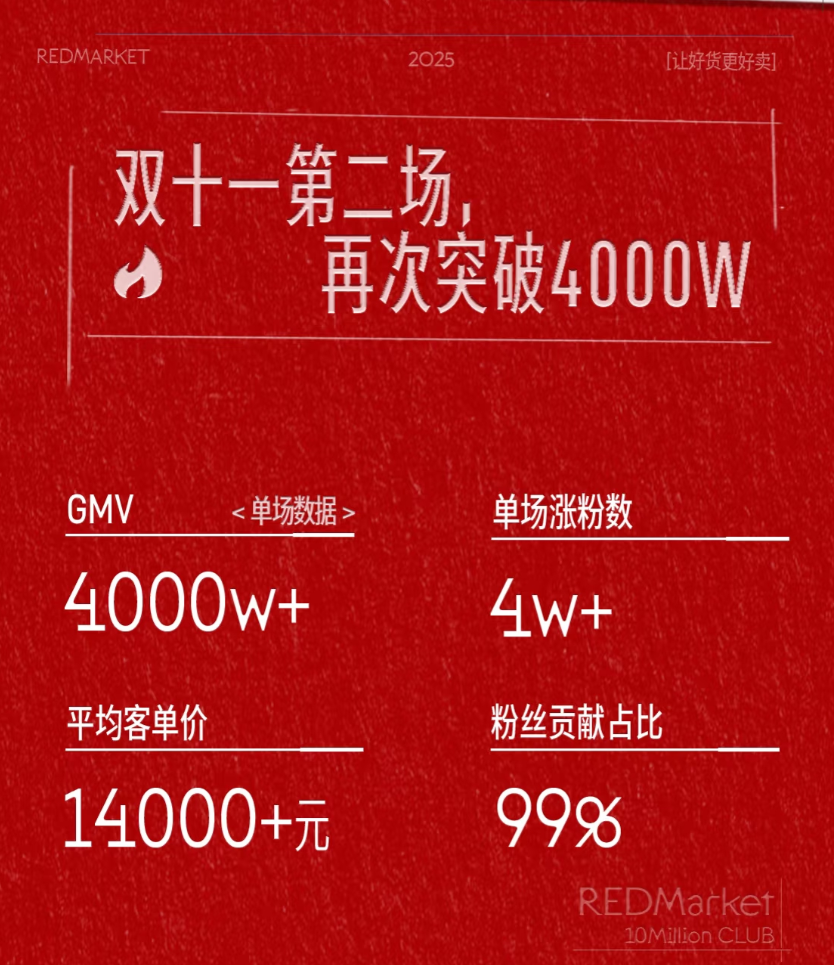
Group 1 - The core viewpoint of the articles highlights the transformation of the Double 11 shopping festival into a more rational and self-indulgent consumer behavior, moving away from the previous frenzy for low prices and consumerism resistance [3][5][21] - The discussion around Double 11 on platforms like Xiaohongshu (Little Red Book) has surged, with over 20 billion exposures and a 600% year-on-year increase, indicating a vibrant consumer market with unmet personalized demands [2][8][14] - Xiaohongshu's e-commerce ecosystem has thrived, with a 77% increase in the number of buyers and a 140% increase in merchants achieving over 10 million in transaction volume during Double 11 [2][14] Group 2 - The new consumer trend emphasizes quality, aesthetics, and personal value, with consumers willing to spend on products that provide a sense of meaning rather than just low prices [5][21] - Xiaohongshu serves as a fertile ground for brands, allowing them to showcase their products and engage with consumers effectively, leading to a significant increase in sales for many brands during Double 11 [9][12][22] - The introduction of the "Direct Grass Planting" feature on Xiaohongshu has enabled brands to connect directly with consumers, resulting in substantial sales figures, such as nearly 200 million for Haier's washing machines [16][20] Group 3 - The articles indicate a shift in consumer preferences towards unique and high-quality products, with a notable increase in categories like trendy toys and cultural collectibles during Double 11 [13][18] - Xiaohongshu's community-driven approach fosters a trust-based relationship between consumers and brands, enhancing the decision-making process and driving sales conversions [22][23] - The platform's ability to match consumer interests with relevant content has created a new commercial ecosystem, facilitating the growth of quality products and new consumer trends [22][23]
小红书上的双11,藏着中国消费的秘密
36氪· 2025-11-13 13:50
Group 1 - The core viewpoint of the article highlights the transformation of the Double 11 shopping festival into a more rational and self-indulgent phase, where consumers prioritize quality and emotional value over mere low prices [5][7][27] - The discussion around Double 11 on platforms like Xiaohongshu has surged, with over 20 billion exposures and a 600% year-on-year increase in topic heat, indicating a vibrant consumer interest [2][10] - Xiaohongshu's e-commerce performance during Double 11 showed a 77% increase in the number of buyers and a 140% increase in merchants achieving over 10 million in transaction volume, reflecting a robust commercial ecosystem [2][19] Group 2 - The article notes that consumers are increasingly willing to spend on products that provide a sense of value and meaning, moving away from the previous mindset of chasing the lowest prices [7][26] - The "rational self-indulgence" phase of Double 11 is characterized by a calmer approach to shopping, where consumers focus on personal satisfaction and comfort for their families without the anxiety of missing out [5][4] - Xiaohongshu serves as a fertile ground for brands, allowing them to connect with discerning consumers who value quality and aesthetic appeal, thus facilitating the growth of good products [14][17][28] Group 3 - The article emphasizes that quality is the minimum requirement for good products, with brand reputation and consumer feedback being key factors in defining quality [14][18] - Xiaohongshu has become a platform where emerging brands can showcase their products and interact with consumers, exemplified by the success of brands like LEXHAM and PERSUN NO. [16][18] - The introduction of the "direct grass planting" feature on Xiaohongshu has enabled brands to achieve significant sales, with notable examples including Haier and TCL, demonstrating the effectiveness of community-driven marketing [21][22][29] Group 4 - The article discusses the evolving consumer preferences, with a notable increase in interest in niche categories such as trendy toys and cultural collectibles during Double 11, indicating a shift towards personalized consumption [18][26] - Xiaohongshu's community-driven approach fosters a trust chain between consumers and brands, enhancing the decision-making process and driving sales conversions [28][30] - The platform's ability to match consumer needs with quality supply has created a new commercial ecosystem, positioning Xiaohongshu as a vital player in the future of Chinese consumption [29][30]
小红书双11:“千万店铺”背后的“慢生意”与“快增长”
Feng Huang Wang Cai Jing· 2025-11-13 13:42
Core Insights - The article highlights the significant growth of Xiaohongshu's e-commerce during the Double 11 shopping festival, showcasing a unique consumption narrative that contradicts the notion of a saturated market. The platform's success is attributed to its community-driven trust and the emergence of "emotional consumption" and "value consumption" desires among consumers [1][14]. Group 1: Xiaohongshu's E-commerce Performance - Xiaohongshu's e-commerce saw a 77% year-on-year increase in the number of orders during Double 11, with the number of merchants achieving over 10 million in sales increasing by 140% [2][14]. - The average transaction value for these high-performing merchants reached 3000 yuan, indicating a shift from traditional low-price volume strategies to a focus on high-value offerings [2][14]. Group 2: Characteristics of Successful Merchants - Successful merchants on Xiaohongshu are characterized by their ability to engage in deep "dialogue" with consumers, rather than relying on traditional traffic-driven sales tactics [3][4]. - The concept of "trust products" has emerged, where products gain popularity through community engagement and user-generated content, rather than through aggressive pricing strategies [4][5]. Group 3: Role of Influencers and Curators - Influencers, referred to as "buyers," have evolved into multifaceted roles that combine content creation, product selection, and trust-building, significantly impacting sales [6][11]. - The average transaction value for some influencers exceeded 10,000 yuan, demonstrating their ability to curate high-value products that resonate with their audience [7][11]. Group 4: Platform Infrastructure and Strategy - Xiaohongshu has implemented strategic initiatives to enhance its e-commerce capabilities, such as the "million commission-free" policy for all merchants and elevating the "shopping" channel to a primary entry point [12][13]. - The platform's focus on "store broadcasting" aims to transform the shopping experience into a sustainable business model, allowing brands to cultivate long-term customer relationships [13][14]. Group 5: Implications for the Supply Chain - Xiaohongshu's success during Double 11 signals a shift in the Chinese supply chain, emphasizing the need for a return to value-driven offerings rather than price competition [14][15]. - The platform provides a valuable opportunity for small and medium-sized brands to connect directly with high-value consumers, fostering a healthier and more sustainable e-commerce ecosystem [15].