
鸣鸣很忙

Search documents
奶茶零食万店时代:“量产甜蜜”的代价谁买单?
Hua Er Jie Jian Wen· 2025-08-16 03:16
Core Viewpoint - The article discusses the rapid expansion of the tea and snack industry in China, driven by low-cost, high-sugar products that have become a significant part of consumer habits, particularly among the youth. This trend raises concerns about public health, particularly regarding diabetes and obesity, as the industry thrives on a "sugar addiction" model that may lead to long-term health costs for society. Group 1: Industry Growth and Trends - The tea and snack industry has seen explosive growth, with brands like Mixue Ice City expanding to over 46,000 stores by the end of 2024, achieving a revenue of 24.83 billion yuan with a growth rate exceeding 22% [9][10] - The "0 yuan purchase" subsidy wars among major delivery platforms have led to increased consumption of sugary drinks, with many consumers unaware of the long-term health implications [2][6] - The rapid expansion of snack stores, such as Wanchen Group, which grew from 7,000 to 15,000 stores in less than a year, highlights the effectiveness of the low-cost, high-volume business model [11][12] Group 2: Health Implications - Excessive sugar intake from beverages and snacks poses significant health risks, including obesity, insulin resistance, and chronic diseases, which are becoming a public health crisis in China [5][35] - The average sugar consumption from tea drinks alone could lead to an additional 1.3 kg of sugar intake per person annually, contributing to rising diabetes rates [19][44] - The prevalence of insulin resistance has increased significantly, with a reported rate of 39.1% among adults, indicating a growing health crisis linked to high sugar consumption [38][42] Group 3: Economic and Social Costs - The healthcare costs associated with diabetes and related diseases are projected to reach 1.2 trillion yuan in 2024, reflecting the financial burden on the healthcare system due to rising sugar consumption [45][49] - The rapid growth of the tea and snack industry, while profitable for companies, is shifting health costs to the public healthcare system, creating a hidden burden on society [49][50] - The government's initiatives to manage weight and reduce sugar intake highlight the urgent need for intervention in the face of rising obesity rates and related health issues [41][60] Group 4: Consumer Behavior and Market Dynamics - The addictive nature of sugary products drives high-frequency consumption, particularly among young consumers, who are often unaware of the health risks associated with their habits [22][26] - The industry's focus on low prices and high availability has led to a significant shift in consumer behavior, with many opting for sugary drinks as a primary source of refreshment [31][32] - Despite some brands attempting to reduce sugar content, consumer preferences for sweet flavors complicate efforts to promote healthier options [51][52]

奶茶零食万店时代:“量产甜蜜”的代价谁买单?
华尔街见闻· 2025-08-16 01:00
Core Viewpoint - The article highlights the rapid expansion of the tea and snack industry in China, driven by low-cost, high-sugar products that pose significant health risks to consumers, particularly the youth. The phenomenon is described as a "sugar addiction economy," where the long-term health costs are often overlooked in favor of immediate consumer satisfaction and business profits [7][4][5]. Group 1: Industry Expansion and Market Dynamics - The "0 yuan purchase" subsidy war among major food delivery platforms has led to a surge in the consumption of sugary drinks, particularly among young consumers [1][2]. - Thousands of chain tea and snack stores are employing economies of scale through supply chain optimization and aggressive expansion strategies, making sugary products more accessible and affordable [2][20]. - The number of tea and snack stores has skyrocketed, with the total number of tea drink outlets reaching approximately 426,300 by mid-2025, and the market size for new-style tea drinks reaching 3,547.2 billion yuan in 2024 [18][12]. Group 2: Health Risks and Societal Impact - Excessive sugar intake is recognized as a significant health threat, leading to conditions such as insulin resistance, obesity, and chronic diseases, which could burden the healthcare system [5][70]. - The average sugar consumption from tea drinks alone could lead to an additional intake of approximately 1.3 kg of sugar per person annually, contributing to rising health issues [33][32]. - The increasing prevalence of insulin resistance and obesity among the population is alarming, with over 39.1% of adults showing signs of insulin resistance, a significant increase over the past two decades [80][82]. Group 3: Business Models and Profitability - The rapid expansion of brands like Mixue Ice City, which has over 46,479 stores and generated 24.83 billion yuan in revenue in 2024, exemplifies the success of the "ten-thousand-store economy" [12][14]. - The low initial investment and high replicability of tea and snack stores attract numerous small franchisees, further fueling the industry's growth [17][19]. - The business model relies heavily on low prices and high volume, with brands achieving significant revenue growth through aggressive store openings and supply chain efficiencies [27][28]. Group 4: Consumer Behavior and Addiction - The addictive nature of sugar is driving high-frequency consumption among young people, with many unaware of the long-term health consequences of their choices [4][6]. - The article draws parallels between sugar consumption and addiction, noting that the immediate pleasure derived from sugary products leads to a cycle of increased consumption [40][44]. - The marketing strategies of tea and snack brands often target young consumers, particularly around schools, creating a habitual consumption pattern that is difficult to break [3][59]. Group 5: Regulatory and Health Management Responses - The Chinese government is beginning to address the health implications of high sugar consumption through initiatives like the "Weight Management Year" program, aimed at raising awareness and promoting healthier lifestyles [90][91]. - There is a growing call for regulatory measures, such as sugar taxes and stricter advertising restrictions on sugary products, to mitigate the public health crisis associated with excessive sugar intake [137][138]. - The article emphasizes the need for a collective effort from society and regulatory bodies to combat the rising tide of sugar addiction and its associated health risks [153][154].

华源证券:量贩龙头充分享受下沉市场升级+渠道效率提升红利 渠道未来仍有较大成长空间
Zhi Tong Cai Jing· 2025-08-14 08:14
Group 1 - The core viewpoint is that the bulk snack retail model, characterized by "vertical + thousands of stores" hard discount strategies, is fundamentally a business driven by traffic growth, benefiting from market upgrades and improved channel efficiency [1] - The total number of stores in the industry has rapidly expanded from 13,000 in January 2022 to over 40,000 currently, leading to an increase in the share of specialty store channels from 7.6% in 2019 to 11.2% in 2024, with the market size of the leisure food and beverage sector projected to reach 3.7 trillion [1] - The bulk retail format shows strong competitiveness in terms of payback period and capital efficiency compared to other retail formats, with a theoretical potential for approximately 86,000 stores nationwide based on various supply and demand parameters [1] Group 2 - The transition from vertical bulk retail to horizontal product expansion is seen as a challenging yet correct strategy, with discount supermarkets optimizing single-store models and expanding store space through refined operations and supply chain efficiencies [2] - The competitive landscape is becoming clearer with leading players in the bulk retail sector focusing on mergers and acquisitions, with distinct advantages in market distribution and operational efficiency between major players [3] - The profitability of leading bulk retailers is expected to improve in the short term due to reduced subsidies and scale efficiencies, while the development of private label brands is crucial for long-term growth and valuation enhancement [4]
休闲零食专题系列报告(一):量贩模式发展:渠道渗透与品类拓展机遇,行业双超对比思考
Hua Yuan Zheng Quan· 2025-08-14 06:29
Investment Rating - The report maintains a "Positive" investment rating for the leisure snack industry [1]. Core Insights - The bulk discount snack channel is fundamentally a business driven by traffic growth, benefiting from the "good, fast, and economical" model, which has allowed leading players to capitalize on the upgrading of lower-tier markets and improved channel efficiency. The total number of stores in the industry has rapidly expanded from 13,000 in January 2022 to over 40,000 currently, contributing to an increase in the share of specialty store channels from 7.6% in 2019 to 11.2% in 2024, with the market size of the leisure food and beverage sector expected to reach 3.7 trillion yuan by 2024 [4][13][8]. Summary by Sections 1. Review of Bulk Snack Channel Development and Future Opportunities - The leisure food and beverage market in China is projected to grow at a CAGR of approximately 5.5% from 2019 to 2024, reaching around 3.7 trillion yuan by 2024. The traditional supply chain is undergoing efficiency transformations due to urbanization, information equality, and logistics and digitalization improvements [8][13]. - The bulk snack channel, characterized as a hard discount model, has thrived by maximizing efficiency and price competitiveness, successfully capturing market share during the rise of value-conscious consumption and the new retail transformation [9][13]. - The number of bulk snack stores has surged from 13,000 in early 2022 to over 40,000, with leading companies like Mingming Hen Mang and Wancheng Group projected to achieve GMV of approximately 55 billion yuan and 43.5 billion yuan, respectively, in 2024 [13][8]. 2. Bulk Channel: Mingming Hen Mang vs. Wancheng - The competitive landscape is becoming clearer as the leading players transition from rapid expansion to mergers and acquisitions. The report highlights the distinct advantages of Mingming Hen Mang and Wancheng in terms of store distribution and operational efficiency [65][66]. - By the end of 2024, both Mingming Hen Mang and Wancheng are expected to operate over 14,000 stores each, with a combined market share of approximately 68%, reflecting a 20 percentage point increase from 2023 [65][73]. 3. Future Profitability and Valuation Considerations for Bulk Channels - The report emphasizes that the profitability of leading players is expected to improve as the competitive landscape stabilizes, with a focus on self-owned brand strategies to enhance scale and profitability. The self-owned brand strategy of Mingming Hen Mang aims to provide differentiated products and higher added value, aligning with future consumer demands [4][13][65]. - The report draws parallels with international discount retail leaders, indicating that similar strategies could lead to sustained growth and valuation improvements, with potential PE ratios exceeding 30x for successful brands [4][13].
跳出价格混战 零食龙头创新求变 量贩零食以精细化运营重塑竞争力|反内卷进行时
Xin Lang Cai Jing· 2025-08-09 07:36
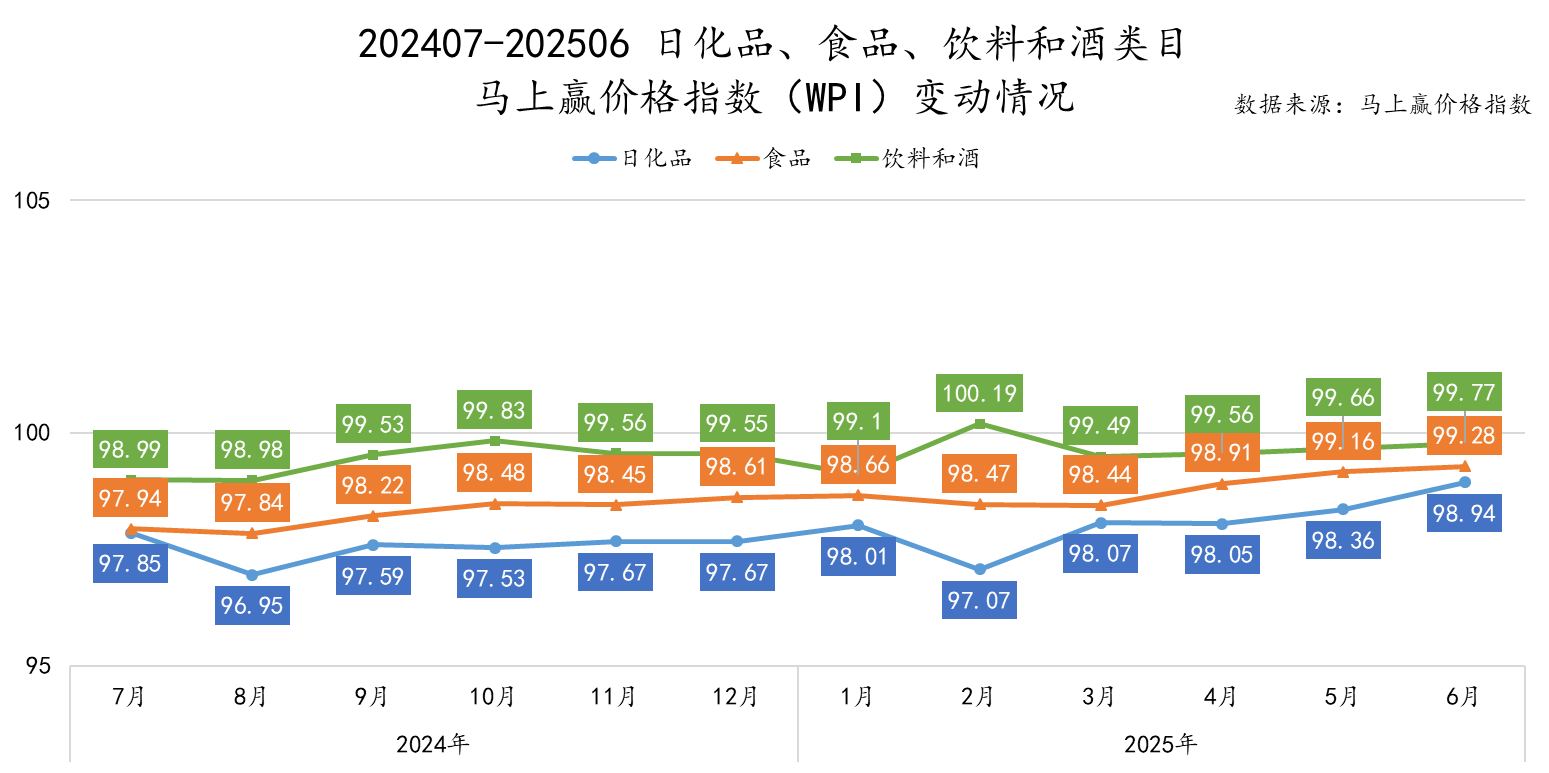
Group 1: Industry Overview - The leisure snack industry is undergoing significant changes, with a focus on price competition leading to a decline in overall category prices [1][2] - The price index for food categories has remained below the baseline of 100 since July 2024, indicating a year-on-year decline in food prices [2] - Companies are responding to price wars by innovating products, enhancing supply chain efficiency, and strengthening brand marketing to create a competitive edge [6] Group 2: Company Strategies - Leading brands are focusing on product innovation and cost leadership to build a competitive moat, with examples like Jinzhai Food launching antibiotic-free, ready-to-eat quail eggs [6] - Salted Fish Shop has introduced new sunflower seed snacks emphasizing quality raw materials and healthy production processes [6] - Brand building and international expansion are seen as effective strategies to overcome price competition, with over 10 snack companies from Hunan province exploring overseas markets [7] Group 3: Retail Dynamics - The bulk snack sector is shifting from price wars to value-based management, moving away from discount battles that characterized previous years [8][9] - The focus has shifted to high-quality products and refined consumer experiences, with brands updating hundreds of SKUs monthly to maintain freshness and appeal [9] - Wanchen Group reported a revenue of 10.688 billion yuan in Q1, with a net profit of 412 million yuan, reflecting a net profit margin increase of 1.36 percentage points year-on-year [9][10] Group 4: Future Outlook - Companies are expected to continue investing in supply chain advantages, brand building, and digital capabilities to balance scale and efficiency for long-term growth [10] - The emphasis on product quality is becoming increasingly important, with reliable quality control being a fundamental requirement for manufacturers [10]
干出440亿独角兽,90后创业者成新晋女首富丨投中嘉川
投中网· 2025-08-08 06:11
Core Viewpoint - The article highlights the unexpected rise of "Kongzhong Yunhui," a cross-border payment company, which achieved a valuation of $6.2 billion (approximately 44.6 billion RMB) in the first half of 2025, surpassing many hard-tech companies and becoming the highest-valued startup in China during this period [7][9][10]. Group 1: Company Overview - Kongzhong Yunhui was founded in 2015 and has completed 13 rounds of financing, attracting investments from notable firms such as Sequoia China, Tencent, and Alibaba Entrepreneur Fund [7][12]. - The company focuses on streamlining traditional cross-border financial processes, offering modular services for payment, currency exchange, and account management, primarily targeting B2B clients, especially SMEs [12][13]. - As of March 2025, Kongzhong Yunhui reported an annual revenue of $720 million, a 90% year-on-year increase, and processed over $130 billion in transactions globally [13]. Group 2: Investment and Valuation - In May 2025, Kongzhong Yunhui completed a $300 million Series F financing round, with participation from global investors including Square Peg, DST Global, and Visa Ventures, leading to its valuation increase to $6.2 billion [9][10][12]. - The company has a diverse product matrix, including foreign exchange engines and embedded financial services, which have contributed to its competitive edge in the market [12][13]. - The article notes that domestic investors have played a significant role in the company's funding history, with a total of $1.2 billion raised over the years, indicating strong support from the Chinese investment community [15][16]. Group 3: Founders and Personal Success - Co-founder Liu Yueting has become the wealthiest woman in New Zealand, with a net worth of 3 billion RMB, following her initial investment of $1 million in the company [14][18]. - The founders' backgrounds include significant experience in finance and investment, which has contributed to the company's strategic positioning and growth [18].

一位90后开始接班
投资界· 2025-08-08 03:23
Core Viewpoint - The article discusses the generational transition in family businesses, focusing on Wang Zening's ascension to the role of General Manager at Wancheng Group, marking a significant shift in leadership and strategy for the company [2][3][4]. Company Transition - Wang Jiankun, the former chairman of Wancheng Group, has resigned, and Wang Zening, his son, has taken over as General Manager, indicating a shift towards a younger leadership [2][3][4]. - Wancheng Group has transformed into a major player in the snack retail industry, with a market value exceeding 30 billion yuan and operating around 15,000 snack stores under the brand "Haoxianglai" [3][8][13]. Leadership Development - Wang Zening has been involved in the family business since 2015, gradually preparing for his leadership role while working alongside his family members [5][6]. - The company has a structured succession plan, allowing Wang Zening to gain experience and knowledge in management before taking on the top role [6][12]. Business Strategy - The company shifted its focus from edible mushrooms to the snack retail sector, capitalizing on the growing demand for discount snack stores [9][10]. - Wancheng Group has integrated multiple snack brands under the "Haoxianglai" umbrella, enhancing its market presence and operational efficiency [10][13]. Market Position - Wancheng Group is now the only A-share listed company in the discount snack retail sector, positioning itself uniquely in a competitive market [13]. - The company faces significant competition from other players in the industry, such as Mingming Hen Mang, which has reported substantial retail growth [13][14].

“红枣第一股”好想你开始卖啤酒,能否靠这一“口”翻身?
Mei Ri Jing Ji Xin Wen· 2025-08-05 13:26
Core Viewpoint - The company "Hao Xiang Ni" is diversifying into the craft beer market, launching new flavors such as red date and green tea, amid ongoing financial struggles and a three-year streak of losses [1][2][3] Company Summary - Hao Xiang Ni has introduced a series of new craft beers, including flavors like red date, green tea, jasmine tea, and peach blossom, priced around 20 yuan per bottle [2] - The company has reported net losses of 189 million yuan, 51.89 million yuan, and 71.96 million yuan for the years 2022 to 2024, with an expected loss of 15 to 25 million yuan for the first half of this year [2][3] - The company is seeking to develop a second growth curve due to the aging customer base and stagnant sales of its core red date products [3] Industry Summary - The new craft beer segment is rapidly gaining popularity, with various brands, including snack companies and supermarkets, entering the market [5] - The craft beer market in China is projected to reach a consumption volume of 230,000 kiloliters by 2025, with a compound annual growth rate of 17% and a market size potentially reaching 130 billion yuan [6] - Despite the growth potential, the craft beer industry is becoming increasingly competitive, leading to lower profit margins and a crowded market landscape [7]

三年亏3亿却分红9亿!好想你跨界投资难掩主业颓势
Sou Hu Cai Jing· 2025-08-01 06:10
Core Viewpoint - The company "Hao Xiang Ni," known as the "first stock of red dates," continues to struggle with significant losses, projecting a loss of 15 million to 25 million yuan for the first half of 2025, marking three consecutive years of losses totaling over 300 million yuan [1][6][8]. Financial Performance - The company reported a revenue drop from 59.61 billion yuan in 2019 to 30.01 billion yuan in 2020, followed by a further decline of 57.32% in 2021, resulting in only 12.81 billion yuan in revenue [6][8]. - The cumulative losses from 2022 to 2024 amounted to 313 million yuan, with losses of 189 million yuan in 2022, 51.89 million yuan in 2023, and 71.96 million yuan in 2024 [8][10]. - The company’s net profit has been below 200 million yuan before 2019, with a significant spike in 2020 due to the sale of a subsidiary, but has since returned to losses [8][9]. Dividend Policy - Despite ongoing losses, the company has distributed over 900 million yuan in dividends over the past three years, with the controlling shareholder's family receiving approximately 30% of this amount [10][11]. - In 2024, the company planned to distribute a record high of 605 million yuan in dividends, despite a net loss of 313 million yuan during the same period [10][11]. Operational Challenges - The company has faced declining sales volumes, with a 7.55% decrease in sales volume in 2024, leading to a 66.10% increase in inventory [9][10]. - The company has implemented measures to optimize product management and reduce costs, but these efforts have not yet translated into improved financial performance [5][6]. Investment Activities - The company has diversified its investments, including a significant stake in "Mi Xue Bing Cheng" and other snack and beverage companies, aiming to leverage these investments to boost sales [14][15]. - In 2024, the company reported that "Mi Xue Bing Cheng" became its largest customer, contributing 5.62% to its annual sales [15][16]. Future Outlook - The company is exploring new sales channels and product lines, including the introduction of beer products, to enhance its market presence [17][18]. - The effectiveness of the company's investment strategy in overcoming its operational challenges remains to be seen, as it seeks to establish a second growth curve [18].

好想你跨界做啤酒生意
Bei Jing Shang Bao· 2025-07-30 16:40
Core Viewpoint - The company "Hao Xiang Ni" is diversifying into the craft beer market, launching a series of flavored beers in response to declining performance in its core business [1][2][4]. Group 1: Company Background and Performance - Founded in 1992, "Hao Xiang Ni" specializes in the research, procurement, production, and sales of health foods, particularly red dates [2]. - The company was the first in the Chinese red date industry to go public in 2011, experiencing significant revenue growth from 2.072 billion yuan in 2016 to 5.961 billion yuan in 2019 [2]. - However, after selling its subsidiary "Bai Cao Wei" to PepsiCo in 2020, the company has faced consecutive years of losses, reporting losses of 189 million yuan, 52 million yuan, and 72 million yuan from 2022 to 2024 [2][3]. Group 2: New Product Launches and Market Strategy - "Hao Xiang Ni" has launched a new series of craft beers, including flavors like red date, green tea, jasmine tea, and peach blossom, set to be released in late May 2025 [1]. - The craft beer products will be sold online at prices of 28.1 yuan per liter, primarily through the company's official flagship stores [1]. - The company has also ventured into other sectors, such as tea beverages and snack foods, indicating a strategy to find new growth points amid declining performance [1][4]. Group 3: Market Trends and Consumer Insights - The craft beer market is experiencing growth, driven by trends in self-indulgent consumption and an increase in female consumers [5]. - The introduction of flavored craft beers aligns with market trends, although similar products are already prevalent [5]. - The company's focus on diverse product offerings reflects a sense of urgency to identify new growth avenues, but there are concerns about the coherence of its diversified strategy [5].
