
比亚迪股份

Search documents
中国十大最具发展潜力城市
泽平宏观· 2026-02-20 16:05
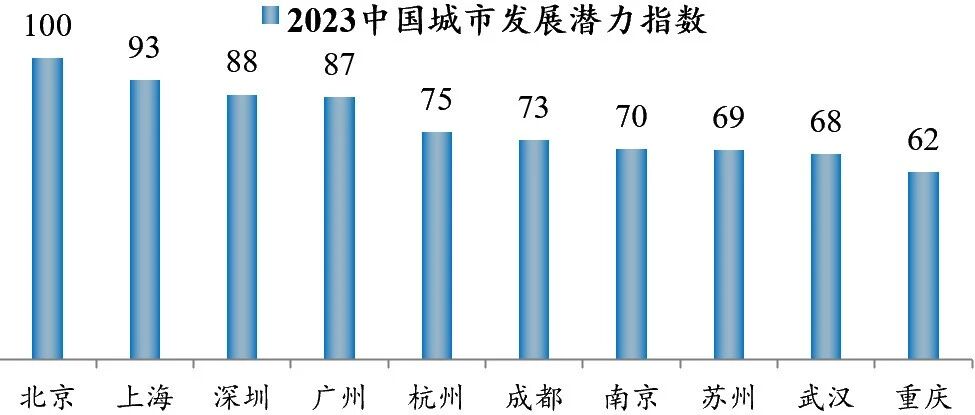
Core Viewpoint - The article discusses the competitive landscape of Chinese cities, highlighting the rapid urbanization and the emergence of new economic centers, while ranking the development potential of 337 cities in China, with Beijing, Shanghai, Shenzhen, and others leading the list [2]. Group 1: Beijing - Beijing is positioned as the political, cultural, international exchange, and technological innovation center of China, with a GDP exceeding 4.1 trillion yuan in 2022, making it the second-largest city after Shanghai [9][10]. - The service sector accounts for 84% of Beijing's economy, with finance, headquarters economy, and technological innovation as key pillars [10]. - Future plans include transforming Beijing into a world-class harmonious city while optimizing population distribution to enhance urban vitality [11][13]. Group 2: Shanghai - Shanghai has established itself as an international economic center, with a GDP of approximately 4.5 trillion yuan in 2022, and aims to rival New York in global economic influence [16][24]. - The city’s industrial structure is supported by the automotive, electronics, and financial sectors, with finance contributing 19.3% to the GDP [17][19]. - Shanghai plans to continue its open policies and develop into a globally competitive city, enhancing the Yangtze River Delta region [24]. Group 3: Shenzhen - Shenzhen's GDP surpassed 3.2 trillion yuan in 2022, marking it as the third-largest city in China, with a significant annual population increase of around 600,000 [25][26]. - The city is recognized as a leading innovation hub, with strategic emerging industries accounting for over 41% of its GDP [26]. - Future initiatives focus on enhancing collaboration within the Guangdong-Hong Kong-Macau Greater Bay Area to solidify its status as a global innovation city [29]. Group 4: Guangzhou - Guangzhou's GDP reached approximately 2.9 trillion yuan in 2022, ranking fifth nationally, with a strong manufacturing base in automotive and electronics [30][31]. - The city faces challenges in innovation capacity and financial sector development, with financial services contributing only 9.2% to the GDP [33]. - Future goals include enhancing its role as a national center city and participating in global economic cooperation [34]. Group 5: Hangzhou - Hangzhou's economy has shown robust growth, with a GDP of around 1.9 trillion yuan in 2022, driven by a vibrant private and digital economy [36][37]. - The city is recognized for its strong digital economy, with core digital industries contributing 27.1% to the GDP [37]. - Plans for the future include improving transportation infrastructure and fostering a more open and innovative business environment [41][42]. Group 6: Chengdu - Chengdu's GDP exceeded 2 trillion yuan in 2022, accounting for 36.7% of Sichuan province's economy, and it is recognized as a key economic hub in Western China [43][44]. - The electronics sector is a major contributor, with a significant portion of the industrial output [44]. - Future strategies involve enhancing its role as a national center city and collaborating with Chongqing to develop the Western economic highland [49]. Group 7: Nanjing - Nanjing's GDP approached 1.7 trillion yuan in 2022, with a per capita GDP of 179,000 yuan, ranking fifth among major cities [50][51]. - The city is focusing on developing its automotive, steel, electronics, and petrochemical industries while nurturing emerging sectors [51]. - Future aspirations include becoming an "innovation city" and enhancing its influence in the Yangtze River Delta region [54]. Group 8: Suzhou - Suzhou's GDP reached nearly 2.4 trillion yuan in 2022, making it the top city among prefecture-level cities in China [56]. - The city is recognized as a global industrial powerhouse, with significant contributions from electronics and manufacturing sectors [56]. - Future plans emphasize its role in the Yangtze River Delta urban cluster and advancing towards a high-tech manufacturing base [59].

火爆的AI数据中心液冷,核心硬件制造工艺技术与材料梳理,建议收藏!
DT新材料· 2026-02-20 16:04
Core Viewpoint - The rapid growth in sectors such as electric vehicles, data centers, and energy storage systems highlights the critical role of water cooling plates (liquid cooling plates) in determining equipment stability and lifespan. The design of flow channel structures in liquid cooling units significantly impacts the thermal performance of battery modules, with well-designed units enhancing thermal uniformity. The manufacturing process of water cooling plates is influenced by material selection, flow channel design, pressure resistance, and cost efficiency [2]. Group 1: Material Selection and Preprocessing - Aluminum alloy is the primary material for power battery water cooling plates due to its balanced properties of thermal conductivity, lightweight, strength, processability, and cost, with 3003 aluminum alloy being widely used for its good overall performance [5]. - Copper alloy, specifically purple copper (thermal conductivity of 401 W/m.K), is used in high-power scenarios (e.g., 800V high-voltage platforms) but requires nickel plating or anodizing to address corrosion issues [5]. - Composite materials are utilized when higher strength is required, typically in a three-layer structure: core material + brazing layer + sacrificial layer [5]. - Surface degreasing is performed using ultrasonic cleaning (frequency 28-80 kHz) to remove oil and ensure effective subsequent welding or passivation [5]. - Passivation treatment involves forming a nano-level protective film on the surface using chromate or non-chromate passivation solutions, achieving over 1000 hours in salt spray tests [5]. Group 2: Manufacturing Processes - Stamping forming is a core process for mass production, utilizing a servo press to achieve 60 strokes per minute with a flow channel depth tolerance of ±0.05mm, suitable for medium and small cooling plates with over 70% material utilization [6]. - Hydraulic forming is recognized for its ability to create complex flow channels, while extrusion forming offers a low-cost standardized solution by extruding aluminum profiles with pre-formed flow channels [10][11]. - 3D printing represents a breakthrough in structural innovation, allowing for the creation of intricate designs that enhance cooling efficiency [14]. Group 3: Flow Channel Processing - The embedded pipe process involves milling grooves in aluminum substrates and inserting copper pipes, suitable for shallow embedded cooling plates [17]. - Advances in technology include the use of Direct Metal Laser Sintering (DMLS) to manufacture seamless cooling plates, achieving over 6 bar pressure resistance [18]. - Innovative designs, such as oblique fins, have been implemented to improve heat dissipation efficiency by 20% in specific applications [18]. Group 4: Welding Processes - Vacuum brazing is the preferred choice for large-scale production, allowing for complex flow designs and achieving over 30% improvement in heat dissipation efficiency [23]. - Friction Stir Welding (FSW) offers high-strength connections with excellent fatigue resistance, although it has limitations in equipment customization costs and welding speed [26]. - The combination of stamping and brazing processes provides an optimal cost-performance ratio, supporting complex flow channel designs [30]. Group 5: Surface Treatment and Quality Control - Anodizing enhances corrosion resistance by generating a 5-20μm oxide film, improving durability by 10 times [35]. - Helium mass spectrometry leak detection is utilized for battery cooling plates, achieving a leak rate of ≤0.1 sccm [36]. - Internal quality checks include ultrasonic C-SAM detection to identify brazing defects and coordinate measuring machines to verify flow channel dimensions [40]. Group 6: Comparison of Typical Manufacturers' Processes - CATL employs a combination of hydraulic forming, vacuum brazing, and helium testing, achieving a 35% reduction in costs for battery pack cooling plates [37]. - BYD utilizes stamping forming, direct cooling technology, and AI visual inspection, enhancing processing efficiency by 40% [39]. - Tesla integrates 3D printing, biomimetic flow channels, and ultrasonic welding, leading the industry in structural innovation by 2 years [39]. - Valeo combines extrusion forming, biomimetic flow channels, and FSW, resulting in a 20% improvement in cooling efficiency for high-end vehicle cooling plates [42].
中美博弈结束了吗?现实更残酷:美国没输,只是连牌桌都下不去了
Sou Hu Cai Jing· 2026-02-20 14:59
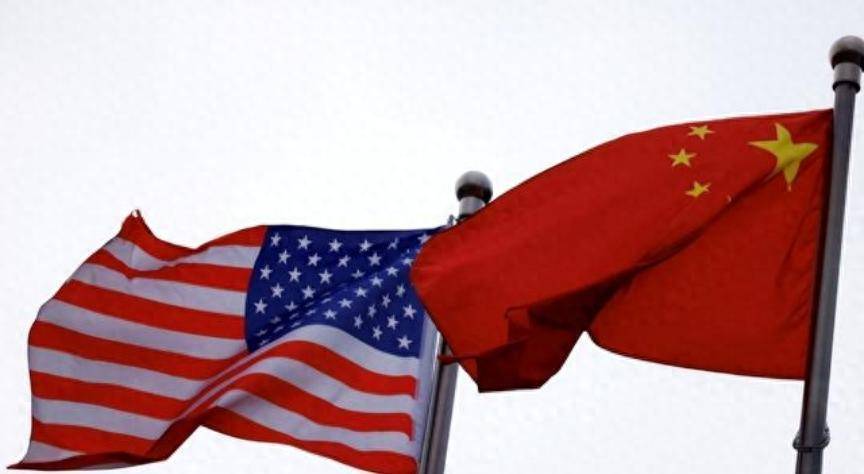
Group 1 - The U.S.-China competition has evolved from a trade war to a broader industrial and technological rivalry, with the U.S. struggling to revive its manufacturing sector while China continues to strengthen its industrial base [1][25] - U.S. manufacturing now accounts for only about 10% of GDP, with a significant portion concentrated in military, semiconductor, and pharmaceutical sectors, indicating a hollowing out of other manufacturing areas [2][3] - China has maintained its position as the world's leading manufacturer for 15 consecutive years, with manufacturing value added projected to reach 31.6% of the global total by 2024 [4] Group 2 - China's exports have shifted from low-end goods to high-tech products, such as advanced machinery and digital devices, which are more profitable [5] - The U.S. attempts to repatriate manufacturing through tariffs have backfired, as high labor and land costs make domestic production unfeasible [6][7] - The semiconductor industry has become a focal point of U.S.-China tensions, with the U.S. imposing strict technology export controls, yet China has managed to increase its domestic production and reduce imports by 15.4% in 2023 [9][11] Group 3 - China's electric vehicle exports surged to 4.91 million units in 2023, marking its first position as the global leader in this sector, with products featuring advanced technology [15] - The shipbuilding industry is another stronghold for China, producing over half of the world's commercial vessels and holding a 66.6% share of new orders [15] - The U.S. military-industrial complex is facing challenges due to reliance on foreign supply chains, which has led to production delays and increased costs [16][20] Group 4 - China's military spending is significantly lower as a percentage of GDP compared to the U.S., yet it has maintained robust military development and capabilities [22] - The U.S. is realizing that its military production cannot keep pace with potential conflicts, especially when compared to China's industrial capacity [21] - The ongoing conflict in Ukraine has highlighted the limitations of U.S. military supply chains and production capabilities [20] Group 5 - The competition between the U.S. and China is not just bilateral but reflects a global struggle between two development models: one based on financial dominance and military deterrence, and the other on real economic cooperation and industrial upgrading [53][54] - China's approach to global governance emphasizes infrastructure development and economic partnerships, contrasting with the U.S. model that often includes political conditions and military support [48][51] - The interdependence of global supply chains means that complete decoupling is unlikely, as many countries seek to maintain trade relations with China [60]
智驾洗牌,“五大”要统一江湖了吗?
Jing Ji Guan Cha Wang· 2026-02-20 13:54
刘晓林/文 2025年9月公布的《智能网联汽车 组合驾驶辅助系统安全要求》强制性国家标准(征求意见稿)(下称《意见稿》)已结束公开征求意见阶段, 预计于2027年1月1日正式实施。这意味着,车企的智驾合规准备已进入一年倒计时。 这一被称为"智能驾驶史上最严新规"的落地,使得整车组合安全、极端场景测试、全生命周期合规迭代将成为硬性约束,行业准入门槛与持续运营成本也会 随之大幅抬升,车企研发路径和智驾行业的格局将不可避免地迎来震荡。是继续自研智驾技术还是采购成熟解决方案?这个一直伴随着汽车企业的命题,将 在2026年得到新的答案。 随着订单被华为、Momenta、地平线等几大智驾头部供应商瓜分,更现实的问题将浮出水面:全栈自研是否成为少数头部玩家的特权?绝大多数车企是否被 迫转向头部供应商?技术同质化与供应链集中风险如何化解?无规模优势的中小车企,能否在合规高压下找到生存支点?2026年,围绕智能驾驶技术主权、 供应链安全、规模效率的行业格局重构已经开启。 新规压顶:自研合规成本飙升 对整车企业而言,技术合规难度和能否承担自研成本,是智驾国标带来的最大挑战。 目前看来,虽然面临新规与成本的双重约束,但智驾行业并未 ...

“热”领未来!2026热管理博览会上海、深圳双展正式启幕
DT新材料· 2026-02-20 11:59
Core Insights - The article emphasizes that thermal management technology has evolved beyond traditional cooling, becoming essential for breakthroughs in computing power, energy efficiency, and product reliability, particularly in advanced fields like AI, smart vehicles, and aerospace [2] - The "Insight Thermal Management 2026" series aims to create a comprehensive platform for industry, academia, and research to address thermal control challenges and establish new thermal balance standards [2] Group 1: Event Overview - The 2026 Future Industry New Materials Expo (FINE2026) will take place from June 10-12 at the Shanghai New International Expo Center, featuring over 50,000 square meters of exhibition space and more than 300 strategic and cutting-edge technology reports, expecting to attract over 100,000 professional visitors [3] - The Shanghai event will focus on high heat flux density challenges, showcasing liquid cooling plates, AI chips, and power device thermal management [6] Group 2: Shanghai Event Highlights - The Shanghai exhibition will emphasize the integration of the Yangtze River Delta industrial cluster, focusing on data centers, new energy vehicles, semiconductors, energy storage systems, and large power facilities [8] - Key topics will include battery thermal management under high-power fast charging, automotive-grade power module cooling, and industrial-grade heat exchange solutions aimed at carbon neutrality [8] Group 3: Shenzhen Event Overview - The seventh Thermal Management Industry Conference and Expo (iTherM2026) will be held in Shenzhen in December 2026, focusing on the flexibility of technology and rapid market response [9] - The Shenzhen event will address the thermal challenges of miniaturized and integrated electronic devices and chips, providing a one-stop value connection platform for the thermal management industry [9] Group 4: Shenzhen Event Highlights - The Shenzhen exhibition will spotlight AI computing servers, smartphones, wearable devices, and low-altitude economy sectors, showcasing technologies like immersion cooling and new thermal interface materials [11] - The event aims to facilitate the commercialization of innovative technologies and provide a platform for startups and tech giants to showcase their ideas [11] Group 5: Previous Event Recap - The 2025 Shenzhen Thermal Management Expo featured numerous companies presenting new materials, processes, and system-level cooling solutions, attracting significant engagement from engineers and professionals [12] - The event successfully transitioned from "display" to "connection," fostering interactions between technology teams and industry demand [16]
掌握10万亿美元资产,美国犹太资本巨头,已全面渗透中国
Sou Hu Cai Jing· 2026-02-20 10:23
Core Viewpoint - BlackRock, the world's largest asset management company, has established a significant presence in the Chinese market, managing assets worth $300 billion through a complex financial network [2]. Group 1: Investment Strategy and Market Entry - BlackRock made its initial investment in China in 2006 by acquiring a stake in China Bank Fund, marking the beginning of its strategic entry into the market [4]. - Following the removal of foreign ownership limits in April 2020, BlackRock quickly submitted an application to establish a wholly-owned public fund company in August 2020 [4]. - By June 2021, BlackRock became the first foreign institution allowed to set up a wholly-owned public fund in China, showcasing its first-mover advantage [6]. Group 2: Investment Holdings and Influence - As of the end of 2024, BlackRock indirectly holds stakes in over 1,200 Chinese listed companies through more than 200 fund products, creating a network that spans critical sectors of the Chinese economy [10]. - In the electric vehicle sector, BlackRock is the second-largest institutional shareholder of CATL and holds approximately 6.2% of BYD's H-shares, along with significant stakes in other new energy vehicle companies [10][12]. - BlackRock's investments extend across the entire electric vehicle supply chain, from battery manufacturing to vehicle production and charging infrastructure [12]. Group 3: Regulatory Environment and Challenges - A 2024 report from the U.S. Congress highlighted that BlackRock invested billions in several Chinese companies under U.S. sanctions, prompting calls for legislative action to limit such investments [20]. - In response to foreign capital penetration, Chinese regulatory bodies have begun to enhance oversight, particularly concerning investments in critical information infrastructure and data resources [22]. - New regulations introduced in March 2024 emphasize compliance for foreign financial institutions, with a focus on preventing circumvention of regulations through complex financial structures [24]. Group 4: Future Outlook and Strategic Developments - By the third quarter of 2025, BlackRock's asset management scale in China reached $1.225 trillion, reflecting a 12% year-on-year growth despite regulatory pressures [28]. - BlackRock's ongoing expansion in China signifies a broader trend of foreign capital navigating the balance between openness and security in the financial landscape [30].

加码本土供应链!欧盟出台新规:电动汽车本土生产比例达70%才能享受补贴【附新能源汽车出口情况分析】
Xin Lang Cai Jing· 2026-02-20 10:22
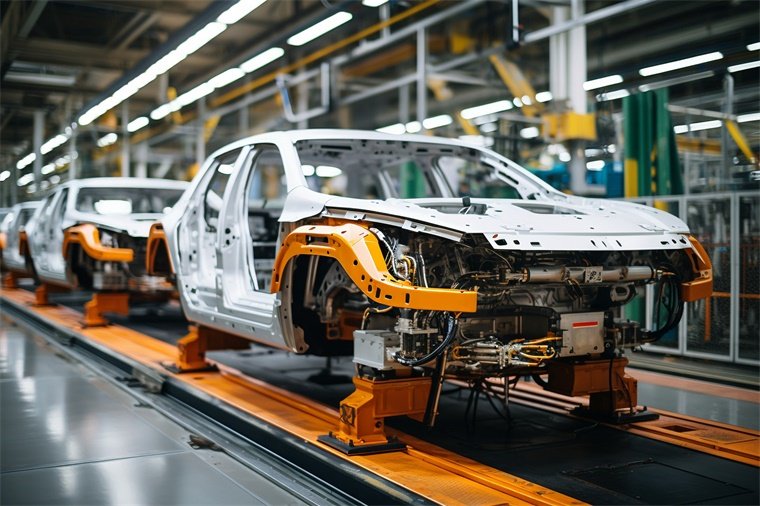
(图片来源:摄图网) 据英国《金融时报》报道,欧盟委员会计划通过即将于2月25日发布的《工业加速法案》,对享受国家购车 补贴或公共采购的电动汽车设定严格的本土化门槛。新规要求电动汽车获得政府补贴需满足70%本土化率的 要求。此举旨在通过行政手段强制提升本地制造比例,以应对中国电动汽车的强势竞争。 截至2025年11月,中国车企在欧盟纯电动汽车市场的占有率已达12.8%,创下历史新高。欧盟此举表面上 是"保护制造业基础",实则是对中国电动车性价比优势的应激反应。自2024年10月起,欧盟已对中国进口电 动汽车征收高额反补贴关税,其中,合作企业平均税率20.7%,不合作企业高达35.3%,叠加原有10%基础关 税,部分企业综合税率接近45%。然而,关税大棒并未阻挡中国车企的步伐,反而促使其灵活调整出口策 略,将重点转向插混车型。据乘联会数据,2025年1-11月中国对欧盟插混车型出口增速高达363%,有效缓 解了关税带来的出口压力。 欧盟的焦虑源于中国新能源汽车产业的全面崛起。中国不仅是全球最大新能源汽车市场,更是全球最大出口 国,自2021年起连续多年保持出口第一大国地位。数据显示,2018-2022年中国新能 ...
增长超200%!贵州凯金新能源实现跨越式发展
Sou Hu Cai Jing· 2026-02-20 06:58
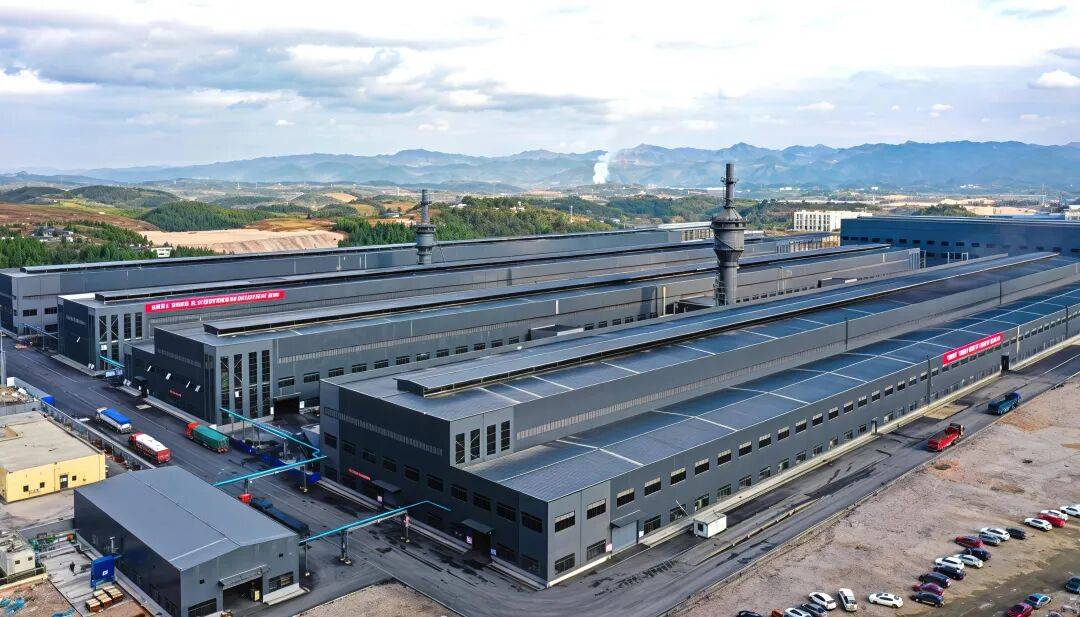
Core Insights - Guizhou Kaijin New Energy Technology Co., Ltd. has achieved a remarkable record by completing the construction and trial production of its factory in just 72 days, setting a new benchmark for project development in the Dalong Development Zone [1] - The company is projected to generate a revenue of 1.3 billion yuan in 2023, increasing to 1.91 billion yuan in 2024, and nearly 4 billion yuan by 2025, representing over 200% growth within two years [1] Company Overview - Established in 2021, Kaijin New Energy leverages the "Guangdong enterprises + Guizhou resources" model, enhancing the "4+" cooperation framework, which includes "Guangdong R&D + Guizhou manufacturing" and "Guangdong market + Guizhou products" [3] - The company has built a 100,000-ton integrated production line for high-performance lithium-ion battery anode materials, serving various applications including electric vehicles and energy storage [3] - Kaijin has formed deep partnerships with leading battery manufacturers such as CATL, BYD, Panasonic, LG, SKI, and Guoxuan High-Tech, and has been recognized as one of the top 100 private enterprises in Guizhou for two consecutive years [3] Production Capacity and Innovation - The company has upgraded its production lines through multiple rounds of technological improvements, increasing capacity by 20%-30% while reducing energy consumption by 20% [5] - By 2025, with full customer certification, the production capacity is expected to stabilize between 85%-100%, with plans to initiate a 50,000-ton graphite integrated project to further enhance capacity and aim for a revenue target of 5 billion yuan [5] - Kaijin continues to invest in R&D, achieving breakthroughs in key performance indicators for anode materials, supported by a research team of over 500 and holding 304 valid patents, including 131 invention patents [5] Employment and Social Responsibility - As production scales up, Kaijin's employment capacity has significantly increased, growing from over 200 employees in 2022 to over 900 currently, providing substantial local job opportunities [7] - The company plans to recruit over 50 outstanding graduates in 2025 to optimize its talent structure and enhance professional technical capabilities for sustainable development [7] Industry Context - The Dalong Development Zone hosts 29 new functional materials enterprises, including Kaijin, which collectively enhance the industrial ecosystem by focusing on manganese-based and sodium-based materials and comprehensive recycling [9] - The development zone aims to achieve an industrial output value of 27.276 billion yuan by 2025, reflecting an 11.03% year-on-year growth, thereby strengthening its industrial foundation and capabilities [9] - The strategic goals for the Dalong Development Zone include establishing a national-level new functional materials industrial base and creating a billion-level industrial park, focusing on attracting new enterprises and projects [9]
交银国际:1月乘用车内需阶段性承压 出口延续高增态势
Zhi Tong Cai Jing· 2026-02-20 06:23
Group 1 - The overall performance of the automotive market in Q1 2026 is relatively flat due to seasonal factors and prior consumption overextension, despite the support from the "trade-in" policy [1] - In January 2026, the retail volume of passenger vehicles in mainland China was 1.544 million units, a year-on-year decline of 13.9%, with domestic brands experiencing a 18% drop in retail volume [1] - The market share of domestic brands decreased by 3.5 percentage points to 57.5%, while joint venture brands performed better with a retail volume of 470,000 units, only a slight decline of 4% [1] Group 2 - The penetration rate of new energy vehicles (NEVs) significantly dropped to 38.6% in January, with NEV retail sales at 596,000 units, a year-on-year decline of 20% [2] - The penetration rate for domestic brand NEVs was 61.7%, down 19.2 percentage points, while luxury brands fell to 16.1%, a decrease of 23 percentage points [2] - The market share of new car manufacturers increased by 7.7 percentage points to 31.2% [2] Group 3 - The export of passenger vehicles continued to show strong momentum, with a total of 576,000 units exported in January, a year-on-year increase of 52% [3] - Domestic brands remain the main force in exports, with 476,000 units exported, a growth of 49%, while joint venture and luxury brands exported 100,000 units, achieving a growth rate of 65% [3] - The export of new energy passenger vehicles reached 286,000 units, a year-on-year increase of 103.6%, accounting for 49.6% of total exports, an increase of 12.5 percentage points [3]


新春走基层 | 百年白裤瑶寨迎娶外国新娘
Guang Xi Ri Bao· 2026-02-20 01:42
2月18日,正月初二,河池市南丹县里湖瑶族乡怀里村,白裤瑶寨里年味正浓。 抵达新郎家后,男方家人依次敬上双杯酒与肉食,接亲队伍每人饮一口酒、吃一口肉,表达接纳与 祝福的仪式简朴而庄重。 白裤瑶生态博物馆内,一句"萨瓦迪卡"让这个古朴的村寨多了一份异国的风情。一名女子站在铜鼓 前,久久没有挪步,这是她第一次见到真正的白裤瑶铜鼓。敲响铜鼓,"咚"的一声,声响穿透广场,在 山坳间回荡。女子连声说:"太神奇了!" 据寨中长者介绍,黎敬光是寨中第一个迎娶外国新娘的青年。乡亲们都说,这是"百年白裤瑶寨的 头一遭"。(龙隆 莫梦姜 覃思灵) 这位女子叫Wanwisa,中文名叫美丽,来自泰国。身旁的男子是她的丈夫——白裤瑶青年黎敬光。 日前,美丽刚刚在白裤瑶寨和黎敬光完成婚礼,成为古老瑶寨的第一位外国新娘。 两人的缘分始于泰国。他们同在比亚迪公司工作,从打羽毛球相识,靠着翻译软件沟通,慢慢走 近。"他是一个善良又热情的人,我相信我们会一直幸福的。"美丽说。 婚礼那天,接亲队伍身着传统白裤瑶盛装,手持长刀的"举刀人"为新人护路。新郎在酒店门前完 成"鸿运陀螺定终身"挑战,陀螺稳稳旋入圆圈,寓意爱情命中注定。入门后,"一路生花" ...