
卓创资讯

Search documents
江特电机拟筹划控制权变更 公司业绩连年亏损
Zheng Quan Ri Bao Wang· 2025-07-22 12:59
Group 1 - Jiangxi Special Electric Motor Co., Ltd. (referred to as "Jiangte Electric") announced a suspension of trading due to potential changes in its actual controlling shareholders, which may lead to a change in control [1] - Jiangte Electric is a leading company in the domestic mica lithium extraction industry, currently holding or controlling over 100 million tons of lithium ore resources [1] - The company's performance has been under pressure due to a continuous decline in lithium prices, reporting a total revenue of 2.103 billion yuan in 2024, a year-on-year decrease of 24.86%, and a net loss attributable to shareholders of 319 million yuan [1] Group 2 - For the first half of 2025, Jiangte Electric expects a net loss attributable to shareholders between 95 million and 125 million yuan, compared to a loss of 64.07 million yuan in the same period last year [2] - The company has increased its investment in the electric motor segment, which has shown steady growth, but the lithium salt segment has suffered losses due to the ongoing decline in lithium carbonate prices [2] - The average price of battery-grade lithium carbonate in China from January to June 2025 was 69,910 yuan per ton, down 32.36% year-on-year [2] Group 3 - Industry insiders indicate that lithium prices are showing clear bottom characteristics, with many projects struggling to sustain current price levels, potentially leading to supply-side adjustments [3] - According to a report, lithium carbonate is expected to remain in a destocking phase from June to August, exerting upward pressure on prices, but the overall market is anticipated to remain in a destocking phase throughout 2025 [3]

油价下调窗口今晚开启,淄博车主出行成本即将降低
Qi Lu Wan Bao Wang· 2025-07-15 10:36
Core Viewpoint - The retail price of refined oil in China is expected to decrease due to fluctuations in international oil prices and domestic supply-demand dynamics [2][3] Group 1: Price Adjustments - The retail price of gasoline and diesel is predicted to be lowered by 130 yuan and 125 yuan per ton respectively, translating to a decrease of 0.10 yuan for 92-octane gasoline, 0.11 yuan for 95-octane gasoline, and 0.11 yuan for 0-octane diesel [2] - After this adjustment, the national standard price for 92-octane gasoline in Zibo will drop to approximately 7.23 yuan per liter, while 95-octane gasoline will decrease to around 7.75 yuan per liter [3] Group 2: Year-to-Date Adjustments - Following this price change, the year-to-date adjustments for refined oil will reflect a pattern of "6 increases, 6 decreases, and 2 stasis," with cumulative reductions of 225 yuan per ton for gasoline and 215 yuan per ton for diesel [3] Group 3: Cost Savings for Consumers - For a household car with a 50L fuel tank, filling up with 92-octane gasoline will save approximately 5 yuan, while a small private car running 2,000 kilometers monthly will see a reduction of about 7 yuan in fuel costs before the next price adjustment [3] - A heavy-duty truck running 10,000 kilometers monthly will experience a decrease of around 195 yuan in fuel costs before the next price adjustment [3] Group 4: Market Outlook - Analysts indicate that while OPEC+ is likely to maintain significant production increases in August and September, potential supply risks may arise from new U.S. sanctions on Russia [4] - The traditional peak season for fuel demand in the U.S. continues, supporting the market, although there are uncertainties regarding the next price adjustment due to fluctuating oil prices [4]



RDA 行业点评报告:真数据变成“金资产”,RDA推动数据要素价值化
ZHESHANG SECURITIES· 2025-07-15 08:13
Investment Rating - The industry investment rating is "Positive" (maintained) [4] Core Insights - The RDA (Real Data Assets) paradigm has been introduced, emphasizing the integration of real data with physical assets, enhancing the authenticity and value of other physical assets, and promoting the capitalization of data elements [1][2] - RDA focuses on the transformation of real data into "golden assets" through blockchain technology, creating a complete path from asset registration to trading, and enhancing the interaction between data elements and capital markets [2][4] Summary by Sections RDA Paradigm and Central Bank Signals - On July 3, the Shanghai Data Exchange released a report on RDA, marking a new phase in data assetization [1] - The People's Bank of China has outlined its achievements and future plans in promoting the deep integration of digital technology and data elements [1] RDA Characteristics and Financialization - RDA consists of three stages: asset preparation, asset issuance, and asset trading, forming a complete chain for the digitalization of physical assets and financialization of data assets [2] - RDA's five characteristics—real number integration, genuine transparency, credible returns, value reconstruction, and ecological collaboration—enhance the interaction between data elements and capital markets [2] Market Potential and Application Scenarios - The RDA market has vast potential, with expected exponential growth in application demand as RDA becomes a mainstream asset type [4] - RDA's versatility allows it to be applied across various non-standard scenarios, including supply chain finance, carbon assets, industrial internet, travel, and intellectual property [4] Related Companies - Companies involved in data and physical asset integration include Jianhui Information and Jieshun Technology [4] - Blockchain foundational companies include Shanda Diwei, Jiuyuan Yinhai, and Zhongke Jiangnan [4] - Companies focused on data capitalization include Shanghai Ganglian, Toris, Hehe Information, and others [4]
RWA:真实资产走向链上世界,开启数字金融新时代
Orient Securities· 2025-07-13 14:41
Investment Rating - The report maintains a "Positive" investment rating for the computer industry, specifically focusing on Real World Assets (RWA) [4] Core Insights - RWA represents a transformative innovation in financial technology by converting real-world assets into digital assets on the blockchain, potentially leading to exponential growth in the sector [2][6] - The global RWA asset market reached $24.5 billion as of June 2025, with projections to exceed $16 trillion by 2030, indicating a significant opportunity for investment [6][18] - The report emphasizes the importance of regulatory frameworks being established globally to support the growth of RWA, with regions like Hong Kong and the EU leading the way [26][30] Summary by Sections RWA: Connecting Real World Assets to Blockchain - RWA involves the tokenization of tangible and intangible assets through blockchain technology, enhancing liquidity and reducing transaction costs [11][12] - The RWA market is rapidly expanding, with a diverse range of assets including real estate, bonds, and commodities being tokenized [15][16] RWA Issuance Process and Regulatory Framework - The RWA issuance process consists of five key steps: asset selection, legal and compliance framework establishment, technology implementation, token issuance, and ongoing management [21][23] - Various countries are developing regulatory frameworks for RWA, with Hong Kong adopting a sandbox approach to foster innovation while ensuring compliance [26][30] Expansion of Asset Classes and RWA Market - RWA assets can be categorized into cash flow, equity, and non-cash flow assets, with credit and bonds currently leading the market [35][36] - The report highlights the significant growth potential in the RWA sector, particularly in tokenized real estate and securities, which are becoming increasingly popular [46][53] RWA Industry Ecosystem - The RWA ecosystem is forming a collaborative industry chain involving asset providers, technology firms, platforms, compliance custodians, and investors [4][6] - Key players in the blockchain and fintech sectors are recommended for investment, including companies like 恒生电子 and 新国都 [2][6]



卓创资讯:二季度大米价格延续涨势 三季度或高位震荡后回落
Xin Hua Cai Jing· 2025-07-11 03:15
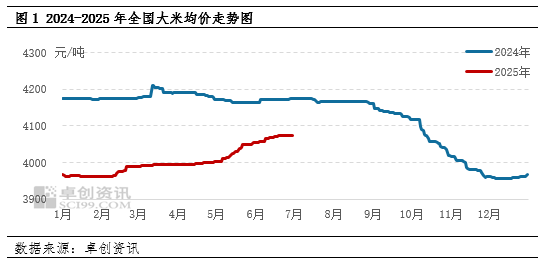
Core Viewpoint - The national average price of rice in China is experiencing fluctuations, with a notable increase in the second quarter of 2025, while the overall supply and demand dynamics suggest a potential decline in prices in the third quarter [1][8]. Price Trends - As of the end of June 2025, the national average price of rice reached 4,075 yuan per ton, marking a 2% increase from early April, but a 2.38% decrease compared to the same period in 2024 [1]. - The average price for the second quarter of 2025 was 4,031.51 yuan per ton, reflecting a 1.35% increase from the first quarter, yet a 3.44% decrease year-on-year [1]. Supply Dynamics - By the end of June, the grain sales progress in major production areas reached approximately 98%, an increase of 7 percentage points since March [3]. - In southern production areas, the remaining rice stocks have dropped to 7% or less, while northeastern areas still have 10%-15% remaining [3]. - The limited supply of rice at the grassroots level is causing difficulties for rice mills in sourcing raw materials, leading to price increases [3]. Mill Operations and Demand - The average operating rate of rice mills in the second quarter increased from 14% to 17%, a 3 percentage point rise, with an average of 16% for the quarter, which is a 1 percentage point increase from the first quarter but a 3 percentage point decrease from the previous year [5]. - Demand for rice is expected to influence prices positively, with increased orders during the Dragon Boat Festival and mid-year promotions leading to a rise in mill operations [5]. Future Price Expectations - In the third quarter, rice prices are anticipated to rise initially before experiencing a decline, with overall supply expected to be more relaxed [7]. - The demand for rice is projected to decrease in July due to seasonal factors, but may increase in August as schools reopen and festivals approach [7]. - The average price of rice is expected to stabilize in July, with a potential slight decrease, while August may see a temporary boost in demand before a more significant decline in September as new rice enters the market [8].
卓创资讯:贸易环节出货积极性提升 华北市场粮源供应增加
Xin Hua Cai Jing· 2025-07-08 03:45
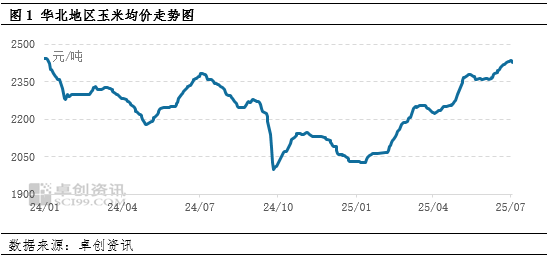
Core Viewpoint - The corn prices in the North China market have shifted from rising to falling since July 4, primarily due to increased supply from traders and stable demand, leading to a slight decrease in prices [1][3]. Group 1: Price Trends - As of July 4, the average corn price in North China was 2427.85 yuan/ton, reflecting a week-on-week decline of 0.26% and a year-on-year increase of 1.86% [1]. - The price drop is attributed to enhanced shipment activities by traders, resulting in a temporary increase in corn supply [1][3]. Group 2: Trader Behavior - Traders have been actively selling corn to lock in profits, with reported outflow profits around 300 yuan/ton as of late June and early July [3]. - Concerns over increased auction volumes of imported corn have led traders to anticipate limited price increases, prompting them to boost their selling activities [3][4]. Group 3: Supply Dynamics - The onset of the rainy season and the introduction of imported genetically modified corn have diversified the factors affecting the corn market [4]. - The auction of imported corn is expected to influence market sentiment and supply dynamics, potentially limiting price increases [4][5]. Group 4: Future Outlook - In the short term, corn prices in North China are expected to remain weak due to increased supply, but may strengthen later in July as concentrated shipments decrease [5]. - The overall supply-demand relationship in the corn market is relatively loose, with expectations of price adjustments depending on auction volumes and transaction conditions [5].
国家药监局发文,全力支持高端医疗器械创新丨南财早新闻
2 1 Shi Ji Jing Ji Bao Dao· 2025-07-04 00:02
Group 1 - The Ministry of Commerce of China has responded to reports about the U.S. President's planned business delegation visit to China, emphasizing the need for mutual respect and cooperation to enhance Sino-U.S. economic relations [1] - The U.S. Department of Commerce has notified major global chip design software suppliers, including Synopsys, Cadence, and Siemens, that the previous requirement for government licensing for their operations in China has been lifted, allowing Siemens to fully restore access for Chinese customers [1] - The National Medical Products Administration of China is focusing on the full lifecycle regulation of high-end medical devices, proposing ten key measures to support major innovations in this sector [1] Group 2 - Shanghai plans to optimize the outbound tax refund consumption environment, aiming to have over 3,000 tax refund stores and more than 10,000 outlets by 2027, with over 80% of stores offering "buy and refund" services [2] - The Ministry of Emergency Management has indicated that China has entered the main flood season, with 2 to 3 typhoons expected to impact the country in July [2] Group 3 - The total summer grain purchase in China has exceeded 50 million tons as the purchasing season peaks [3] - The State Council has issued a document to replicate and promote 77 pilot measures from the Shanghai Free Trade Zone, covering various sectors including service trade and digital trade [3] - The China Securities Regulatory Commission has announced a list of 12 companies for IPO inspections, indicating ongoing activity in the capital markets [4] Group 4 - Insurance funds have significantly increased their stake acquisitions in the capital market, with 18 instances recorded in 2025, surpassing the total for 2023 [4] - Seven brokerage firms have conducted share buybacks in the first half of the year, totaling 191 million shares and 2.03 billion yuan in buyback amounts, indicating a positive market environment for the brokerage sector [4] Group 5 - Tesla's sales in Germany fell by 60% in June, with total sales for the first half of 2025 down by 58.2% [5] - Audi has announced that it will not raise prices in the U.S. market in July, as it faces a continuous decline in sales for six consecutive quarters [5] - The U.S. stock market showed mixed results, with the S&P 500 index reaching a new record high for the year [5] Group 6 - The conversation between Russian President Putin and U.S. President Trump covered issues such as the Middle East situation and Russia-Ukraine negotiations [6] Group 7 - Guangzhou Railway Station has undergone upgrades that are expected to transform the surrounding commercial area [7] - The market for virtual assets is gaining momentum, with stablecoins becoming a hot topic in both Hong Kong and mainland stock markets [7]

全球虚拟资产中心的雄心:香港稳定币加速跑
2 1 Shi Ji Jing Ji Bao Dao· 2025-07-03 04:43
Core Viewpoint - The establishment of the "Stablecoin Regulation" in Hong Kong marks a significant step in solidifying its position as an international financial center and a hub for virtual assets, with a comprehensive regulatory framework for fiat-backed stablecoins set to take effect on August 1 [2][11]. Group 1: Market Dynamics - The stablecoin market is experiencing a surge in interest, with the total issuance exceeding $250 billion as of June 4, 2025, dominated by USDT at over $150 billion and USDC at over $60 billion [3]. - The first stablecoin, Tether (USDT), was launched in 2014, pegging 1 USDT to 1 USD, and has since become a foundational tool in cryptocurrency trading and cross-border payments [3]. - The recent IPO of Circle, the issuer of USDC, saw its stock price rise nearly 170% on its first day, reflecting growing market enthusiasm for stablecoins [4]. Group 2: Regulatory Framework - Hong Kong is the first global financial center to establish a dedicated regulatory framework for fiat-backed stablecoins, with the "Stablecoin Regulation" passed by the Legislative Council on May 21, 2023 [7][11]. - The regulation includes a licensing system for stablecoin issuers, which will be implemented on August 1, 2023, requiring compliance with core responsibilities such as reserve management and risk management [8][9]. - The Hong Kong Monetary Authority (HKMA) has initiated a "stablecoin issuer sandbox" to allow institutions to test their business models and technology under controlled conditions [9]. Group 3: Strategic Implications - The rapid implementation of the "Stablecoin Regulation" demonstrates Hong Kong's competitive awareness in the digital currency regulatory space, setting a new standard for global fiat-backed stablecoin development [2][11]. - The Hong Kong government aims to enhance market efficiency and liquidity through the "Hong Kong Digital Asset Development Policy Declaration 2.0," reinforcing its ambition to become a global digital asset center [11]. - The integration of stablecoins into the financial ecosystem is seen as a pivotal step towards the tokenization of financial assets, with potential implications for the international monetary system [12].
油价或迎“三连涨”,淄博车主出行成本再度增加
Qi Lu Wan Bao Wang· 2025-07-01 09:50
Core Viewpoint - The retail price of refined oil in China is expected to increase due to fluctuating international crude oil prices influenced by geopolitical tensions in the Middle East, with specific price adjustments set for July 1 [2][3]. Group 1: Price Adjustments - As of June 30, the reference crude oil price change rate was 5.41%, leading to an expected increase of 235 yuan per ton for gasoline and 225 yuan per ton for diesel, translating to an increase of 0.18 yuan, 0.19 yuan, and 0.19 yuan per liter for 92-octane gasoline, 95-octane gasoline, and 0-octane diesel respectively [2]. - After the upcoming price adjustment, the national standard price for 92-octane gasoline in Zibo will rise from 7.14 yuan per liter to approximately 7.32 yuan per liter, while 95-octane gasoline will increase from 7.66 yuan per liter to around 7.85 yuan per liter [3]. Group 2: Cost Implications - For a typical family car with a 50L fuel tank, filling up with 92-octane gasoline will cost an additional 9 yuan. For a small private car running 2,000 kilometers per month with an 8L/100km fuel consumption, the total fuel cost will increase by about 13 yuan before the next price adjustment window [3]. - In the logistics sector, a heavy truck running 10,000 kilometers per month with a fuel consumption of 38L/100km will see an increase in fuel costs of approximately 337 yuan before the next price adjustment window [3]. Group 3: Market Outlook - Short-term oil prices are expected to remain volatile, primarily influenced by the geopolitical situation in the Middle East, with a focus on US-Iran negotiations. However, unless a significant conflict arises, oil prices are unlikely to return to previous highs [3]. - Following a decrease in geopolitical risks, oil prices have returned to levels prior to the conflicts, but summer demand in the US is expected to provide support for prices, indicating that international oil prices may continue to fluctuate in the upcoming period [3]. Group 4: Future Price Adjustment Schedule - The next price adjustment window for refined oil will open on July 15, 2025, at 24:00 [4].

低价刺激短期消费增长 业内人士称鸡蛋价格上行拐点到来尚需时日
Zhong Guo Zheng Quan Bao· 2025-06-26 20:32
Core Viewpoint - Recent chicken egg prices in China have rebounded after a prolonged decline, with average prices rising to 7.28 yuan/kg as of June 26, 2023, reflecting a 1.82% increase from the previous week [1][2]. Supply and Demand Dynamics - The increase in egg prices is attributed to low inventory levels and stimulated consumer demand due to lower prices, despite concerns about the sustainability of this rebound due to high temperatures and seasonal factors [1][3]. - As of June 20, average inventory levels in production and circulation were reported at 0.95 days and 1.04 days, respectively, indicating a decline of approximately 10.38% and 10.34% compared to previous periods [3]. - Analysts predict that the supply of laying hens will continue to increase, with a theoretical growth of 0.75% in laying hen inventory expected in July [4][5]. Seasonal Influences - The traditional low season for chicken eggs typically occurs in June, with high temperatures and humidity affecting storage and quality, leading to a generally pessimistic outlook for the market [3][4]. - The end of the plum rain season in mid-July is anticipated to improve storage conditions, potentially leading to a recovery in prices as demand for replenishment increases [6][7]. Price Trends and Forecasts - Historical data suggests that chicken egg prices tend to rise significantly from the low point during the plum rain season to the peak during the Mid-Autumn and National Day holidays, with average increases ranging from 25% to 88% [7]. - Current market conditions indicate that while prices may stabilize at low levels in the short term, a significant rebound is expected post-plum rain season, with potential price peaks estimated between 3.8 yuan and 4.1 yuan per jin [7].