蜜雪冰城

Search documents
超购2358倍!乐舒适(02698.HK)遭散户爆抢:现金牛+豪华基石背书,下一只消费大牛股冉冉升起
Ge Long Hui· 2025-11-05 12:45
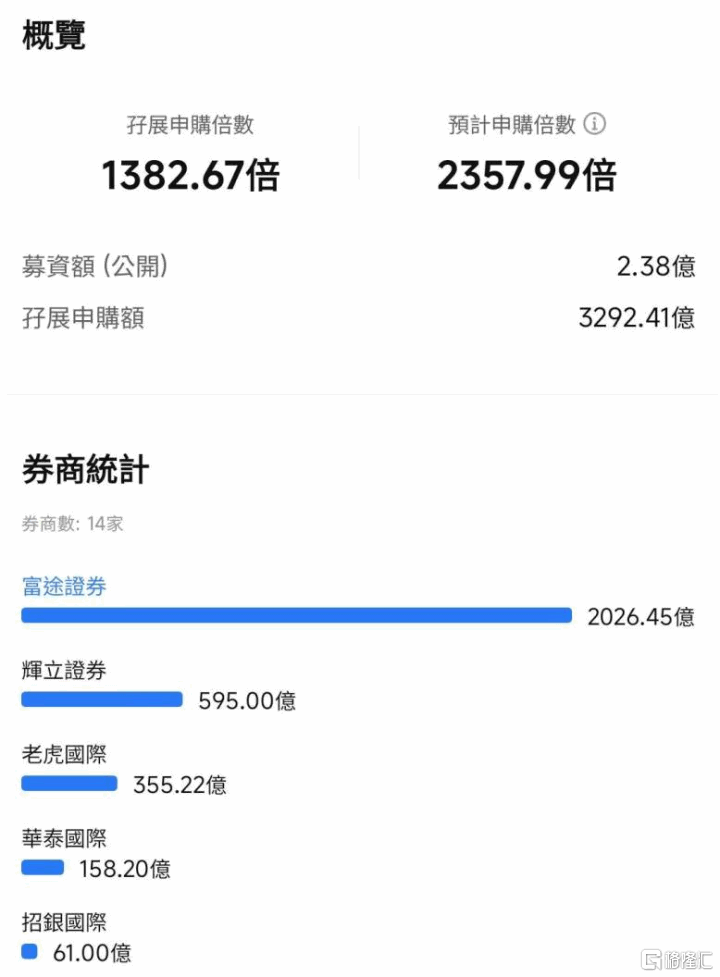
Core Viewpoint - The Hong Kong stock market is witnessing a surge in consumer enterprises, with notable IPOs like LeShuShi, which aims to become the "first African consumer goods manufacturer" listed in Hong Kong, leveraging its strong position in the African market and the hygiene products sector [1][4]. Group 1: Company Overview - LeShuShi is a multinational hygiene products company focusing on emerging markets such as Africa, Latin America, and Central Asia, primarily selling baby diapers, sanitary napkins, and wet wipes, with a leading position in the African market [4][7]. - The company has achieved significant interest in its Hong Kong IPO, with a subscription rate of 2,358 times, indicating strong demand from both institutional and retail investors [1][2]. Group 2: Market Potential - Africa is characterized as the "youngest continent," with a high potential for economic development and consumer upgrades, as evidenced by a projected 1.8% compound annual growth rate in newborn numbers from 2020 to 2024 [7][8]. - The penetration rate for baby diapers in Africa is approximately 20%, significantly lower than the 70% to 86% rates in Europe, North America, and China, presenting a vast market opportunity for LeShuShi [8][9]. Group 3: Financial Performance - LeShuShi has demonstrated strong financial performance, with revenues of $320 million, $411 million, and $454 million projected for 2022, 2023, and 2024, respectively, alongside net profits of $18.4 million, $64.7 million, and $95.1 million, showing a growth rate of 251.7% and 47.0% for 2023 and 2024 [11][12][20]. - The company's operating cash flow has also increased significantly, from $13.57 million in 2022 to $109 million in 2024, indicating robust cash generation capabilities [12][13]. Group 4: Valuation and Investment Appeal - LeShuShi's estimated P/E ratio is around 20x, which is considered reasonable given its unique positioning in the market and growth potential compared to peers [15][20]. - The company has attracted significant institutional backing, including investments from the International Finance Corporation (IFC) and prominent investment firms, enhancing its credibility and growth prospects [21][23]. Group 5: Future Growth Prospects - LeShuShi is expanding its operations into Latin America, replicating its successful business model from Africa, which is expected to drive further growth [24][25]. - The company aims to evolve into a "Procter & Gamble of Africa" by leveraging capital market support for acquisitions and expanding its product offerings through a multi-brand strategy [24][26].

中拉相“豫” 共赢未来
He Nan Ri Bao· 2025-11-04 23:48
Group 1 - The 18th China-Latin America Entrepreneurs Summit was held in Zhengzhou, showcasing the historical and cultural connections between China and Latin America [1] - Latin American guests experienced various Chinese companies, including Yutong Bus, which has a significant presence in the Latin American market with over 28,000 units sold since 2005 [1] - Yutong Bus has established the world's largest new energy bus production base, with an annual output exceeding 150,000 units, highlighting a sustainable development model [2] Group 2 - Companies like Super Fusion and China Railway Equipment are actively expanding their operations in Latin America, with over 300 cooperation cases reported [2] - The Mexican government is working on a new energy vehicle development plan, aiming to localize manufacturing and introduce new energy vehicle technology [2] - The collaboration between Chinese and Latin American companies is enhancing the quality of life for local consumers, as seen with the expansion of Mixue Ice City in Mexico [2][3] Group 3 - The strategic location of the Port of Coquimbo in Chile is set to enhance trade connections with Asia, particularly for commodities and new energy vehicles [3] - The ongoing cooperation between China and Latin America is fostering a win-win scenario, with both regions benefiting from shared resources and technology [3]

星巴克中国易主三问:谁在操盘?花落谁家?价值几许?
Jing Ji Guan Cha Bao· 2025-11-04 14:42
Core Insights - Starbucks announced the sale of up to 60% of its Chinese business to Boyu Capital, valuing Starbucks China at $4 billion [1][2] - The joint venture will be managed from Shanghai, overseeing over 8,000 Starbucks stores in mainland China [1][9] - Starbucks retains 40% ownership and continues to own the brand and intellectual property, receiving licensing fees from the new joint venture [2][3] Shareholder Structure - The joint venture is structured with Starbucks Global as the direct partner, rather than Starbucks China, indicating a shift from a wholly-owned subsidiary to a joint venture [2] - The total value of Starbucks' retail business in China is projected to exceed $13 billion, comprising the sale proceeds, retained equity, and future licensing revenues [2] Acquisition Process - The sale process began in November 2024, with various potential buyers, including over 20 institutions, expressing interest [4][5] - After multiple rounds of bidding, Boyu Capital emerged as the final buyer, with a history of significant investments in the consumer sector [6][7] Valuation Insights - The final valuation of $4 billion is considered relatively low compared to earlier estimates of $5 billion to $7.5 billion [7][8] - Factors influencing the valuation include market comparisons, business fundamentals, and cash flow projections, alongside non-numerical elements like brand strength and management quality [7][8] Future Expansion Plans - The new joint venture aims to expand Starbucks' store count in China to 20,000, leveraging local expertise to penetrate smaller cities and emerging regions [9][10] - Starbucks has faced increased competition from local brands, resulting in a decline in market share from 42% in 2017 to 14% by 2024 [10]

服务产业迎政策利好,新消费景气持续
Haitong Securities International· 2025-11-04 10:31
Group 1 - The service industry is expected to benefit from favorable policies, with a significant increase in service consumption anticipated in 2026 due to continuous policy support and demand dividends [3][7][11] - The report highlights the structural growth in emotional value and symbolic consumption, particularly in the IP toy industry, which is rapidly realizing commercial value [3][7][9] - The retail industry is undergoing a transformation towards a decentralized model, with traditional retail facing intense competition and new channels like discount stores and community supermarkets emerging [3][7][9] Group 2 - The report emphasizes the importance of optimizing holiday arrangements and integrating cultural tourism to stimulate demand, particularly for families with children [12][15] - The service consumption structure in China shows significant room for growth, with the current per capita service consumption being much lower than that of developed countries [29][30][32] - The tea and coffee beverage market in China is experiencing rapid growth, with the market size expected to increase significantly, driven by consumer demand in lower-tier cities [56][58][59] Group 3 - The online travel agency (OTA) market is projected to maintain stable profit margins, with companies like Trip.com leading in growth despite slight slowdowns in overseas markets [48][54] - The hotel industry is seeing a gradual improvement in operating data, with a narrowing decline in revenue per available room (RevPAR) expected to continue [37][40][43] - The report indicates that the demand for travel and tourism services is stable, with business travel being a significant source of fluctuations in demand [40][41]



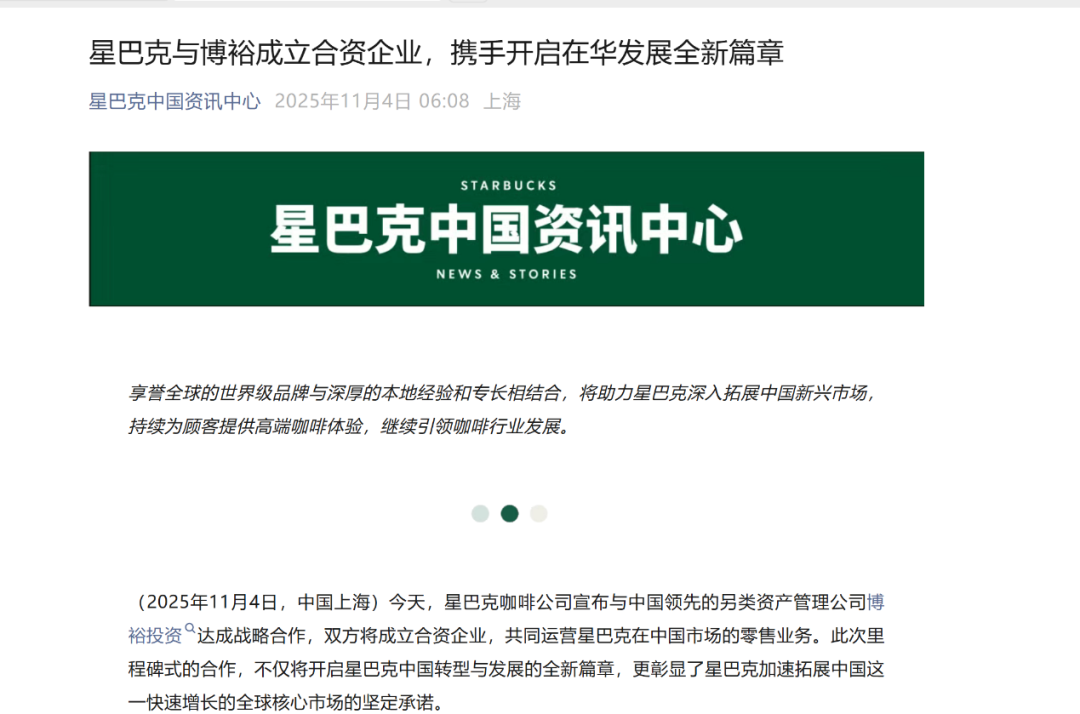
星巴克中国卖了!出售最多60%股权、剑指2万家门店
Guo Ji Jin Rong Bao· 2025-11-04 08:54
星巴克中国股权买家尘埃落定,这是星巴克入华26年来里程碑式的变动。 博裕资本成立于2011年,近年先后投资蜜雪冰城、海天味业(603288)、华润饮料等头部消费品牌,今 年5月还以百亿级资金入主北京SKP。 "博裕在本地市场的经验与专长,将有力加速星巴克在中国市场,特别是中小城市及新兴区域的拓 展。"星巴克咖啡公司董事长兼首席执行官倪睿安(Brian Niccol)这样表示。 此次股权调整,亦折射出星巴克中国应对本土竞争的战略考量。作为星巴克在全球的第二大市场,中国 市场近年面临瑞幸、库迪等本土咖啡品牌,以及新茶饮品牌的双重挤压,近两年星巴克营收和门店规模 已被瑞幸超越,客单价、销量等重要经营指标持续波动。 为扭转局面,星巴克今年加快自我变革,以降价加码非咖业务、加快门店区域下沉,并增加营销活动。 11月4日,星巴克咖啡(SBUX)正式宣布与博裕投资达成战略合作,将成立一家合资企业运营中国市 场的零售业务。此举标志着这家国际咖啡巨头在华开启"本土资本+品牌授权"的全新运营模式。 新合资公司总部将设立在上海,愿景是未来将星巴克中国门店规模拓展至20000家,目前星巴克在中国 市场门店总数为8011家。该交易需监 ...
【中拉企业家高峰会】在相识中走近 在相知中同行
Zheng Zhou Ri Bao· 2025-11-04 02:12
Core Insights - The 18th China-Latin America Entrepreneurs Summit was held in Zhengzhou, focusing on economic and cultural integration between China and Latin America [1][3] - The summit aims to enhance traditional trade cooperation and expand into emerging fields such as green economy, digital economy, and smart manufacturing [4][10] - The event showcased the potential for collaboration in various sectors, including renewable energy, agricultural technology, and infrastructure [3][4] Group 1: Event Overview - The summit was co-hosted by multiple Chinese governmental bodies and featured representatives from nearly 30 Latin American and Caribbean countries [1][3] - It included a series of activities such as opening ceremonies, plenary sessions, and specialized meetings to highlight the rich natural resources and innovative potential of Latin America [4][10] Group 2: Trade and Economic Data - In 2024, trade between China and Latin America is projected to exceed $500 billion, with China being the second-largest trading partner for the region [3] - Zhengzhou's total import and export volume reached 556.6 billion yuan in 2024, with trade with Latin America amounting to 30 billion yuan [6] Group 3: Cultural Exchange and Exhibitions - The summit featured cultural displays, including non-material cultural heritage from Henan, showcasing local cuisine and craftsmanship [7][9] - Latin American countries presented their unique industries, such as Mexico's service trade and Venezuela's coffee and chocolate sectors, emphasizing their economic growth and investment opportunities [9][10] Group 4: Industry Participation - Companies like Yutong Bus have established a significant presence in Latin America, exporting to 21 countries and holding a market share of approximately 40% [12] - The summit highlighted various Chinese products, including advanced machinery like the large-diameter shield tunneling machine, which has already been exported to Brazil [12]

星巴克官宣大消息
Zhong Guo Ji Jin Bao· 2025-11-04 01:49
Core Viewpoint - Starbucks has entered into an agreement with Boyu Capital to establish a joint venture in China, marking the first time in 26 years that Starbucks has relinquished control of its Chinese operations, aiming to enhance growth amidst fierce competition from local brands like Luckin Coffee [3][4]. Group 1: Joint Venture Details - Boyu Capital will hold up to 60% of the joint venture, while Starbucks retains 40%, with the deal based on a valuation of approximately $4 billion [4][5]. - The joint venture will be headquartered in Shanghai and will manage over 8,000 existing Starbucks stores in China, with plans to expand the store count to 20,000 in the future [4][10]. - Starbucks CEO Brian Niccol emphasized that Boyu's local market expertise will accelerate Starbucks' expansion, particularly in smaller cities and emerging regions [4]. Group 2: Market Context and Performance - Starbucks faces significant competition from local brands, particularly Luckin Coffee, which has over 24,000 stores compared to Starbucks' 8,000 [9]. - Despite the competitive landscape, Starbucks reported a 6% year-over-year increase in revenue for the fourth quarter, reaching $831.6 million, and a 5% increase for the full fiscal year, totaling $3.105 billion [9]. - The company has adjusted its strategy by implementing price reductions and localizing its menu to attract consumers, although its prices remain higher than those of competitors like Luckin [10]. Group 3: Strategic Implications - The partnership with Boyu Capital represents a deeper commitment to localizing Starbucks' strategy in the increasingly competitive Chinese coffee market [10]. - Starbucks has accelerated its expansion into lower-tier markets, nearly doubling its entry into county-level markets, with a total of 415 new stores added in the fiscal year [10]. - The shift to a "small and beautiful" store model, reducing store sizes and focusing on takeout, reflects Starbucks' adaptation to the preferences of consumers in lower-tier markets [10].
河南供应链,有多厉害?
3 6 Ke· 2025-11-04 01:08
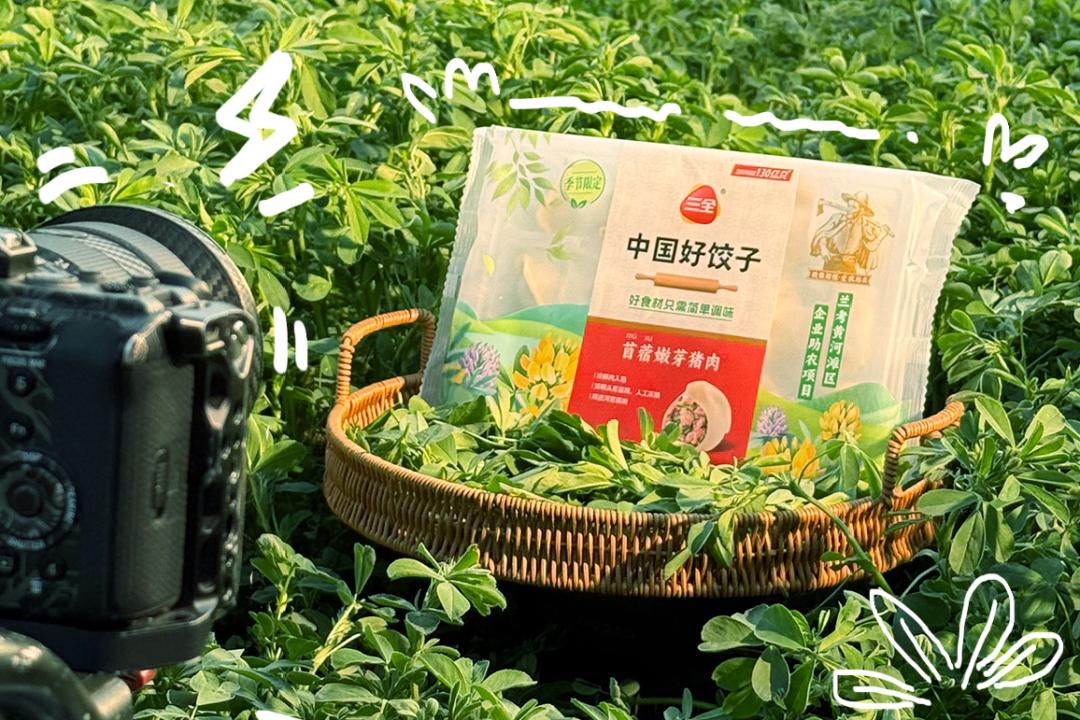
Core Insights - The article emphasizes the emergence of Henan as a significant player in China's food supply chain, transforming it into a vital hub for food production and distribution, often referred to as the "kitchen of the nation" [1][17] - Henan's food supply chain is characterized by a comprehensive and efficient network that supports local brands and facilitates their growth on a national scale [1][8] Group 1: Key Players in Henan's Food Industry - Notable food brands from Henan, such as Sanquan, Si Nian, Shuanghui, and Baixiang, have successfully penetrated national markets, showcasing the effectiveness of the local supply chain [2][3] - Sanquan Foods, established in 1992, has become a leader in China's frozen food industry, leveraging Henan's agricultural resources and transportation networks for rapid expansion [2][3] - Si Nian Foods has developed a sustainable agricultural supply chain model, establishing order-based agricultural bases that enhance the quality and standardization of local produce [5][7] Group 2: Supply Chain Advantages - Henan's food industry benefits from a complete supply chain ecosystem, with over 7,800 small and medium-sized enterprises supporting the frozen food sector [3][10] - The region's population of 100 million provides a vast market and diverse consumer demands, contributing to the competitive edge of local brands like Sanquan [3][10] - The success of the acid-spicy noodle industry in Tongxu County exemplifies Henan's ability to create a full-cycle industrial ecosystem, integrating production, logistics, and retail [8][10] Group 3: Retail and Distribution Innovations - The local supermarket chain, Pang Dong Lai, exemplifies the integration of local agricultural production with retail, achieving significant cost reductions and quality control through direct sourcing [13][14] - Pang Dong Lai's collaboration with local suppliers has led to the development of customized products, enhancing its market position and supporting local businesses [14][16] - The establishment of logistics bases, such as the JD Logistics Supply Chain Base in Xuchang, further strengthens the efficiency of Henan's food supply chain [14][16] Group 4: Government Support and Infrastructure - The Henan provincial government prioritizes the development of the food industry, aiming to build a trillion-level modern food cluster by 2025 [16] - Continuous improvements in transportation infrastructure, including a comprehensive high-speed rail and highway network, facilitate efficient logistics and distribution [16][17] - The Zhengzhou Airport Economy Comprehensive Experimental Zone enhances the region's capability to export products nationally and internationally, supporting the growth of Henan's food supply chain [16][17]



宗馥莉用“女首富宝座”到底换了些什么?
Sou Hu Cai Jing· 2025-11-03 23:13
Core Insights - The article discusses the recent changes in the rankings of female entrepreneurs in China, highlighting the fall of Zong Fuli from the top position to third place, with her wealth at 87.5 billion yuan, a significant gap from the new top female entrepreneur, Zhong Huijuan, whose wealth reached 141 billion yuan [2][12]. Group 1: Wealth Rankings and Changes - Zong Fuli has dropped to third place in the 2025 Hurun Women Entrepreneurs List, with a wealth of 87.5 billion yuan, while Zhong Huijuan and her daughter have a combined wealth of 141 billion yuan, marking a 83% increase [2][12]. - The top ten female entrepreneurs have all seen varying degrees of wealth growth, with Zong Fuli's growth being the lowest at only 8% [2][12]. Group 2: Zong Fuli's Leadership Challenges - Zong Fuli has faced significant leadership challenges, including resignations and a return to power, which have affected the brand image of Wahaha and the family's wealth [3][6][10]. - The internal power dynamics at Wahaha have shifted, with Zong Fuli's ability to control the company being compromised due to the shareholding structure, where the state-owned entity holds 46% of the shares compared to her 29.4% [7][8]. Group 3: Market Performance and Future Prospects - Wahaha's revenue for 2024 is projected to be around 70 billion yuan, reflecting a 53% year-on-year growth, but concerns remain about the company's ability to maintain this momentum amid fierce competition [11][12]. - Zong Fuli's potential to reclaim the title of the richest woman in China hinges on Wahaha's performance, requiring significant innovation and market expansion to compete with rapidly growing sectors like pharmaceuticals and technology [13][14].

星巴克中国2025财年收入31.05亿美元,同比增长5%
Sou Hu Cai Jing· 2025-11-03 08:45
Core Insights - Starbucks China reported a revenue of $3.105 billion for the fiscal year 2025, marking a 5% year-on-year increase. The fourth quarter revenue reached $831.6 million, up 6%, indicating four consecutive quarters of revenue growth [2] - Same-store sales have shown positive growth for two consecutive quarters, with a 9% year-on-year increase in transaction volume, reflecting a significant rise in consumer visit frequency [2] - The company has successfully implemented product innovation and scene upgrades, evidenced by the launch of the Golden Osmanthus series, which combined traditional cultural elements with modern coffee drinks, achieving a record single-day sales figure [2] - As of the end of the fiscal year, Starbucks China had expanded its store count to 8,011, covering 1,091 county-level cities across the country [2] Industry Trends - The competitive landscape is changing with the rise of domestic coffee brands like Luckin Coffee and new tea beverage brands such as Mixue Ice Cream and Tea, which are entering the coffee market with lower prices, challenging Starbucks' pricing strategy [2] - Coffee in China is transitioning from a "niche luxury product" associated with social status to a "daily consumer good," with consumers increasingly prioritizing convenience and cost-effectiveness, directly impacting Starbucks' "third space" model [3]