
西门子

Search documents
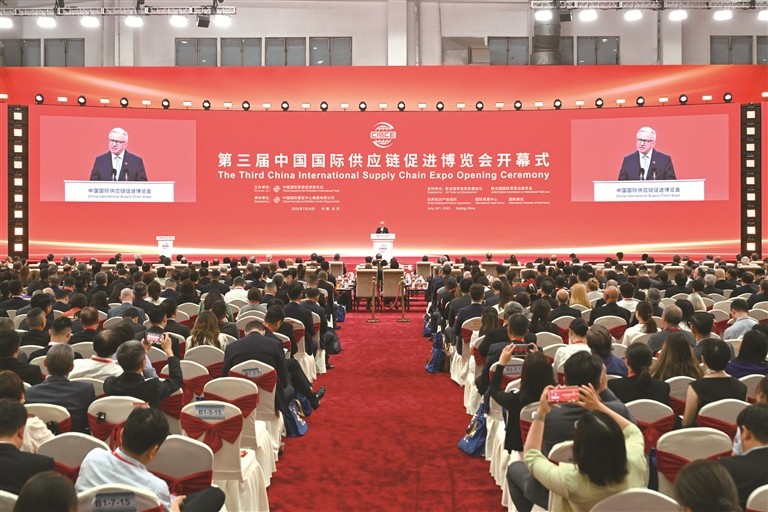
中国国际供应链促进博览会在京开幕
Zhong Guo Hua Gong Bao· 2025-07-18 02:25
Core Insights - The third China International Supply Chain Promotion Expo (Chain Expo) opened in Beijing, featuring 651 participating companies from 75 countries and regions, with over 65% being Fortune Global 500 and industry leaders, and 35% being foreign exhibitors [2][4] Group 1: Event Overview - The Chain Expo includes six major chains: advanced manufacturing, clean energy, smart automotive, digital technology, healthy living, and green agriculture, along with supply chain service exhibition areas [2][4] - Over 100 new product launches are expected during the expo, representing a 10% increase from the previous year [4] Group 2: Innovations and Features - The expo introduced an innovation chain section showcasing 14 institutions and companies that demonstrate the entire process from basic research to market feedback [4] - The first global supply chain index matrix and visual industry maps were released during the expo, along with a dedicated new product launch area [4] Group 3: Networking and Collaboration - The Chain Expo serves as a platform for linking global industry partners, with previous editions facilitating collaborations among upstream and downstream companies [5] - The upgraded "Find Friends" model 3.0 version will utilize big data and AI algorithms for better matchmaking and cloud-based connections among enterprises [5] Group 4: Industry Perspectives - Executives from multinational companies highlighted the expo's role in promoting global supply chain stability, with China being recognized as a key stabilizer and innovation source in the global industrial landscape [6]

南京在链博会上发布全球合作三大机遇
Zhong Guo Jing Ji Wang· 2025-07-17 12:44
Core Insights - The third China International Supply Chain Promotion Expo themed "IN Nanjing - Linking the World, Walking with Nanjing" was held in Beijing, showcasing Nanjing's advantages in industry, innovation, and business environment to promote global cooperation in supply chains [1][2] - Nanjing aims to build a resilient industrial ecosystem by inviting global partners to collaborate on three major opportunities: creating a resilient industrial chain ecosystem, fostering innovation-driven momentum, and expanding digital trade space [1][2] Group 1 - The event attracted participation from over 10 countries and leading companies such as Siemens, Meituan, and WeGene, highlighting Nanjing's open and dynamic business environment [1][2] - Key agreements were signed during the event, including a partnership between the China Council for the Promotion of International Trade and Jiangsu Qingtian Industrial Internet Co., aimed at advancing the digital and green transformation of trade services [1][2] - The establishment of the "China Council for the Promotion of International Trade Nanjing Training Base" was announced, which will focus on training professionals in trade investment and commercial law to support industrial chain development [1][2] Group 2 - Various departments in Nanjing promoted the city's advantages, emphasizing its investment environment, national-level development opportunities in the Jiangbei New Area, and leadership in artificial intelligence and software industries [2] - The event concluded with five major project signings in key sectors, including a global supply chain trade document delivery system with SF Express and a digital trade strategic partnership with Alibaba to assist in industrial digital transformation [2] - Nanjing is positioned as a strategic hub in the Yangtze River Economic Belt, aiming to build a global industrial chain network and share the benefits of new productivity development with partners [2]
多重力量驱动下的欧元走势大逆转
Qi Huo Ri Bao Wang· 2025-07-17 00:46
Group 1: Euro's Initial Decline and Challenges - The euro faced significant depreciation, with the exchange rate against the dollar dropping below 1.0177, marking a 20-year low due to a "triple pressure" scenario [2] - The eurozone economy, particularly Germany, is experiencing structural weaknesses, with the manufacturing PMI remaining below the growth threshold for 12 consecutive months, indicating severe economic challenges [4] - Political instability in Germany, including significant divisions over fiscal policy, has raised concerns about the eurozone's fiscal discipline [5] Group 2: Dollar's Strength and Capital Flows - The Federal Reserve's high interest rates (4.25%-4.5%) have increased the dollar's attractiveness, leading to a surge in capital inflows into the U.S. market, with $1.2 trillion entering U.S. stocks and bonds in Q4 2024, 35% of which came from the eurozone [3] - German and French institutional investors have reduced their holdings in local bonds in favor of U.S. Treasuries, further exerting downward pressure on the euro [3] Group 3: Euro's Recovery and Driving Factors - In March 2025, the euro began a strong rebound, characterized by a "V" shaped recovery, driven by changes in monetary policy expectations, fiscal stimulus measures, and a crisis of confidence in the dollar [6] - The European Central Bank's interest rate cuts and the narrowing of the interest rate differential between the U.S. and Europe have led to a reallocation of global capital towards eurozone bonds, supporting the euro's recovery [8] Group 4: Structural Issues and Long-term Challenges - Despite the euro's rebound, structural issues such as industrial hollowing and an aging population continue to pose long-term challenges for the eurozone economy [20][19] - The eurozone's energy transition and fiscal coordination difficulties hinder effective economic policy, impacting the euro's stability [21] Group 5: Geopolitical and Market Sentiment Influences - Geopolitical events and market sentiment significantly affect the euro's exchange rate, with trade tariffs and central bank policy shifts amplifying volatility [16][17] - The eurozone faces external competition from the U.S. and China, which poses additional challenges to its economic position in the global market [22]
港股概念追踪 | 规模空前!2025世界人工智能大会举办在即 哪些公司将受益?(附概念股)
Zhi Tong Cai Jing· 2025-07-16 23:39
Core Viewpoint - The 2025 World Artificial Intelligence Conference (WAIC) will be held in Shanghai from July 26 to July 28, focusing on AI infrastructure, intelligent terminals, and AI-enabled new industrialization among other key areas [1][2]. Group 1: Event Overview - The WAIC will feature an unprecedented exhibition scale, with over 70,000 square meters of exhibition space and participation from more than 800 companies, over 50% of which are from outside China [1]. - The event will showcase over 3,000 cutting-edge exhibits, including 40 large models, 50 AI terminal products, and 60 intelligent robots, marking the largest scale in the history of the conference [1]. Group 2: Product Launches and Innovations - The conference will highlight innovative products in three main areas: model applications, embodied intelligence, and smart hardware, with numerous first-time launches [2]. - Notable product launches include Siemens' Industrial Copilot, Tesla's Tesla Bot, and various AI applications from major companies like Google, Alibaba, and Tencent [2]. Group 3: Industry Insights - Analysts from Dongwu Securities and Guojin Securities indicate that AI applications are experiencing rapid growth, with significant cost reductions and increasing penetration rates, suggesting a transition into a fast growth phase for the industry [3][4]. - The emergence of AI Agents is seen as a pivotal moment in the software revolution, reshaping various aspects of work and life [4]. Group 4: Company Developments - Baidu has announced the open-sourcing of its Wenxin large model series, marking a significant advancement in the large model field [5]. - Alibaba is collaborating with China FAW to develop a dedicated large model for the automotive industry, aiming to enhance efficiency and drive business transformation [5]. - SenseTime plans to launch its new productivity tools and an embodied intelligence platform during the conference [5]. Group 5: Market Predictions - Horizon Robotics is projected to achieve a compound annual growth rate of 57.5% from 2025 to 2027, with expectations of reaching breakeven by 2028 [6]. - The company is anticipated to capture 54% of the market share for advanced driver-assistance systems (ADAS) in China by 2027, leveraging local automotive chip advantages [6].


应流股份20250716
2025-07-16 15:25
Summary of Conference Call for Yingliu Technology Industry Overview - The demand for gas turbines, optical modules, and PCBs is driven by large-scale investments in overseas data centers, positively impacting related US stock sectors [2][4] - The domestic military aviation engine sector is expected to see growth in new model deliveries despite 2025 being a small year for military products [2][6] - The domestic civil aviation engine market exceeds 100 billion RMB, currently reliant on imports, with domestic engines like the Changjiang series maturing [2][6][7] - The global market for civil aviation engines is highly concentrated, dominated by GE Aviation, Pratt & Whitney, and Rolls-Royce, with high demand but limited delivery capacity [2][7] Company Insights - Yingliu Technology has diversified its operations across military engines, gas turbines, oil and gas, mining, and nuclear power, establishing a platform development model [3][9] - The company’s order backlog increased from 150-200 million RMB at the end of Q3 last year to 1.2 billion RMB by the end of Q1 this year, indicating strong demand [3][9] - Recent long-term contracts with Siemens and other overseas clients extend production schedules to 2028-2029, expected to significantly boost future performance [3][10] Financial Performance - The company has maintained high R&D investment levels since 2017, averaging 300-400 million RMB annually, with capital expenditures rapidly increasing to 4.5 billion RMB [3][11] - The nuclear power business has shown rapid growth, with expectations of significant order releases in the next two to three years, maintaining a growth rate of around 20% [3][12][14] Future Prospects - The company is entering a harvest period, with a strong order book and expected profitability improvements in Q3 [3][13] - The low-altitude sector is being fully developed, with large orders signed in the first half of the year, anticipated to turn from losses to profits in the coming years [3][15] - The nuclear fusion business is also being explored, with collaborations for materials and equipment development, providing additional growth potential [3][14] Key Contracts and Collaborations - Significant contracts signed with major players like Siemens and GEV reflect the increasing demand for gas turbines and the need for domestic companies to support main engine manufacturers [3][8][10] Conclusion - Yingliu Technology is well-positioned for growth with a diversified portfolio, strong order backlog, and strategic investments in R&D and capital expenditures, indicating a positive outlook for future performance across various sectors [3][13][15]

医疗设备月度中标梳理-20250716
Tianfeng Securities· 2025-07-16 09:14
Investment Rating - The industry investment rating is "Outperform the Market" [2][45] Core Insights - The total bidding amount for medical devices in June 2025 reached 12.618 billion yuan, representing a year-on-year growth of 30% and a total of 83.817 billion yuan for the first half of 2025, with an overall year-on-year increase of 64% [3][9][10] Summary by Sections Medical Device Bidding Overview - The medical device bidding amount in June 2025 was 12.618 billion yuan, showing a year-on-year increase of 30% and a quarter-on-quarter decrease of 6% [9] - The cumulative bidding amount for the first half of 2025 was 83.817 billion yuan, with a year-on-year growth of 64% [10] Domestic Brands - Mindray Medical's bidding amount in June 2025 was 623 million yuan, up 15% year-on-year, with a total of 4.258 billion yuan for the first half of 2025, reflecting a 64% increase [16][18] - United Imaging's June 2025 bidding amount was 769 million yuan, a 35% year-on-year increase, totaling 4.841 billion yuan for the first half of 2025, up 53% [13][14] - Aohua Endoscopy's June 2025 bidding amount was 27 million yuan, down 46% year-on-year, with a total of 235 million yuan for the first half of 2025, up 57% [19][20] - Kaili Medical's June 2025 bidding amount was 102 million yuan, a 73% year-on-year increase, totaling 642 million yuan for the first half of 2025, up 115% [22][23] - Shanwaishan's June 2025 bidding amount was 30 million yuan, a 222% year-on-year increase, totaling 186 million yuan for the first half of 2025, up 211% [25][26] - Wandong Medical's June 2025 bidding amount was 222 million yuan, a 416% year-on-year increase, totaling 728 million yuan for the first half of 2025, up 107% [28][29] Imported Brands - Philips' June 2025 bidding amount was 658 million yuan, down 4% year-on-year, with a total of 4.570 billion yuan for the first half of 2025, up 61% [31][32] - Siemens' June 2025 bidding amount was 978 million yuan, a 48% year-on-year increase, totaling 6.074 billion yuan for the first half of 2025, up 60% [34][35] - GE's June 2025 bidding amount was 1.447 billion yuan, a 49% year-on-year increase, totaling 6.736 billion yuan for the first half of 2025, up 56% [37][38]





机械行业专题
2025-07-16 06:13
Summary of Conference Call Records Industry Overview - The discussion primarily revolves around the impact of AI on the mechanical equipment industry, particularly focusing on three key areas: the emergence of new industries due to AI, the amplified demand for existing equipment, and the transformation of competitive dynamics within traditional industries [1][15]. Key Points and Arguments 1. **Emergence of New Industries**: AI has led to the creation of new sectors, such as the cloud robotics industry, which is a direct result of AI advancements [1]. 2. **Increased Equipment Demand**: The demand for traditional equipment like gas turbines, steam turbines, and refrigeration units has significantly increased due to AI [1]. 3. **Transformation of Competitive Landscape**: AI has empowered traditional industries, leading to notable changes in competition and operational dynamics [1]. 4. **Market Resilience**: The overall market has shown resilience, with a sustained increase in activity levels despite previous adjustments in capacity and macroeconomic conditions [2]. 5. **Technological Convergence**: The industry is currently in a thematic phase rather than a growth phase, with technology still evolving and not yet fully converged [3]. 6. **Challenges for Traditional Companies**: Companies in the mechanical sector, such as Sanhua and others, are struggling to reach new highs without fundamental improvements in the industry [4]. 7. **M&A Activity**: Recent mergers and acquisitions, particularly in the robotics sector, are becoming a focal point for growth, reminiscent of past cross-border M&A trends [5]. 8. **Industry Growth Metrics**: The human-robotics sector is projected to reach a scale of over 20 billion, a significant increase from virtually non-existent levels in 2022 [6]. 9. **Labor Market Insights**: The textile and apparel industry has a substantial wage expenditure, estimated at 5 to 6 trillion RMB annually, highlighting its reliance on human labor [8]. 10. **AI's Role in Textile Automation**: AI advancements are enabling automation in the textile industry, which was previously heavily reliant on manual labor, thus changing the competitive landscape [9][10]. 11. **Investment Opportunities**: Companies like Jietek are expected to see significant profit growth due to AI integration, with projections of over 1 billion in profit this year [11]. 12. **Temperature Control Equipment**: Companies involved in temperature control, such as those providing cooling solutions, are expected to see growth driven by AI applications [13][14]. 13. **Gas Turbine Market**: The gas turbine market is anticipated to grow, with companies like Yingliu expected to increase their production capacity significantly [14][15]. 14. **Overall Investment Climate**: The investment landscape remains promising, with a focus on companies that are leveraging AI to enhance their operational efficiency and market position [16]. Additional Important Insights - The discussion emphasizes the importance of understanding the evolving dynamics within the mechanical equipment industry as AI continues to reshape traditional business models and operational efficiencies [1][15]. - The potential for significant profit growth in companies that adapt to AI technologies is highlighted, indicating a shift in investment focus towards those embracing innovation [11][16].
从限售到“解封”:黄仁勋访华,H20回归,英伟达为何力保中国市场?
Mei Ri Jing Ji Xin Wen· 2025-07-15 13:06
Core Viewpoint - Nvidia is resuming the sales of its H20 GPU in China and launching a new GPU compatible with the Chinese market, emphasizing the importance of AI for global business and society [1][2]. Group 1: Sales Resumption and Market Strategy - Nvidia's CEO Jensen Huang has made significant efforts to restore H20 sales, meeting with policymakers in Washington to discuss the company's contributions to job creation and AI infrastructure in the U.S. [1][2]. - The resumption of H20 sales is seen as a strategic move to stabilize relationships with major clients in cloud computing and prevent further market share loss [1][3]. - The introduction of the RTX PRO GPU, marketed as ideal for digital twin AI in smart factories and logistics, allows Nvidia to avoid sensitive high-computing training scenarios while tapping into China's industrial digital transformation [1][3]. Group 2: Financial Impact and Market Expectations - Nvidia faced a financial loss of $4.5 billion in Q1 of fiscal 2026 due to H20's export restrictions, with $4.6 billion in sales and $2.5 billion in unfulfilled orders [3]. - The stock price of Nvidia rose to $168 following the announcement of H20's sales resumption, indicating market alignment with the company's strategic direction [3][4]. Group 3: New Product Development - Nvidia is also launching a new product, the B30, based on the RTX PRO 6000 Blackwell, designed to comply with U.S. export regulations by removing advanced technologies like HBM and NVLink [6][7]. - The B30 is expected to cater to AI inference and edge deep learning applications, although it may not meet the high-performance requirements for large model training due to the removal of HBM [7][8]. Group 4: Competitive Landscape and Domestic Alternatives - Domestic competitors are increasingly adopting local AI chips, with major Chinese tech firms testing homegrown alternatives to reduce reliance on Nvidia products amid U.S. export controls [8][9]. - The emergence of local GPGPU solutions is seen as a response to potential supply chain disruptions, with companies like Alibaba and Tencent developing their own AI chips [9].

是该好好收拾了,中方转守为攻,通电全球,一口气对三十国加税
Sou Hu Cai Jing· 2025-07-15 11:33
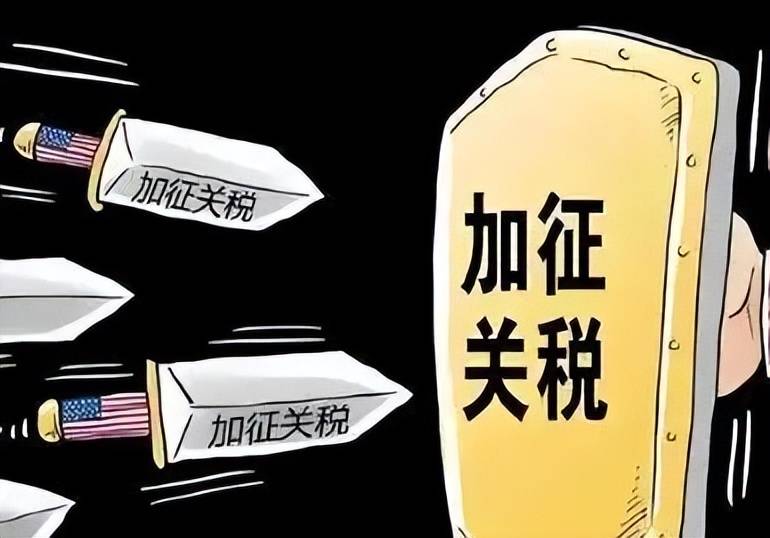
Core Viewpoint - China has shifted from a passive defensive strategy in international trade to an active offensive approach, responding decisively to unfair treatment and trade pressures from multiple countries [1][3][22]. Trade Measures - On July 1, China announced anti-dumping duties on stainless steel products imported from 30 countries, including the EU, Indonesia, and South Korea [4][5]. - The move is seen as a direct response to previous trade actions against China, such as the EU's imposition of a 13.2% anti-dumping duty on Chinese tinplate products [5][15]. Strategic Implications - The decision to impose tariffs on multiple countries simultaneously signals a significant change in China's role in international trade, indicating a transition to a more assertive stance [3][22]. - China is leveraging its strong industrial base in stainless steel production, which accounts for a substantial portion of the global market, to enhance domestic competitiveness [15][18]. Market Dynamics - The tariffs are designed to apply differentiated rates, particularly targeting South Korean companies, which may face punitive tariffs as high as 103.1%, while leaving some room for cooperation [18]. - Countries like Indonesia, which rely on their natural resources, are attempting to use their position to gain political leverage, but they may underestimate China's control over critical resources like nickel [10][19]. Global Reactions - The EU and UK are facing significant supply chain risks due to China's actions, prompting a reevaluation of their trade relationships with China [18]. - South Korean companies are experiencing stock declines and are considering relocating operations to mitigate risks associated with China's trade policies [18]. U.S.-China Relations - The U.S. has notably been excluded from the recent tariff list, indicating a potential shift in its approach towards China, as evidenced by recent actions to ease restrictions on exports to China [5][19][21]. - This strategic omission suggests that the U.S. may be seeking to improve relations with China, recognizing the importance of cooperation in the context of global supply chains [19][21].
(经济观察)第三届链博会将启 特色突出呈三大亮点
Zhong Guo Xin Wen Wang· 2025-07-15 04:43
中新社北京7月15日电 题:第三届链博会将启 特色突出呈三大亮点 中新社记者 王梦瑶 尹倩芸 第三届中国国际供应链促进博览会(简称"链博会")将于7月16日开幕。在当前全球供应链格局加速重构 背景下,今年链博会特色更加突出,呈现三大亮点。 参展情况超预期美国参展商增长 本届链博会参与热情较往届显著提升。官方数据显示,超650多家中外企业和机构将参展,覆盖75个国 家、地区和国际组织。世界500强和行业龙头企业占比超过65%。境外参展商占比达到35%,其中欧美 参展商达到境外参展商总数的50%。 值得注意的是,美国参展商数量比上届增长15%,继续位列境外参展商数量之首,参展面积增长10%。 中国美国商会、美国大豆出口协会、美国谷物协会等机构有关负责人表示,中国是非常重要的市场,美 国企业愿持续投资中国,参与中国经济增长和创新,与中国市场和发展共同进步。 中国贸促会副会长于健龙说,各方参展参会情况超出预期。在当前国际形势变乱交织、经济全球化遭遇 逆流背景下,这是对链博会投下的信任票,也是对中国经济发展投下的信任票。 一些国内重要产业集聚地的企业将组团参展,如宇树科技等新锐企业将组成浙江人工智能产业链参展, 全球人 ...