九毛九

Search documents
九毛九(9922.HK):2季度运营压力持续 下调盈利预测 维持中性评级
Ge Long Hui· 2025-07-22 19:30
Group 1 - The overall operational pressure in Q2 continues, with same-store sales showing a downward trend. The average daily sales for the company's core brands, including Tai Er, Song Hotpot, and Jiu Mao Jiu, decreased by 13.7%, 14.3%, and 18.5% year-on-year respectively, indicating a competitive environment in the restaurant industry [1][2] - Despite the pressure on same-store performance, the decline in same-store sales for Tai Er has narrowed from 21.2% in Q1 to 13.7% in Q2, showing signs of operational adjustments taking effect. The average transaction value for Tai Er and Jiu Mao Jiu increased by 1.5% and 1.8% respectively, while Song Hotpot saw a decrease of 2.0% [2] - The company has adjusted its revenue and profit forecasts for 2025-27, projecting revenue between 5.61 billion to 6.34 billion RMB and net profit between 150 million to 300 million RMB, reflecting a reduction of approximately 12-31% [3] Group 2 - The company has reduced its total number of stores to 729, with a net decrease of 51 stores in Q2, primarily due to structural adjustments of inefficient locations. Tai Er has implemented a new model for 57 of its restaurants, which is expected to enhance operational performance in the second half of the year [2] - The target price has been adjusted to 2.79 HKD, maintaining a neutral rating based on a projected price-to-earnings ratio of 19 times, rolling to the 2026 forecast earnings per share [3]
九毛九(09922):九毛九(9922HK)
BOCOM International· 2025-07-22 09:18
Investment Rating - The report maintains a neutral rating for the company, with a target price adjusted to HKD 2.79, indicating a potential decline of 3.1% from the current price of HKD 2.88 [2][17]. Core Insights - The company continues to face operational pressures in Q2, leading to a downward revision of profit forecasts for 2025-2027. The same-store sales for key brands have shown a decline, with the company adjusting its strategies to stabilize performance [6][19]. - Despite the challenges, there are signs of improvement in the core brand's performance, with expectations for marginal recovery in the second half of the year as store adjustments take effect [6][19]. - The company has reduced its store count by 51 in Q2, primarily due to structural adjustments of underperforming locations, which is expected to enhance operational efficiency moving forward [6][19]. Financial Overview - Revenue projections for 2025 have been revised down to RMB 5,615 million, reflecting a decrease of approximately 6.6% from previous estimates. Net profit forecasts have also been adjusted down to RMB 153 million for 2025, a reduction of 31.3% [5][7][19]. - The company’s financial metrics indicate a significant drop in earnings per share (EPS) for 2024, with a forecast of RMB 0.04, down from RMB 0.31 in 2023. The EPS is expected to recover gradually in subsequent years [5][19]. - The report highlights a stable gross margin of around 64.3% for 2025, although operating and net profit margins are projected to decline slightly [7][21].
港股午评|恒生指数早盘涨0.25% 电力设备板块强势
智通财经网· 2025-07-22 04:09
Market Overview - The Hang Seng Index rose by 0.25%, gaining 62 points to close at 25,057 points, while the Hang Seng Technology Index increased by 0.07% and the Hang Seng Biotechnology Index rose by 1.69%. The early trading volume in Hong Kong stocks reached HKD 137.8 billion [1]. Company Performance - China Longgong (03339) surged over 30%, with expected net profit growth of 29% to 45% year-on-year for the first half of the year [1]. - Harbin Electric (01133) increased by over 8%, anticipating a net profit of approximately RMB 1.02 billion for the mid-term [2]. - Gold stocks rose collectively with the increase in gold prices, with Chifeng Jilong Gold Mining (06693) up by 4.29% and Tongguan Gold (00340) up by 2.48% [3]. - Zhenjiu Lidu (06979) rose by 3.48%, following the recent launch of its new product, Dazhen Zhenjiu, with market attention on upcoming policy catalysts [4]. - NIO Inc. (09866) increased by 4.47%, driven by market optimism regarding the sales of the L90 model, with institutions noting strong competitive product capabilities [5]. - Sai Crystal Technology (00580) rose nearly 8%, with expected net profit growth of nearly 1.7 times for the first half, and the acquisition of Hunan Hong'an is expected to achieve high complementarity [5]. - Tianqi Lithium (09696) rose over 6% and Ganfeng Lithium (01772) increased by 7.4% following a sudden production halt at Qinghai Salt Lake Industry [6]. - Nine Mao Jiu (09922) surged over 9%, with a significant narrowing of the year-on-year decline in same-store average daily sales for the second quarter [7]. - Fufeng Group (00546) rose by 9%, expecting a mid-term net profit increase of RMB 700 million, and plans to accelerate overseas capacity construction [8]. - Dongfeng Motor Group (00489) increased by over 10%, with the company's self-owned passenger vehicle business showing signs of improvement in profitability [9]. - Meizhong Jiahe (02453) fell over 4% in early trading, planning a discounted 17% placement to raise approximately HKD 260 million for hospital construction and AI business [10].
业绩预告陆续披露,企业持续积极布局
GOLDEN SUN SECURITIES· 2025-07-21 10:54
Investment Rating - The industry investment rating is maintained as "Add" [5] Core Viewpoints - The retail sector shows a stable overall performance in 2025, with some companies demonstrating positive trends. The second quarter earnings forecasts are being disclosed, and companies are actively positioning themselves for growth [8] - The new consumption landscape remains vibrant, with key players such as Gu Ming, Cha Bai Dao, and others expected to perform well [8] - Retail transformation continues, with traditional retailers like Yonghui Supermarket and others making significant adjustments to their operations [8] Summary by Sections Retail Sector - In June 2025, the total retail sales of consumer goods reached 42,287 billion yuan, with a year-on-year growth of 4.8%, which is in line with expectations. Excluding petroleum and automotive factors, the retail sales of consumer goods amounted to 35,702 billion yuan, with a year-on-year growth of 4.1% [1] - Various categories showed different growth rates, with essential goods like food and beverages increasing by 8.7%, while optional categories like furniture and automobiles experienced a slowdown [1] Tourism and Hospitality - The tourism sector is expected to see a decline in visitor numbers and revenue growth in Q2 due to various factors, but companies are improving their capabilities through IP, products, and marketing [2] - The hotel sector is showing signs of improvement, with Jin Jiang Hotels forecasting a net profit of 3.2-3.6 billion yuan for Q2, despite a year-on-year decline of 50.7%-44.7% [2] Food and Beverage - Some restaurant brands have shown positive performance in June, with Guoquan expecting a core operating profit of 1.8-2.1 billion yuan for H1 2025, reflecting a year-on-year increase of 44%-68% [3] - The tea beverage sector is anticipated to benefit in Q3, maintaining relatively high growth rates [3] Retail Transformation - Traditional retail companies are undergoing significant transformations, with Yonghui Supermarket adjusting 124 stores and closing 227 in the first half of 2025 [4] - Specialized chains like mother and baby stores and Miniso are expected to see improved growth rates in Q2 [4] Cross-Border Trade - The small commodity city in Yiwu has seen strong demand in the潮玩 and skincare sectors, with bidding results exceeding expectations [7] - The overall growth rate of the cross-border sector may experience a slight decline due to varying tariff impacts [7] Investment Recommendations - Key companies to watch include Yonghui Supermarket, Chongqing Department Store, and others in the retail transformation space [8] - In the tourism sector, companies like Xiangyuan Cultural Tourism and Songcheng Performance are expected to perform well [8]
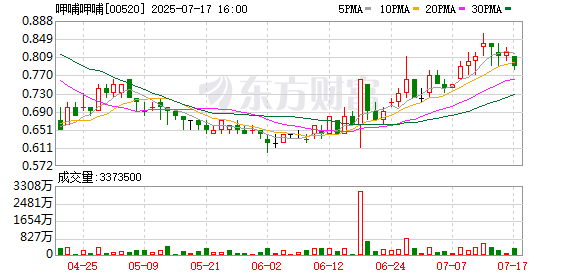
呷哺呷哺启动“凤还巢”计划,“分蛋糕”能否成为“良药”?
Bei Ke Cai Jing· 2025-07-21 09:38
Core Insights - The company Xiapu Xiapu has launched the "Feng Huan Chao" plan, allowing internal employees to become partners in new stores, with 21 partners already signed and 5 stores operational [1][6][8] - The shift to a partnership model is seen as a strategic move to regain growth amidst a competitive market, with plans to add 50 to 100 partner stores annually [1][2][8] - The restaurant industry is transitioning from direct management to a combination of partnership and franchise models, indicating a search for new growth drivers [3][7] Company Strategy - The "Feng Huan Chao" plan employs a "three-party shared equity" model, where partners, the company, and executives share ownership of the stores, promoting risk-sharing and profit-sharing [4][6] - The company provides comprehensive support to partners, including brand authorization, supply chain assurance, and operational guidance, allowing them to focus on optimizing business performance [5][6][8] - The plan aims to align the interests of frontline employees with store performance by offering a profit-sharing model, with 30% to 40% of store profits allocated to operational staff [6][8] Industry Context - The hot pot market is projected to reach a size of 617.5 billion yuan in 2024, with a growth rate of 5.6%, but the pace is slowing compared to previous years [2] - The number of hot pot restaurants is expected to peak at 535,500 in Q3 2024 before declining, reflecting a shift in consumer spending habits [2] - The trend of partnership models in the restaurant industry is gaining traction, with successful examples like Mi Cun Ban Fan and Xi Jia De demonstrating the potential for rapid expansion [3][7]
信达国际控股港股晨报-20250721
Xin Da Guo Ji Kong Gu· 2025-07-21 02:12
Market Overview - The Hang Seng Index is challenging the 25,000 point mark, with active trading and a positive risk appetite despite limited corporate earnings improvement [2][6] - The market is awaiting catalysts such as potential China-US summits or unexpected policies from mainland China to drive further gains [2] Sector Focus - The focus for today includes the release of China's one-year and five-year Loan Prime Rate (LPR) [3] Macro Focus - The Chinese government is encouraging foreign investment through various measures to enhance project service guarantees and optimize land allocation [7] - Foreign Direct Investment (FDI) in China decreased by 15.2% year-on-year in the first half of 2025, with a notable decline in the manufacturing sector [7] - The Ministry of Finance announced plans for a more proactive fiscal policy in the second half of the year [7] - The People's Bank of China maintained the LPR at 3% for one year and 3.5% for five years, aligning with market expectations [7] - The Ministry of Industry and Information Technology is promoting innovation in future industries, including humanoid robots and digital transformation in various sectors [7] Corporate News - Xinyi Solar's product prices have dropped, leading to an expected profit decline of 56%-66% for the first half of the year [4] - Meituan, JD.com, and Ele.me were summoned by the market regulator to ensure rational competition in the food delivery sector [8] - HSBC is reportedly dissolving a team focused on managing geopolitical risks despite increasing threats [9] - Ant Group is collaborating with Citibank to enhance foreign exchange risk management using AI technology [9] - Meituan and Alibaba's Taobao are engaged in a price war, reportedly spending 1.6 billion RMB on promotions [9]
港股餐饮股震荡走低,奈雪的茶(02150.HK)跌超4%,百胜中国(09987.HK)跌超2%,九毛九(09922.HK)跌超1%。
news flash· 2025-07-21 01:54
Group 1 - The Hong Kong restaurant stocks experienced a downward trend, with Nayuki's Tea (02150.HK) falling over 4% [1] - Yum China (09987.HK) saw a decline of more than 2% [1] - Jiumaojiu (09922.HK) dropped over 1% [1]
21特写|“中国味”席卷东南亚:品牌中餐如何破解出海难题?
2 1 Shi Ji Jing Ji Bao Dao· 2025-07-18 12:35
Group 1 - The core viewpoint of the articles highlights the rapid expansion of Chinese restaurant brands in Southeast Asia, marking a new era of internationalization for Chinese cuisine [1][2][16] - Chinese restaurant brands have opened over 6,100 stores in Southeast Asia by the end of 2024, a significant increase from approximately 1,800 stores in 2022, indicating a growth of more than three times [1][5] - The Southeast Asian restaurant market has shown a year-on-year growth of 4.6%, reaching a scale of $132.9 billion, which is only 17% of the Chinese market size [5][6] Group 2 - The competitive landscape for Chinese restaurants in Southeast Asia is intensifying, with challenges such as supply chain issues, regulatory barriers, and cultural differences affecting consumer habits [2][11] - Localization is crucial for the success of Chinese restaurant brands abroad, as the degree of localization directly impacts the scalability of their overseas operations [2][17] - The preference for Chinese cuisine among Southeast Asian consumers is growing, with popular dishes like hot pot and dim sum gaining traction, reflecting a shift from traditional perceptions of Chinese food [3][12] Group 3 - Brands like Haidilao and Zhang Liang Spicy Hot Pot have successfully expanded into Southeast Asia, with Zhang Liang opening over 60 stores in the region, demonstrating the potential of the market [4][14] - The demographic factors in Southeast Asia, such as a large population and a significant Chinese community, contribute to the high demand for Chinese cuisine [4][5] - The restaurant industry in Southeast Asia is characterized by a high percentage of consumer spending on food and beverages, with Indonesia reaching 48.8% [6][11] Group 4 - The supply chain is a critical factor for the success of Chinese restaurants in Southeast Asia, with many brands adopting a hybrid approach of local and imported ingredients to ensure quality and compliance with local regulations [10][11] - The rapid expansion of Chinese restaurant brands is accompanied by a wave of closures, particularly in Singapore, where the market is becoming saturated [12][13] - Successful Chinese brands in Southeast Asia are those that effectively combine global standards with local adaptations, ensuring they resonate with local consumers [16][17]
智通港股空仓持单统计|7月18日
智通财经网· 2025-07-18 10:34
Group 1 - The top three companies with the highest short positions are WuXi AppTec (02359), CATL (03750), and COSCO Shipping Holdings (01919), with short ratios of 23.99%, 17.39%, and 14.14% respectively [1][2] - The companies with the largest increase in short positions are Giant Biogene (02367), WuXi AppTec (02359), and Henderson Land Development (00012), with increases of 2.05%, 1.43%, and 1.41% respectively [1][2] - The companies with the largest decrease in short positions are SF Holding (06936), Far East Horizon (03360), and Jiumaojiu International Holdings (09922), with decreases of -1.94%, -1.22%, and -1.18% respectively [1][3] Group 2 - The top ten companies with the highest short ratios include Ganfeng Lithium (01772) at 13.09%, Xiexin Technology (03800) at 12.57%, and Shandong Gold (01787) at 12.35% [2] - The companies with the largest increase in short ratios also include Fuyou Glass (06865) at 12.07% and Tigermed (03347) at 9.81% [2] - The companies with the largest decrease in short ratios include Vanke Enterprise (02202) at 11.38% and Green Leaf Pharmaceutical (02186) at 11.96% [3][4]

呷哺集团推出“凤还巢”合伙人计划 餐饮行业加速人才战略升级
Zheng Quan Ri Bao· 2025-07-17 14:15
Core Viewpoint - The company, Xiaobu Group, has launched the "Feng Huan Chao" partner program aimed at retaining and attracting talent in the restaurant industry through profit-sharing with employees [2][3] Group 1: Partner Program Details - The initial phase of the program includes 21 partners, with 5 partner stores already operational, and plans to add approximately 50 to 100 new partner stores annually [2] - The core model of the "Feng Huan Chao" program is a "three-party co-ownership," linking store profits closely with partners, thereby enhancing their motivation and initiative [2] - The program is designed for internal employees, allowing them to focus solely on optimizing operational metrics without worrying about startup costs or brand management [3] Group 2: Support and Standards - Xiaobu Group will provide comprehensive support, including brand authorization, supply chain assurance, and strict management standards, ensuring consistency in brand image and service quality [3] - A dedicated service team will assist partners throughout the entire process, from site evaluation to operational guidance and marketing planning [3] Group 3: Industry Context - The initiative reflects a broader trend in the restaurant industry, where leading brands are adopting partner or franchise models to accelerate expansion [4] - Other companies, such as Haidilao and Jiumaojiu, are also implementing similar models to enhance operational efficiency and reduce costs [5] - The partner model is seen as a way to better align employee interests with business outcomes, potentially leading to rapid expansion and increased market share [4][5]